Munich cooking classes — learn Bavarian cuisine hands-on
Munich: beer brewing course with tour and tasting
Are cooking classes available in Munich for tourists?
Yes. Munich has a small but solid range of cooking classes focused on Bavarian cuisine — pretzel and bread baking, Weißwurst and sausage making, traditional Wirtshaus dishes, and beer brewing courses. Group classes cost €75-130 per person for 3-4 hours. Private classes run €150-250 per couple. Most classes are taught in English upon request.
Cooking Bavarian food versus eating it
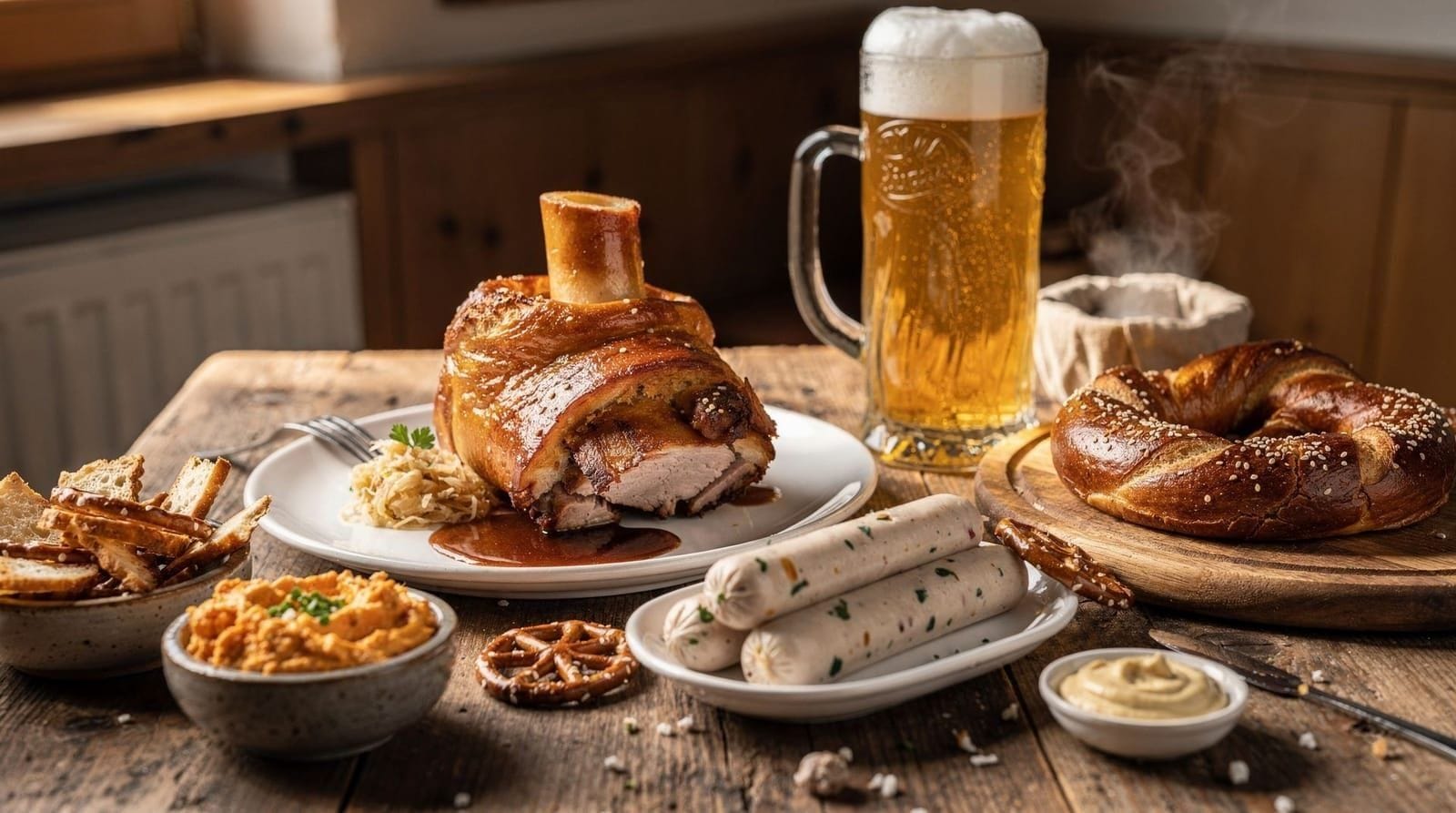
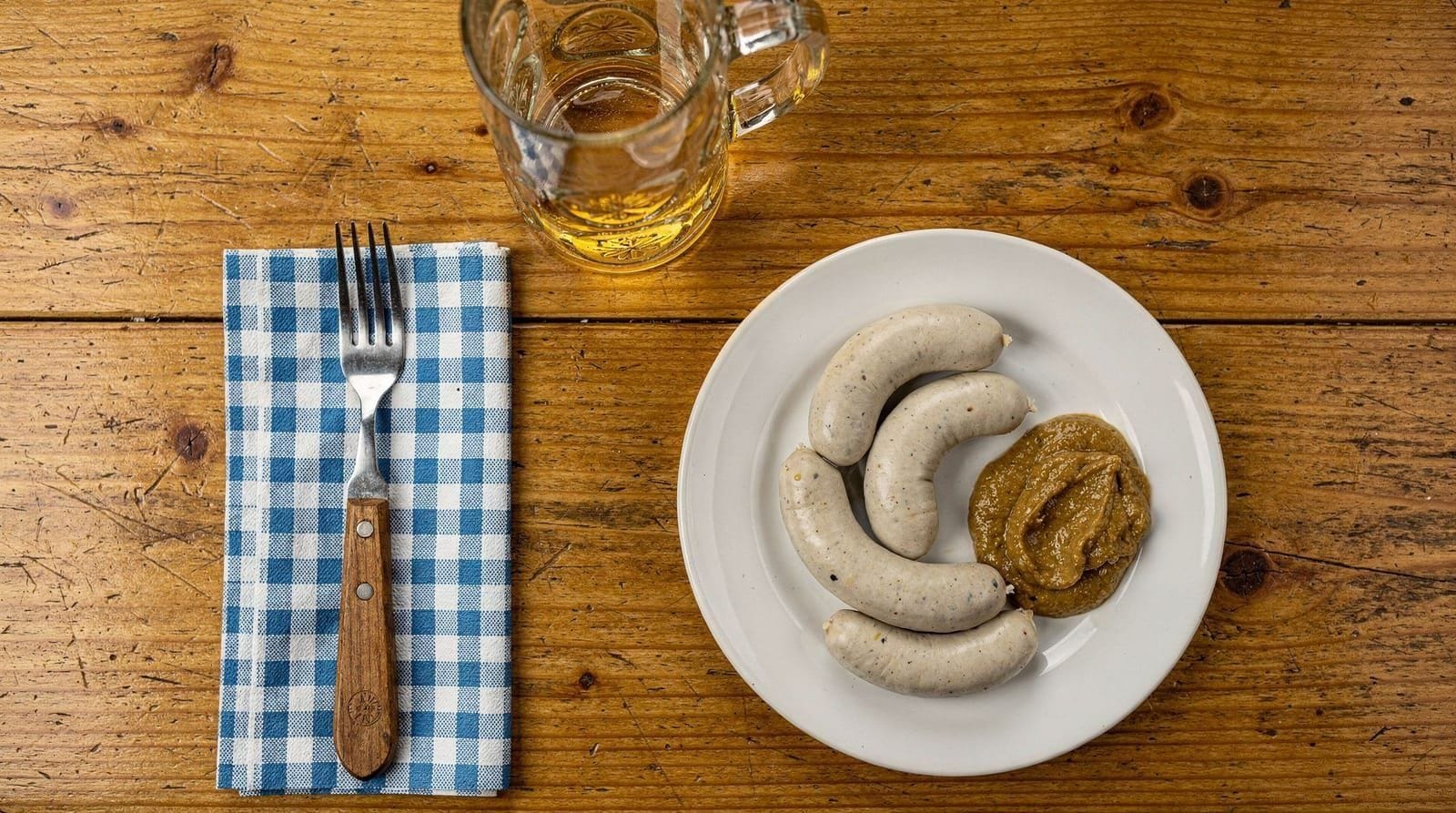
Eating at a traditional Wirtshaus gives you the result of Bavarian cooking — the finished Schweinshaxe, the Kaiserschmarrn dusted with icing sugar, the Knödel floating in clear broth. A cooking class gives you the process: why the Weißwurst is made the way it is, why Knödel require specific bread ratios to hold together, why Brezn must be dipped in sodium hydroxide solution to develop the characteristic dark, chewy crust.
| Cost | €65–150 per person for group classes; €150–250 for private |
| Time needed | 3–4 hours for most formats; 5–6 for beer brewing |
| Best format for a first visit | Bavarian classics group class |
| Most distinctive skill | Pretzel/lye baking — genuinely unusual technique |
| Language | English available on request at most schools |
| Book ahead | Yes, especially around Oktoberfest season |
For visitors who want to understand Munich’s food culture more deeply than eating alone allows — and who want to take those techniques home — a cooking class is the most direct route. Munich is not a city with an enormous cooking school scene compared to Italian cities like Bologna or Florence, but the classes that exist are genuinely good and focused on the dishes worth learning.
This guide covers the formats available, what to look for in each, what you’ll actually learn in a Bavarian cooking class, and how to book.
The types of Munich cooking classes
Bavarian classics cooking class
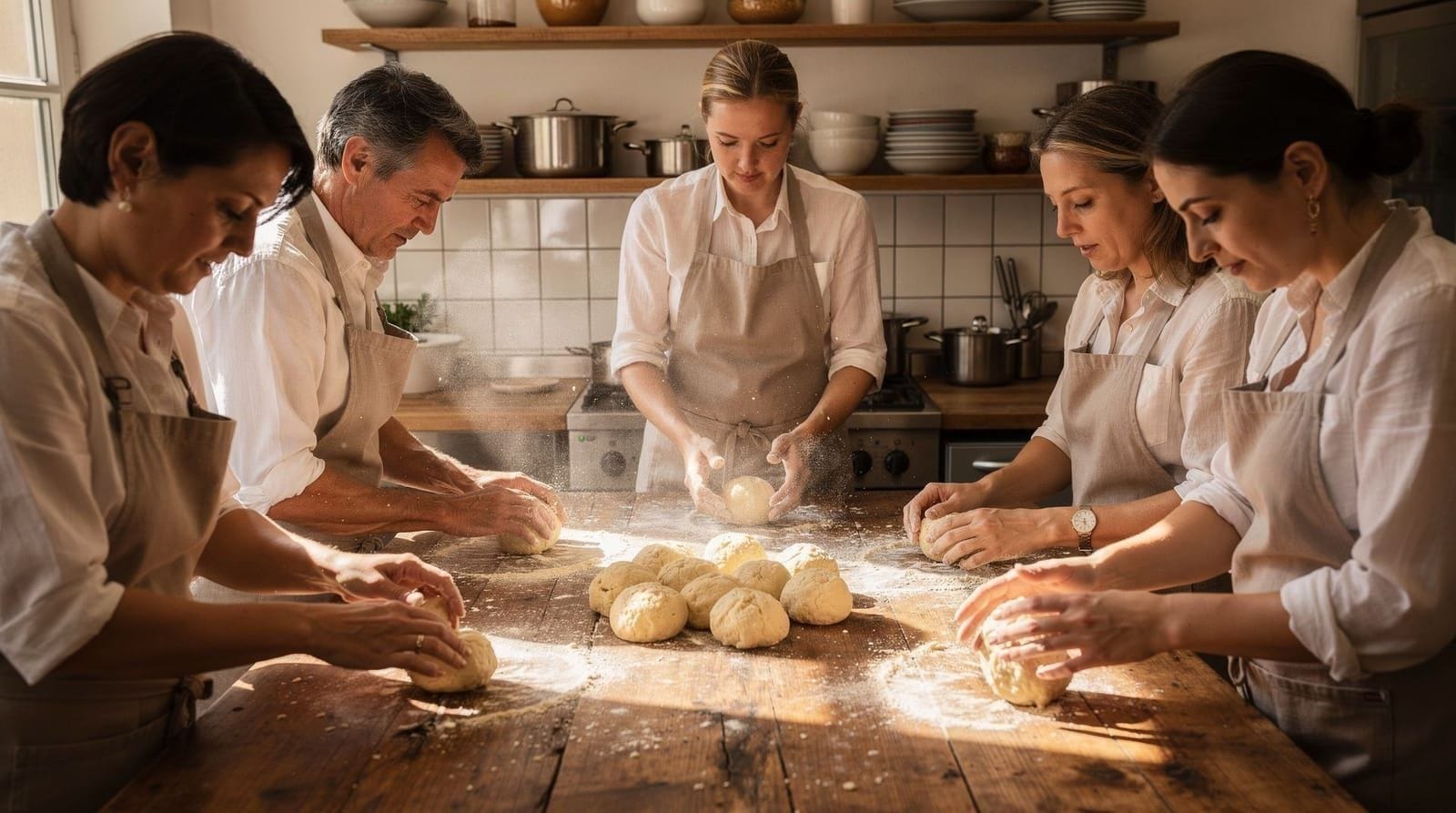
The most common format: a group of 8-12 people works through a menu of 3-4 traditional Bavarian dishes over 3-4 hours, guided by an instructor, then sits down to eat what they’ve made.
A typical Bavarian classics class menu might include:
- Weißwurst made from scratch (the mincing, seasoning, casing, and poaching)
- Semmelknödel (bread dumplings — the most technically demanding common Bavarian side dish)
- Schweinshaxe (though this requires long roasting and is often demonstrated rather than made from scratch in a 3-hour session)
- Kaiserschmarrn for dessert
The learning in these classes is practical and immediate — you understand why Weißwurst is pale (no nitrates, no high-heat cooking), why Knödel texture is so difficult to get right (the bread-to-egg ratio), and why Kaiserschmarrn must be torn while hot rather than cut.
Cost: €75-120 per person. Language: Most Munich cooking schools offer English instruction on request.
Pretzel and bread baking classes
Brezn baking is a specific skill that visitors find both achievable in 3-4 hours and deeply satisfying. The process — mixing and shaping the dough, the critical dipping in lye solution that creates the characteristic dark crust, baking to the right internal temperature — produces results that are genuinely superior to most purchased pretzels and can be replicated at home.
Lye baking classes (working with the food-grade sodium hydroxide solution) require safety instruction and appropriate kitchen setup, which is why they’re better done in a class than attempted at home without guidance. The class instructor handles the lye safely and explains the chemistry — the alkalinity of the lye raises the pH of the dough surface, which causes the Maillard reaction to proceed faster and at lower temperatures, producing the dark, glossy crust that no other baking technique replicates.
A pretzel-focused class typically also covers Laugenbrötchen (lye rolls), Laugenstangen (lye sticks), and the difference in salt levels between traditional Bavarian Brezn and the more neutral versions sold commercially.
Cost: €65-100 per person.
Sausage making workshops
Munich’s sausage culture is specific and technically interesting — the Weißwurst, Bratwurst, Leberkäse, and Bierschinken varieties all require distinct preparation techniques. Sausage-making workshops cover the meat selection and grinding, the seasoning blends (learning why Weißwurst must use fresh parsley and why the lemon zest matters), the casing preparation and filling, and the poaching or baking.
These are usually hands-on and messy in the best possible way — meat grinders, casing stuffers, and the kind of kitchen activity that produces real learning. They typically finish with tasting the finished sausages with the appropriate accompaniments.
A good sausage class teaches you:
- How to recognise good meat for each sausage type
- Why emulsified sausages like Weißwurst require temperature control during grinding
- The correct spice ratios for the main Munich sausage varieties
- How to handle natural casings
Cost: €80-130 per person.
Beer brewing courses
Munich’s beer brewing tradition is old, specific, and rule-bound — the Reinheitsgebot (purity law) of 1516 specified that beer could only be made from water, barley, and hops (yeast was added to the list once its role was understood). Learning to brew Bavarian-style beer is a separate skill from cooking, but in Munich it is inseparable from the food culture.
Beer brewing courses in Munich typically cover:
- The Reinheitsgebot and its historical significance
- Munich water chemistry and why it produces the Helles style naturally
- Mashing and conversion — converting grain starches to fermentable sugars
- Hop varieties and how the balance of bitterness and aroma is controlled
- Fermentation and conditioning — the extended cold-conditioning (lagering) that defines the Munich lager style
- A visit to or comparison between different brewing setups
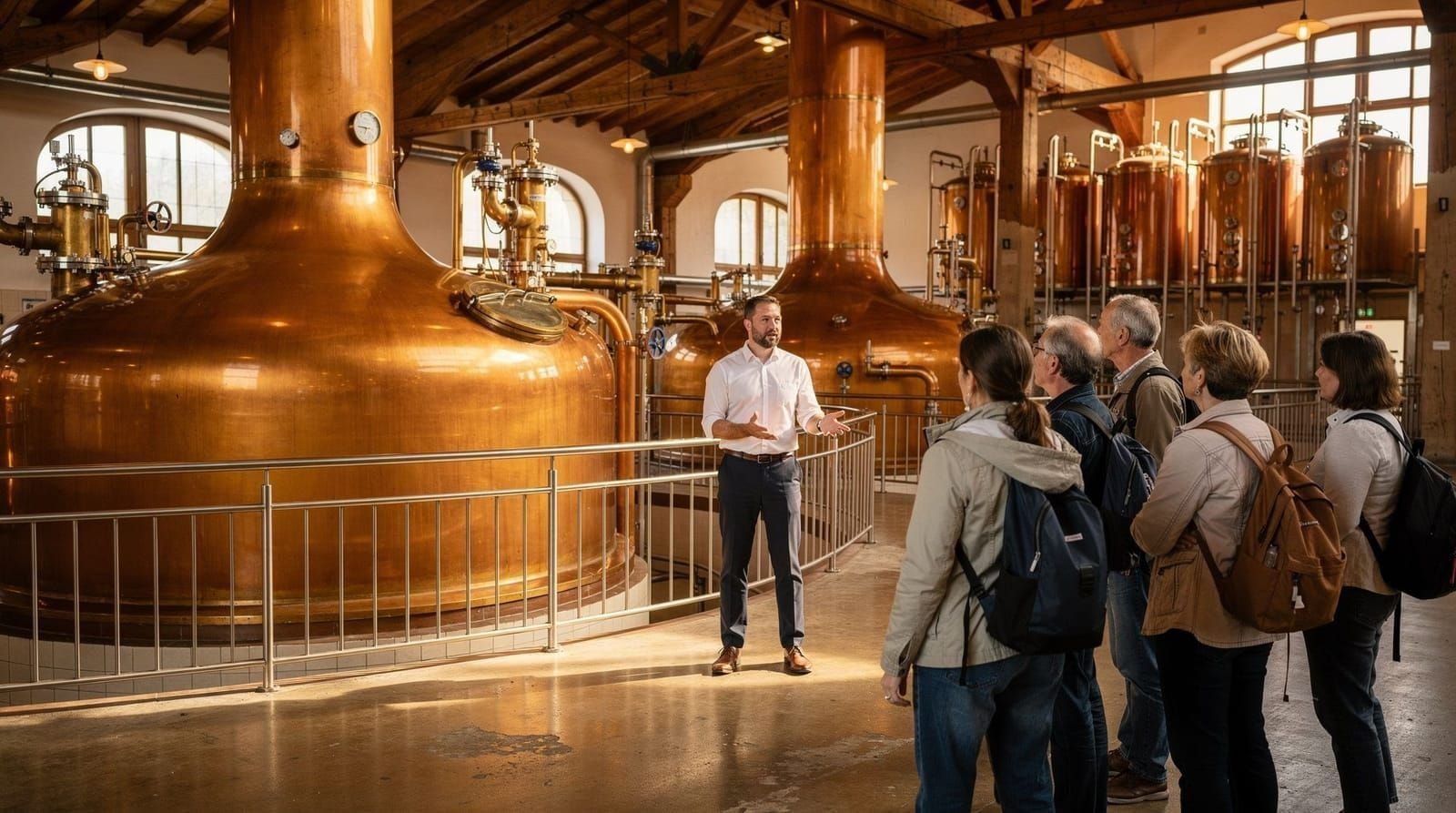
The Munich beer brewing course with tasting covers the practical and historical sides of Bavarian brewing alongside a guided tasting of the major Munich beer styles.
Most beer brewing courses last 5-6 hours and include either take-home beer from a batch you help prepare or a full tasting session covering the main Munich beer styles.
Cost: €90-150 per person.
Beer and food pairing classes
The intersection of cooking and beer culture — understanding which Bavarian dishes work with which beer styles and why — is covered in a smaller number of specialist classes and tastings. These are closer to a structured tasting session with food accompaniments than a hands-on cooking class, but they provide the pairing knowledge that makes subsequent restaurant meals in Munich significantly more interesting.
A typical beer and food pairing class covers:
- The six major Munich brewery styles and their flavour profiles
- How malt sweetness, hop bitterness, and carbonation interact with fat, acid, and umami in food
- Specific Bavarian pairings — Weizenbier with fish, Märzen with roasted meat, Dunkles with sweet-savoury dishes
- Seasonal and Oktoberfest styles and their appropriate food partners
For beer-specific tours that combine cultural context with tasting, the Munich brewery tours guide and the beer hall etiquette guide provide background reading.
What you’ll learn in any good Bavarian cooking class
The shared learning across all Bavarian cooking class formats is an understanding of the underlying logic of the cuisine. In three to four hours, a good class typically conveys:
Why Bavarian food is the way it is. The Alpine climate, short growing seasons, reliance on grain and pork, and the central role of the monastery brewery system in preserving and developing culinary techniques. Understanding the history makes the food more interesting.
The technical foundations. Knödel require precision in the bread-to-liquid ratio. Weißwurst must be cooked at controlled temperatures to prevent the emulsion from breaking. Brezn require lye treatment for their specific crust character. These are real skills with real technical bases, not arbitrary traditions.
The ingredient quality standards. Bavarian food depends on good regional ingredients — the right veal for Weißwurst, the right fat ratios for Obatzda, the right aged bread for Semmelknödel. A class that uses quality ingredients teaches you what the dish should taste like, which makes you a better consumer of it everywhere else.
Authentic recipes to take home. The value of a cooking class extends beyond Munich. A reliable Kaiserschmarrn recipe, a pretzel technique, and a proper Obatzda formula are genuinely useful afterwards.
Finding and booking Munich cooking classes
Munich cooking classes are not uniformly well-publicised. The main booking channels:
Dedicated cooking schools: Munich has several established cooking schools — Kochschule Karotte, COOK & TASTE, and similar operations — that run regular group classes. These have the most consistent scheduling and the best professional kitchens.
Restaurant-affiliated cooking schools: Some of Munich’s better-regarded restaurants run occasional cooking workshops. These are typically smaller, more intimate, and taught by the restaurant’s actual chefs — meaning higher quality instruction at a higher price.
Airbnb Experiences: Munich-based home cooks offer private cooking sessions through Airbnb Experiences. These are often the most affordable option (€45-70 per person), the most personally styled, and the most variable in quality. Read reviews carefully.
Specialised tour operators: The Munich premium sightseeing and Bavarian delicacies experience combines food culture education with hands-on tastings in a structured format that covers the market and cooking traditions together.
When evaluating any class, check:
- Class size (smaller is better — 6-10 is ideal)
- The instructor’s background (professional chef versus enthusiastic home cook — both can be good, but set expectations accordingly)
- Language of instruction
- What’s included in the price (ingredients, take-home materials, the meal, wine or beer pairings)
- Cancellation policy
Bavarian cooking techniques worth understanding
Some of the techniques covered in Munich cooking classes are genuinely unusual — different enough from mainstream European cooking that understanding them enriches both the class experience and your subsequent eating in the city:
Laugen treatment for bread: Dipping shaped dough into a food-grade lye (sodium hydroxide) solution before baking is what gives Brezn, Laugenbrötchen, and Laugenstangen their distinctive dark, glossy surface and the complex, slightly bitter flavour of the crust. No other technique produces this result. The lye raises the pH of the dough surface, causing the Maillard browning reaction to proceed faster and at lower oven temperatures — the result is a crust colour and texture impossible to achieve with egg wash, steam, or any other common technique. A pretzel baking class makes this process visible and safe.
Emulsion control for Weißwurst: Weißwurst is an emulsified sausage — the fat and protein are bound into a stable suspension rather than remaining separate. Maintaining this emulsion requires temperature control throughout grinding and mixing: the meat mixture must never exceed around 12°C during preparation, because warmth causes the fat to separate and the emulsion to break. This is why Weißwurst feels different from a standard sausage and why it cannot be grilled — the heat destroys the emulsion. A sausage-making class demonstrates this physically.
Knödel construction: Bavarian dumplings (Knödel) come in several forms — Semmelknödel (bread dumplings), Kartoffelknödel (potato dumplings), and Leberknödel (liver dumplings). Each requires different construction logic. Semmelknödel depend on the bread-to-liquid ratio: too much liquid produces a dense, gluey ball; too little gives a crumbly dumpling that disintegrates in the broth. The correct technique — soaking cubed bread to the right level, binding with egg and seasoning, and cooking in barely simmering water rather than a rolling boil — is something that requires practice to calibrate. A cooking class compresses that learning significantly.
Kaiserschmarrn timing: The moment of tearing Kaiserschmarrn — pulling the pancake apart while still hot enough to caramelise on the torn edges — requires judgement that is easier to learn by doing than by reading. Too early and the pieces are still soft and doughy in the middle; too late and the whole thing has set to a uniform texture without the textural contrast that makes the dish interesting. Cooking classes that include Kaiserschmarrn give you the physical memory of the right timing.
Specialist cooking experiences in Munich
Beyond standard cooking class formats, Munich has a few specialist food learning experiences worth knowing:
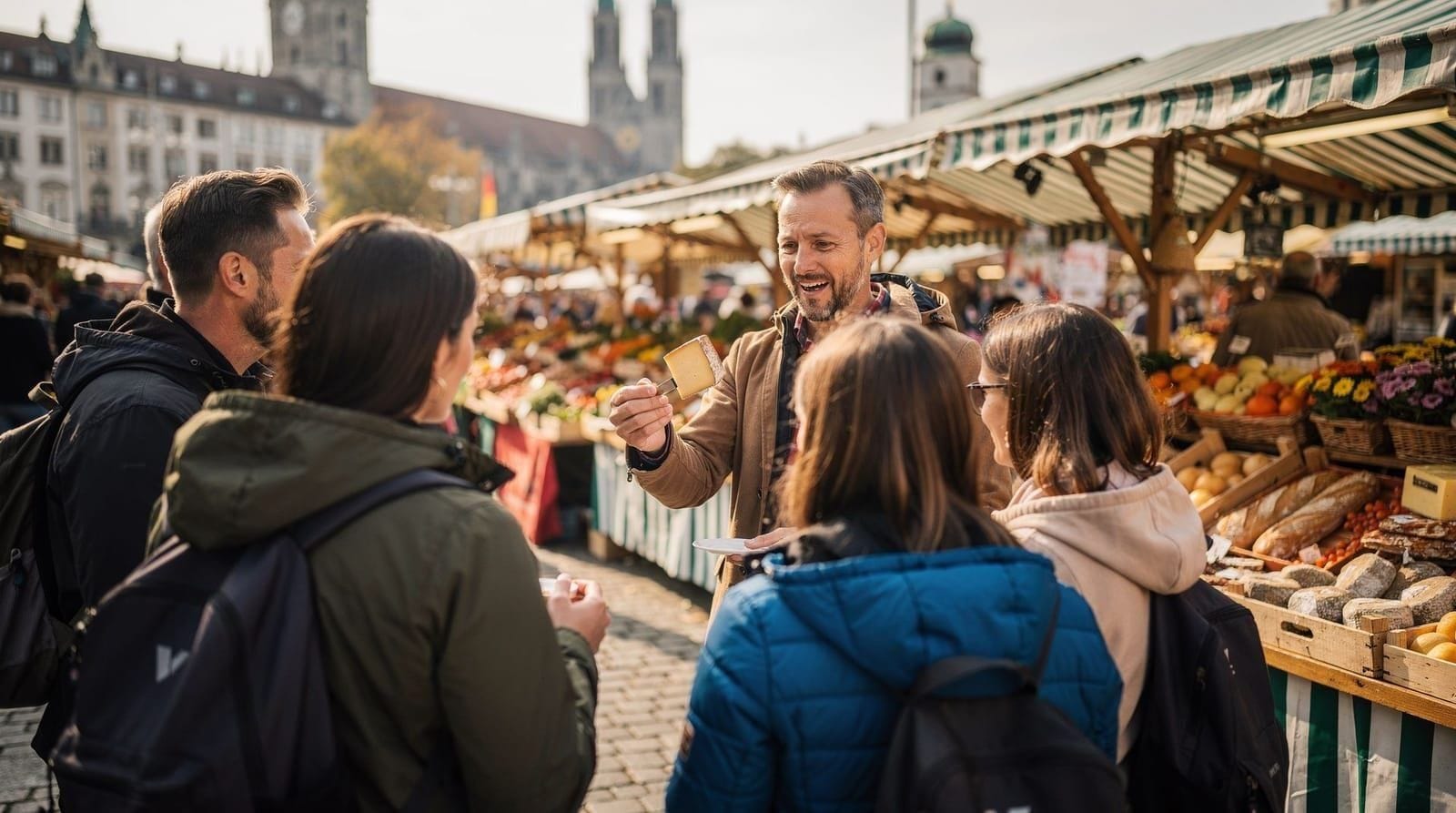
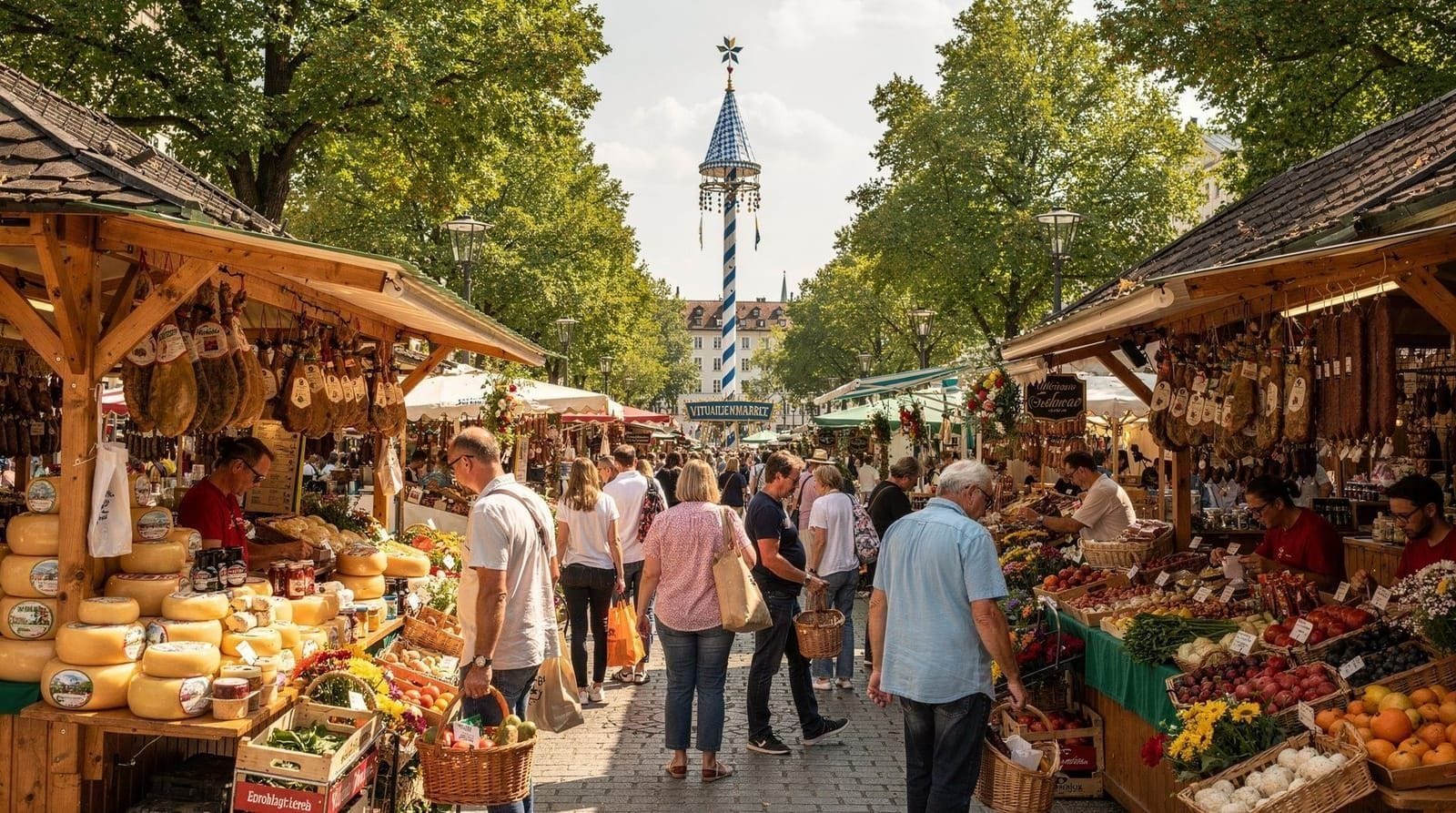
Market-to-table sessions: Some Munich food tour operators and private cooks offer experiences that begin with a shopping session at the Viktualienmarkt followed by cooking what was purchased. This produces a different kind of learning — selecting seasonal ingredients, making decisions about what to cook based on what’s available, and understanding the relationship between the market and the Bavarian kitchen. These are typically private sessions and cost €150-200 for two people for a half-day.
Schlachtschüssel (pig butchery) workshops: Available in November and December, when the traditional Bavarian Schlachttag (butchering day) season runs. These intensive workshops cover the traditional whole-animal processing that produces the full range of Bavarian pork products — Weißwurst, Leberkäse, Blutwurst, Sülze, and the cured cuts. Available through specialist food operators and farm-based experiences within 30-60 minutes of Munich.
Alpine dairy workshops: In the broader Munich region, some Alpine farms and dairy producers offer cheese-making workshops specifically around Bergkäse (mountain cheese) and Quark preparation. These require travel out of the city proper (typically to the Tegernsee or Chiemgau areas), but they connect the food culture to its geographic origins in a way that urban cooking classes cannot replicate.
Cooking classes as part of a Munich itinerary
A cooking class works well as a morning or early afternoon activity — the 3-4 hour format typically occupies 10am-2pm or 2pm-6pm, leaving the rest of the day free. In a 3-day Munich itinerary, a cooking class on day two (after an orientation day covering the Marienplatz area and Viktualienmarkt) provides a deeper layer of engagement with the food culture.
For visitors during Oktoberfest, a morning cooking class before the afternoon tent session provides useful context for what’s being served inside — understanding why the Hendl is roasted the specific way it is makes eating one in the Hofbräuzelt considerably more interesting.
The Munich budget guide covers food experiences across different price points, including how cooking classes compare with guided food tours and self-guided market eating as experiences.
Choosing the right cooking class format
With five distinct formats available, matching the class to what you actually want to learn avoids a common disappointment — booking a “cooking class” that turns out to be mostly a tasting session, or vice versa.
| If you want | Book this | Typical cost |
|---|---|---|
| A broad introduction to Bavarian cuisine | Bavarian classics class | €75–120 |
| One genuinely unusual, take-home skill | Pretzel/lye baking class | €65–100 |
| Hands-on, slightly messy, technical | Sausage making workshop | €80–130 |
| Brewing science and history alongside food | Beer brewing course | €90–150 |
| Structured tasting with less hands-on cooking | Beer and food pairing class | Varies, often bundled |
| Personal, home-style, most affordable | Airbnb Experience with a local cook | €45–70 |
If you can only fit in one class and want the widest coverage of Bavarian cooking logic in a single session, the Bavarian classics format is the safest choice — it touches on dumplings, sausage, and dessert technique in one sitting rather than going deep on a single skill.
What a cooking class adds beyond the recipe
The genuine value of a Munich cooking class extends past the specific dishes learned. Understanding why Bavarian food developed the way it did — the Alpine climate’s short growing season, the historical reliance on grain and pork, the monastery brewing tradition’s influence on food preservation — changes how you read a Wirtshaus menu for the rest of your trip. A visitor who has made Semmelknödel from scratch orders it differently afterwards, with a clearer sense of what a well-made version should taste and feel like, and can spot a poor one immediately.
This is also why a cooking class pairs so naturally with the Munich food tour guide rather than replacing it — the food tour maps the landscape of what to eat and where, and the cooking class explains why it tastes the way it does.
Frequently asked questions about Munich cooking classes
Do I need cooking experience to join a Munich cooking class?
No. All classes for tourists are designed for participants with a range of cooking backgrounds, from complete beginners to confident home cooks. The instructor adapts the level of instruction to the group. If you have a specific skill level, mention it when booking so the operator can place you appropriately.
What should I wear to a Munich cooking class?
Closed-toe shoes are mandatory in any professional kitchen setting — aprons and protective equipment are provided. Don’t wear your best clothes; Bavarian cooking involves fat and rich sauces that create splatter. Most cooking schools provide aprons that are changed between classes.
Can I buy a cooking class as a gift for someone?
Yes. Most Munich cooking school operators sell gift vouchers for their classes, redeemable within a specified period. This works well as an Oktoberfest-adjacent gift — the voucher can be used during or after the festival season. Check expiry dates and the flexibility of dates before purchasing.
Are there cooking classes specifically for Oktoberfest recipes?
Yes, during the Oktoberfest season (late September to early October), several Munich cooking schools offer Oktoberfest-focused classes covering the tent-specific dishes — Hendl, Brezn, Obatzda, and the festival snacks. These are worth booking well in advance as they fill quickly during the festival period.
How does a cooking class compare to a food tour in terms of value?
They’re different experiences. A food tour covers breadth — many stops, many dishes, cultural context, neighbourhood orientation. A cooking class covers depth — one cuisine, several techniques, real learning. Most visitors who have time for both prefer doing the food tour first (to understand the landscape of Bavarian cuisine) and the cooking class second (to go deeper on a few dishes). If you only have time for one, choose based on whether you prefer experiencing or learning.
Which Munich cooking class is best for a first-timer with only one free afternoon?
The Bavarian classics class, since it covers the widest range of techniques — dumplings, sausage basics, and dessert — in a single 3-4 hour session. It gives a genuine sense of the cuisine’s underlying logic without requiring you to choose between narrower specialist formats like pretzel baking or beer brewing.
Can I do a Munich cooking class if I only speak a little English or German?
Most established Munich cooking schools teach in English by default or on request, and instructors are used to working with mixed-language groups by demonstrating techniques visually rather than relying purely on verbal explanation. If your English is limited, mention this when booking so the operator can pair you with a class that has a stronger hands-on, show-don’t-tell teaching style.
Top experiences
Bookable activities with verified prices and instant confirmation on GetYourGuide.