Munich in 3 days: the perfect city break itinerary
From Munich: Neuschwanstein Castle full-day trip by van
Three days: Munich and one essential day trip
Three days is the minimum to feel comfortable in Munich without rushing. The structure here: two days covering the city’s highlights in depth, plus one full day out to Neuschwanstein (or Dachau if you visited on day two). This is the itinerary I’d recommend to anyone who asks how long to spend in Munich on a first visit.
Expect to walk 12-18 km per day. Comfortable shoes matter. Budget: 150-200 EUR per person per day (mid-range including accommodation from 110 EUR/night).
| Where | Altstadt, English Garden, Nymphenburg, Dachau, Füssen/Neuschwanstein |
| Cost | around 150-200 EUR/person/day incl. accommodation |
| Time needed | 3 full days, 07:30-08:00 starts |
| Getting there | walkable core + Tram 17, S2, Bayern-Ticket train to Füssen |
| Best time | May-September for castle crowds and weather |
Day 1: Altstadt, English Garden, and Nymphenburg Palace
Morning: Historic core on foot
08:00 — Marienplatz and Viktualienmarkt
Arrive at Marienplatz early. Munich’s historic square is at its best before 09:30 when the tour groups thin out. Walk five minutes south to Viktualienmarkt for a Weisswurst breakfast — the white sausage is a Munich institution eaten with sweet mustard and a pretzel, traditionally before noon.
09:30 — Frauenkirche and Asam Church
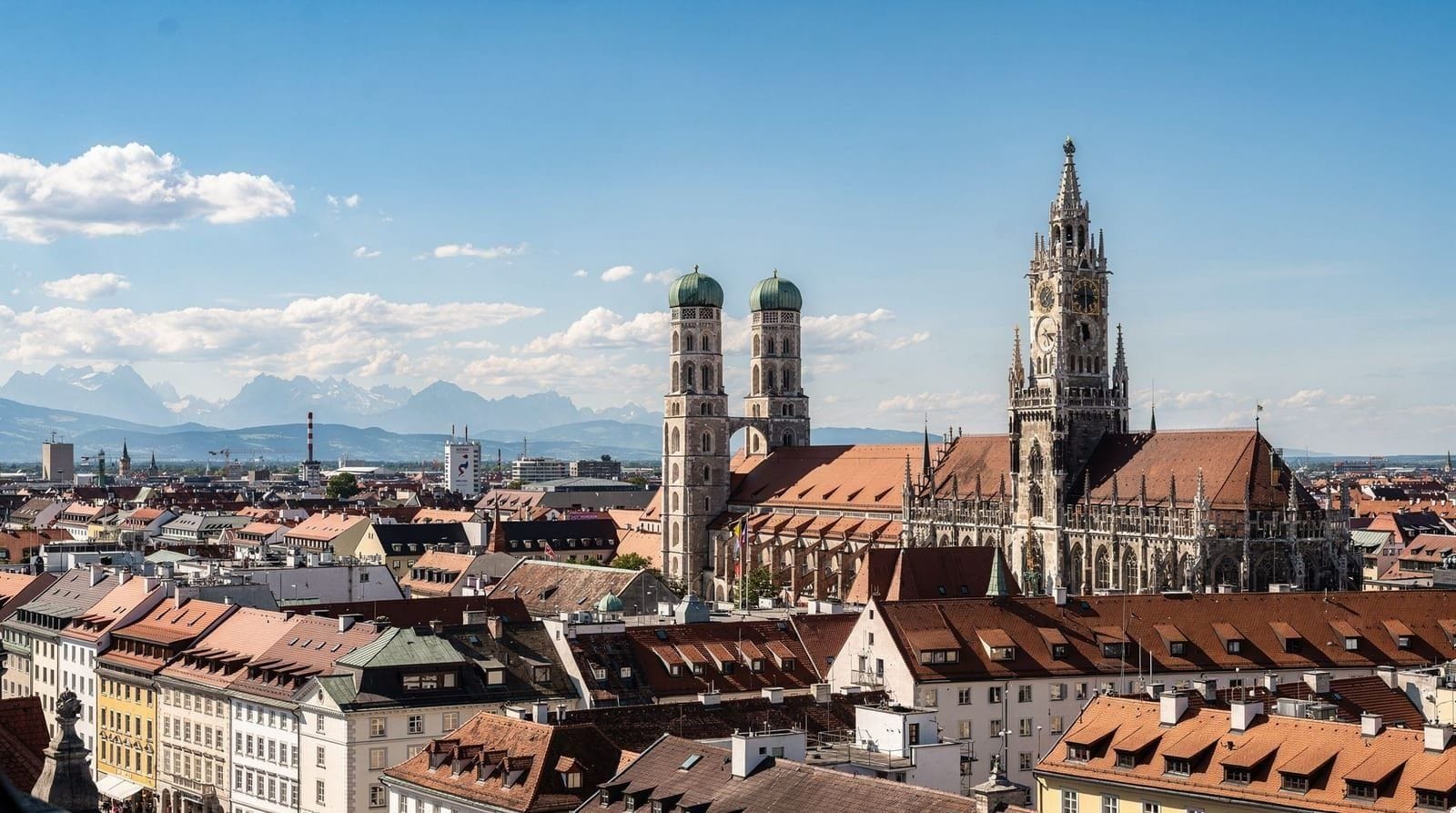
Munich’s twin-towered Frauenkirche (free entry) is the city’s skyline anchor. Walk west on Kaufingerstrasse then south to Asam Church on Sendlingerstrasse — a private Baroque chapel from 1746, lavishly gilded, open daily from 09:00. Free.
10:30 — Residenz Palace
The Residenz is 130 rooms of Wittelsbach royal apartments open to visitors. Combined entry (state rooms + treasure chamber + Cuvilliés Theatre) 20 EUR. Allow 90 minutes. The Antiquarium — Europe’s largest secular Renaissance hall — is a genuine architectural marvel rarely on tourist shortlists. Residenz Palace skip-the-line guided tour
Afternoon: English Garden and Nymphenburg
12:30 — English Garden lunch
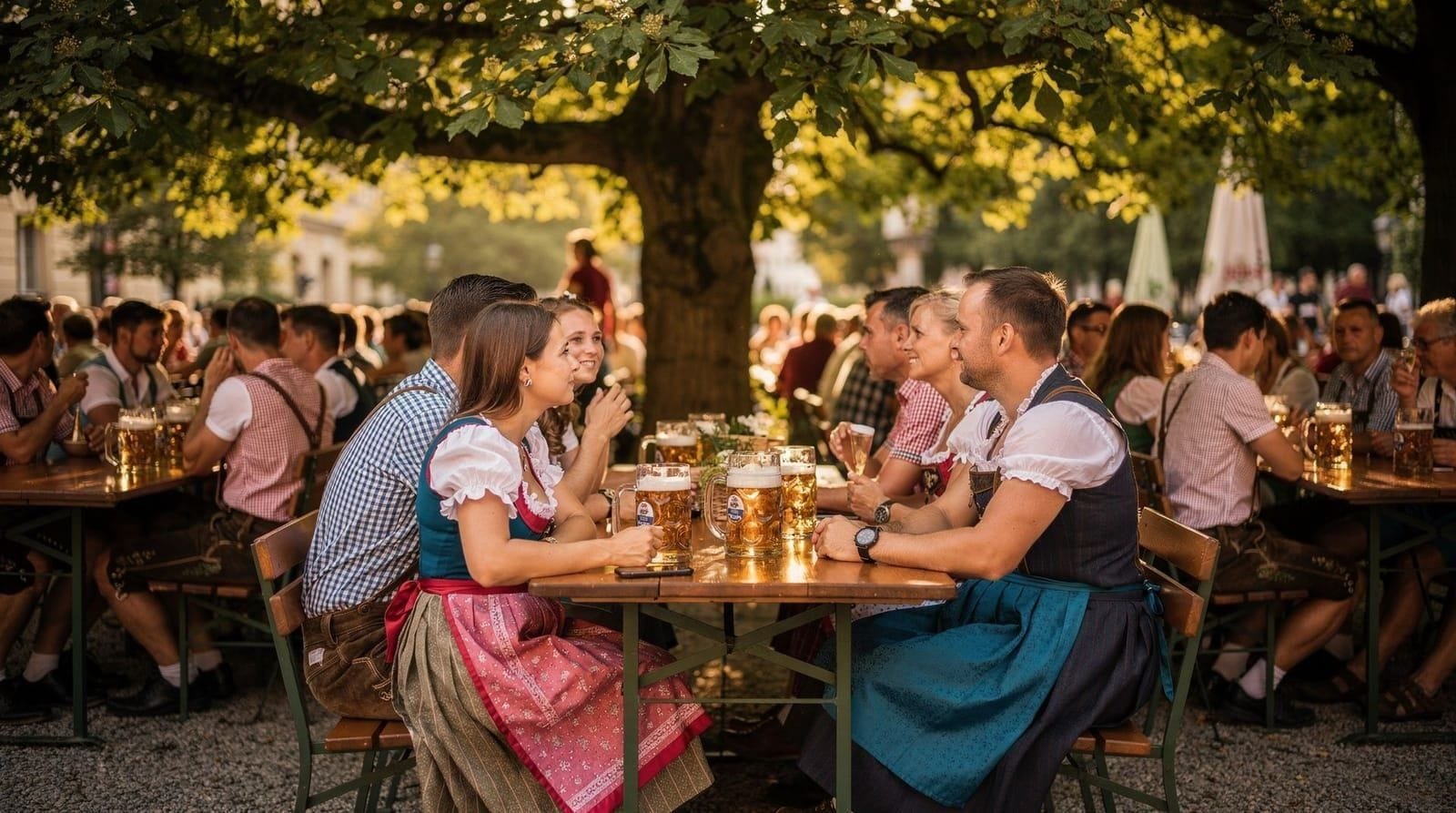
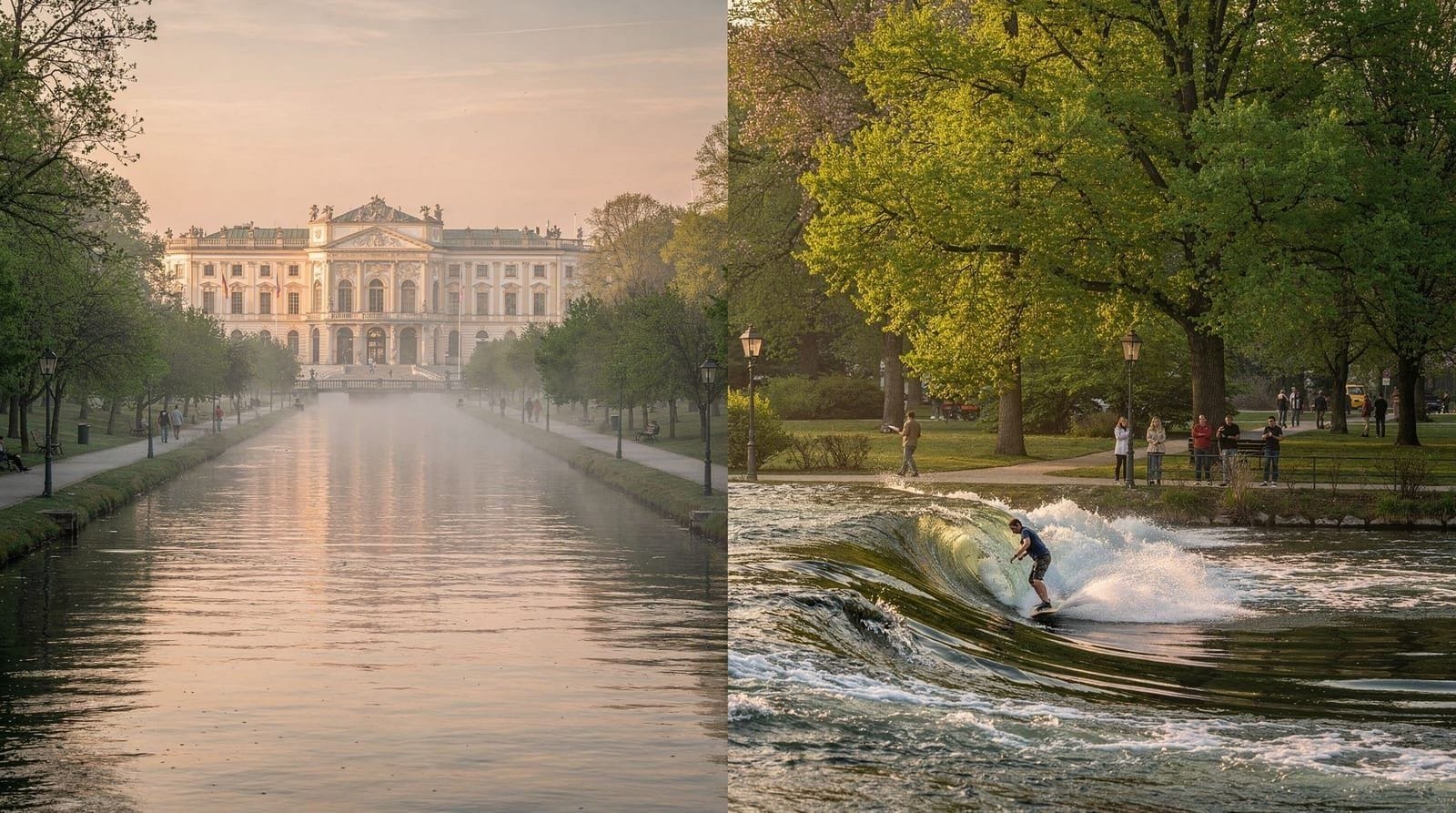
Walk northeast 20 minutes through the Hofgarten to the English Garden. The Chinesischer Turm beer garden is Munich’s second-largest (7,000 seats) and the most authentically local of the city’s major gardens. Hendl (roasted chicken) 11 EUR, Masskrug Augustiner 9.50 EUR (2026). The Eisbach surfers at the garden’s southern entrance are a five-minute detour — surfers ride a standing wave year-round, entirely for free.
14:30 — Nymphenburg Palace
Tram 17 from Karlsplatz to Schloss Nymphenburg (20 minutes). The Wittelsbach summer palace sits in 8 km of formal gardens with a canal, hunting lodges, and a porcelain museum in the outbuildings. Entry 9 EUR adults (2026). Ludwig I’s Gallery of Beauties in the Amalienburg (a small rococo hunting lodge in the garden) is one of Munich’s most charming hidden gems.
The Nymphenburg Palace guide has room-by-room highlights.
16:30 — Return to centre
Tram 17 back to Karlsplatz. Freshen up at your hotel before evening.
Evening: Augustiner Keller
19:30 — Augustiner Keller
The Augustiner Keller on Arnulfstrasse is the oldest beer hall still run by its founding brewery in Munich. Vastly more local in atmosphere than the Hofbräuhaus, with the city’s best wood-panelled dining rooms and a beer garden that holds 5,000. Order Augustiner Helles vom Holzfass (lager from wooden barrel — this is what separates Augustiner from all other Munich beers). Main courses: Schweinsbraten (roast pork) 18 EUR, Steckerlfisch (grilled fish on a stick) 16 EUR.
The best beer gardens in Munich guide ranks the main gardens by quality and crowd levels.
Day 2: Dachau Memorial and Museum District
Morning: Dachau
09:00 — S-Bahn to Dachau
S2 from Munich Hauptbahnhof to Dachau station (25 minutes, included in Zone M day ticket). Bus 724 to KZ-Gedenkstätte Dachau (12 minutes). The memorial site opens at 09:00 and closes at 17:00. Free entry.
Dachau (1933-1945) was the first Nazi concentration camp and the model for those that followed. The permanent exhibition in the former maintenance hall is well-curated and takes 2 hours to read carefully. The crematorium and punishment block are preserved. Allow 3 hours and be prepared for an emotionally demanding visit. See the Dachau Memorial guide for what to expect. Dachau Memorial small-group guided tour from Munich
13:00 — Return to Munich and lunch in Maxvorstadt
Back by S-Bahn (25 minutes). Lunch in the Maxvorstadt university quarter — Takeichi (Theresienstrasse, ramen 13-16 EUR) or Cafe Luitpold (Briennerstrasse, Bavarian lunch plates 16-22 EUR).
Afternoon: Maxvorstadt museums
14:30 — Alte Pinakothek or Deutsches Museum
The Maxvorstadt district concentrates three world-class galleries within 500 metres:
- Alte Pinakothek: Europe’s finest collection of Old Masters (Rubens’ massive canvases, Dürer self-portraits, Raphael madonnas). Entry 12 EUR, 7 EUR Sundays. The Pinakothek museums guide covers all three buildings and recommends which to prioritise.
- Deutsches Museum (30 minutes on foot south): The world’s largest science museum at 73,000 sqm. Genuinely extraordinary — the pre-20th century sections on mining, printing, and nautical history are the best in the world. Entry 16 EUR (2026). See Deutsches Museum guide.
- Lenbachhaus: Blue Rider paintings (Kandinsky, Marc, Münter). Entry 15 EUR. Smaller and quicker than the Pinakothek — 90 minutes is sufficient.
Choose one. Trying to cover two major museums in one afternoon produces surface-level visits.
17:30 — Optional: Olympiapark or Schwabing
The Olympiapark offers a relaxed late-afternoon walk and a panoramic tower (19 EUR). The Schwabing neighbourhood north of the English Garden has Munich’s best independent cafes and bookshops for a quieter evening pace. See the Schwabing guide.
Evening: Hofbräuhaus and Marienplatz night walk
19:30 — Hofbräuhaus
On your second evening, visit the Hofbräuhaus for contrast with night one’s local Augustiner. The Hofbräuhaus is legitimately famous and legitimately touristy — the 1589 building, brass band, and roaring hall atmosphere are worth experiencing. Beer is Hofbräu lager (adequate, not exceptional). Schweinshaxe 24 EUR. Book ahead in summer.
After dinner, Marienplatz by night is beautiful — walk the pedestrian zone west toward Kaufingerstrasse, then south through the Rindermarkt to catch the Frauenkirche facade illuminated.
Day 3: Neuschwanstein day trip
Full day: Neuschwanstein Castle
07:30 — Early train to Füssen
This is the single most important logistical note in this itinerary: Neuschwanstein requires a full day from Munich and advance ticket booking. Train from Munich Hauptbahnhof: Regional Express or Bayerische Oberlandbahn (BOB) to Buchloe, change for Füssen. Total journey: approximately 2 hours each way. First trains depart from 07:00; taking the 07:30 train gets you to Füssen by 09:30.
A Bayern-Ticket (25 EUR for 1 person + 7 EUR each additional, 2026) covers all regional trains in Bavaria and is the most cost-effective way to make this trip. See the Bayern-Ticket guide for purchase and activation.
09:30 — Füssen and Schwangau
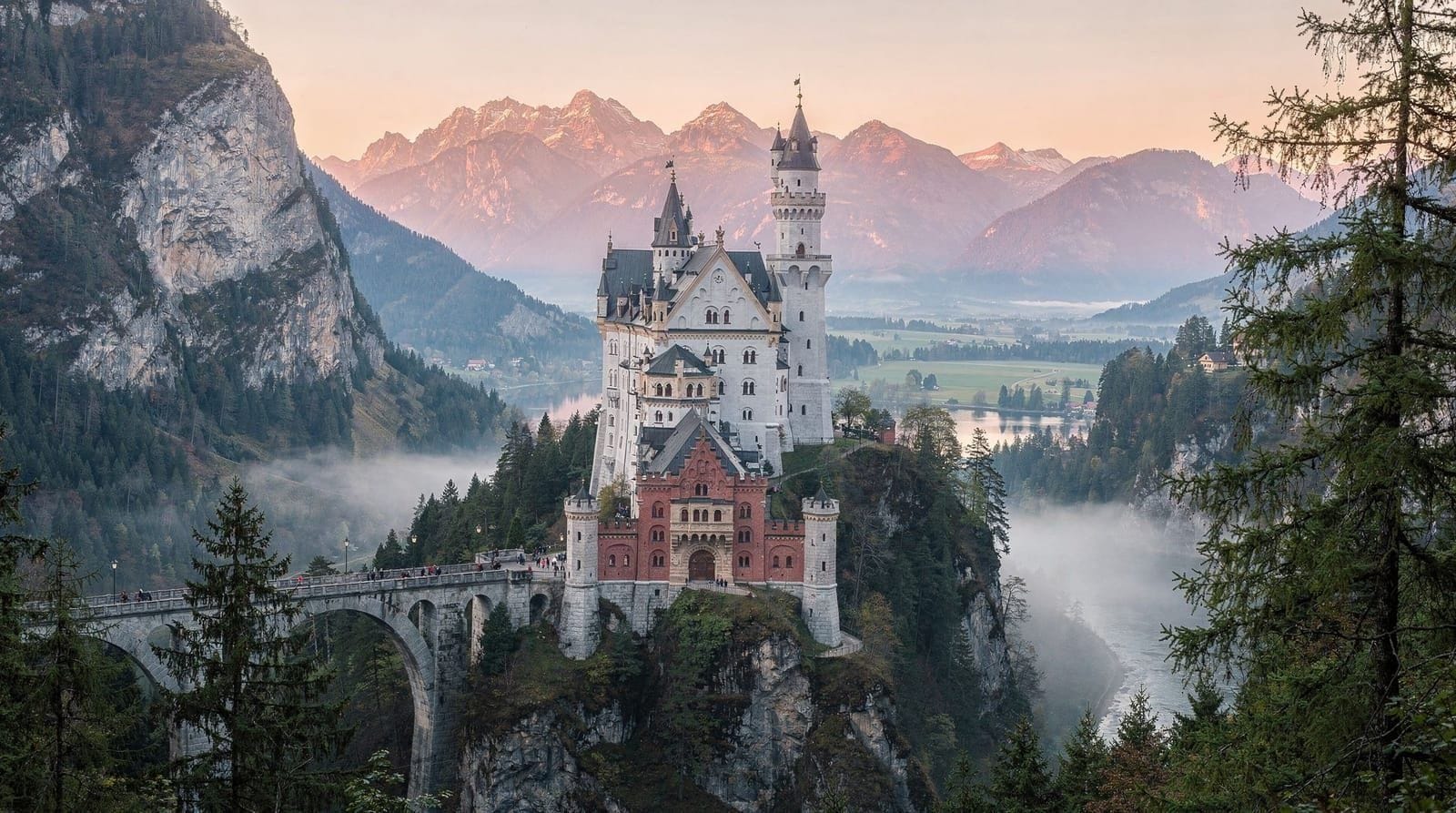
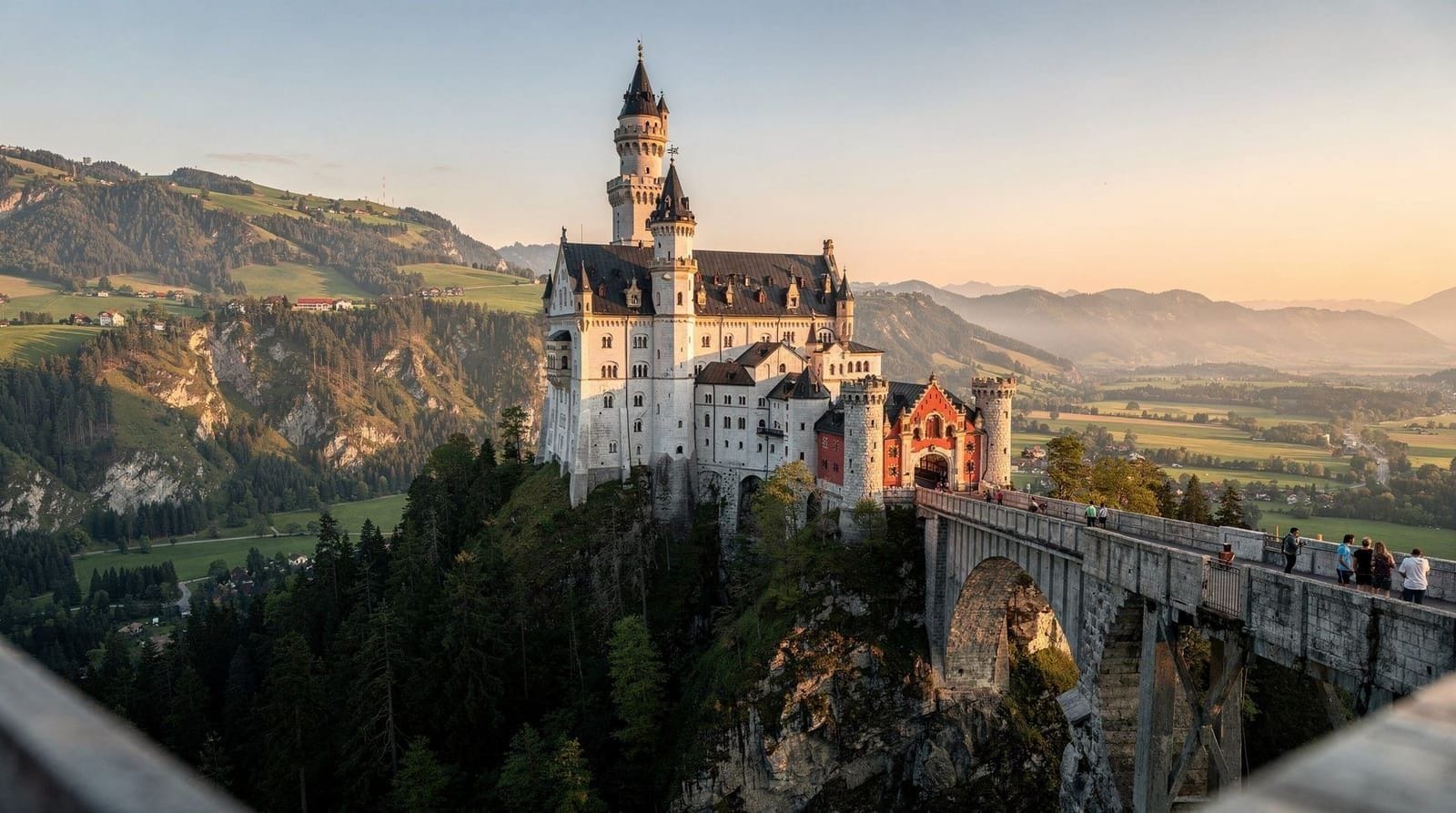
From Füssen station, Bus 73 or 78 to Hohenschwangau (10 minutes) or a taxi (10-15 EUR). The walk from the bus stop to the castle ticket office takes 15 minutes. Neuschwanstein timed tickets must be booked online at least a few days ahead (often weeks in summer) — entry without a timed ticket is not possible. Adult entry: 17 EUR (2026). The castle tour takes 35 minutes inside and is guided only.
The Neuschwanstein Castle guide gives full detail on the castle history, the photo spots, and what Ludwig II’s vision actually was.
10:30 — Hohenschwangau Castle
Just below Neuschwanstein, Hohenschwangau was Ludwig II’s actual childhood home and arguably better than Neuschwanstein for interiors — more colourful, more personal, not as completed as the fairy-tale castle above. Entry 21 EUR (2026). The Neuschwanstein vs Hohenschwangau guide helps decide if you have time for both.
12:30 — Marienbrücke and Alpine views
Walk 25 minutes uphill from the Neuschwanstein ticket office to the Marienbrücke — the iron footbridge that spans a gorge directly facing the castle’s famous turrets. This is the shot seen in every Munich tourism photo. Allow 45 minutes for the walk, time on the bridge, and descent. Go early in the afternoon for better light and fewer people. Full-day Neuschwanstein guided day trip from Munich
14:00 — Lunch in Füssen
Take the bus back to Füssen for lunch. The Gasthof zum Schwanen (Brotmarkt) does solid Bavarian plates for 14-18 EUR. Füssen itself is worth 30 minutes of walking — the medieval old town and Hohes Schloss (free exterior, small museum inside) are pleasant and much less visited than the castles.
16:00 — Return train to Munich
Train from Füssen to Munich: 2 hours. Arrive back by 18:00-18:30.
Evening: Relaxed dinner in Glockenbach
20:00 — Glockenbach or Au-Haidhausen
After a full day of travel, the Glockenbach quarter or Au-Haidhausen offer a quieter alternative to the Altstadt for your final evening. Both neighbourhoods have independent restaurants serving international cuisine alongside Bavarian standards.
Practical notes for 3 days
Transport summary:
- Day 1: All walkable + Tram 17 for Nymphenburg. MVV day ticket 9 EUR.
- Day 2: S2 to Dachau included in Zone M day ticket. Same ticket covers all city travel.
- Day 3: Bayern-Ticket recommended (25 EUR for 1 person, covers all regional trains).
Accommodation: Three nights is best booked as a package. The Maxvorstadt area (between the museums and Marienplatz) is central without the noise of the Altstadt hotel zone. See where to stay in Munich.
What to skip if time is short: The Cuvilliés Theatre at the Residenz (opens afternoons only), Legoland Deutschland (90 minutes away, family-only interest), and the Olympic Tower (unless you specifically want the panorama).
Frequently asked questions about this itinerary
Should I visit Dachau or Neuschwanstein first?
Emotionally, doing Dachau before Neuschwanstein allows you to end the trip on a lighter note. Logistically, both are full half-days, so either day works. If visiting during peak summer, Neuschwanstein castle tickets dictate which day you go — book those first, then plan everything else around it.
How long in advance should I book Neuschwanstein tickets?
At least 2 weeks in summer, ideally a month for July and August weekends. The official booking system (tickets.hohenschwangau.de) is the only reliable source — third-party sites add fees of 5-15 EUR with no additional value. See the Neuschwanstein tickets guide.
Can I combine Neuschwanstein and Linderhof in one day?
Yes, but it’s a long day. Several guided tours cover both in one go from Munich — these are the most time-efficient option. The Neuschwanstein and Linderhof guide explains what’s involved in combining both without a tour.
Is the Munich City Pass worth it for 3 days?
The 3-day Munich City Pass (99 EUR, 2026) includes public transport and 45 attractions. If you plan to visit Nymphenburg (9 EUR), the Residenz (20 EUR), a Pinakothek (12 EUR), and Deutsches Museum (16 EUR), the pass pays for itself before the transport credit. Compare against individual prices before buying.
What’s the best neighbourhood for a Munich base?
Maxvorstadt for museum proximity; Schwabing for a leafy residential feel; Lehel for walkability to the English Garden. The Altstadt itself has fewer mid-range hotels and more noise. See the Munich where to stay guide.
Is 3 days in Munich too rushed?
Three days feels comfortable for a first visit — you see the main sights without sprinting. With a week, you can add Berchtesgaden, Salzburg, the Zugspitze, and Bavaria’s lakes. See the 5-day Munich and Bavaria itinerary if you have more time.
What should I do on a rainy day in Munich?
Munich’s museums are among Europe’s best. The Deutsches Museum alone can fill a full rainy day. The Pinakothek der Moderne combines modern art with design and architecture in one building. Or visit the BMW Welt and Museum — partly covered spaces with free showroom access.
Detailed planning notes for 3 days
Getting the most from the Neuschwanstein day: The biggest mistake visitors make at Neuschwanstein is arriving without a pre-booked timed ticket and being turned away. The castle has a fixed daily visitor capacity and all entry is by timed slot only. Book directly at tickets.hohenschwangau.de (official site). Third-party ticket sites charge 5-20 EUR more for identical access. The booking confirmation goes directly to your email — print it or have it ready on your phone.
The second mistake is underestimating the uphill walk from the ticket office to the castle entrance: 30-35 minutes at a moderate pace, with some steep sections. Horse carriages are available (9 EUR up, 7 EUR down) but slow during peak times. The walk is more rewarding — you can stop at lookout points along the route that most visitors on carriages miss.
Dachau: what the guided tour adds: The free self-guided visit to Dachau is thorough, but the guided tour (available with the affiliate link above) adds chronological and political context that the exhibition panels don’t fully provide. The guide typically covers how Dachau’s design influenced subsequent camps, how the local Munich population related to the camp’s existence during the war years, and what liberation looked like in April 1945. Audio guide rental (3.50 EUR) is a middle option if a full guided tour doesn’t appeal.
Museum district logistics (Day 2): The three Pinakothek galleries close on Mondays (Alte and Neue Pinakothek) or Tuesdays (Pinakothek der Moderne). Plan accordingly — if Day 2 is a Monday, the Deutsches Museum (closed Mondays too) and Lenbachhaus (check seasonal hours) may also be affected. The BMW Museum and BMW Welt are open 7 days a week. Check current opening hours at the specific museum websites before going.
Beer halls on Day 3 (post-travel): After a full day of trains and castle visits, arriving back in Munich by 18:30 and wanting a sit-down dinner by 20:00 is realistic. The Hofbräuhaus is the most walk-in-friendly of the major beer halls for late arrivals. The Augustiner Keller (Arnulfstrasse) and Spatenhaus an der Oper (Residenzstrasse) are better quality but benefit from reservations.
Walking shoes and luggage: Three days in Munich with a day trip involves a lot of walking — budget 10-15 km per day in the city. Comfortable, broken-in shoes are essential. If arriving with luggage direct from the airport, left luggage lockers (Gepäckaufbewahrung) at Munich Hauptbahnhof are available 24/7 at 4-7 EUR per item per day.
Photography notes: Munich’s best photo spots are often best in early morning or late evening light. Marienplatz at 08:00 is calm and beautifully lit; by 11:00 it’s a sea of tour group flags. The Marienbrücke at Neuschwanstein faces southwest — morning light comes from behind the castle (backlighting), afternoon light is frontal and better for photography. If you plan to photograph from the bridge, aim for 14:00-16:00 in summer.
Booking timeline for 3 days in Munich:
- 4-6 weeks ahead: Neuschwanstein timed tickets (especially July-August weekends)
- 2-3 weeks ahead: Hofbräuhaus reservation (weekend evenings)
- 1 week ahead: Accommodation if not yet booked
- Day of: MVV day tickets (from any station machine), Dachau (no booking needed, free entry)
Three-day summary at a glance
| Day | Morning | Afternoon | Evening |
|---|---|---|---|
| Day 1 | Marienplatz, Viktualienmarkt, Frauenkirche, Asam Church, Residenz | English Garden lunch, Nymphenburg Palace | Augustiner Keller |
| Day 2 | Dachau Memorial | Alte Pinakothek / Deutsches Museum / Lenbachhaus | Hofbräuhaus, Marienplatz by night |
| Day 3 | Train to Füssen, Hohenschwangau | Neuschwanstein, Marienbrücke, Füssen lunch | Glockenbach or Au-Haidhausen dinner |
Comparing 3 days with the alternatives
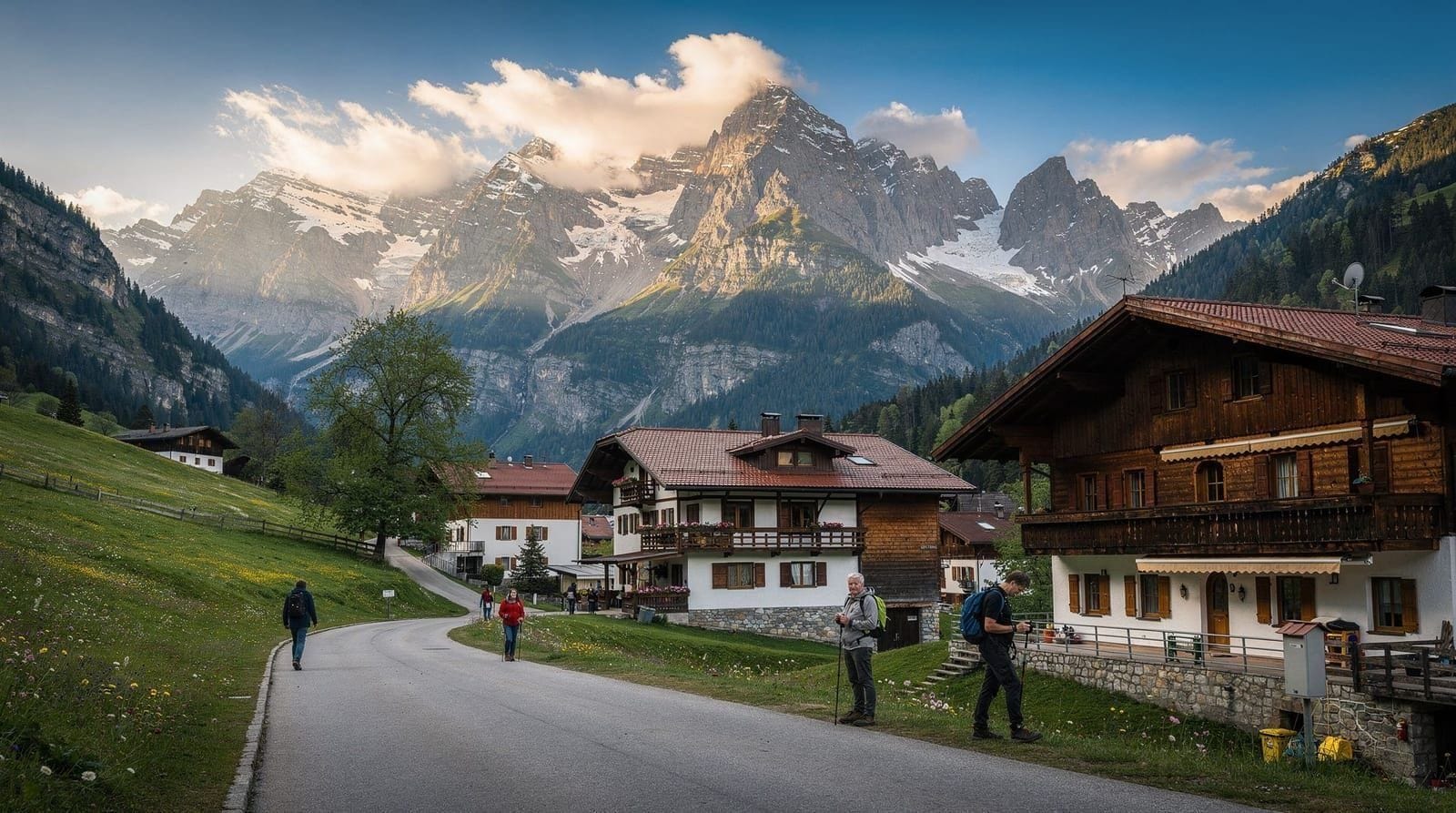
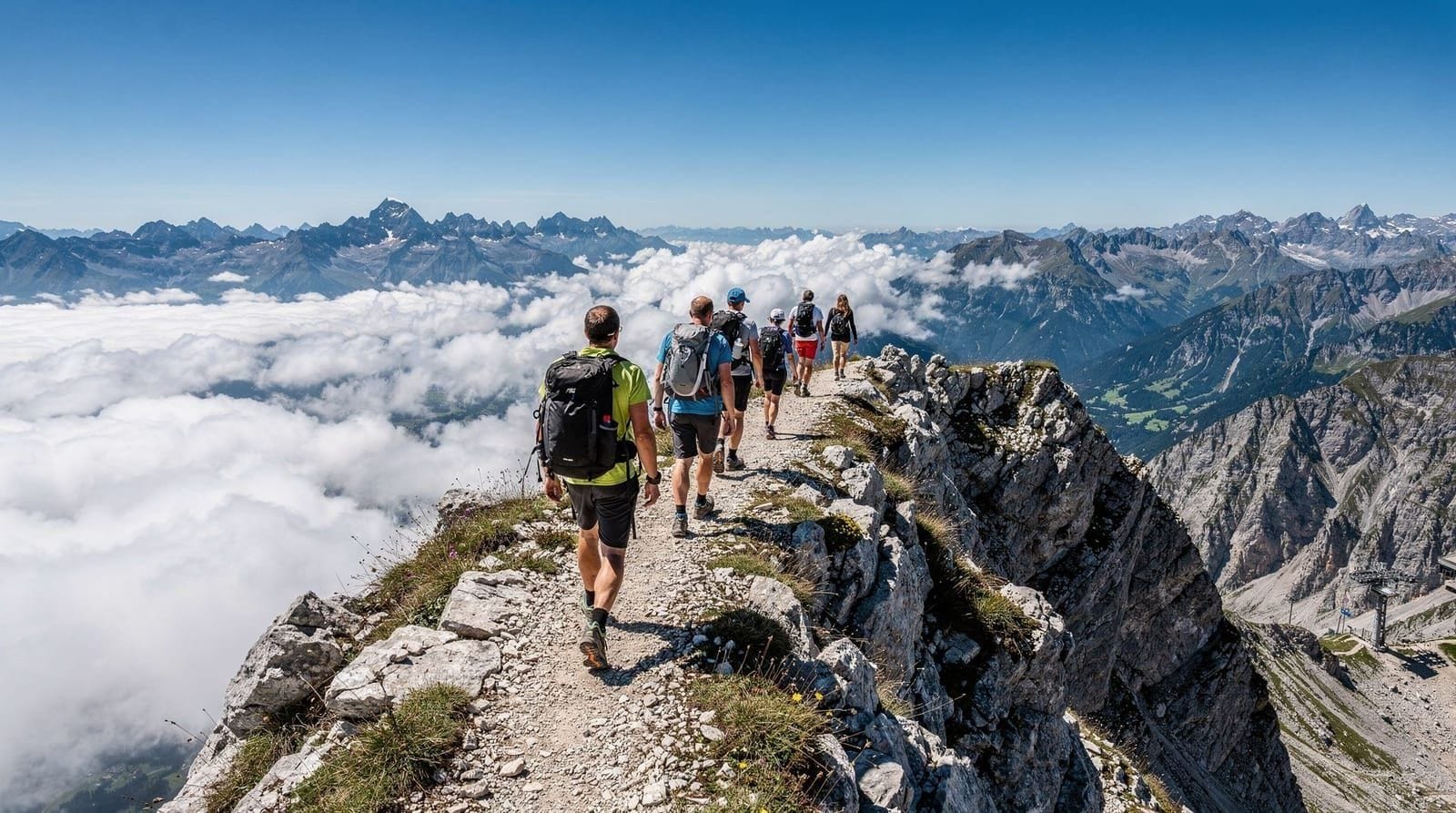
Three days is the itinerary length most first-time visitors settle on, but it isn’t automatically right for everyone. Against the 2-day itinerary, the extra day buys you Neuschwanstein or a proper museum afternoon without cutting Dachau — genuinely worth it if castles or the Deutsches Museum matter to you. Against the 4-day itinerary, you lose Salzburg entirely; if Austria is on your list, four days is the better fit. If your interest leans more toward mountains and hiking than palaces and museums, the Bavarian Alps 3-day itinerary covers Zugspitze, Berchtesgaden, and the Alps region in the same three-day window instead of staying Munich-centred — a genuinely different trip with the same duration. See the Munich itinerary ideas guide for the full comparison across all durations.
Handling the Neuschwanstein day if the weather turns
Unlike the Zugspitze, Neuschwanstein’s castle interiors are weather-proof, but the Marienbrücke viewpoint and the uphill walk are considerably less pleasant in rain. If Day 3’s forecast looks poor, consider swapping it with Day 2 (Dachau and the museum district are both largely indoors) so the outdoor castle day lands on your best-weather day of the three. The Neuschwanstein crowds honest guide covers what the visit is actually like at different times and in different weather, which is worth reading before you fix your day order.
Solo travellers and couples: does this itinerary need adjusting?
This itinerary is written for the general case, but the pacing works slightly differently depending on who’s travelling. Solo travellers tend to move faster through museums and can comfortably add the Cuvilliés Theatre or Asam Church’s lesser-visited side chapel to Day 1 without falling behind schedule — see the Munich solo travel guide for solo-specific notes on beer hall seating and evening safety. Couples on a first visit often want to slow the pace on Day 1’s afternoon rather than rush both the English Garden and Nymphenburg — cutting Nymphenburg’s garden walk to 30 minutes instead of 60 is the easiest place to claw back time without losing the palace interior. Neither adjustment changes the overall three-day shape — they’re pacing tweaks, not structural changes to the plan outlined above.
Top experiences
Bookable activities with verified prices and instant confirmation on GetYourGuide.