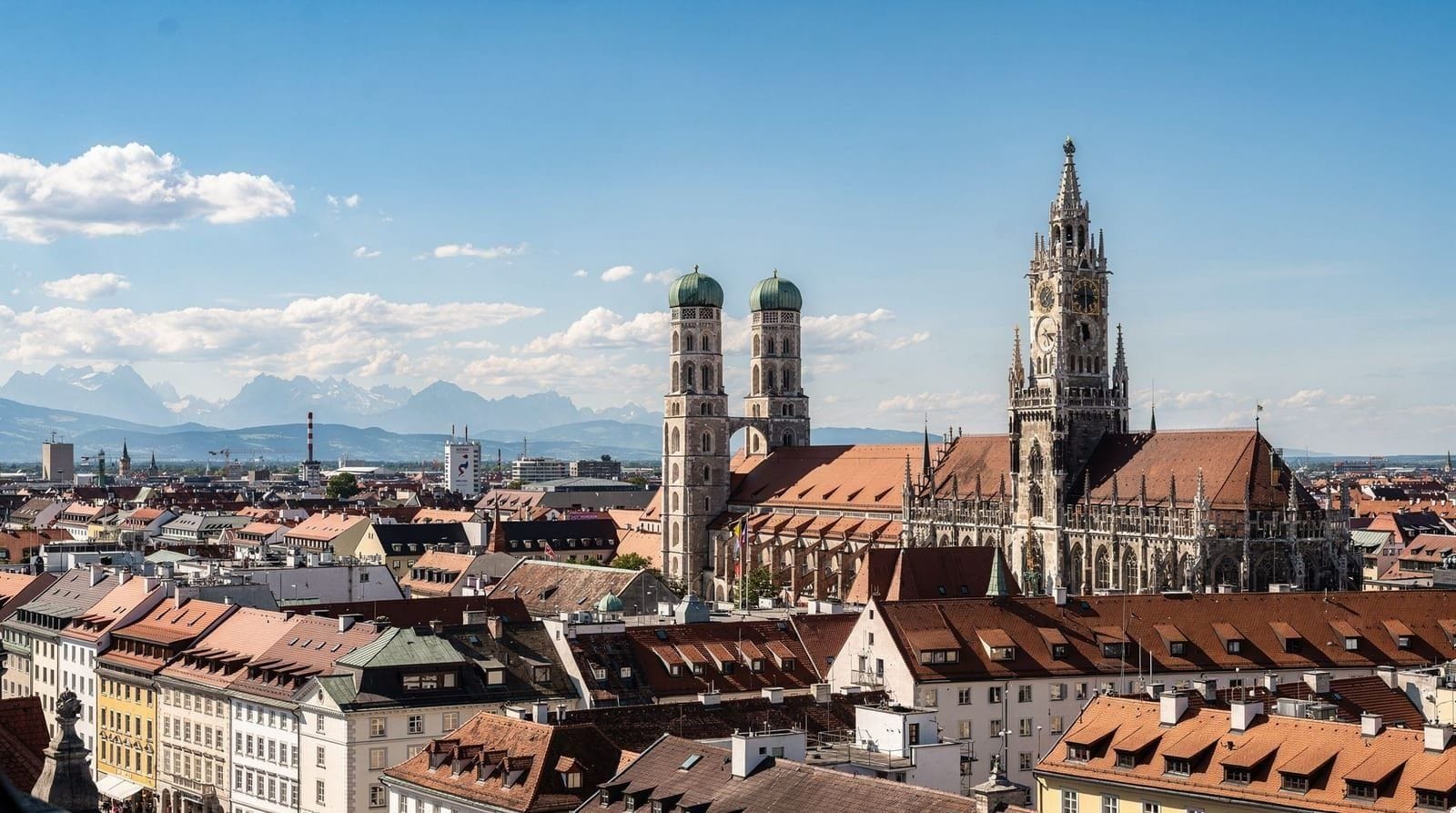
Munich and Bavaria in 5 days: the classic itinerary
From Munich: Neuschwanstein Castle full-day trip by van
The 5-day Bavaria circuit
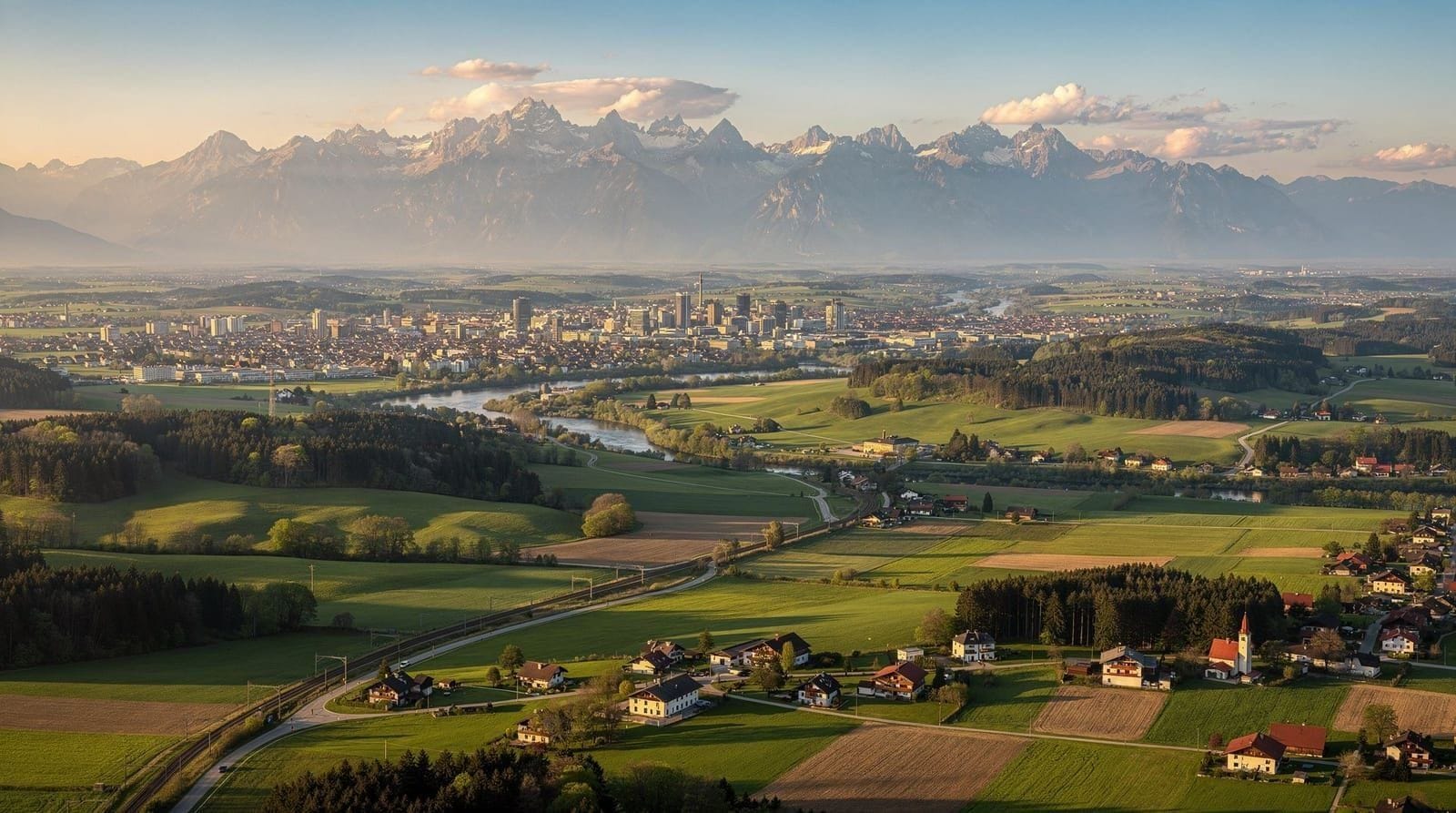
Five days is the sweet spot for a Bavaria trip: enough time to explore Munich without rushing, plus three major day trips that cover the region’s most iconic sights — Neuschwanstein Castle, the Zugspitze summit, and Salzburg in Austria. Add Dachau Memorial for historical context, and you have the most complete first-time Bavaria experience possible within a week.
This itinerary works entirely by public transport. No car required (though a car adds flexibility on Day 3 for combining Neuschwanstein, Linderhof, and Oberammergau in one loop).
| Where | Munich, Füssen/Neuschwanstein, Garmisch/Zugspitze, Dachau, Salzburg |
| Cost | around 1,200-1,700 EUR/person total (incl. accommodation) |
| Time needed | 5 full days, 07:30-08:00 starts on day-trip days |
| Getting there | walkable core + Bayern-Ticket, OBB Railjet to Salzburg |
| Best time | late May-September for weather and castle crowds |
Day 1: Munich — Altstadt and beer hall initiation
Morning: Historic Munich
08:00 — Marienplatz to Residenz
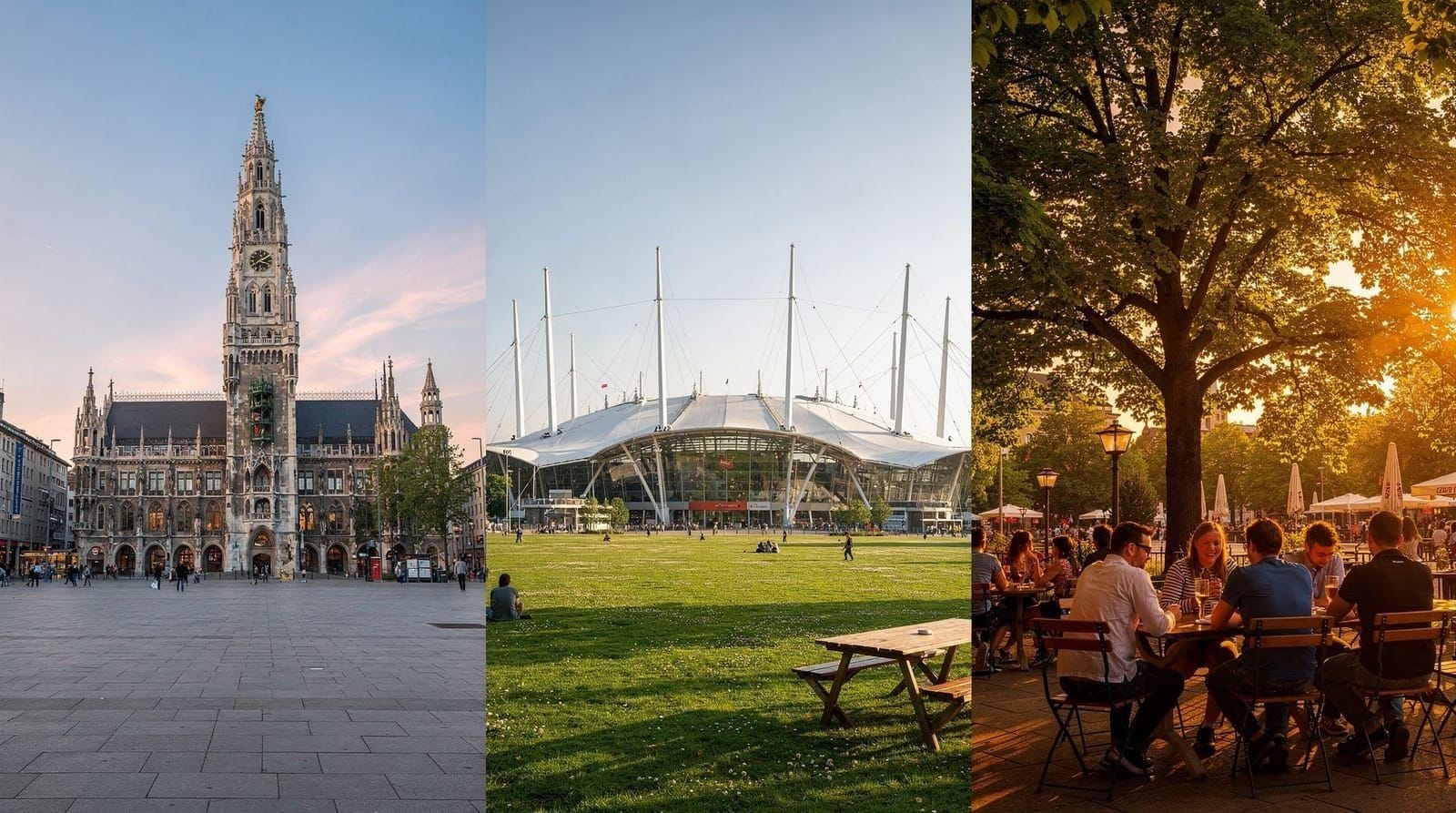
Arrive at Marienplatz before the crowds. The morning light on the Neues Rathaus is at its best before 10:00. Walk south to Viktualienmarkt for a Weisswurst breakfast (8-10 EUR), then west to Asam Church and north to the Residenz Palace.
The Residenz — 130 rooms, the Antiquarium, the Treasury with its 16th-century Wittelsbach crown jewels — deserves 90 minutes minimum. Entry 20 EUR, or book a guided tour to understand what you’re looking at: Residenz Palace and Hofgarten guided visit
11:00 — Odeonsplatz and Hofgarten
Walk through the Hofgarten (free) north of the Residenz — the Italian-style arcaded garden is Munich’s most elegant public space. The Feldherrnhalle at the south end of Odeonsplatz was the site of the 1923 Beer Hall Putsch. See the Beer Hall Putsch history guide for what actually happened here.
Afternoon: English Garden and Schwabing
12:30 — Lunch at Chinesischer Turm
The English Garden’s Chinese Tower beer garden: 7,000 seats, Augustiner lager, and roasted chicken. Munich at its most comfortable. See English Garden guide.
14:00 — English Garden walk to Schwabing
The Schwabing neighbourhood north of the English Garden was Munich’s artistic bohemian quarter in the early 20th century — home to Kandinsky, Paul Klee, and the Blue Rider movement. Now residential and pleasant. The Wedekindplatz area has good independent cafes. Walk through and back to your hotel by 16:30.
Evening: Augustiner Keller
19:30 — Augustiner Keller (Arnulfstrasse)
Munich’s original brewery tap: the best Helles lager in the city, served from wooden barrels. Order Schweinsbraten (roast pork, 18 EUR) or Leberkäse (Bavarian meat loaf with fried egg, 11 EUR). A far better beer hall introduction than starting at the Hofbräuhaus.
Day 2: Dachau Memorial and Nymphenburg Palace
Morning: Dachau
09:00 — S2 to Dachau
Take S2 from Hauptbahnhof (25 minutes). Bus 724 to the memorial. Free entry. The Dachau Memorial opened in 1933 as the first Nazi concentration camp and served as a model for the entire camp system. Permanent exhibition takes 2 hours. Leave time for the grounds (original barracks, crematorium, memorial sculptures). Return to Munich by 13:00. Dachau Memorial small-group guided tour from Munich
Afternoon: Nymphenburg Palace
14:30 — Tram 17 to Nymphenburg
A contrasting afternoon: the Wittelsbachs at their most extravagant. Nymphenburg Palace is set in 8 km of formal gardens with four hunting lodges open to the public. Entry 9 EUR. The Amalienburg lodge (entry included) is the finest example of Bavarian rococo in the country — its Hall of Mirrors outdoes Versailles for intimacy. Allow 2 hours.
Return to centre by 17:30.
Evening: Hofbräuhaus
19:30 — Hofbräuhaus
Night two at the Hofbräuhaus: the world’s most famous beer hall is legitimately worth experiencing once. The contrast with last night’s Augustiner Keller is instructive — this is more tourist, but still a genuine 16th-century building with live brass band and serious Bavarian food (Schweinshaxe 24 EUR). Book ahead in summer.
Day 3: Neuschwanstein and royal castles
Full day: Schwangau
07:30 — Train to Füssen
Bayern-Ticket (25 EUR, 2026) covers the 2-hour regional journey. Book Neuschwanstein timed tickets online at least 2 weeks ahead — this is the most important logistics step in this entire itinerary. Without a timed ticket, entry is not possible.
09:30 — Hohenschwangau Castle
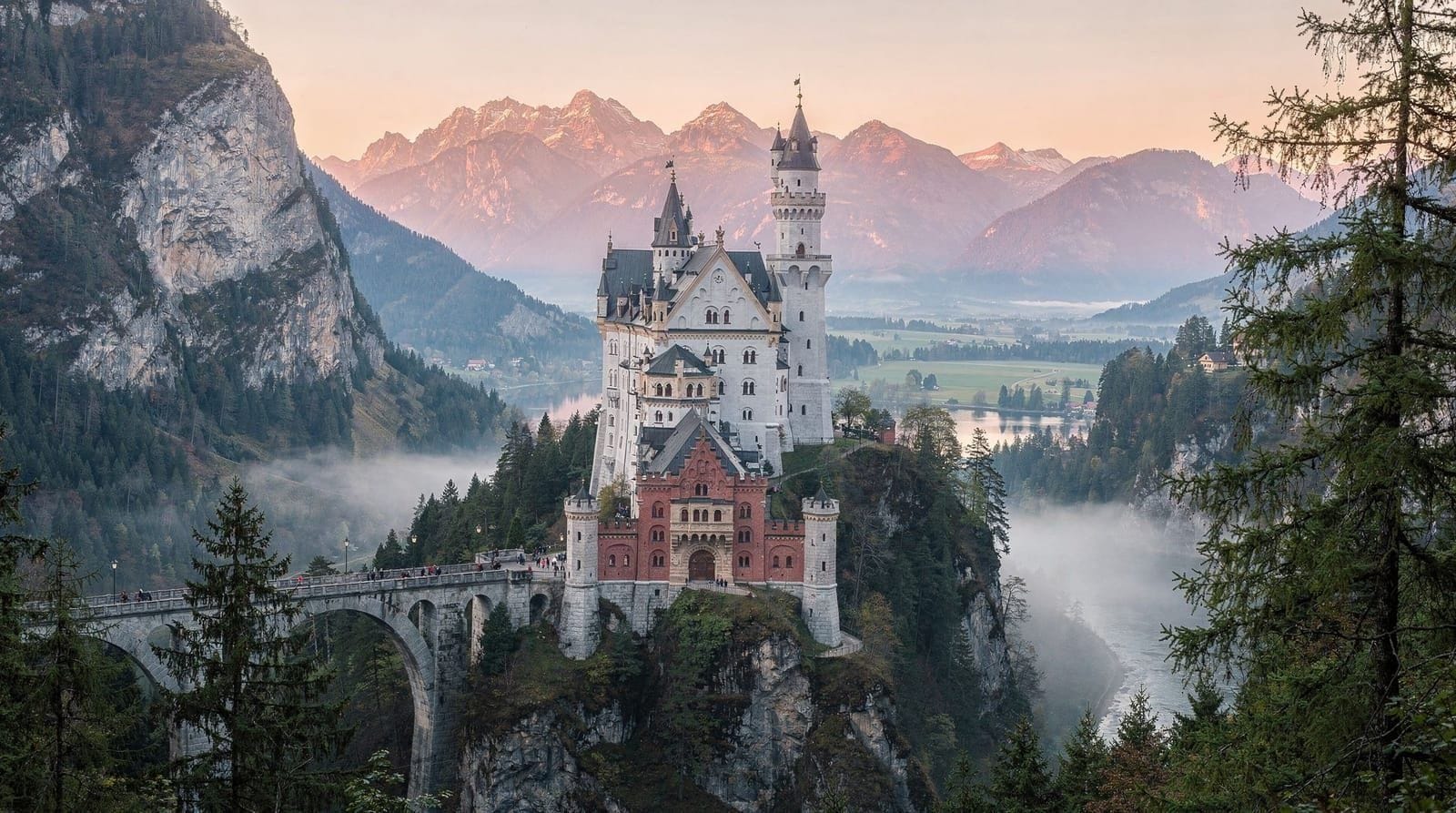
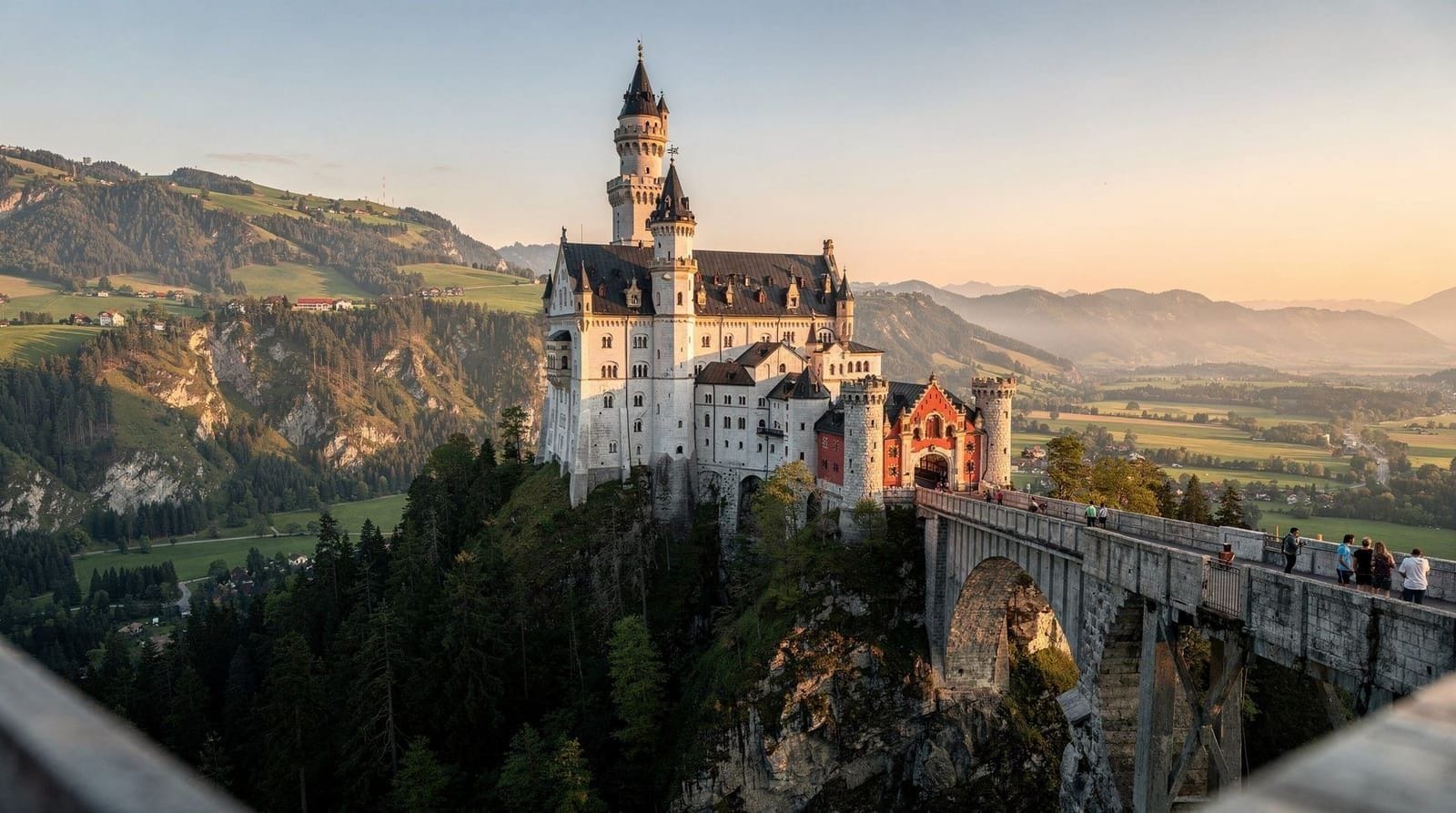
Start below at Hohenschwangau — Ludwig II’s childhood home (entry 21 EUR). More intimate than Neuschwanstein, with original furniture and personal effects. The Neuschwanstein vs Hohenschwangau guide explains which to prioritise if you can only do one.
11:00 — Neuschwanstein Castle
Walk 30 minutes up (or horse carriage, 9 EUR up/7 EUR down) to Neuschwanstein for your timed entry. The tour is 35 minutes inside, guided only. Entry 17 EUR. Immediately after, walk 25 minutes up to the Marienbrücke footbridge for the definitive castle view — see Marienbrücke guide for timing and photo angles. Full-day Neuschwanstein tour from Munich
13:30 — Lunch in Füssen
Bus 73 back to Füssen (10 minutes). Lunch on Reichenstrasse (various options 12-18 EUR). Walk the Füssen Altstadt — the Hohes Schloss and the lakeside path to the Forggensee reservoir are undervisited and good for 45 minutes.
16:00 — Optional: Wieskirche (Pilgrimage Church)
If you have a car: the Wieskirche (18 km north of Füssen, UNESCO listed) is one of the most extraordinary Baroque church interiors in Germany and has no entry fee. By public transport, Bus 9606 from Füssen runs a few times daily — check times at mvv-muenchen.de.
17:00 — Return train to Munich
Day 4: Zugspitze — Germany’s highest peak
Full day: Alpine summit
07:30 — Train to Garmisch-Partenkirchen
Regional train from Munich Hauptbahnhof to Garmisch-Partenkirchen: 90 minutes. Bayern-Ticket covers this journey (25 EUR, 2026). Trains run every 1-2 hours from early morning.
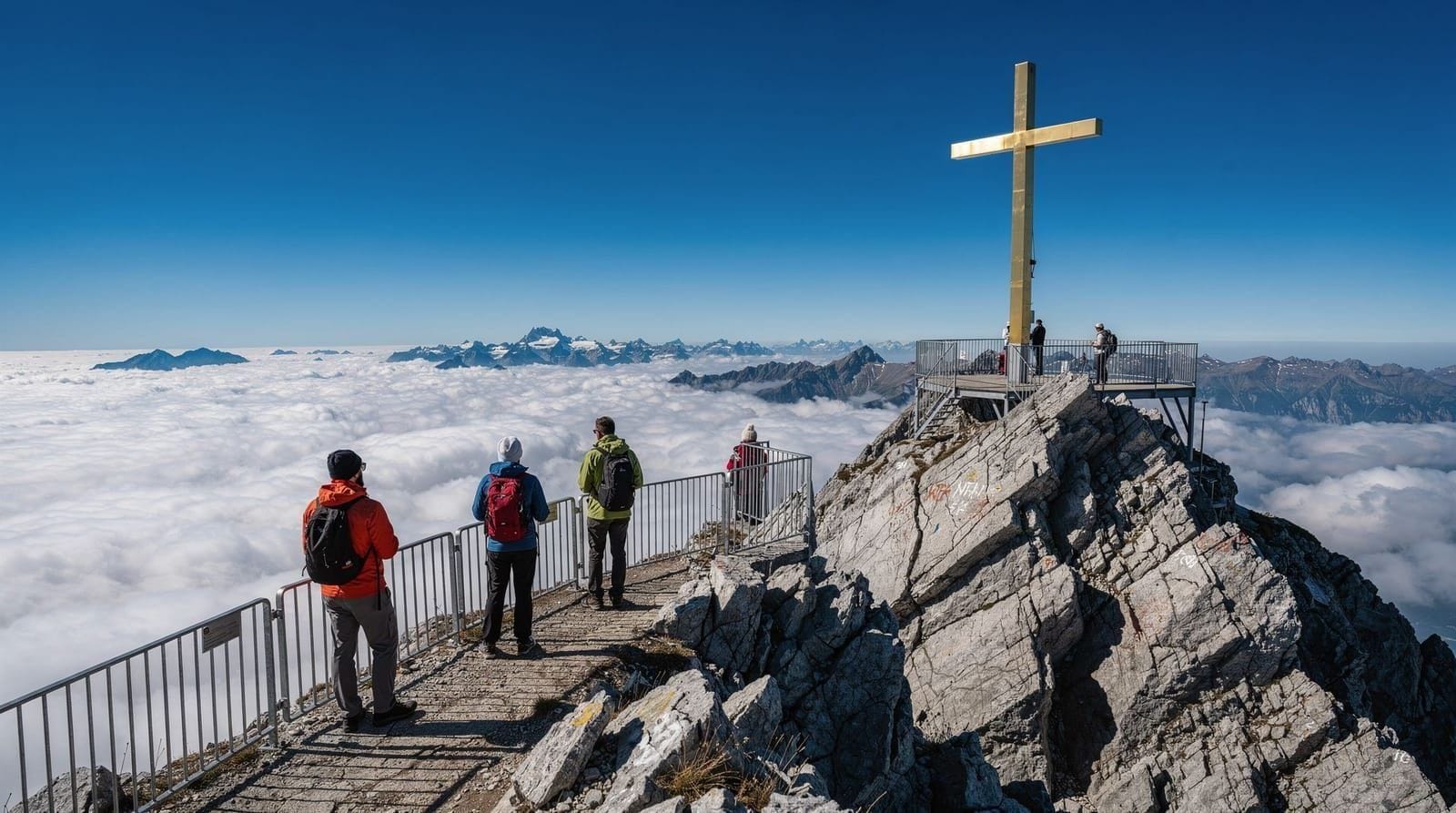
Garmisch-Partenkirchen is the base for Zugspitze, Germany’s highest peak at 2,962 metres. Two routes to the summit:
- Zugspitze Cogwheel Train (Zahnradbahn): Departs from Garmisch station, stops at Eibsee lake, continues through Europe’s longest cogwheel tunnel to the summit station. Journey: 75 minutes.
- Eibsee cable car (Eibseeseilbahn): From Eibsee lake station (15 minutes by cogwheel from Garmisch), cable car to summit in 10 minutes. Better views but weather dependent.
Summit ticket (2026): 64.50 EUR return by cogwheel train + cable car combined (Zugspitze Ticket). Includes glacier viewing platform, summit restaurant, and the Zugspitze glacier walk. The Zugspitze day trip guide explains the different ticket options in detail.
10:00 — Summit arrival
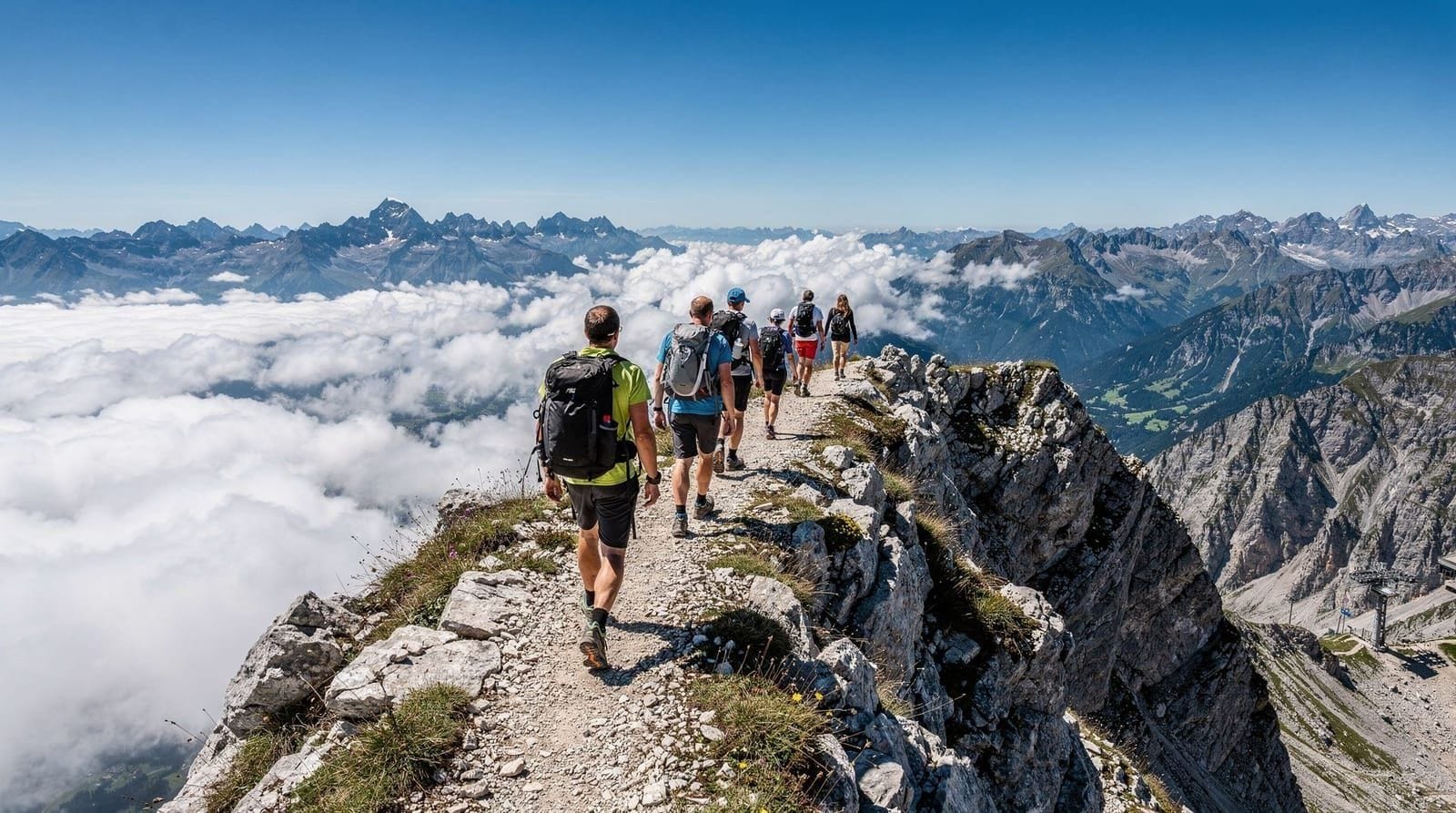
At 2,962 metres, the views on clear days extend to the Austrian Alps, the Dolomites, and 400 peaks across four countries. The glacier is shrinking rapidly — it has lost 80% of its area since 1820 and parts may be inaccessible depending on the season. The summit restaurant (Münchner Haus) serves hot food from 14 EUR. Dress warmly: temperatures at the summit are 15-20 degrees cooler than Munich. Guided Zugspitze day trip from Munich
13:00 — Eibsee lake
Descend by cable car to Eibsee station. The Eibsee lake (1,000m altitude, transparent turquoise water) is one of Bavaria’s most beautiful lakes and almost unknown to international visitors. The 7.3 km circuit path takes 2.5 hours; even a 30-minute lakeside walk is worthwhile. See the Bavarian Alps cable cars guide for the full Garmisch area overview.
14:30 — Garmisch Altstadt
Return to Garmisch by cogwheel. The old town (Partenkirchen section) has 17th-century painted facades and a pleasant pedestrian area. Konditorei Dallmair on Bahnhofstrasse does good Apfelstrudel (5 EUR). Walk the Partnachklamm gorge if you have energy (3.5 km round trip, 8 EUR entry).
17:00 — Return train to Munich
Arrive back by 18:30.
Evening: Low-key Munich dinner
After a high-altitude day, a quiet dinner is sensible. The Glockenbachviertel is Munich’s most relaxed neighbourhood for independent restaurants. Café Ruffini (Orffstrasse) is a Munich institution for organic Bavarian food, relaxed pace, 20-26 EUR mains.
Day 5: Salzburg day trip
Full day: Mozart’s city
08:00 — Railjet to Salzburg
OBB Railjet from Munich Hauptbahnhof: 1 hour 30 minutes. Trains every hour. Cost: 25-50 EUR return on OBB (book at oebb.at). Bayern-Ticket is NOT valid for Austrian trains. OBB Sparschiene tickets booked 2 weeks ahead can cost 9-17 EUR each way.
Arrive Salzburg by 09:30. Walk from Hauptbahnhof (20 minutes) or Bus 3/8 to the Altstadt.
10:00 — Mozart’s Salzburg
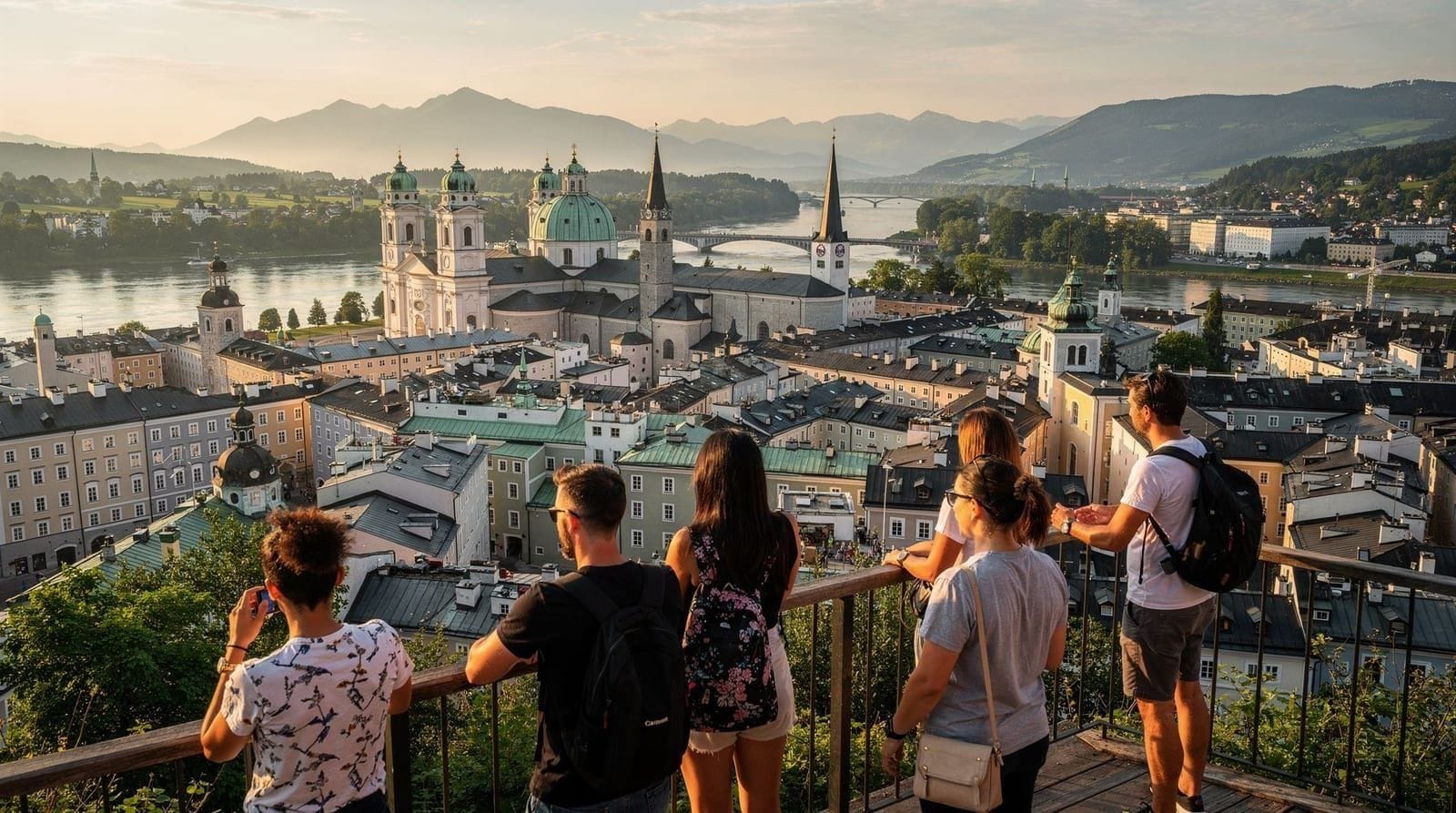
Salzburg’s old town is UNESCO-listed and one of the best-preserved Baroque cities in Central Europe. Start at Mozarts Geburtshaus (Mozart’s birthplace, Getreidegasse 9, 13 EUR). Continue through Getreidegasse — the main shopping street with its wrought-iron guild signs — to Mozartplatz and the Residenzplatz, where the 15-metre Baroque fountain is a natural meeting point.
12:00 — Lunch near Universitatsplatz
Green Market (Grüner Markt) on Universitatsplatz runs daily (Monday-Saturday) with Salzburg street food and produce. Cafe Tomaselli on Alter Markt (est. 1705) is the city’s most storied coffee house for Melange (Viennese-style coffee) and pastries. Main sit-down options along Steingasse on the east bank of the Salzach.
13:30 — Hohensalzburg Fortress
The Salzburg Fortress (Festung Hohensalzburg) is one of Europe’s best-preserved medieval fortresses. Funicular from Festungsgasse (13.80 EUR including entry, 2026). The views over the Salzach river and Old Town are the finest in the city. Interior museum rooms take 60 minutes to cover properly.
15:00 — Mirabell Palace gardens and Salzach walk
Mirabell Gardens (free) across the river have the hedge-bordered stairway and fountain terrace used in The Sound of Music — genuinely pleasant even without the film context. Walk south along the Salzach riverside path back to the Old Town. See the Sound of Music Salzburg tour guide.
17:30 — Train back to Munich
Direct Railjet departs hourly. Arrive Munich by 19:00-19:30. Munich to Salzburg guided day trip
Final evening: Local Munich farewell
20:00 — Au-Haidhausen dinner
The Au-Haidhausen neighbourhood east of the Isar river is where Munich residents go for a quiet evening. Wirtshaus in der Au (Lilienstrasse) specialises in Bavarian Schmankerl (traditional snacks) and Augustiner on tap. Schneider Weisse Tap House (Tal 7, central Altstadt) is the best address for Weissbier if you want one final traditional German beer.
Practical summary for 5 days
Transport costs per person (2026):
- MVV Zone M day tickets x2 (Days 1-2): 18 EUR
- Bayern-Ticket x2 (Days 3-4 Neuschwanstein + Zugspitze): 50 EUR
- Zugspitze summit ticket: 64.50 EUR
- Salzburg return train: 30-50 EUR
- Total transport: approximately 162-180 EUR per person
Key bookings (do these before anything else):
- Neuschwanstein timed castle entry (tickets.hohenschwangau.de, book 2-4 weeks ahead)
- Hofbräuhaus dinner (online reservation, 2-3 days ahead in summer)
- Salzburg train (OBB Sparschiene if budget-conscious, book 1-2 weeks ahead)
- Accommodation for 5 nights in Munich’s Maxvorstadt or Schwabing area
Frequently asked questions about this itinerary
What’s the best order for these 5 days?
The order in this itinerary is optimised for energy management: City exploration first (Days 1-2), then the castle day (Day 3, often the most logistically intense), the Zugspitze summit (Day 4, weather permitting), and Salzburg last (Day 5, relaxed ending). Swap Days 4 and 5 if weather forecasts suggest better conditions for the summit on an earlier date.
Do I need a car for the Neuschwanstein day?
No — Bayern-Ticket covers the train, and Bus 73/78 from Füssen reaches Hohenschwangau. A car adds flexibility for combining Neuschwanstein with Linderhof Palace and Oberammergau (a 60-90 minute driving circuit), but the standard train route is entirely practical.
What if the Zugspitze is cloudy?
Check the summit webcam at zugspitze.de before departure. If clouds are forecast, swap Day 4 with an alternative: Berchtesgaden and Eagle’s Nest (see Berchtesgaden day trip guide), Tegernsee lake, or a Munich museum day. The Zugspitze trip is most satisfying on clear days — don’t force it in poor conditions.
Can I extend this to 7 days?
Yes — the 7-day Munich and Bavaria itinerary adds Berchtesgaden and Eagle’s Nest, Regensburg, and deeper exploration of the Bavarian Alps or lakes. Two additional days dramatically increases what you can see.
Is Salzburg worth a full day or just half a day?
A full day (as structured here) is better for a first visit — you have time for the fortress, both the Geburtshaus and the gardens, and a relaxed lunch without rushing. Half a day by the afternoon train is workable if you’ve been to Salzburg before.
How much should I budget for 5 days in Munich and Bavaria?
A practical mid-range budget: Accommodation 110-160 EUR/night (5 nights = 550-800 EUR), transport 162-180 EUR, attraction entries 80-100 EUR, food 80-120 EUR/day (400-600 EUR total). Grand total: approximately 1,200-1,700 EUR per person, not including international flights.
Detailed planning notes for 5 days
Weather contingency planning: Bavaria is mountain-adjacent and weather can shift quickly. The Zugspitze summit is the most weather-sensitive element of this itinerary — check the summit webcam (zugspitze.de) the morning of Day 4. If cloudy, swap with Salzburg (weather-tolerant) and push the Zugspitze to Day 5. The castle days (Days 2-3) are weather-tolerant since most time is spent indoors.
Best time of year for this itinerary: Late May through September is ideal. July and August have the most reliable weather but the highest crowds at Neuschwanstein (book tickets 3-4 weeks ahead). June is excellent for a balance of good weather and fewer crowds. October has beautiful autumn colours in the English Garden and foothills; the Eagle’s Nest closes mid-October, and Zugspitze weather becomes less reliable.
Accommodation strategy for 5 nights: For a 5-night stay, look for accommodation with free cancellation and book the Maxvorstadt or Schwabing areas for proximity to both the museum quarter and Marienplatz. A serviced apartment for 5 nights can be cheaper than a hotel and gives the option to self-cater breakfast — saving 15-25 EUR per person per day. Sites like Booking.com and Airbnb both have strong Munich inventory.
Getting around between day trips: The Bayern-Ticket (25 EUR, valid until 03:00 the following morning) is the most cost-effective option for any day involving a regional train. It covers up to 5 people travelling together on the same ticket — group of 4 costs the same as a single person’s ticket (25 EUR + 7 EUR per additional person up to 5). A family of 4 pays just 46 EUR for unlimited regional train travel all day across Bavaria.
Combining Neuschwanstein and Zugspitze in one day: Not recommended. Both require 2+ hours of travel from Munich and 3-4 hours on site. Attempting both in one day means missing the Marienbrücke viewpoint (no time) and rushing the Zugspitze summit (you’d need to start the descent by 13:00). Keep them on separate days.
The Dachau-then-Nymphenburg pattern (Day 2): This day has the sharpest emotional contrast in the entire itinerary — a morning at a concentration camp memorial followed by an afternoon at a baroque palace. The contrast is jarring but historically instructive. Both sites relate to the same dynasty and the same city’s history in different centuries. Give yourself 30 minutes after returning from Dachau (a quiet coffee, a walk) before heading to Nymphenburg.
Evening meal recommendations by day:
- Day 1: Augustiner Keller (best first beer hall experience, most local)
- Day 2: Hofbräuhaus (contrasts with Day 1, iconic, book ahead)
- Day 3 (post-Neuschwanstein): Simple dinner near your hotel — you’ll be tired from the travel day
- Day 4 (post-Zugspitze): Glockenbachviertel for quieter evening after a physical day
- Day 5 (final evening): Au-Haidhausen or Schwabing for a neighbourhood farewell dinner
What to buy in Munich: If you’re looking for genuine Bavarian souvenirs rather than tourist-shop generic items, the best souvenirs Munich guide covers specific shops. The Viktualienmarkt has the best Lebkuchen, Bavarian cheeses, and local spirits. Manufactum on Dienerstrasse sells quality German-made goods with no tourist markup. Beer steins from the Hofbräuhaus itself are legitimately collectible; the identical-looking ones in Marienplatz souvenir shops are usually imported and lower quality.
Five-day summary at a glance
| Day | Zone | Highlight | Pace |
|---|---|---|---|
| Day 1 | Munich Altstadt | Residenz, English Garden, Schwabing | Moderate |
| Day 2 | Munich | Dachau Memorial, Nymphenburg Palace | Emotionally demanding morning |
| Day 3 | Füssen/Schwangau | Neuschwanstein, Hohenschwangau, Marienbrücke | Full day, some walking |
| Day 4 | Garmisch/Zugspitze | Summit at 2,962m, Eibsee lake | Full day, altitude |
| Day 5 | Salzburg (Austria) | Hohensalzburg Fortress, Mirabell Gardens | Relaxed closing day |
Five days versus a Munich-only week
Compared with spending all five days in Munich itself, this circuit trades city depth for regional breadth — you’ll know the Altstadt, Nymphenburg, and the beer hall scene reasonably well by Day 2, but you won’t have explored Munich’s outer neighbourhoods (Glockenbachviertel, Haidhausen’s quieter corners) in any depth. For visitors who prefer a slower, single-base week without three separate day trips, the Munich in 4 days itinerary plus an extra unplanned day, or simply a longer stay using the Munich neighbourhoods overview as a guide, would suit better. This 5-day circuit is built for travellers who specifically want Neuschwanstein, the Zugspitze, and Salzburg — Bavaria’s three most-asked-about excursions — rather than deep city immersion.
Extending to a full week
If five days feels tight once you’re actually planning it — a common realisation once the train timetables and ticket booking windows start stacking up — the 7-day Munich and Bavaria itinerary is the natural next step. It adds Berchtesgaden and the Eagle’s Nest, Regensburg, and generally more breathing room between day trips, without changing the core structure established here. Reviewing that itinerary before committing to five days is worthwhile if your travel dates have any flexibility at all.
What if the weather forces a swap?
Bavaria’s mountain weather is genuinely unpredictable, and this itinerary has one clearly weather-sensitive day (Day 4, the Zugspitze) sitting between two that aren’t (Days 3 and 5). If the forecast for Day 4 looks poor, the cleanest swap is with Day 5 — Salzburg’s Altstadt and fortress work in any weather, while the Zugspitze summit in cloud offers essentially no view and isn’t worth the ticket price. Check the summit webcam at zugspitze.de the evening before Day 4 rather than the morning of, so you have time to actually rebook Salzburg train tickets if a swap is needed; OBB fares booked the night before are noticeably pricier than tickets bought a week ahead, so build a small buffer into your Day 4/5 transport budget for this contingency. The best time to visit Munich guide has a fuller seasonal breakdown if you’re still choosing travel dates and want to minimise this risk from the outset, since June-July generally has more stable summit weather than late-season September trips.
Top experiences
Bookable activities with verified prices and instant confirmation on GetYourGuide.