Marienbrücke at Neuschwanstein: the viewpoint, closures and how to visit
Munich: Neuschwanstein Castle tour
Is Marienbrücke open all year at Neuschwanstein?
No. Marienbrücke (Mary's Bridge) is regularly closed in winter and during icy or stormy conditions, typically from November through March or April. Closures are unpredictable and made on safety grounds — the bridge is an iron structure over a deep gorge and becomes dangerously slippery when frozen. Always check conditions on the day of your visit.
| Where | Pöllat Gorge, 10-15 min uphill from the castle entrance |
| Cost | free to visit (no separate ticket) |
| Time needed | 15-20 minutes at the bridge, plus the walk |
| Getting there | shuttle bus (around €4) or 40-50 min walk from the ticket center |
| Best time | before 9am or after 4:30pm in summer; check closures Nov-Apr |
The most famous view in Bavaria — and what it takes to actually get there
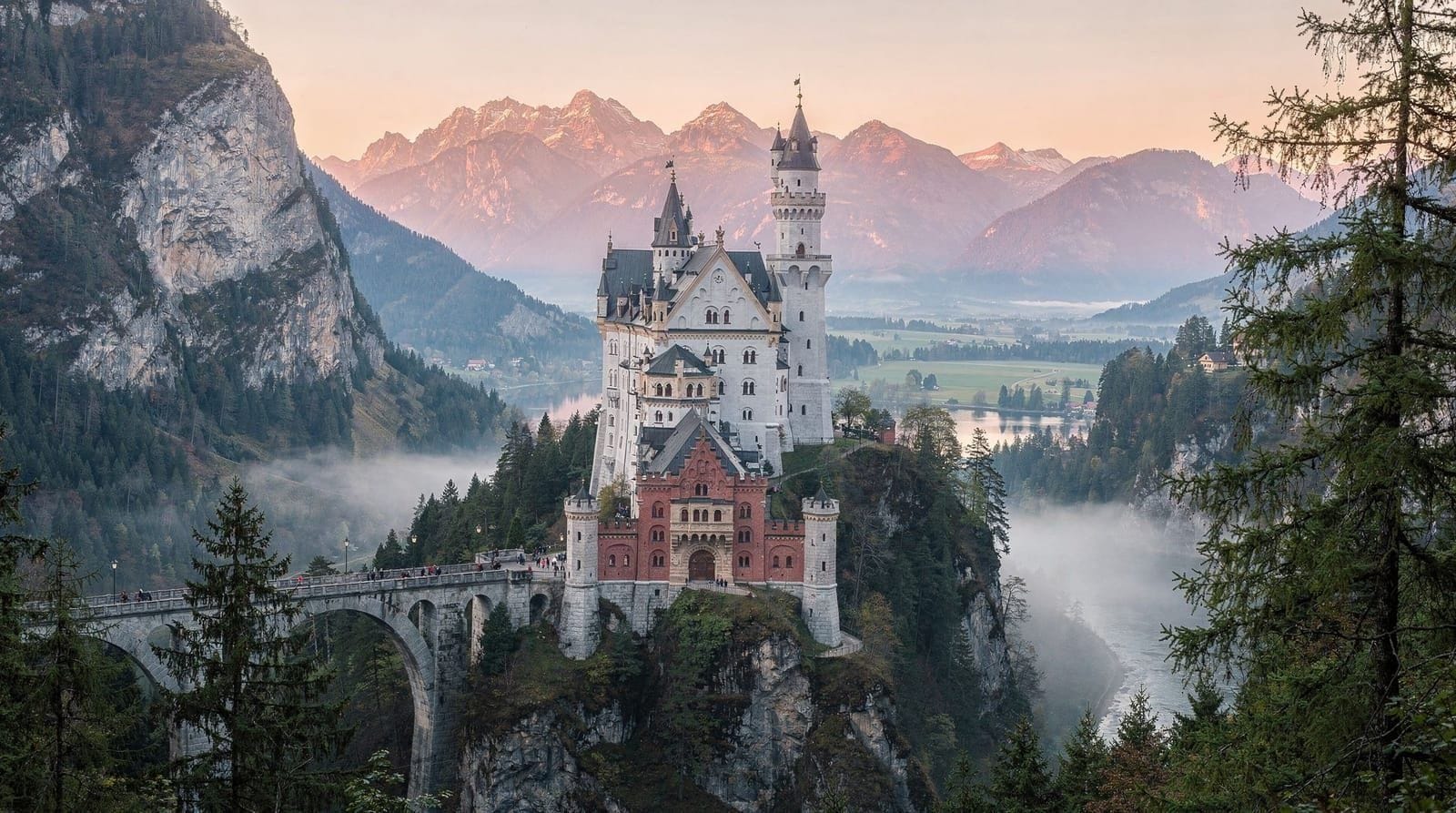
Every photograph of Neuschwanstein Castle that appears in a travel magazine, a screensaver, or a German tourism brochure is almost certainly taken from the same place: Marienbrücke, the narrow iron bridge that spans the Pöllat Gorge 90 metres above the valley floor. From the bridge, the castle appears framed below you against a backdrop of forested slopes and, on clear days, the snow-capped ridgeline of the Allgäu Alps to the south. It is, undeniably, one of the great European views.
Getting to that view, however, requires some planning that many visitors discover only after they arrive. Marienbrücke is not at the castle entrance. It is not a short step from the car park. And it is not always open. Understanding the logistics in advance converts a potentially frustrating experience into a straightforward one.
This guide covers exactly how to reach the bridge, what conditions affect access, what to expect when you get there, and — importantly — what to do if the bridge is closed when you visit.
What Marienbrücke actually is
Marienbrücke (Mary’s Bridge, named after Queen Marie of Bavaria) is an iron suspension bridge that spans the Pöllat Gorge about 150 metres above the bridge’s own foundations but 90 metres above the gorge floor. It was constructed in 1866, replacing an earlier wooden bridge, to give King Ludwig II views of his castle under construction. Ludwig used it regularly to observe Neuschwanstein’s building progress from above.
The bridge is 48 metres long and approximately 1 metre wide for pedestrians. It is bolted to the rock face on both sides of the gorge. The view from the bridge looks northwest, directly at the castle’s main facade — the famous angle that gives the castle its postcard silhouette of towers rising above the treeline.
Below the bridge, the Pöllat stream drops in a waterfall through the gorge before flowing north toward the valley. The gorge itself is around 45 metres deep at the bridge point, and the sound of the falls is audible from the bridge deck in most conditions.
How to reach Marienbrücke
From the Neuschwanstein ticket center at the base (Alpseestrasse), there are two approaches to Marienbrücke.
Via the shuttle bus to the castle, then on foot: The shuttle bus (€4 uphill) deposits you near the castle entrance. From there, a clearly marked path leads uphill and southeast for 10-15 minutes to Marienbrücke. Total uphill time from the bus stop to the bridge is around 15 minutes, with around 60 metres of elevation gain.
Walking the full route from the ticket center: The walk from the ticket center uphill on the main path to the castle takes 30-40 minutes. Beyond the castle entrance, continue another 10-15 minutes to the bridge. Total time from ticket center to bridge on foot is approximately 45-55 minutes.
The path to the bridge is surfaced and clearly marked. It involves a moderate incline and some steps. For visitors with limited mobility, the shuttle bus significantly reduces the walking required, though the final section from the castle to the bridge remains on foot.
One important logistical point: if you have a timed entry ticket to the castle interior, plan your bridge visit carefully. The standard approach is to walk or bus up, visit the bridge first (especially early in the morning before the castle opens), then descend slightly to the castle for your entry time. Going to the bridge after the interior tour means emerging into full midday crowd conditions; going before your entry means a quieter bridge and a cleaner morning light.
Winter and ice closures: the honest situation
Marienbrücke closes whenever ice or storm conditions make it unsafe. This happens regularly from late November through March or April, and occasionally during cold snaps at other times of year.
The authority responsible for the bridge (the Bavarian state) makes closure decisions day by day based on current and forecast conditions. There is no announcement more than 24-48 hours in advance. Attempting to find out definitively whether the bridge will be open for your visit in January is not possible — the only reliable check is on the day itself, either via the official Neuschwanstein website (neuschwanstein.de) or by calling the ticket center directly.
If you are visiting in November, December, January, February, or March, the realistic probability of a closure is high. In a typical year, the bridge is closed for cumulative weeks during these months. In mild winters, it may remain open much of the time; in cold winters, it may be closed continuously from December through March.
This matters because many visitors travel specifically for the bridge view. Arriving to find it closed — particularly after a journey from Munich or further — is a genuine disappointment. The alternative viewpoints described below provide some mitigation, but they are not the same as the bridge itself.
| Period | Closure risk | What to expect |
|---|---|---|
| Jun-Sep | Low | Open barring storms; the main risk is crowding, not closure |
| Apr-May, Oct | Low-moderate | Usually open; occasional closures during cold snaps or storms |
| Nov | Moderate | Closures become more frequent as temperatures drop |
| Dec-Mar | High | Cumulative weeks of closure typical in a normal winter |
What to do if the bridge is closed: The Pöllat Gorge viewpoint below the bridge (see below) remains accessible and provides a different perspective. The castle exterior and courtyard remain accessible regardless. The interior tour, if you have tickets, is unaffected by bridge closure. The view from the Tegelbergbahn cable car above Schwangau gives a broader elevated perspective. Book a guided Neuschwanstein tour from Munich including castle entry
The crowd situation at Marienbrücke
On peak summer days in July and August, Marienbrücke can have 50-100 people on it simultaneously. The bridge is narrow, and with crowds of this density, the experience involves waiting for the view to clear, jostling for railing position, and taking photographs over or around other visitors’ heads. This is not comfortable.
The crowd dynamics at the bridge track the castle visitor numbers closely, with a lag of about 20-30 minutes. When the first interior tour groups emerge from the castle (around 9:30-10am), they walk to the bridge. When the 11am and noon groups emerge, they follow. The result is continuous high density from mid-morning until around 4-5pm on summer weekdays, and from around 10am on summer weekends.
Strategies that work:
Arriving at the bridge before 9am is the most effective option. The castle opens at 9am; shuttle buses start running somewhat earlier. Being at the bridge at 8:30am on a summer morning gives the kind of near-solitary experience that the midday crowd makes impossible.
Arriving after 4:30pm in summer is the next best window. The last shuttle buses stop in the late afternoon, and the castle closes at 6pm. Bridge crowd levels drop noticeably from around 4:30-5pm as visitors begin descending.
For those willing to walk the full 45-55 minutes uphill from the ticket center rather than taking the shuttle, the morning arrival window extends slightly — you can start the walk at 7:45am and be at the bridge by 8:45am.
Alternative viewpoints near Marienbrücke
Pöllat Gorge lower viewpoint: A path from the castle entrance descends into the gorge below Marienbrücke, following the Pöllat stream. From below, looking up, you can see the bridge spanning the gorge above with the castle visible above and to the left. This view is less famous but more dramatic in a different way — the scale of the gorge is more viscerally apparent from within it. Morning light illuminates the cliff face opposite particularly well.
The Tegelbergbahn summit: The Tegelberg cable car, departing from near the Neuschwanstein ticket center in Schwangau, rises to 1,720 metres. From the summit, the Neuschwanstein castle appears below as a toy-sized structure in its full mountain setting — a view that no ground-level viewpoint can replicate. This is a half-day addition and requires a separate cable car ticket (approximately €28 adults). Our Bavarian Alps cable cars guide covers the Tegelbergbahn in more detail.
The trail northeast toward Alpsee: Walking east from the castle ticket center along the shore of Alpsee lake gives a different low-level view of the castle from below. The reflection of the castle in the lake on calm mornings can be striking, though the angle is less direct than from Marienbrücke.
The Hohenschwangau hillside: The viewing terrace near Hohenschwangau Castle looks across the valley at Neuschwanstein from a similar elevation — not the dramatic downward view of Marienbrücke, but a broader perspective showing both castles in their landscape.
What to expect when you arrive in good conditions
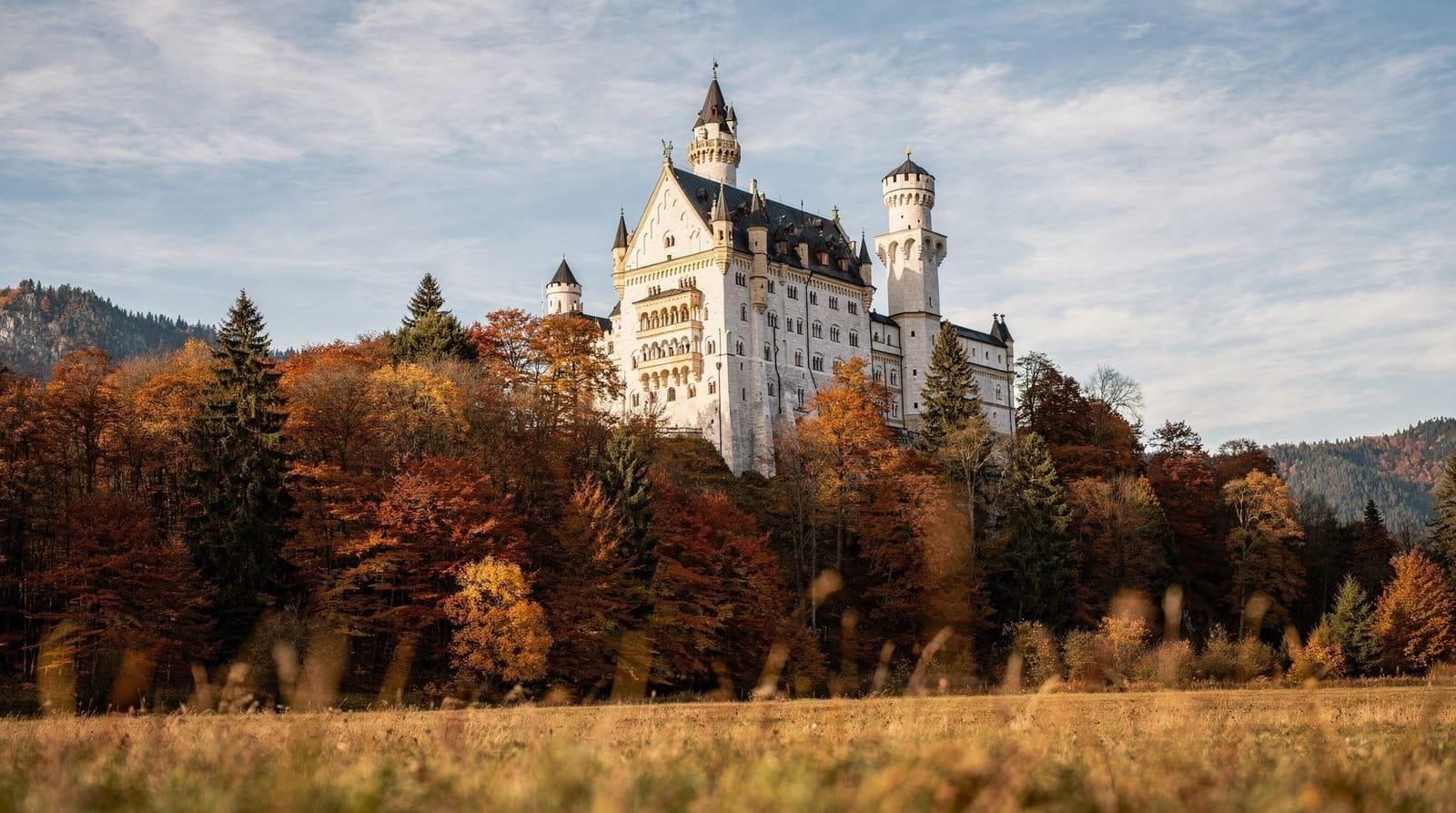
If conditions are good and the bridge is open, the experience of Marienbrücke on a clear morning is difficult to overstate. The castle sits below at a slight angle, its white limestone facades and slate-blue roofs vivid against dark forest. The Pöllat waterfall is audible below. The Allgäu peaks — Säuling, Zugspitze chain, Hochvogel — appear on the southern horizon on clear days.
The bridge deck itself is metal grating, with views through the grating to the gorge below. This can be disconcerting if you dislike heights; the exposure is real, not token. The railings are solid and the bridge is structurally sound, but visitors with a fear of heights or vertigo may find the experience uncomfortable. The width means that there is no wide buffer between you and the railing on busy days.
Photography conditions are best with the sun to your back in the morning (the castle faces north and slightly east). In afternoon light, the castle is partially backlit from the main bridge position. Photographers seeking specific angles should note that some of the best frames involve leaning the camera over the railing toward the east — this requires care and awareness of the gorge below.
Safety, vertigo and what to wear
The bridge is structurally sound and maintained by the Bavarian state, but the exposure is genuinely real — you are standing on metal grating 90 metres above a gorge with mesh railings that let you see straight down. If you or anyone in your group has a strong fear of heights, it’s worth deciding in advance whether to attempt the bridge at all; the lower Pöllat Gorge viewpoint gives a taste of the scenery without the same exposure. Footwear matters more than most visitors expect: the grating and the approach path can be slick with rain, and in the shoulder months a light frost is possible even when the bridge is officially open, so grippy closed shoes are the safer choice over sandals. Bring a layer even on a warm day — wind funnels through the gorge and the bridge itself is noticeably cooler than the surrounding forest path. Strollers can cross the bridge but the grating surface and narrow width make it awkward; a carrier is more practical for young children.
Combining Marienbrücke with a wider visit
The most logical full day at Neuschwanstein runs as follows: arrive early, bridge first (before your castle entry time), then castle interior, then Hohenschwangau if you have a second ticket, then Füssen town for lunch and the return train to Munich.
For visitors who want more of the mountain environment, the Tegelberg cable car as an afternoon addition provides a completely different perspective and altitude, and the summit has an excellent restaurant. Our best alpine views near Munich guide ranks the Tegelberg summit view among the region’s top five.
For those planning their castle visit strategy in detail — including the advance booking process, the timed entry system, and the shuttle bus — our Neuschwanstein castle guide and Neuschwanstein tickets guide cover the full picture. Book combo tickets for Neuschwanstein and Hohenschwangau
Weather and fog: Even when the bridge is technically open, low cloud and fog are common in the Allgäu foothills, especially in the shoulder seasons after rain. A closed bridge is announced in advance in some form; fog is not, and it can roll in within an hour and erase the view entirely. If your trip allows any flexibility, checking a short-range mountain weather forecast for Schwangau the morning of your visit is more useful than the general forecast for Füssen or Munich, which can look clear while the gorge itself sits in cloud.
Photographing the castle from the bridge: practical notes
A few specific points for photographers:
Focal length: A standard to short telephoto lens (35-85mm equivalent) captures the castle against its full context from the bridge. Wide angle tends to emphasise the bridge foreground at the expense of the castle. Longer telephoto (100-200mm) allows selective compression of the mountain background.
Time of day: The castle faces roughly north-northwest. Morning light from the east illuminates the facade between approximately 8am and 11am in summer. Afternoon light falls from the west and creates partial shadow on the main facade by around 2-3pm. Overcast light flattens shadows and is actually useful for detail shots of the castle architecture.
Winter closures and snow: If you can visit in late November or early December before consistent closures begin, or in April when the bridge may reopen with snow still on the surrounding peaks, the winter landscape dramatically changes the castle’s appearance. Snow on the conical towers and forested slopes behind is visually distinctive. However, ice and cold temperatures require appropriate footwear and clothing.
Drone use: Drones are not permitted in the immediate area of Neuschwanstein and the gorge — the castle complex is in protected airspace. This is enforced.
Our Neuschwanstein photo spots guide covers all the main photography positions in detail, including specific camera settings recommendations and the less-obvious angles that most visitors miss.
Frequently asked questions about Marienbrücke at Neuschwanstein
Why is Marienbrücke sometimes closed?
Marienbrücke spans the Pöllat Gorge at a height of 90 metres. The bridge surface becomes icy and extremely slippery in freezing temperatures, creating a serious fall hazard. Bavarian authorities close it proactively whenever ice or storm conditions are forecast, typically from late November through March or April.
How do you get to Marienbrücke from Neuschwanstein Castle?
From the castle entrance, take the path that leads uphill toward the gorge — the walk takes 10-15 minutes on a marked path. From the ticket center at the base without visiting the castle first, the walk takes about 40-50 minutes uphill total.
What is the best time of day to visit Marienbrücke for photos?
Early morning between 8am and 10am gives the best light and the thinnest crowds. By 11am in peak season, the bridge is crowded. Evening after 5pm in summer is another quieter window.
Are there alternative viewpoints to Marienbrücke?
Yes. The Pöllat Gorge viewpoint below the bridge gives a different and less-crowded view. The Tegelbergbahn cable car summit provides an elevated view of the entire Neuschwanstein area. The Hohenschwangau hillside gives a broader perspective from across the valley.
Can you visit Marienbrücke without a castle ticket?
Yes. The path to Marienbrücke is accessible without a castle entry ticket — you walk up from the ticket center, past the castle exterior, and continue to the bridge on the public footpath.
Is the walk to Marienbrücke strenuous?
The walk from the castle entrance to Marienbrücke is uphill but short — 10-15 minutes on a surfaced path. Most visitors of average fitness can manage it without difficulty.
How many people can be on Marienbrücke at once?
The bridge has a posted capacity limit. In practice, during peak summer months, crowds can be dense. The bridge is narrow and arriving early or late dramatically reduces this problem.
Is Marienbrücke suitable for people afraid of heights?
It can be genuinely uncomfortable. The bridge deck is metal grating with views straight through to the gorge 90 metres below, and the mesh railings don’t fully block the sense of exposure. If vertigo is a concern, the Pöllat Gorge lower viewpoint or the Hohenschwangau hillside give a taste of the scenery from ground level without crossing the bridge itself.
Top experiences
Bookable activities with verified prices and instant confirmation on GetYourGuide.