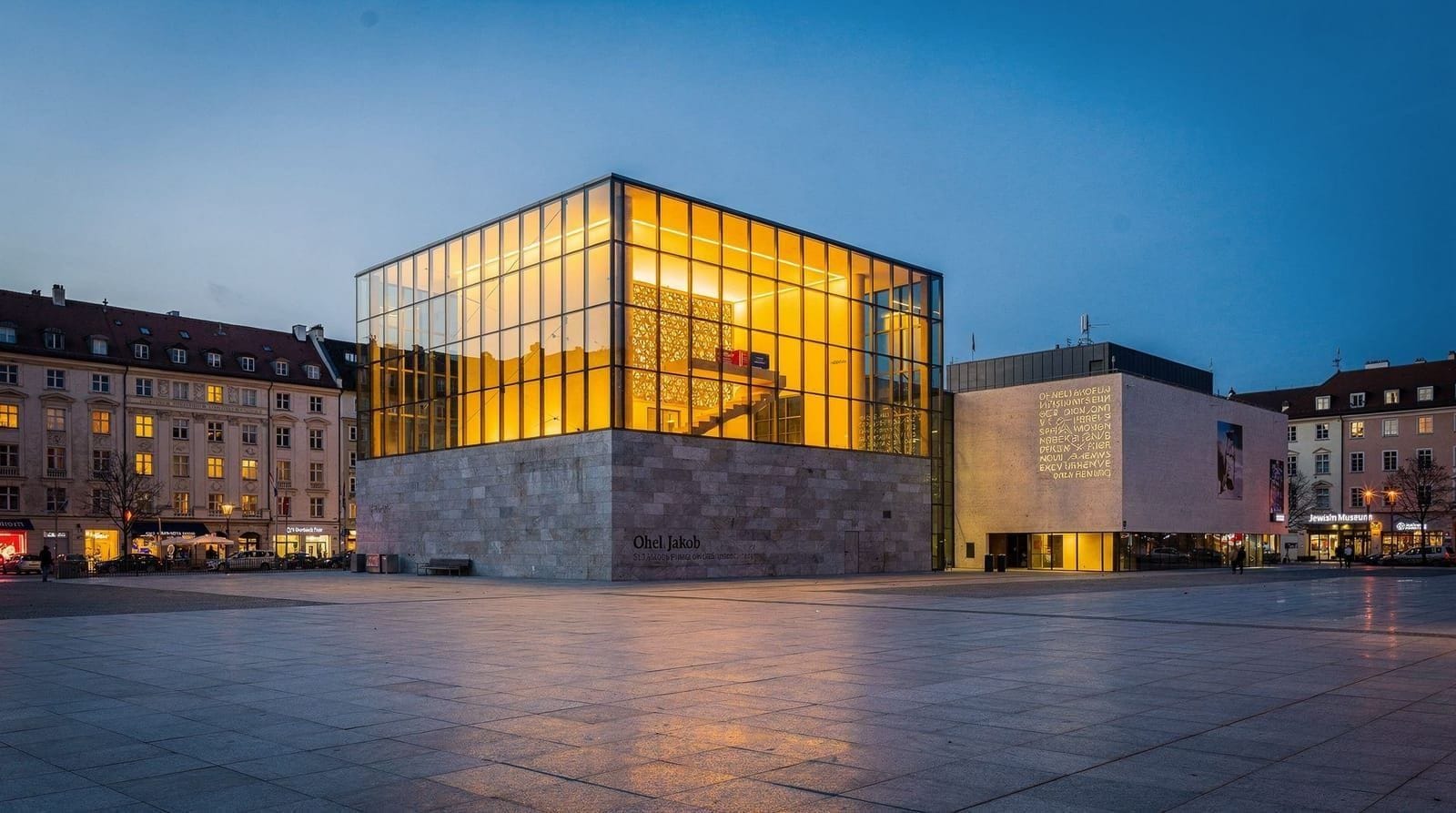
Dachau Concentration Camp Memorial Site — complete visitor guide
From Munich: Dachau Memorial Site day tour
How do I get to the Dachau Memorial Site from Munich?
Take the S2 S-Bahn from Munich Hauptbahnhof toward Petershausen and exit at Dachau station (about 25 minutes). From there take bus 726 (direction Saubachsiedlung) to the KZ-Gedenkstätte Dachau stop — roughly 10 minutes. The memorial site is free to enter and open Tuesday to Sunday.
Before you go: approaching Dachau as a memorial, not a destination
The Dachau Concentration Camp Memorial Site receives more than a million visitors each year, making it one of the most-visited memorial sites in Europe. That volume creates a responsibility for visitors that is different from a museum or a tourist attraction. You are entering a place where over 41,500 documented deaths occurred — the real figure is higher — and where hundreds of thousands of people were imprisoned, tortured and subjected to forced labour and medical experimentation.
This guide provides factual, practical information for a respectful visit. It is not a “things to do in Dachau” listing. The site demands and deserves considered engagement.
| Where | Dachau, 16km north of Munich |
| Cost | Free entry; audio guide €3.50 |
| Time needed | Minimum 3 hours; 4 hours to read the exhibition fully |
| Getting there | S2 S-Bahn to Dachau, then bus 726 (~35–40 min total) |
| Opening | Tuesday–Sunday, 09:00–17:00; closed Mondays |
Historical background
Dachau opened on 22 March 1933 — less than two months after Hitler became Chancellor. It was the first Nazi concentration camp, established by Heinrich Himmler and SS-Obergruppenführer Hilmar Wäckerle as a “model camp” for holding political prisoners: communists, social democrats, trade union leaders and journalists.
Over twelve years, Dachau evolved from a political prison into a system of terror. Jews, clergy (more than 2,700 Catholic priests were interned in a dedicated “priests’ barracks”), Jehovah’s Witnesses, Roma and Sinti, homosexuals, and prisoners from across occupied Europe passed through or were sent directly to Dachau and its more than 100 sub-camps.
The camp was liberated by the United States Army’s 45th Infantry Division on 29 April 1945. American soldiers who entered the camp documented the conditions in photographs that remain among the most disturbing of the war. Around 32,000 prisoners were liberated.
Getting there
By S-Bahn (strongly recommended)
The most practical route from Munich is the S2 S-Bahn from Munich Hauptbahnhof, direction Petershausen. Exit at Dachau station (Bahnhof Dachau) — journey time approximately 25 minutes. The Bayern-Ticket covers this journey if you are using it for other day trips.
From Dachau Bahnhof, take bus 726 (direction Saubachsiedlung) to the stop KZ-Gedenkstätte Dachau. The bus runs approximately every 20 minutes and takes about 10 minutes. Do not rely on the distance from the train station to the site being walkable — it is around 3.5 km.
The Bayern-Ticket guide explains how day-travel tickets work; a single Bayern-Ticket covers the S-Bahn leg for up to five people and is worth considering if you are travelling as a group.
By guided tour from Munich
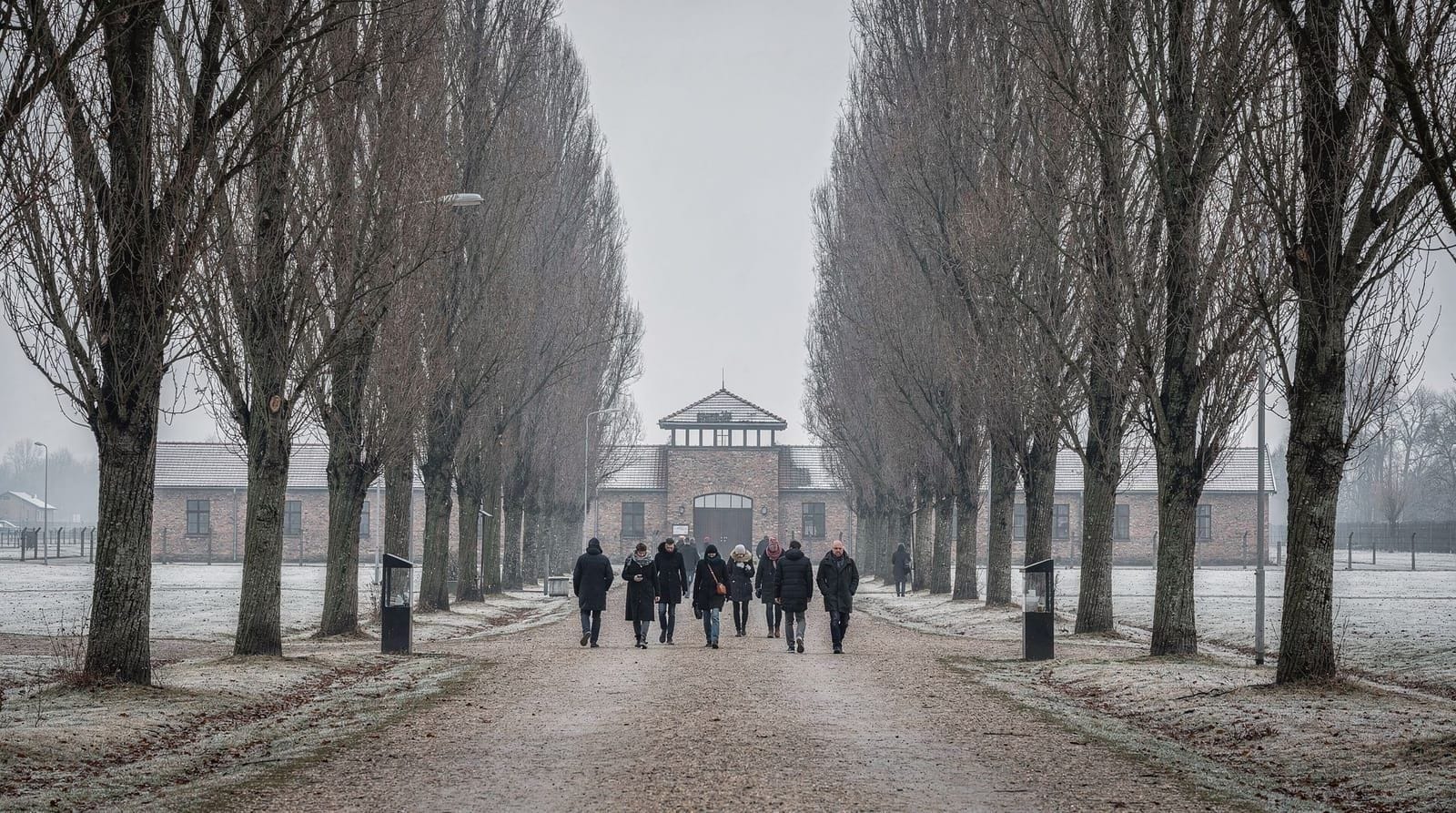 Dachau Memorial Site guided small group tourCheck availability
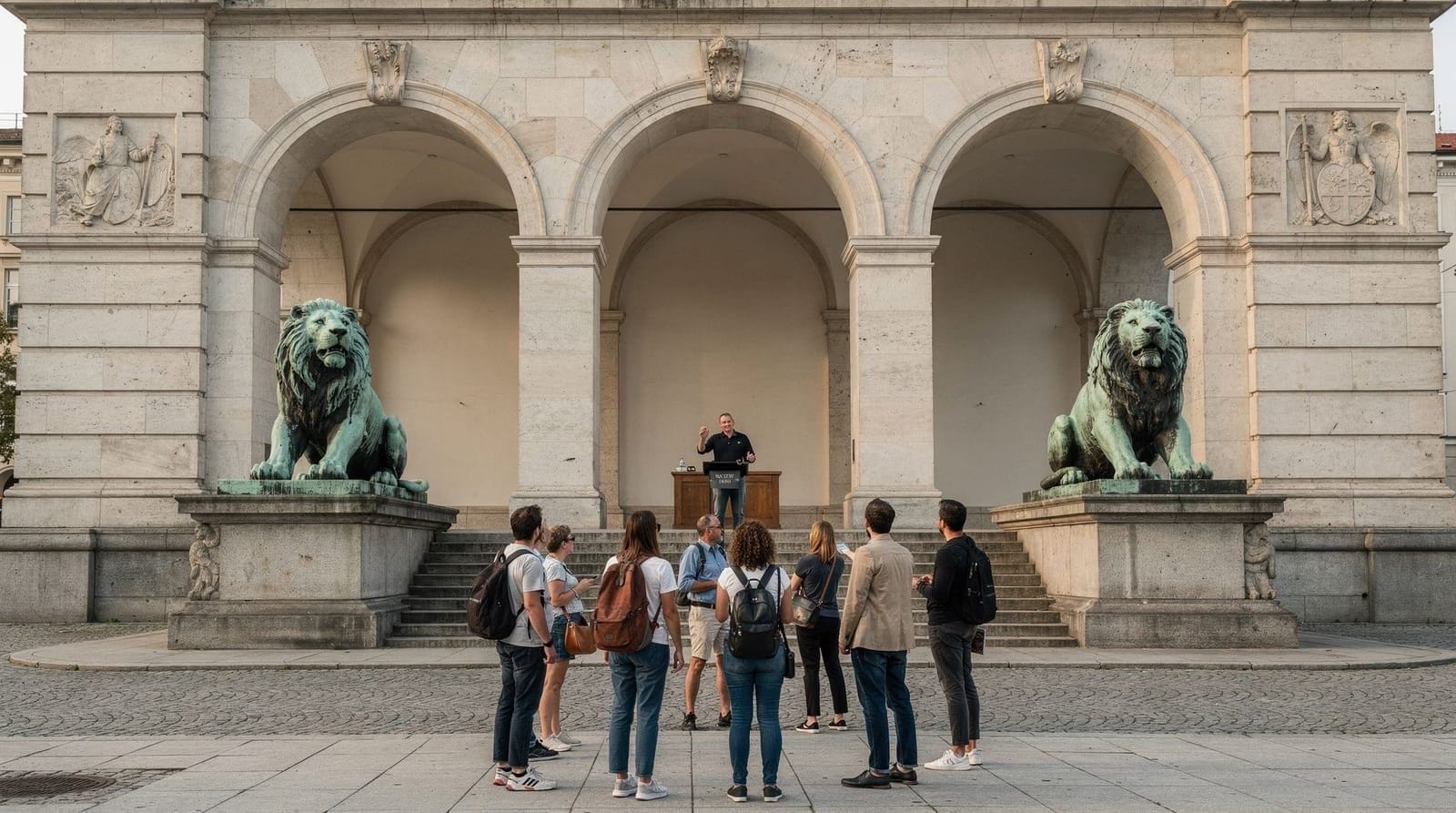
Guided tours from Munich to Dachau depart from central Munich (typically near Hauptbahnhof or Marienplatz) and include transport, a professional guide and typically three to four hours at the site. For visitors who want historical context woven into the visit — rather than reading panels independently — this is the most substantive option.  Dachau Memorial Site day tourCheck availability
Small-group tours (typically eight to twelve participants) allow more time for questions and a slower pace through the site than standard large-group coach tours. For a visit to a site of this gravity, the smaller format is worth the additional cost.
What to expect at the site
The entrance and Jourhaus
You enter through the former Jourhaus, the gatehouse through which all prisoners entered. The original iron gate bears the words “Arbeit macht frei” — “Work sets you free” — the cynical inscription the SS placed on concentration camp entrances. The gate is original.
The Appellplatz (roll-call square)
Inside the gate lies the enormous Appellplatz where prisoners were forced to stand for roll calls, sometimes for hours in all weather, often as collective punishment. The scale of the square is disorienting. The current surface is the original ground.
The barracks
Two barracks have been reconstructed to their original layout, showing the overcrowded bunks, the sanitary conditions and the spatial organisation of prisoner life. The remaining barracks foundations are marked with low concrete outlines, giving a sense of the full scale of the camp’s prisoner accommodation.
The permanent exhibition
The permanent exhibition occupies the large maintenance building (Wirtschaftsgebäude) along the northern edge of the Appellplatz. It opens at 09:00 and runs chronologically — from the political context of 1933, through the consolidation of the camp system, to the extreme conditions of the war years, the liberation and the post-war history of the site.
Allow at least 60 to 90 minutes for the exhibition. The documentation is detailed, the photographs unflinching. Some sections deal explicitly with medical experiments conducted on prisoners; these are presented factually and without sensationalism but are genuinely disturbing.
The crematoria
Beyond the barracks area, a path leads to the service building containing the original crematorium and, adjacent, a second, larger crematorium (Baracke X) built in 1942 and equipped with a gas chamber. Historical debate continues about whether the Dachau gas chamber was ever used for systematic mass killing — it was used for executions, and the evidence for systematic gassing at Dachau (as opposed to Auschwitz-Birkenau or Sobibor) remains contested by historians. The exhibition addresses this question directly.
The memorial chapels and international monuments
Three religious memorial chapels — Catholic, Protestant and Jewish — were built after the war and stand beyond the crematoria. A Russian Orthodox chapel was added later. A large international monument in the centre of the former camp, inaugurated in 1968, stands as the main commemorative focus.
Practical information
- Opening hours: Tuesday to Sunday, 09:00 to 17:00. Last entry at 16:30.
- Closed: Mondays, Rosenmontag, Faschingsdienstag, Christmas Day (25 December), New Year’s Day (1 January). Some other public holidays — always check in advance.
- Admission: Free of charge.
- Audio guide: 3.50 euros, available in German, English, Italian, French, Russian, Hebrew and other languages. Strongly recommended for independent visitors.
- Guided tours on site: Tours in German and English run several times daily. Check the memorial’s schedule at the information counter on arrival.
- Photography: Permitted in most areas with restraint.
- Facilities: A visitor centre with bookshop and café is located at the entrance. The café operates as a functional stop rather than a leisure destination.
- Accessibility: The site is largely accessible for wheelchair users on paved paths, though some uneven ground exists between structures.
Visiting with dignity
A few practical considerations for the visit:
The atmosphere at Dachau is serious. Most visitors arrive with that understanding. However, a site receiving a million visitors includes a minority who treat it as a photo opportunity. If you witness behaviour you find inappropriate, the staff are present and approachable.
Dress practically for the weather. There is little shelter from rain or direct sun in the main memorial area. The visit involves considerable walking on outdoor surfaces.
Silence is not mandated but tends to emerge naturally in the crematorium and memorial chapel areas. This is appropriate.
The town of Dachau
The town of Dachau itself deserves a brief note. The name “Dachau” was associated with the arts long before the camp — the Dachau artists’ colony flourished from the 1870s into the early 20th century, and the town’s baroque old town and museum of Dachau history reflect a long, independent civic identity.
The town’s population has lived with the shadow of the camp’s name since 1945 and has engaged honestly and sometimes painfully with that history. Visitors should not assume that the entire town is somehow implicated; they should, however, understand that local residents are aware of the association and have often thought about it more carefully than passing tourists.
How Dachau connects to Munich’s wider history
Dachau did not operate in isolation from Munich. The camp was administered from Munich, staffed largely by SS personnel from the region, and supplied by local businesses. Dachau prisoners were used as forced labour across Bavaria, including in Munich itself.
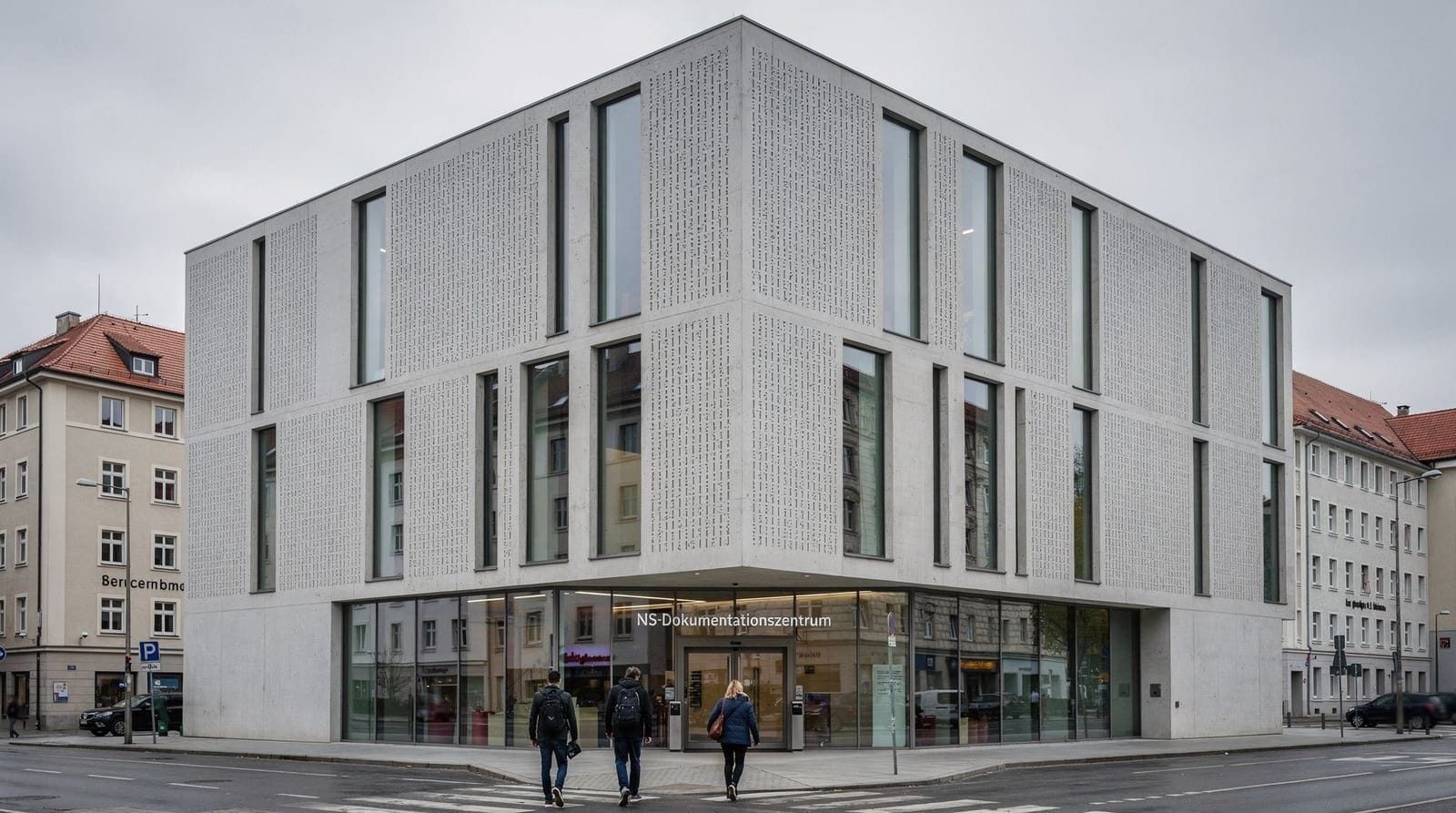
Visiting Dachau as part of a broader engagement with Munich’s Nazi-era history is therefore appropriate. The Munich Third Reich walking tour guide covers the city-centre sites. The NS-Dokumentationszentrum guide covers the main historical exhibition in Munich’s Maxvorstadt. The Beer Hall Putsch history provides context for how the Nazi movement developed in Munich before it held national power.
For visitors who want to combine Dachau with Munich city history, the Munich to Dachau day trip guide suggests how to structure the day, including whether to visit Dachau in the morning or afternoon given crowd patterns and the emotional weight of the visit.
Post-visit
Many visitors find that a visit to the Dachau Memorial requires time for reflection before returning to normal tourist activities. The Isar riverbanks, the English Garden and the quieter parts of the Englischer Garten provide that space. There is no expectation that you should transition directly to beer gardens and Hofbräuhaus; equally, there is no rule that you must not.
The site’s bookshop at the entrance carries a well-curated selection of historical texts in multiple languages. Purchasing a book supports the memorial’s educational mission and provides a way of continuing your engagement with the material after you leave.
Preparing for the visit
Some practical preparation makes the visit more meaningful and less disorienting:
Read a little beforehand. A short overview of the camp’s history — the timeline above, or the memorial’s own website — helps you follow the permanent exhibition without needing to absorb everything cold. It is not necessary to be an expert; a basic sense of the chronology is enough.
Plan for the full visit, not a stop on the way to somewhere else. Rushing the exhibition to catch a train or fit in an afternoon of sightseeing afterward works against the purpose of coming at all. Block out a genuine half-day.
Decide in advance whether you want a guide. A guided tour, either the memorial’s own on-site tours or an organised tour from Munich, adds context that self-guided reading sometimes misses, particularly around contested historical questions the exhibition addresses directly. Independent visitors who prefer their own pace should use the audio guide rather than skipping context altogether.
Consider timing within a longer Munich trip. Many visitors find it easier to visit Dachau earlier in a multi-day trip rather than on the last day, giving time afterward to process what they have seen rather than heading straight to an airport.
Combining the visit with Munich’s wider WWII history
Dachau is one part of a larger, connected history that is physically present across Munich. Visitors who want to understand the fuller picture — how the Nazi movement began in Munich, how the city functioned under the regime, and how Germany has engaged with this history since 1945 — can combine a Dachau visit with the NS-Dokumentationszentrum in Maxvorstadt, the Beer Hall Putsch history, and the Munich Jewish history guide. Spreading these across two days rather than compressing them into one gives each site the attention it deserves.
Frequently asked questions about visiting the Dachau Memorial
Is it appropriate to visit Dachau as a tourist?
Yes. The Dachau Concentration Camp Memorial Site was established specifically to welcome and educate visitors. Over a million people visit each year, and the site’s staff and educational mission are oriented toward that engagement. The question of “appropriateness” is really about how you visit — with genuine attention and respect rather than as a spectacle.
Can I take the S-Bahn directly to the memorial?
Not quite directly. The S2 takes you to Dachau train station. From there you take bus 726 to the KZ-Gedenkstätte stop — a ten-minute ride that runs approximately every 20 minutes. The total journey from Munich Hauptbahnhof is around 35 to 40 minutes.
Does Dachau have a gift shop?
The visitor centre has a bookshop selling historical texts, educational materials and some modest items. It does not sell typical tourist merchandise — there are no keyrings or magnets. The emphasis is on educational publications.
Are there other concentration camp memorial sites near Munich?
The Munich area is most directly associated with Dachau, but Flossenbürg camp (in the Upper Palatinate, about two hours from Munich) is another significant site. The Obersalzberg Documentation Centre near Berchtesgaden covers the regime’s Bavarian Alpine headquarters. An Eagle’s Nest Berchtesgaden tour visits the Kehlsteinhaus, which is distinct from the Obersalzberg site.
What did Dachau prisoners experience day to day?
The permanent exhibition covers this in detail. In brief: prisoners faced brutal conditions from the outset, including severe overcrowding, malnutrition, forced labour (in armaments factories and elsewhere), arbitrary punishment, medical experiments (particularly in the war years) and systematic dehumanisation. Conditions deteriorated sharply after 1939 as the camp population massively increased with prisoners from occupied Europe.
How should I talk to children about what they see at Dachau?
This depends heavily on the child’s age and maturity. For teenagers, honest, age-appropriate discussion that contextualises what they see — without minimising the horror — is appropriate. The memorial staff are experienced at supporting this kind of conversation. For younger children, most educators recommend waiting until they are old enough to process the material meaningfully.
Is there a café or restaurant at the Dachau Memorial?
There is a small café at the visitor centre near the entrance. It serves coffee, sandwiches and light meals. It is functional rather than expansive. Several restaurants are located in Dachau town centre, accessible by bus or a short walk.
Top experiences
Bookable activities with verified prices and instant confirmation on GetYourGuide.