Munich in World War II — a history guide for visitors
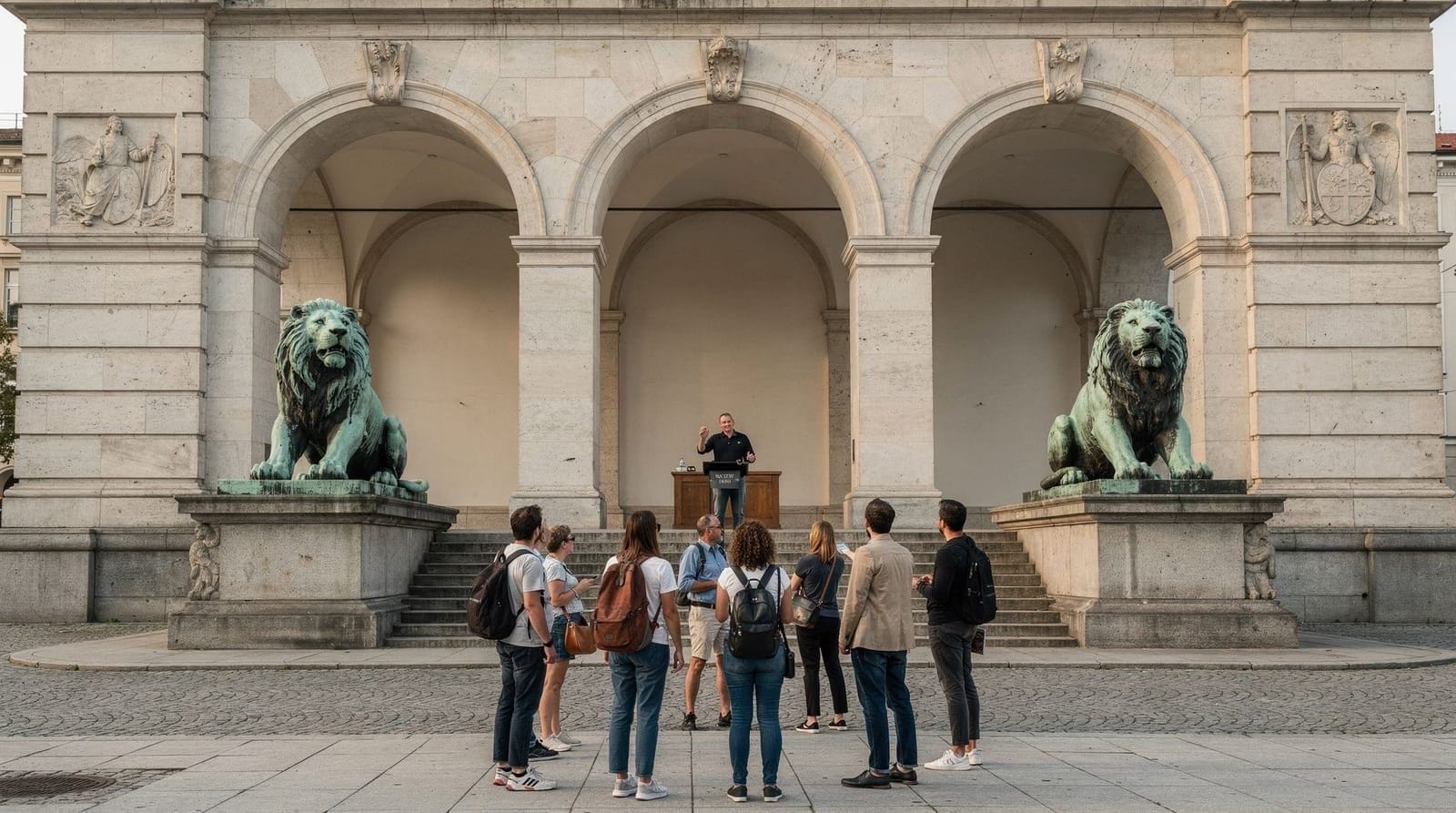
Munich: Third Reich and WWII walking tour
What was Munich's role in World War II?
Munich was the NSDAP's birthplace and administrative capital, housing the party's national headquarters on Brienner Strasse. The city was heavily bombed by Allied forces from 1940 to 1945, suffering significant civilian casualties and the destruction of much of its historic centre. American forces liberated Munich on 30 April 1945.
Munich between 1919 and 1945: a compressed chronology
Munich’s wartime history cannot be understood without starting in 1919. The city that emerged from World War I was politically fractured, economically devastated and briefly governed by a short-lived Soviet-style republic before right-wing Freikorps units took control. Into that instability came the young Adolf Hitler — an Austrian army veteran, failed artist and recently demobilised soldier — who found in Munich a city raw enough to be remade.
This guide is a factual chronology and site guide for visitors who want to understand Munich’s specific role in the Second World War, from the movement’s origins through the devastation of Allied bombing to the city’s liberation and reconstruction.
| Time needed | Half a day for key central sites; add a full day for Dachau |
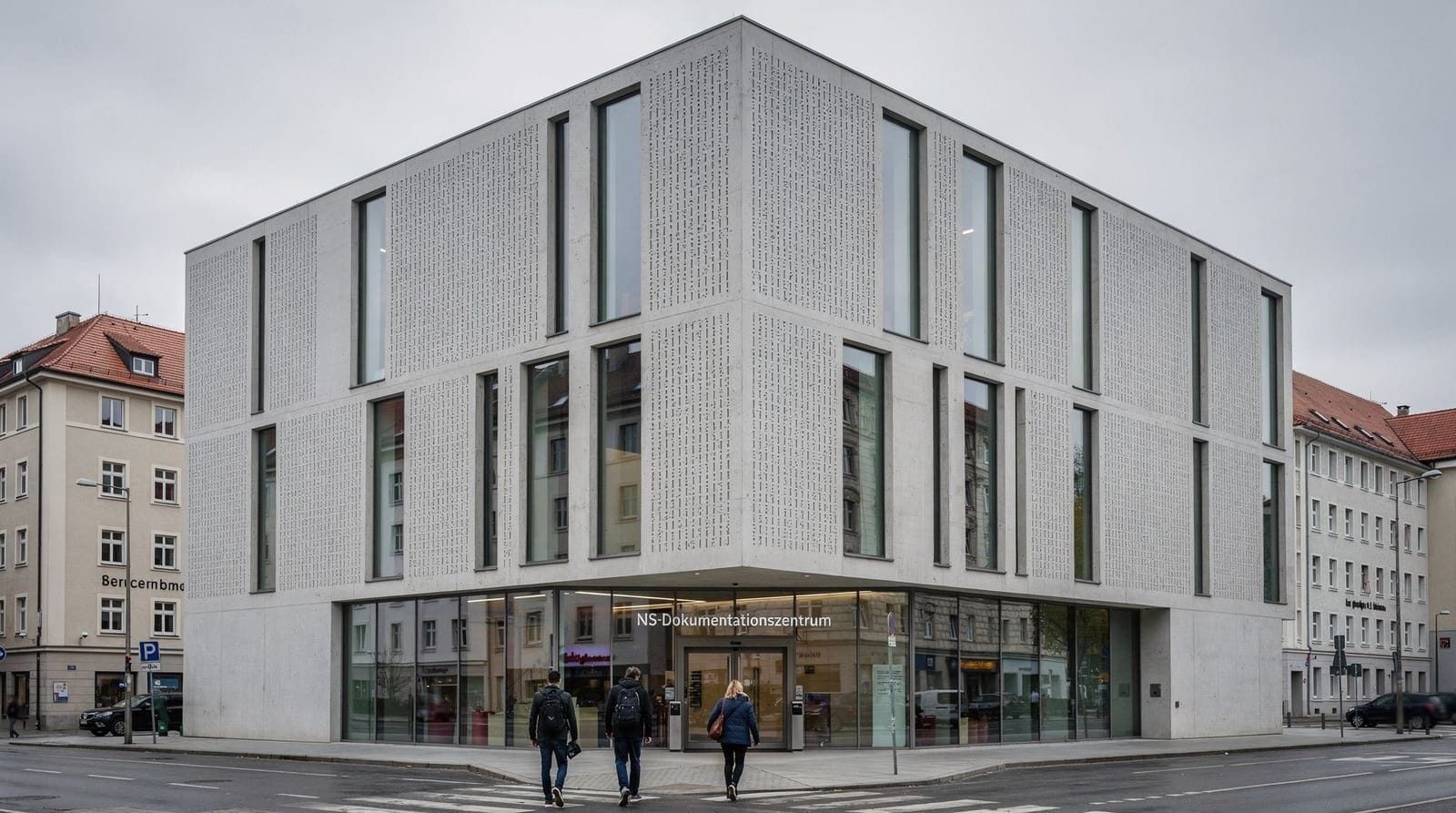
| Essential stop | NS-Dokumentationszentrum, Brienner Strasse 34 |
| Cost | Free (Dachau, Königsplatz) to EUR 7 (documentation centre) |
| Tone | Factual, measured — not sensationalised |
| Getting around | Central sites walkable; Dachau by S2 S-Bahn + bus |
1919 to 1923: the movement’s Munich roots
The German Workers’ Party — which became the NSDAP in 1920 — was founded in Munich in January 1919. Hitler joined in September that year as the party’s 55th member and quickly became its most effective public speaker. Munich’s beer halls — the Hofbräuhaus, the Bürgerbräukeller, the Sterneckerbräu — served as meeting rooms, propaganda stages and organisational hubs.
The party’s membership grew rapidly in the years of German hyperinflation, and on 8 November 1923 Hitler attempted to seize power in the Beer Hall Putsch. The putsch failed. The march through Munich the following morning ended at the Feldherrnhalle on Odeonsplatz with police gunfire killing 16 marchers. Hitler fled, was arrested, and served nine months in Landsberg prison. His failed coup and subsequent trial gave him a national platform he had not previously had.
The Beer Hall Putsch history guide covers this episode in detail.
1933 to 1939: Munich as party capital
After Hitler’s appointment as Chancellor on 30 January 1933, Munich was quickly elevated to political significance. The NSDAP established its national headquarters in the “Braunes Haus” at Brienner Strasse 34 — the site now occupied by the NS-Dokumentationszentrum. The Führerbau at Arcisstrasse 12 became Hitler’s official Munich reception building and conference centre. A Verwaltungsbau (administrative building) occupied the opposite corner.
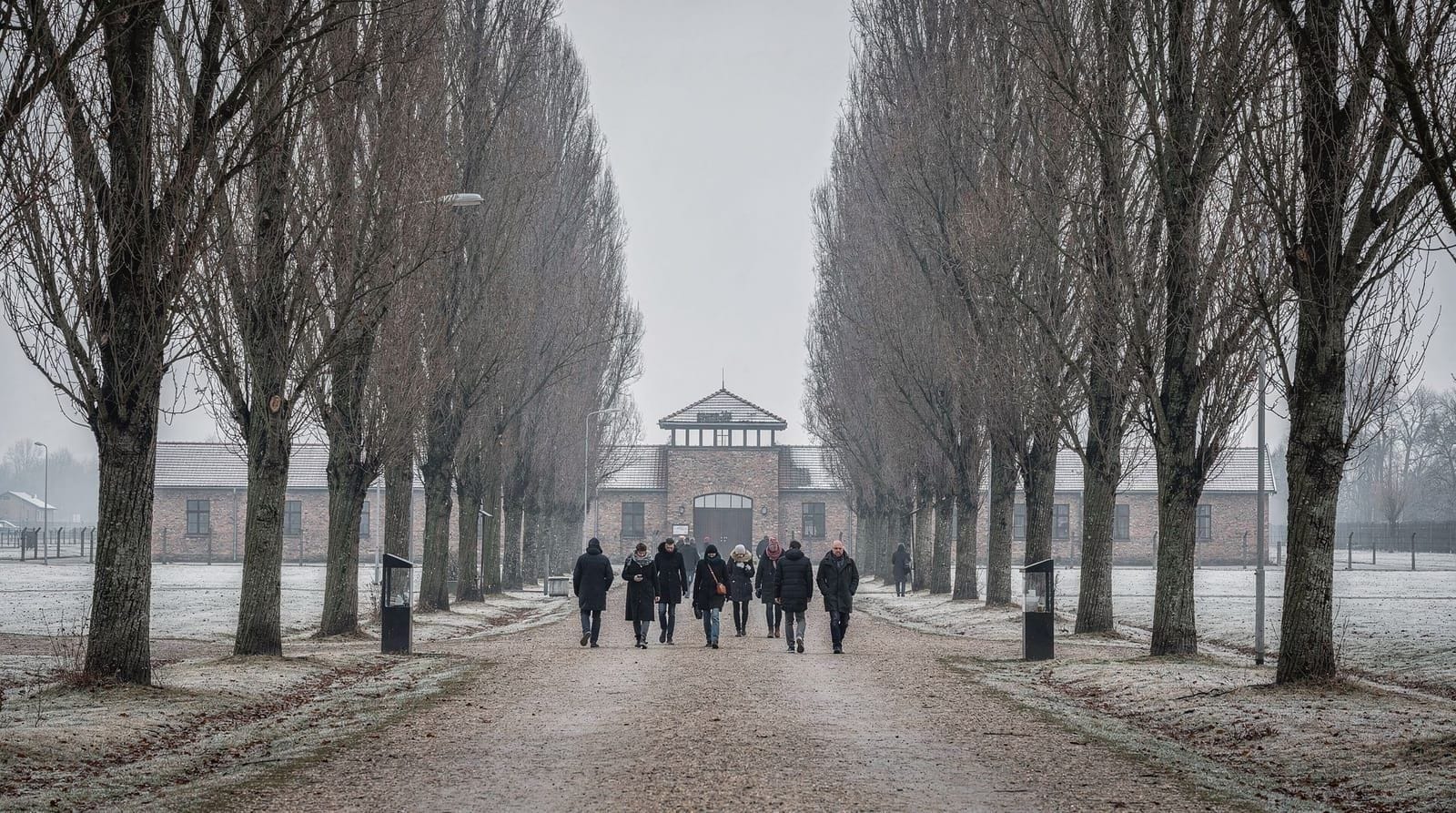
Dachau concentration camp opened on 22 March 1933 — seven weeks after Hitler took power. It began as a political prison, primarily holding Communists, Social Democrats and trade union leaders. A full account of the camp and how to visit is in the Dachau Memorial guide.
In 1935, the Nuremberg Laws — which stripped Jews of German citizenship — were announced at the NSDAP party rally in Nuremberg, though their drafting involved Munich-based party lawyers. Munich’s Jewish community began facing systematic persecution, emigration pressure and ultimately deportation.
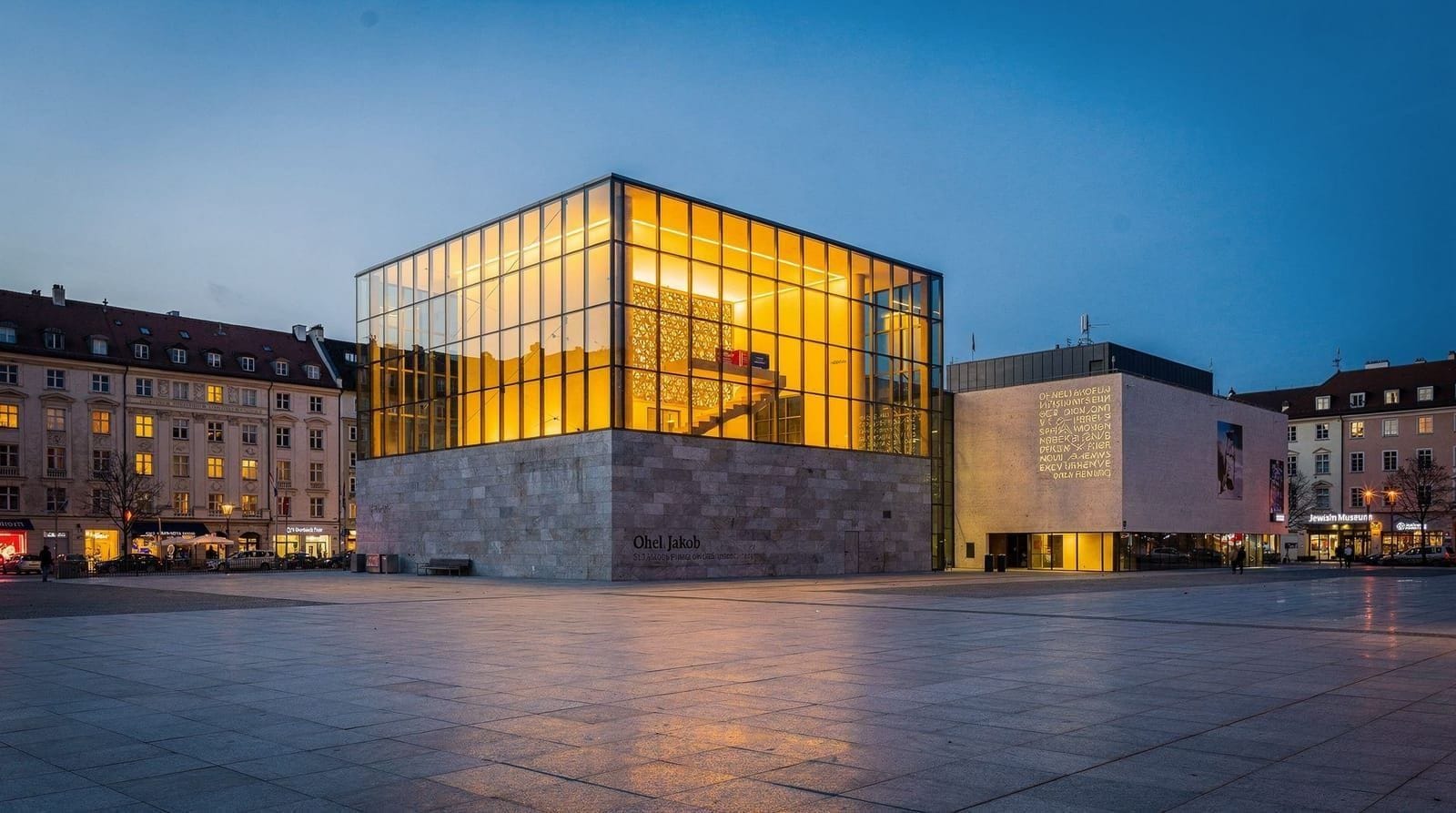
On 9 November 1938, Kristallnacht — the nationwide pogrom — saw the destruction of the Ohel Jakob synagogue on Herzog-Max-Strasse (the site of the present synagogue on Sankt-Jakobs-Platz), the looting and destruction of Jewish-owned businesses and the arrest of Jewish men across the city. The Munich Jewish history guide covers this and the broader history of Munich’s Jewish community.
The Munich Agreement was signed at the Führerbau on Arcisstrasse on 30 September 1938. British Prime Minister Neville Chamberlain’s declaration of “peace for our time” after the signing has become a byword for the failure of appeasement. The building still stands and can be visited from outside; a small plaque marks the agreement.
1939 to 1945: the war years
Munich’s wartime experience divides into several phases.
The early war period (1939 to 1942)
Munich remained well behind the front lines and largely functioning until Allied strategic bombing reached Germany in force. The NS-Dokumentationszentrum on Brienner Strasse continued operating. Dachau’s population expanded dramatically as prisoners from occupied countries — Poland, France, the Soviet Union, Yugoslavia — arrived in large numbers.
On the night of 8 November 1939, Georg Elser — a Swabian carpenter acting entirely alone — detonated a bomb concealed in a pillar of the Bürgerbräukeller moments after Hitler had left the hall early. Thirteen people were killed; Hitler survived. Elser was arrested, held in Dachau and Sachsenhausen as a “special prisoner,” and executed on 9 April 1945.
Allied bombing (1940 to 1945)
Munich suffered 74 Allied air raids between September 1940 and April 1945. The British Royal Air Force and United States Army Air Forces targeted Munich for several reasons: its rail hub connecting Germany to Italy and southern Europe, its industrial facilities, and its symbolic value as the “Capital of the Movement.”
The worst raids fell in 1944 and early 1945. Large areas of the Altstadt were destroyed, including the Frauenkirche (which lost its roofs), the Residenz (which burned), significant parts of Schwabing and the industrial east of the city. Approximately 6,000 Munich civilians died in bombing; many more were evacuated to the countryside.
The reconstruction of Munich after the war was a major undertaking extending into the 1950s and 1960s. The decision to reconstruct the Frauenkirche, the Residenz and the Alte Pinakothek in their pre-war forms rather than replace them with modern buildings was contested at the time and reflects a specific political choice about historical continuity. Visitors today see buildings that look 19th-century but in many cases date from the 1950s. The Frauenkirche guide and Residenz guide both note this reconstruction history.
The White Rose (1942 to 1943)
Between June 1942 and February 1943, a small group of students at Ludwig Maximilian University and their associates produced and distributed six leaflets calling for passive resistance to the Nazi regime. Sophie Scholl, Hans Scholl, Christoph Probst, Alexander Schmorell, Willi Graf and professor Kurt Huber were the principal members. On 18 February 1943, the Scholls were caught distributing leaflets in the university’s main building and arrested. They were executed by guillotine on 22 February 1943 in Munich’s Stadelheim prison.
A memorial installation at Geschwister-Scholl-Platz 1 — the university’s main entrance — marks the arrest site. The DenkStätte Weiße Rose inside the building is free to enter and provides detailed documentation of the group’s history. The White Rose resistance guide covers the sites and history in full.
Liberation (30 April 1945)
By late April 1945, the Third Reich was collapsing. American forces from the 7th Army reached Munich from the south and west. On 30 April 1945 — the same day Hitler shot himself in the Berlin Führerbunker — Munich fell to the 42nd and 45th Infantry Divisions of the US Army with limited combat in the city centre.
Dachau had been liberated the previous day, 29 April, by elements of the 45th Infantry Division. The liberating soldiers encountered a train of cattle cars outside the camp filled with dead prisoners, the crematorium still containing bodies, and approximately 32,000 surviving prisoners in devastating condition. Photographs and film footage taken by American military personnel document what they found.
Key wartime sites accessible today
NS-Dokumentationszentrum, Brienner Strasse 34
The most important single institution for understanding Munich’s Nazi-era history. Built on the site of the former NSDAP national headquarters (the “Braunes Haus”), it opened in 2015 with a permanent exhibition covering four floors. Open Tuesday to Sunday, 10:00 to 19:00. Admission 7 euros. The NS-Dokumentationszentrum guide covers the exhibition in detail.
The Führerbau, Arcisstrasse 12
The building where the 1938 Munich Agreement was signed survives as the Hochschule für Musik und Theater. The exterior can be viewed freely. A small information plaque marks its history. Tours of the interior are not generally available to the public, but the building’s significance is explained on most Third Reich walking tours.
Königsplatz
The 19th-century neoclassical square was paved over and used as a Nazi parade ground from 1933. The two “temples of honour” built to house the putsch dead’s sarcophagi were demolished by American occupiers in 1945. The square has been restored with lawn. Archaeological traces of the Nazi-era paving remain partially visible.
Feldherrnhalle and Viscardigasse
The 1843 Feldherrnhalle at the southern end of Ludwigstrasse was the site of the putsch’s fatal end in 1923. During the Third Reich, SS guards were posted here and the Nazi salute was required. The cobblestone detour through Viscardigasse — carved out by Munich residents to avoid saluting — has brass markers commemorating this quiet resistance.
Ludwig Maximilian University — White Rose memorials
The main entrance on Geschwister-Scholl-Platz and the DenkStätte Weiße Rose inside the building. Take any U-Bahn to Universität station.
Stadelheim Prison
Munich’s Stadelheim Prison, in the south of the city, was where Sophie Scholl, Hans Scholl, Christoph Probst and others were executed by guillotine in 1943. The prison still operates as a correctional facility and is not open to visitors, but a memorial plaque marks the site.  birthplace of the Third Reich guided walking tourCheck availability
The Dachau Memorial Site
Thirty minutes from central Munich by S2 S-Bahn and bus. Open Tuesday to Sunday 09:00 to 17:00. Free admission. One of the most visited memorial sites in Europe and the most significant single location for understanding the concentration camp system. See the Dachau Memorial guide for full visitor information.
How Munich recovered
Munich’s postwar recovery was shaped by American occupation (Munich fell within the US occupation zone), large-scale reconstruction and a decision by city leaders to rebuild the historic centre largely in its pre-war forms. By the 1950s, the Marienplatz, the Frauenkirche and the core of the Altstadt had been substantially rebuilt. The Munich Altstadt guide covers the historic centre as it exists today.
The NS-Dokumentationszentrum’s opening in 2015 was a significant milestone. Munich was among the last major German cities to open a dedicated documentation centre for Nazi-era history — Berlin had opened its Topography of Terror in 2010, Nuremberg its Documentation Centre in 2001. The delay reflected ongoing debates in the city about how directly to engage with its specific role in the movement’s rise.
Planning a self-guided route through central sites
For visitors with half a day rather than a guided tour, a logical walking sequence links the central sites without much backtracking: start at Königsplatz (U2 Königsplatz) to see the former Nazi parade ground and the Propyläen gate, walk five minutes to the NS-Dokumentationszentrum on Brienner Strasse and allow at least ninety minutes for the permanent exhibition, then continue on foot toward Odeonsplatz and the Feldherrnhalle, noting the Viscardigasse detour route. From there it is a short walk to Geschwister-Scholl-Platz at the university for the White Rose memorial. This core route covers roughly 2.5 km and takes three to four hours including the documentation centre, without requiring transit between stops.
Dachau requires a separate half-day, ideally its own morning or afternoon rather than an add-on to the central route — the memorial itself deserves at least two hours, and the S-Bahn and bus connection each way adds roughly 45 minutes total.
Visiting with sensitivity: practical and ethical notes
These sites document mass violence, persecution and the machinery that enabled genocide, and visitor behaviour matters. Photography is generally permitted at the NS-Dokumentationszentrum and Dachau, but posed or celebratory photographs are inappropriate and, at Dachau specifically, are discouraged by on-site signage. Guides on the Third Reich walking tours are trained historians, not general city guides, and the tone throughout is deliberately factual rather than dramatised — visitors expecting a sensationalised true-crime style presentation will find the actual approach more sober and contextual.
Children under about 12 generally find the material difficult to process meaningfully; most guided tours and the Dachau Memorial itself recommend a minimum age of around 13–14 for visitors, with parental judgement for individual children. The Dachau memorial guide has specific notes on preparing children and teenagers for the visit.
Connecting Munich to Nuremberg and Berlin
 private or group Third Reich and WWII walking tourCheck availability
Munich, Nuremberg and Berlin each hold distinct places in Third Reich history. Munich is where the movement was born and headquartered. Nuremberg hosted the mass party rallies, and its trials after the war brought the surviving Nazi leadership to account. Berlin was where the regime governed and from which the Holocaust was orchestrated.
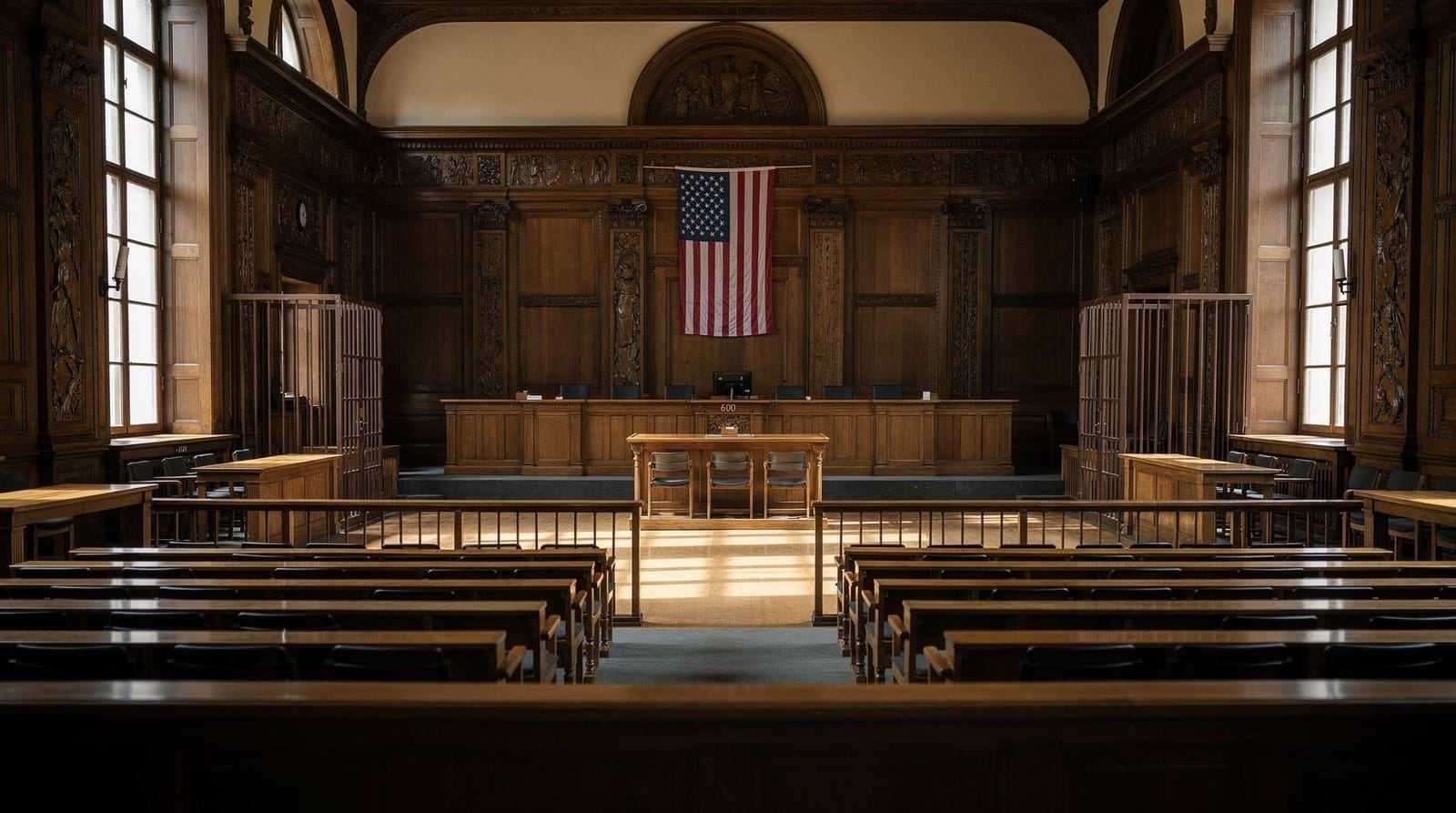
The Nuremberg trials guide covers what to see in Nuremberg. A day trip from Munich to Nuremberg takes approximately one hour by ICE train and can be combined with a morning visit to the NS-Dokumentationszentrum in Munich.
Frequently asked questions about Munich’s WWII history
Was Munich an important military target during WWII?
Yes. Munich’s importance as a bombing target came from its rail connections (particularly to Italy via the Brenner Pass), its armaments and industrial facilities, and its symbolic value as the birthplace of National Socialism. American and British bombers targeted the city in 74 raids between 1940 and 1945.
Is there a memorial to Munich bombing victims?
There is no single central memorial specifically to civilian bombing victims, though this is a recurring subject of debate in the city. The Waldfriedhof cemetery in Sendling contains a large memorial area for air raid victims. Various churches and neighbourhoods have local memorials.
What was the Braunes Haus?
The “Braunes Haus” (Brown House) was the popular name for the NSDAP national headquarters at Brienner Strasse 34. It was heavily damaged in bombing raids and demolished after the war. The NS-Dokumentationszentrum now stands on the same plot.
Did any Munich residents resist the Nazi regime?
Yes. The White Rose group at Ludwig Maximilian University is the most celebrated example. Individual acts of resistance — hiding Jewish neighbours, refusing to salute at the Feldherrnhalle, small acts of non-compliance — were widespread. Georg Elser’s bomb in 1939 was a more dramatic solitary act of resistance. None of these acts stopped the regime, but they matter historically and morally.
What happened to Munich’s Jewish population during the war?
Munich’s pre-war Jewish population of approximately 11,000 was subjected to systematic persecution from 1933 onward — exclusion from professions, business confiscations, Kristallnacht violence in 1938, deportation from 1941 and the Holocaust. The majority of Munich Jews who did not emigrate before deportations began did not survive the war. The Munich Jewish history guide documents this history fully.
How did ordinary Munich residents relate to the Nazi regime?
This is a question historians have debated extensively. Levels of genuine enthusiasm, passive compliance, opportunism and quiet dissent all coexisted in the population. Munich was an early stronghold of NSDAP support but also contained a significant working-class socialist tradition. The NS-Dokumentationszentrum’s permanent exhibition addresses the question of local society’s relationship to the regime with considerable nuance.
How much time should I set aside for Munich’s WWII history sites?
A half-day (three to four hours) covers the central sites — Königsplatz, the NS-Dokumentationszentrum, Feldherrnhalle and the White Rose memorial — at an unhurried pace. Add a separate half-day for Dachau Memorial, ideally on a different day or a different part of the same day, rather than combining both into a single rushed itinerary.
Is it better to visit with a guide or self-guided?
For a first visit, a guide adds real value — the Third Reich walking tours are led by specialist historians who provide context that on-site plaques do not. Self-guided visits work well for a return trip or for visitors who prefer to read at their own pace, particularly at the NS-Dokumentationszentrum, where the exhibition itself is thoroughly documented in English.
Top experiences
Bookable activities with verified prices and instant confirmation on GetYourGuide.