Munich in 4 days: the extended city and day-trip itinerary
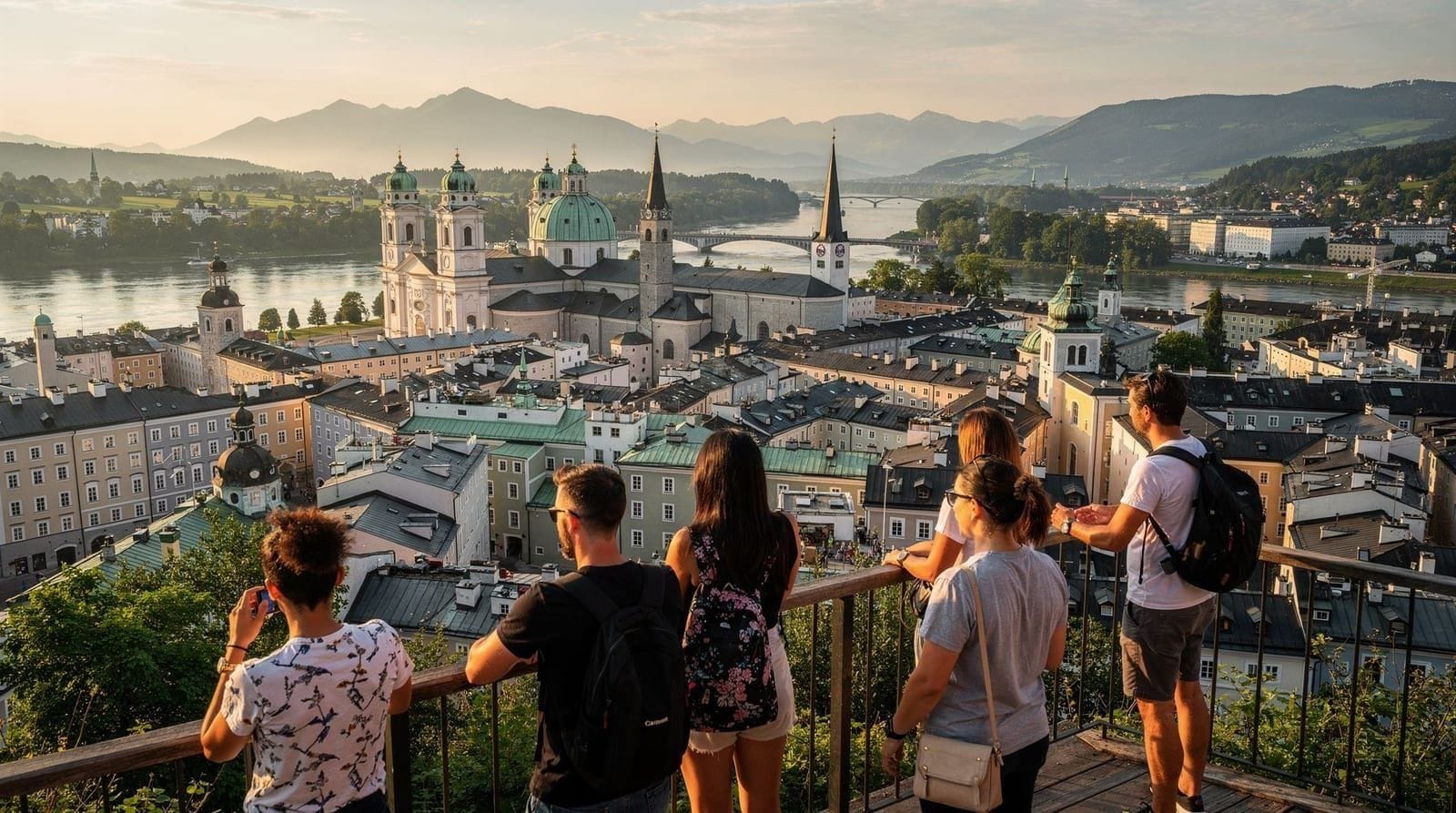
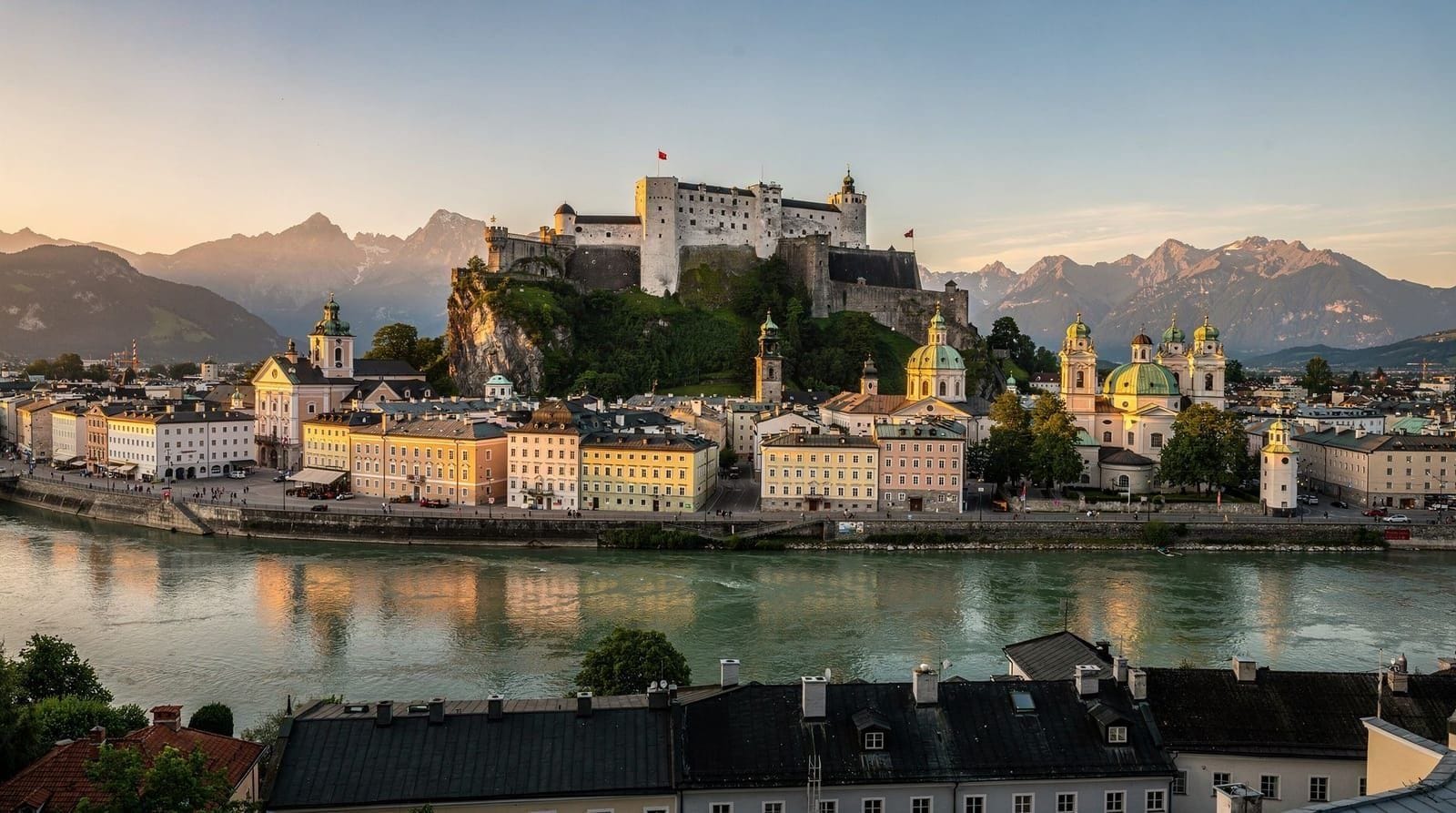
From Munich: Salzburg day trip by train
Four days: Munich, castles, history, and Austria
Four days allows proper depth in Munich and time for two major day trips. This itinerary combines the city’s essential sights with a Neuschwanstein castle visit and a day in Salzburg — the two most popular excursions from Munich. Day 4 returns to the city for a slower, more local pace: a morning at the Deutsches Museum, an afternoon in a neighbourhood that doesn’t appear on most tourist maps.
Budget: 150-200 EUR per person per day, including mid-range accommodation (110-160 EUR/night).
| Where | Altstadt, Nymphenburg, Füssen/Neuschwanstein, Dachau, Salzburg |
| Cost | around 150-200 EUR/person/day incl. accommodation |
| Time needed | 4 full days, 07:30-08:00 starts on day-trip days |
| Getting there | walkable core + Tram 17, S2, Bayern-Ticket, OBB Railjet |
| Best time | May-September for castle and Salzburg crowds/weather |
Day 1: Altstadt and Nymphenburg Palace
Morning: Munich’s historic core
08:00 — Marienplatz
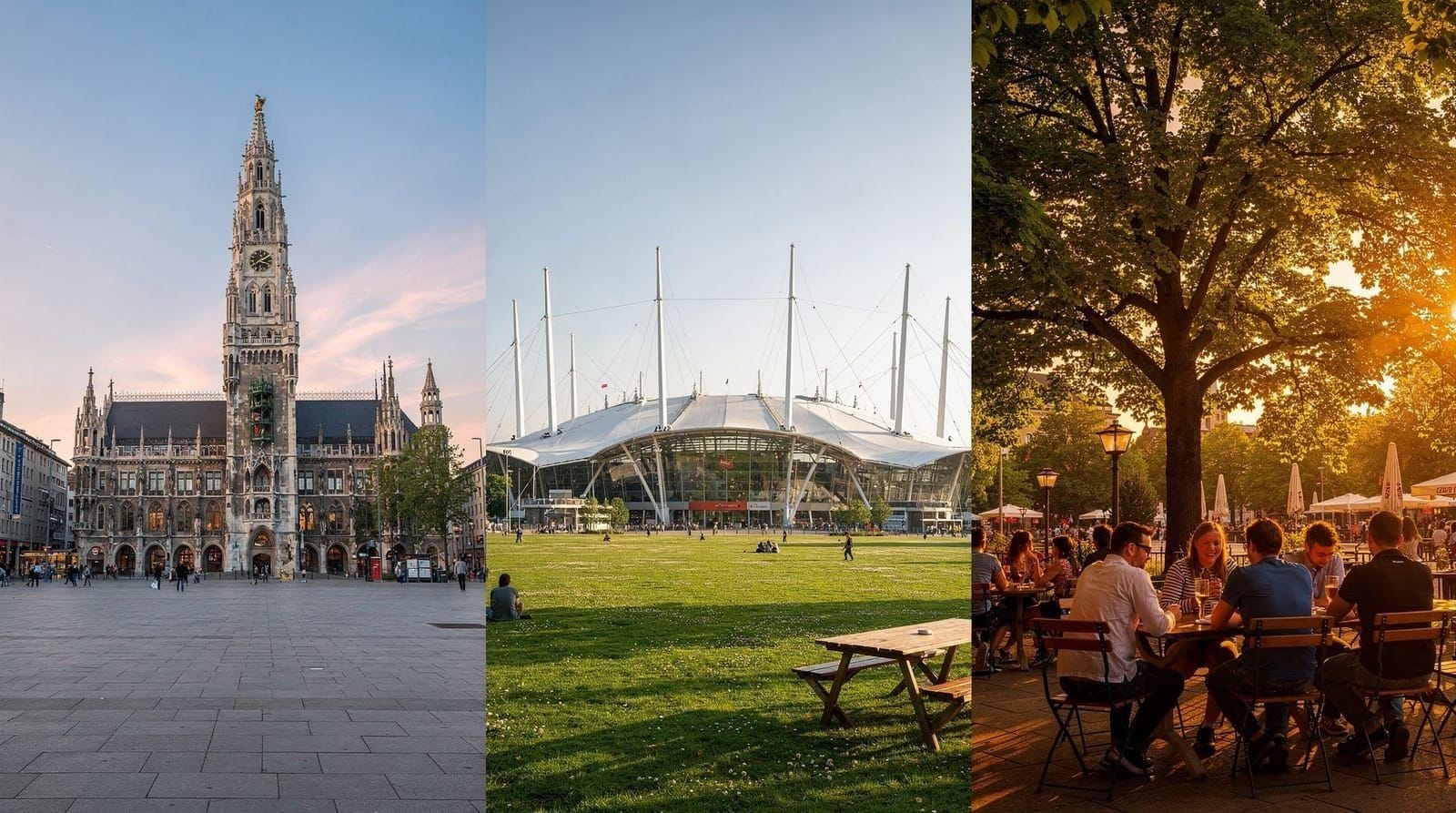
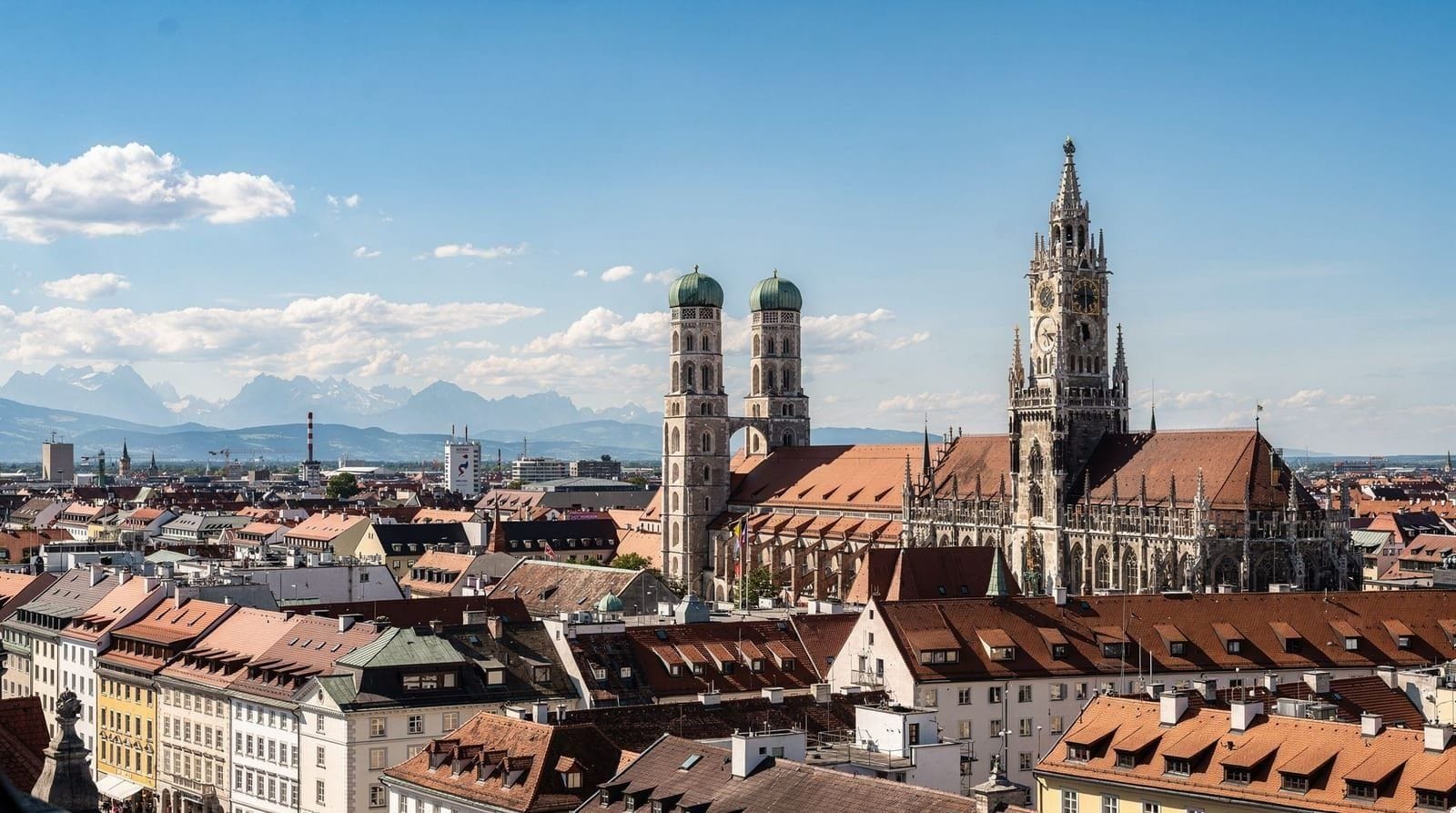
Marienplatz is the starting point for any Munich visit. The Neues Rathaus Glockenspiel runs at 11:00 and 12:00 in summer — arrive by 10:45 to see it without a crowd. Walk to the Frauenkirche (10 minutes, free entry) then double back through the Rindermarkt to the Viktualienmarkt for breakfast.
Morning standard: Weisswurst, sweet mustard, pretzel (8-10 EUR). The butcher stalls near the market’s central beer garden are the best source. The Viktualienmarkt beer garden opens from around 09:00.
09:30 — Residenz Palace
The Residenz is Munich’s most underrated major sight — 130 state rooms spanning six centuries of Wittelsbach taste. The Antiquarium (built 1568, the largest secular Renaissance hall north of the Alps) stops most visitors in their tracks. Combined entry: 20 EUR. Allow 90 minutes.
The Asam Church is a 10-minute detour south and takes 20 minutes. Free and spectacular. Residenz Palace private guided tour
Afternoon: Nymphenburg and English Garden
12:30 — Lunch and English Garden
Walk northeast through the Hofgarten into the English Garden (3.7 km long, larger than Central Park). Lunch at the Chinesischer Turm beer garden — self-service roasted chicken (11 EUR) and Masskrug Augustiner (9.50 EUR). Check the Eisbach surfers near the southern entrance — Munich’s most surreal sight.
14:30 — Nymphenburg Palace
Tram 17 from Karlsplatz (20 minutes) to Munich’s most photogenic royal residence. The palace canal, formal garden, and four hunting lodges in the grounds are all worth exploring. Entry 9 EUR (2026). Focus on the main palace and the Amalienburg lodge — the Badenburg (a baroque indoor swimming pool from 1721) is the most unusual room on the grounds. See Nymphenburg Palace guide.
17:00 — Return to centre
Evening: Beer hall experience
19:30 — Augustiner Keller
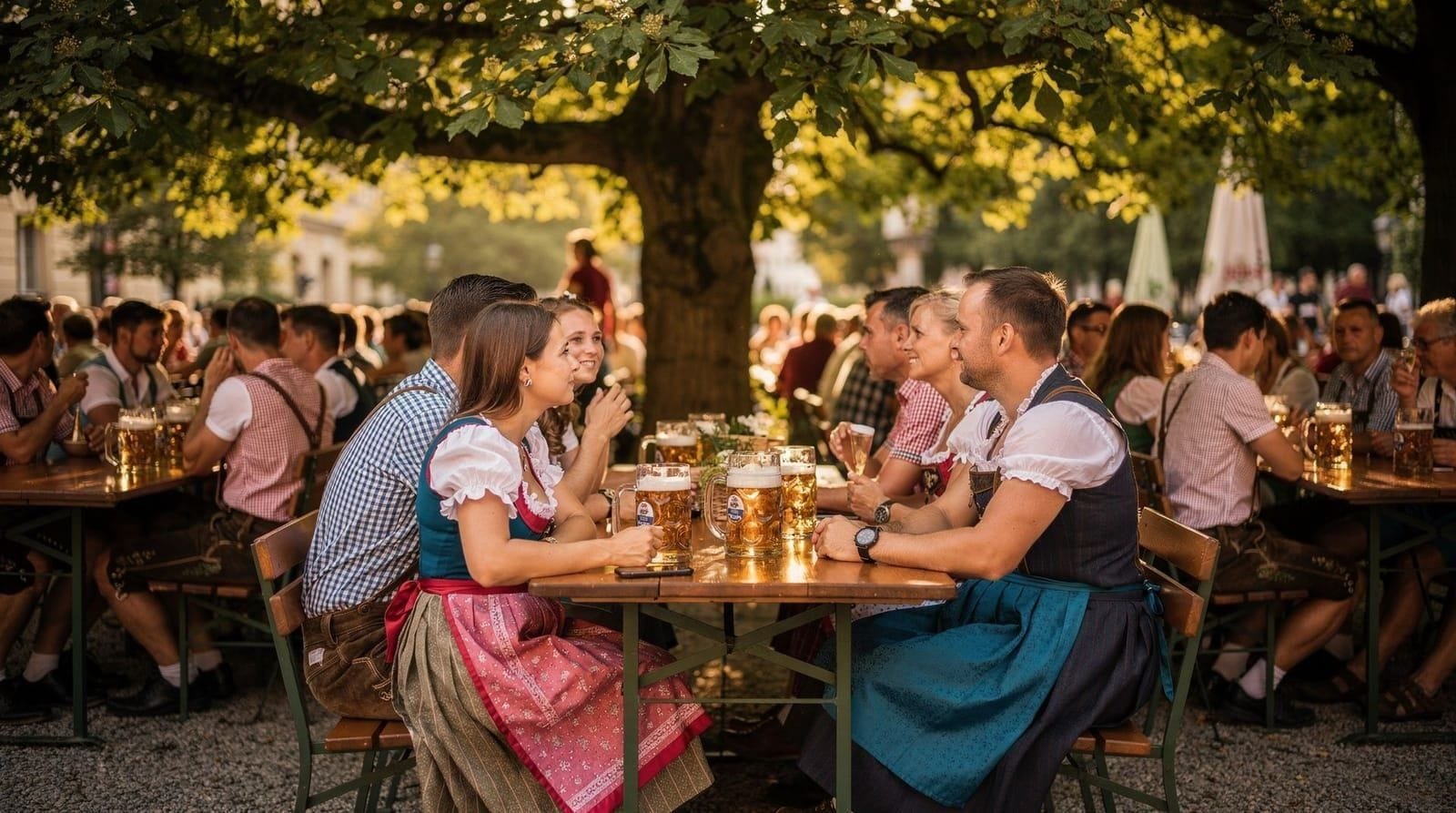
Arnulfstrasse 52, 10 minutes’ walk from Hauptbahnhof. Munich’s finest old-school beer hall: wood-panelled rooms, Augustiner Helles vom Holzfass (lager from wooden barrel, the benchmark of Munich beer), and a beer garden that fills with Munich residents in warm weather. Mains 16-22 EUR. Quieter and more authentic than the Hofbräuhaus.
Day 2: Neuschwanstein Castle day trip
Full day: Royal castles
07:30 — Train to Füssen
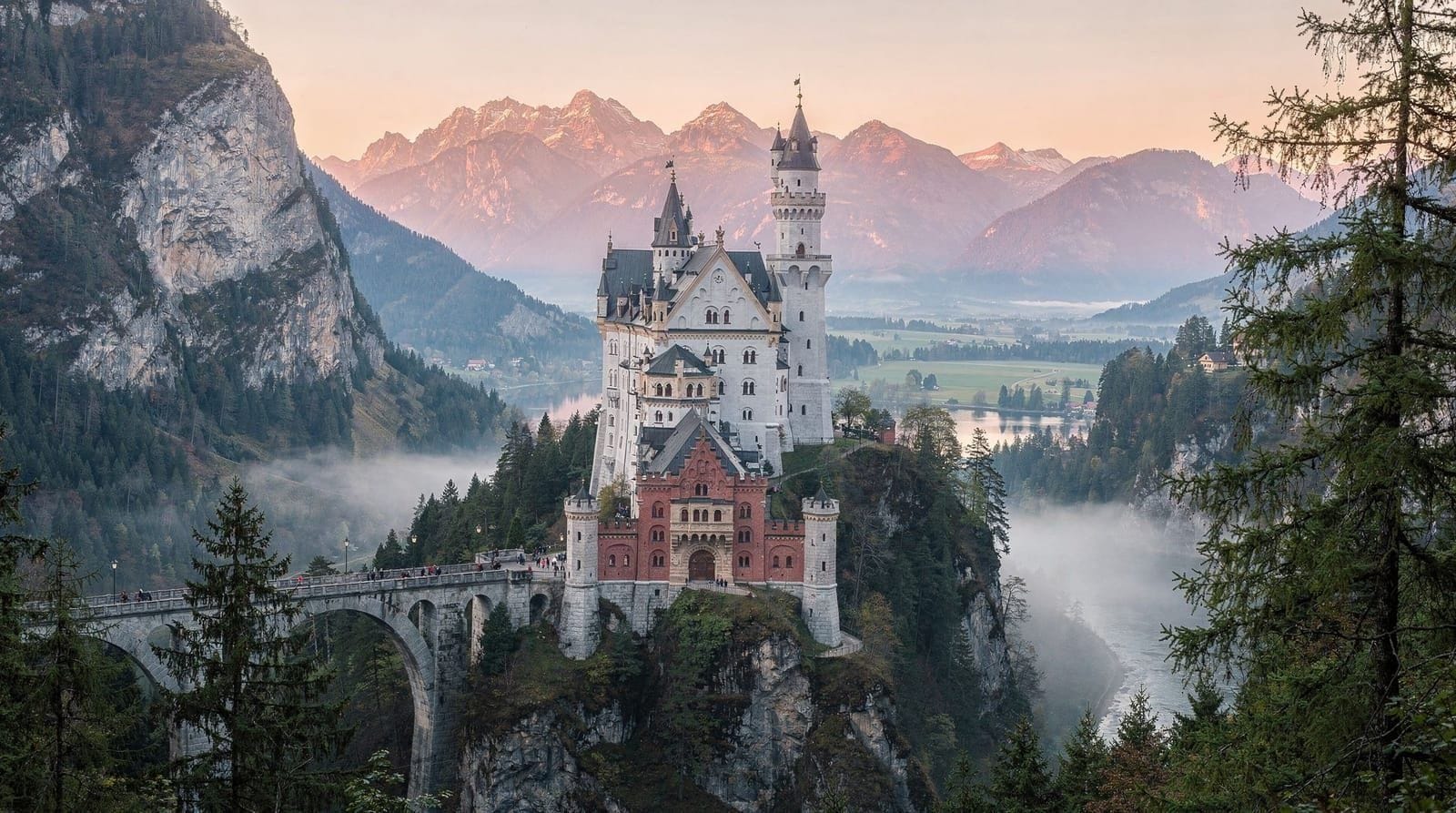
Bayern-Ticket (25 EUR for 1 person, 2026) covers the 2-hour regional train journey from Munich Hauptbahnhof to Füssen via Buchloe. Neuschwanstein timed tickets must be booked online weeks ahead in summer — book before arranging anything else about this trip.
09:30 — Neuschwanstein and Hohenschwangau
Bus 73/78 from Füssen station to Hohenschwangau (10 minutes) or taxi (12 EUR). The Neuschwanstein castle tour is 35 minutes inside (guided only). Adult entry: 17 EUR (2026). Immediately below, Hohenschwangau is Ludwig II’s actual childhood home with more colourful interiors and a more human scale — entry 21 EUR.
Walk from the ticket office up to the Marienbrücke iron footbridge (25 minutes) for the classic castle photo. Visit in the morning for better light. See the Neuschwanstein Marienbrücke guide for exactly where to stand. Full-day Neuschwanstein guided trip from Munich
13:00 — Lunch in Füssen old town
Bus back to Füssen. The old town (Altstadt) around Brotmarkt has independent cafes and the Hohes Schloss castle — the medieval princes’ residence, now partly a gallery. Gasthof zum Schwanen does Bavarian food for 14-18 EUR.
15:30 — Optional: Linderhof detour
If returning by the 17:00 train, a quick stop at Linderhof Palace is not realistic from Füssen. Save Linderhof for the 5-day itinerary or a car-based trip.
16:30 — Return train to Munich
Arrive Munich Hauptbahnhof approximately 18:30.
Evening: Hofbräuhaus
19:30 — Hofbräuhaus
Night two calls for the Hofbräuhaus — Munich’s most famous beer hall (1589), the one everyone talks about. It’s rowdy and full of tourists; it’s also a genuine Munich institution with good food. Schweinshaxe (pork knuckle, 24 EUR), half a chicken (14 EUR). Reserve ahead for summer weekends.
Day 3: Dachau Memorial and Salzburg preview
Morning: Dachau
09:00 — S-Bahn to Dachau Memorial
S2 from Munich Hauptbahnhof to Dachau (25 minutes). Bus 724 to the memorial site. Free entry. The Dachau Concentration Camp Memorial opens at 09:00. Permanent exhibition: 2 hours. Grounds (original barracks, crematorium, punishment block): 1 additional hour. A guided tour adds context: Dachau Memorial small-group guided tour
Return to Munich by 13:00.
Afternoon and evening: Prepare for Salzburg day
14:00 — Lunch in Maxvorstadt
The Maxvorstadt university quarter has Munich’s best density of independent restaurants. Cafe Luitpold (Briennerstrasse) is the most atmospheric — a 19th-century coffee house with good lunch plates (16-22 EUR).
15:00 — Alte Pinakothek or leisure
If you have energy: the Alte Pinakothek houses Rubens, Dürer, and Raphael. Entry 12 EUR (7 EUR Sundays). Allow 90 minutes for the highlights. Alternatively, an afternoon in the English Garden or Schwabing neighbourhood offers a slower pace before tomorrow’s travel day.
19:00 — Early dinner and early night
Salzburg day starts early (see Day 4). A relaxed dinner in the hotel area is more sensible than another late beer hall night. Takeichi (Theresienstrasse, ramen 14-16 EUR) or a Brotzeit plate at a neighbourhood gasthaus.
Day 4: Salzburg day trip
Full day: Mozart’s city
08:00 — Train to Salzburg
RJ (Railjet) train from Munich Hauptbahnhof to Salzburg Hauptbahnhof: 1 hour 30 minutes. Trains every hour from 06:00. Standard fare: 25-50 EUR return on EC/ICE services, depending on booking window. OBB Sparschiene tickets (booked weeks ahead) can cost as little as 9 EUR each way. The Bayern-Ticket does NOT cover international trains to Austria — you need a separate Austrian/OBB ticket or Interrail pass.
Salzburg is covered in detail in the Munich to Salzburg day trip guide. The essentials:
10:30 — Salzburg Old Town (Altstadt, UNESCO listed)
Walk from Salzburg Hauptbahnhof (20 minutes on foot) or Bus 3/8 to the Old Town. Key stops: Getreidegasse (Mozart’s birthplace at No. 9, entry 13 EUR); Mozartplatz; the Residenzplatz and Residenz fountain; the Dom (Cathedral, free). The Altstadt is compact — you can cover the main streets in 2 hours on foot.
12:30 — Lunch on Universitatsplatz or Steingasse
Cafe Tomaselli (Alter Markt 9) is Salzburg’s oldest coffee house (1705) — coffee and Apfelstrudel (8-11 EUR) is the classic order. For a Salzburg meal, Gasthof Zum Wilder Mann (Getreidegasse) does Salzburger Nockerl (a regional soufflé dessert) alongside solid Austrian mains.
14:00 — Hohensalzburg Fortress
The fortress (Festung Hohensalzburg) dominates the skyline from every angle. Funicular from Festungsgasse (13.80 EUR return including fortress entry, 2026). Views over the Salzach river and the Alps are excellent. The fortress itself is open 09:00-19:00 (summer). Allow 90 minutes.
16:00 — Mirabell Palace and gardens
The Mirabell Gardens (free) are directly across the Salzach river and contain the hedge maze and stairway location used in The Sound of Music. For Sound of Music tour context, see the Sound of Music Salzburg tour guide.
17:30 — Train back to Munich
Direct Railjet trains depart every hour. Arrive Munich Hauptbahnhof by 19:00-19:30. Munich to Salzburg guided day trip by train
Evening: Low-key Munich farewell
20:00 — Dinner in Au-Haidhausen
The Au-Haidhausen neighbourhood east of the Isar is an excellent final-evening choice: local wine bars, independent restaurants, and none of the tourist activity of the Altstadt. Wirtshaus im Maximilianeum (Maximilianeum 1) is particularly good for Bavarian classics in a quiet setting.
Practical notes for 4 days
Transport costs summary (per person):
- MVV day tickets x2 (Days 1 + 3): 18 EUR
- Bayern-Ticket (Day 2 Neuschwanstein): 25 EUR
- Salzburg return train (Day 4): 30-50 EUR depending on booking
- Total transport: 73-93 EUR
Booking priority list:
- Neuschwanstein timed tickets (book 2-4 weeks ahead minimum in summer)
- Hofbräuhaus dinner reservation (Friday/Saturday, 2-3 days ahead)
- Salzburg train tickets (OBB Sparschiene = cheapest if booked 2 weeks ahead)
4-day variant — Zugspitze instead of Salzburg: Replace Day 4 with the Zugspitze day trip for Germany’s highest peak (2,962m). Train from Munich Hauptbahnhof to Garmisch-Partenkirchen (90 minutes, Bayern-Ticket), then the Zugspitze cogwheel train or cable car. Summit restaurant and glacier. Return by late afternoon.
Frequently asked questions about this itinerary
Is 4 days enough to see Munich and Bavaria properly?
Four days covers Munich itself thoroughly and allows two day trips. You won’t see the Bavarian Alps in depth, Regensburg, Nuremberg, or Berchtesgaden. For a fuller Bavaria experience, 7 days is better — see the 7-day Munich and Bavaria itinerary.
Can I do Neuschwanstein and Salzburg in the same day?
Not comfortably. Both require 3+ hours of travel time, and Neuschwanstein requires 2-3 hours on site. Attempting both means rushed visits to each. Keep them on separate days.
What’s the best train option from Munich to Salzburg?
Austrian Federal Railways (OBB) Railjet services are fastest (90 minutes) and most comfortable. Book at oebb.at or bahn.de. Sparschiene early-bird tickets can be as cheap as 9 EUR each way if booked 2-4 weeks ahead. The Bayern-Ticket is not valid for international journeys.
Is Dachau appropriate after visiting Neuschwanstein?
The contrast is jarring if visited back-to-back, but both are essential to understanding 20th-century Bavaria. Most visitors find spacing them by at least one day emotionally helpful. This itinerary puts them on Days 2 and 3 respectively, which works well.
Which day is best for the Bavarian food market breakfast?
The Viktualienmarkt runs Monday to Saturday. Sunday mornings, opt for the Auer Dult market (seasonal, Mariahilfplatz, eastern Altstadt) or a hotel breakfast — the Viktualienmarkt is closed.
Can I visit Hohenschwangau and Neuschwanstein both in one day?
Yes. Both castles are within 10 minutes’ walk of each other and the shared ticket office. Allow 30-35 minutes for each guided tour. Most visitors do both in a half-day at Schwangau, leaving afternoon time for Füssen old town or the Partnach Gorge (a 1-hour drive from Schwangau).
Practical details for 4 days in Munich
Day-by-day packing list:
- Day 1 (city walking): Comfortable shoes, day bag. No special equipment needed.
- Day 2 (Neuschwanstein): Layers (mountain temperature is 5-8 degrees lower than Munich), sturdy shoes for the uphill walk to the castle, water bottle. The horse carriage queues often run longer than the walk.
- Day 3 (Dachau + Nymphenburg): No special equipment. Dachau has no cafe on site; bring a snack or eat breakfast before departing.
- Day 4 (Salzburg): Passport or national ID card if travelling from Germany to Austria (EU free movement, but occasionally checked on OBB trains). Keep OBB ticket on your phone or printed.
Money and payment: Munich is more cash-friendly than most European capitals, though card payments are now accepted in most restaurants and museums. The Hofbräuhaus accepts cards; smaller beer gardens (like Chinesischer Turm) accept both. Dachau is free. Keep some cash (20-40 EUR) for market purchases and smaller Gasthäuser.
Salzburg practical notes: The city is in Austria, which uses EUR — no currency exchange needed. The historical centre is compact and walkable from Hauptbahnhof (20 minutes on foot). Buying Austrian stamps for postcards at the Salzburg Hauptbahnhof newsagent (not German stamps) is essential if you plan to mail anything.
Maximising Day 1 with the Residenz: The Residenz has two separate ticketing options — the state rooms alone (13 EUR), or state rooms plus treasury (20 EUR). The Treasury is worth the additional cost for the 16th-century Wittelsbach electoral regalia, including the Crown of Bavaria (Bayerische Königskrone, 1806) and a late-Gothic prayer book (Gebetbuch) in a cover studded with rubies and pearls. The Cuvilliés Theatre (3 EUR additional, separate entrance on Briennerstrasse) is Europe’s finest surviving Rococo court theatre but can only be visited on its own timed slot — check current hours at residenz-muenchen.de.
Munich travel tips for a 4-day visit:
The Munich travel tips guide covers the specifics in more detail, but key points:
- Never buy tickets on trains without first validating them at the platform stamp machines (blue boxes) — the MVV day ticket must be stamped when first used or it’s invalid.
- Munich has no tipping culture at beer halls — rounding up to the nearest euro is standard. At sit-down restaurants, 5-10% is appropriate if service was good.
- Bike rental is a genuine alternative to public transport for city days — Munich has excellent cycling infrastructure and the English Garden is magnificent by bike. Rental shops near the Hauptbahnhof typically charge 15-20 EUR/day for a standard bicycle.
- The Munich U-Bahn and S-Bahn guide covers the network in detail, including night bus options after 01:00 when the U-Bahn closes.
Comparison: 4 days vs. 5 days: Adding a fifth day lets you include the Zugspitze (Germany’s highest peak, a full day from Munich) or replace the rushed morning/afternoon split on Day 3 with slower, deeper visits. See the 5-day Munich and Bavaria itinerary for how an additional day changes the experience.
Honest notes on tourist traps: The Hofbräuhaus sells its own branded beer steins at inflated prices — you can find the same quality at Manufactum in the Altstadt or at the Viktualienmarkt craft stalls for 30-50% less. The pretzel sellers outside major attractions charge 5-6 EUR for what the Viktualienmarkt sells for 1.50 EUR. The “traditional Bavarian dinners” in hotel packages are almost universally inferior to simply booking a table at a genuine beer hall. See the Munich tourist traps guide for a fuller list.
Biking as an alternative to public transport on Day 1: Munich has 1,200 km of bike lanes and is one of Europe’s most cycling-friendly cities. Renting a bike for Day 1 (15-20 EUR/day from shops near Hauptbahnhof) lets you cover Marienplatz, the English Garden, and Nymphenburg at a relaxed pace without any U-Bahn or Tram transfers. The English Garden in particular is excellent by bike — you can follow the Eisbach stream north and arrive at the Chinese Tower beer garden by a route that takes you through quiet meadows.
What Munich does better than other German cities: Munich is not Berlin, and this is not a criticism. Munich’s strengths are: consistency (reliable, clean, well-organised), a genuine outdoor cafe and beer garden culture that doesn’t exist at the same quality elsewhere in Germany, the juxtaposition of serious high culture (Pinakotheks, Residenz) with serious low culture (Masskrug, Weisswurst, lederhosen), and proximity to the Alps that gives the city a different relationship with nature and seasons. The is Munich worth visiting guide addresses the question honestly for different types of traveller.
Four-day summary at a glance
| Day | Morning | Afternoon | Evening |
|---|---|---|---|
| Day 1 | Marienplatz, Frauenkirche, Residenz | English Garden lunch, Nymphenburg Palace | Augustiner Keller |
| Day 2 | Train to Füssen, Neuschwanstein, Hohenschwangau | Füssen lunch, Marienbrücke | Hofbräuhaus |
| Day 3 | Dachau Memorial | Maxvorstadt lunch, Alte Pinakothek | Early dinner (Salzburg early start tomorrow) |
| Day 4 | Railjet to Salzburg, Altstadt | Hohensalzburg Fortress, Mirabell Gardens | Au-Haidhausen dinner |
Weighing Zugspitze against Salzburg for Day 4
This itinerary defaults to Salzburg for Day 4, and for most first-time visitors it’s the right call — a UNESCO old town, Mozart history, and a genuinely different country in one day. But the Zugspitze variant noted above deserves a fuller comparison if you’re undecided. Salzburg is culture and architecture; the Zugspitze is nature and altitude — Germany’s highest peak at 2,962m, with views into four countries on a clear day. Salzburg works regardless of weather; the Zugspitze is essentially wasted in cloud, so check the summit webcam before committing. If you’ve already done a European old town on this trip or a previous one, the Zugspitze offers something this itinerary otherwise lacks entirely: genuine alpine scenery. The Bavarian Alps 3-day itinerary is worth a look if the mountains end up mattering more to you than a second historic city centre.
How this compares to 3 and 5 days
Against the 3-day itinerary, the extra day here buys you Salzburg — a full country, not just a museum afternoon, which is a bigger jump than it might look on paper. Against the 5-day Munich and Bavaria itinerary, you’re missing the Zugspitze summit and a somewhat more relaxed pace generally; four days here still involves back-to-back day trips on Days 2 and 4 with only Day 3 as a breather. If your trip has any flexibility, moving from four to five days does more for your comfort level than moving from three to four.
Where the pressure points are: Days 2 and 4 are both early-start, full-day round trips with limited slack — if either train runs late or a queue is longer than expected, the schedule compresses rather than breaks, but it stops being relaxed. Day 3, sandwiched between them, functions as recovery as much as sightseeing; resist the urge to overfill it with a second museum on top of Dachau. The Munich trip planning guide has a broader framework for building slack into any multi-day Bavaria itinerary, which is worth applying here if you tend to overschedule, particularly around the two long day-trip days that bookend the middle of this itinerary.
Top experiences
Bookable activities with verified prices and instant confirmation on GetYourGuide.