
Munich tourist traps: what to skip and what's actually worth it
Munich: old town walking tour
What are the biggest tourist traps in Munich?
The Hofbräuhaus is genuinely historic but its food is overpriced and mediocre — go for one beer, eat elsewhere. Marienplatz souvenir shops charge 3-5x street market prices. 'Free' walking tours are tip-mandatory and often low quality. Licensed taxis outside the airport still occasionally take long routes — always confirm the fixed airport rate (€70-€85) upfront.
What visiting Munich honestly costs — before you get surprised
Munich does not pretend to be cheap, and that honesty is actually one of its virtues. A sit-down lunch at a mid-range restaurant will run €15–25 per person. A Maß of beer — the iconic one-litre stein — costs around €9–10 in a standard beer hall and €14–15 in Oktoberfest tents. Coffee at a café near the Residenz: €4–5. These are the baseline numbers, and most of them are reasonable for a wealthy European capital with genuinely excellent food and infrastructure.
The problem is not that Munich is expensive. The problem is that a small but significant layer of tourist-facing businesses charges dramatically more than the local rate for noticeably worse products. A Schweinsbraten that costs €16 at a neighbourhood Wirtshaus turns up on a tourist menu near Frauenkirche for €28. A ceramic stein worth €15 at the Viktualienmarkt sits behind glass near Marienplatz with a €45 price tag. A “free” walking tour costs exactly what a paid one does — just without the accountability.
This guide names those traps specifically: where they are, what they cost, and what to do instead. It is not an argument against spending money in Munich. It is an argument for spending it on things that are actually good. If you are still putting together your itinerary, the destinations overview for Munich covers what is worth prioritising across a full visit.
| Where traps cluster | Marienplatz, Weinstrasse, Platzl (around the Hofbräuhaus) |
| Typical markup | 30–500% above the local rate |
| Cost to avoid it | Usually nothing — just walking one or two streets further |
| Biggest single trap | ”Free” walking tour tips (€15–20/person, same cost as a paid tour) |
| Best defense | Menus in six languages, photos of every dish, and staff waving you in are all red flags |
The Hofbräuhaus problem
Let us start with the most debated venue in Munich. The Hofbräuhaus is not simply a tourist trap — that framing is too reductive. It was founded in 1589 as a ducal brewery, it survived the Second World War largely intact, and it has been a fixture of Munich life for centuries. Hitler gave his early speeches there; Lenin drank there while in exile. The building, the vaulted ceilings, and the oompah band are all genuine.
Go once. Have a beer. Soak in the atmosphere. That is the correct use of the Hofbräuhaus.
The trap is the food — and the assumption that because the venue is famous, the cooking must be good. It is not. A Schweinsbraten at the HB in 2026 costs €22–26. An equivalent roast pork at Augustiner am Platz, seven minutes’ walk away, costs €14–18 and is prepared with more care. Löwenbräukeller in Maxvorstadt serves the same dish for similar prices with a terrace that has none of the tour-group crowd management.
The beer price itself is not a Hofbräuhaus trap — all Munich beer halls operate on roughly the same pricing, around €9–10 per Maß in normal conditions. This is a Munich-wide baseline, not an HB premium. So the beer is fine. Order a Maß, look at the ceiling, listen to the band, and then leave for dinner somewhere else.
The broader trap in the same category is the “tourist menu” phenomenon. Restaurants directly surrounding the HB on Platzl and along the pedestrian zone post large menu boards in English, Italian, Japanese, and Korean advertising set menus for €30–40. These menus are designed to look comprehensive and Bavarian while serving food that bears no resemblance to what locals eat. The red-cabbage garnish is from a jar. The Knödel are microwaved. The gravy is powder-based. None of this is what Bavarian cooking actually is.
For a proper assessment of the HB’s genuine appeal alongside its limitations, read the Hofbräuhaus guide. For better alternatives across Munich, the Munich beer halls guide covers Augustiner-Keller, Löwenbräukeller, Paulaner am Nockerberg, and the Hirschgarten — all of which offer more authentic food at fairer prices. If you want to understand the context before you go, the Munich beer hall etiquette guide is useful for navigating the culture without overpaying.
The trap, and the fix, at a glance:
| Trap | Typical cost | Better alternative | Cost there |
|---|---|---|---|
| Schweinsbraten at HB tourist tables | €22–26 | Augustiner am Platz, 7 min walk | €14–18 |
| Ceramic stein near Marienplatz | €45–65 | Viktualienmarkt stall | €15–20 |
| ”Free” walking tour tip | €15–20/person | Licensed small-group tour | Fixed price, vetted guide |
| Weinstrasse “traditional” set menu | €30–40 | Gärtnerplatzviertel or Au-Haidhausen restaurant | €15–25 |
| Third-party skip-the-line reseller | 30–60% markup | Official site (e.g. residenz-muenchen.de) | Official price |
Marienplatz and the souvenir tax
The 200-metre radius around Marienplatz operates on a separate economy from the rest of Munich. Prices for souvenirs in this zone follow a simple rule: take what the item costs at the Viktualienmarkt or a neighbourhood shop, multiply by three to five, and that is your price.
A hand-painted ceramic beer stein that sells for €15–20 at a stall in the Viktualienmarkt will appear behind a lit glass cabinet near the Neues Rathaus for €45–65. The provenance markings are often identical: “Made in Bavaria” can legally refer to a product assembled in Bavaria from components manufactured elsewhere, and many of the steins near Marienplatz are exactly that. If you want a stein that is genuinely produced by a Bavarian craftsperson, ask the seller directly for the name of the manufactory and verify it — very few of the tourist-zone shops will be able to answer.
The cuckoo clock situation is worth addressing separately because it causes specific confusion. Cuckoo clocks are not Bavarian. They are a product of the Black Forest, which is in Baden-Württemberg — a different German state with a different food culture, dialect, and history. Any shop near Marienplatz selling “authentic Bavarian cuckoo clocks” is selling a geographic fiction. The clocks themselves may be genuine Black Forest products (look for the “Verein die Schwarzwälder Uhrmacher” certification mark), but they have no special connection to Munich or Bavaria. If someone tells you otherwise, walk out.
Better places to buy:
- Dallmayr on Dienerstrasse for exceptional food souvenirs — local jams, honeys, coffee, pralines. Pricy, but genuinely what the label says.
- Manufactum at Hackenstrasse for German-made products across multiple categories.
- Obletter Spielwaren on Kaufingerstrasse for quality children’s gifts and toys that are not souvenir-junk.
- The Viktualienmarkt itself for edible souvenirs — Bavarian mustard, Lebkuchen spice mixes, artisan bread. Read more in the Viktualienmarkt food guide.
For what Marienplatz is genuinely worth — the Glockenspiel, the architecture, the view from the Neues Rathaus tower — the Marienplatz guide covers it with honest timing advice.
The “free” walking tour reality
Munich’s Marienplatz is one of the busiest free walking tour launch points in Europe. Most mornings, you will find three to six different tour operators with brightly-coloured umbrellas, offering 2.5-hour tours of the Altstadt at no upfront cost.
Here is the mechanism: guides work entirely on tips. At the end of the tour, they give a short speech about how the recommended tip is €15–20 per person. Most tourists, feeling social pressure and not wanting to seem cheap after spending two hours with someone, pay it. This makes the effective cost identical to a paid fixed-price tour — but without any of the accountability structures that paid tours require.
Licensed paid tours employ guides who must maintain quality or lose bookings and reviews. Free-tour guides have no such check. Some are genuinely excellent — knowledgeable, engaging, well-prepared — but there is no way to know in advance, and no mechanism for recourse if the tour is poor. Quality variance is extreme.
The tours also tend to share the same route (Marienplatz, Frauenkirche, Residenz exterior, Hofgarten, Odeonsplatz) and the same historical anecdotes pulled from the same handful of English-language Munich guides. If you have done a free walking tour in any European city, you have a reasonable preview of what you will get.
The better option if you want a guided Altstadt experience is a small-group licensed tour: 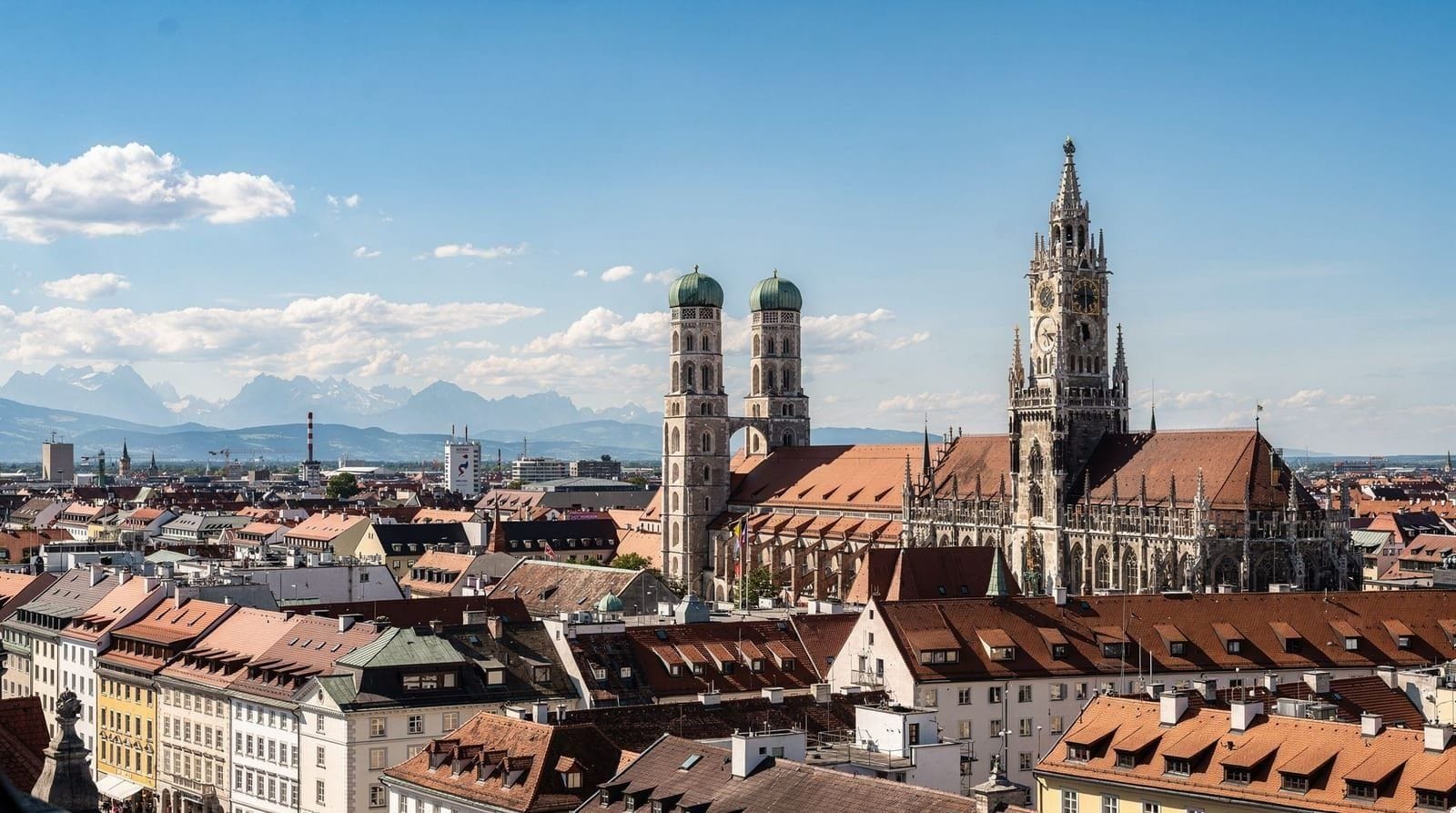 old town walking tourCheck availability
This gives you a vetted guide, a fixed price, and a rating system that creates real accountability. The Munich walking tours guide compares the main options including self-guided routes. And the Munich free walking tours guide gives an honest breakdown of which operators are more reliable if you do decide to go the tip-based route — including how to evaluate a guide in the first few minutes before committing.
Restaurant tourist menus near the main sights
The English-menu signal is the most reliable tourist-trap detector in Munich. Any restaurant that posts a laminated A-frame menu in six languages on the pavement outside Frauenkirche, along Weinstrasse between Marienplatz and the cathedral, or directly facing the Residenz entrance is almost certainly operating on a tourist markup model. The food is designed to look Bavarian — it uses the right vocabulary, the right garnishes — but the sourcing, preparation, and portion quality are calibrated for volume, not flavour.
Specific red flags to recognise:
- Photos of every dish printed on the menu (a practice no self-respecting Munich restaurant uses)
- Staff stationed outside who approach you, make eye contact, and gesture toward a table
- “Traditional Bavarian” labelling on dishes that are not traditional (pasta dishes, pizza, and generic schnitzel that is not Wienerschnitzel all appear on these menus)
- No German on the menu at all — in a Munich restaurant with any local clientele, there would be at least a German version
The worst concentration of these restaurants runs along Weinstrasse and the short stretch of Kaufingerstrasse closest to Marienplatz. Avoid sitting down anywhere in that specific corridor without first walking another two streets in any direction.
Better neighbourhoods to eat:
- Gärtnerplatzviertel: about ten minutes’ walk south of Marienplatz, dense with independent restaurants and bars that serve real food at reasonable prices
- Au-Haidhausen: across the Isar, slightly further, excellent value and a strong neighbourhood restaurant scene
- Side streets off Sendlinger Strasse: particularly Herzogspitalstrasse and Damenstiftstrasse, which have butchers, delis, and small restaurants that serve local workers at lunch
The best restaurants in Munich guide includes specific name recommendations across price ranges. For the specifically Bavarian food question — what real Schweinsbraten, Weisswurst, and Brez’n should taste like — the best Bavarian food in Munich guide is the right reference.
Taxi overcharging and transport traps
Munich taxis are metered, licensed, and regulated by the Bavarian transport authority. Outright fraud — refusing to use the meter, charging invented prices — is genuinely rare and can be reported. The more common issue is legal overcharging through route choice, and it is worth understanding before you arrive.
The airport route problem: The journey from Munich Airport (MUC) to the city centre has no officially fixed flat rate — it is metered. The standard journey via the Stadtautobahn (city motorway, A94/B2R approach) runs €70–85 depending on traffic and exact destination. The longer route via the A9 Autobahn adds approximately 15 minutes and €10–15 to the fare, and it is perfectly legal for a driver to take it unless you specify otherwise. When you get into a taxi at MUC, say “Bitte über die Stadtautobahn” — “via the city motorway, please” — and you avoid this issue. Alternatively, take the S-Bahn S1 or S8 from the airport directly to Marienplatz for €13.60, around 40 minutes.
City centre: Hail taxis from marked Taxistands (taxi ranks) rather than flagging them from the pavement near tourist sites. Drivers at official ranks are next in a rotating queue and have no reason to favour certain passengers or routes. Drivers who approach you — or who are flagged by hotel staff outside major tourist hotels — occasionally have arrangements with specific partners. The meter should start as soon as you get in; if it does not, ask the driver to start it before moving.
Uber operates legally in Munich, uses the same licensed driver pool, and provides a useful price comparison. For most city-centre journeys, the fare is comparable to metered taxis, but you have an upfront estimate.
Airport transfer touts: Near the Munich Airport arrivals hall, individuals sometimes approach travellers offering “official” fixed-price transfers to the city at rates well above a metered taxi or the S-Bahn. These are not airport-authorised services. Use the official taxi rank, a pre-booked licensed transfer, or the S1/S8 S-Bahn — all clearly signed and genuinely regulated.
One trap to avoid entirely: the tour bus and day-trip package sellers who operate outside Marienplatz and near the Hauptbahnhof. These sell “Neuschwanstein day trips” and “Bavarian highlights” packages often for €70–120 per person. Some are legitimate operators; many are unlicensed resellers of coach seats to licensed tours, taking a large cut. If you want a day trip, book directly with a named operator or through a vetted booking platform. More context in the Munich old town history guide on navigating the historical sites without paying inflated package prices.
Overpriced “skip-the-line” ticket resellers
Several major Munich attractions — particularly the Residenz, the BMW Museum, and Nymphenburg Palace — are targeted by third-party ticket resellers operating through Google Ads, Viator clones, and tourist-zone kiosks. These resellers charge 30–60% above the official entry price, often with no added service beyond a printable PDF.
Official 2026 prices to know:
- Residenz Munich (palace only): €9 adults, children under 18 free; combined Residenz + Treasury: €14
- Nymphenburg Palace: €9 adults (palace only); combination tickets available
- Deutsches Museum: €15 adults, €8 students
- BMW Museum (standalone): €10 adults; BMW Welt is free
If you see prices above these figures on a third-party site, you are paying a reseller markup with no benefit. The official booking channels are residenz-muenchen.de, deutsches-museum.de, and schloss-nymphenburg.de. None of these attractions has consistent queues that justify skip-the-line premiums — the Residenz in particular is often uncrowded except on peak summer Saturdays.
The exception: guided tours that include the entry ticket alongside interpretation are genuinely worth paying for. A food tour that charges €75 and includes Viktualienmarkt tastings, entry to a private beer cellar, and a knowledgeable guide costs more than self-entry because you are paying for curated access and expertise: 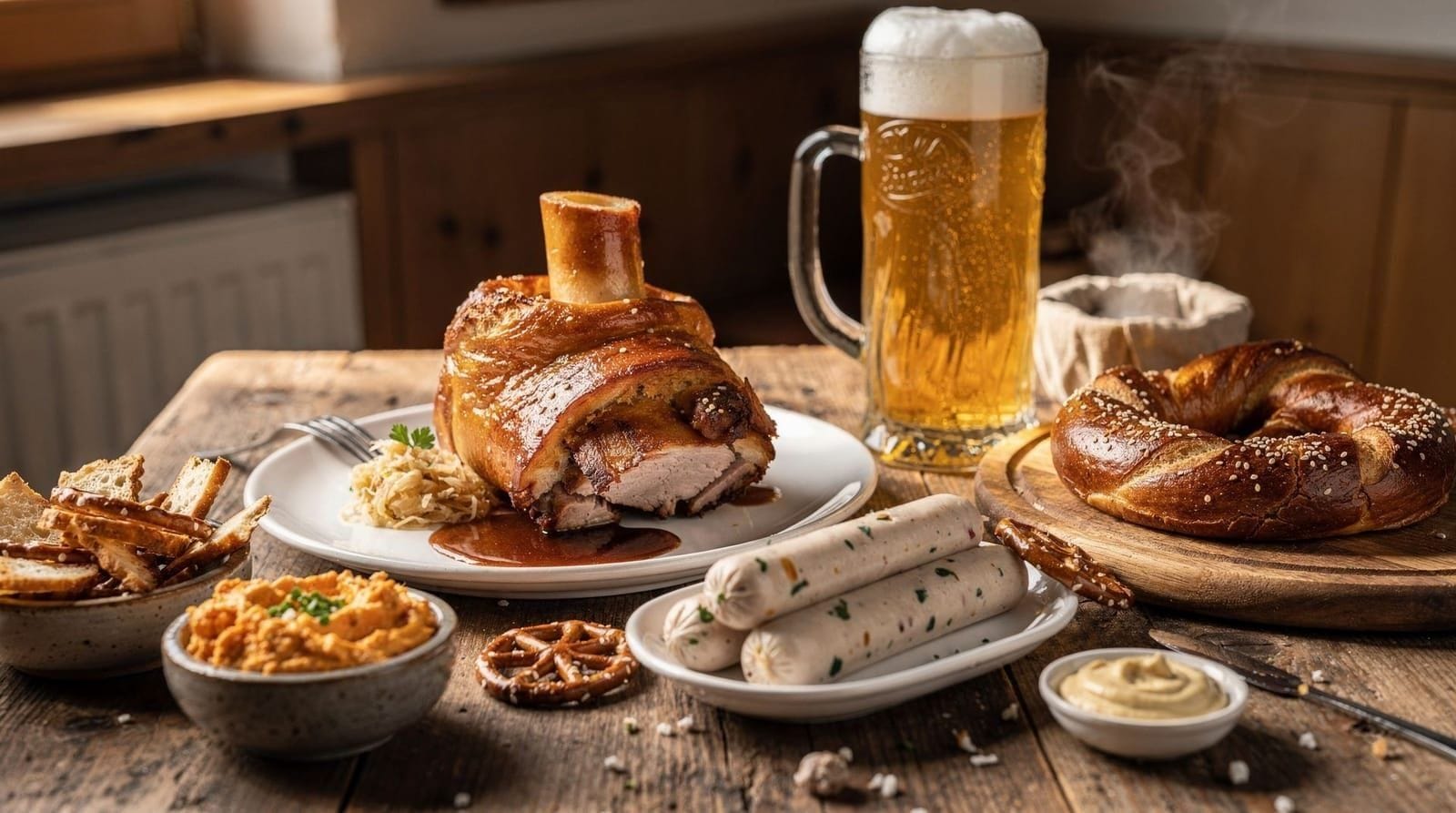 Viktualienmarkt and Altstadt food tourCheck availability
The Munich food tour guide goes deeper on which food tour formats provide genuine value — tastings versus demonstrations versus pure walking, and what price per experience is fair. For the 1-day version of a Munich visit, the Munich 1-day itinerary also addresses how to sequence attractions without falling into the queuing and reseller traps.
Oktoberfest-specific traps worth knowing in advance
Oktoberfest brings its own layer of tourist pricing on top of Munich’s normal baseline. Table reservations at the big tents are frequently resold by unofficial brokers at multiples of the official price — always book directly through the tent’s own website or a named, licensed operator. Costumed “photo opportunity” vendors outside the Theresienwiese entrances charge for photos with props that add nothing authentic to the experience. And several bars along the approach routes advertise “Oktoberfest specials” that are simply standard drinks at a markup, unconnected to the festival itself. The Oktoberfest tickets and tables guide and the Oktoberfest scams and tips guide both go deeper on this if you are visiting during the festival specifically.
What is NOT a tourist trap (contrary to popular opinion)
Some things get labelled tourist traps that are not. It is worth being precise, because the label can cause visitors to avoid genuinely good experiences out of misplaced caution.
The Viktualienmarkt: Yes, prices are higher than a Rewe supermarket. A bunch of radishes costs more. This is because the market sells fresh produce sourced from local and regional farms, operates in a prime city-centre location, and employs humans rather than supermarket logistics. This is not a tourist trap — it is a market with honest pricing for what it is. Read the Viktualienmarkt food guide before you go.
Munich MVV public transport: The €9 single-day ticket looks expensive at first glance for a city transit system. It is not. It covers unlimited travel on all U-Bahn, S-Bahn, tram, and bus lines within the city ring. The partner ticket (up to 5 people, €18.50) is exceptional value for families or groups. No tourist trap here.
Nymphenburg Palace: The €9 entry is fair for the scale of the grounds and palace interior. The palace canal, formal French gardens, and the Marstallmuseum with its royal sleighs are all included. Crowds are minimal compared to the Residenz.
The English Garden: Completely free, 3.7 square kilometres, home to a river surf wave, beer gardens, and Japanese tea houses. No trap at all — just one of the best urban parks in Europe.
The food tour alternative worth paying for
The single most reliable way to eat well in Munich without falling into tourist menus is a vetted guided food tour. This is not a shill — it is a structural observation. A knowledgeable guide who takes you to specific stalls and restaurants is doing something that takes considerable local knowledge to replicate independently, especially on a first visit when you cannot read the signals (which bakery queue means the bread is good, which butcher does their own slaughtering, which café the Marktfrauen actually use).
Good food tours in Munich follow a logical geography: the Viktualienmarkt as the supply chain anchor, a beer hall for context, a pretzel bakery, often a cheese shop in the Gärtnerplatzviertel. They do not take you to the restaurants on Weinstrasse. Viktualienmarkt and Altstadt food tourCheck availability
The Munich food tour guide reviews the format options in detail. If you are planning multiple days, the Munich 2-day itinerary suggests a logical food tour timing that does not clash with the Marienplatz Glockenspiel crowds.
Frequently asked questions about Munich tourist traps
Is the Hofbräuhaus a tourist trap?
Partially. The venue itself is genuinely historic and worth visiting once for the atmosphere. The trap is the food: at €22–26 for a Schweinsbraten, you are paying double what equivalent dishes cost seven minutes away. Have a Maß, look at the ceiling, then leave for dinner at Augustiner-Keller or Löwenbräukeller. See the full Hofbräuhaus guide for a balanced assessment.
Are Munich taxis safe to use?
Yes, Munich taxis are licensed and regulated, and outright fraud is uncommon. The legitimate issue is route choice, particularly from the airport. Always ask for the Stadtautobahn route when travelling from MUC to the city, and use official Taxistands rather than flagged taxis near tourist hotspots. Uber also operates in Munich with the same licensed driver pool.
Where should I avoid eating near Marienplatz?
Avoid restaurants on Weinstrasse between Marienplatz and Frauenkirche, and those immediately adjacent to the Residenz entrance. Red flags: menus posted in six languages, staff stationed outside to wave you in, photos of every dish, and no German version of the menu. Walk ten minutes to the Gärtnerplatzviertel or Au-Haidhausen for dramatically better food at fairer prices.
Are “free” walking tours in Munich worth it?
Sometimes, but with caveats. The effective cost (€15–20 recommended tip) is identical to a paid tour. Quality varies significantly because there is no licensing or accountability mechanism. If you want a guided Old Town experience, a licensed small-group tour provides more reliable value. If you decide to go the free-tour route, the Munich free walking tours guide identifies the more consistent operators and explains what to look for in the first ten minutes of a tour.
What souvenirs are actually made in Bavaria?
Genuine Bavarian-made items include Nymphenburg porcelain (expensive but authentic, sold directly at the palace shop), locally produced honey and preserves at the Viktualienmarkt, Bavarian mustard from Händlmaier (available at Dallmayr and supermarkets), and Lebkuchen from Nuremberg bakeries with traditional recipes. Cuckoo clocks are Black Forest products, not Bavarian. Steins near Marienplatz are often assembled in Bavaria from non-Bavarian components — ask for the manufactory name if authenticity matters.
Is the hop-on hop-off bus worth it in Munich?
This depends on your mobility and time. Munich’s city centre is compact and walkable — Marienplatz to the English Garden is 25 minutes on foot, Marienplatz to Nymphenburg is better reached by tram (line 17). For visitors with limited mobility or those who want an orientation overview on day one, the hop-on hop-off bus provides useful structure. For everyone else, the MVV day ticket covers faster public transport across the same routes at about one-third the price. 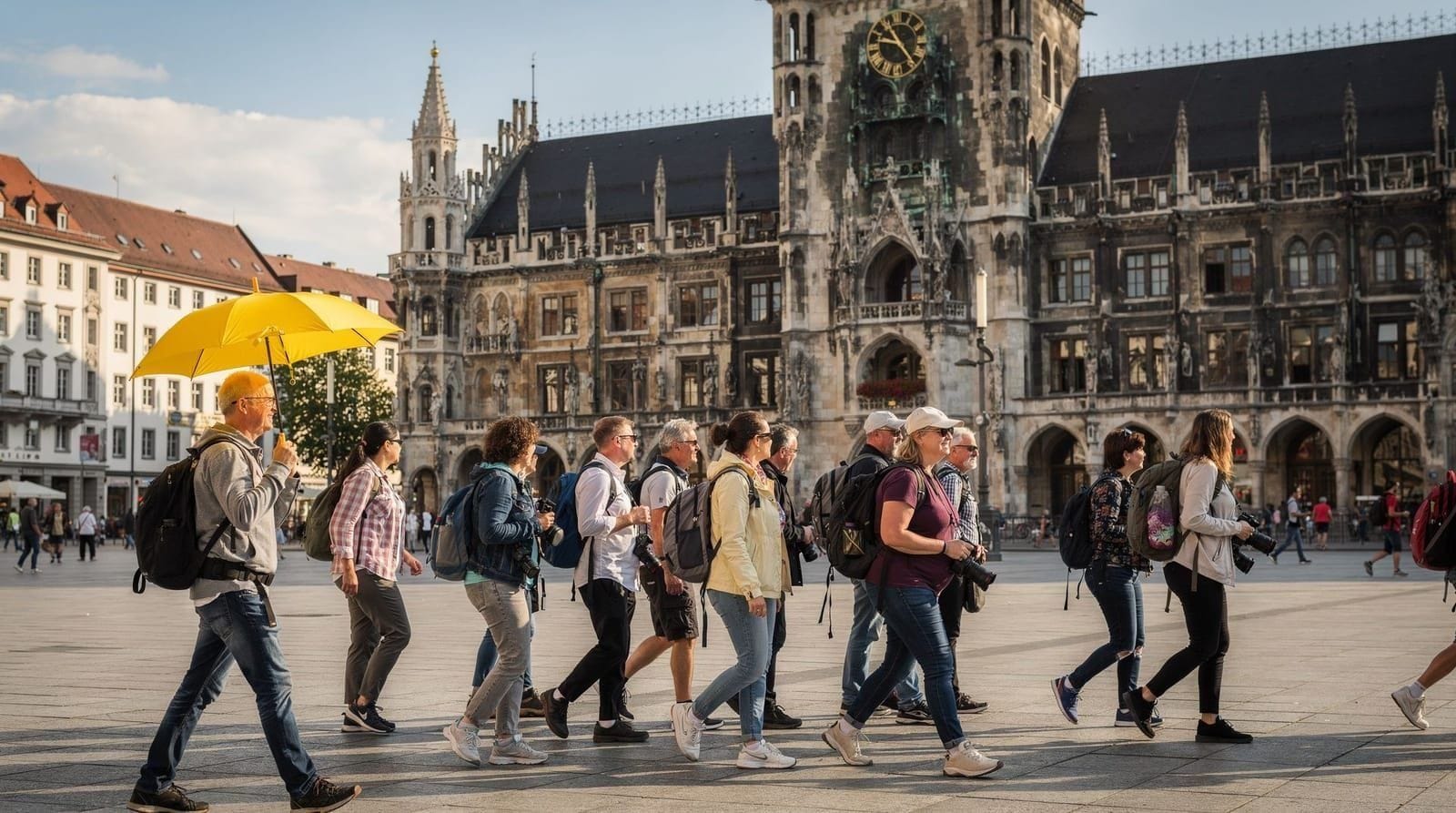 hop-on hop-off sightseeing tour 1-day or 2-day ticketCheck availability
What is the official price for Residenz Munich tickets?
The Residenz Munich palace costs €9 per adult in 2026. The combined ticket covering the palace and the Treasury (Schatzkammer) is €14. Children under 18 enter free. The Cuvilliés Theatre has a separate admission. If you see prices significantly above these on any third-party site, you are looking at a reseller markup — book directly at residenz-muenchen.de to pay the official rate.
Are there specific tourist traps during Oktoberfest?
Yes. Table reservations resold above the official tent price, costumed photo-op vendors near the Theresienwiese entrances, and “Oktoberfest special” drinks that are just standard bar prices marked up are the main ones. Book tent tables directly through the tent’s own website or a licensed operator, and treat any street vendor selling “official” merchandise with scepticism.
Is it worth avoiding Marienplatz entirely because of the tourist traps?
No — Marienplatz itself, the Glockenspiel, and the Neues Rathaus tower are genuinely worth seeing and cost nothing beyond the optional tower ticket. The traps are specific businesses in the surrounding streets, not the square itself. Enjoy the square, then walk away from it to eat, shop, and drink.
Munich rewards visitors who look one street further. The best beer garden is rarely the one closest to a major sight. The best Weisswurst is at a butcher’s counter at 9am, not at a restaurant that serves it all day. The best souvenir is something you actually encountered in the city rather than something manufactured for the purpose of being bought by someone who visited. None of this requires a big budget or insider knowledge — it just requires knowing which signals mean “tourist pricing ahead” and walking past them.
For building a full itinerary that avoids the traps and hits the genuinely worthwhile things, start with the Starkbierfest guide if your timing allows for one of Munich’s best and least-touristy events, and use the Munich old town history guide to understand what you are actually looking at when you stand on Marienplatz.
Top experiences
Bookable activities with verified prices and instant confirmation on GetYourGuide.