Starkbierfest guide: Munich's strong beer festival during Lent
Munich: guided food walking tour with beer tasting
What is Starkbierfest in Munich?
Starkbierfest (strong beer season) is a traditional Munich festival held during Lent, typically in March. Paulaner's Nockherberg brewery is the historic centrepiece, where the original Salvator doppelbock has been tapped since 1751. Strong beers run 7–9% ABV and the festival is far less crowded than Oktoberfest.
Most visitors to Munich know about Oktoberfest. Far fewer know about Starkbierfest — the “strong beer season” that transforms the city’s beer halls every March, celebrating a brewing tradition that predates Oktoberfest by centuries. If you can visit Munich in early-to-mid March, Starkbierfest offers one of the most authentic, least touristy, and most genuinely enjoyable beer experiences the city has to offer.
| Where | Nockherberg (Au) plus most Munich beer halls and breweries |
| Cost | Around €6–8 per Halbe (500ml) at standard venues |
| Time needed | An afternoon or evening; the season runs about three weeks |
| Getting there | U1/U2 to Kolumbusplatz, then a 5-minute walk uphill to Nockherberg |
| Best time | Weekday afternoons in the second or third week of March |
The history: monks, Lent, and liquid bread
The story of Starkbier begins with the Paulaner monks at their monastery on the Nockherberg hill in Munich’s Au district. Like many religious orders in Bavaria, they brewed beer for their own sustenance. During the austere 40 days of Lent — when eating solid food was restricted — they developed an especially strong, nutritious beer that could serve as “liquid bread,” providing calories and sustenance during fasting.
Their Salvator (Latin for “saviour”) was thick, dark, and remarkably rich. By the 17th century it had become locally famous, and in 1751 the first formal public tapping of Salvator at Nockherberg was documented. The monks were eventually secularised in the early 19th century, but the brewing tradition was preserved by the secular Paulaner brewery, which continues to this day.
The tradition of naming doppelbock beers with the suffix “-ator” comes directly from Salvator — Ayinger’s Celebrator, Augustiner’s Maximator, Löwenbräu’s Triumphator, and Hofbräu’s Delicator all follow the convention established by that original Nockherberg beer.
What Starkbier actually is: beer style explained
Starkbier is the German term for strong beer, broadly defined as beer above 6.5% ABV. At Starkbierfest specifically, the featured style is Doppelbock — a rich, malty lager typically running 7–9% ABV, dark amber to deep brown in colour, with a complex flavour profile.
A glass of Salvator (7.9% ABV) pours a dark amber-brown with ruby highlights. The nose is loaded with caramel, dried fruit (plum, raisin), and bread crust. On the palate it is thick and warming, with a sweet malt backbone balanced by just enough hop bitterness to prevent it feeling cloying. The finish is long, warming, and faintly reminiscent of dark chocolate.
The critical thing to understand is that a Maß of doppelbock at 7.9% ABV contains roughly twice the alcohol of a Maß of Helles at 4.9%. The richness of the beer disguises this effectively. It is very easy to drink two or three over the course of an afternoon and be considerably more affected than you anticipated. Pace yourself accordingly.
Standard Munich beer hall prices apply during Starkbierfest: a half litre (Halbe) of Starkbier costs approximately €6–8 at most venues. At Nockherberg, prices are slightly higher.
Nockherberg: the heart of Starkbierfest
The Paulaner Nockherberg (Hochstrasse 77, Munich-Au) is where the tradition lives. This hillside brewery tap and restaurant is the oldest Starkbier venue in the world, and the ceremonial Salvator tapping here each spring is a genuine Munich institution.
The Salvator tapping ceremony takes place on the first Friday or Saturday of March. It is a full event: Bavarian dignitaries attend, the Lord Mayor of Munich traditionally taps the first barrel (with varying degrees of skill), and the beer flows. The atmosphere is festive but distinctly local — this is not an Oktoberfest-style international party but a Munich ritual that the city does for itself.
The Derblecken (a Bavarian word roughly meaning “to publicly mock”) is the satirical roast that accompanies the opening ceremony. A comedian or character actor — often performing as a classic Bavarian character type — lampoons current Bavarian politicians, the state government, and prominent local figures. The jokes are sharp, topical, and delivered in Bavarian dialect. Even if your German is not strong enough to follow the jokes, the reaction of the audience gives you a clear sense of what is landing. The ceremony is broadcast live on Bayerisches Fernsehen (Bavarian public television).
Tickets for the opening ceremony are sold through the Paulaner Nockherberg website and tend to sell out weeks in advance. Book as soon as they go on sale, typically in January.
For the remaining weeks of Starkbierfest, Nockherberg is open to the public without advance tickets, though the main hall fills up quickly on weekends. Arriving early afternoon on a weekday gives you the best chance of a comfortable seat.
The main Starkbier beers: a guide
Paulaner Salvator (7.9% ABV) — The original and the benchmark. Dark amber, rich, and full-bodied. Available exclusively at Nockherberg during the festival and in bottles at shops year-round.
Augustiner Maximator (7.5% ABV) — Augustiner’s contribution to the doppelbock tradition, available at Augustiner venues during March. Slightly lighter in body than Salvator but with the characteristic Augustiner smoothness. The Augustinerkeller is the best place to try it.
Löwenbräu Triumphator (7.6% ABV) — Rich, dark, and malty, with a distinctive sweetness. Available at Löwenbräukeller and Löwenbräu venues from early March.
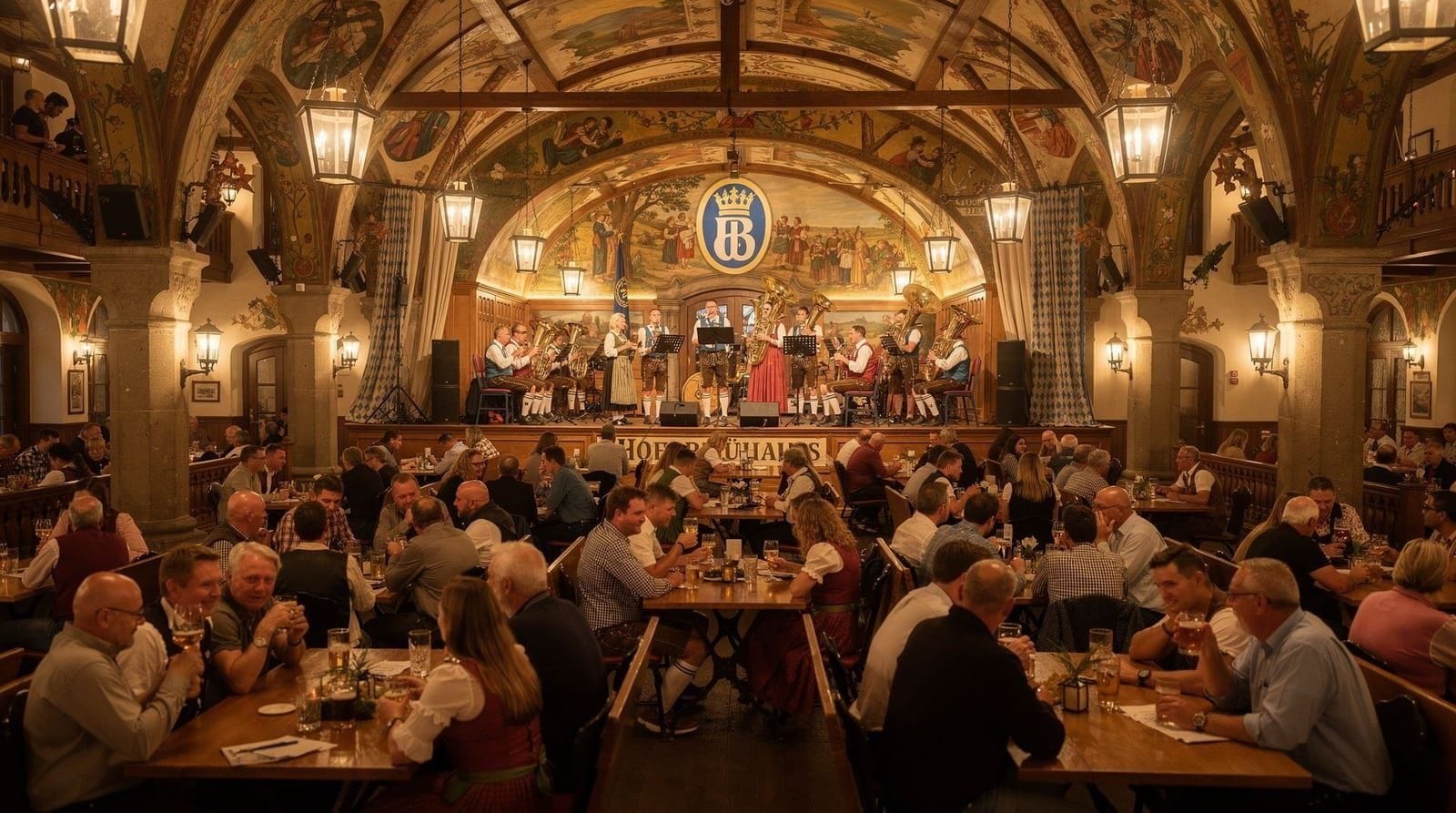
Hofbräu Delicator (7.5% ABV) — Hofbräu’s doppelbock, available at the Hofbräuhaus and HB venues during Starkbierfest. A competent strong beer with the slightly crisper character typical of the HB range.
Ayinger Celebrator (6.7% ABV) — Technically from Aying (a village 25 km south of Munich), Celebrator is the internationally best-known Bavarian doppelbock. It is darker and slightly less sweet than Salvator, with a coffee and dark chocolate character. Available at specialty beer bars and some restaurants in Munich throughout the year.
For a guided tasting that covers the different Starkbier styles with food pairings and historical context, a structured beer and food tour can be an excellent way to explore the strong beer season. Munich guided food walking tour with beer tasting
Other venues for Starkbierfest across Munich
Beyond Nockherberg, most Munich breweries and beer halls have their own Starkbierfest events in March. Some highlights:
Löwenbräukeller (Stiglmaierplatz, Neuhausen) — One of Munich’s grandest beer halls, and an important Starkbierfest venue. The Triumphator tapping here is a major local event.
Mathäser Bierstadt (near Hauptbahnhof) — A large, modern beer hall with a good Starkbierfest programme.
Augustinerkeller (Arnulfstrasse) — Starkbierfest is celebrated here with Maximator available throughout March. Less formal than Nockherberg, easier to get a table, and excellent for a quiet afternoon of strong beer.
Wirtshaus in der Au (Lilienstrasse, Haidhausen) — A neighbourhood pub that takes Starkbierfest seriously, with a rotating selection of doppelbocks from around Bavaria.
Many of these venues also organise their own ceremonial tapping events during March — check local listings (München Ticket, the venue websites) for specific dates.
Paulaner am Nockherberg vs the neighbourhood venues: the Nockherberg brewery itself trades on ceremony and history, which means bigger crowds and a livelier atmosphere but less personal service. The neighbourhood spots — Wirtshaus in der Au especially — offer a quieter, more conversational version of the same tradition, often with a smaller but carefully chosen selection of doppelbocks from smaller Bavarian breweries you won’t find at the big venues. If your priority is atmosphere and history, go to Nockherberg. If your priority is a relaxed evening with excellent beer and no crowd management, a neighbourhood venue usually wins.
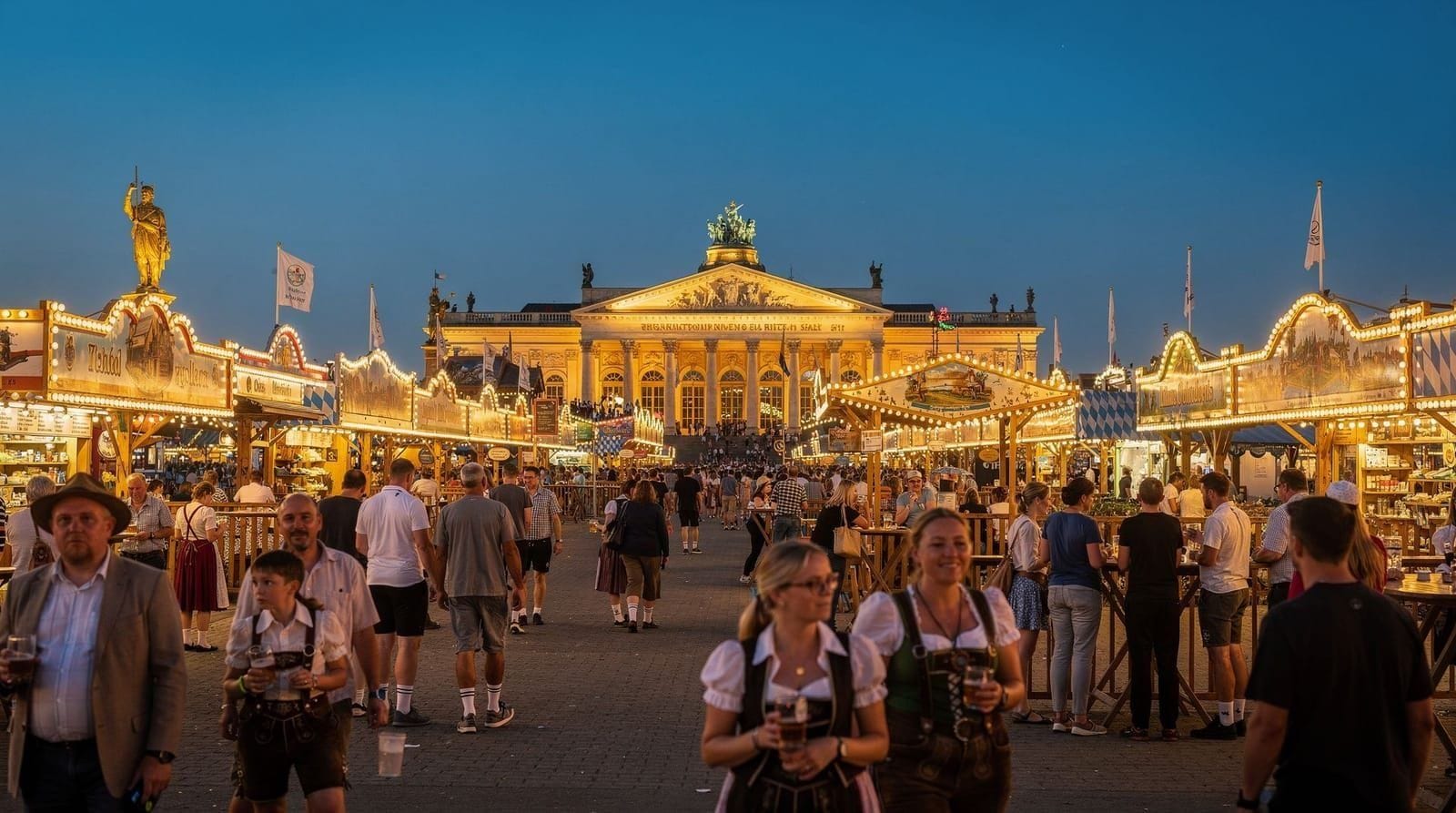
Starkbierfest vs Oktoberfest: key differences
| Starkbierfest | Oktoberfest | |
|---|---|---|
| When | March (Lent, ~3 weeks) | Mid-Sept to early Oct (~2 weeks) |
| Where | Multiple venues citywide, focus on Nockherberg | Theresienwiese fairground |
| Beer | Doppelbock, 7–9% ABV | Märzenbier, ~6.5% ABV |
| Crowd | Mostly locals and German tourists | International, very mixed |
| Atmosphere | Relaxed, convivial, quieter | High-energy, festive, extremely loud |
| Tables | Walk-in most venues, booking only for opening ceremony | Reservations essential on weekends |
| Prices | Standard Munich prices (~€6–8 per Halbe) | Premium Wiesn prices (~€14–15 per Maß) |
The conclusion for most beer-focused travellers: Starkbierfest is a better experience if your priority is actually tasting and understanding great beer. Oktoberfest is the better experience if you want the spectacle, the scale, and the festival atmosphere.
Planning your Starkbierfest visit
Best time to go: A weekday afternoon, particularly in the first two weeks of March. The opening weekend at Nockherberg is crowded; the middle weeks are calmer and more enjoyable for lingering.
Getting to Nockherberg: Take the U-Bahn to Kolumbusplatz (U1/U2), then a 5-minute walk uphill to Hochstrasse 77. Alternatively, take the Tram 18 to Deutsches Museum, then a 10-minute walk. The Munich public transport guide covers ticketing.
Where to stay: The Au-Haidhausen neighbourhood, a 5-minute walk from Nockherberg, is a good base for Starkbierfest — it is also a genuinely pleasant Munich neighbourhood. The Au-Haidhausen neighbourhood guide has hotel recommendations and local restaurant tips.
Pairing with other Munich activities: March is a good time to visit Munich’s museums (no summer crowds), the Deutsches Museum, and the Residenz. The Munich spring guide covers what the city offers in March beyond Starkbierfest.
For a full calendar of Munich beer festivals through the year, including Frühlingsfest (April-May), Kocherlball (July), and Oktoberfest, see the Munich beer festivals calendar. Munich Bavarian beer walking tour with samples and food
What to do around Starkbierfest
If you are visiting Munich specifically for Starkbierfest, there is plenty to combine with the beer programme. A few suggestions:
The Viktualienmarkt (5-minute walk from Marienplatz) is at its most authentic in winter and early spring before the summer tourist crowds arrive. The beer garden there runs year-round in mild weather. The Viktualienmarkt food guide covers the best stalls.
The Deutsches Museum is the world’s largest science and technology museum, a five-minute walk from Nockherberg across the Isar. The Deutsches Museum guide explains how to prioritise the collection.
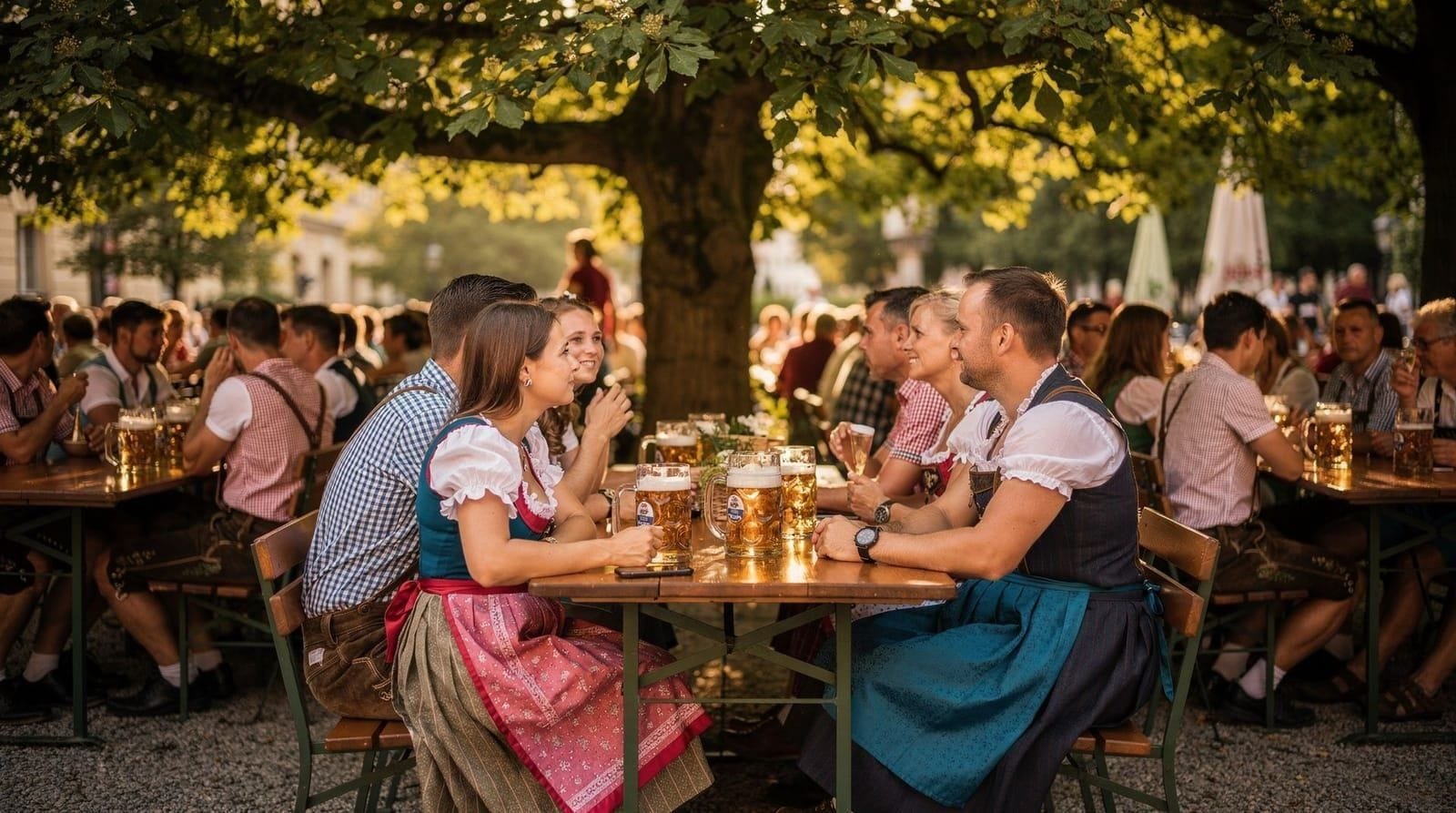
March in Munich often brings cold weather (average high 8–10°C), so pack layers. The Munich packing guide has seasonal advice. Beer gardens themselves may still be too cold for extended outdoor sitting in early March — most Starkbierfest drinking happens indoors in the traditional Bierhalle rooms, with outdoor terraces only becoming comfortable toward the end of the festival in late March as temperatures rise.
The Starkbier drinking ritual: what to expect
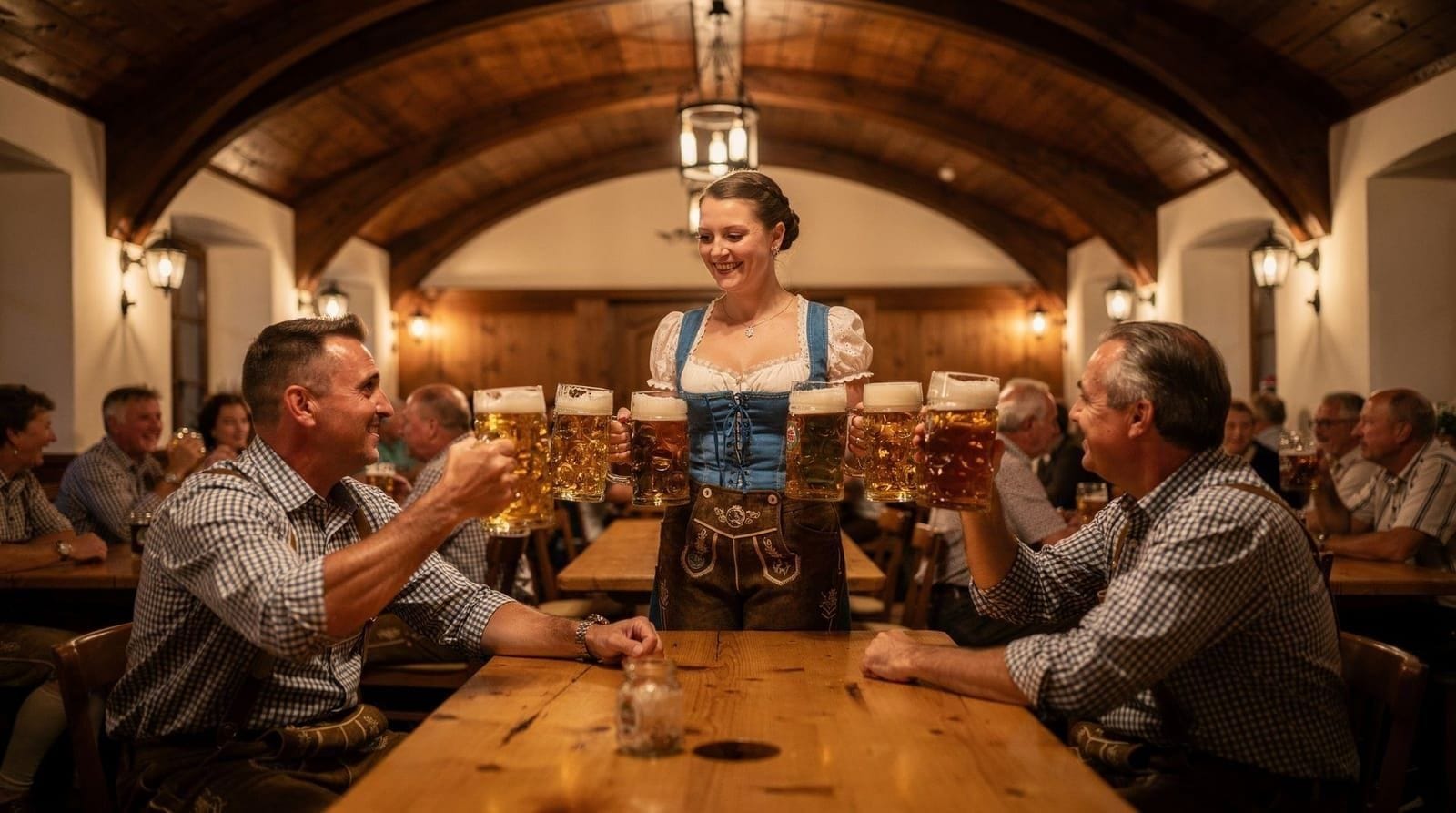
Drinking doppelbock at Starkbierfest is a different experience from the Maß-heavy culture of Oktoberfest. The stronger, richer beers call for a different pace — most experienced drinkers order a Halbe (500 ml) rather than a full Maß, at least to begin with, and savour it slowly with food rather than treating it as a volume exercise.
The traditional approach at Nockherberg is to order a Halbe of Salvator, a portion of Obatzda with Brezn, and to sit long enough to appreciate the beer properly. Two Halbe over two hours is a reasonable programme for an afternoon; if you move to a second venue, the same principles apply.
The cultural context matters too. Starkbierfest is not just a drinking festival — it has a spiritual dimension rooted in the Lenten tradition. The monks who developed Salvator were fasting from solid food; the beer was their nutrition. That history gives the experience a different quality from Oktoberfest’s pure exuberance. There is something more contemplative about Starkbierfest, an atmosphere of enjoying something precious and seasonal.
Pairing food with doppelbock at Starkbierfest
The rich, malty character of doppelbock responds well to food that can hold its own against the beer’s intensity. At Nockherberg and other Starkbierfest venues:
Steckerlfisch (grilled fish on a stick) — A traditional Lenten food, grilled over open flames and served with horseradish and bread. The smoky, savoury fish pairs beautifully with the sweet caramel notes of Salvator or Maximator.
Schweinsbraten (roast pork) — The classic Bavarian roast, with crackling and a dark beer gravy. The fat and protein stand up well to a robust doppelbock, and the beer’s malt sweetness complements the rendered pork fat.
Käsespätzle (cheese egg noodles) — A rich, filling dish of handmade egg noodles baked with aged mountain cheese and topped with fried onions. Hearty enough for a cold March evening.
Fastengebäck (Lenten pastries) — Some traditional bakeries around Munich produce special Lenten pastries during the strong beer season: Faschingskrapfen (jam doughnuts), Schmalzkücherl (fried pastries dusted with sugar), and various soft pretzels enriched with extra fat. These are sold at market stalls and at the Viktualienmarkt.
The best Bavarian food guide covers the Munich food scene in more depth, and the Viktualienmarkt food guide has market-specific recommendations for March.
Booking, budgeting, and a realistic first-timer’s plan
For a first Starkbierfest visit, the simplest plan is also the most reliable one. Skip the ceremonial opening at Nockherberg unless you already have tickets — it sells out weeks ahead and the crowds work against the relaxed atmosphere that makes Starkbierfest worthwhile in the first place. Instead, pick a weekday afternoon in the second or third week of March, start at Nockherberg for a Halbe of Salvator and a plate of Obatzda, then walk or tram across to the Au-Haidhausen side of the Isar for a second, quieter venue if you want to keep going. Budget around €25–35 for two Halbe and a hearty meal at standard Munich prices — considerably less than an equivalent Oktoberfest afternoon, and with none of the tent-reservation stress.
If you are combining Starkbierfest with a short Munich trip, the Munich 3-day itinerary and the how many days in Munich guide help fit a March visit around the city’s other major sights, most of which are genuinely pleasant to visit in the quieter shoulder season.
Frequently asked questions about Starkbierfest
Is Starkbierfest only in Munich?
No — other Bavarian towns also celebrate strong beer season in March, and doppelbock beers are brewed by monasteries and commercial breweries across southern Germany and Austria. But Munich, and Nockherberg specifically, is the historical centre of the tradition, and the Derblecken makes the Munich celebration unique.
Can I attend Starkbierfest if I do not speak German?
Absolutely. The Derblecken ceremony is entirely in Bavarian German, but the rest of the experience — drinking excellent beer in atmospheric venues — needs no translation. Servers at Nockherberg and other central Munich venues generally speak enough English to take your order and answer questions.
What is the cheapest way to experience Starkbierfest?
Skip the opening ceremony at Nockherberg (tickets are expensive) and visit mid-week during the second or third week of March. Go to the Augustinerkeller for Maximator or seek out Celebrator at a specialty beer bar. You can have a full afternoon of strong beer and good food for well under €40 per person.
Are children allowed at Starkbierfest?
Children are welcome at the beer garden and restaurant areas of most venues during daytime hours. The ceremonial opening events are adult-oriented and loud. Standard German rules apply: children cannot be served alcohol but can accompany adults into most venues.
How do I find out the exact 2026 dates?
Paulaner Nockherberg announces the official dates on their website (paulaner-nockherberg.com) in late December or January. The festival traditionally begins the first Friday of March and runs for approximately three weeks. Local Munich event sites like Münchner Stadtportal and München Ticket also list the programme.
What else is happening in Munich in March?
Besides Starkbierfest, March brings the first warm days of the year, the gradual reopening of beer gardens, and occasional snow. It is one of the better months to visit museums without crowds. The Munich spring guide and best time to visit Munich guide cover March in more detail.
Is Starkbierfest better than Oktoberfest?
They serve different purposes rather than one being objectively better. Starkbierfest is calmer, cheaper, and more focused on the beer itself — a better fit if you want to actually taste and understand strong Bavarian brewing without fighting crowds. Oktoberfest is the bigger spectacle, with tents, music, and an international party atmosphere that Starkbierfest deliberately doesn’t try to replicate. Many repeat visitors to Munich come to prefer Starkbierfest precisely because it feels like a local ritual rather than a tourist event.
Top experiences
Bookable activities with verified prices and instant confirmation on GetYourGuide.