Munich beer festivals calendar: every major event through the year
Munich: guided food walking tour with beer tasting
What beer festivals does Munich have besides Oktoberfest?
Munich has major beer festivals throughout the year: Starkbierfest (strong beer, March), Frühlingsfest (spring Oktoberfest, late April to early May), Kocherlball (traditional dance in English Garden, July), and Oktoberfest (September-October). Winter brings Glühwein at Christmas markets. Each targets a different crowd and atmosphere.
| Biggest event | Oktoberfest, mid-Sept to early Oct |
| Best local-feel option | Starkbierfest, March |
| Cost per Maß | Around €10–15 depending on festival |
| Getting there | U-Bahn/S-Bahn/tram to each venue (see below) |
| Best time overall | Starkbierfest or Frühlingsfest for smaller crowds |
Munich’s relationship with beer does not begin and end with Oktoberfest. The city’s brewing calendar runs year-round, anchored by a series of festivals that range from intimate neighbourhood events to the largest folk festival on earth. Understanding the full calendar helps you choose the right time to visit — or helps you understand why Munich is always doing something interesting with a Maß in hand.
This guide covers every significant Munich beer festival in calendar order, with dates, what to expect, who it suits, and practical advice for each.
January and February: the brewing quiet
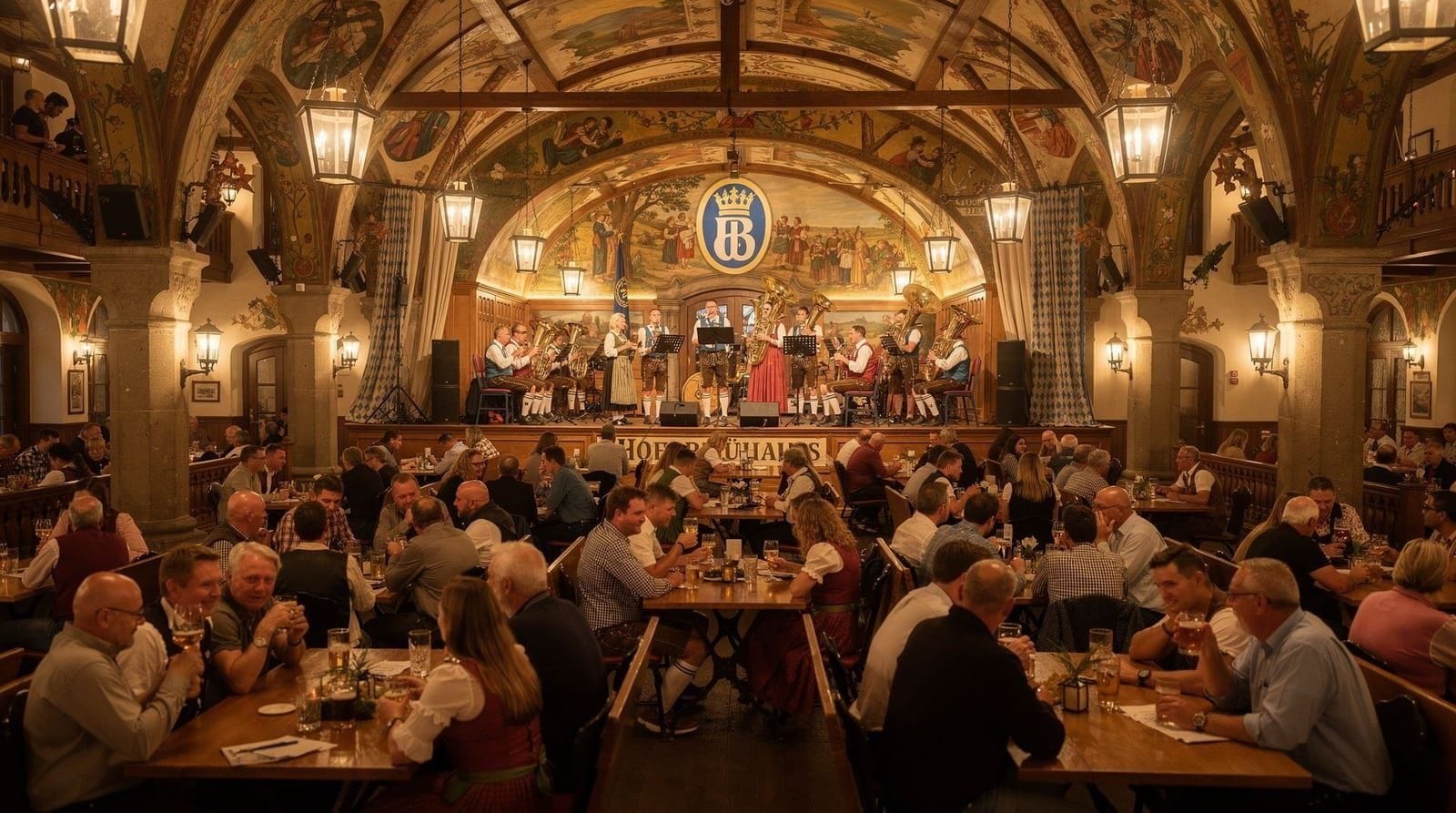
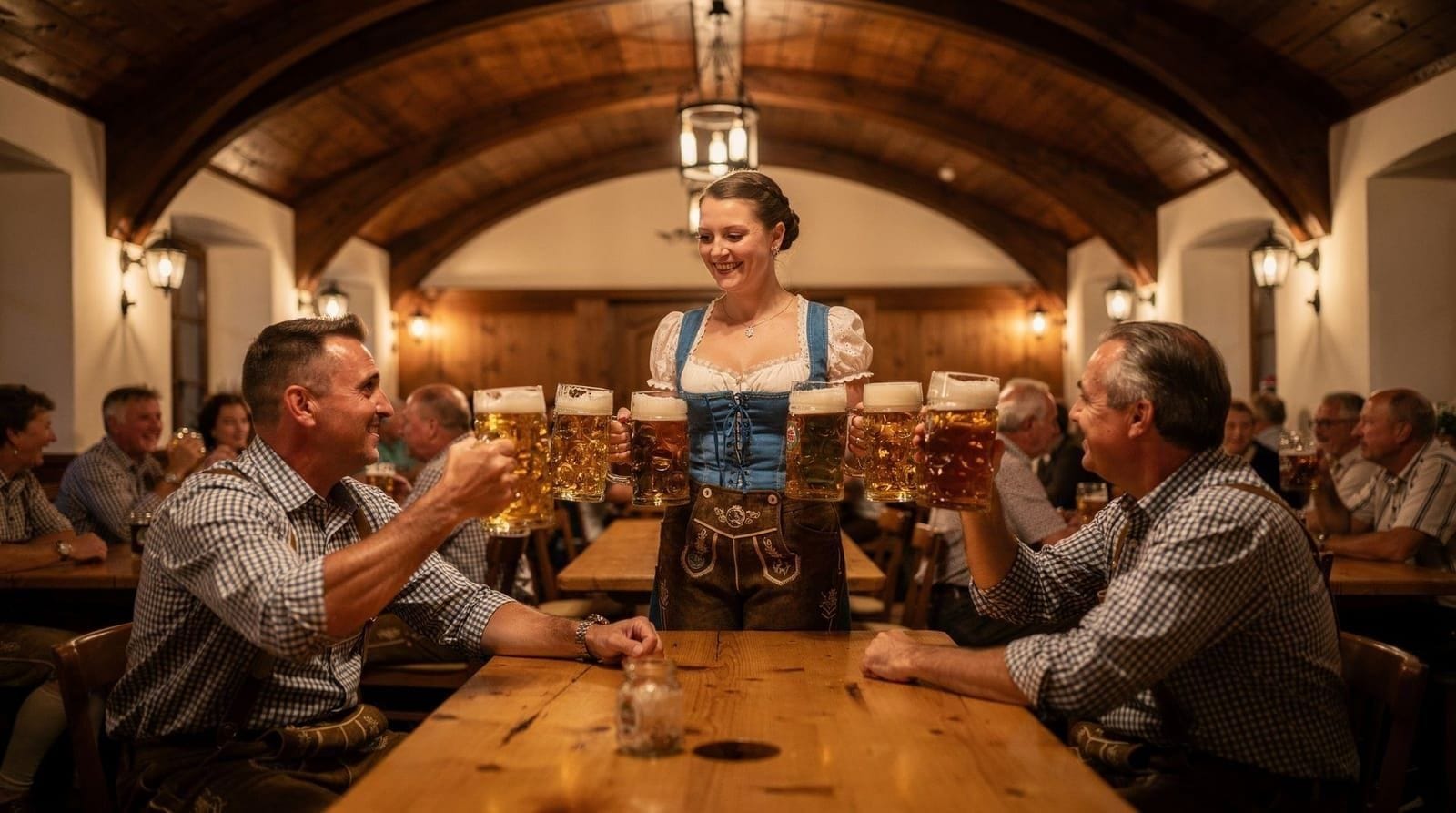
January and February are Munich’s quietest festival months. The Christmas markets have closed, Oktoberfest is a distant memory, and the city settles into a pleasantly unhurried winter pace. Beer halls continue operating as usual — this is actually an excellent time to visit venues like Augustinerkeller and Hofbräuhaus without summer crowds — but there are no dedicated beer festivals.
The consolation is Carnival (Fasching in German), which reaches its peak in the week before Ash Wednesday (usually February or early March, depending on the Easter calendar). Munich’s Fasching celebrations include costume parades, parties in beer halls, and a general festive atmosphere that draws Bavarians rather than international tourists.
March: Starkbierfest
Dates 2026: Approximately March 6–28 (exact dates announced January 2026) Main venue: Paulaner Nockherberg (Hochstrasse 77, Munich-Au) Beer style: Doppelbock, 7–9% ABV Crowd: Predominantly local and German Advance booking required: For the opening Salvator tapping and Derblecken ceremony only
Starkbierfest (strong beer festival) is Munich’s Lenten tradition — the celebration of the doppelbock beers originally brewed by monks to sustain them during fasting. The centrepiece is the tapping of Salvator (Paulaner’s 7.9% ABV doppelbock) at Nockherberg, accompanied by the Derblecken: a satirical political roast in Bavarian dialect, broadcast on Bavarian television.
The strong beer season extends beyond Nockherberg to most Munich beer halls, which serve their own doppelbock specials throughout March: Augustiner Maximator (7.5% ABV), Löwenbräu Triumphator (7.6% ABV), Hofbräu Delicator (7.5% ABV), and at specialty bars, Ayinger Celebrator (6.7% ABV).
Who it suits: Beer enthusiasts, travellers who want an authentic Munich festival without Oktoberfest crowds, visitors in March who want to combine the strong beer season with museum visits and quieter city exploration.
Honest caveat: The strong beers are deceptively smooth and considerably more potent than Munich’s everyday Helles. Pace yourself — a Maß of Salvator at 7.9% ABV is the equivalent of nearly two Maß of Helles in alcohol content.
For the complete guide including the Derblecken ceremony, ticket booking, and all the doppelbock beers available: Starkbierfest guide. Munich guided food walking tour with beer tasting
April to early May: Frühlingsfest
Dates 2026: Late April to early May (typically 17 days; official 2026 dates announced in autumn 2025) Location: Theresienwiese (the same site as Oktoberfest) Beer style: Munich Helles, Märzenbier Crowd: Predominantly German and local Advance booking: Recommended for weekends, not essential on weekdays
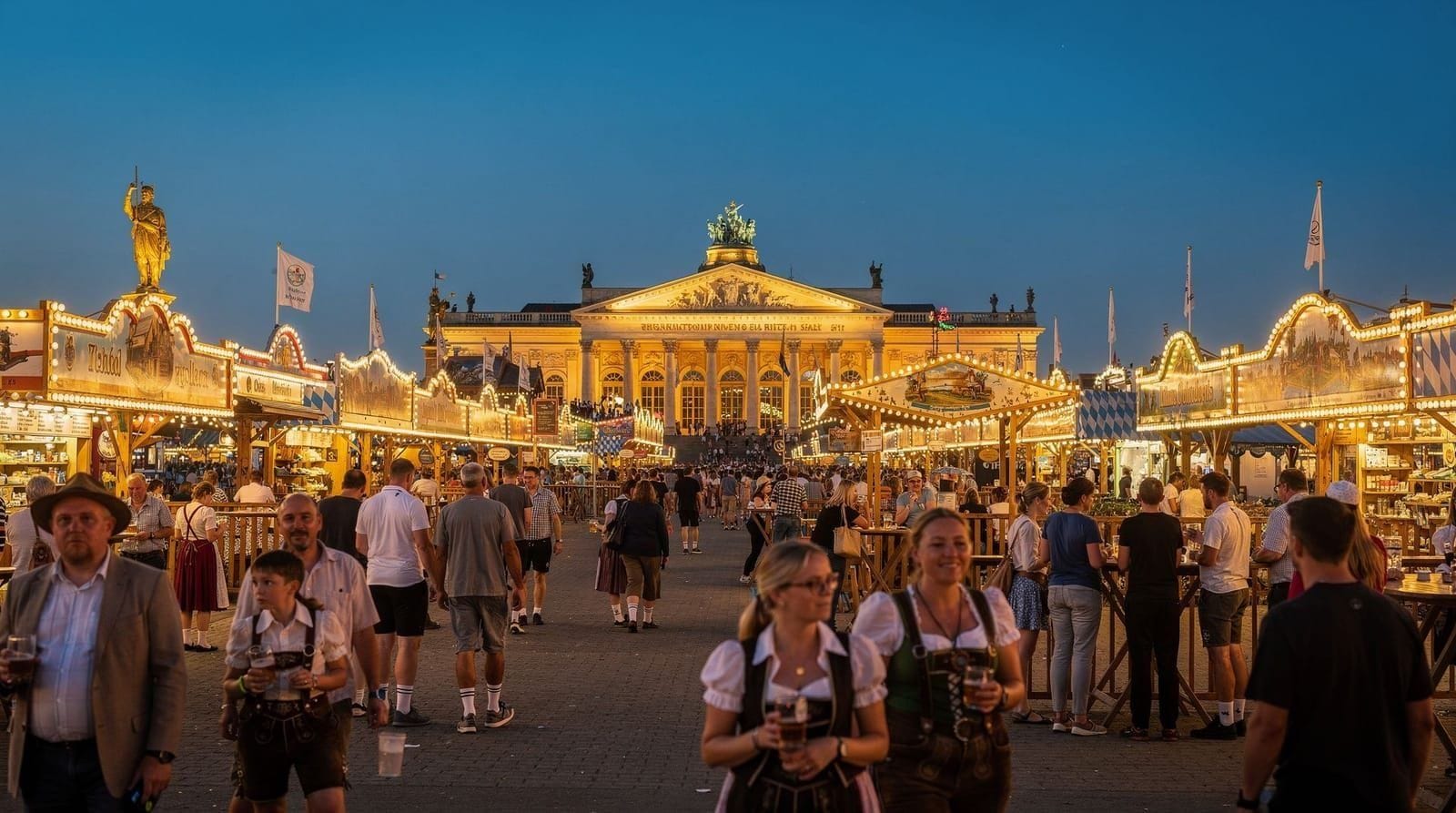
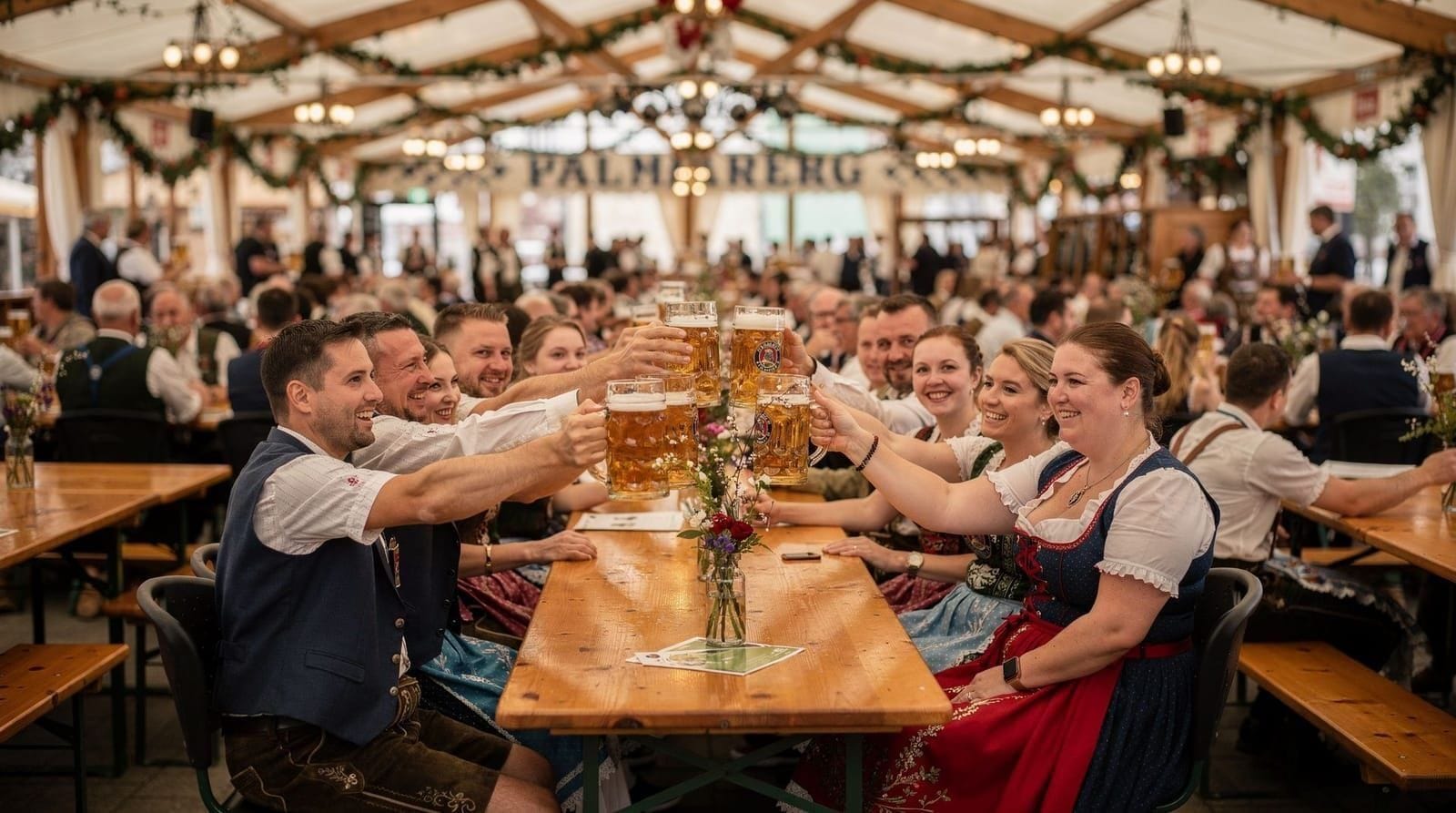
The Frühlingsfest (Spring Festival) is Munich’s understated secret — a full Oktoberfest-format festival, on the same fairground, with the same six Munich breweries, the same tent structure, fairground rides, and atmosphere — but with a fraction of Oktoberfest’s international crowd.
It is sometimes called the “kleine Wiesn” (little Oktoberfest) and the comparison is apt. The tents are smaller than their autumn counterparts, the prices slightly lower (though still festival pricing — expect €12–14 per Maß in 2026), and the atmosphere is markedly more local. The crowd speaks German.
What makes Frühlingsfest different: Spring temperatures (April in Munich can range from cold to surprisingly warm), lighter beer than Oktoberfest Märzenbier, and the general sense of a city celebrating the end of winter rather than a global festival destination. Hotel prices are a fraction of Oktoberfest prices.
Who it suits: Visitors who want the Oktoberfest experience without the Oktoberfest crowds and prices. Also excellent for people visiting Munich in spring who want to see Theresienwiese in festival mode.
May to June: beer garden season begins
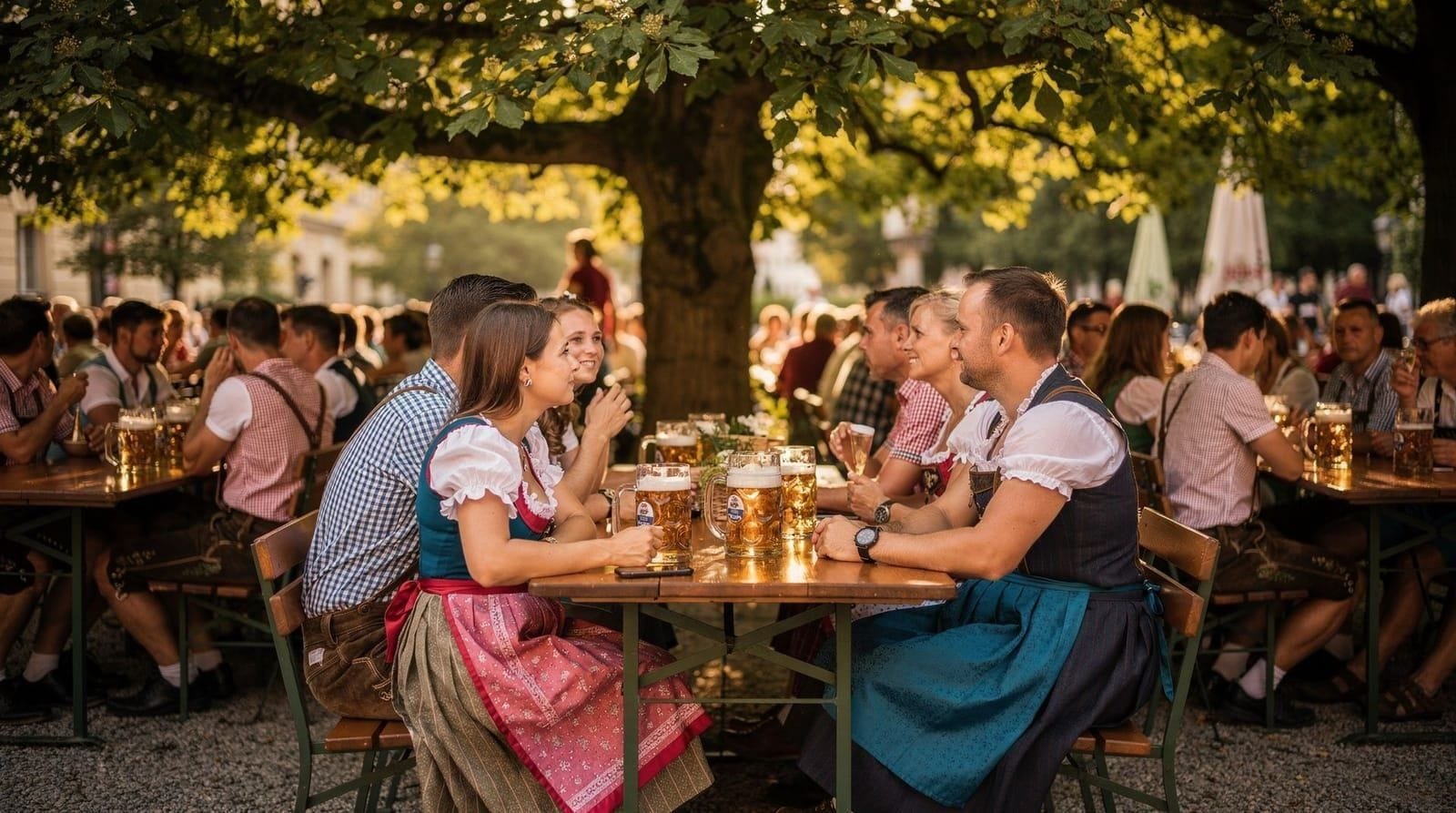
No dedicated festival, but this is when Munich’s beer garden culture comes fully back to life. The Augustinerkeller beer garden, the English Garden Biergarten at the Chinese Tower, the Hirschgarten, and the Viktualienmarkt beer garden all operate at full capacity from late April or May onward.
The best beer gardens in Munich guide covers the full list with practical details. The Viktualienmarkt beer garden guide focuses on the most centrally located option.
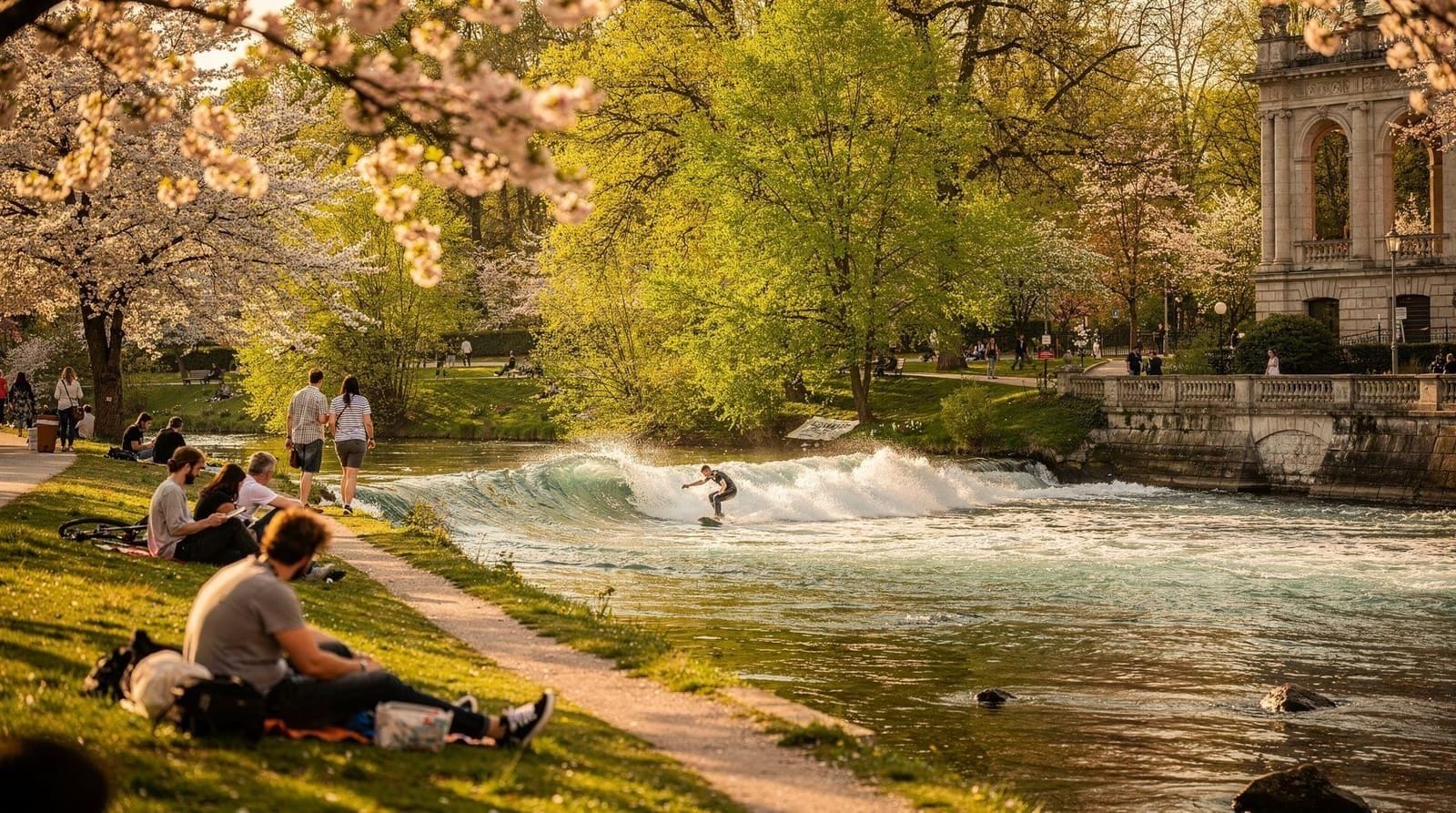
May also brings the opening of the English Garden for swimming season at the Eisbach wave — an unusual combination of surfing and beer garden culture that makes the English Garden one of Munich’s most photogenic summer destinations.
July: Kocherlball
Date 2026: Third Sunday in July (July 19, 2026) Location: Chinese Tower, Englischer Garten Beer: Hofbräu (from the Chinese Tower beer garden) Crowd: Munich locals, families, couples in traditional dress Tickets: Free to attend the dancing and music; pay for beer and food as usual
The Kocherlball (literally “cook’s ball” or “servants’ ball”) is one of Munich’s most charming and least-known traditions. It dates to the 19th century when domestic servants — cooks, maids, coachmen — who had Sundays off would gather in the English Garden to dance while the upper classes were still sleeping. The dancing started early in the morning to make the most of the free time.
Today the tradition is preserved as an annual outdoor ball beginning at 06:00 (yes, 6 in the morning) and running until noon. Traditional Bavarian folk music is played by live bands, couples in Dirndl and Lederhosen waltz and polka on the dance floor around the Chinese Tower pagoda, and the beer garden opens early to supply the proceedings.
What to expect: Hundreds of people in traditional Bavarian dress dancing in an 18th-century park under a pagoda at sunrise. The atmosphere is joyful, unpretentious, and distinctly Bavarian in a way that has nothing to do with international tourism.
Who it suits: Early risers (seriously — this starts at dawn), people interested in traditional Bavarian culture beyond Oktoberfest, couples who want a romantic and unusual Munich morning. Also interesting for photographers.
Beer caveat: The Chinese Tower beer garden serves Hofbräu. Beer service begins at garden opening, which is earlier than usual on Kocherlball day. Drinking beer at 07:00 in a formal Bavarian setting is thoroughly normalised at this event.
August: gap before the season
August has no dedicated Munich beer festival, but the city is at its warmest and most cosmopolitan. Beer gardens are packed on sunny days, and the English Garden’s outdoor swimming at Eisbach and the Isar river banks is at its peak.
Several Bavarian cities hold their own festivals in August — Straubing’s Gäubodenfest (Bavaria’s second-largest folk festival), Nuremberg’s Volksfest, and Augsburg’s Plärrer — all within reasonable day-trip distance from Munich. The best day trips from Munich guide covers Augsburg and Nuremberg as options for combining city visits with festival culture.
September to early October: Oktoberfest
Dates 2026: September 19 – October 4, 2026 Location: Theresienwiese, Munich Beer: Oktoberfest Märzenbier (~6.2–6.5% ABV) from all six Munich breweries Crowd: 6 million visitors over the festival, international Advance booking: Essential for weekend tent seating
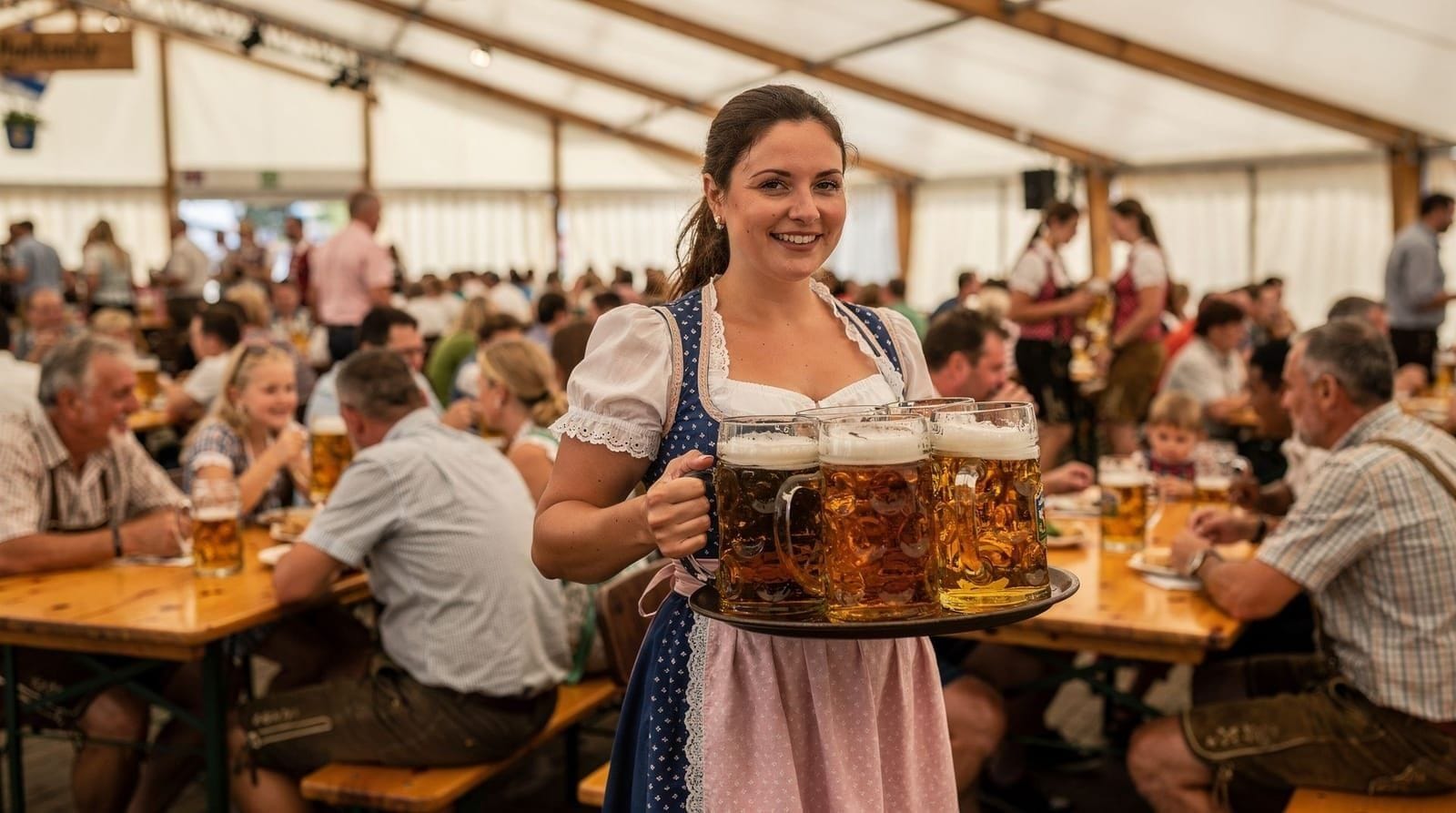
The world needs no introduction to Oktoberfest. For the purposes of this calendar, the key details: 16 days across two and a half weekends, six brewery tents plus dozens of smaller traditional tents, fairground rides, food stalls, and an international crowd that descends on Munich in numbers that make it one of the most logistically complex events on the travel calendar.
The Oktoberfest guide covers the full festival. For timing strategy, the best time for Oktoberfest guide breaks down each period from the opening weekend to the closing Sunday.
A Maß of Oktoberfest Märzenbier costs approximately €14–15 at all six tents in 2026. Tent reservations for weekends open in early spring and sell out quickly. Munich Oktoberfest tour with tent reservation, food and beer
For visitors who want Oktoberfest beer context before or alongside the festival: Munich beer and food tour with dinner and Oktoberfest Museum
November: the quiet after the storm
November is Munich’s least touristic month and arguably its most pleasant for independent travellers. Beer halls continue operating normally, the city is calm, and museum queues have vanished. The Bavarian State Museum, the Deutsches Museum, and the Pinakothek galleries are all more enjoyable in November than in summer. See the Munich museums pass guide for the best value option.
November 1 is All Saints’ Day (Allerheiligen) — a public holiday in Bavaria, when many shops are closed but beer halls and restaurants are open.
December: Christmas markets and Glühwein
Main markets: Late November to December 24 Location: Marienplatz (main), Schwabing, Haidhausen, Maxvorstadt, and neighbourhood markets
Munich’s Christmas markets are among Germany’s most celebrated, dominated visually by the Christkindlmarkt at Marienplatz beneath the Neues Rathaus. The emphasis shifts from beer to warm drinks — Glühwein (mulled wine), Heißer Apfelwein (hot apple wine), and Feuerzangenbowle (rum punch with a flaming sugar cone). A cup of Glühwein typically costs €3.50–5, with a refundable mug deposit.
Beer halls stay busy through December, and some serve hot beer (Heißes Bier) as a winter speciality — an acquired taste that regular Munich beer drinkers either love or politely refuse.
The Munich Christmas guide and Munich Christmas markets guide cover the December programme in detail.
Which festival for which traveller
| Traveller type | Best festival | Why |
|---|---|---|
| Beer enthusiast | Starkbierfest (March) | Superior beer, local atmosphere, lower prices |
| First-time visitor wanting Oktoberfest | Oktoberfest weekday (Sept 22–25) | Festival atmosphere without overwhelming crowds |
| Traditional Bavarian culture seeker | Kocherlball (July) | Folk dance, traditional dress, early morning magic |
| Families with children | Frühlingsfest (April-May) | Fairground rides, calmer atmosphere, lower hotel prices |
| Avoiding all crowds | November or early March | Quiet, local, excellent museum and beer hall access |
| Winter visitor | Christmas markets (December) | Seasonal atmosphere, Glühwein, Munich at its most photogenic |
Getting around Munich’s festival calendar
All major festival venues in Munich are reachable by public transport. The Theresienwiese (Oktoberfest and Frühlingsfest) is on U4/U5 (Theresienwiese station). Nockherberg (Starkbierfest) is on U1/U2 (Kolumbusplatz) or Tram 18. The English Garden Chinese Tower (Kocherlball) is reachable by Tram 17 or Bus 54. Marienplatz (Christmas markets) is the central U-Bahn/S-Bahn hub.
The Munich public transport guide covers all routes, ticketing, and the Bayern-Ticket for day trips. The getting around Munich guide covers transport from a more practical perspective.
For tour options that include guided beer culture experiences across multiple festival seasons: Munich beer halls and breweries guided tour (3 hours)
Festival etiquette that applies at every event
The same basic rules carry across Munich’s whole festival calendar, not just Oktoberfest. Tipping the extra change up to the next euro for table service is standard and expected. Sharing a bench with strangers is normal once a tent or beer garden fills — nobody reserves an entire table for two people. Standing on benches is generally accepted at Oktoberfest itself but frowned on at quieter events like Starkbierfest and Frühlingsfest, where the crowd skews older and more local. The Munich beer hall etiquette guide covers the fuller set of unwritten rules, and doubles as useful preparation for any of the festivals above, not only the big one.
Choosing a brewery to follow through the year
Each festival on this calendar is dominated by Munich’s six traditional breweries — Augustiner, Hacker-Pschorr, Hofbräu, Löwenbräu, Paulaner and Spaten — and regulars tend to develop a preference that shapes which tents and beer gardens they gravitate toward. The Augustiner vs Hofbräu comparison is a useful primer if you’re new to the distinctions, and the Munich brewery tours guide covers behind-the-scenes visits if a festival alone doesn’t satisfy your curiosity about how the beer is actually made.
Frequently asked questions about Munich beer festivals
How does Oktoberfest compare to other Munich beer festivals for price?
Oktoberfest is consistently the most expensive. A Maß at Oktoberfest 2026 costs €14–15; at Starkbierfest and Frühlingsfest expect €10–14; regular beer halls year-round charge €10–12. Hotel prices spike dramatically during Oktoberfest (3–5x normal rates), while Starkbierfest brings no significant hotel premium.
Are there guided tours that cover Munich’s beer culture outside Oktoberfest?
Yes. Several operators run year-round beer hall tours, brewery tours, and tasting experiences that give historical context to Munich’s brewing culture regardless of season. The Munich beer tasting tours guide covers the best options in detail.
What Munich beer festival would you recommend for a solo traveller?
Starkbierfest for a beer-focused visitor, or a weekday Oktoberfest visit for the full experience. Solo travellers benefit from Munich’s communal beer table culture — you will naturally end up sharing tables and meeting people. The Munich solo travel guide addresses the social dynamics in more detail.
Does Frühlingsfest have the same tents as Oktoberfest?
The same six Munich breweries are represented, but the tents at Frühlingsfest are generally smaller than their Oktoberfest counterparts. The fairground is also smaller. Think of Frühlingsfest as a scaled-down version of Oktoberfest with more local character.
Is there a beer festival in Munich in the summer months?
The Kocherlball in July is the main dedicated event, but summer in Munich is really about the beer garden culture rather than organised festivals. The Isar river banks, the English Garden, and beer gardens citywide become the informal gathering points. The Munich in summer guide covers the full summer picture.
Where can I find the official 2026 dates for each festival?
Oktoberfest dates are announced by the city of Munich well in advance at oktoberfest.de. Starkbierfest opening dates are announced by Paulaner on their website. Frühlingsfest dates are published by the city in late autumn before each spring edition. Kocherlball is always the third Sunday of July.
Is Frühlingsfest worth attending if I’ve already been to Oktoberfest?
Yes, and for some travellers it’s the better experience the second time around. The format is nearly identical but with a fraction of the crowd, lower prices, and a noticeably more local atmosphere — you’ll hear far more German spoken around you than at Oktoberfest.
Do I need to book beer garden tables the way I book Oktoberfest tents?
No. Munich’s beer gardens, including the ones covered in the best beer gardens guide, operate on a first-come, self-service basis at their communal tables — reservations are only relevant for Oktoberfest and Starkbierfest’s opening ceremony.
Top experiences
Bookable activities with verified prices and instant confirmation on GetYourGuide.