Viktualienmarkt beer garden: Munich's best central outdoor drinking spot
Munich: Viktualienmarkt gourmet food tour
What is the Viktualienmarkt beer garden in Munich?
The Viktualienmarkt beer garden is a 1,000-seat outdoor beer garden in the heart of Munich's historic market, a 5-minute walk from Marienplatz. It rotates through all six Munich Oktoberfest breweries on a roughly 2-week schedule in summer, and allows guests to bring food from the surrounding market stalls.
In a city full of excellent beer gardens, the Viktualienmarkt beer garden holds a special place. It is not the biggest (the Augustinerkeller seats five times as many people) and it is not the quietest (it sits in the middle of Munich’s busiest food market). But it might be the most genuinely Munich experience you can have with a beer in hand — local shoppers picking up lunch from market stalls, tourists learning that pretzels taste better in Bavaria, and a rotating cast of Munich’s six great breweries supplying the drinks.
| Where | Viktualienmarkt square, 5-minute walk from Marienplatz |
| Cost | Maß around €10.50–12; Halbe around €5.50–7; market food €1.50–6/item |
| Time needed | 1–2 hours, or fold into a 3-hour Altstadt circuit |
| Getting there | Walk from Marienplatz, or U-Bahn to Marienplatz (all lines) |
| Best time | Weekday mornings from 10:30, before the midday rush |
What makes the Viktualienmarkt beer garden different
Most Munich beer gardens are associated with a single brewery. The English Garden’s Chinese Tower beer garden serves Hofbräu. The Augustinerkeller serves Augustiner (naturally). The Hirschgarten, one of the world’s largest beer gardens at 8,000 seats, serves Augustiner.
The Viktualienmarkt beer garden is the exception — it rotates through all six Oktoberfest breweries on an approximately two-week cycle throughout the summer. This means that depending on when you visit, you might be drinking Paulaner Helles, or Löwenbräu Dunkel, or Hacker-Pschorr Weißbier. The current brewery is posted on a sign at the entrance. There is no published advance schedule, which is either charmingly unpredictable or mildly frustrating depending on your perspective.
For beer enthusiasts visiting over several days, the rotation provides a natural framework for comparison — come back on different visits to try the beer from a different brewery, in the same setting, at the same table. It is one of the better ways to run your own comparative tasting of Munich’s brewing traditions.
The food-from-outside tradition
One of the most important things to know about the Viktualienmarkt beer garden — and a rule that applies to traditional Bavarian beer gardens generally — is that you are allowed and expected to bring your own food from outside. You must purchase your drinks at the garden, but food is your affair.
This tradition dates back to 18th-century ordinances that governed beer garden operation in Bavaria. Brewery owners wanted to sell beer outdoors without the overhead of running kitchens; the compromise was that guests could bring their own food. The tradition persists today and is protected by Bavarian law at establishments that observe it.
At the Viktualienmarkt, this means you can spend 20 minutes shopping the surrounding stalls for your lunch, then settle at a beer garden table with a Maß of whatever is on tap and a proper Bavarian spread. This is not a workaround — it is exactly how the regulars do it.
What to buy from the market stalls
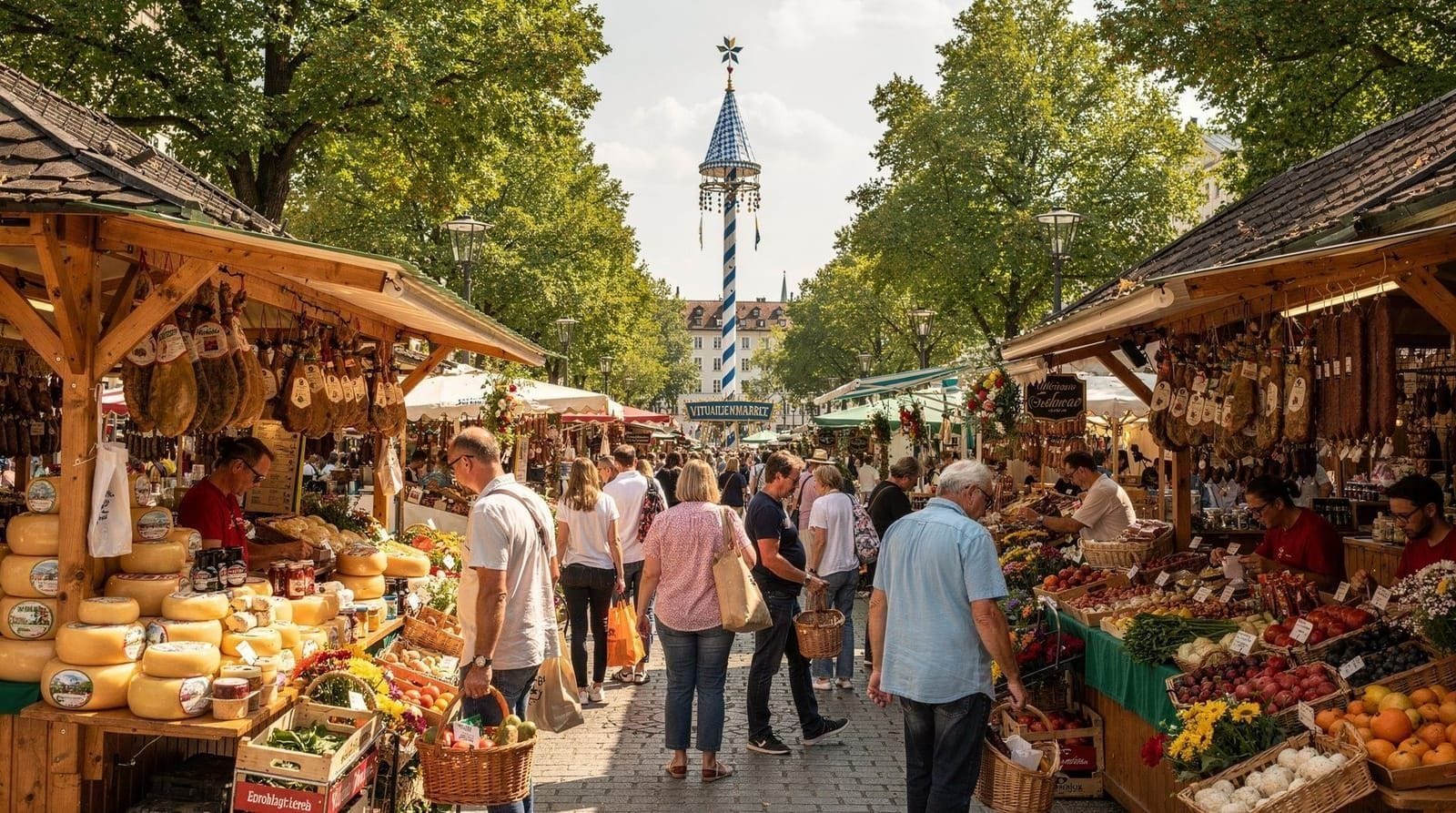
The Viktualienmarkt has around 140 permanent stalls and vendors across its central square, ranging from cheese specialists and butchers to fishmongers and organic produce sellers. For beer garden food, the best options:
Leberkäse (Bavarian meatloaf) from the butcher stalls: Served in a bread roll (Leberkässemmel), this is Munich’s most popular street food — pink, savoury, and substantial. Buy it warm, freshly sliced, and eat it within a few minutes. Cost around €3.50–4.50 per roll.
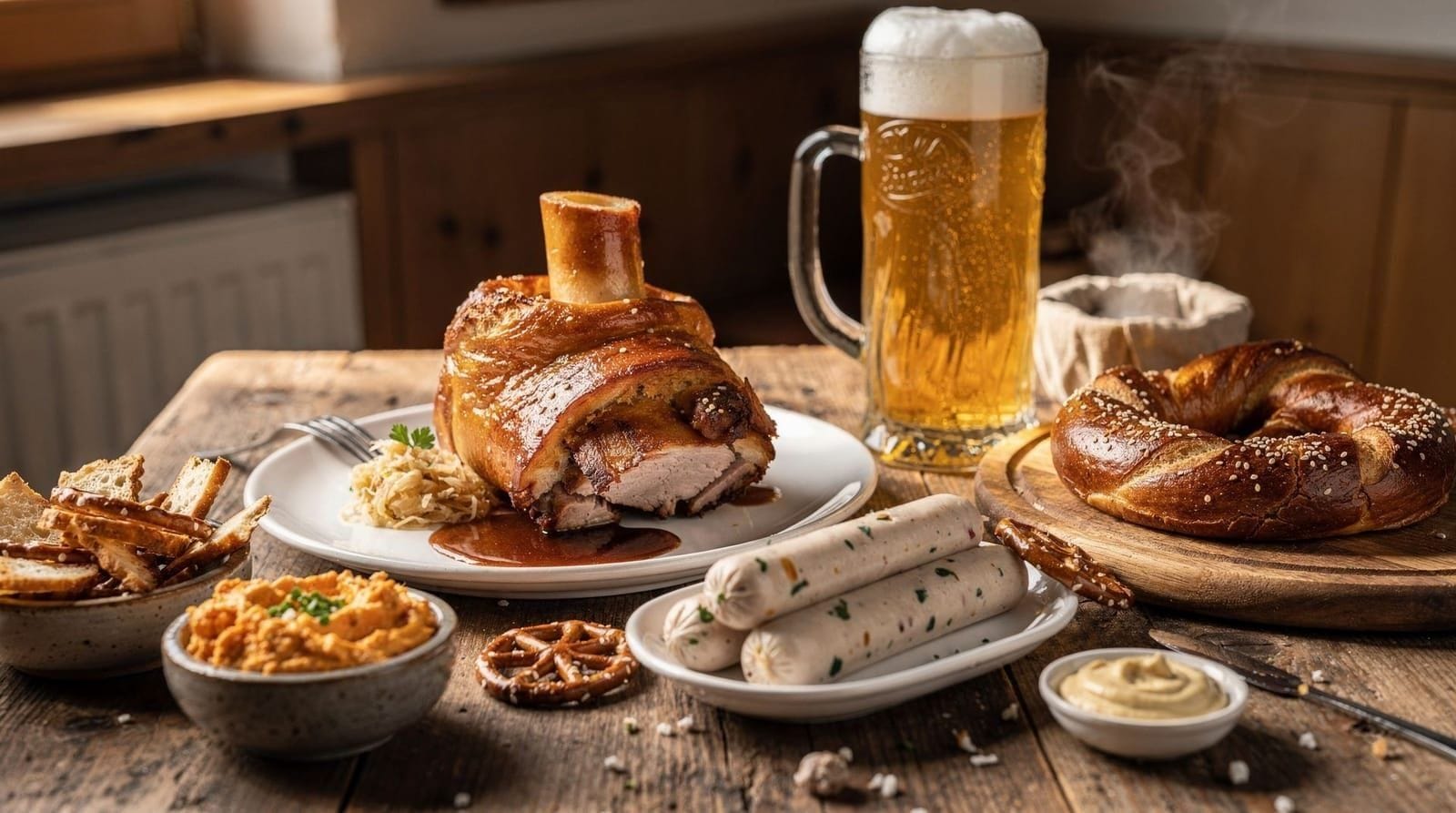
Weißwurst from traditional butchers: The classic Munich breakfast sausage, sold in pairs with sweet mustard and a Brezn. Best eaten before noon according to tradition, though the market stalls sell them until early afternoon. Around €2.50 per sausage.
Obatzda from the cheese stalls: The spreadable Bavarian cheese blend is sold by weight at several stalls, typically ready-made in small containers. Buy it with a Brezn for a perfect beer garden snack. Around €4–6 for a generous portion.
Brezn (giant Bavarian pretzels): Sold at multiple bakery stalls throughout the market. Fresh-baked, properly salty, and substantially different from anything sold under the name “pretzel” outside Bavaria. Around €1.50–2.50 each.
Rettich (white radish, spiral-cut with salt): A traditional beer garden snack found at some of the older market stalls. Sold whole, already sliced in the traditional corkscrew spiral, with a salt shaker. Around €3–4.
Ready-to-eat cheeses: Several specialists sell high-quality Bavarian cheeses — Obazder, Bergkäse (mountain cheese), and Limburger — that work well with dark bread and Brezn. For more detail on what to buy and from whom, the Viktualienmarkt food guide covers the stalls in detail.
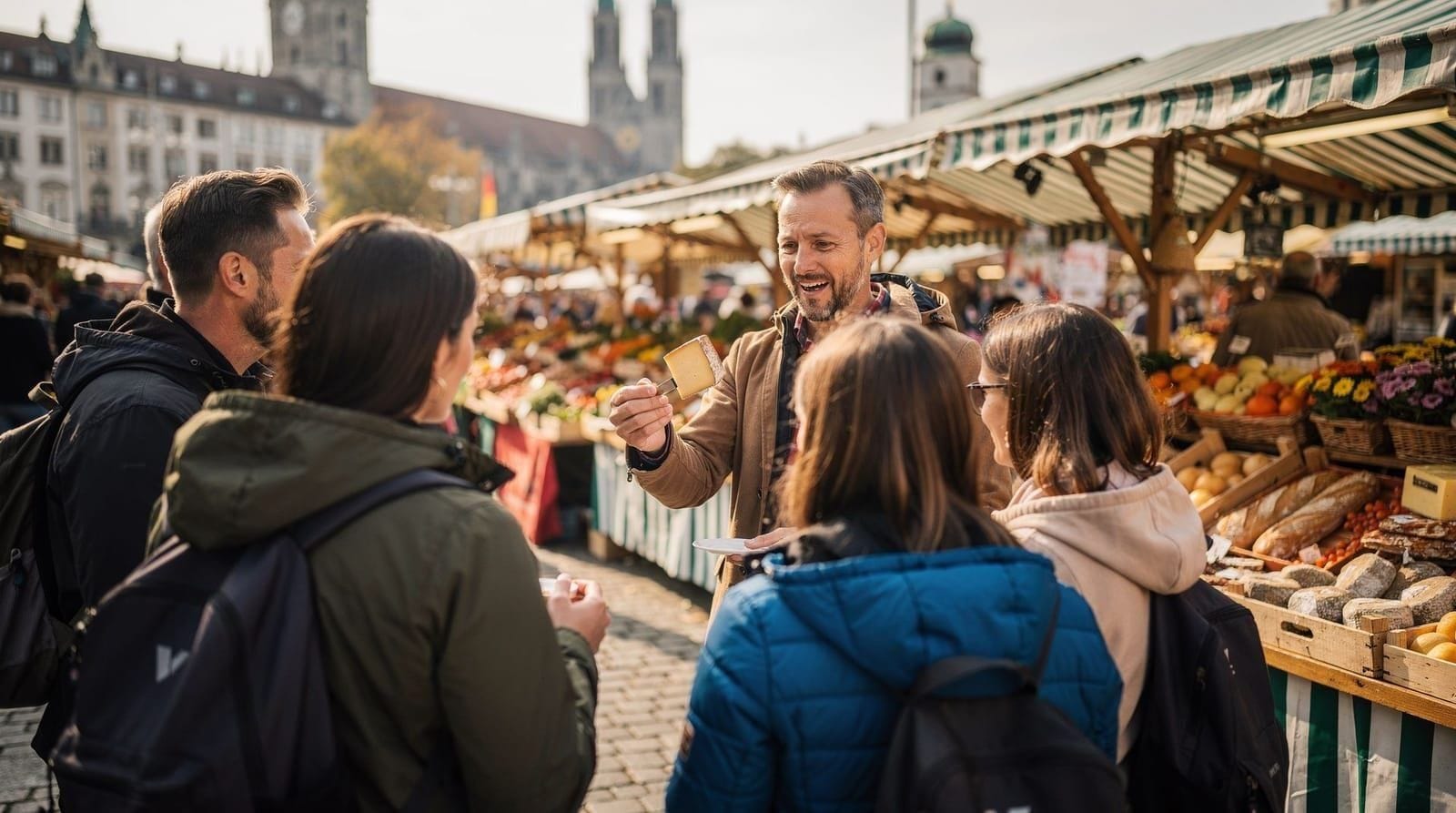
For a guided introduction to the market and the food culture alongside beer pairings, a food tour that includes a beer garden stop is an excellent investment of two hours. Munich Viktualienmarkt gourmet food tour
The setting: what you are sitting among
The Viktualienmarkt occupies a site that has functioned as Munich’s central food market since 1807, when it was moved from its original location in Marienplatz to its current position. The square is flanked by permanent market stalls, a fishmonger, flower sellers, and the covered arcade of the Schrannenhalle (a 19th-century grain hall that now houses specialty food retailers).
At the centre of the market stands the Maibaum — the Maypole, painted in blue and white Bavarian stripes and decorated with small carved figures representing Munich’s traditional crafts and guilds. This is one of the most photographed spots in Munich, and sitting in the beer garden with the Maibaum in your eyeline is the kind of composition that makes Munich look like a postcard even in real life.
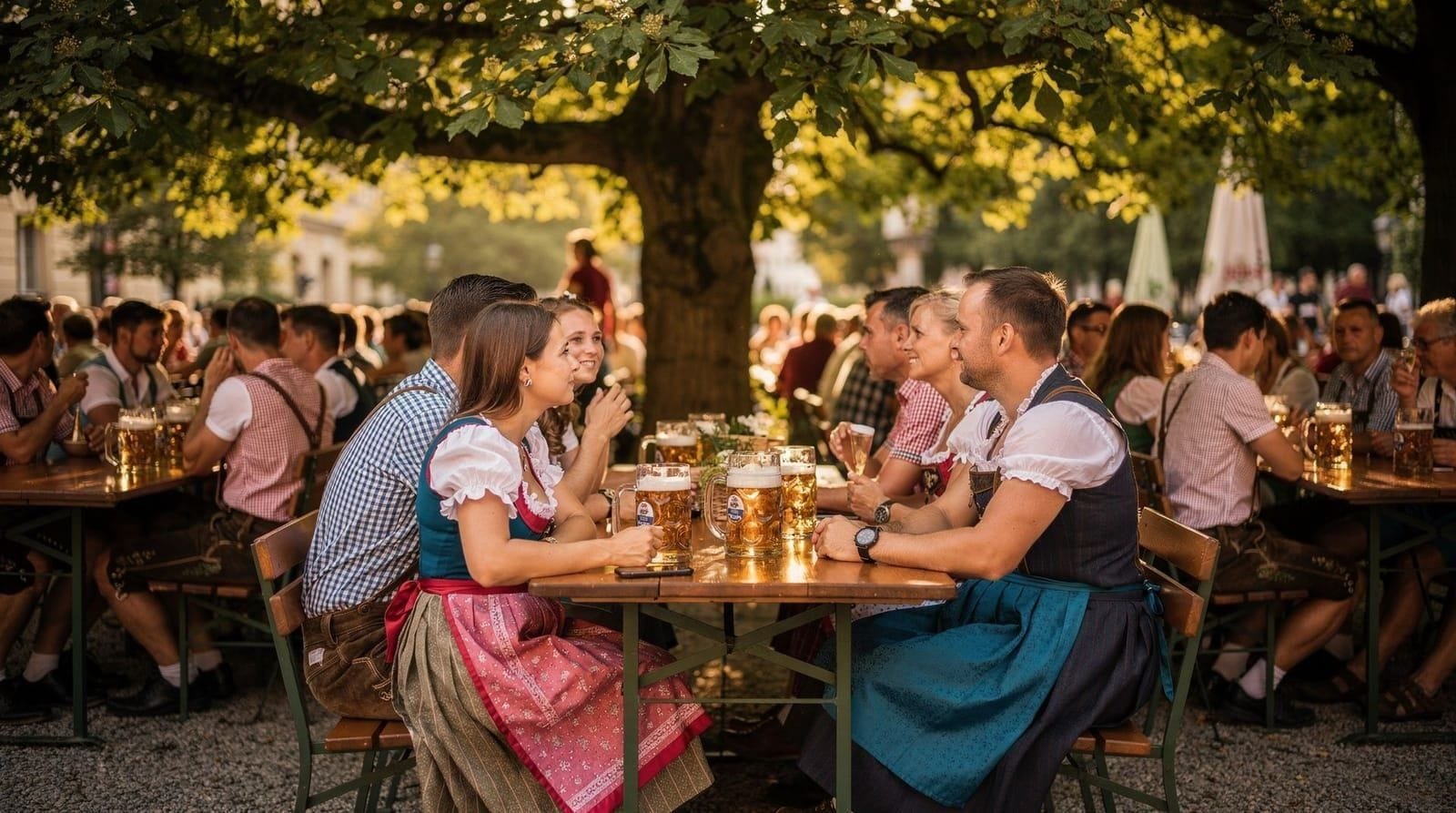
The beer garden itself is arranged under large mature chestnut trees, which provide shade and give the space its characteristic dappled light in summer. Seating is at traditional long wooden Biertische (beer tables) and Bierbänke (benches), and sharing with strangers is the norm — see the Munich beer hall etiquette guide for how this works in practice.
When to visit and what to expect
Best time: A weekday morning from 10:30 (the market opens at 09:00, the beer garden soon after) before the midday rush. The combination of fresh market produce at its best, the first cold Maß of the day, and a relatively uncrowded setting is one of Munich’s authentic pleasures.
Summer afternoons: Busy but atmospheric. Seats fill quickly from noon onward. Arrive, scan for a gap at a communal table, ask “Ist hier noch frei?” and settle in. Service is at your table.
Winter: The beer garden operates on warm or mild days — even in winter, Münchners will sit outside in proper clothing at the first hint of sunshine. But there is no guarantee of service in cold or wet weather. If the garden is closed, the market stalls are still operating and excellent for food shopping.
Avoiding the queues: If you are buying food from multiple stalls to bring to the garden, do the market shopping first, then go to the beer garden. Returning to the stalls with beer in hand while holding your place at the table is impractical.
Weather contingency: Munich weather in spring and autumn can turn quickly, and the beer garden has limited covered seating. If rain arrives mid-visit, the surrounding market arcades and the Schrannenhalle offer shelter without losing the market atmosphere entirely — you can wait out a shower there before deciding whether to return to the beer garden or head elsewhere. In practice, most Münchners simply wait a passing shower out under a market awning rather than leaving.
Photographing the Maibaum and the market: The best light for photographing the Maibaum and the market stalls is mid-morning, when the sun angle avoids the harsh shadows of midday and the stalls are freshly stocked and photogenic before the lunchtime crowds thicken. Evening light after the market closes (post-20:00 in summer) also works well if you want the square without the stalls, though the beer garden itself will be winding down by then.
How the beer is served
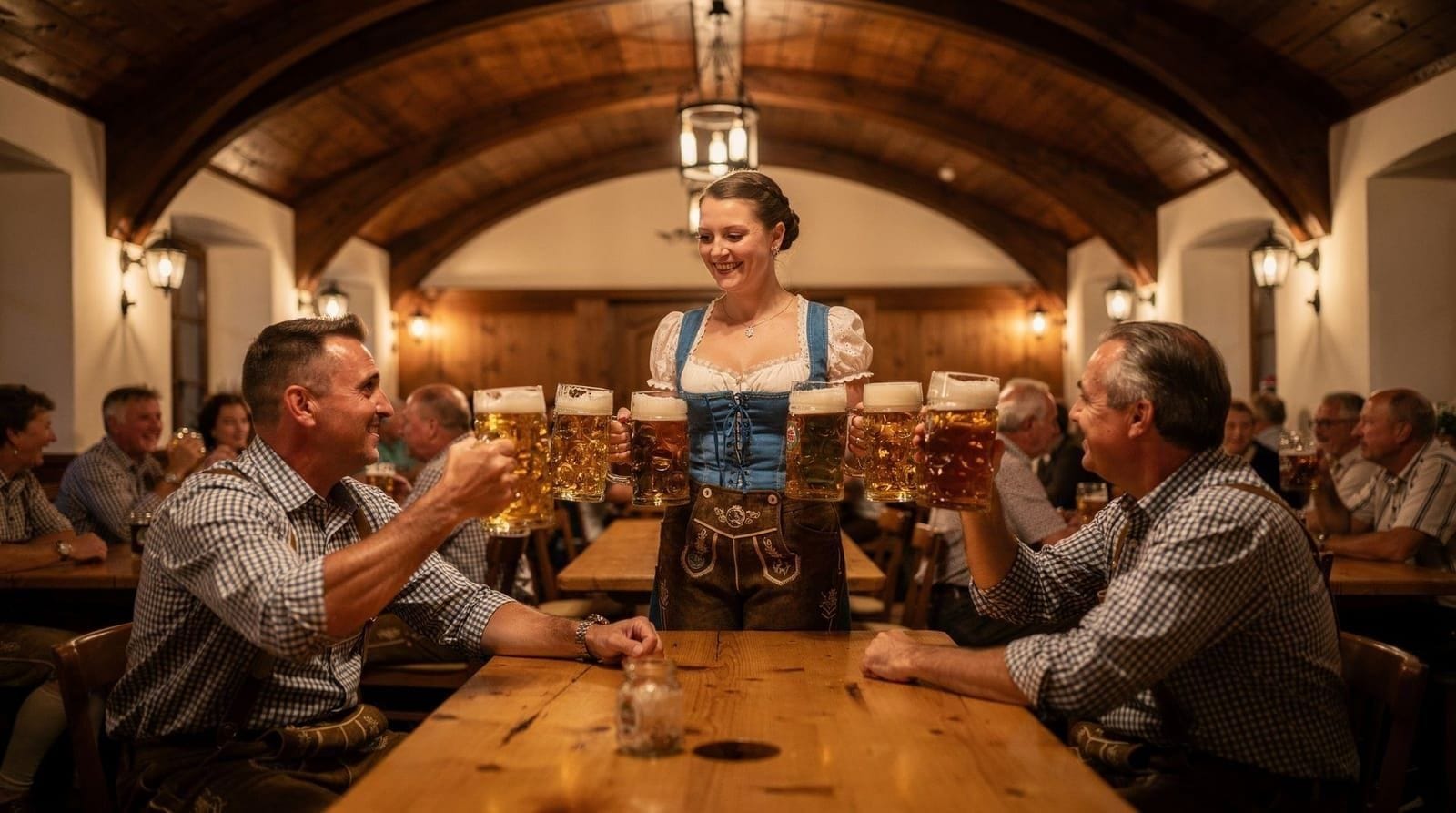
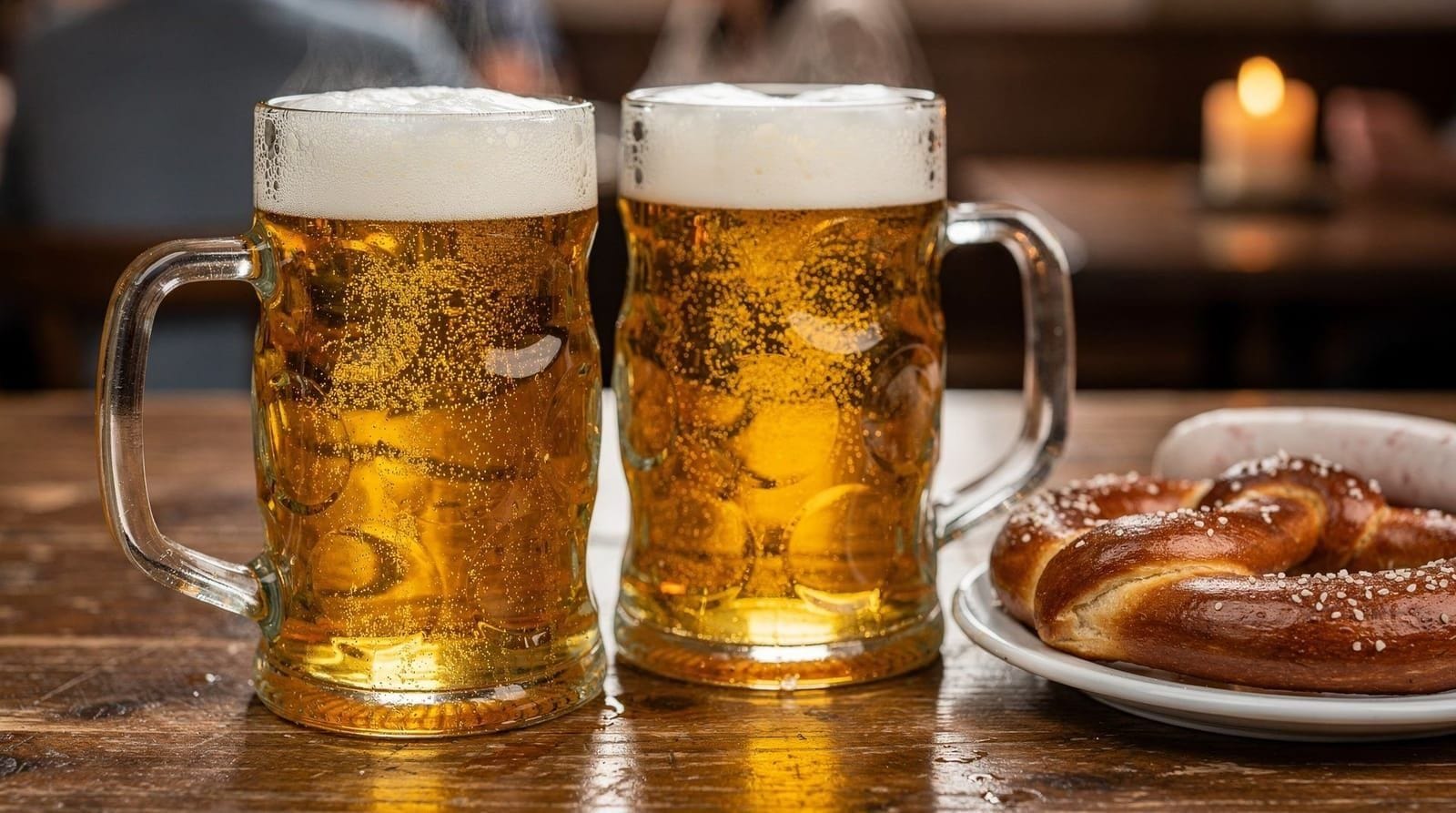
Order at your table — a server (Bedienung) circulates through the garden. Point, hold up fingers, or say “Zwei Maß Helles bitte” (two litres of Helles, please). In peak season the service can be slow during the midday rush; be patient. Servers at the Viktualienmarkt carry impressive quantities of Maß mugs at once.
You can also order food from the garden’s own kitchen — typically a limited menu of Brezn, sausages, and simple snacks — if you do not want to shop the market. But the whole point of this beer garden is bringing market food, so take advantage of it.
Payment is at the end of your visit. Tipping by rounding up (say “zwanzig” when your bill is €18) is standard. Do not leave coins on the table.
A Maß of Helles at the Viktualienmarkt costs approximately €10.50–12 in 2026. A Halbe (500 ml) runs €5.50–7.
Combining the Viktualienmarkt with the neighbourhood
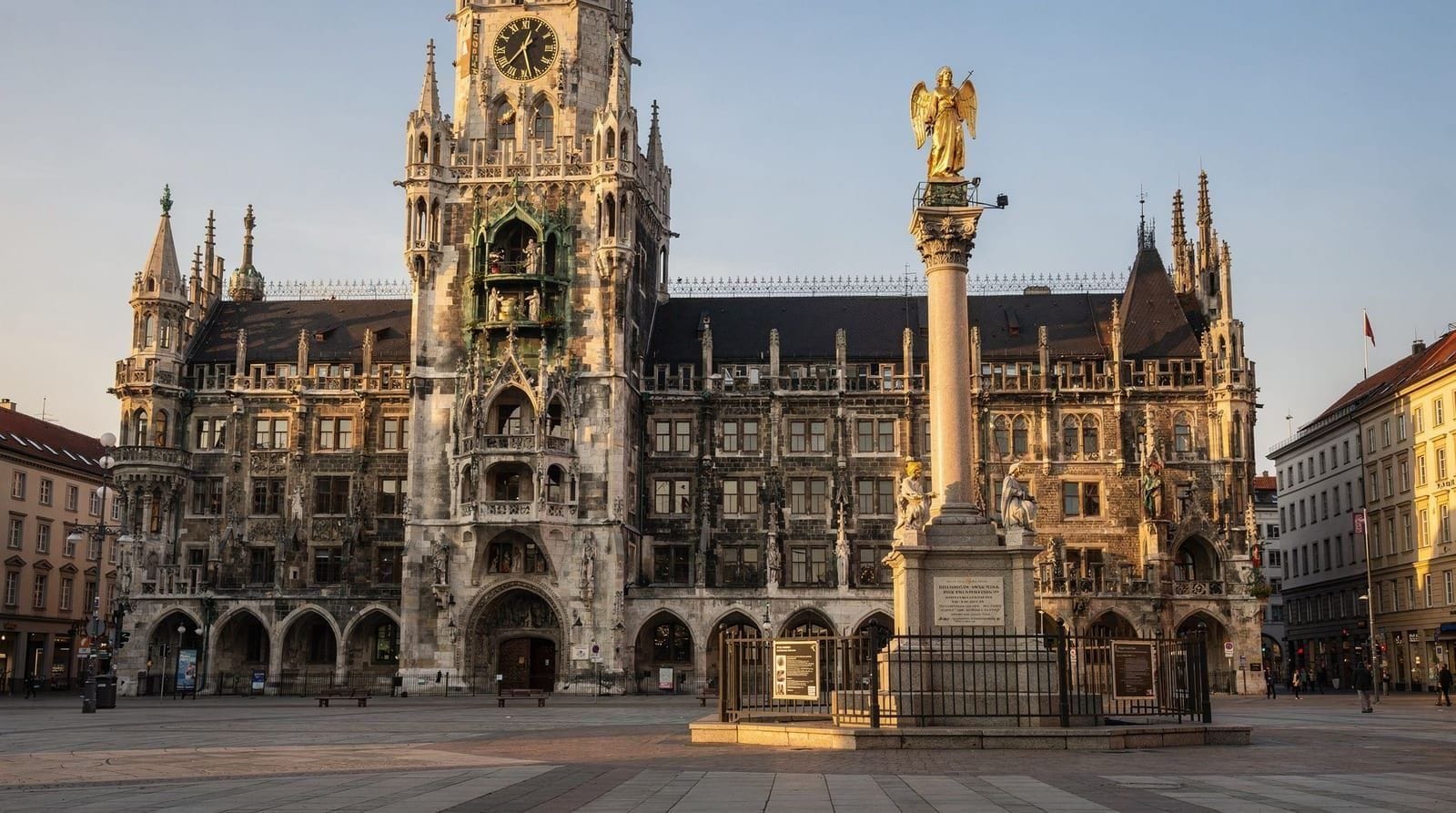
The beer garden is an excellent starting point for exploring the surrounding Munich Altstadt. From the Viktualienmarkt it is a 5-minute walk to Marienplatz and the Rathaus-Glockenspiel, 3 minutes to the Frauenkirche, and 10 minutes to the Isartor.
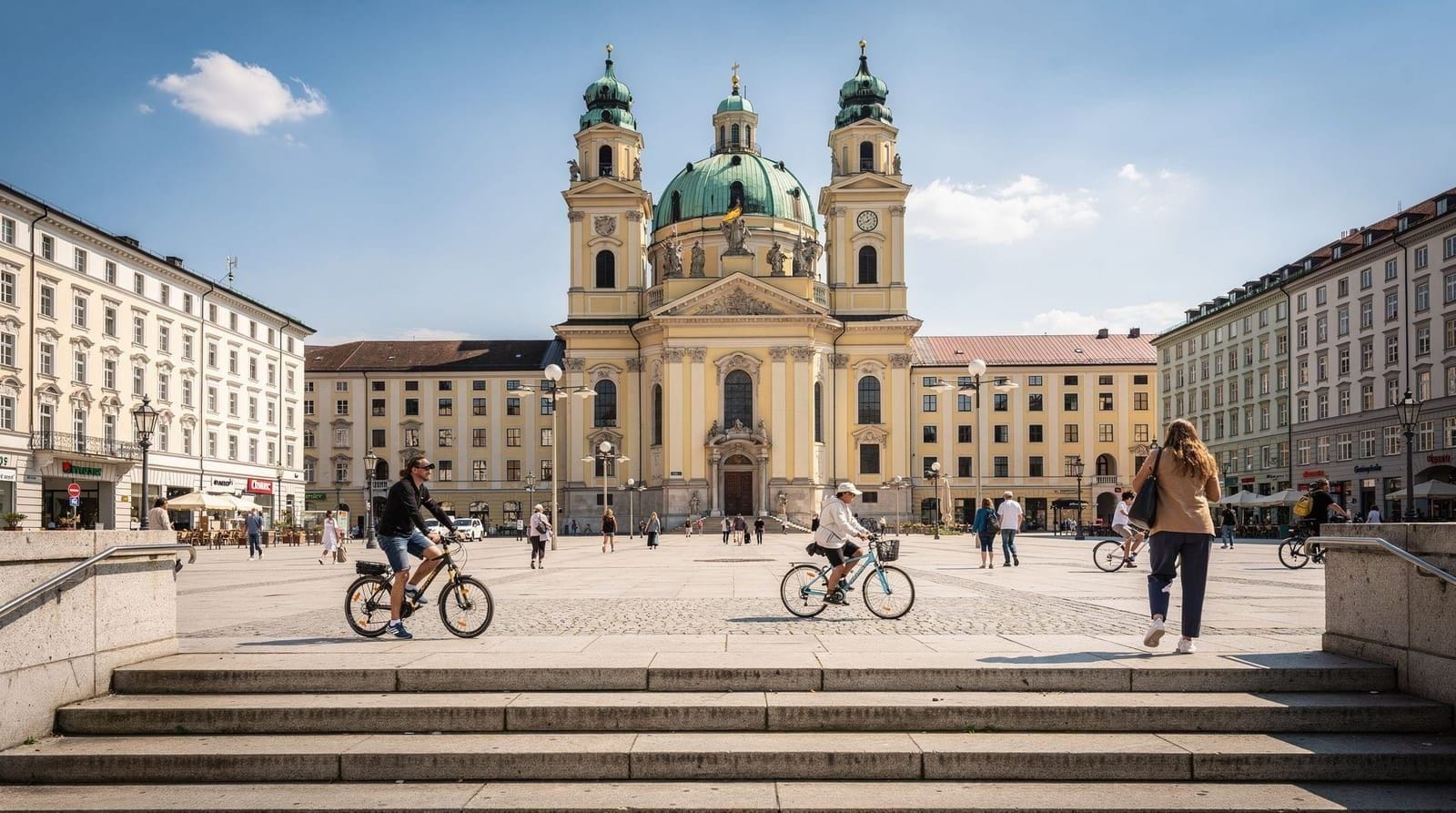
A logical morning combines: walk from Marienplatz south to the market, shop the stalls, sit in the beer garden for a Maß and food, then continue to the Asam Church (3 minutes away) and down to the Isar. This circuit takes about 3 hours at a comfortable pace.
For a guided walk that covers the Altstadt alongside the market, a walking tour with a Viktualienmarkt stop gives good historical context to the buildings you are passing. Munich walking tour: old town and Viktualienmarkt
For the full Altstadt food and beer experience with tasting, a dedicated food tour covers the market stalls with explanation of what you are eating and why. Munich Viktualienmarkt and Altstadt food tour
Comparing the Viktualienmarkt to other Munich beer gardens
Munich has over 100 beer gardens, and the Viktualienmarkt is far from the largest or the most spectacular. Here is how it compares to the main alternatives:
Augustinerkeller (5,000 seats, Arnulfstrasse): More atmospheric for a proper afternoon of drinking, larger beer garden under chestnut trees, excellent kitchen. Less central, further from sightseeing. Best if beer is the primary goal.
English Garden Chinese Tower Biergarten (7,000 seats): The most famous Munich beer garden experience, under a multi-tiered Chinese pagoda tower in the Englischer Garten. Hofbräu beer. Large, lively, genuinely enjoyable but can be very touristy. The English Garden guide covers it in detail.
Hirschgarten (8,000 seats, Nymphenburg): Enormous, serene, frequented by families and dog walkers. Augustiner beer, picnic atmosphere. Best for a long, lazy afternoon.
Viktualienmarkt: Smallest of the big ones, most central, most convenient for combining with sightseeing, unique for the bring-your-own-food-from-market tradition and the brewery rotation.
| Seats | Beer | Best for | |
|---|---|---|---|
| Viktualienmarkt | ~1,000 | Rotates all 6 Oktoberfest breweries | Central location, market food, sightseeing days |
| Augustinerkeller | ~5,000 | Augustiner | A dedicated afternoon of drinking |
| Chinese Tower (English Garden) | ~7,000 | Hofbräu | Classic postcard beer garden atmosphere |
| Hirschgarten | ~8,000 | Augustiner | Long, relaxed afternoons, families, dog walkers |
A realistic first-time visit
If this is your first Munich beer garden, the Viktualienmarkt is a genuinely good place to start precisely because it removes the guesswork. Arrive mid-morning, walk the stalls for ten minutes to get a sense of what’s on offer, buy a Leberkässemmel or a Brezn with Obatzda, then find the beer garden entrance and check the sign for which brewery is currently pouring. Grab a table, flag a server, and order in short German phrases — nobody expects fluency, and pointing works fine too. The whole process, from arrival to sitting with a Maß in hand, takes about fifteen minutes once you know the sequence, compared with the understandable hesitation most first-timers feel navigating it cold.
Solo travellers should not hesitate to visit alone — sharing a communal table with strangers is completely normal here, and the relaxed, market-adjacent atmosphere makes it one of the more comfortable solo beer garden experiences in the city compared with the louder, more group-oriented Hofbräuhaus. Bringing a book or simply people-watching over a Halbe is a perfectly ordinary way to spend an hour at the Viktualienmarkt, and nobody will think twice about a single occupied seat at a long bench. If you want a little more structure than sitting solo, arriving during the busier lunch window means you’ll almost certainly end up sharing a table and striking up a conversation with locals or fellow travellers — one of the more organic ways to meet people in Munich without any special effort.
Frequently asked questions about the Viktualienmarkt beer garden
What are the opening hours of the Viktualienmarkt beer garden?
The beer garden opens daily during market hours (the market opens at 09:00 Monday to Saturday; closed Sunday). The beer garden typically opens from around 09:30 or 10:00 and closes at dusk or earlier if weather turns. The market itself closes at 20:00 on weekdays and 16:00 on Saturdays. The beer garden may stay open slightly later in summer evenings.
Is the Viktualienmarkt beer garden open on Sundays?
The Viktualienmarkt itself is closed on Sundays (German market laws), but the beer garden sometimes operates independently. This is not guaranteed — check on arrival. If closed, the English Garden Biergarten is open year-round including Sundays.
Can I reserve a table at the Viktualienmarkt beer garden?
No — it is a walk-in only venue, as all traditional Bavarian beer gardens are. Reservations are not possible. First come, first seated. On busy summer days, arrive early or after the lunch rush.
Is the Viktualienmarkt beer garden suitable for vegetarians?
Yes. Several of the surrounding market stalls sell excellent vegetarian options — cheeses, bread, salads, and vegetable-based snacks. The Munich vegetarian and vegan guide covers the whole city, but the market itself has strong vegetarian options.
What is the atmosphere like at the Viktualienmarkt beer garden?
Less boisterous than the Hofbräuhaus, less touristy than most Munich beer halls, and distinctly more local in character than many beer gardens closer to the main sights. You will find Munich shoppers taking a beer break, families with children, tourists who have done their homework, and professionals on lunch breaks. The atmosphere is convivial and relaxed rather than festive or loud.
Is the Viktualienmarkt beer garden in the Munich old town walking route?
Yes — the Viktualienmarkt is a natural stop on any walk through the Altstadt. The Munich old town walking route passes directly through the market square. The Munich self-guided walk also includes it.
What is the Viktualienmarkt’s history?
The Viktualienmarkt has been Munich’s central food market since 1807, when King Maximilian I ordered the city’s market to be moved from Marienplatz to its current location, creating a dedicated food trading area that could expand without blocking the civic square. Over the following two centuries it grew into a permanent fixture of Munich’s daily life, surviving both World Wars (the market stalls were rebuilt almost immediately after 1945) and becoming one of the most photographed sites in the city. The beer garden was established early in the market’s history, reflecting the Bavarian tradition of outdoor drinking wherever people gathered.
Is the food at the Viktualienmarkt expensive?
Market prices are not budget prices — the Viktualienmarkt caters to Munich professionals and serious food shoppers who value quality over bargain. A Leberkässemmel (Bavarian meatloaf roll) costs around €3.50–4.50; a Brezn is €1.50–2.50; cheese by weight depends on the type. The food quality is consistently high, and the experience of eating market-fresh Bavarian food at a beer garden table is worth the premium over supermarket prices. For a more budget-focused approach to Munich eating, the Munich budget guide has practical alternatives.
What is the best beer style to order at the Viktualienmarkt beer garden?
It depends on which brewery is currently serving. If Augustiner is on rotation (check the sign at the entrance), order the Helles — it is widely considered Munich’s finest example of the pale lager style. If Paulaner is serving, try the Weißbier, which Paulaner does particularly well. Dunkel (dark lager) is a reliable choice from any of the six breweries and pairs especially well with the richer market foods like Leberkäse and aged cheese. The Munich beer tasting tours guide explains the style differences in detail if you want more context before ordering.
Top experiences
Bookable activities with verified prices and instant confirmation on GetYourGuide.