Munich old town walking route — self-guided map and times for 2026
Munich: walking tour through old town and Viktualienmarkt
What is the best walking route through Munich's old town?
Start at Marienplatz, walk south to Viktualienmarkt, then west to Frauenkirche, north to the Residenz and Odeonsplatz, and finish with a walk through Hofgarten. The full loop is 2.8 km and takes around 2 hours at a relaxed pace with stops.
The route in brief
Munich’s Altstadt is one of the most rewarding districts in Germany to explore on foot. The six-stop route below covers 2.8 km of mostly traffic-free streets and takes 2 to 2.5 hours with stops — longer if you enter the Residenz museum or linger over lunch at Viktualienmarkt. Everything described here is free to access from the street; entrance fees are noted where they apply.
| Where | Marienplatz to Hofgarten, Munich Altstadt |
| Cost | free to walk; optional entries around €5–14 |
| Time needed | 2–2.5 hours at a relaxed pace |
| Getting there | U3/U6 or S-Bahn to Marienplatz |
| Best time | weekday mornings for lighter crowds |
Route at a glance:
| Stop | What it is | Time to allow |
|---|---|---|
| 1. Marienplatz | Historic central square, Glockenspiel | 20–30 min |
| 2. Viktualienmarkt | Open-air market and beer garden | 30–45 min |
| 3. Frauenkirche | Twin-towered cathedral | 20–30 min |
| 4. Residenz | Wittelsbach royal palace complex | 20 min exterior, 2–3h museum |
| 5. Odeonsplatz | Baroque square, Feldherrnhalle | 15 min |
| 6. Hofgarten | Formal court garden, finishing point | 15–20 min |
Total distance: approximately 2.8 km. Suitable for all fitness levels.
Stop 1: Marienplatz (start here, allow 20–30 minutes)
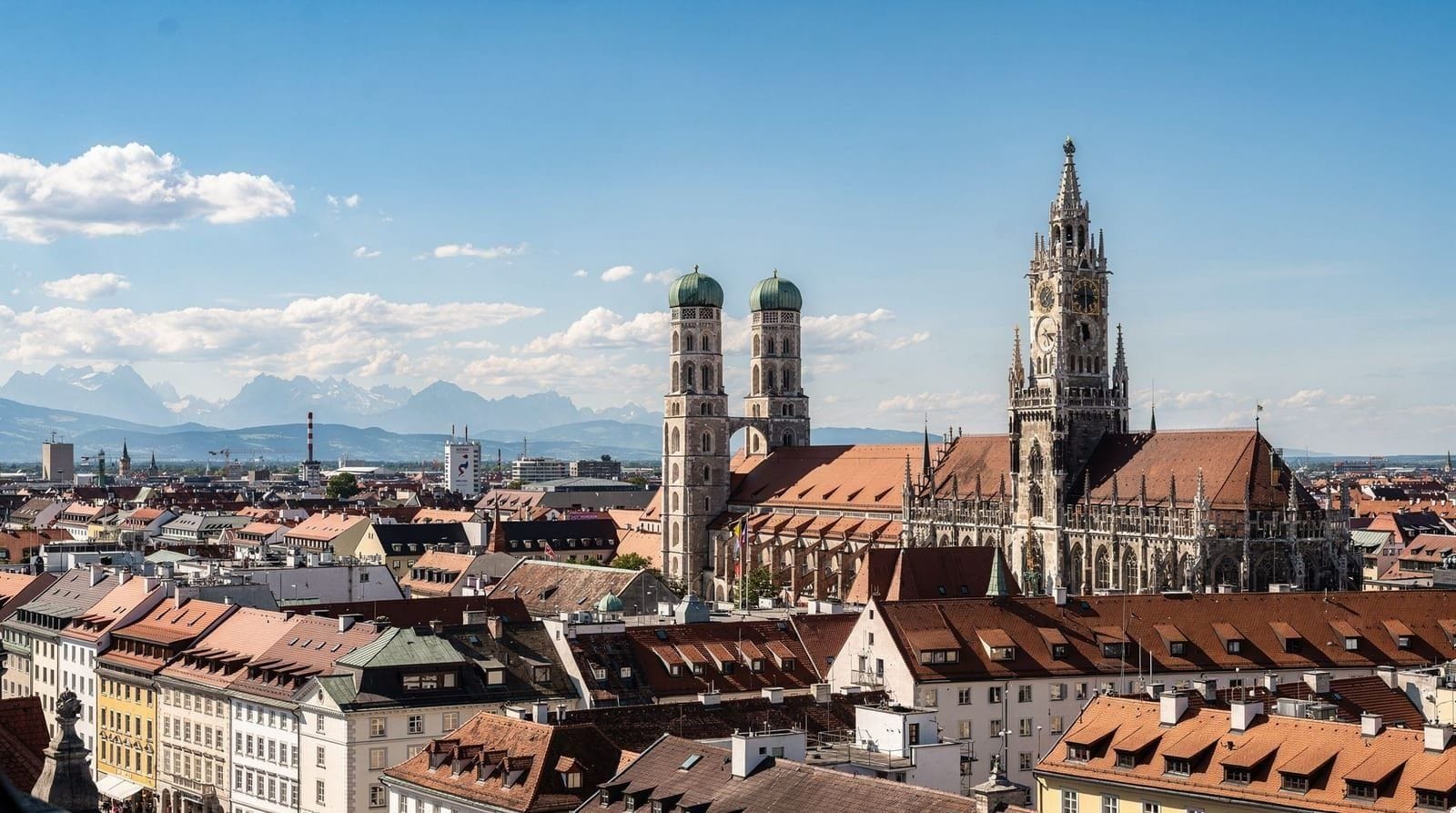
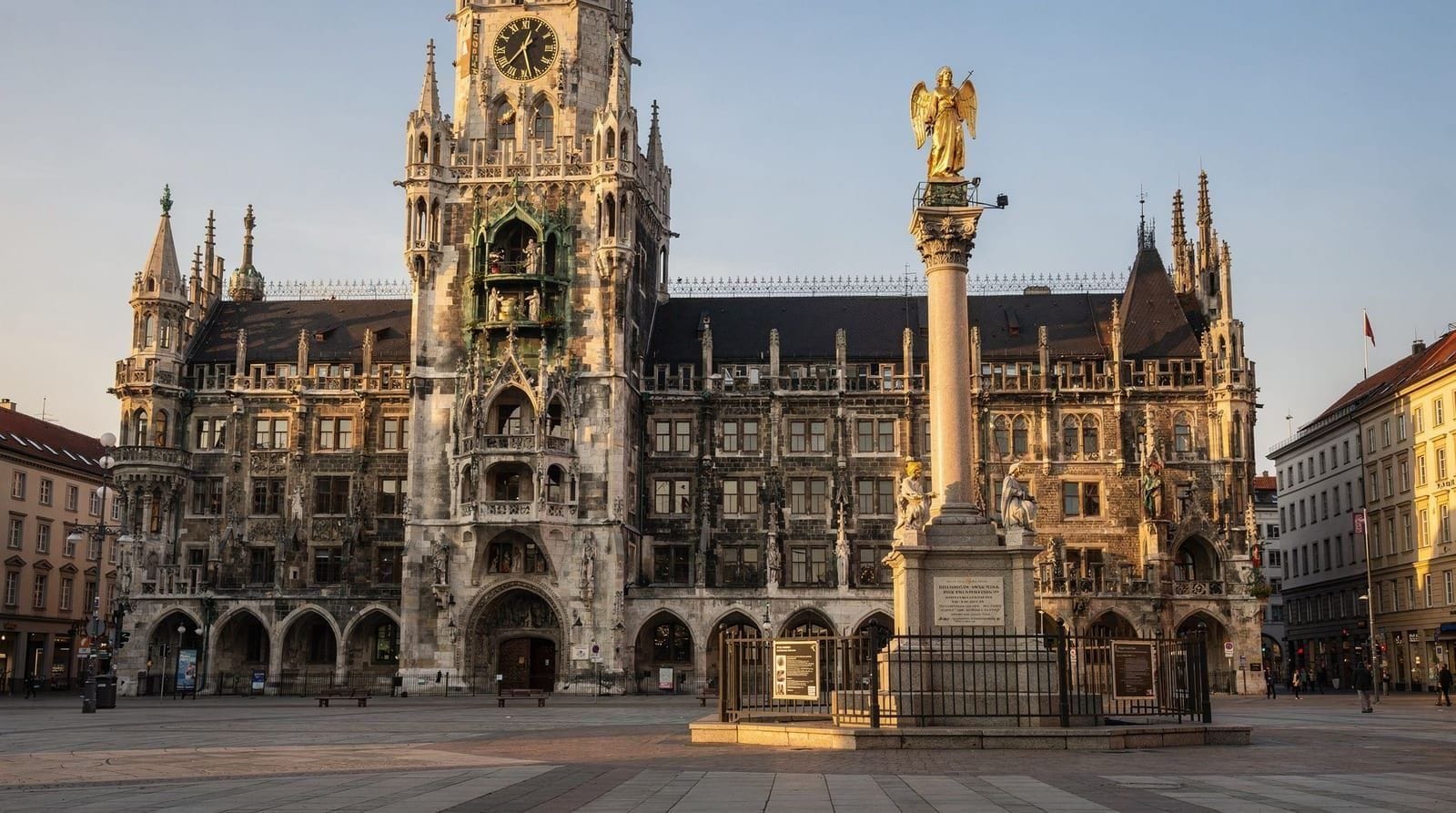
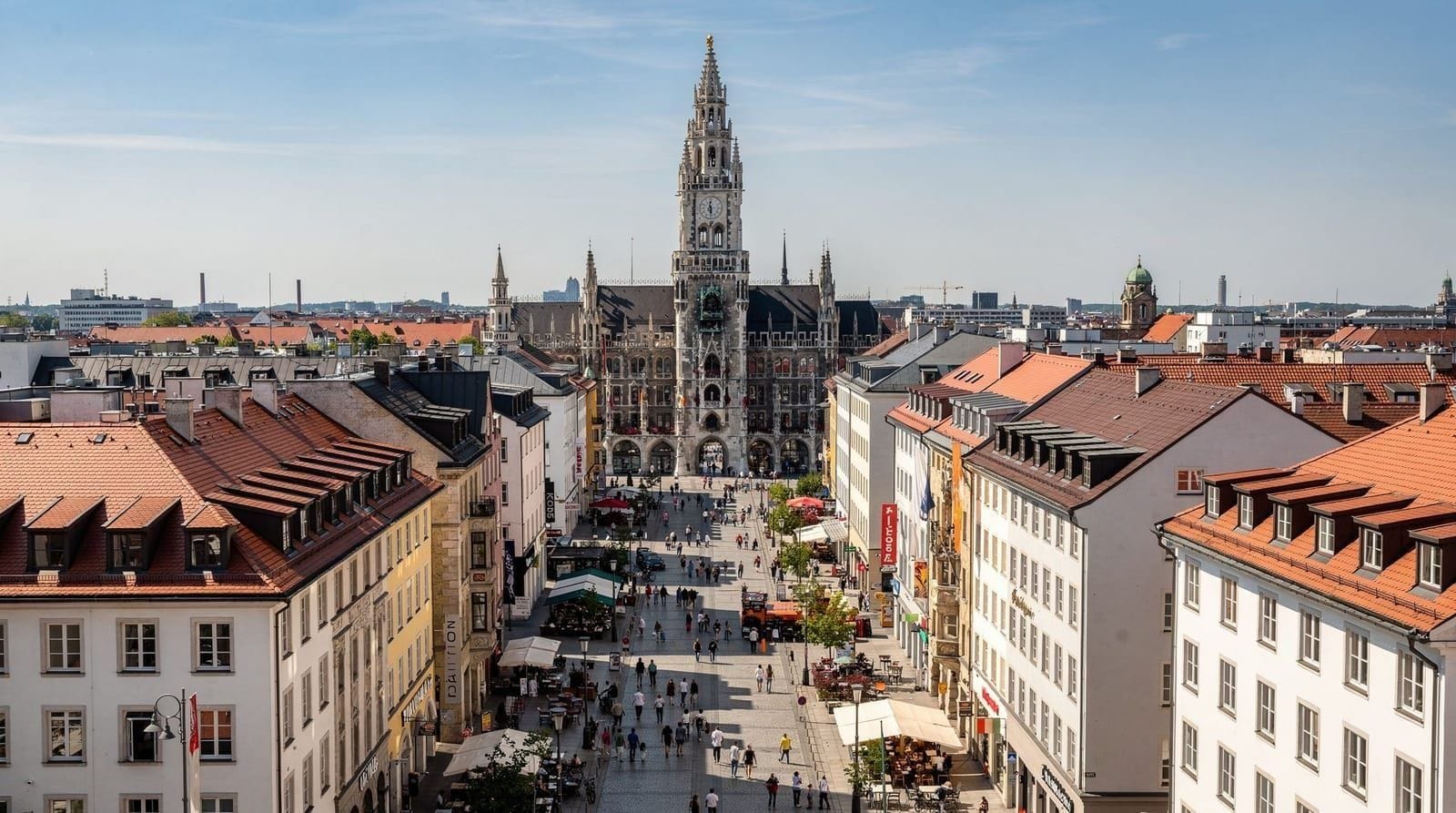
Marienplatz is Munich’s central square and has been since the city’s founding in 1158. Despite the volume of tourists, it rewards a slow look. The square is dominated by two distinct buildings: the Neues Rathaus (New Town Hall, 1867–1909) on the north side, with its neo-Gothic facade and famous glockenspiel; and the older Altes Rathaus on the east side, now housing a toy museum.
The Glockenspiel: The carillon sits on the Neues Rathaus tower at the third-floor level. It runs at 11am and noon daily, and additionally at 5pm from May to October. The mechanism features 43 bells and 32 life-sized figures acting out two historical scenes: the 1568 wedding of Duke Wilhelm V, and a dance celebrating the end of a plague. Allow for a crowd — the south side of the square gives the best view of the figures.
The Mariensaule: The golden column at the centre of the square, topped by a gilded Madonna, was erected in 1638 to celebrate Munich’s survival of plague and Swedish invasion during the Thirty Years’ War. The four corner figures at the base represent pestilence, war, hunger, and heresy.
Practical notes: The square has no seating except a few benches near the Mariensaule. Public toilets are available in the U-Bahn station below the square (€0.70). The square is fully pedestrianised.
Stop 2: Viktualienmarkt (10 minutes walk south, allow 30–45 minutes)
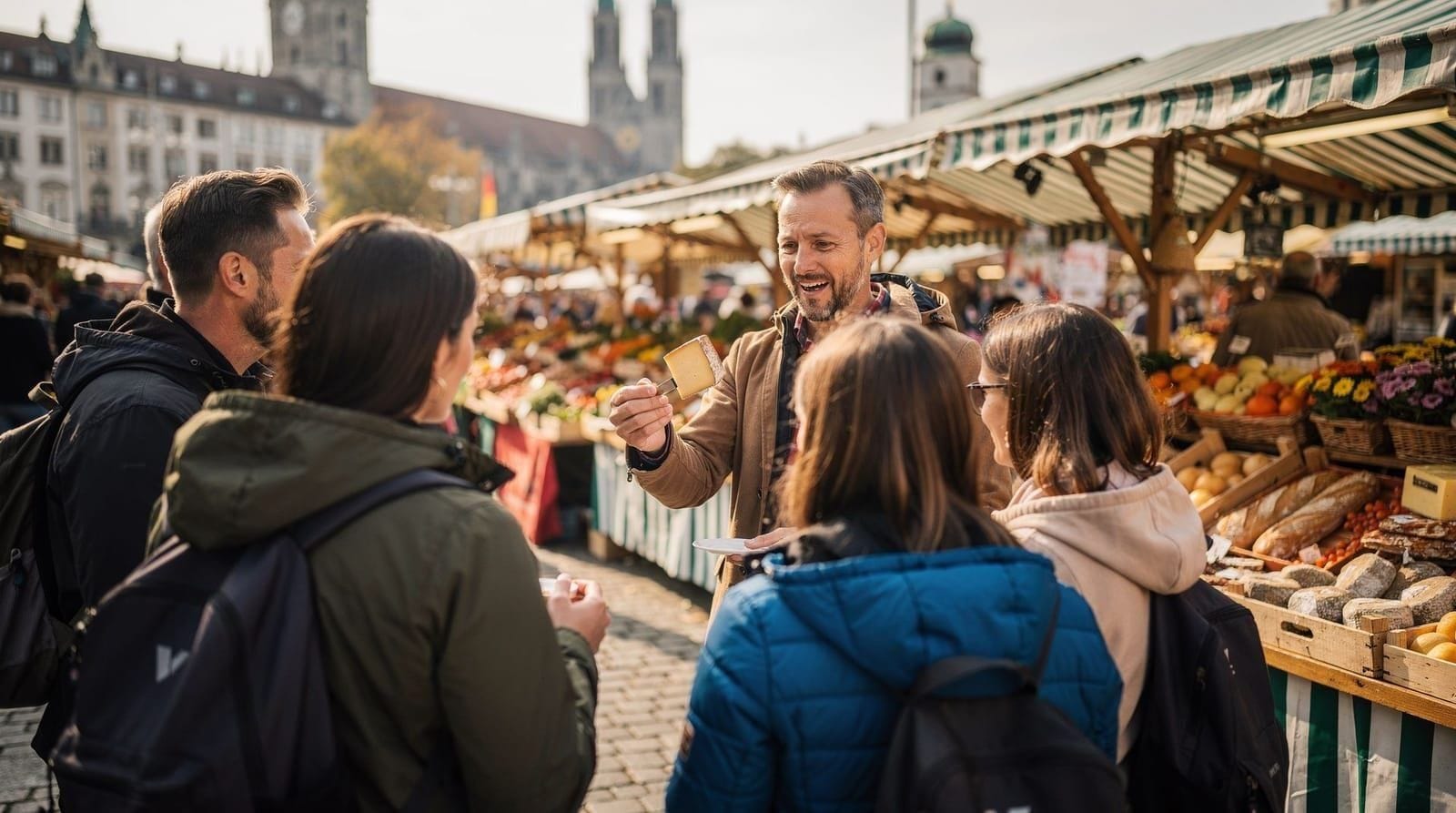
From Marienplatz, walk south past Altes Rathaus and continue to Viktualienmarkt — Munich’s open-air food market, in continuous operation since 1807. The market occupies a large square and has around 140 permanent stalls selling cheese, meat, bread, vegetables, herbs, flowers, honey, and Bavarian specialities.
What to eat: Weisswurst (white veal sausages, traditionally eaten before noon with sweet mustard) are sold at several butchers. Fresh pretzels cost €1.50–2.50. Obatzda, a spiced Camembert spread, is sold in tubs or served on bread at the sit-down stalls. Radishes sliced in a fan shape (Radi) and salted are a traditional accompaniment to beer.
The beer garden: At the centre of the market is a beer garden with seating for several hundred. It is operated communally rather than by a single brewery, which means each stall sells its own beer — an unusual arrangement that rotates through the six major Munich breweries on a seasonal basis. A Mass (1-litre stein) costs around €9–11.
The maypole (Maibaum): The tall decorated pole at the market’s edge bears painted symbols representing Munich’s traditional crafts and trades. This one is a modern version of a centuries-old tradition.
After the market, walk west and slightly north towards Frauenkirche — the twin towers are visible from most of the Altstadt and serve as a natural navigation point.
Stop 3: Frauenkirche (15 minutes walk west of Viktualienmarkt, allow 20–30 minutes)
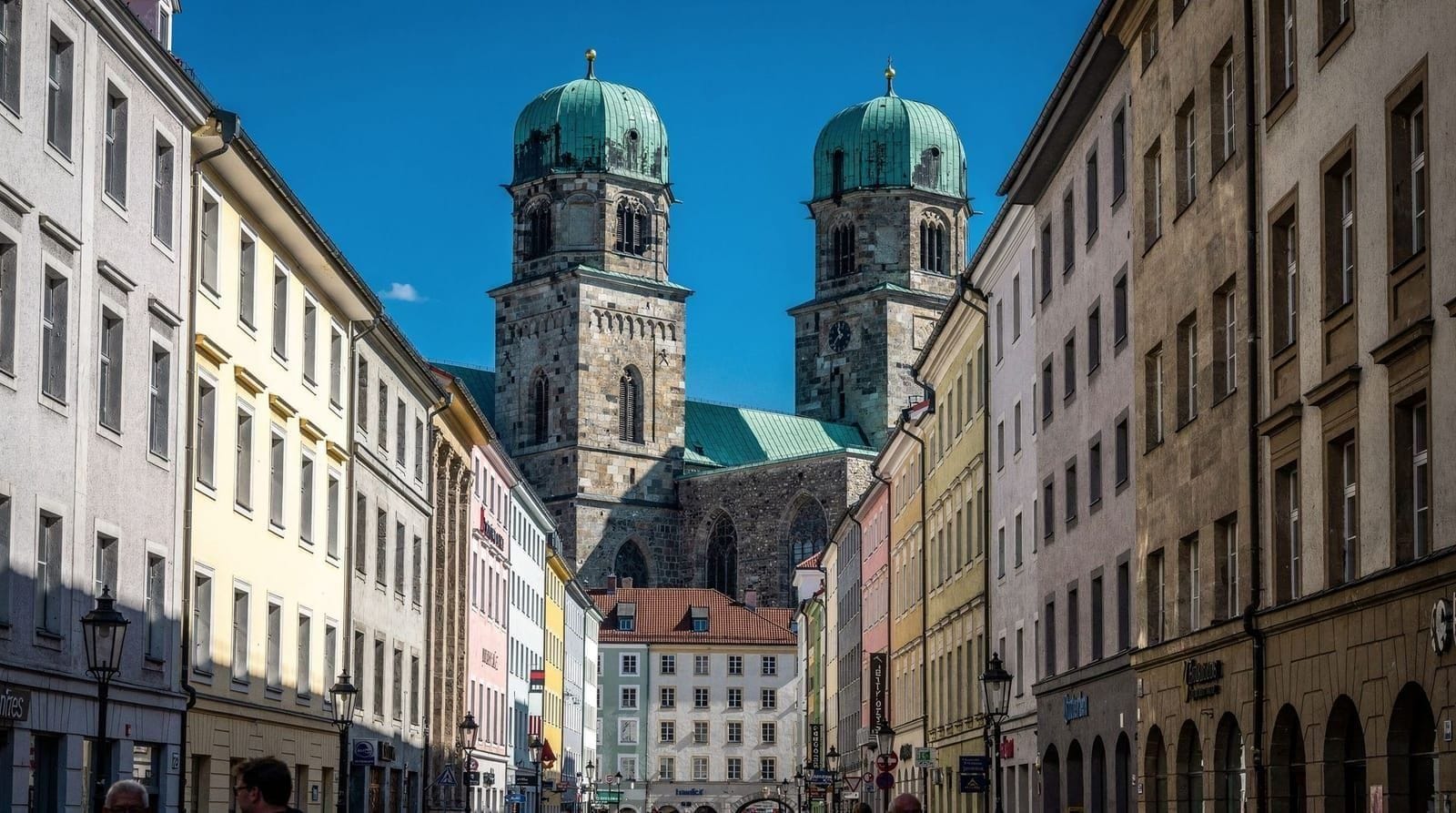
The Cathedral Church of Our Lady (Frauenkirche) is Munich’s most recognisable landmark, its two onion-domed towers reaching 99 metres. The building dates from 1468–1488 — the towers were completed later in 1524–1525. By a city ordinance that stood until 2004, no building in Munich could exceed the towers’ height; the rule has since been replaced by a district-by-district height regulation.
Inside the cathedral: Entry is free. The interior is striking for its austerity — the nave is massive, pale, and surprisingly uncluttered for a Catholic church of this age. Look at the stained glass in the east choir, which dates partly to the 15th century.
The Devil’s footprint: Just inside the main entrance, set into the floor, is a dark footprint-shaped mark. Legend holds that the Devil visited the finished church to verify the builder had broken his promise to construct it without any windows. Standing on that precise spot, the Devil saw only pillars — and believed there were no windows. He stamped his foot in satisfaction and departed. In fact, the windows are visible from everywhere else in the church; that one spot is where pillars align to block them. The footprint is real (though its exact origin is debated by historians); the story is a good example of Munich’s habit of packaging its legends with a wry edge.
Tower access: The south tower offers a viewing platform at 91 metres. It is closed for renovation through late 2026 — check current status before planning to ascend.
From Frauenkirche, walk north-east along Theatinerstrasse or the parallel alleys to reach Max-Joseph-Platz and the Residenz.
Stop 4: Residenz (15 minutes walk north-east, allow 20 minutes exterior, longer for museum)
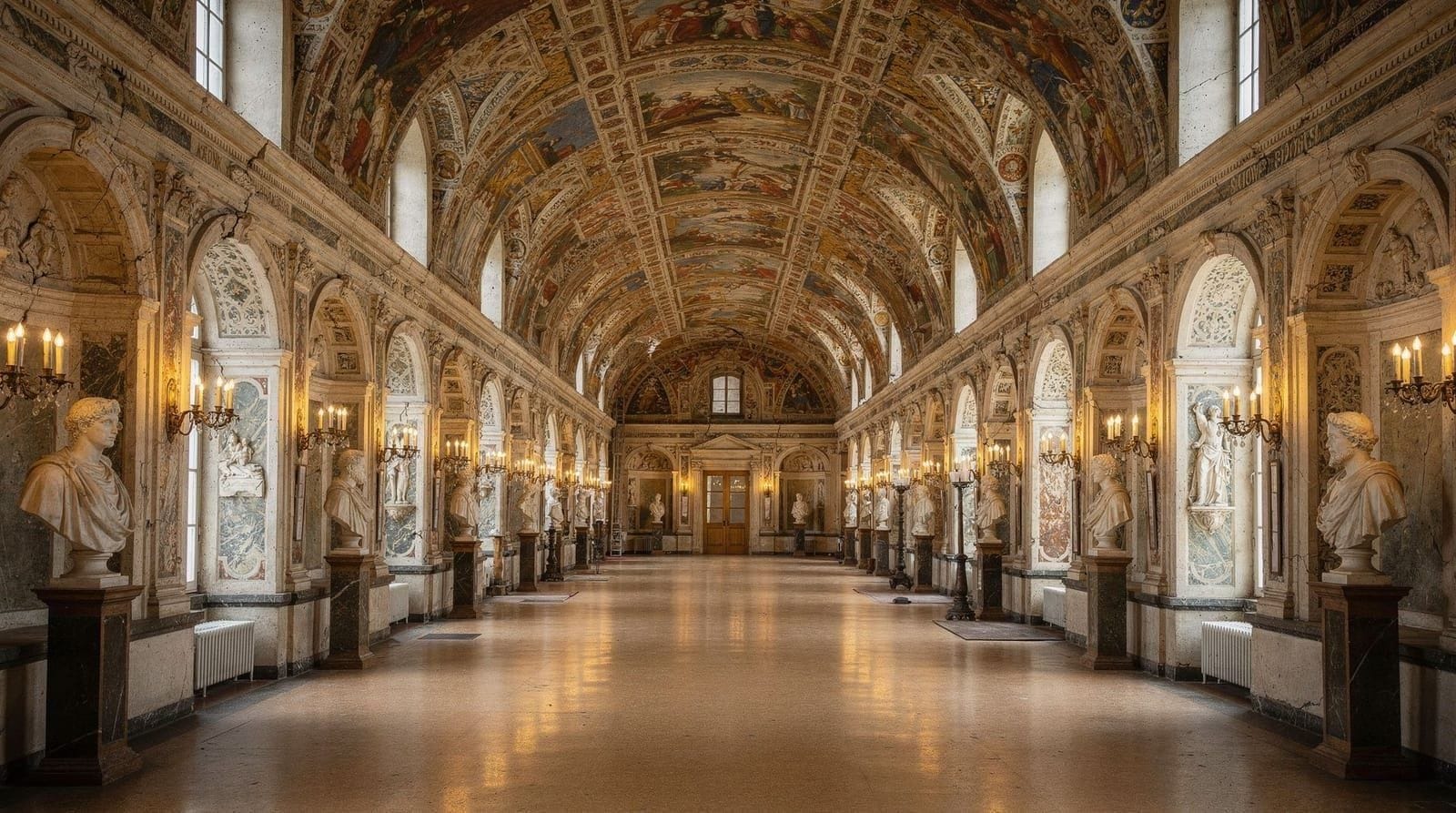
The Munich Residenz is the former royal palace of the Wittelsbach dynasty, which ruled Bavaria for roughly 700 years. The complex grew from a small fortress in 1385 into the largest city palace in Germany, with 10 courtyards and over 130 rooms.
The exterior: The main facade on Max-Joseph-Platz is the Konigsbau (King’s Wing), built 1826–1835 in Florentine Renaissance style for King Ludwig I. It faces the National Theatre (Bayerische Staatsoper), giving the square a formal grandeur that is quite different from the medieval feel of Marienplatz.
Entry: The Residenz Museum costs €9 adults, €8 reduced (2026 prices), with a combined ticket including the Treasury at €14/€11. If time is limited, the exterior courtyard called Brunnenhof (Fountain Court) can be viewed for free through the archway — it is one of the most elegant spaces in Munich and worth a five-minute stop.
Practical notes: Full visits to the museum take 2–3 hours. If this route is a standalone morning walk, consider returning for a dedicated museum visit on another day. The Munich Residenz guide covers what to prioritise inside.
From the Residenz, continue north along Residenzstrasse to Odeonsplatz — a 5-minute walk.
Stop 5: Odeonsplatz (5 minutes walk north, allow 15 minutes)
Odeonsplatz is one of Munich’s grandest squares, though it functions primarily as a traffic and public transport node rather than a pedestrian space. Its southern end is anchored by the Feldherrnhalle (Field Marshal’s Hall), a neoclassical loggia built 1841–1844 modelled on the Loggia dei Lanzi in Florence. The two bronze lions at its base represent Bavaria and the Bavarian Army.
Historical context: The Feldherrnhalle was the site of the failed Beer Hall Putsch of 8–9 November 1923, when Hitler’s NSDAP attempted a coup. Police stopped the march here; 16 Nazis and 4 police officers were killed. After 1933, when the Nazis came to power, the site became a place of compulsory salute — passers-by who did not want to acknowledge it were known to detour through the adjacent Viscardialley, still nicknamed the Dodgers’ Alley (Drückebergergasse).
On the west side of Odeonsplatz stands the Theatinerkirche, a yellow Baroque church with an elaborate facade. Entry is free. The interior — white stucco, oval nave, ornate side chapels — contrasts sharply with the severity of Frauenkirche and is worth a 10-minute look if you have not seen baroque church interiors before.
Stop 6: Hofgarten (adjacent to Odeonsplatz, allow 15–20 minutes)
The Hofgarten is a formal Italian-Renaissance-style garden laid out in 1613–1617 for Duke Maximilian I. It sits immediately behind Odeonsplatz and is separated from the modern Englischer Garten to the north by a busy road.
What you see: A grid of gravel paths lined with linden trees leads to a central domed temple (Diana Temple, 1615) where street musicians often play during warmer months. The garden is popular with office workers at lunchtime and families in the afternoon — it is genuinely used, not merely decorative.
The northern wall: The long arcade on the north side of the garden (Hofgartenarkaden) contains a series of frescoes depicting scenes from Bavarian history, painted by Peter Cornelius in the early 19th century. Most visitors walk past without noticing them; they repay a slower look.
Ending the walk: The Hofgarten connects directly to the Englischer Garten (the large English-style park that extends north for several kilometres) through a gap in the northern arcade. For a longer day, the English Garden guide picks up the route from here.
Getting the most from this route
If you want a guided version
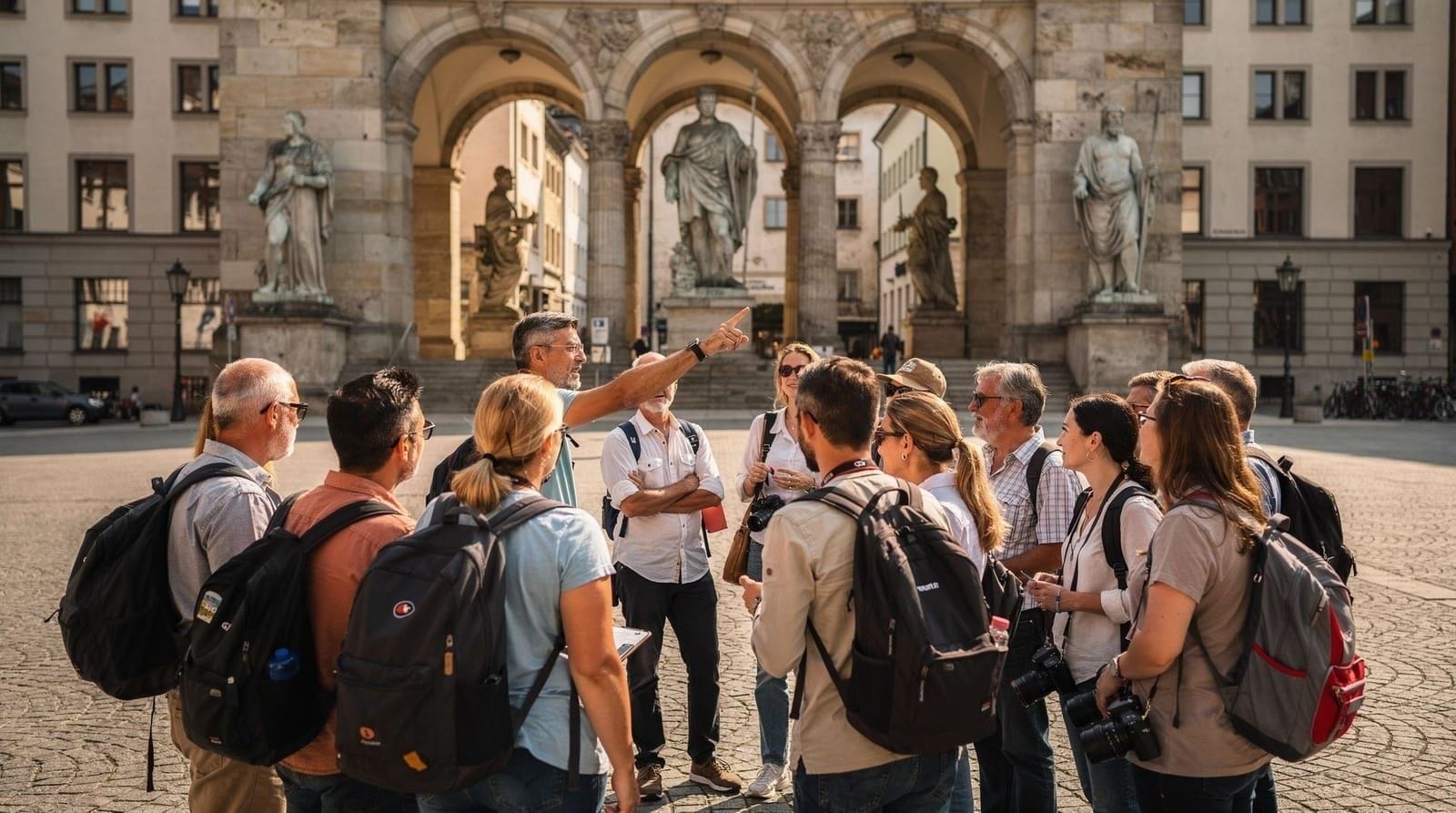
A guided walking tour of these same sites provides historical commentary that a self-guided walk cannot fully replicate. A knowledgeable guide can, for instance, explain why the Residenz’s Konigsbau was deliberately built to look Italian rather than German, or the specific political significance of individual carvings on the Feldherrnhalle. The best English-language walking tours cover this route in two hours: Munich: old town walking tour
For a combined approach — guided walk plus food introduction at Viktualienmarkt — this tour links both: Munich: walking tour through old town and Viktualienmarkt
Practical tips for the self-guided route
Timing: Allow the full 2.5–3 hours rather than rushing. The walk can be done faster, but the Residenz exterior and Hofgarten reward slower exploration.
Navigation: The towers of Frauenkirche are visible from most of the route and serve as a reliable orientation point. Google Maps works well in the Altstadt; the old town is dense enough that a physical map (available free from the main tourist office at Hauptbahnhof) is also useful.
Restrooms: Available at the Marienplatz U-Bahn station (€0.70), inside Viktualienmarkt (café purchase required), in the Residenz lobby (museum visitors), and in the Hofgarten cafe.
Weather: The route is comfortable in light rain — most stops are either open-air with shelter options nearby, or covered (Frauenkirche, Residenz courtyard arcade). The Hofgarten becomes muddy in heavy rain.
Connecting onward
This route ends at Hofgarten. From here you have several options depending on your time:
- Englischer Garten: Enter through the gap in the Hofgartenarkaden and continue north. The English Garden guide covers routes and what to see, including the famous surf wave at Eisbach (a 10-minute walk from Hofgarten).
- Maxvorstadt museums: Walking west from Odeonsplatz brings you to the museum quarter — Maxvorstadt guide covers the Pinakothek complex and surrounding cultural sites.
- Return to Hauptbahnhof: The U-Bahn from Odeonsplatz (U3, U4, U5, U6) connects directly to Hauptbahnhof in 4 minutes.
For a fuller trip context, the 2-day Munich itinerary integrates this route into a structured visit with other major attractions.
Adapting the route for different visitors
Short on time (90 minutes): Do Marienplatz, Frauenkirche and Odeonsplatz only, skipping Viktualienmarkt’s beer garden pause and the Hofgarten. This trims the route to its three most visually essential stops.
Travelling with kids: The Glockenspiel at Marienplatz and the market stalls at Viktualienmarkt are the most engaging stops for children; the Residenz museum interior is a harder sell for younger visitors, so treat the Brunnenhof courtyard view as sufficient rather than paying for the full museum. See the Munich with kids guide for broader family-trip planning.
Photography-focused visitors: Early morning (before 9am) gives the clearest shots of Marienplatz and Frauenkirche without crowds, and the Hofgartenarkaden frescoes photograph well in the softer light of late afternoon. The Munich Instagram spots guide has more specific framing suggestions along a similar route.
Rainy-day version: The Frauenkirche interior, the Residenz museum and the Hofgarten’s arcaded walkway all offer shelter, making this route more rain-resilient than most Munich walks. See the rainy day in Munich guide for backup options if the weather turns worse than light rain.
Frequently asked questions about Munich’s old town walking route
Do I need to pay anything on this route?
The route itself is entirely free — all six stops are accessible without payment. Optional paid experiences include: Residenz Museum interior (€9 adults), Frauenkirche south tower when open (€5), and Altes Rathaus toy museum (€6 adults).
How often does the Marienplatz glockenspiel run?
Daily at 11am and noon. From May through October, it also runs at 5pm. The performance lasts approximately 10–12 minutes. Crowds gather 5–10 minutes before — position yourself on the south side of the square for the clearest view of the figures.
What should I bring on this walk?
Comfortable flat shoes are the single most important item — cobblestones appear at Viktualienmarkt and in several connecting alleys. A light layer works year-round given Munich’s variable weather, and cash (a few euros) is useful for Viktualienmarkt snacks and the €0.70 U-Bahn station toilets, since some smaller market stalls are cash-preferred.
Can I do this route by bike?
Most of the route passes through pedestrian-only zones where cycling is prohibited. The Marienplatz zone, Kaufingerstrasse, and the area around Viktualienmarkt are all pedestrianised. The route is designed for walking only. For cycling, the Munich bike rental guide covers routes that navigate around the pedestrian zones.
Where can I eat near this route?
Viktualienmarkt (Stop 2) is the most obvious spot for a market snack. For a sit-down meal, the area around Frauenkirche has numerous restaurants ranging from traditional Bavarian to international. The Augustinerkeller Stammhaus on Neuhauser Strasse (between Hauptbahnhof and Marienplatz) is a reliable traditional option that is not a tourist trap. The best restaurants in Munich guide covers the full range.
Can I extend this route into a full day?
Yes. The most natural extension is north through the Hofgartenarkaden gap into the Englischer Garten, adding an hour or two of park walking and the option of the Chinesischer Turm beer garden for lunch — see the English Garden guide. Alternatively, walking west from Odeonsplatz brings you to the Kunstareal museum quarter for an afternoon of art; the Munich museum quarter guide has a full one-day itinerary for that half of an extended day.
Should I do this route before or after a museum visit?
Before, if possible. The Altstadt route gives you geographic and historical bearings — the relationship between Marienplatz, the Residenz and Odeonsplatz — that make a subsequent museum visit easier to place in context. Doing the Kunstareal or Residenz museum first and the walking route second works too, but visitors who do the walk first tend to report a clearer mental map of the city afterwards.
Is this walking route wheelchair accessible?
The main sections — Marienplatz, Kaufingerstrasse, Odeonsplatz, and Hofgarten — are all accessible on level surfaces. Viktualienmarkt has some cobblestone sections that can be difficult. The interior of Frauenkirche is accessible via the main entrance. The Residenz’s Brunnenhof courtyard is accessible through the main archway.
What is the best season for this walk?
All seasons work. Summer is the busiest but the beer garden at Viktualienmarkt is at its best. Autumn brings lower crowds and pleasant temperatures. Winter is atmospheric — particularly December, when Munich’s Christmas markets occupy Marienplatz itself. Spring (April–May) offers good light for photography without August-level tourist density.
Top experiences
Bookable activities with verified prices and instant confirmation on GetYourGuide.