Munich in 2 days: the complete weekend itinerary
Munich: old town walking tour
Why two days works well for Munich
Two days gives you enough time to explore the city without exhaustion. Day 1 covers the historic core — Marienplatz, beer halls, the English Garden, and Nymphenburg Palace. Day 2 adds a morning visit to Dachau Memorial Site (45 minutes by train) and an afternoon in Munich’s museum district (Maxvorstadt) or a Bavarian mountain experience at the Olympic Park.
Budget: 120-160 EUR per person per day including accommodation (hostels from 30 EUR, mid-range hotels from 110 EUR in the Maxvorstadt area).
| Where | Altstadt, English Garden, Nymphenburg, Dachau, Maxvorstadt |
| Cost | around 120-160 EUR/person/day incl. accommodation |
| Time needed | 2 full days, 08:00 starts recommended |
| Getting there | walkable core + Tram 17, S2 to Dachau |
| Best time | year-round; May-October for beer garden evenings |
Day 1: Historic Munich, beer gardens, and Nymphenburg
Morning: Altstadt deep dive
08:00 — Marienplatz
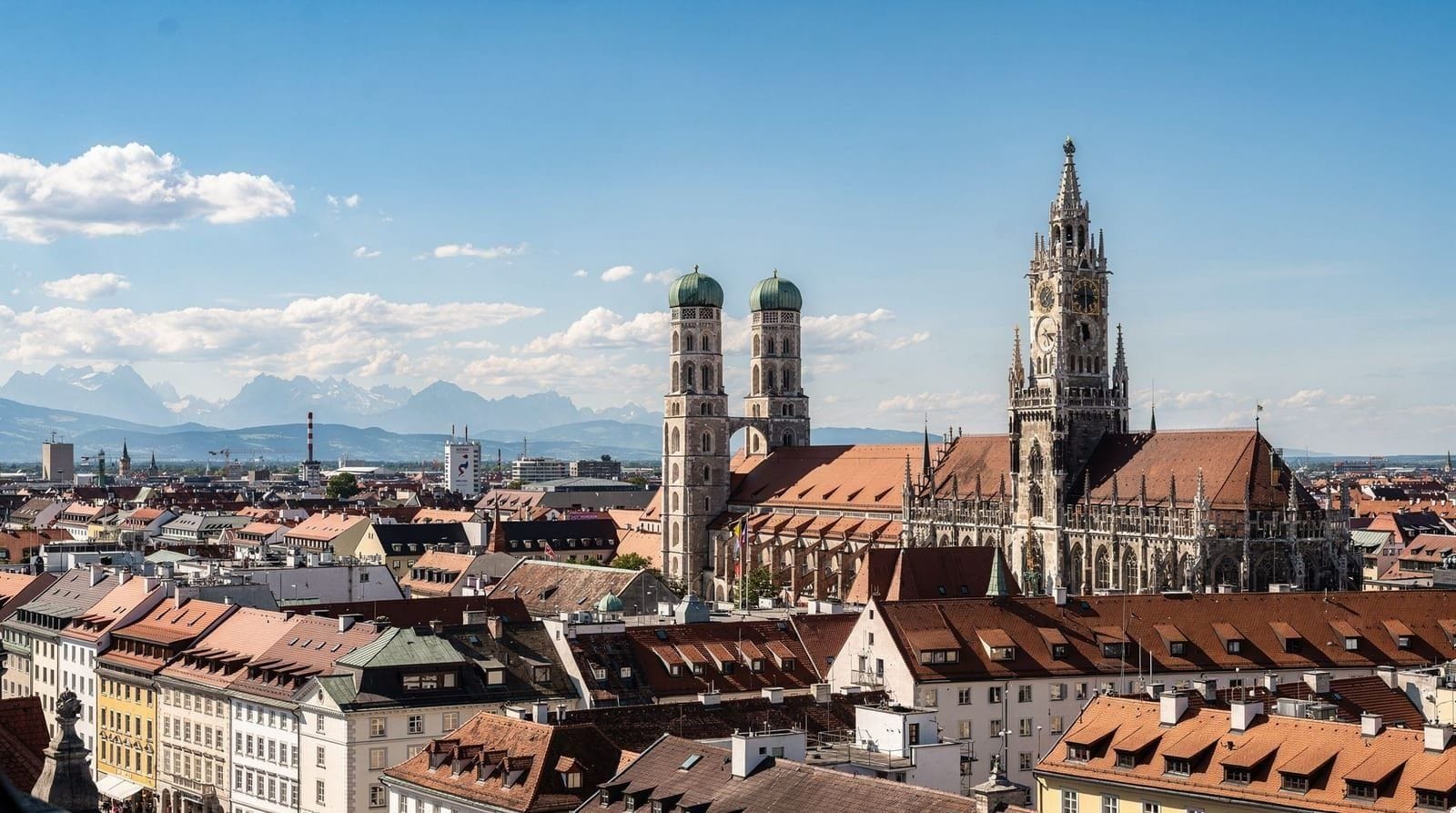
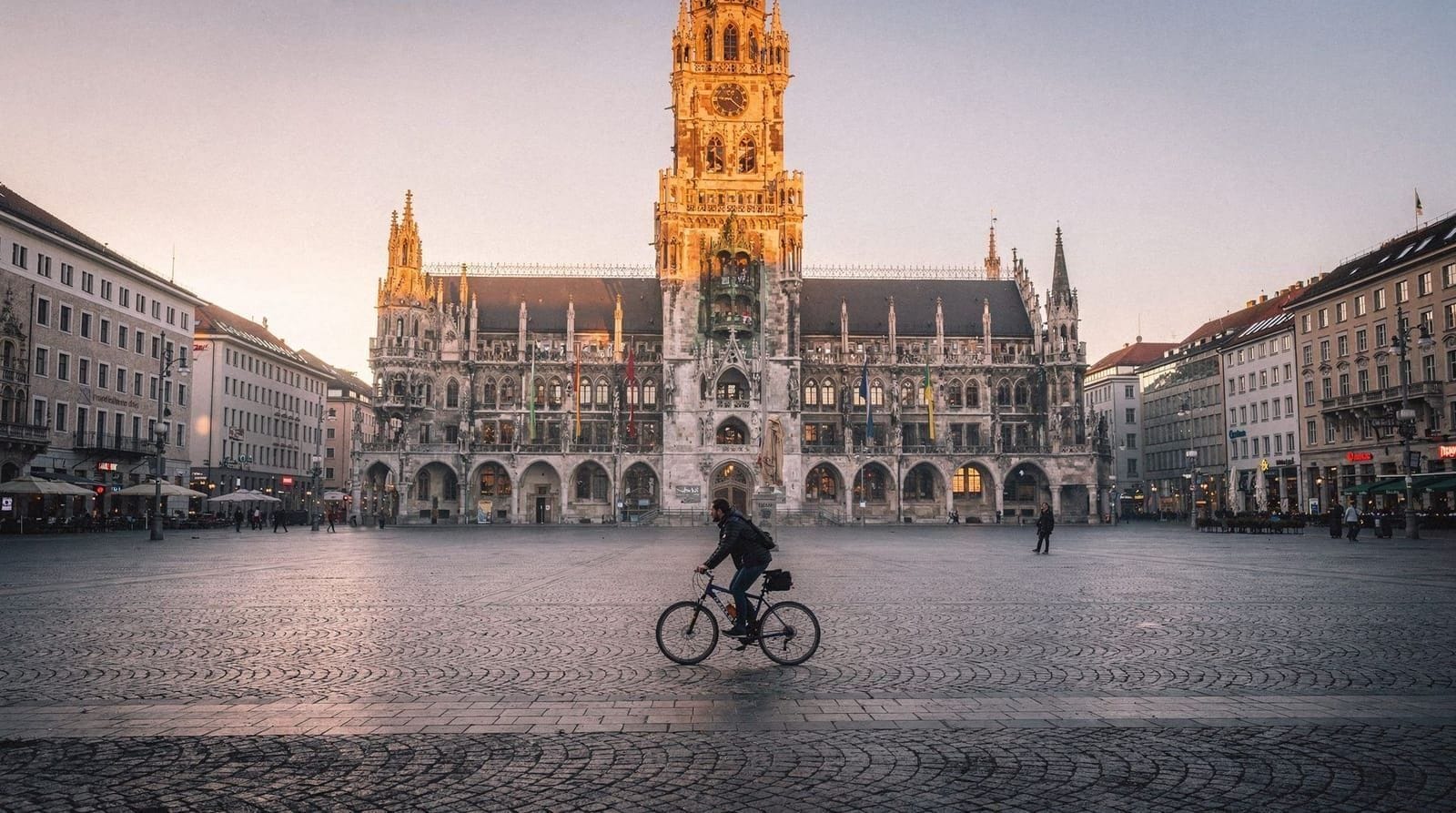
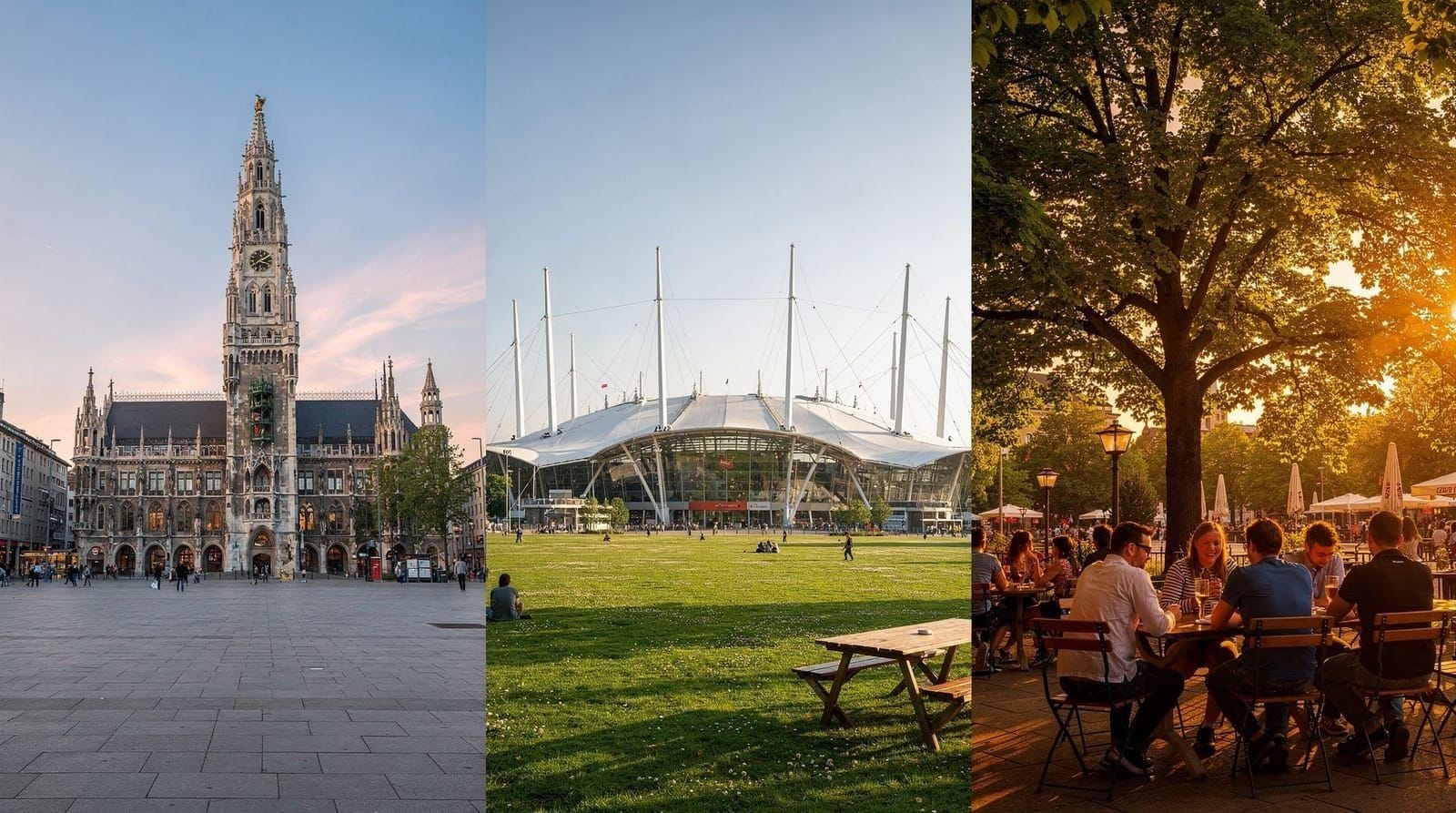
Start at Marienplatz before the tour buses arrive. The Neues Rathaus (New Town Hall) Glockenspiel carillon runs at 11:00, 12:00, and 17:00 in summer. The 15th-century Altes Rathaus on the east side of the square now houses a toy museum (5 EUR, 2026).
Walk south five minutes to the Viktualienmarkt for breakfast. The market runs Monday to Saturday, 08:00-20:00. Weisswurst with sweet mustard and a pretzel costs 8-10 EUR from the butcher stalls; coffee from the market roasters is around 3 EUR.
09:30 — Frauenkirche and Asam Church
Munich’s twin-towered cathedral (Frauenkirche) is 10 minutes south of Marienplatz on foot, entry free. Then cut through Sendlingerstrasse to the Asam Church — one of the most extravagant Baroque interiors in Europe and entirely free. The church was built by the Asam brothers in 1746 as a private chapel attached to their house next door. Open daily 09:00-18:00.
10:30 — Residenz Palace
The Residenz is Munich’s answer to Versailles — 130 rooms of Wittelsbach royal apartments, plus the Antiquarium (a 16th-century barrel-vaulted hall, the largest Renaissance hall north of the Alps) and the Cuvilliés Theatre. Full entry (state rooms + treasure chamber + Cuvilliés) costs 20 EUR; combined ticket with Nymphenburg is better value if you plan both. Residenz Palace and Hofgarten guided visit
Allow 90 minutes for the Residenz. On exit, walk through the Hofgarten (free) to the Odeonsplatz.
Afternoon: English Garden and Nymphenburg
12:30 — Lunch at Chinesischer Turm beer garden
Munich’s second-largest beer garden is a 20-minute walk northeast through the English Garden. Hendl (roasted chicken) costs 11 EUR, a Masskrug of Augustiner 9.50 EUR. The English Garden itself deserves a proper exploration — look for the Eisbach surfers near the Haus der Kunst entrance, a genuine Munich curiosity (free, year-round).
14:30 — Nymphenburg Palace
Take Tram 17 from Karlsplatz or Bus 51 from Hauptbahnhof (20 minutes). Nymphenburg is the Wittelsbach summer palace set in 8 km of formal gardens. Entry to the palace and outbuildings costs 9 EUR adults (2026). Ludwig I’s Gallery of Beauties inside the Amalienburg hunting lodge is a highlight often missed by casual visitors. Allow 2 hours. Nymphenburg Palace entry ticket
Return to city centre by 17:00.
Evening: Beer hall dinner
18:00 — Augustiner am Platzl
Start with a half-litre of Augustiner Helles (the lightest, most drinkable of Munich’s major beers) at the Augustiner am Platzl just off Marienplatz. Quieter than the Hofbräuhaus and used by Munich residents.
19:30 — Hofbräuhaus dinner
The Hofbräuhaus is touristy, rowdy, and entirely worth it on night one. Order Schweinshaxe (roasted pork knuckle, 24 EUR) or Obazda with pretzels (7 EUR) as a starter. The house beer is Hofbräu — acceptable but not Munich’s finest; the Augustiner on draught at other halls is better. Reserve ahead May-October.
Day 2: Dachau Memorial and the Museum District
Morning: Dachau Concentration Camp Memorial Site
09:00 — Depart for Dachau
Take S2 from Munich Hauptbahnhof to Dachau station (25 minutes, covered by a valid MVV day ticket). Then Bus 724 or 726 to the KZ-Gedenkstätte Dachau stop (12 minutes). The memorial site opens at 09:00 daily and is free to enter.
Dachau was the first of the Nazi concentration camps, operational from 1933 to 1945. The site preserves original barracks, the crematorium, and the SS training camp. The permanent exhibition in the former maintenance building takes about 2 hours to read carefully. Allow 3 hours total. Dachau Memorial is a sobering but important visit — not suitable for children under 12. Munich to Dachau Memorial guided tour
Return to Munich Hauptbahnhof by 13:30.
Afternoon: Maxvorstadt museum district
14:00 — Lunch in Maxvorstadt
Maxvorstadt, the university quarter northwest of the Altstadt, has Munich’s best concentration of independent restaurants. Takeichi (Theresienstrasse) does excellent Japanese ramen for 13-16 EUR. For Bavarian: Cafe Luitpold on Briennerstrasse is a century-old coffee house with solid lunch options.
15:00 — Choose your museum
The Maxvorstadt district has three major galleries within 500 metres of each other:
- Alte Pinakothek: European masters (Rubens, Dürer, Raphael). Entry 7 EUR Sundays, 12 EUR other days. The Pinakothek museums guide explains what each building covers. Closed Mondays.
- Deutsches Museum (20 minutes on foot, south of Marienplatz): The world’s largest science and technology museum. Entry 16 EUR adults (2026). If you go here, allocate at least 4 hours — the aviation and mining sections alone take 90 minutes. See the Deutsches Museum guide.
- Lenbachhaus: Home to the Blue Rider movement paintings (Kandinsky, Münter, Marc). Entry 15 EUR. The Lenbachhaus guide covers the permanent collection highlights.
Sunday note: Munich’s main museums offer Sunday admission at reduced rates (1 EUR Alte Pinakothek, 7 EUR Deutsches Museum) making Sunday the best day for museums if on a budget.
Deutsches Museum layout tip: The museum is 73,000 sqm across multiple buildings. Attempting to see everything in 3 hours leads to superficial visits everywhere. Instead, pick two or three sections that genuinely interest you. The most popular with most visitors: the aviation hall (ground floor, Building 1), the marine engineering section (ground floor, Building 2), and the historic instruments and clocks collection (Building 3). The mining section in the basement involves a walk-through reconstructed tunnel and is the most physically immersive experience in any German museum.
Alte Pinakothek masterwork shortlist: If you have 90 minutes, prioritise: Room II for Dürer’s self-portraits (the most psychologically intense paintings in the building), Room VII for Rubens’ monumental canvases (including the 3.9m Massacre of the Innocents), and Room X for Rembrandt and Raphael. The upper floor contains Dutch Golden Age landscapes that reward slow looking.
17:30 — Olympiapark optional
If museums aren’t your preference, the 1972 Olympic Park (Olympiapark) is a 20-minute U-Bahn ride (U3 to Olympiazentrum). The free grounds are worth a walk; the tower panorama costs 19 EUR. The BMW Welt showroom adjacent is free and worth 30 minutes. See Olympiapark guide.
Evening: Bavarian wine bar or traditional dinner
19:00 — Dinner with a different tone
After the beer halls of night one, consider a different option for your second evening:
- Zum Franziskaner (Residenzstrasse): Traditional Bavarian food, 1892 origins, better quality than the Hofbräuhaus at similar prices. Known for Weisswurst evenings (unusually, they serve them past noon in the evening format).
- Tantris (for splurge): Munich’s original fine-dining institution, booked weeks ahead. Tasting menus from 195 EUR.
- Schumann’s Bar (Odeonsplatz): Munich’s best cocktail bar, legendary among European bartenders. Drinks from 16 EUR.
For wine instead of beer, see the Munich wine bars guide.
Making the most of 2 days: insider notes
Day 1 pacing: The Residenz and Nymphenburg together in one day is ambitious but workable if you don’t linger over every room. At the Residenz, focus on the Antiquarium (ground floor, barrel-vaulted hall) and the Treasury — these two sections alone make the visit worthwhile. At Nymphenburg, the main palace interior takes 45-60 minutes; the grounds (canal walk, Amalienburg lodge) add another 60-90 minutes.
Day 2 emotional preparation for Dachau: The Dachau Memorial site is not a difficult place to navigate physically, but it is emotionally demanding. Most visitors find the experience quieter and more personal than expected. The permanent exhibition (in the former maintenance building, opened as a museum in 1965) is presented chronologically and does not use shock tactics — it is restrained and factually dense. Children under 12 are not recommended.
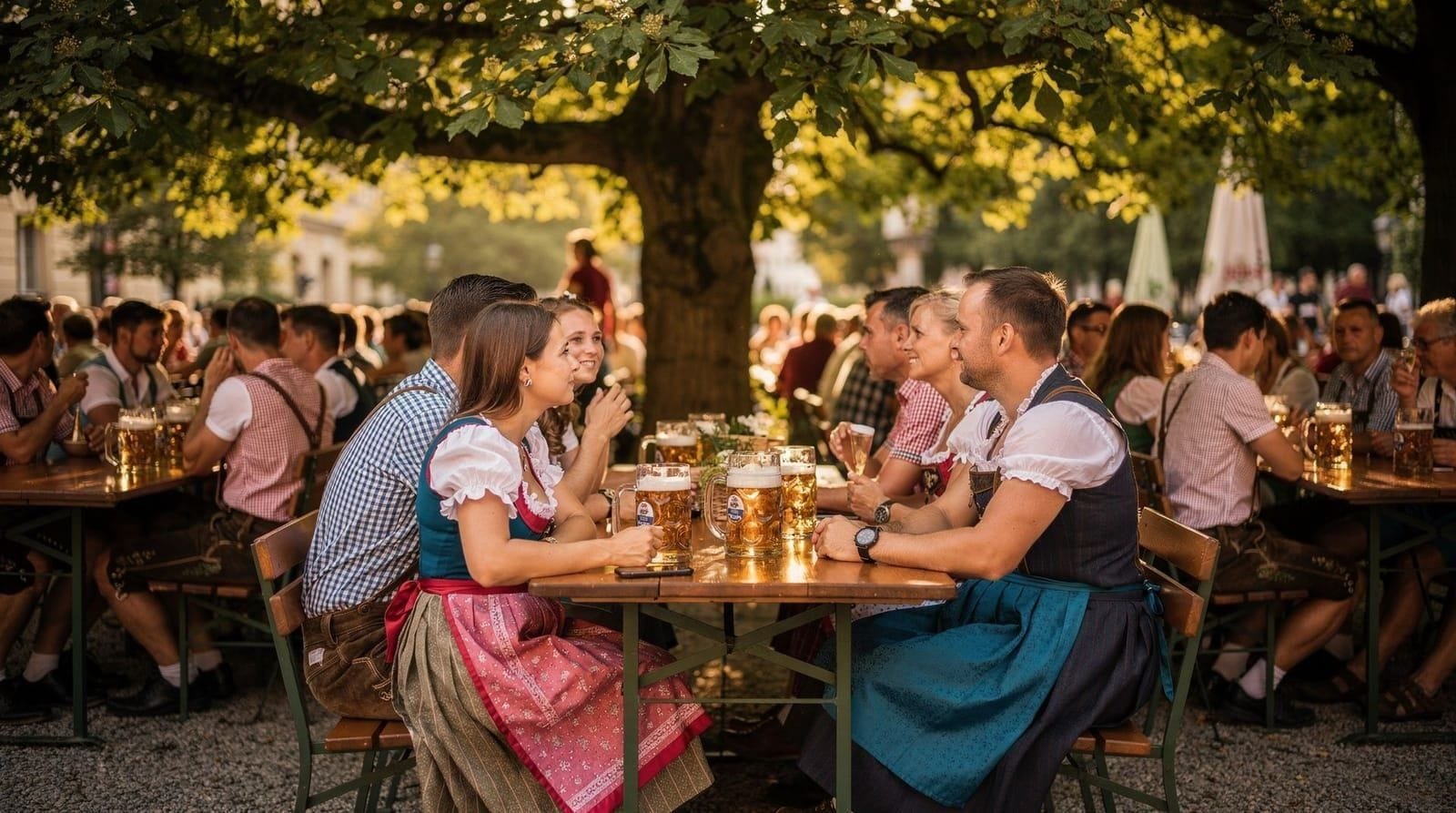
Beer hall seating strategy: Munich’s major beer halls operate on a shared-table model. You will be seated with strangers, and this is entirely normal. The benches encourage conversation. If you don’t speak German, pointing at the menu and holding up fingers for quantity works universally. Servers carry Masskrugs (1-litre mugs) in enormous quantities and will expect you to order beer — this is a beer hall, not a restaurant with beer on the menu.
Maximising the museum quarter: Maxvorstadt’s museum row (Königsplatz to Odeonsplatz, roughly) can be walked in 20 minutes. The three Pinakothek buildings (Alte, Neue, Moderne) share a piazza and are complementary. If you do Alte Pinakothek on Sunday afternoon (1 EUR entry), add the Pinakothek der Moderne next door (entrance from the same piazza, 10 EUR) for design, graphics, and 20th-century painting in contrast. Allow 30 minutes each.
The English Garden on a weekend: Sunday afternoons in the English Garden are a Munich institution. Families, cyclists, joggers, and beer garden crowds turn the park into the city’s collective living room. The informal nude sunbathing area north of the Chinese Tower (FKK zone) is well-signposted and matter-of-fact — don’t be surprised to encounter it.
Booking hotel for 2 nights: Mid-range Munich hotels (3-star, 110-150 EUR/night) in the Maxvorstadt, Schwabing, or Haidhausen areas are quieter than Altstadt hotels and better connected to both city sights and S-Bahn lines. Weekend rates (Friday-Saturday) are typically lower than weekday rates in Munich (a business travel city). Booking 3-4 weeks ahead typically gives better rates than last-minute. See the Munich where to stay guide for specific neighbourhood breakdowns and hotel categories.
Planning variations for a 2-day visit
Variant A: Oktoberfest timing (late September to early October)
If your 2-day visit falls during Oktoberfest, the entire itinerary shifts. Day 1 should include at least an afternoon at the Theresienwiese festival grounds — even without a beer tent reservation, the outer grounds are free to enter and give a sense of the spectacle. Day 2 can still include Dachau or a museum day as planned. Note that hotels during Oktoberfest cost 2-3x regular rates and must be booked months ahead. The Oktoberfest guide covers tent reservations, what the tents are actually like, and how to have a good time without one.
Variant B: Skip Dachau, add Neuschwanstein
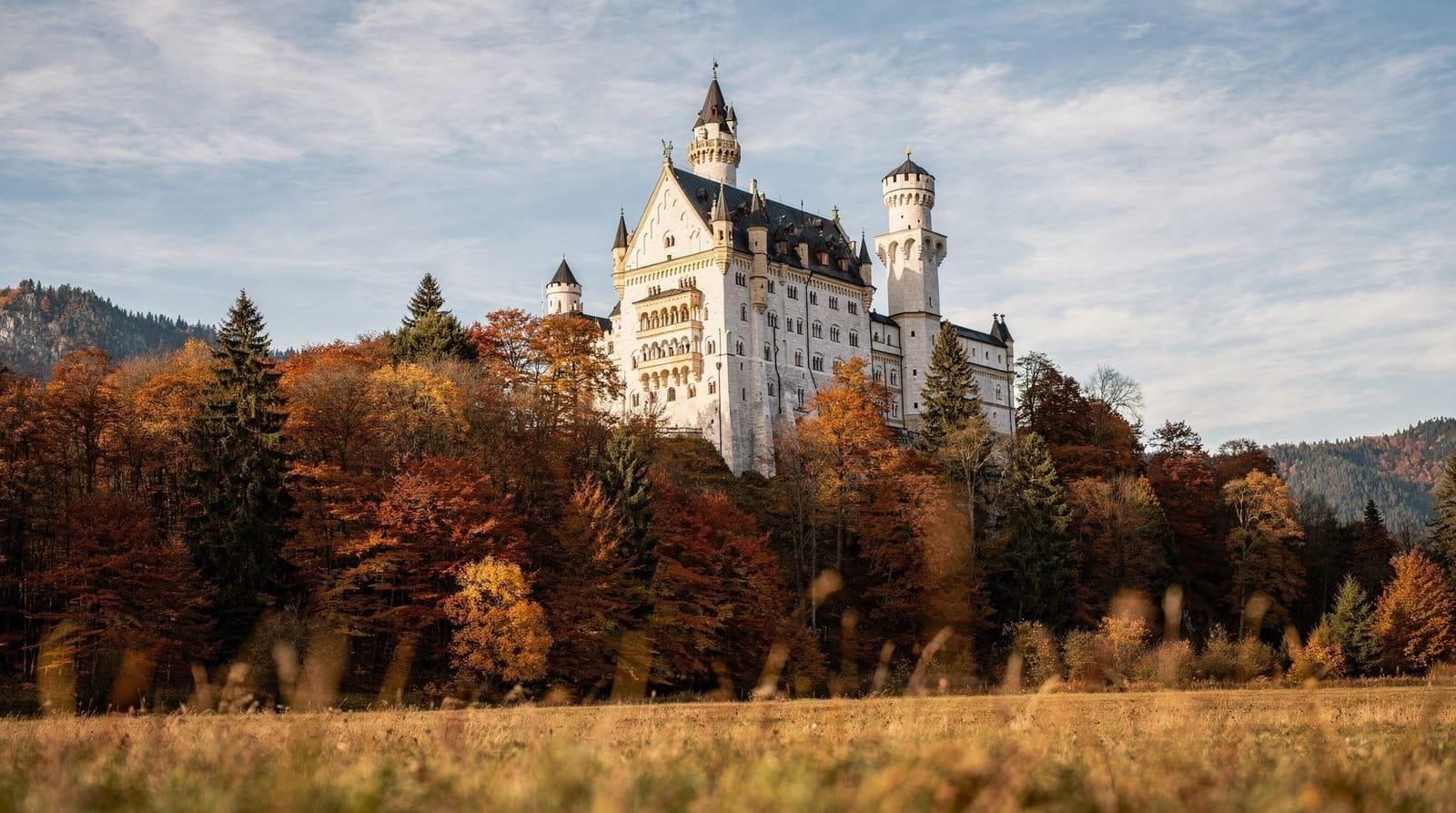
If you prefer nature and castles over WWII history, replace the Dachau morning on Day 2 with an early-morning visit to Neuschwanstein Castle (2 hours each way by train). This makes Day 2 intense — 07:30 departure, castle visit by 10:30, back in Munich by 14:30 for a museum afternoon. It’s doable but rushed; 3 days is better for combining Munich and Neuschwanstein without sprinting.
Variant C: Focus on Munich’s beer culture
For visitors whose primary interest is Munich’s brewery heritage, the best beer gardens in Munich guide lists six worth visiting. A 2-day beer circuit: Day 1 evening at Augustiner Keller; Day 2 lunch at Chinesischer Turm in the English Garden; Day 2 evening at Löwenbräukeller or the Paulaner Nockherberg. A guided beer and brewery walking tour provides historical context: Bavarian beer walking tour with tastings
Variant D: Art and history focus
Replace the Nymphenburg afternoon with the Lenbachhaus (Blue Rider collection, Kandinsky’s Munich period) and continue to the Pinakothek der Moderne (20th-century design and art, same building complex). On Day 2, replace Dachau with the Documentation Center at Obersalzberg (a day trip) or the Munich WWII history guide walking tour of the Altstadt sites related to the Third Reich.
What two days doesn’t cover: Berchtesgaden and Eagle’s Nest, Neuschwanstein (properly), the Bavarian Alps, Salzburg, Regensburg, Nuremberg, or any of Bavaria’s lakes and countryside. Two days in Munich is a city trip — a good one, but Bavaria requires more time to explore properly. See the 5-day Munich and Bavaria itinerary for the next level.
Practical information for 2 days
Public transport: A 2-day MVV day ticket (2-Tageskarte) for Zone M costs 16 EUR (2026). Alternatively, the Munich CityTourCard includes public transport and museum discounts.
Best area to stay: The Maxvorstadt and Schwabing districts put you within walking distance of the museum quarter and a 15-minute walk from Marienplatz. See where to stay in Munich for neighbourhood breakdowns.
Day 2 variant — Neuschwanstein instead of Dachau: If history is less your focus, the Neuschwanstein day trip is the classic Bavarian experience. The train journey takes 2 hours each way (BOB from Munich Hauptbahnhof, change at Buchloe or Kaufbeuren). Book Neuschwanstein timed tickets online at least 2 weeks ahead — they sell out. See the Neuschwanstein tickets guide.
Two-day summary at a glance
| Day | Morning | Afternoon | Evening |
|---|---|---|---|
| Day 1 | Marienplatz, Frauenkirche, Asam Church, Residenz | English Garden lunch, Nymphenburg Palace | Augustiner am Platzl, Hofbräuhaus dinner |
| Day 2 | Dachau Memorial Site | Maxvorstadt lunch, one museum (Alte Pinakothek / Deutsches Museum / Lenbachhaus) | Franziskaner, Tantris, or Schumann’s Bar |
Travelling with kids on this 2-day plan: Dachau Memorial is not recommended for children under 12, and the permanent exhibition is dense reading even for older teenagers. Families with younger children generally do better replacing Day 2’s morning with the Hellabrunn Zoo or a relaxed morning in the English Garden’s playgrounds, then keeping the museum afternoon (the Deutsches Museum in particular is excellent for curious kids). See the Munich with kids guide for a fuller family-oriented version of this two-day structure.
This shape works for most first-time visitors, but it isn’t the only valid order. Swapping Day 1 and Day 2 entirely is reasonable if your hotel check-in time favours a slower first afternoon — arrive, drop bags, and go straight to Dachau on your first full morning instead, saving the beer hall introduction for a more relaxed second evening. The Munich 3-day itinerary blog and Munich in 2 days blog post cover reader experiences with both orderings if you want more perspective before deciding.
Is 2 days too short? A honest comparison with 1 and 3 days
Two days sits in an awkward middle: enough for Munich’s highlights plus one day trip, not enough for the Bavarian Alps, Salzburg, or a second castle day. Compared with the 1-day itinerary, you gain Dachau or Neuschwanstein and a proper museum visit — a meaningful upgrade. Compared with the 3-day itinerary, you lose the flexibility to slow down, and Day 2 in particular can feel rushed if you linger too long at either the memorial site or the museum. If your schedule allows even one extra day, it buys considerably more breathing room than the jump from one to two days does. The best time to visit Munich guide is worth checking too — the season you travel in changes how tight two days feels, since long summer daylight hours make late starts more forgiving than the shorter days of winter. Winter visitors should also check the Munich in winter guide — several of the outdoor elements here (the Nymphenburg canal walk, the English Garden lunch) are still worthwhile in the cold, but plan for shorter daylight and dress accordingly, and note that some beer garden seating (Chinesischer Turm’s outdoor tables) closes entirely in winter, with indoor seating substituted instead.
Frequently asked questions about this itinerary
Is 2 days enough for Munich?
Two days covers the city highlights without rushing. You’ll see the Altstadt, English Garden, Nymphenburg, and have time for one meaningful day trip (Dachau or Neuschwanstein). For Bavaria’s castles and Alps, you need at least 5 days.
Which day should I visit Dachau?
Any day works — Dachau Memorial opens Tuesday to Sunday (closed Mondays). Morning visits are slightly less crowded than afternoons. The return journey to Munich takes about 40 minutes, so a morning visit fits naturally into a half-day.
Do I need a car for this 2-day itinerary?
No. Munich’s public transport covers everything in this itinerary. S-Bahn reaches Dachau, Trams serve Nymphenburg, and the U-Bahn links the museum district to the centre. A car would actually be a disadvantage — parking in central Munich costs 4-6 EUR per hour.
What’s the best way to book Nymphenburg Palace?
Walk-in tickets are available at the palace kiosk. In peak season (June-August), arriving before 10:30 avoids the main queues. The combined palace + Marstallmuseum + porcelain collection ticket (9 EUR) is the standard adult price and includes all permanent exhibitions.
How far in advance should I book for the Hofbräuhaus?
For weekday visits outside Oktoberfest season, same-day online booking or walk-in is usually fine. Friday and Saturday evenings, particularly May-September, book 1-3 days ahead. During Oktoberfest itself (late September-early October), popular beer halls and tent reservations sell out months in advance.
Is Maxvorstadt or Altstadt better for accommodation?
Altstadt is central but has fewer mid-range options. Maxvorstadt offers better value with quieter streets and is 15 minutes on foot from Marienplatz. Schwabing to the north is residential and pleasant. The Munich where to stay guide covers each district with specific hotel recommendations.
Top experiences
Bookable activities with verified prices and instant confirmation on GetYourGuide.