Munich wine bars guide
Munich: old town food tour with 10+ tastings, beer and pretzel
Does Munich have good wine bars?
Yes, though it is less celebrated than the beer scene. Munich has a growing number of serious wine bars, particularly in Glockenbachviertel, Au-Haidhausen, and Maxvorstadt, with strong representation of Franconian Silvaner, Riesling, and Spätburgunder (Pinot Noir).
| Grape to know | Silvaner (Franconia) — dry, mineral, pairs with Bavarian food |
| Best neighbourhood | Glockenbachviertel — highest concentration of wine bars |
| Typical glass price | €5–9 for a good Silvaner or Riesling |
| Bottle to spot | Bocksbeutel — flat, round, EU-protected Franconian shape |
| Reservations | Recommended Thu–Sat at established venues |
Wine in a beer city: Munich’s quiet other scene
Munich is globally famous for beer. The Hofbräuhaus pours a million litres a year; the Oktoberfest shifts six to seven million litres in sixteen days; every neighbourhood has a beer garden. Against this backdrop, the wine scene occupies a lower-profile position — but it is more serious than the city’s international reputation suggests.
The explanation is partly historical. Franconia — Bavaria’s wine-producing region centred on Würzburg — has been shipping its wines south to Munich since at least the 15th century. The city’s traditional wine taverns (Weinstuben) predate the modern beer hall by centuries. The Weinstube model — a warm, low-lit room with wooden booths, regional wine by the glass or carafe, and a Brotzeit plate — survived alongside the beer hall culture and today coexists with a younger generation of natural wine bars and wine-focused restaurants.
This guide covers both: the traditional Weinstube and the contemporary wine bar, what to drink in each, and where to find the best of both in Munich’s neighbourhoods.
Franconian wine: what Munich drinks
Before covering the bars, it helps to know what you are ordering.
Silvaner is the defining grape of Franconia and the variety most associated with Bavarian wine culture. It is typically bone dry, with a pronounced mineral quality, moderate acidity, and aromas of herbs, earth, and sometimes white stone fruit. It pairs extremely well with Bavarian food — the richness of Schweinsbraten (roast pork) and Käsespätzle responds to the wine’s dryness and mineral character.
Top Franconian Silvaner producers to look for on Munich wine lists:
- Weingut Juliusspital (Würzburg) — one of the oldest German wine estates, run as a charitable foundation since 1576. The Spätlese trocken Silvaner is a benchmark wine.
- Weingut Fürst Löwenstein (Kleinheubach) — estate producer known for precise, age-worthy Silvaner from the Maintal.
- Weingut Zehnthof Luckert (Sulzfeld) — smaller family estate, excellent entry-level Silvaner at reasonable prices.
- Weingut Rainer Sauer (Escherndorf) — from one of Franconia’s best vineyard sites (Escherndorfer Lump), consistently high quality.
Riesling from Franconia tends to be leaner and more austere than its Mosel or Rheingau counterparts — a function of the continental climate. Look for Rieslings from the Würzburger Stein, one of Germany’s most famous vineyard sites.
Spätburgunder (Pinot Noir) from Franconia is light-bodied with red cherry and earthy notes — nothing like a Burgundy or Oregon Pinot, but well-suited to the Bavarian kitchen. Ahr and Rheinhessen Spätburgunder also appear on better Munich lists.
Natural wines have a growing presence in Munich, particularly in the Glockenbachviertel. Local importers bring wines from Austria, Alsace, and Italian natural producers — Pet-Nat, Piwi varieties, skin-contact whites. Several wine bars have built their entire identity around this style.
Wine bar recommendations by neighbourhood
Glockenbachviertel — the hub of Munich’s wine scene
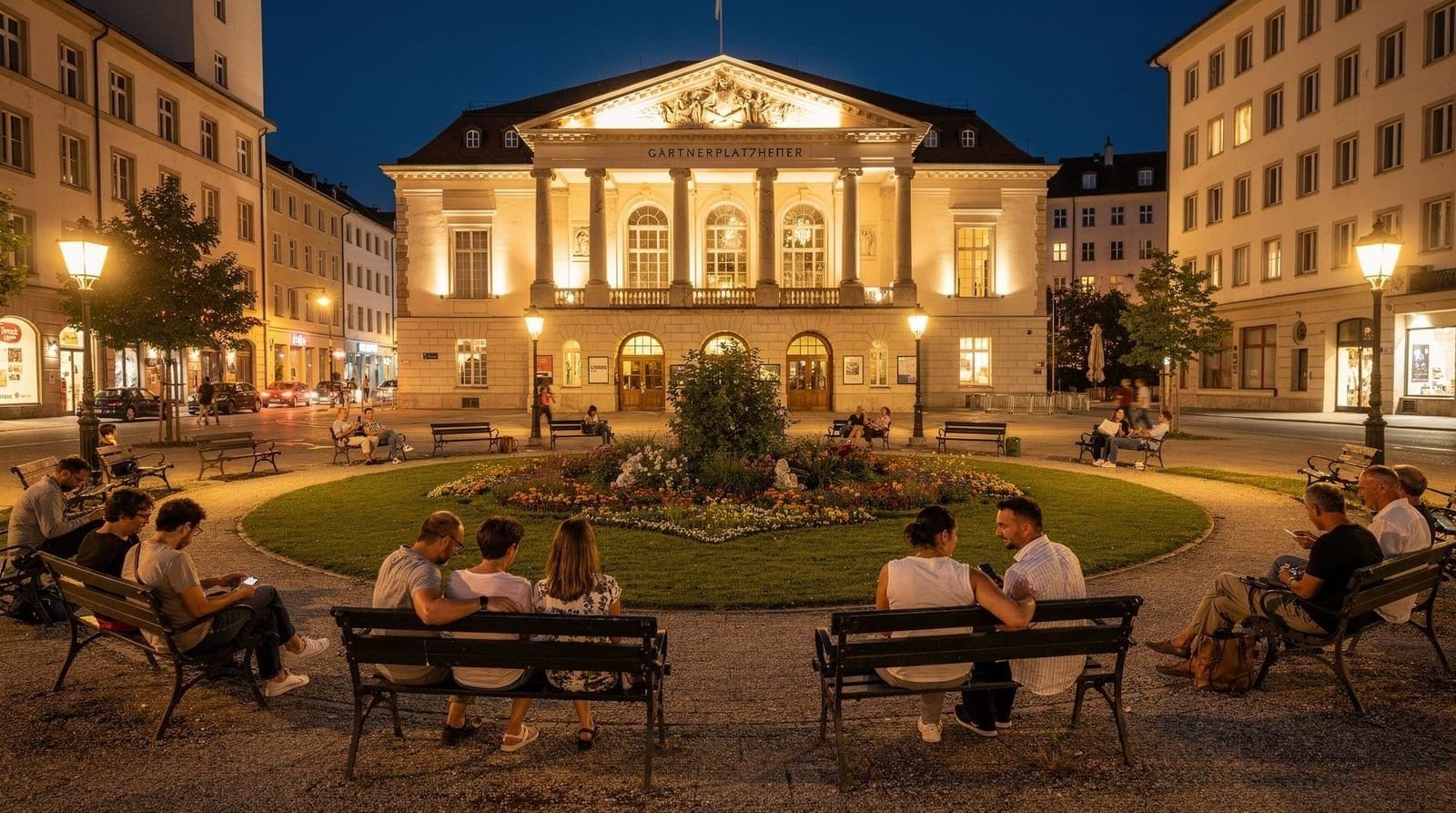
The Glockenbachviertel has the highest concentration of wine bars in Munich, particularly along Reichenbachstrasse and the streets around Gärtnerplatz.
Weinhaus Neuner (Herzogspitalstrasse) is one of Munich’s oldest wine restaurants — established in 1852 — and one of the few remaining traditional Weinstuben in the city centre. The list focuses on Franconian wines with a deep selection of Juliusspital and Bürgerspital estates. Food is Bavarian and serious. Expect to pay €7–9 per glass for the good Silvaner; the restaurant also runs special tastings in its cellar on selected evenings.
Vinothek W (Brienner Strasse, near Königsplatz) is a more modern, retail-focused wine bar where you can buy bottles to take away or drink in the bar at a modest corkage mark-up. Strong selection of Austrian Grüner Veltliner alongside the Franconian range. Comfortable, mid-volume atmosphere and knowledgeable staff.
Au-Haidhausen — quieter and less tourist-facing
Au-Haidhausen has a working-class neighbourhood history and a current gentrification pattern that has brought several good food and drink venues without yet overwhelming the local atmosphere.
Weinstadl (Innere Wiener Strasse area) is a neighbourhood wine bar with strong Austrian and southern German focus. Thursday evenings are usually busiest; the back terrace in summer is excellent. A carafe of house Grüner Veltliner costs around €16 for half a litre.
Maxvorstadt — museum quarter evenings
The Maxvorstadt is primarily a daytime district — the Pinakothek museums, the university, and the art galleries are daytime institutions. After 19:00, the Maxvorstadt quiets down, but a few good wine options survive.
Bar Centrale (Leopoldstrasse) runs as an Italian wine bar and café with a strong focus on northern Italian producers — Alto Adige Pinot Grigio, Vermentino from Sardinia, Nebbiolo from Piedmont. Not Franconian, but one of the best-run wine programs in the neighbourhood.
Schwabing — traditional Weinstube territory
Schwabing retains several traditional wine taverns that predate the craft bar era. These Weinstuben are not fashionable in the contemporary sense but are extremely comfortable, with long wine lists at fair prices and food that is genuinely Bavarian.
Gasthaus zur Münchner Freiheit operates as a neighbourhood institution and wine tavern more than a restaurant, with a well-annotated list of Franconian producers and house-poured Scheurebe by the glass.
What to order and how to order it
By the glass (vom Glas): Most Munich wine bars offer 4–8 wines by the glass, changing weekly or seasonally. A standard pour is 0.1 litre (100ml) or 0.2 litre (200ml). Ask for a “Glas Weißwein” (glass of white) and specify the grape or region if you have a preference.
By the carafe (Karaffe): A quarter-litre carafe (0.25L) is a standard unit at Weinstuben and costs €5–8 for the house wine. A half-litre carafe is the typical order for two people at a dinner.
By the bottle (Flasche): Most wine bars allow you to order from the full bottle list at the table. The selection is generally 30–80% broader than the by-the-glass list.
Wine tasting evenings (Weinproben/Weindegustationen): Several Munich wine bars and wine shops run structured tastings on weekday evenings — usually four to six wines from a single region or producer, with cheese or charcuterie accompaniment. Prices run €20–40 per person. Check the venues’ websites or Instagram accounts for upcoming events. A guided Bavarian food experience pairing traditional dishes with regional wines is a good way to understand how Franconian wine complements the local cuisine.
The Bocksbeutel: Franconian wine’s distinctive bottle
If you buy Franconian wine to take home, the flat, round Bocksbeutel bottle is the indicator of geographic origin. The shape is protected by EU designation and can only be used for Franconian wine (with a few historical exceptions in other countries). It is a useful shortcut when shopping: if it is in a Bocksbeutel, it is from Franconia.
The three charitable wine estates of Würzburg — Juliusspital, Bürgerspital, and the Staatlicher Hofkeller — each sell their wines at shops attached to their respective cellars in Würzburg. If you are making the Munich to Würzburg train journey or visiting the Rothenburg ob der Tauber area, these shops offer the best selection and prices you will find anywhere.
Wine shopping in Munich
Vino-Vine (Schwabing) is a specialist wine shop with an unusually good selection of German and Austrian estate wines, including older vintages. Staff are knowledgeable and not condescending. Prices are fair for the quality.
Galeria Kaufhof wine department (Marienplatz) carries a broad range at competitive prices and is useful for bottle purchases when other shops are closed (the department store opens Sundays during Advent).
Mövenpick Weinkeller (multiple locations) is a Swiss chain with reliable mainstream selection. Not adventurous, but trustworthy for known producers.
Supermarket wine (Rewe, Edeka): Larger branches, particularly the Rewe on Rosenheimer Strasse and the Edeka near Hauptbahnhof, stock a surprisingly decent regional selection alongside the usual international range, often at better prices than dedicated wine shops for everyday-drinking bottles. Look for the Bocksbeutel shape on the Franconian shelf if you are short on time and want a reliable pick without asking staff.
Wine and food pairing in a Bavarian context
Munich’s wine culture is inseparable from its food culture, and the pairings that work in Franconia translate directly to Munich restaurants. A few reliable pairings:
- Silvaner trocken + Weisswurst: The dry mineral wine cuts through the fat of the veal sausage without overpowering the subtle flavour.
- Scheurebe + Obatzda: The variety’s aromatic character (blackcurrant, grapefruit) contrasts well with the earthy, fatty cheese spread.
- Spätburgunder + Sauerbraten: The light red has enough structure to accompany the marinated braised beef without competing with the sweet-sour sauce.
- Riesling Spätlese trocken + Sauerkraut-based dishes: The wine’s acidity mirrors and amplifies the fermented cabbage’s tang.
For a broader overview of Bavarian cuisine and the dishes these wines accompany, see the Bavarian dishes guide and the best restaurants in Munich.
A wine bar evening: practical logistics
Munich’s wine bars typically open from 17:00 or 18:00 and close around midnight or 01:00. Thursday, Friday, and Saturday evenings require reservations at the more established venues. The Glockenbachviertel is walkable from the U-Bahn stop at Fraunhoferstrasse or a 20-minute walk from Marienplatz.
Dress code: none formally stated anywhere, but Munich wine bars tend to attract a slightly older, better-dressed crowd than beer halls. Smart casual is appropriate and slightly underdressed is perfectly fine. Groups larger than four should call ahead even midweek, since many of the best Weinstuben are genuinely small rooms with limited seating.
A typical evening order: arrive at 19:00, start with a glass of Scheurebe or Silvaner, order a cheese plate (Käsebrett) for €12–16, follow with a second glass of Spätburgunder, finish around 21:30. Total spend per person: €28–45 depending on the venue tier. For visitors who want to combine sightseeing with Bavarian culinary experiences including wine, this premium tour covers local delicacies alongside the city’s main attractions.
Honest assessment: limitations of the Munich wine scene
Munich is not Berlin, where wine bar culture is central to the city’s food identity. The beer garden still dominates Munich’s outdoor socialising; the Weinstube is a quieter, interior experience. Several excellent traditional Weinstuben closed in the past decade as rents rose in the city centre.
Natural wine is fashionable but the Munich scene is less developed than Hamburg or Cologne. Several self-described “natural wine bars” serve inconsistent bottles from lesser importers — quality varies significantly. Ask the staff which bottles they recommend before ordering something at the top of the list.
For visitors with serious wine interest, a day trip to Würzburg by train (approximately 2.5 hours, Bayern-Ticket eligible on Saturdays) allows you to visit the Juliusspital and Bürgerspital cellars directly and taste the wines at source. The Bavarian rail guide covers train logistics.
Wine during Oktoberfest and Christmas markets
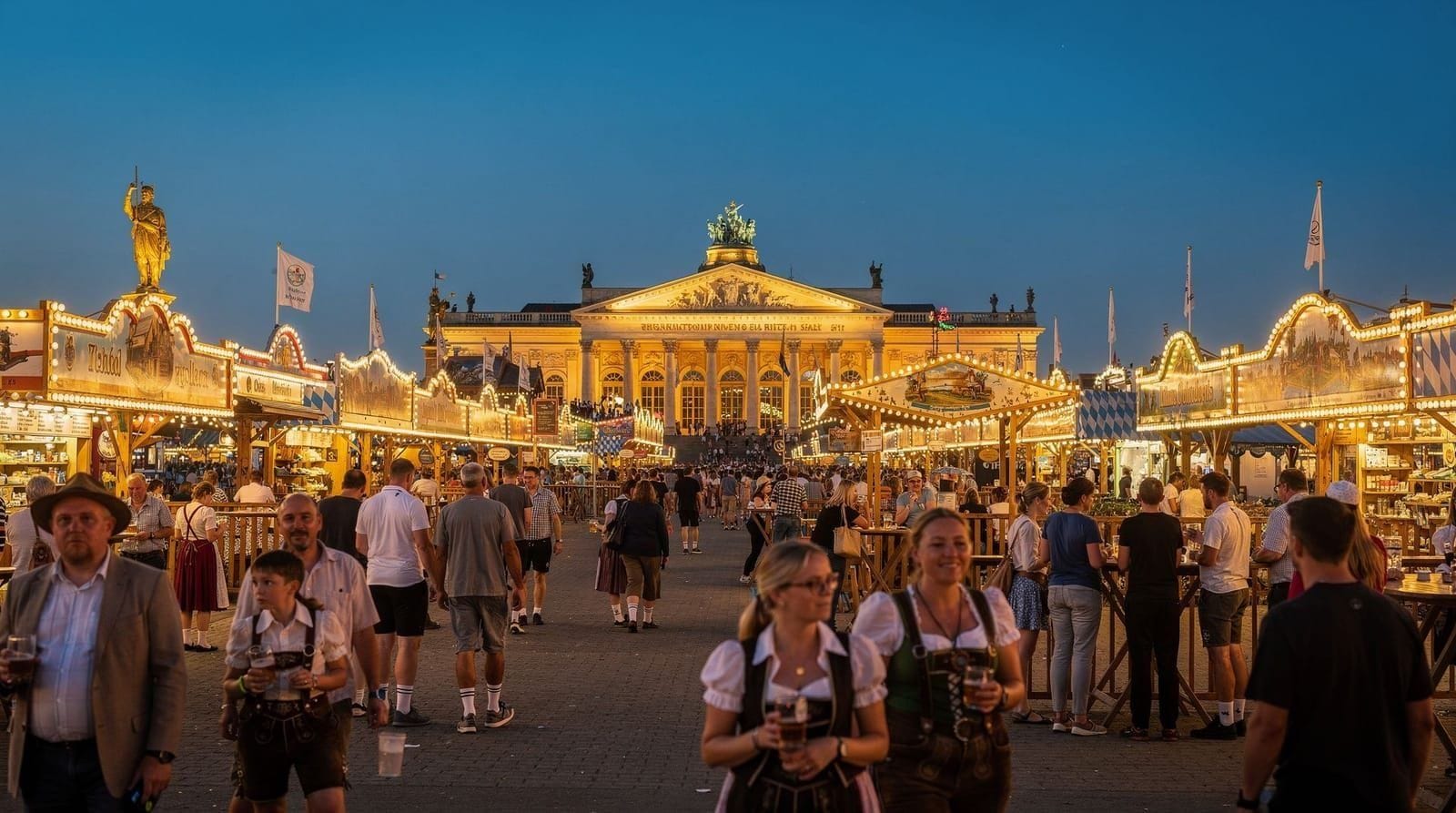
Wine is a minority pursuit at Oktoberfest — beer tents dominate almost entirely, and most Festzelt drink menus are limited to a single house wine by the glass, often unremarkable. If wine matters during your Oktoberfest visit, plan a separate evening at a Glockenbachviertel or Au-Haidhausen wine bar rather than expecting a good glass inside the Theresienwiese tents themselves.
Christmas markets are friendlier territory: alongside Glühwein (mulled wine, almost always red and sweetened with spices), several Munich markets now offer a white Glühwein made from Silvaner or Riesling, and a few upscale market stalls pour unheated wine by the glass for visitors who want something less sweet. The Christmas markets guide covers the food and drink stalls in full.
Wine tasting experiences for visitors
Beyond wandering into a Weinstube, several structured options suit visitors who want more context than a menu alone provides. Hotel concierges and the Munich Tourist Office can point to current Weinproben (tasting evenings) at specific bars, which change weekly. For a single dedicated afternoon, a Würzburg day trip pairs a wine-region visit with sightseeing in one of Bavaria’s most attractive towns, and gives direct access to producer cellar-door prices that undercut Munich retail by 20–30%.
Frequently asked questions about Munich wine bars
Is it rude to order wine in a beer hall?
No. Most traditional Munich beer halls carry a short wine list. It is unusual but entirely acceptable. The Weinschorle (wine spritzer — wine diluted with sparkling water) is a standard summer drink in Bavaria and ordered without stigma anywhere.
What is the best Franconian wine to buy as a gift?
A Würzburger Stein Silvaner Spätlese trocken from Bürgerspital or Juliusspital in the distinctive Bocksbeutel. It is unmistakably Bavarian in presentation, holds up well in checked baggage, and costs €12–20 per bottle at Munich wine shops.
Are Austrian wines common in Munich wine bars?
Very common. Austria and Bavaria share food traditions and the wines complement Bavarian cuisine naturally. Grüner Veltliner and Riesling from Wachau and Kremstal appear frequently; Blaufränkisch from Burgenland is common as a red option.
Does Munich have wine festivals?
Yes. The Münchner Weintage (Munich Wine Days) typically runs for several days in autumn, usually at the Alte Messe grounds or similar large venue, featuring 200+ producers. Check the event’s website for 2026 dates. Several neighbourhoods also run smaller wine events in summer.
Can I visit a winery near Munich?
Franconian wineries are in Würzburg, 2.5 hours by train. The closest German wine region is actually Lake Constance (Bodensee), accessible from Munich by train in about 2 hours to Lindau or Konstanz. The wineries there are small and not extensively set up for visitors, but a few offer tastings by appointment.
What is Weinschorle?
A Weinschorle is white wine (typically Riesling or Silvaner) mixed approximately half-and-half with chilled sparkling water (Sprudelwasser). It is lower in alcohol than a straight glass, refreshing in summer, and drunk across all social settings in Bavaria from beer garden to restaurant. Order it as “ein Weinschorle” and you will receive it without needing to explain.
Are Munich wine bars child-friendly?
Generally no. Munich wine bars are adult-focused venues that typically do not have high chairs or children’s menus. Families with children are better directed to the beer gardens, which are explicitly family-friendly under German law, or to the Munich food scene more broadly.
Can I find good wine at Oktoberfest?
Not really, beyond a basic house glass in most tents. Oktoberfest is built around beer, and wine lists inside the Festzelte are limited and unremarkable. If wine matters to your Oktoberfest trip, save it for a separate evening in Glockenbachviertel or Au-Haidhausen.
Do I need to speak German to order wine confidently?
No. Munich wine bar staff, particularly in Glockenbachviertel and Maxvorstadt, are used to English-speaking visitors and can talk through the list in English. Learning a few grape names (Silvaner, Spätburgunder, Scheurebe) helps you point at what interests you, but is not essential.
Top experiences
Bookable activities with verified prices and instant confirmation on GetYourGuide.