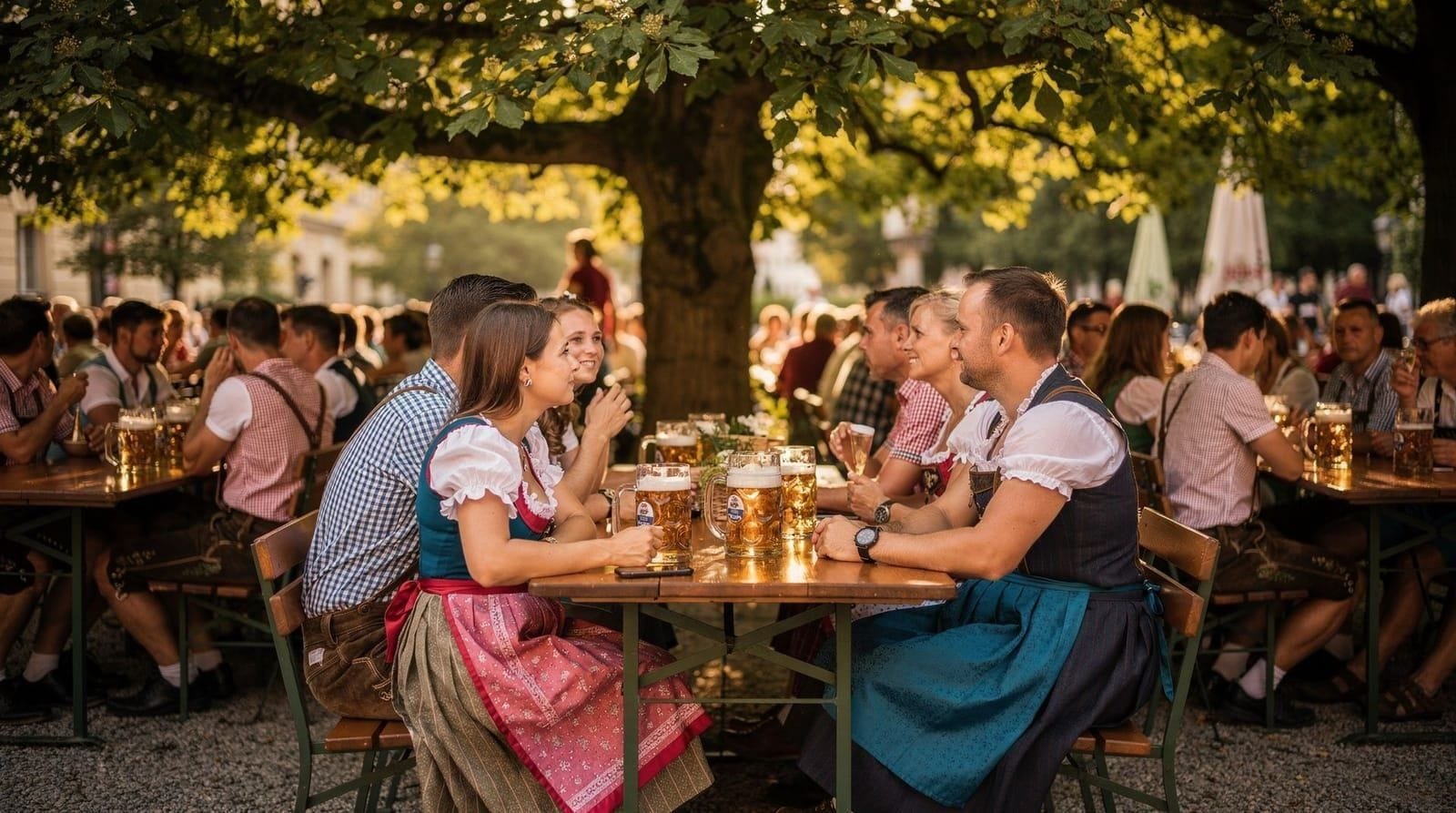
Munich food tour guide — how to eat your way through the city
Munich: old town food tour with 10+ tastings, beer and pretzel
Are Munich food tours worth it?
For first-time visitors, yes. A good guided food tour covers 8-12 tasting stops in 3 hours, introduces the logic of Bavarian cuisine, and costs €65-95 per person. Self-guided tours using the Viktualienmarkt as a base cost far less but require more preparation. The best guided tours concentrate on the old town and Viktualienmarkt area.
Why Munich’s food culture rewards serious attention
Munich is not a city where food happens incidentally around the sightseeing. Eating in Munich — particularly eating Bavarian food, in the places where Bavarians eat it — is one of the things the city does best. The food culture here is old, specific, and somewhat rule-bound (Weißwurst before noon, bring your own food to a beer garden but buy your beer there), and those rules exist for reasons worth understanding rather than dismissing.
A food tour — guided or self-directed — is the most efficient way to decode that culture in a short visit. In three hours you can cover the Viktualienmarkt’s historic stalls, understand the taxonomy of Munich’s beer and sausage traditions, eat a genuine cross-section of Bavarian dishes, and leave with enough context to order confidently in any traditional Wirtshaus for the rest of your trip.
This guide covers how to choose between guided and self-guided approaches, what the best guided tours actually include, how to build a self-guided route, and what to eat at every stage.
| Best for | First-time visitors, food-focused travellers |
| Cost (guided) | Around €65–95/person for 3 hours, 8–12 tastings |
| Cost (self-guided) | Around €25–35/person for the same route |
| Start point | Viktualienmarkt, 5 min south of Marienplatz |
| Booking | 1–2 weeks ahead in peak season (Jun–Sep, Oktoberfest) |
The Viktualienmarkt as starting point
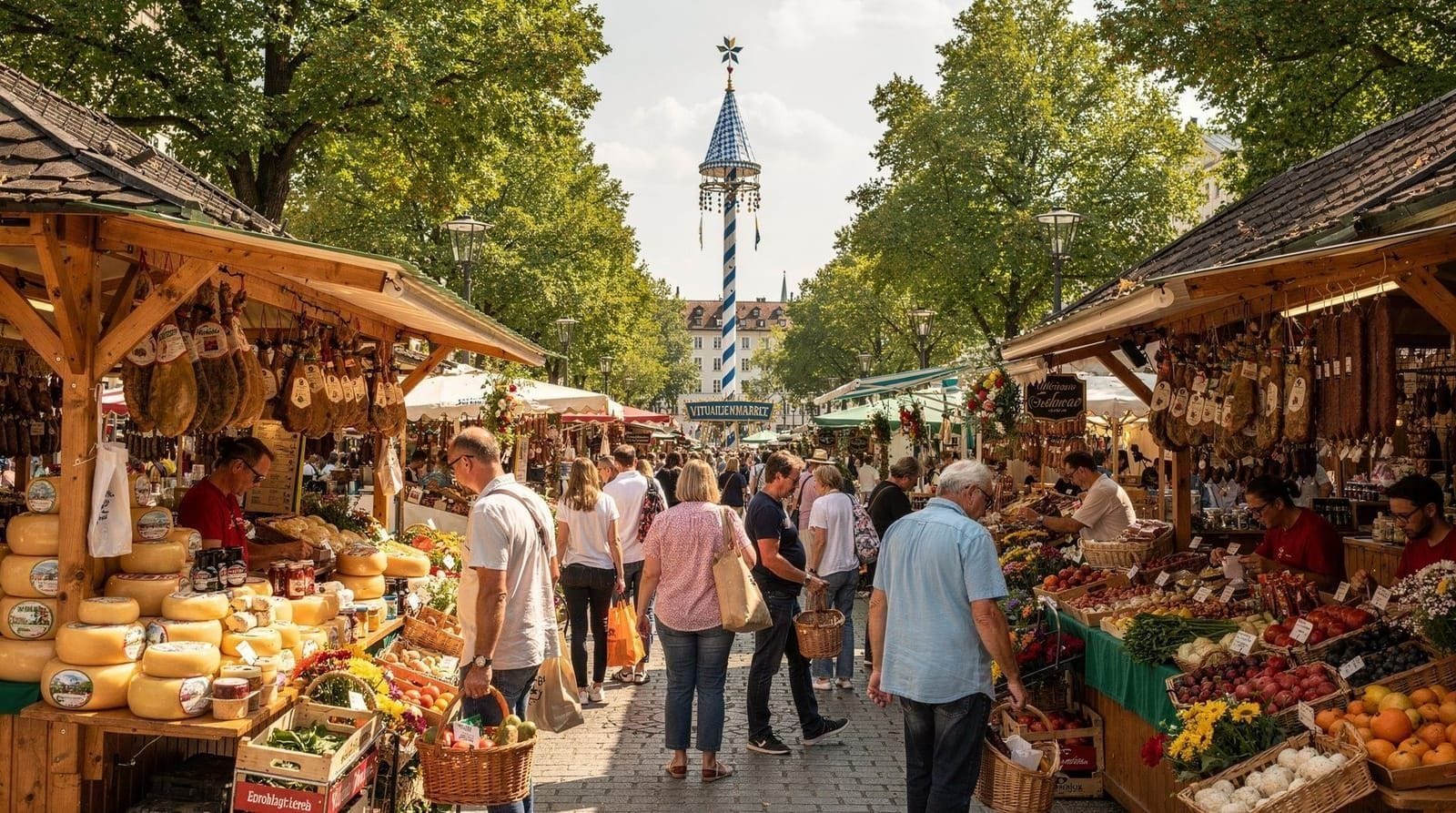
Every Munich food tour, guided or otherwise, eventually passes through the Viktualienmarkt — the central open-air market that has occupied the same site since 1807, a 5-minute walk south from Marienplatz. The market has around 140 permanent stalls and is open Monday through Saturday.
What makes the Viktualienmarkt useful for food tourism is its breadth. Within 200 metres you can find: fresh Brezn from specialist bakers, all six varieties of Munich brewery beer at the central beer garden, cheese from Alpine dairies, smoked sausages from Bavarian producers, fresh fruit from local orchards in season, Obatzda made on the premises, Leberkäse hot from the oven in bread rolls, and specialist honey, pickle, and preserve stalls that have been run by the same families for decades.
It is also a working market where Munich locals shop for food, not a tourist market with inflated prices and novelty products. The distinction matters: you’re not paying a tourist premium to visit, and the stalls are competing on quality and price rather than convenience and footfall.
Guided food tours: what to look for
Munich has numerous food tour operators ranging in quality from excellent to forgettable. The markers of a good guided food tour:
A small group size. Tours of more than 12-15 people become logistically difficult at market stalls and make meaningful interaction between the guide and participants harder. Look for groups of 8-12 as an upper limit.
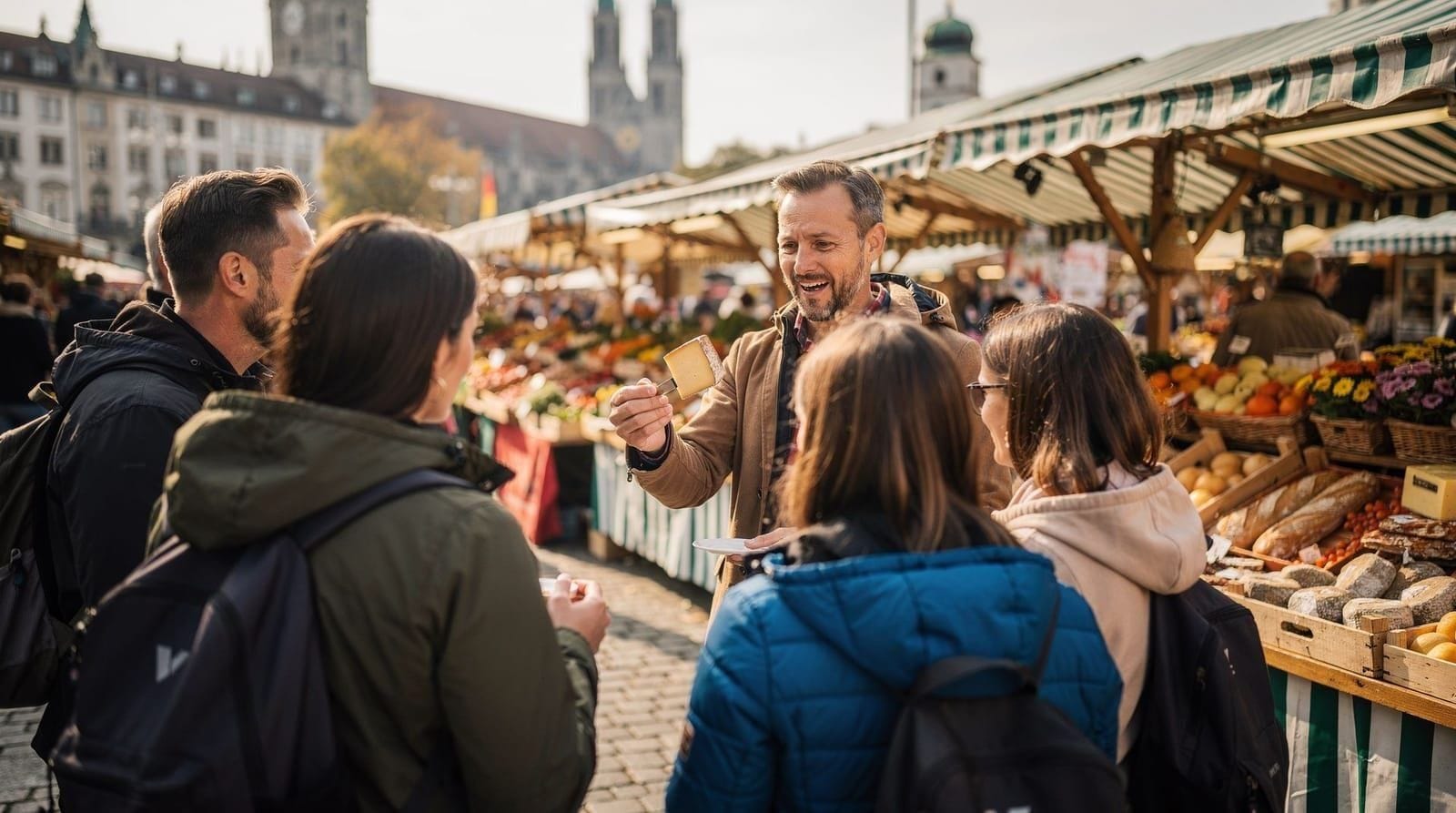
A local guide with roots in Munich. Not someone who learned the tour script, but someone who grew up in the city and can answer questions about which stalls their parents used, what the market looked like in the 1980s, and why a particular cheese producer still uses traditional mountain milk. This contextual knowledge is what makes a food tour worth the cost over self-directed walking.
Multiple independent tastings, not restaurant stops only. The best food tours combine market stall tastings (where the food is freshly prepared in front of you) with sit-down stops at a traditional Wirtshaus or beer hall. Tours that are primarily sit-down restaurant visits miss the spontaneity of market eating.
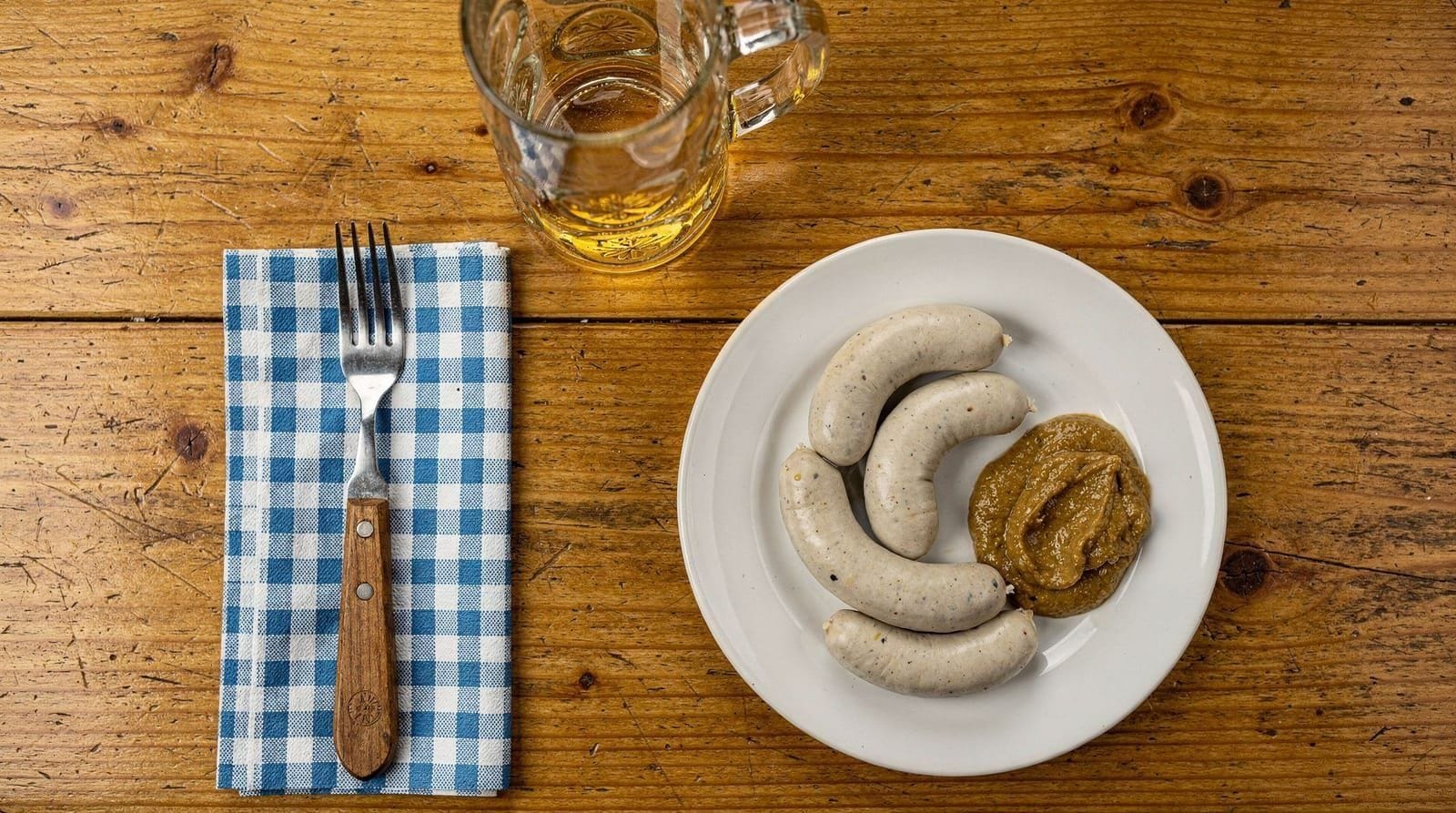
Inclusion of Weißwurst. If a morning food tour doesn’t include Weißwurst — served correctly, before noon, with sweet Senf and a pretzel — it’s omitting Munich’s most culturally specific dish. The etiquette around eating Weißwurst (sucking the sausage out of its skin rather than cutting it is traditional in Bavaria, though either method is accepted) is exactly the kind of thing a good guide explains.
The Munich old town food tour with 10 tastings covers the Marienplatz area, the Viktualienmarkt, and key stops in the historic centre over approximately 3 hours, with tastings at market stalls and a traditional Wirtshaus included.
For a focus specifically on Viktualienmarkt’s gourmet vendors, the Viktualienmarkt gourmet food tour concentrates the tasting experience around the market’s specialist producers and the beer garden.
Choosing between guided tour formats
| Tour style | Duration | Best for |
|---|---|---|
| Old town, 10 tastings | ~3 hours | First-time visitors wanting broad coverage |
| Viktualienmarkt gourmet | ~2.5–3 hours | Visitors who want to focus on the market itself |
| Bavarian food, 3 courses | ~3 hours | Sit-down structure, fewer walking stops |
| Traditional food, full meal | ~3.5 hours | Visitors prioritising one substantial meal over many small tastings |
The self-guided food tour route
If you prefer to move at your own pace and spend time where you want, the following self-guided route covers the essentials in a half-day morning.
Start: Hofpfisterei on Tal Straße (7:30-8:30am)
Begin with bread. Hofpfisterei is Munich’s oldest organic bakery, founded in 1331 and producing sourdough bread from stone-milled grain using traditional methods. The Tal Straße branch opens at 6:30am and the bread emerging from the ovens in the morning — dark rye, light wheat, and the Hausbrot loaf — is worth travelling for. A bread roll costs €1-1.50. Buy a Laugenbrötchen (lye roll) to start.
Stop 2: Viktualienmarkt — sausage and Weißwurst (by 9am)
The Viktualienmarkt opens at 8am Monday to Saturday. The best Weißwurst on the market is generally agreed to be at the Standl 4 or Standl 19 stalls — both of which are traditional butcher operations, not tourist-facing snack bars. Order a pair of Weißwurst with sweet Senf (sweet mustard — do not accept spicy mustard as a substitute) and a Brezn from the adjacent baker.
Stop 3: Cheese and Obatzda at the market
Two or three dedicated cheese stalls at the Viktualienmarkt sell Alpine-style cheeses alongside house-made Obatzda. A small tub of Obatzda with a Brezn to spread it on costs €5-7. The Obatzda at Schmitt und Söhne has been consistently good for years.
Stop 4: Café Frischhut for Schmalznudeln (10am)
Schmalznudeln are a Munich-specific fried dough speciality — a flat, crispy-edged disc dusted with sugar and eaten warm. The only place in Munich that still makes them in the traditional manner is Café Frischhut on Prälat-Zistl-Straße, a 3-minute walk from the Viktualienmarkt. The café opens at 9am and runs until the dough runs out — often by noon on weekends. Two Schmalznudeln with coffee costs around €7.
Stop 5: Leberkäse stop (11am)
A warm Leberkäse roll from the market butchers is one of Munich’s great cheap meals — dense, savoury meat, slightly pink in the centre, in a bread roll with a thin scrape of mustard. It costs €3-4 and is completely satisfying. Most Viktualienmarkt butchers have a hot counter for this.
Stop 6: Beer garden at the Viktualienmarkt (11:30am)
Round out the morning with a Maß at the Viktualienmarkt’s beer garden — the only one in Munich that rotates through all six official breweries across the year. It opens at approximately 10am and closes at 8pm (weather dependent). A litre of whichever brewery is currently in rotation costs around €9-10. You can bring the food you’ve accumulated at the market stalls.
What the guided tours cover that self-guided misses
An experienced guide at any of the better Munich food tours adds layers of context that are genuinely hard to replicate alone:
Historical framing. Why Munich’s food culture is more conservative than Berlin’s, why the Weißwurst rule exists (it was originally a food safety measure before refrigeration), why Augustiner beer commands local loyalty that Hofbräu does not, and why the Oktoberfest tent system determines which brewery gets served where.
Stall introductions. At a busy market, the difference between a tourist-facing stall and a genuine producer stall is not always obvious. A guide who knows the market takes you to the right places without wasted time.
Bavarian food vocabulary. Knowing the difference between Weißwurst and Bratwurst, between Helles and Märzen, between Obatzda and plain Camembert, and between a Brezn and a Laugengebäck roll makes subsequent meals across the trip significantly better.
For visitors with a particular interest in traditional Bavarian food presented in a sit-down format alongside a structured meal, the traditional food tour with full meal takes the format further, including a proper multi-course Bavarian meal at a traditional restaurant.
Neighbourhood food tours beyond the centre
The old town and Viktualienmarkt are the natural anchor for most food tours, but Munich’s food scene extends considerably into the city’s residential neighbourhoods.
Au-Haidhausen: The eastern neighbourhood around the Au-Haidhausen area, south of the Isar, has a concentration of independent bakeries, natural wine bars, and modern Bavarian restaurants that represent Munich’s evolving food culture. The Wirtshaus in der Au (Lilienstraße 51) is among the best traditional Wirtshäuser in the city — the Dampfnudel (steamed yeast dumplings with vanilla sauce) here is exceptional.
Schwabing and Maxvorstadt: The university quarter northwest of the English Garden has a more international food scene — Vietnamese, Middle Eastern, and modern European restaurants sit alongside classic Bavarian options. The Schwabing neighbourhood guide covers the area’s geography and eating options.
Glockenbach: The Glockenbachviertel south of the centre has Munich’s highest concentration of independent restaurants, wine bars, and cocktail bars. Less traditional Bavarian, more modern European — but worth including if you’re staying more than two nights.
Beer and food together — the Bavarian approach
In Munich, food and beer are not separate categories. A traditional Bavarian meal structures itself around beer as a natural accompaniment in the same way French food pairs with wine. Understanding this is essential for eating well in the city.
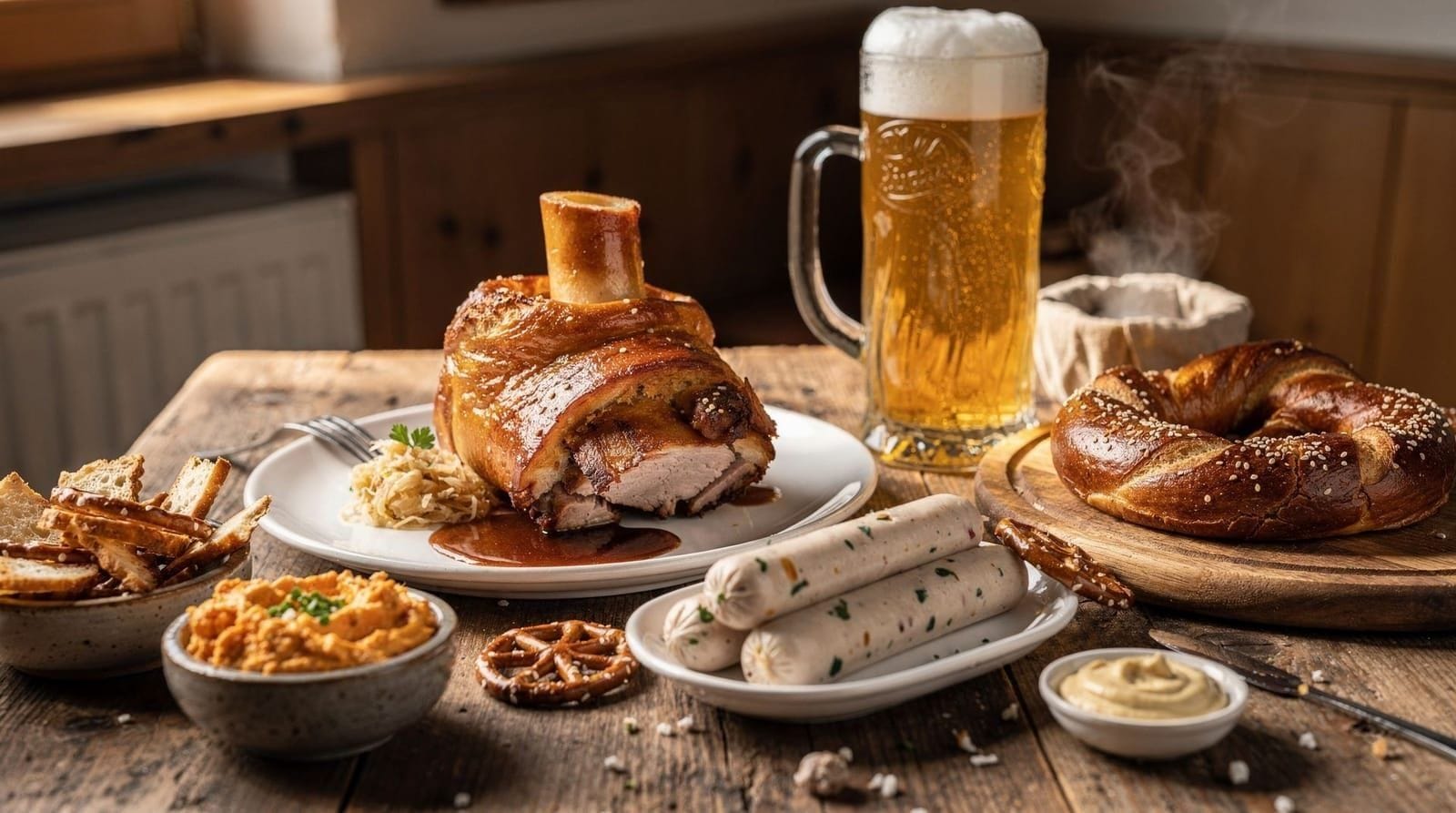
The pairing logic is not complicated: Helles (pale lager, the most common Munich style) works with almost everything — its lightness doesn’t compete with food. Märzen (amber lager, the Oktoberfest style) pairs with heavier dishes like Schweinshaxe or Sauerbraten. Weizenbier (wheat beer, served in a tall 500ml glass) is particularly good with lighter dishes — salads, fish, and lighter sausages. Dunkles (dark lager) pairs naturally with the sweeter elements — Kaiserschmarrn, Lebkuchen-based sauces, or duck.
The Munich beer hall etiquette guide covers the social conventions of beer ordering, stein sizes, and what to say when proposing a toast.
Evening food culture in Munich
Munich’s food culture after 6pm is different in character from the morning market and lunchtime beer garden experience. The evening shift is beer hall and Wirtshaus territory — sit-down tables, longer meals, and the particular atmosphere of a city that takes its drinking and eating seriously but without the self-consciousness of a trendy food scene.
The practical options for an evening meal in Munich range considerably:
Traditional Wirtshaus: The city’s best sit-down traditional restaurants include Wirtshaus in der Au (the consistent local recommendation), Zum Dürnbräu in the old town, and the Augustiner-Keller Gaststätte attached to Munich’s best-regarded beer garden. Booking is essential on weekend evenings. The best restaurants in Munich guide covers these and others across price ranges.
Beer hall dining: The large beer halls (Hofbräuhaus, Augustiner am Dom, Löwenbräukeller) offer Bavarian food alongside their primary beer service. The food at most beer halls is adequate rather than exceptional, but the atmosphere is part of the experience. The exception is Augustiner-Keller Gaststätte, where the kitchen takes the food genuinely seriously.
Modern neighbourhood restaurants: The Glockenbachviertel and Haidhausen neighbourhoods have the best concentration of modern, independently run restaurants in Munich. These skew toward contemporary European rather than traditional Bavarian — useful for visitors who want quality cooking that isn’t exclusively pork and dumplings.
Bavarian dinner food tours: Several Munich food tour operators run evening-format tours that combine a beer hall visit with multiple tasting stops across an evening route. These are particularly useful for first-time Munich visitors who arrive and want an orientation through food and beer culture in one structured experience.
Seasonal food touring in Munich
The Viktualienmarkt’s seasonal produce and Munich’s food event calendar mean that food touring at different times of year offers very different experiences:
March (Starkbierfest): The Strong Beer Festival at Paulaner’s Nockherberg venue runs for two weeks around mid-March. Starkbier (“strong beer,” around 7-8% alcohol) is the seasonal specialty — darker, richer, and more intense than the standard Munich Helles. The Munich beer festivals calendar covers this and other seasonal events.
April-June (asparagus season): White asparagus (Spargel) from the Schrobenhausen region near Munich defines spring menus across the city from late April through June. A food tour in this period will encounter asparagus in multiple forms — raw at the market, as soup, alongside white meat at traditional restaurants.
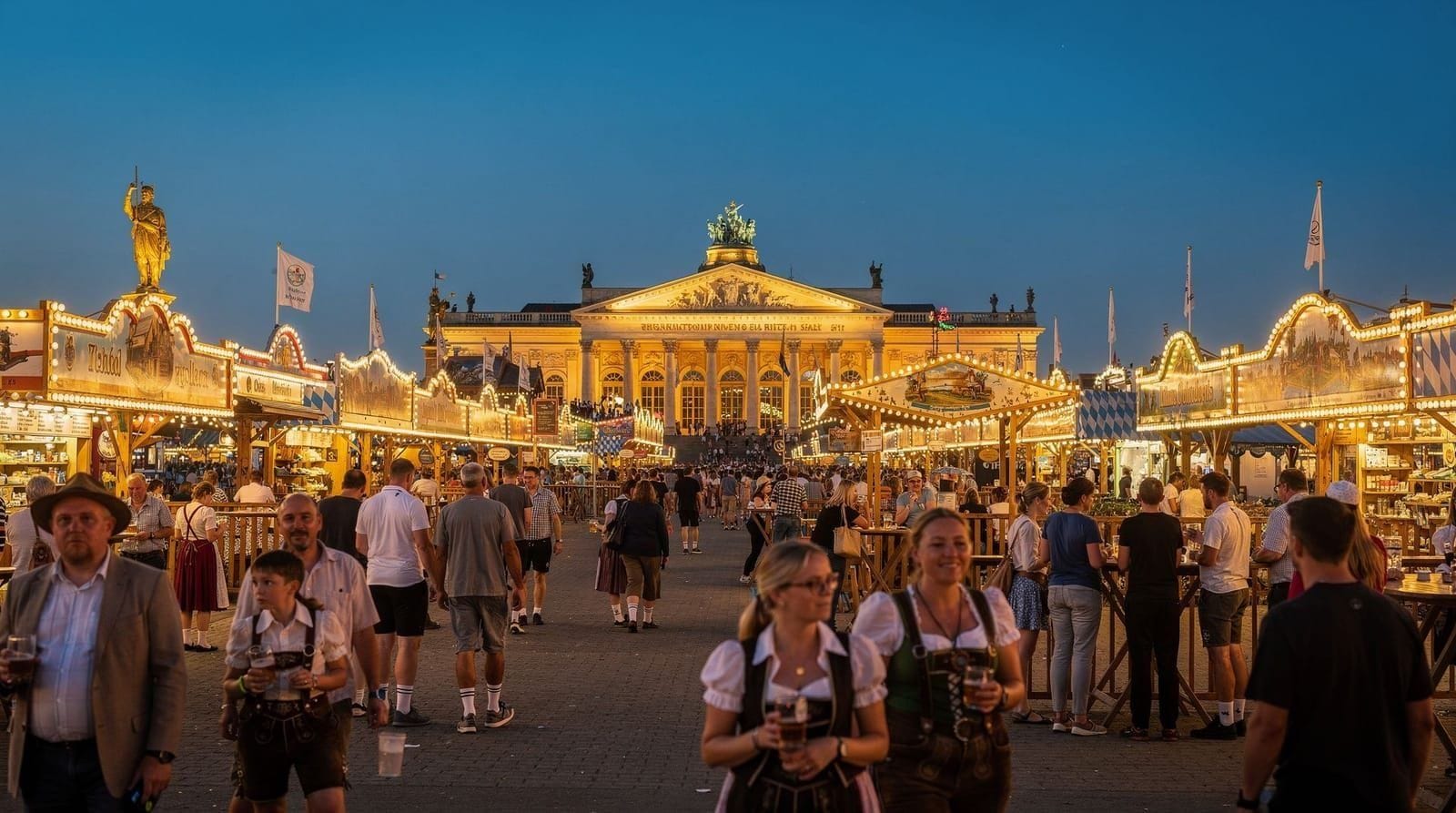
September-October (Oktoberfest): The festival runs in late September and early October. The food culture around Oktoberfest extends beyond the tent — market food, brewery restaurant specials, and the Märzen beer style that defines the season are available across the city. Food tours in this period often incorporate Oktoberfest context without requiring you to enter the festival grounds. The Oktoberfest guide covers the full festival picture.
November-December (Christmas market season): The Christkindlmarkt on Marienplatz and the Viktualienmarkt’s advent stalls transform Munich’s food culture around seasonal products — Lebkuchen, roasted almonds, Glühwein, and the Stollen season. Winter food tours have a completely different character and are genuinely worth doing even if you’ve visited Munich in summer before.
Coffee, cake and dessert culture — the part food tours often skip
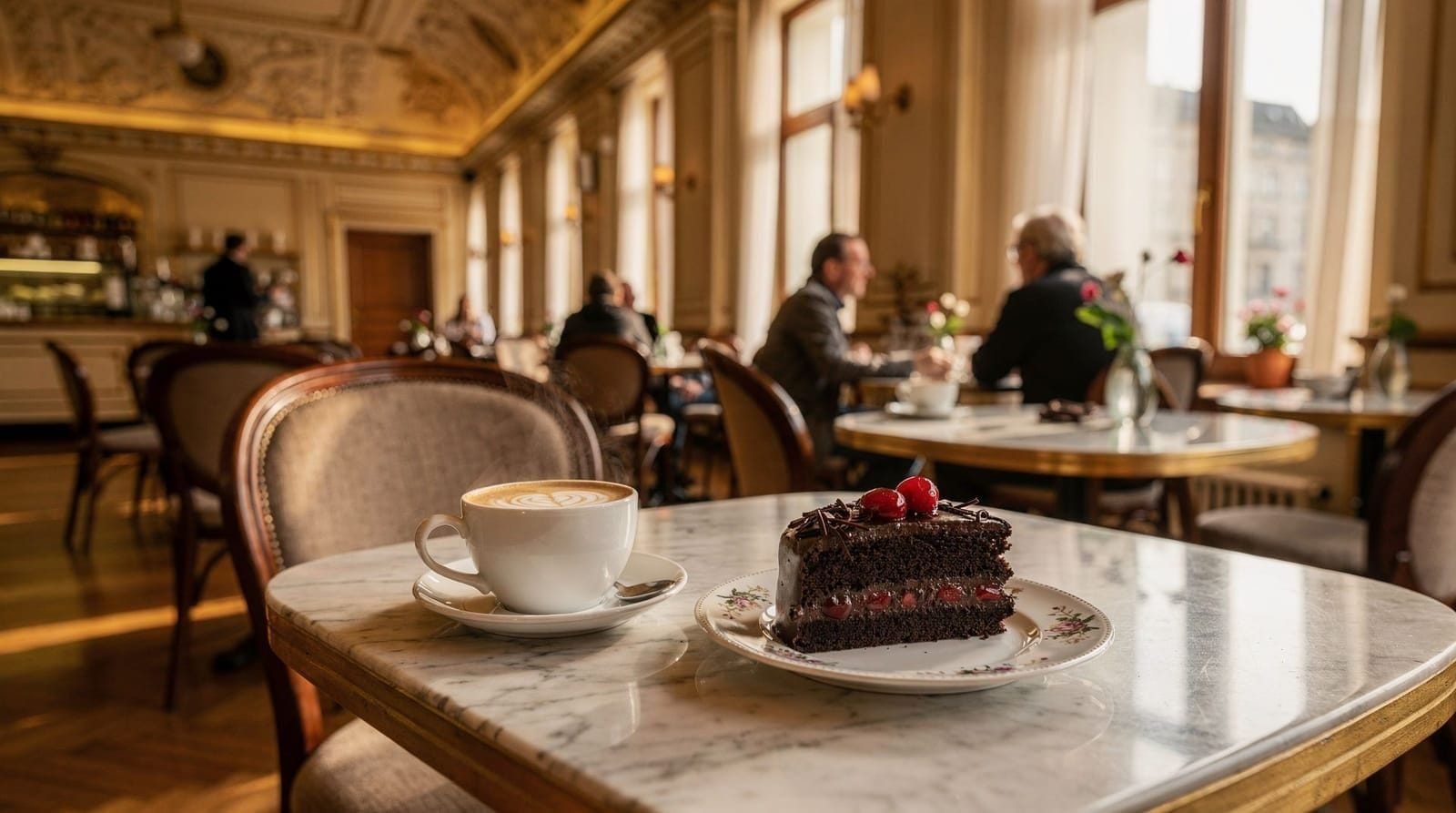
Most Munich food tours focus on savoury Bavarian staples and beer, which means the city’s serious café and dessert culture is worth exploring separately. Munich has a strong Kaffee und Kuchen (coffee and cake) tradition inherited from Vienna’s café culture, expressed through the city’s café scene.
Café Luitpold (near Odeonsplatz) is Munich’s oldest grand café, dating to 1888, with an extensive cake selection and a genuinely historic dining room. A slice of cake with coffee runs €8–12.
Dallmayr on Dienerstraße, the historic delicatessen and coffee roaster, has a café section serving its own-roast coffee alongside pastries — a useful stop if your self-guided route passes near Marienplatz in the early afternoon.
Kaiserschmarrn, the shredded pancake dessert with stewed fruit, is worth seeking out at a traditional Wirtshaus rather than a café — Wirtshaus in der Au’s version is a standout and pairs naturally with the Dampfnudel already mentioned above.
Building 30–45 minutes for coffee and cake into a food tour day — either as a mid-afternoon break after the market stops or as a dedicated stop — rounds out the sweet side of Bavarian food culture that most tastings-focused tours don’t cover.
Vegetarian and vegan food touring in Munich
Bavarian cuisine is traditionally meat- and dairy-heavy, but Munich’s food scene has adapted considerably. Most guided tours can accommodate a vegetarian version with advance notice — substituting cheese, pretzel and vegetable stops for the sausage and Leberkäse tastings. Fully vegan guided food tours exist but are a smaller, specialist category; search specifically rather than assuming a standard tour can be adapted on the day.
For a self-guided vegetarian route through the Viktualienmarkt, the cheese and Obatzda stalls, fruit and vegetable stands, and several bakery stalls provide a genuinely satisfying morning without any meat. The Munich vegetarian and vegan guide covers restaurant options beyond the market for the rest of your trip, including modern plant-based restaurants in Glockenbach and Schwabing that represent a different, more contemporary side of Munich’s food culture than the traditional Wirtshaus scene.
Where food tours fit in a broader Munich itinerary
A morning food tour pairs naturally with an afternoon at a beer garden or a walk through the English Garden. If you’re spending 3 days in Munich, a food tour on the first morning is an efficient way to orient yourself around the city’s neighbourhoods and food culture before exploring independently.
The Munich budget guide includes a realistic breakdown of food costs across different eating contexts — from market stalls to fine dining at Tantris or Atelier — with per-person averages for 2026.
For visitors whose primary interest is beer rather than food, the Munich brewery tours guide and the beer hall etiquette guide cover the beer-specific territory in more depth.
Frequently asked questions about Munich food tours
Is a food tour a good activity for children?
Yes, with some caveats. Most guided food tours involve a fair amount of walking (4-6 km over 3 hours) and standing at stalls, which can tire younger children. The tasting format — eating small amounts of many different things — is usually popular with children. Check with the tour operator about minimum age limits; most tours welcome ages 8 and up.
Do Munich food tours run year-round?
Most guided food tours run year-round, though frequencies drop in January and February. The Viktualienmarkt is open year-round, and the Christmas market period (late November through Christmas Eve) adds seasonal food options including Glühwein, Lebkuchen, and roasted almonds. Winter food tours have a particular character — see the Munich Christmas guide for the seasonal food angle.
What should I wear on a Munich food tour?
Comfortable walking shoes appropriate for cobblestones in the old town area. The Viktualienmarkt can be muddy after rain — proper shoes matter. Dress in layers: the market is partially shaded and the beer hall stops can be significantly cooler than outdoor temperatures on summer days.
How far in advance should I book a guided food tour?
In peak season (June-September) and particularly during Oktoberfest (late September to early October), popular food tours sell out 1-2 weeks in advance. Outside peak season, 3-5 days ahead is generally sufficient. Morning tours on weekdays are easiest to book last-minute.
Can I do a food tour if I have dietary restrictions?
Most tour operators accommodate common restrictions with advance notice — lactose intolerance, gluten sensitivity, and halal requirements can usually be worked around. Full vegetarian and vegan food tours exist in Munich, though they require a specific search. Strict kosher options are limited in the traditional Bavarian food context.
What is Weißwurst etiquette and does it matter?
Weißwurst should be eaten before noon — this is a cultural convention that Munich locals observe seriously. The sausage is boiled, not grilled, served in its own broth in a small pot, eaten with sweet (not spicy) mustard and a pretzel. The traditional way to eat it is to cut off one end and suck the meat out of the casing (“zuzeln”), though cutting it open is equally acceptable. Any guide or waiter who scolds you for cutting it lengthwise is being unnecessarily strict.
Are children’s portions available on food tours?
Guided food tours typically charge a reduced price for children under 12 and adjust portions accordingly. Self-guided routes can simply be scaled to appetite — a child’s version of a Viktualienmarkt morning might involve half a Brezn, one Weißwurst, and a Schmalznudel, costing under €8 total.
Is it better to do a food tour on day one or later in the trip?
Day one, ideally. A morning food tour on your first full day in Munich builds the vocabulary and orientation — which stalls matter, what to order, how Bavarian beer and food pairing works — that makes every subsequent meal across your trip better. Doing it later means you spend the earlier days ordering blind.
Can I combine a food tour with the Munich beer hall experience in one day?
Yes, and it’s a common and sensible pairing. A morning food tour ending around 1pm leaves the afternoon free, and an evening beer hall visit (Hofbräuhaus, Augustiner am Dom, or a quieter Wirtshaus) rounds out the day without repeating the same food. See the Munich beer halls guide for evening options that complement rather than duplicate a morning tasting route.
Top experiences
Bookable activities with verified prices and instant confirmation on GetYourGuide.