Munich beer halls — the complete local guide
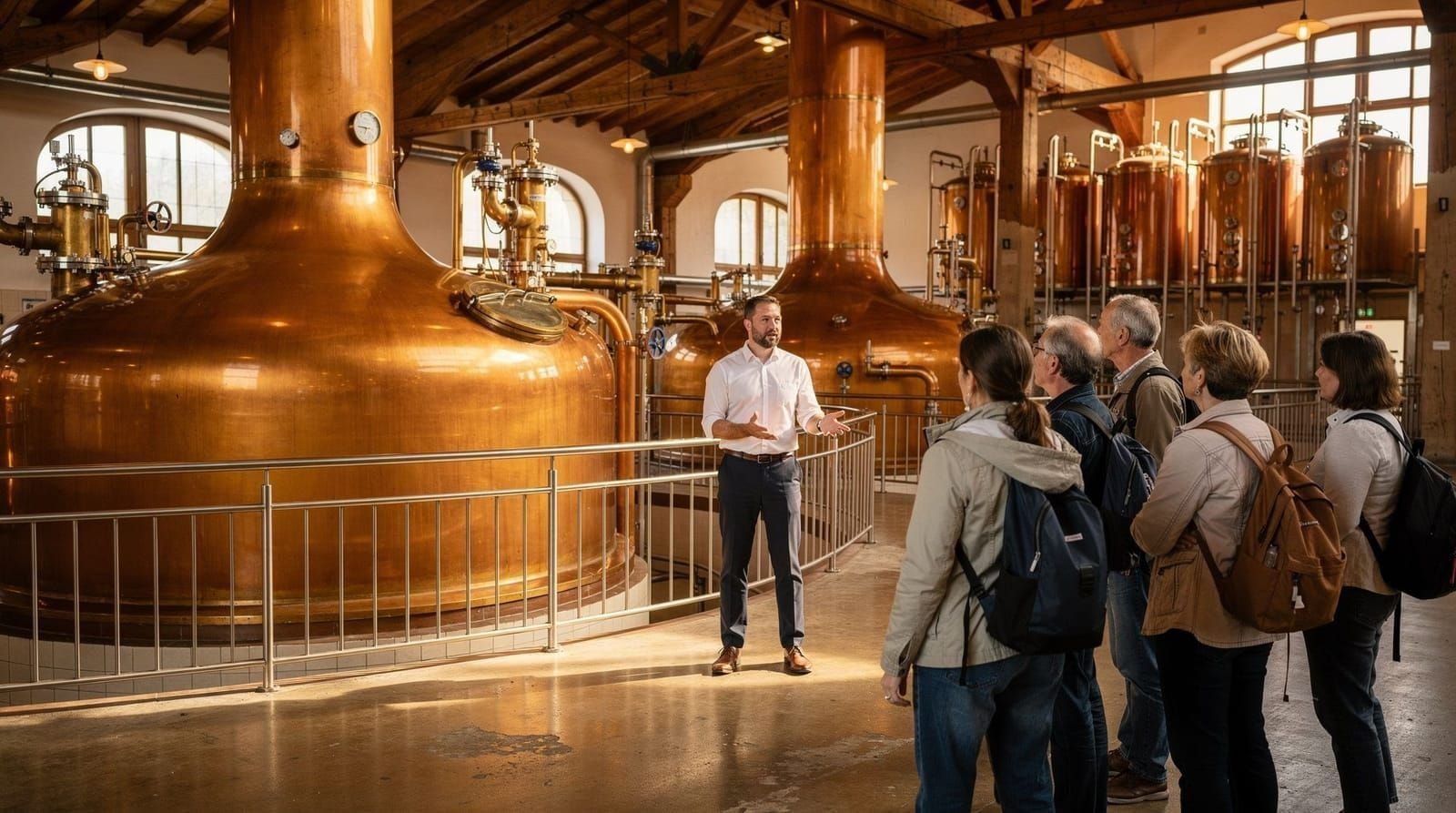
Munich: beer halls and breweries 3-hour guided tour
What is the best beer hall in Munich?
Augustiner-Keller (Arnulfstraße 52) is the local favourite — excellent Augustiner beer, a beloved garden, and far fewer tourists than the Hofbräuhaus. Augustiner Stammhaus (Neuhauser Str. 27) is a good central option. The Hofbräuhaus is worth visiting once for the history but charges inflated prices and is heavily tourist-oriented.
| Best local pick | Augustiner-Keller, Arnulfstraße 52 |
| Most famous | Hofbräuhaus, Platzl 9 |
| Typical cost | Maß €9.80–11.10 outside festivals |
| Getting there | Most halls are U-Bahn/S-Bahn accessible |
| Best time | Weekday lunch or before 17:30 for a garden seat |
Beer halls and Bavarian identity — more than a place to drink
Munich’s beer halls are not simply large restaurants that serve beer. They are — or at least were — civic spaces where Bavarians of different backgrounds shared long wooden tables, discussed politics, celebrated weddings, and observed the rhythms of the calendar together. The tradition of communal table seating, where strangers sit alongside one another as a matter of course, reflects a specifically Bavarian understanding of public life. The beer hall was the place where class boundaries softened, at least for an evening.
That civic function was not always benign. The Hofbräuhaus hosted one of the earliest major speeches by Adolf Hitler in February 1920, and the Bürgerbräukeller (now demolished) was the site of the failed Beer Hall Putsch in 1923. Munich’s relationship with its beer halls runs through the darkest chapters of German history as well as its most convivial ones.
Today the large halls operate primarily as restaurants and tourist destinations, but the underlying format survives: communal seating, oompah bands on raised stages, Maßkrüge delivered in fistfuls by servers who have memorised your drink count, and beer that has been brewed according to the Reinheitsgebot (purity law of 1516) for more than five centuries. The six Munich breweries authorised to serve at Oktoberfest — Augustiner, Paulaner, Hacker-Pschorr, Hofbräu, Löwenbräu, and Spaten — each operate their own flagship venues. Knowing the difference between them transforms a beer hall visit from a tourist activity into something closer to what locals actually do here.
The six official Munich breweries
Augustiner-Bräu (founded 1328 by Augustinian monks) is the oldest of the six and the one Bavarians tend to nominate as their favourite. Its Edelstoff and Helles are widely regarded as Munich’s most drinkable everyday beers — clean, light, and slightly softer than the other major breweries. Augustiner is also the only brewery that still serves its Festbier at Oktoberfest from wooden casks rather than metal kegs, a distinction that beer traditionalists take seriously.
Hofbräu München (1589) is the most famous outside Bavaria because the Hofbräuhaus became internationally known through tourism and, historically, through German-American immigrant communities who imported the name and the format. The brewery itself is state-owned (Freistaat Bayern) and serves a serviceable Helles and Weißbier. The beer is not bad. The experience of the main hall, however, has drifted far from what a Bavarian would consider authentic.
Löwenbräu (1383) was for much of the 20th century Munich’s best-selling brewery. Its Löwenbräu Original is a recognisable amber lager. The Löwenbräukeller on Stiglmaierplatz is one of Munich’s most architecturally impressive beer hall buildings, with a beer garden that is genuinely popular with locals from the Maxvorstadt and Neuhausen neighbourhoods.
Hacker-Pschorr exists as the result of a 1972 merger between two historic breweries: Hacker (1417) and Pschorr (1834). Their Helles and Weißbier are solidly made. The merger reduced the distinctiveness of each brand somewhat, but the Hacker-Pschorr Bräuhaus near Sendlinger Tor remains a good, less-touristy option for a sit-down beer in the city centre.
Paulaner (1634, founded by Franciscan monks at Nockherberg) is best known internationally for its Weißbier, which is the best-selling premium wheat beer in Germany by volume. Paulaner also brews the Salvator Doppelbock — one of the strongest traditional lagers in Bavaria — that anchors the Starkbierfest in March. The Paulaner am Nockherberg venue has the deepest historical roots of any operating Munich brewery restaurant.
Spaten (1397) is technically the brewery behind the Schottenhamel tent at Oktoberfest — the tent where the Mayor taps the first keg. It merged with Franziskaner in 1921 and is now owned by AB InBev alongside Löwenbräu and several others. Spaten’s Märzen is considered the original model for the Oktoberfest beer style. Its flagship venue in the city centre operates under the Augustiner-Stammhaus and Spatenbräu branding at different locations.
Hofbräuhaus am Platzl — the honest assessment
Address: Platzl 9, 80331 München (just off Marienplatz, a five-minute walk from the Rathaus) Hours: Daily 09:00–23:30 Beer price: Maß €11.10 (2026); food €14–24 for mains
The Hofbräuhaus is the most visited beer hall in the world and one of Munich’s most recognised addresses. The building dates from 1589 in its original form; the current structure was rebuilt in 1897 and restored after Second World War bomb damage. The ground-floor Schwemme (the main hall) seats around 1,000 people under a vaulted ceiling painted with hops and barley vines. A brass band plays from a raised balcony most evenings and weekend afternoons. The upper floors are more sedate and better suited to groups who want to hear each other speak.
Here is what guidebooks tend to understate: the Hofbräuhaus is, by any fair measure, a tourist attraction that serves beer rather than a functioning local beer hall. On most evenings, 80–90% of the clientele are international visitors. Service is stretched thin due to volume. Beer prices are the highest in Munich outside Oktoberfest. The Maß at €11.10 is roughly 15–20% more than you’ll pay at Augustiner-Keller or Löwenbräukeller for comparable or better beer.
None of this makes the Hofbräuhaus a bad visit. The atmosphere on a busy evening is genuinely electric — the band is good, the hall is impressive, and the sheer improbability of 1,000 people from 40 countries sharing beer steins in a century-old Bavarian hall is its own kind of spectacle. Visit it once. Sit in the Schwemme at a long communal table, order a Maß and a Brezn, stay for an hour. Then leave knowing you’ve done it, and spend your remaining evenings in Munich at better and more local options.
The Hofbräuhaus full guide covers the building’s history, the different floors, and how to navigate the Schwemme efficiently if you want more detail.
Augustiner Stammhaus — the best central option
Address: Neuhauser Str. 27, 80331 München (Kaufingerstraße pedestrian zone, one minute from Karlsplatz/Stachus) Hours: Daily 09:00–24:00 Beer price: Maß €9.80 (2026); food €12–20 for mains
The Augustiner Stammhaus (“home pub”) is the original brewery tap of Augustiner-Bräu, opened in 1328 at this site when the Augustinian monks still ran the operation. The current building was heavily modified in the 19th century and again after WWII, but the ground-floor restaurant retains a convincing sense of antiquity: low barrel-vaulted ceilings, dark wood panelling, and long communal tables.
The beer is the point here. Augustiner Helles on tap at the source is noticeably fresher than the same beer served elsewhere. The Edelstoff (a stronger Export-style lager) is also available and worth trying alongside the standard Helles. Prices are honest: a Maß runs €9.80, roughly €1.30 less than the Hofbräuhaus for beer that most Bavarians would rank higher.
The crowd is mixed — tourists do find it, being on the main pedestrian shopping street — but the ratio of international to local visitors is considerably better than at the Hofbräuhaus. Lunchtime and early afternoon are typically calm. Evenings from 18:00 onwards fill up, and weekend evenings can be busy. No reservations are taken for the main hall; the best strategy is to arrive before 18:30 on weekdays or before 17:30 on Fridays and Saturdays.
Augustiner-Keller — the local favourite
Address: Arnulfstraße 52, 80335 München (five minutes on foot from Hauptbahnhof, direction north) Hours: Daily 10:00–24:00; beer garden until 22:00 Beer price: Maß €9.90 (2026) in the garden, €10.20 inside; food €12–20
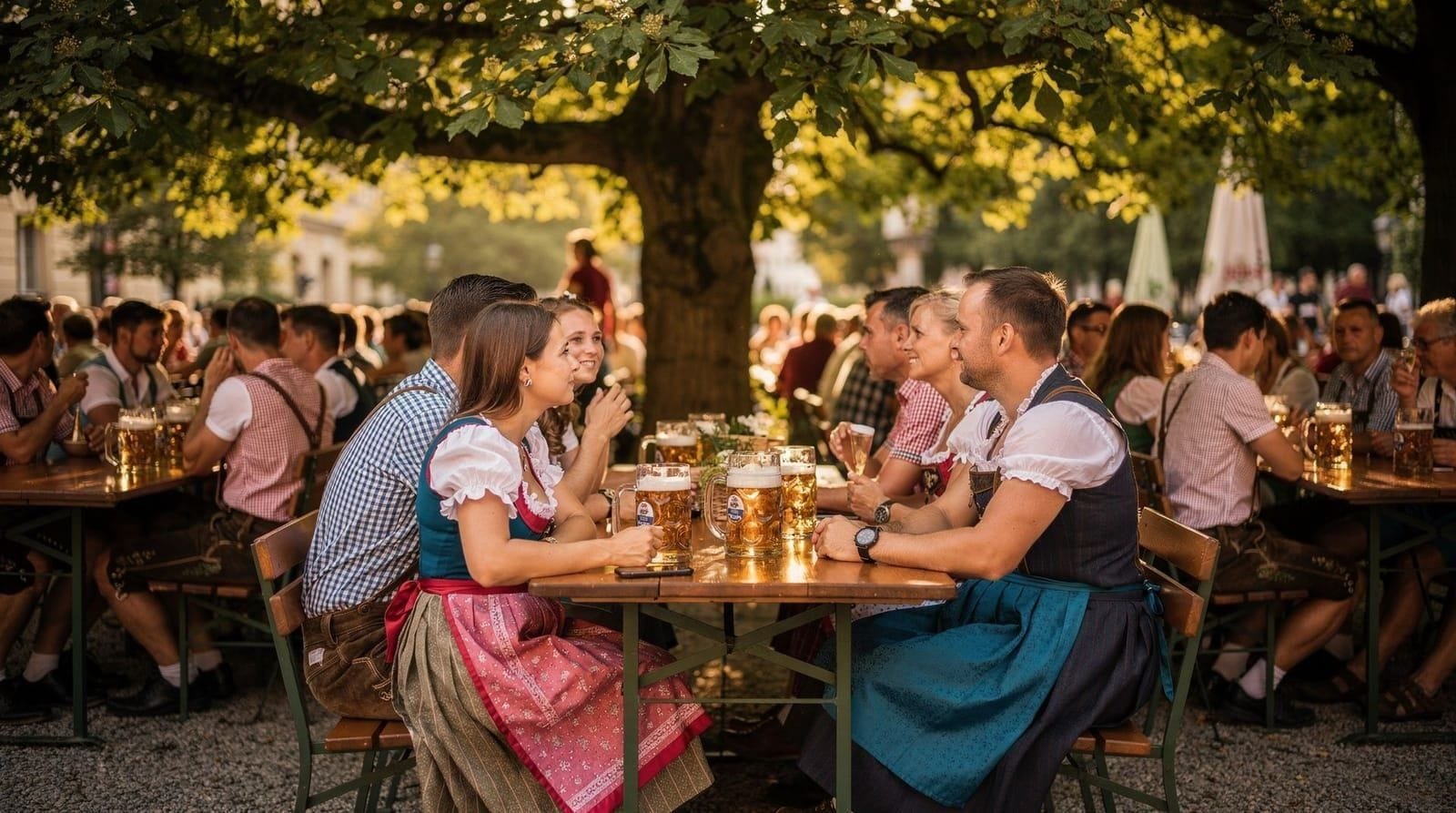
If you ask a Munich resident where they actually go for a beer, Augustiner-Keller comes up more often than any other single answer. The venue combines a large indoor hall with one of the city’s most beloved beer gardens — a chestnut-shaded courtyard seating around 5,000 under trees that have been there for over a century.
The building’s history includes a network of stone cellars (Keller) where Augustiner stored its lager during the cold months before mechanical refrigeration — Munich’s beer garden tradition itself emerged because breweries planted chestnut trees above the cellars to keep the ground cool, and began allowing locals to bring their own food and sit in the shade. Augustiner-Keller is one of the venues where this story is most directly visible.
On summer evenings the garden fills with a broad cross-section of Munich society: students from the nearby TU München, office workers, families with children, tourists who have done their homework. The indoor Festsaal hosts live music on weekend evenings and can be booked for private events. The kitchen serves Bavarian standards — Schweinshaxe (roast pork knuckle) at €18, Obatzda (aged camembert spread) at €7 — at honest prices.
Beer garden seating does not require service; you order at the kiosk and carry your own tray. Indoor seating comes with table service. If you want to experience the beer garden in full swing, arrive by 17:30 on weekdays or 16:30 on summer Saturdays. 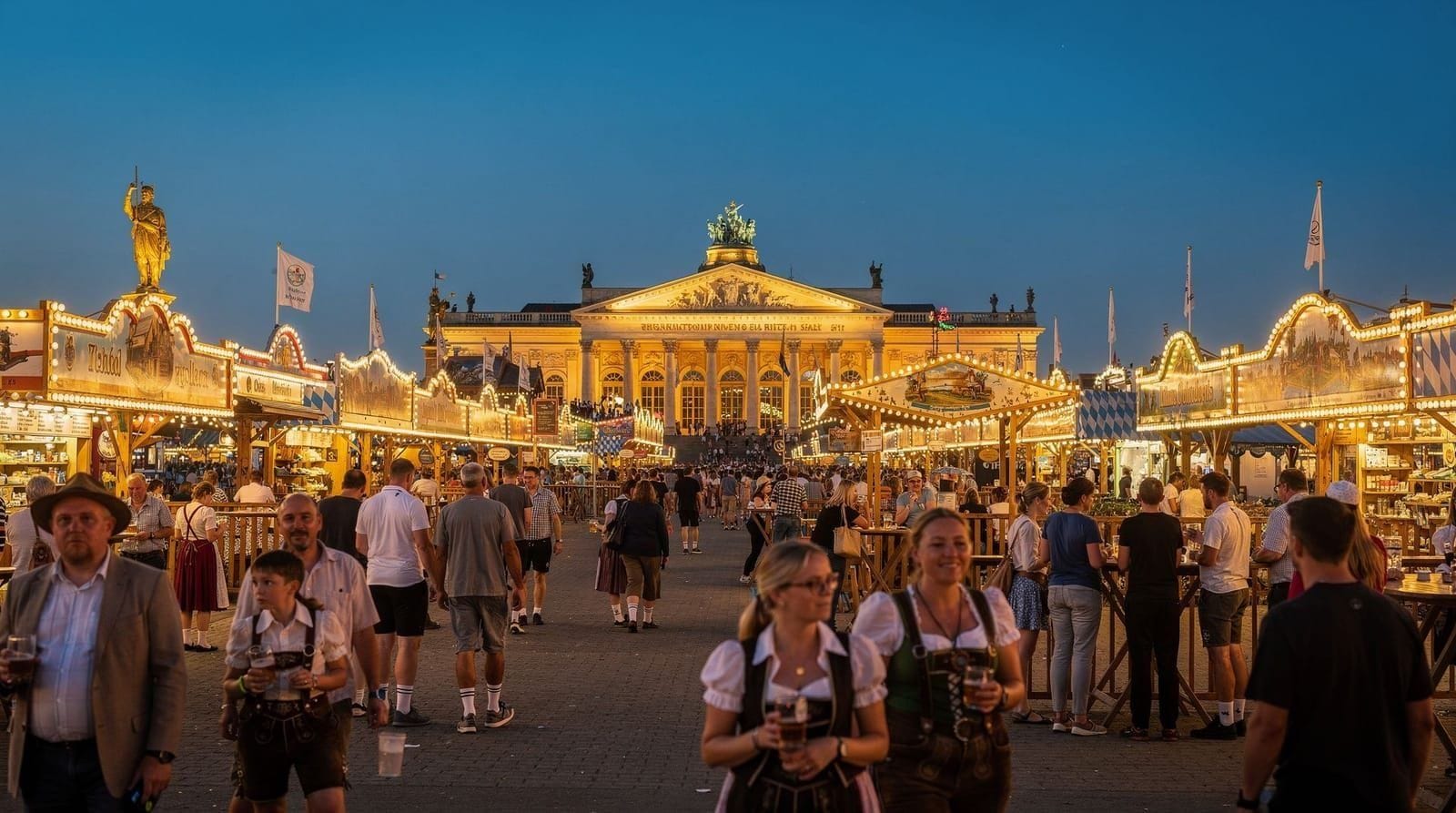 beer halls and breweries 3-hour guided tourCheck availability
Löwenbräukeller — the architecturally impressive outsider
Address: Nymphenburger Str. 2, 80335 München (Stiglmaierplatz; U1 or tram 12) Hours: Daily 11:00–24:00; beer garden in summer Beer price: Maß €10.20 (2026); food €12–22
The Löwenbräukeller sits at Stiglmaierplatz in the Maxvorstadt, a neighbourhood of galleries and university buildings about 1.5 km from the city centre. The building is one of Munich’s most striking beer hall structures: a large Gründerzeit-era hall with a carved stone facade, a beer garden on the western side, and a festival hall (Festhalle) used for the Löwenbräu Starkbierfest and other events throughout the year.
The clientele at Löwenbräukeller skews significantly more local than at the venues closer to Marienplatz. On a weekday evening in spring or autumn you’ll find Munich residents in their 30s and 40s, neighbourhood regulars, and groups celebrating birthdays — the kind of crowd the Hofbräuhaus lost to tourism decades ago. Service is attentive without being hurried.
The Löwenbräu Original on tap is a solid amber lager with more body than the Augustiner Helles — not a better beer necessarily, but a different one. The Weißbier is reliable. For a meal, the Schweinshaxe and Sauerbraten are both worth ordering.
Getting there: U1 to Stiglmaierplatz, or tram 12 from Karlsplatz. It is a ten-minute walk from Hauptbahnhof and completely manageable on foot. The slightly inconvenient location from the tourist centre is part of what keeps the crowd local.
Paulaner am Nockherberg — history and Starkbierfest
Address: Hochstraße 77, 81541 München (Nockherberg hill, Au-Haidhausen neighbourhood; tram 25 from Marienplatz) Hours: Daily 10:00–23:00 Beer price: Maß €10.50 (2026); food €13–22
The original Paulaner brewery was established here by Franciscan monks in 1634 on the Nockherberg (“Knocker Hill”) south of the Isar. The friars brewed Salvator — a strong, dark doppelbock — as a liquid sustenance for fasting periods. When Napoleon secularised the Bavarian monasteries in 1799, secular brewers took over the operation, but the tradition and the recipe survived.
The current Paulaner am Nockherberg is rebuilt (the original complex was badly damaged in WWII), but the site retains its historical significance and is the venue for Starkbierfest every March — Munich’s strong-beer festival, which in many ways predates Oktoberfest in form and is considerably more local in character. During Starkbierfest, Paulaner taps the Salvator keg in a ceremony mimicking the Mayor’s Oktoberfest keg-tapping, accompanied by satirical political cabaret.
Year-round, the Paulaner am Nockherberg is a functioning restaurant and beer hall with a large outdoor terrace overlooking the Isar valley. The location requires a tram ride from the centre, which again filters the crowd toward Munich residents rather than day tourists. The Weißbier here is notably good — Paulaner is one of Germany’s most respected wheat beer producers. The view from the terrace in good weather is one of Munich’s underrated pleasures.
Hacker-Pschorr Bräuhaus — a quieter alternative
Address: Sendlinger Straße 75, 80331 München (near Sendlinger Tor; U1/U2/U3/U6 Sendlinger Tor) Hours: Daily 11:00–24:00 Beer price: Maß €10.40 (2026); food €13–21
Hacker-Pschorr operates a Wirtshaus (pub-style restaurant) near Sendlinger Tor, one of Munich’s original medieval gate towers. It is close enough to the centre to be convenient but far enough from Marienplatz that tourist foot traffic drops significantly. The interior is warm, traditionally furnished, and maintains a genuine beer hall format with long communal tables and attentive service.
Hacker-Pschorr Helles is one of Munich’s more underappreciated everyday lagers — light, clean, and slightly more bitter than the Augustiner version. The Märzen (available in autumn) is excellent. Food is well-prepared Bavarian standards at reasonable prices for the location.
For visitors who want to experience a proper Munich beer hall atmosphere without the tourist-to-local ratio of the Hofbräuhaus or even the Augustiner Stammhaus, this is one of the better options in the inner city.
Pricing, tipping, and practical etiquette
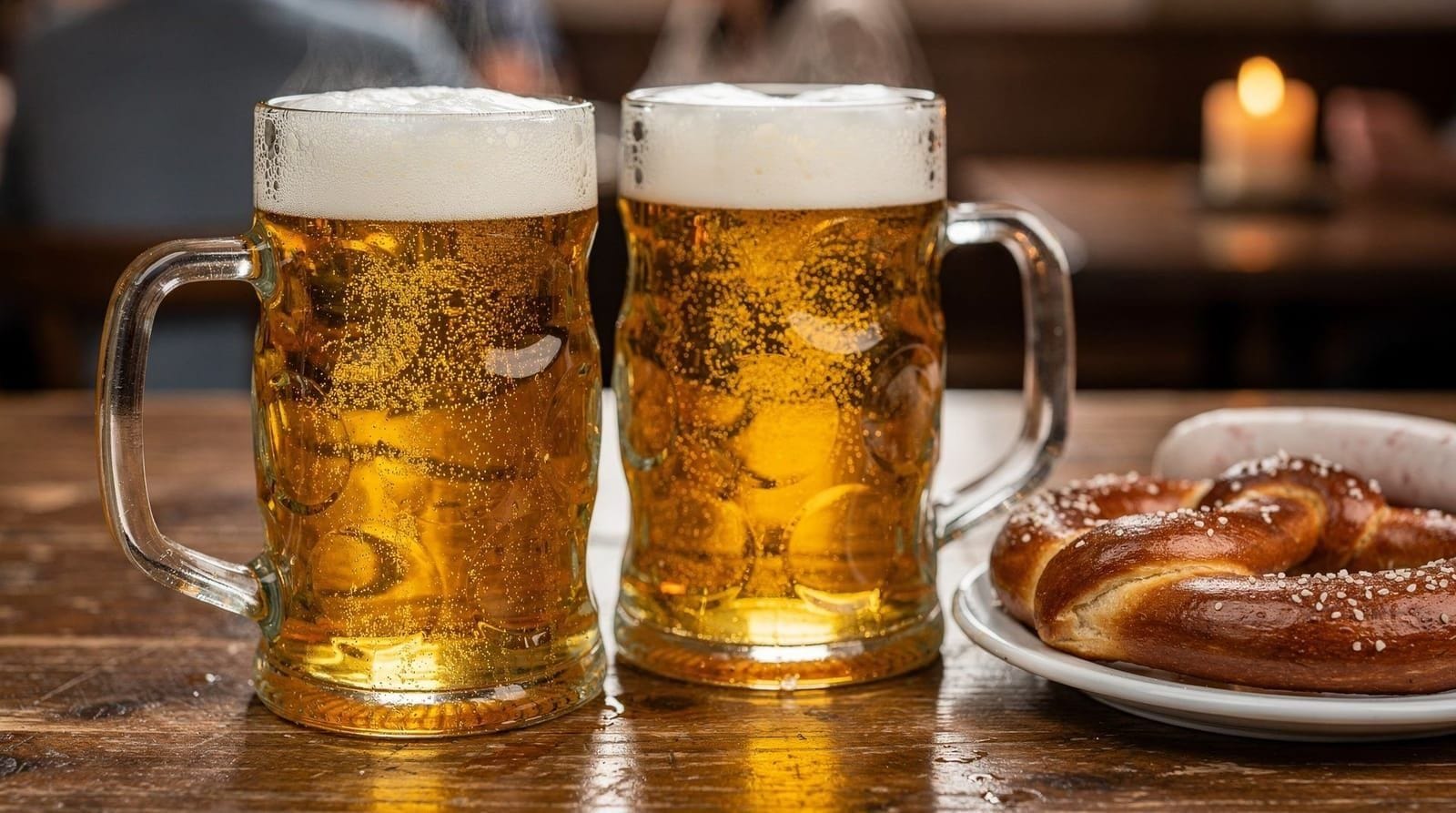
Beer prices (2026): Regular beer halls in Munich charge €8–11 for a Maß. The Hofbräuhaus sits at the top of that range at €11.10. Augustiner venues are slightly lower at €9.80–10.20. Paulaner and Löwenbräu venues run €10–10.50. Hacker-Pschorr and others fall similarly. At Oktoberfest, the same beers cost €15.70–€16.50 per Maß — a premium of roughly 50% that reflects the enormous operational cost of running festival tents and the captive demand.
Table sharing: The communal table format is standard. If you see empty seats at a long table, ask “Ist hier noch frei?” before sitting. The only exception is tables marked “Stammtisch” — these are permanently reserved for regular local patrons (often members of associations, sports clubs, or long-standing friend groups). Sitting at a Stammtisch as a visitor is genuinely rude. The table will usually have a small plaque or a Stammtisch sign.
Tipping: Add €1–2 per Maß when paying. In practice, the standard is to round up to the nearest euro: if your bill is €21.40, hand over €23. Servers carry astonishing numbers of full steins and work very long shifts. Tipping adequately is part of the social contract.
Ordering: In beer gardens with self-service kiosks, you order and collect at the counter. In the main halls, table service is standard — wait for the server to come to you. Waving is acceptable, but snapping fingers is not. When the server asks “Noch a Maß?” (another litre?) you can nod or say “Ja bitte” or “Nein, danke.”
Language: Most servers in tourist-frequented halls speak English. In more local venues, basic German phrases get a warmer response. “Einmal Helles bitte” (one Helles, please) and “Die Rechnung bitte” (the bill, please) cover the essentials.
For a structured introduction to navigating Munich’s beer halls and brewery culture with a local guide: 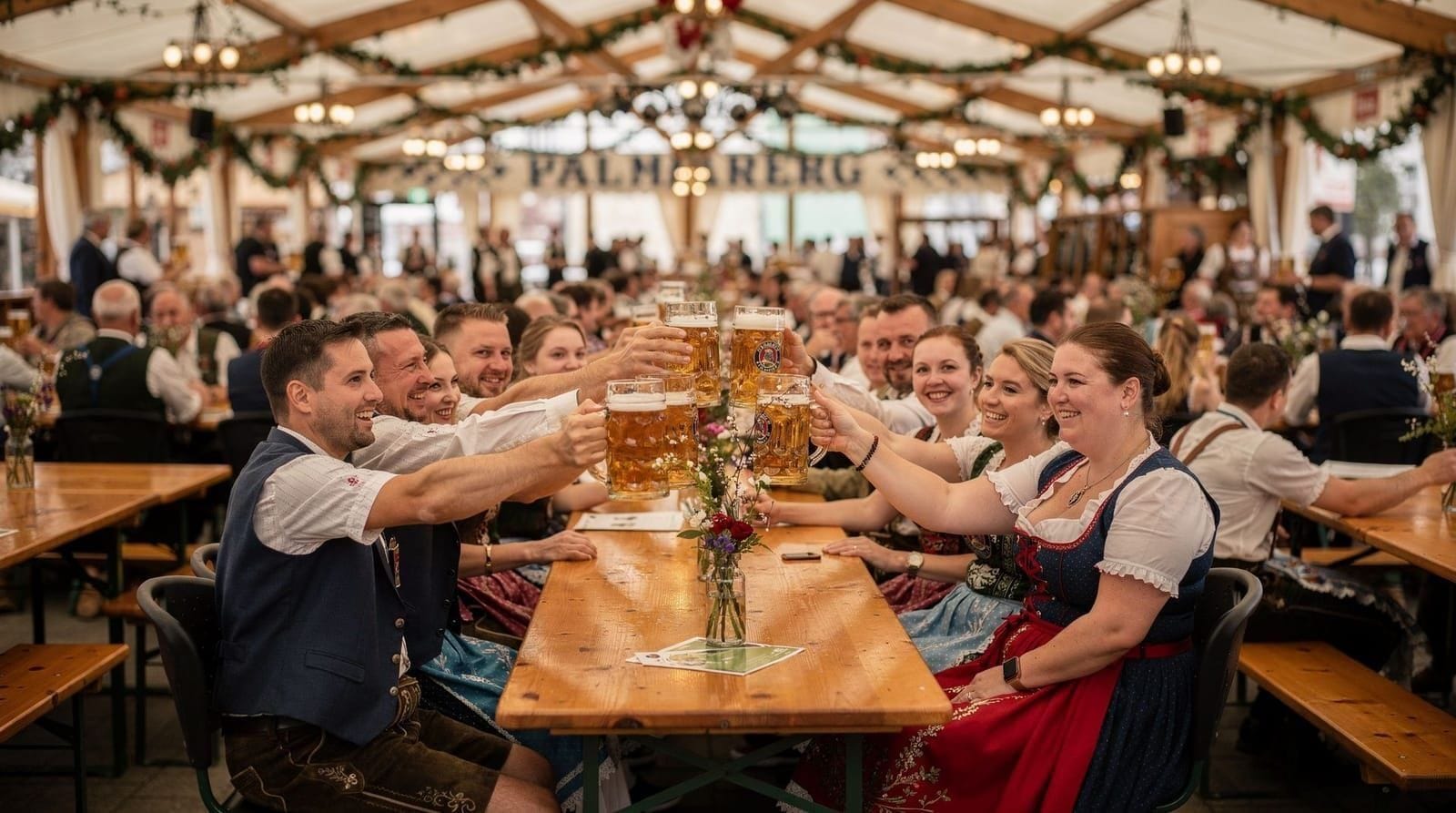 private beer hall hopping with 3-course menu and tastingCheck availability
Best times to visit
Summer evenings (June–August): The beer gardens are at their best. Augustiner-Keller fills its outdoor tables from 17:00. Arrive by 17:30 on weekdays or earlier on weekends to secure a garden seat.
Autumn (September–October): Oktoberfest season. All the major halls increase service and atmosphere. The weeks immediately around Oktoberfest are the most festive time of year for Munich beer culture overall. Expect elevated energy at Augustiner-Keller, Löwenbräukeller, and the others as well as at the festival grounds.
March (Starkbierfest): The Paulaner am Nockherberg hosts Starkbierfest with the Salvator tapping. Smaller and more local than Oktoberfest, but the strong doppelbock (roughly 7.5–9% ABV) requires a different approach to pacing. The cabaret shows that accompany the tapping ceremony are conducted in Bavarian dialect and are largely impenetrable to visitors who don’t speak German, but the atmosphere is worth experiencing.
Weekend evenings: Busy everywhere, particularly Friday and Saturday from 19:00. The Hofbräuhaus is genuinely overwhelming on Saturday nights. Better alternatives on weekend evenings: Augustiner-Keller (garden in summer, Festsaal in winter), Löwenbräukeller, Hacker-Pschorr Bräuhaus.
Weekday lunches: Calm, often quiet, and the best time to experience beer hall food without competing for a table. A Maß and a Schweinshaxe at 12:30 on a Tuesday in October is one of Munich’s quieter pleasures.
Combining beer halls with Munich’s food scene
Beer halls serve food, and some of it is excellent, but the repertoire is deliberately narrow: roast pork, sausages, dumplings, pretzels, and various preparations of pork and potato. For a broader picture of Munich’s food culture, the Viktualienmarkt food guide covers the city’s main market, which is steps from Marienplatz and surrounded by beer garden tables. The Viktualienmarkt has its own beer garden — outdoor, self-service, rotating brewery selection — that makes an excellent lunch stop.
For a guided tour combining beer and food, the Munich food tour guide explains the options across different neighbourhoods. The Munich walking tours section covers tours that include beer hall stops alongside historical sites.
Beer hall visits also combine naturally with Munich old town history — the Hofbräuhaus, Augustiner Stammhaus, and Viktualienmarkt beer garden are all within a ten-minute walk of Marienplatz and the key historical sites. The Munich 2-day itinerary integrates beer hall visits with old town sightseeing efficiently, and the Munich trip planning guide covers transport and neighbourhoods for first-time visitors.
For the comparison between Munich’s two most debated beer choices: 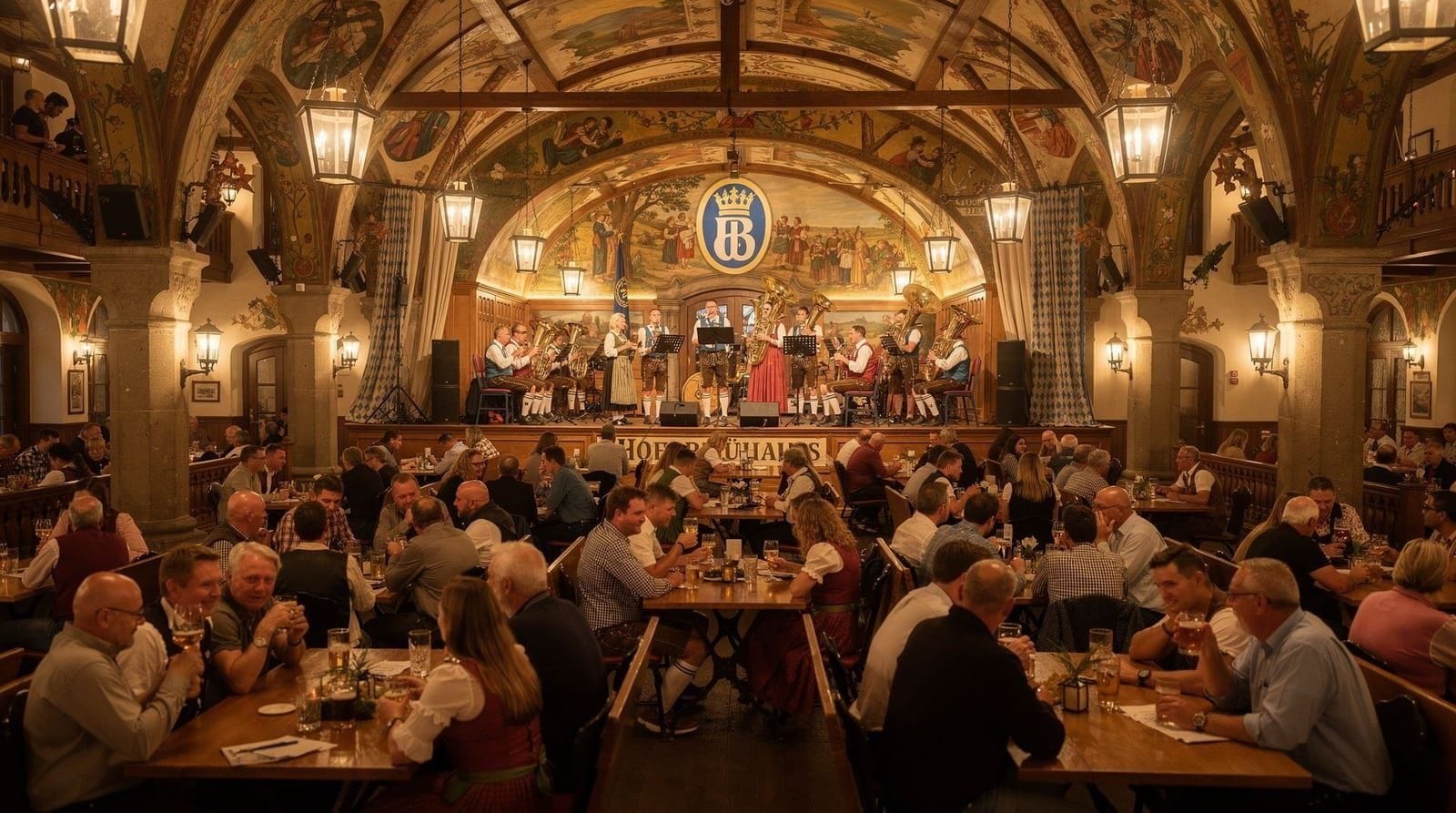 Bavarian beer walking tour with samples and foodCheck availability
The Augustiner vs Hofbräu question
The Augustiner vs Hofbräu comparison goes deeper into the differences between the two breweries and their flagship venues, but the short version for planning purposes:
Choose Augustiner (Stammhaus or Keller) if: You want the beer Bavarians actually prefer, slightly lower prices, a more local crowd, and a more genuine atmosphere. The Stammhaus is more convenient; the Keller is more atmospheric.
Choose the Hofbräuhaus if: You want the most famous Munich beer hall experience, don’t mind an overwhelmingly tourist crowd, and are visiting Munich once and want to say you’ve been. Accept the higher prices as the cost of the experience.
Both have their place in a Munich visit. The mistake is treating them as equivalents — they serve very different functions in the Munich beer hall ecosystem, and knowing which one suits your particular evening is the difference between a great experience and a mediocre one.
Quick comparison: which hall for which visitor
| Hall | Best for | Crowd | Maß price (2026) |
|---|---|---|---|
| Augustiner-Keller | Locals’ favourite, beer garden | Mixed, more local | €9.90 garden / €10.20 inside |
| Augustiner Stammhaus | Central location, honest prices | Mixed | €9.80 |
| Hofbräuhaus | The famous experience, once | Mostly international | €11.10 |
| Löwenbräukeller | Architecture, local crowd | Mostly local | €10.20 |
| Paulaner am Nockherberg | History, Isar valley views | Mostly local | €10.50 |
| Hacker-Pschorr Bräuhaus | Quiet city-centre option | Mixed, fewer tourists | €10.40 |
Beer hall etiquette in brief
Table service, not bar service, is standard indoors; the server comes to you and you pay at the end. Communal tables are shared with strangers as a matter of course, except any table marked “Stammtisch,” which is permanently reserved for regulars and should never be used by visitors. Tipping by rounding the bill up to the nearest euro is expected. The Munich beer hall etiquette guide covers this in full, including the Prost toasting ritual and what to do if you accidentally sit somewhere you shouldn’t.
Beer halls beyond the six breweries
The venues above are the flagship halls of Munich’s six Oktoberfest-authorised breweries, but the city has a wider beer hall scene worth knowing about. Neighbourhood Wirtshäuser without a major brewery name attached often serve excellent beer from smaller producers and have a genuinely local clientele that the flagship venues, by their scale, cannot replicate. If you’re staying more than a couple of days, mixing one or two of the famous halls with a neighbourhood Wirtshaus gives a fuller picture of Munich’s drinking culture than the flagship circuit alone. Ask your accommodation for a nearby recommendation — this is one area where local advice consistently beats guidebook lists.
Frequently asked questions about Munich beer halls
What is the difference between a Bierkeller, Wirtshaus, and Bräuhaus?
A Bierkeller (beer cellar) originally referred to the underground cellars where beer was stored — the beer garden above was a secondary development. Today the term is used loosely for large beer hall complexes with garden space. A Wirtshaus is a traditional inn or tavern, generally smaller and more neighbourhood-oriented. A Bräuhaus (brew house) indicates a venue directly connected to a working brewery. In practice, the terms overlap and are used interchangeably at many large Munich venues.
Can I bring my own food to Munich beer gardens?
Yes — but only in beer gardens that have a self-service kiosk rather than full table service, and only if the garden’s rules permit it. Augustiner-Keller historically permitted visitors to bring their own food to garden kiosk areas (a very old Munich tradition). The rule is that you must purchase your beer from the venue. In recent years some venues have become stricter about outside food; check current rules when you arrive.
Is the Hofbräuhaus the most expensive beer hall in Munich?
At €11.10 per Maß, it is at the top end of Munich’s regular beer halls. Augustiner venues run €9.80–10.20 and represent better value for comparable or better beer. At Oktoberfest, all the major tents charge €15.70–€16.50 regardless of brewery — well above regular hall prices.
What food should I order at a Munich beer hall?
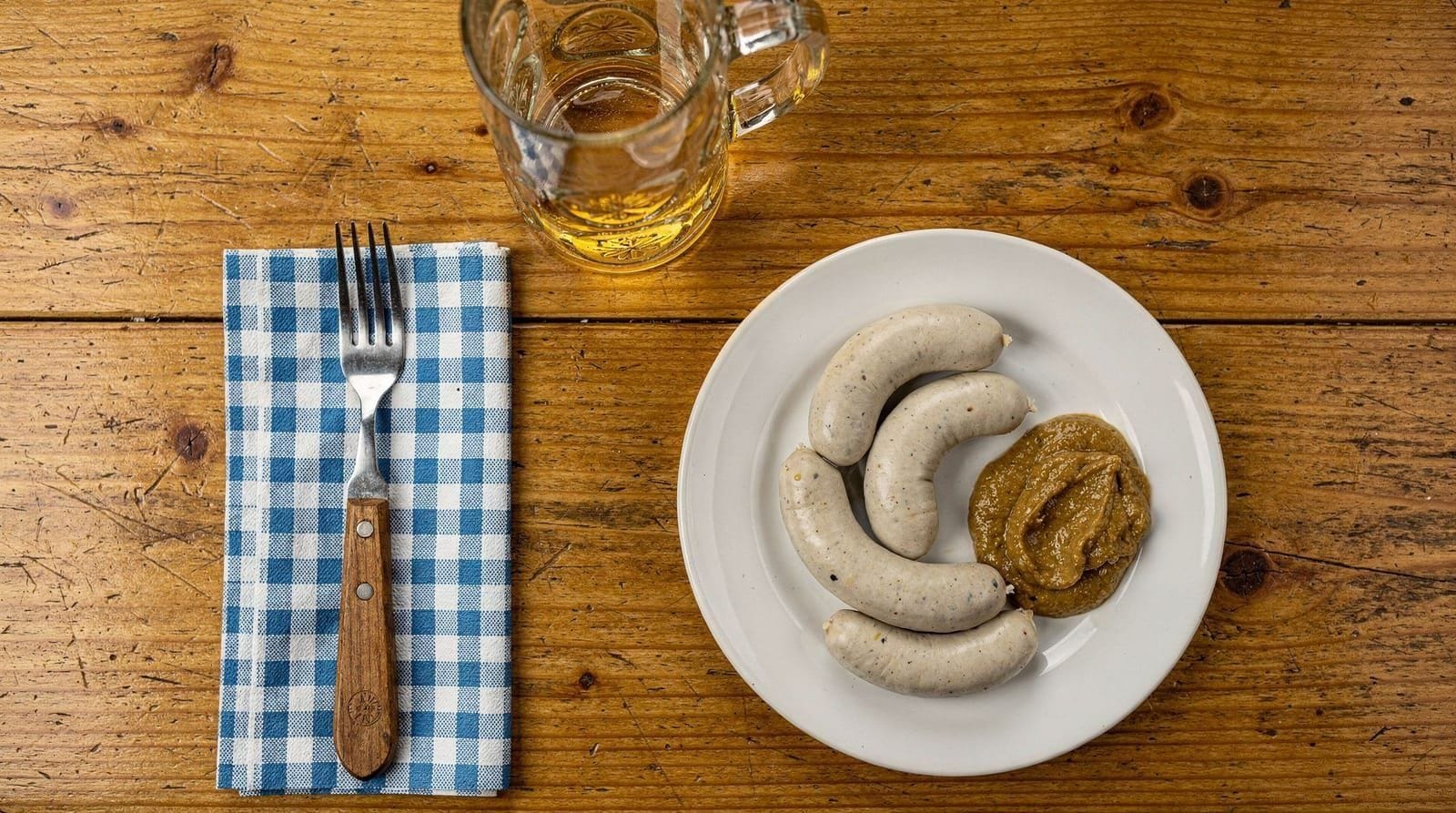
Schweinshaxe (roast pork knuckle) is the signature dish — substantial, flavoursome, and always served with Sauerkraut and potato dumplings (Knödel). Hendl (half roast chicken) is lighter and also excellent. Obatzda (a seasoned soft cheese spread) with a Brezn (pretzel) is the standard opening snack. Weißwurst (white veal sausage with sweet mustard, traditionally eaten before noon) is worth trying at least once. For an introduction to the full range of Munich food culture beyond beer halls, the Munich food tour guide covers the broader landscape.
How do Munich beer halls compare to Oktoberfest?
The main differences are price (beer is €5–6 cheaper per Maß in regular halls), scale (Oktoberfest tents hold thousands; a typical hall holds a few hundred), and atmosphere (Oktoberfest is a festival event with bands playing pop songs in oompah arrangements; beer halls have more varied musical programming or none at all). The beer hall etiquette guide applies equally to both settings. Beer halls offer a more sustainable regular experience; Oktoberfest is an event. If you are visiting in September or early October, combining both makes sense — the Munich autumn Oktoberfest season guide covers how to structure this.
Do Munich beer halls stay open year-round?
Yes. The major halls — Hofbräuhaus, Augustiner Stammhaus, Augustiner-Keller, Löwenbräukeller, Paulaner am Nockherberg, and others — operate year-round, with reduced beer garden hours in winter. The indoor halls are heated and fully operational. Starkbierfest in March and Oktoberfest in September/October are the peak festival periods, but any month offers good beer hall experiences. Munich budget guide has advice on seasonal pricing differences if cost is a factor.
Which Munich beer hall is best for a first-time visitor with only one evening?
Augustiner-Keller if the weather allows an outdoor evening, since it combines a genuinely local atmosphere with the classic beer garden format. If you want the single most famous experience regardless of crowd, the Hofbräuhaus is the honest choice — just go early or accept the tourist density.
Are Munich’s beer halls suitable for a first visit to the city, or should I see other sights first?
Either order works. Several beer halls, including the Hofbräuhaus and Augustiner Stammhaus, sit within a few minutes of Marienplatz, so a beer hall stop fits naturally alongside old-town sightseeing rather than requiring a separate trip. The Munich 2-day itinerary shows how this typically gets sequenced on a short visit.
Top experiences
Bookable activities with verified prices and instant confirmation on GetYourGuide.