Munich solo travel guide — everything you need for a great solo trip
Why Munich is one of Europe’s best cities for solo travel
Munich rarely tops the “best solo travel” lists in the way that Barcelona or Amsterdam do, but in practice it is one of the most welcoming cities in Europe for people traveling alone. The infrastructure is excellent, the city is safe, English is widely spoken, and — crucially — the beer hall culture is specifically built around communal seating, which means sitting down alone does not feel awkward in the way it might in a regular restaurant.
This guide covers everything you need: logistics, safety, social opportunities, budget management, Oktoberfest as a solo traveler, and specific tips for solo female travelers. It is based on what actually works, not generic advice.
| Safety | One of Europe’s safest major cities |
| Best base | Maxvorstadt or Schwabing |
| Cost | Around 60–85 EUR/day, hostel included |
| Meeting people | Free walking tours, beer gardens, hostel common areas |
| Getting around | U-Bahn/S-Bahn, safe at all hours including overnight |
Safety in Munich — the honest picture
Munich is one of the safest major cities in Europe by almost any measure. The crime rate is low, violent crime against tourists is rare, and the city centre is well-lit and well-policed. The feeling of personal safety walking around at night — in the old town, Schwabing, Maxvorstadt, and most other central areas — is genuinely high.
Some specific points worth knowing:
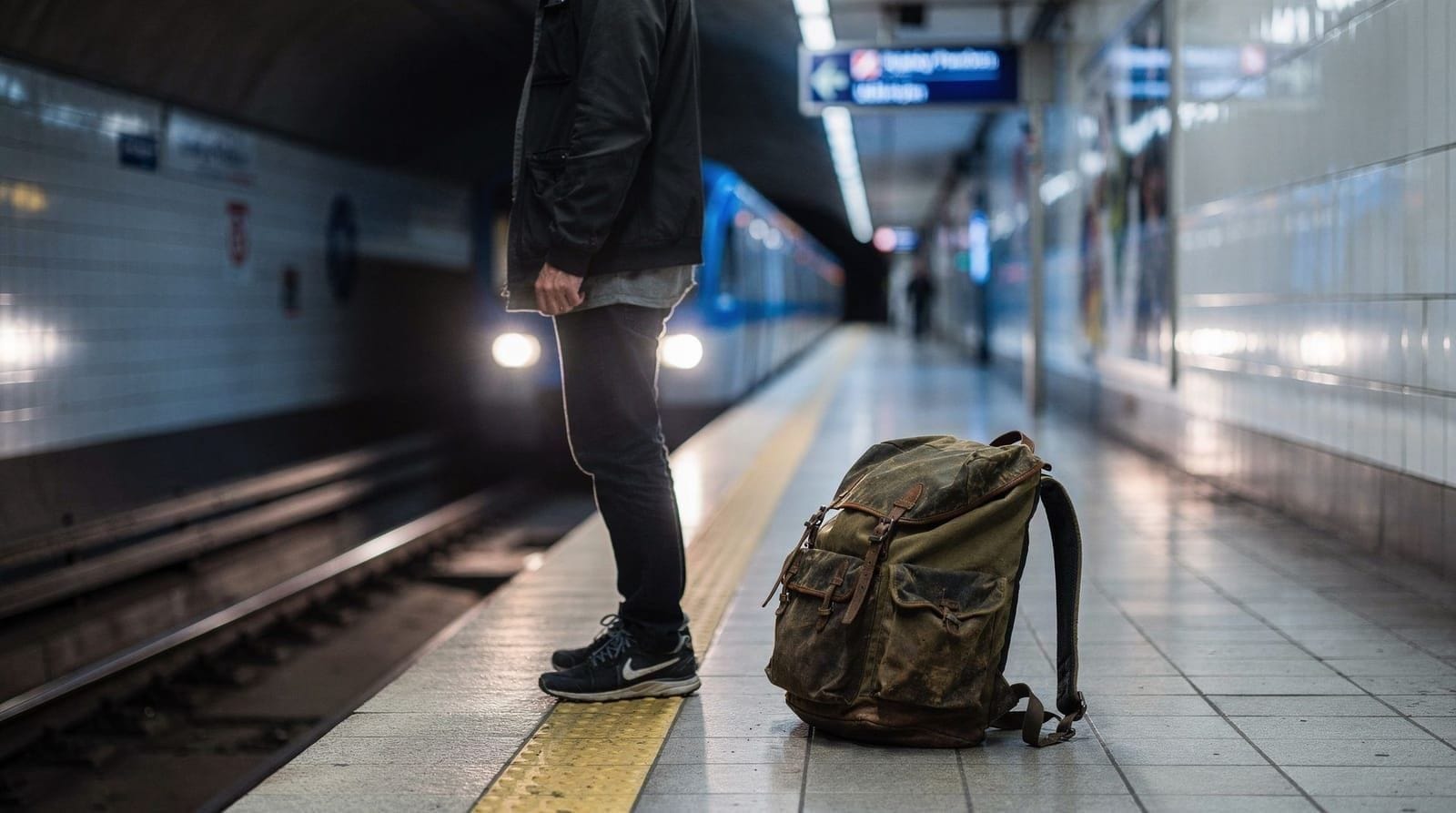
Public transport: The U-Bahn and S-Bahn are safe at all hours, including late at night. The Friday and Saturday night services run continuously. The platforms are clean and busy enough at most hours that you are not waiting alone in deserted stations.
Areas to be aware of: The area immediately around the main train station (Hauptbahnhof) has a higher concentration of street activity and some visible drug use on the square in front of the station. It is not dangerous in the conventional sense, but it can feel chaotic if you are arriving with luggage late at night. Walking a few blocks away makes an immediate difference.
Pickpockets: The main risk for any solo traveler in Munich is distraction-based theft at tourist sites, on crowded public transport (especially during Oktoberfest), and in the Hofbrauhaus. Use a zipped bag, keep your phone and wallet aware. This is a normal tourist-city risk and not a Munich-specific problem.
Solo female travel in Munich
Munich is consistently rated very safe for solo female travelers. Women traveling alone report feeling comfortable in bars, restaurants, beer halls, and public spaces at all hours. There is no significant street harassment culture, and most locals will ignore you completely (which in a large German city is actually reassuring rather than unfriendly).
Some practical notes:
Hostel culture: Munich’s hostels, particularly in Maxvorstadt and around the Hauptbahnhof, tend to have a social atmosphere that makes meeting people easy. The staff at most hostels are accustomed to solo travelers and will point you toward where people are gathering. Mixed dorms are standard; female-only dorms are available at several hostels if you prefer.
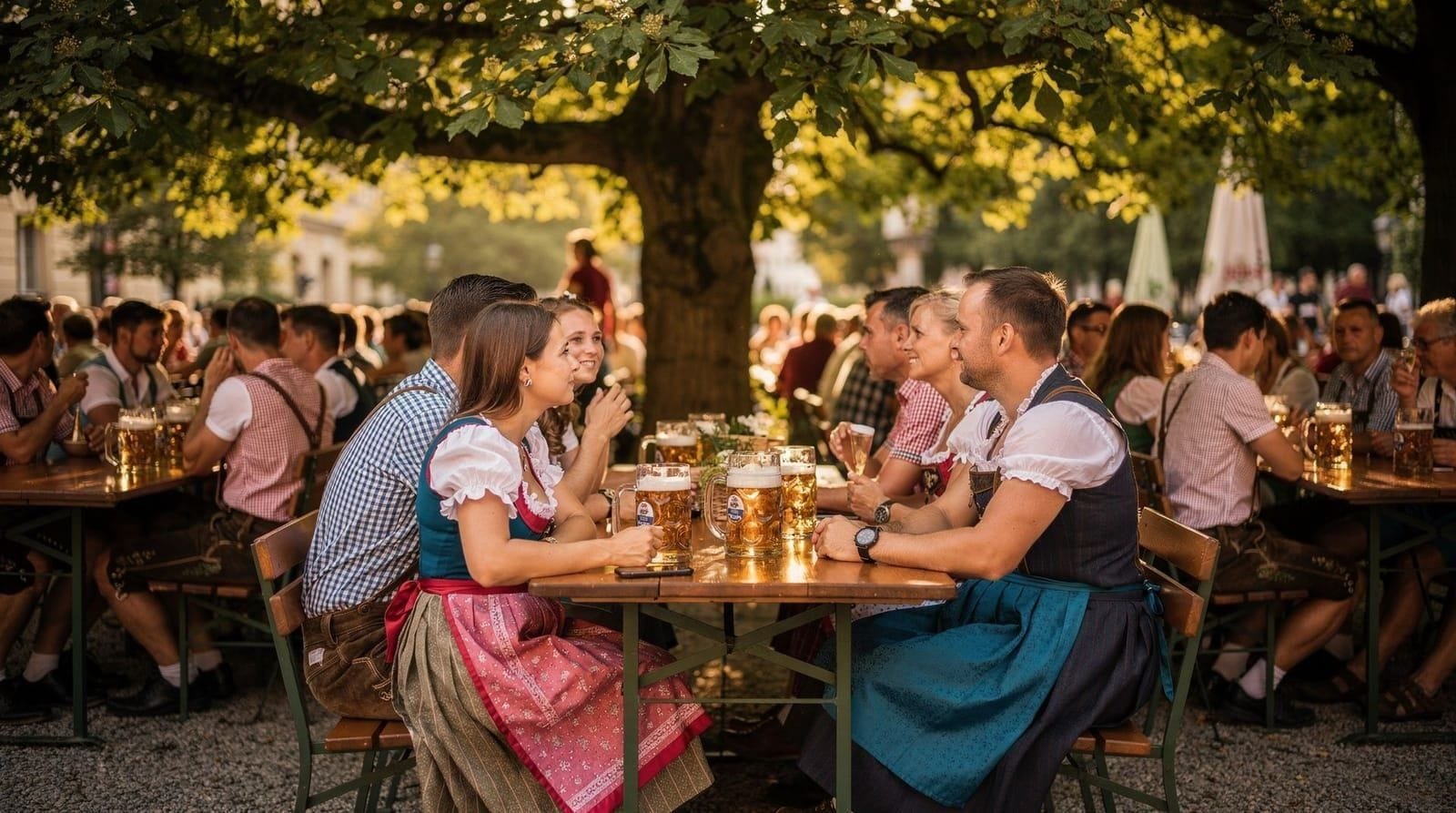
Beer halls and beer gardens: Going alone to a beer hall or beer garden is completely normal. The communal seating means you will often end up at a table with strangers — this is how Munich’s social culture works. A simple “Ist hier noch frei?” (Is this seat free?) opens most conversations.
Late night: If you are staying out late, public transport is safer than taxis in terms of personal safety (plus much cheaper). Munich’s night U-Bahn and S-Bahn run on weekends. Trusted taxi apps like FreeNow are reliable if you prefer a car.
Where to stay as a solo traveler
Neighbourhood choice matters more for solo travelers than it does for those traveling in groups, because proximity to social life and public transport affects how easy it is to get around without a car.
Maxvorstadt: The best neighbourhood for solo travelers on a budget. Close to the main museums, excellent transport connections, several good hostels, and a strong student and young professional population that keeps the area lively. See the full Munich neighborhoods guide for details.
Schwabing: Slightly more upscale, livelier nightlife, good for solo travelers who want to go out in the evenings. The English Garden is on your doorstep, and the neighbourhood has an easy, social feel.
Ludwigsvorstadt (around Hauptbahnhof): The most practical for transport but not the most atmospheric. Good for budget options; less good for people who want to feel embedded in Munich life. Fine for short stays.
Avoid: Staying in a hotel in a residential outer suburb with no nightlife or hostel common areas. Solo travel works best when your accommodation has social infrastructure.
Meeting people — where it actually happens
Munich is not the most instantly social city in Europe, but it has specific structures that make meeting people easy if you know where to look.
Free walking tours
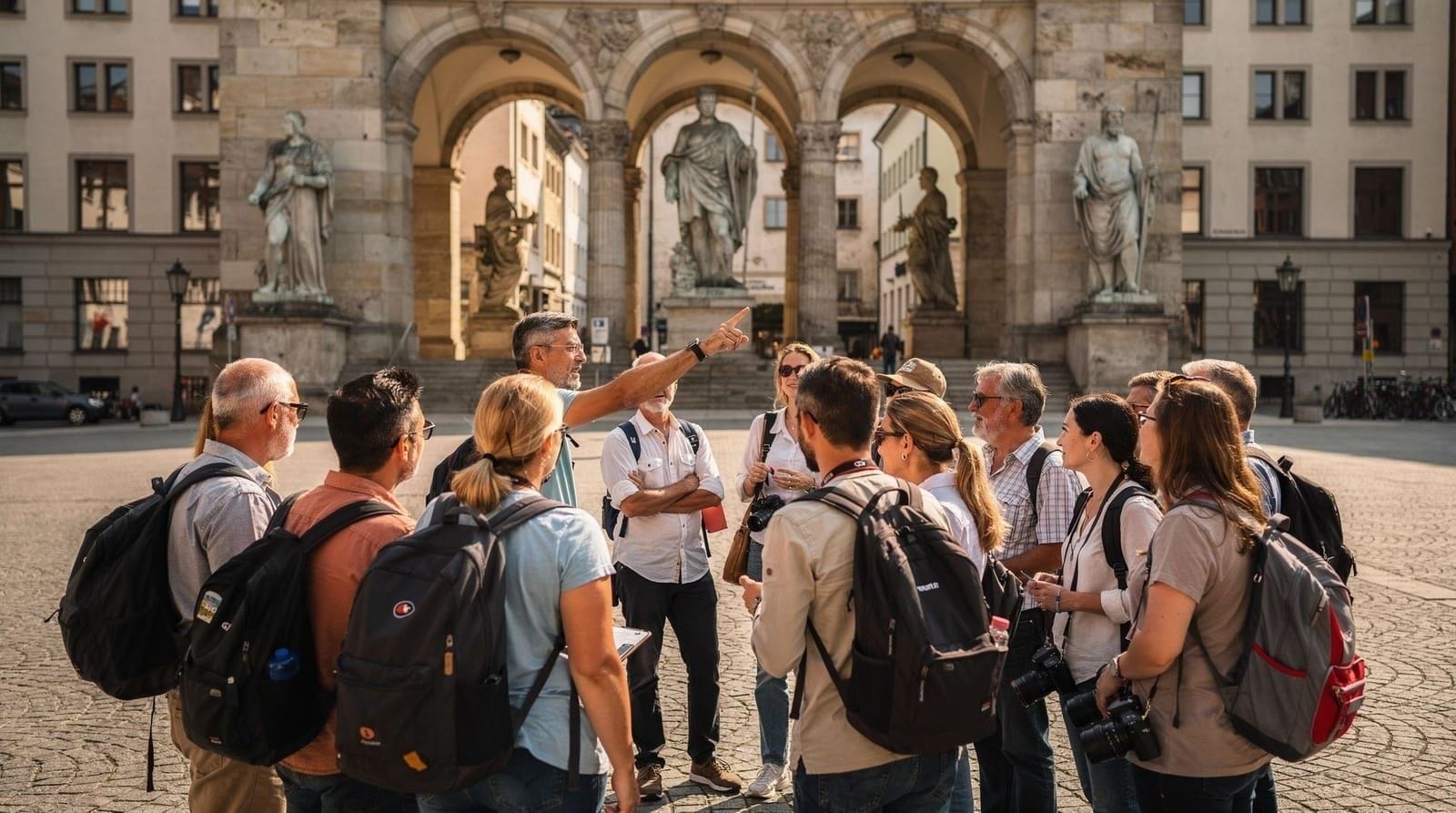
Free walking tours (tip-based) are consistently the best place to meet other solo travelers in any European city, and Munich is no exception. The tours run daily from Marienplatz, last 2–2.5 hours, and attract a mix of solo travelers and small groups. You will almost always end the tour with a few people suggesting lunch or a drink.
A guided old town walking tour is the best way to orient yourself and meet people simultaneously on your first day — it covers the major sights while giving you the context you need to make the rest of your stay make sense.
Beer halls and beer gardens
The Hofbrauhaus has a reputation for being overpriced and full of tourists, which is fair. But the communal seating culture works exactly the same way at better-value options: Augustiner am Dom, the Viktualienmarkt beer garden, and any of the larger English Garden beer gardens. You sit down at a long table, you buy a Maß or a half-Maß, and conversations happen naturally.
The English Garden beer garden guide covers the specific options and how to navigate them.
Hostel common areas and bars
Munich’s better hostels — particularly Wombats, Meininger, and Jaeger’s — have bar areas that function as genuine social venues in the evening. The bar-crawl culture is not Munich’s speciality in the way it is in Prague or Amsterdam, but hostel-organized events happen regularly and are worth joining on a first evening when you do not yet know anyone.
Day trips as social opportunities
Group day trips are another reliable way to meet people. Tours naturally create conversation — you are stuck in a vehicle or walking together for hours. A half-day Dachau guided trip or any of the castle or mountain day tours will put you with a group of other travelers for most of the day. Not everyone wants to be social, but the opportunity is there.
Budget tips for solo travelers
Solo travel has one unavoidable structural disadvantage: you pay for accommodation in singles, which almost always cost more per person than splitting a double. Everything else, however, can be managed carefully.
Accommodation: Hostel dorms are the obvious budget solution (28–40 EUR per night in 2026). Private rooms in hostels are cheaper than hotel singles and often have access to the same social areas. Guesthouses (Pensionen) are cheaper than hotels for private rooms.
Eating: Munich has excellent street food options that are both cheap and solo-friendly — the Viktualienmarkt for a quick lunch, Eataly Munich for sit-down at a counter, Turkish and Middle Eastern spots near the Hauptbahnhof for evenings. Sitting alone at a restaurant is entirely normal in Munich; you will not receive any odd treatment.
Drinks: Beer garden prices are significantly lower than beer hall prices, and the smallest acceptable beer in Munich (half a Maß, 0.5L) is still less than a pint in most other European cities. A Maß (1L) at the English Garden’s Chinese Tower beer garden runs approximately 5.40–5.80 EUR — the best value in the city.
Museum Sundays: Most of Munich’s state museums cost 1 EUR on Sundays. If you are there over a Sunday, do your museum day then.
Bayern-Ticket: For any day trip, the Bayern-Ticket is outstanding value — from 29 EUR for unlimited regional rail travel across Bavaria for one full day. See the day trips by train guide for which trips it covers.
Solo-friendly activities
Some activities work much better solo than others. In Munich specifically, these are reliably good:
Walking the city: Munich is a beautiful walking city. The old town, the Maxvorstadt museum district, the Isar riverside, and the English Garden can all be explored on foot without any planning. A good pair of shoes and a downloaded offline map is all you need.
Museums: Munich’s museum scene is world-class. The Deutsches Museum alone can absorb 4–6 hours; the Pinakothek museums could take an entire day. Solo museum visits are ideal — you set your own pace entirely.
The English Garden: The largest urban park in the world (larger than Central Park) is an extraordinary space for solo walking, reading, and people-watching. The surfers on the Eisbach wave at the garden’s entrance are a free Munich attraction that never gets old.
Day trips by train: Solo travelers are the best candidates for independent day trips — you can take the train when you want, stay as long as you like, and turn back when you have had enough. See the full best day trips from Munich guide for the full list.
Guided walking tours: As mentioned above, these are both socially useful and genuinely informative. Munich’s walking tour options range from free tip-based tours to specialist history walks and cycling tours.
Oktoberfest solo — the complete picture
Oktoberfest is arguably one of the best events to attend solo in Europe, and simultaneously one of the most chaotic. Here is the honest picture:
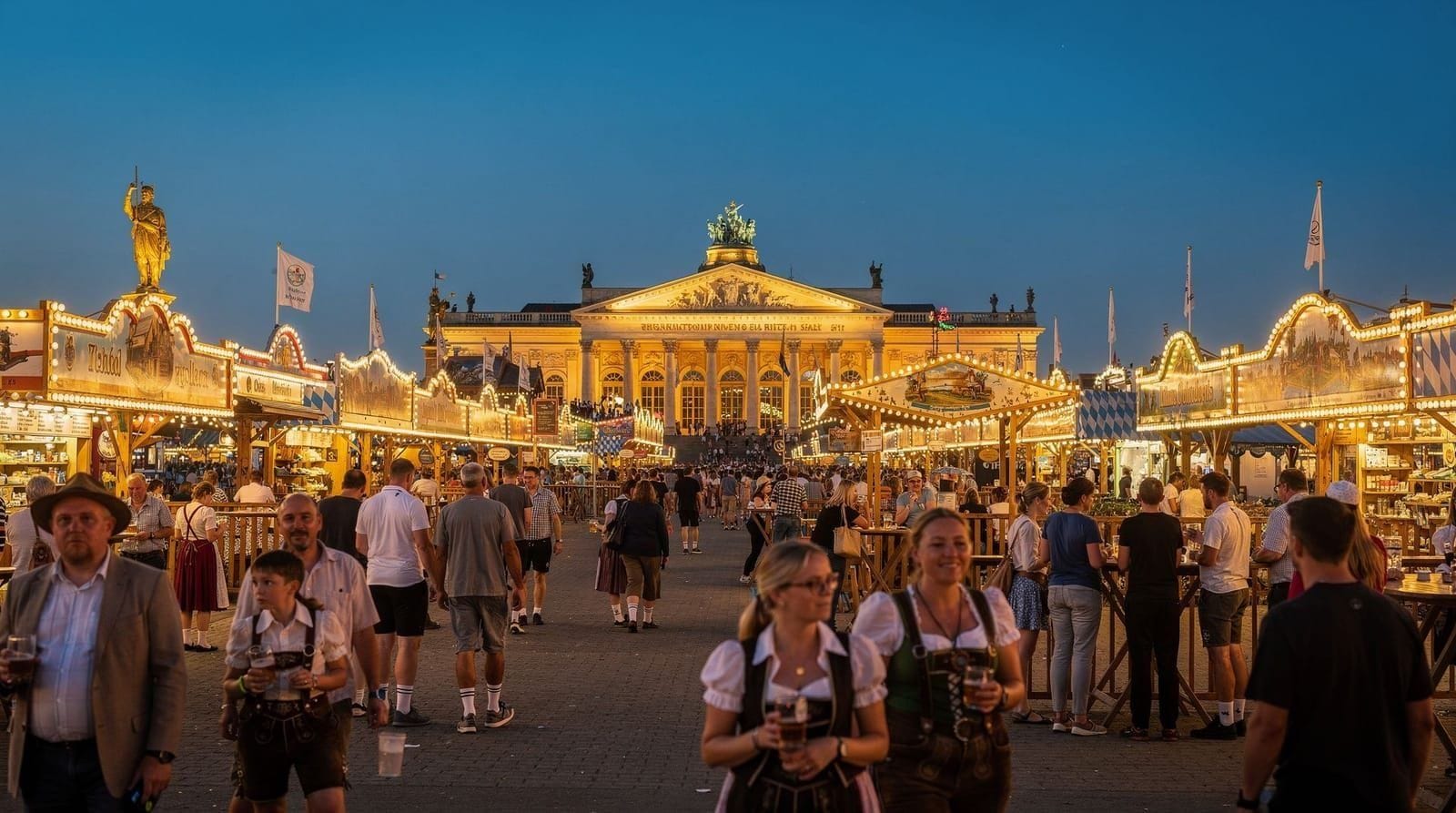
The social upside: The tents seat thousands of people at long shared tables. Solo travelers are welcomed at empty seats next to strangers. Conversations start easily, especially with other international visitors. Many travelers report that Oktoberfest was their most social experience of any trip — you simply cannot sit at a long bench with 10 strangers for three hours without talking.
The practical challenges:
- Getting a seat inside the major tents on weekends without a table reservation is extremely difficult. Reservations for the Oktoberfest tents open months in advance and fill quickly. Without a reservation, arrive before the tents open (10:30 on weekdays, 09:00 on weekends) and queue.
- Afternoons inside the tents during peak hours can feel overwhelming and very loud. The experience improves markedly after about 17:00 when some people leave.
- Beer is served by the Maß only (1 litre) inside the main tents. There is no half option. Pace yourself accordingly.
For full logistics, the Oktoberfest guide covers everything from tent recommendations to what to wear.
Solo female traveler note for Oktoberfest: Oktoberfest is an unusual environment that requires more situational awareness than Munich normally does. Large amounts of alcohol, dense crowds, and festival atmosphere are the mix. Specific practical advice: stay with hostel groups or other travelers you have met, use the official wristband system if your hostel offers it, keep your bag zipped at all times, and trust your instincts about sitting elsewhere if a situation feels wrong.
Solo neighbourhood comparison
| Neighbourhood | Vibe | Best for | Watch out for |
|---|---|---|---|
| Maxvorstadt | Student, museum quarter | Budget hostels, meeting people | Quieter at night than Schwabing |
| Schwabing | Upscale, lively evenings | Nightlife, English Garden access | Slightly pricier than Maxvorstadt |
| Ludwigsvorstadt | Practical, near Hauptbahnhof | Transport convenience, short stays | Less atmospheric, busier station area |
| Glockenbachviertel | Bohemian, dense bar scene | A first solo night out | Fills late; quieter before 9pm |
Eating alone in Munich, practically
Munich makes solo dining unusually easy compared to many European cities, largely because of the beer hall and beer garden communal-seating tradition — sitting down at a shared table alone draws no attention at all. Beyond beer halls, the Viktualienmarkt is built for solo eating: you assemble your own plate from multiple stalls and eat standing or at shared benches, with no waiter interaction required. Traditional Gasthöfe are comfortable for a solo sit-down meal at lunch, when Mittagstisch menus are common and tables turn over quickly. For dinner, counter-seating spots — Eataly Munich among them — remove any awkwardness entirely. The one place solo dining feels slightly out of step is a formal restaurant like Tantris; if fine dining alone isn’t your preference, stick to the Gasthof and market circuit instead.
Handling the language barrier
Munich’s English proficiency is high. In tourist areas, restaurants, transport hubs, and any establishment dealing with visitors, you can operate entirely in English without difficulty. Younger Munichers in particular tend to speak excellent English.
Where language can be a minor issue:
- Older locals in outer neighbourhoods or traditional beer halls may have limited English. A phrasebook or Google Translate handles 95% of situations.
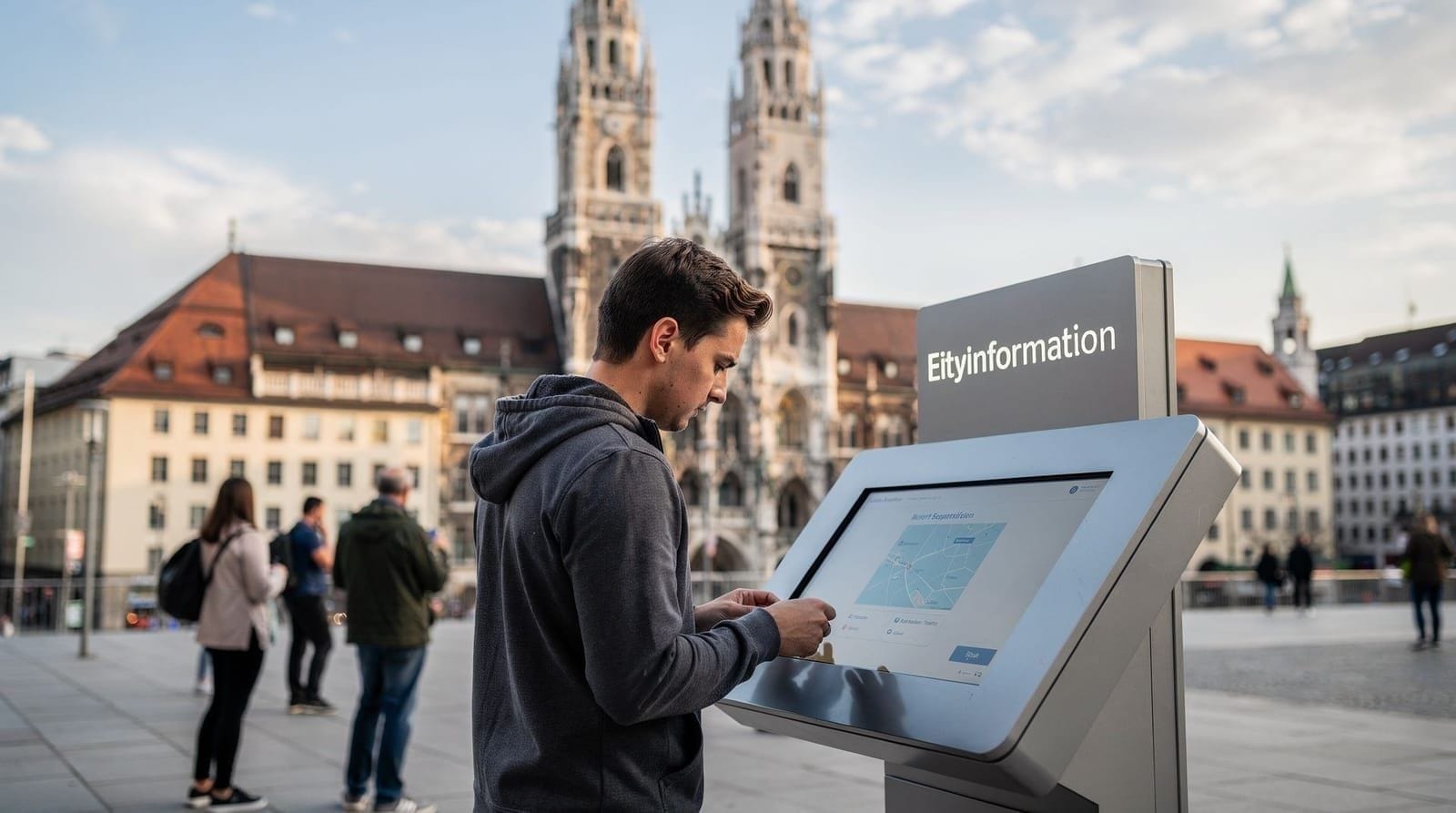
- Ticket machines: The MVV machines have English language options — see the Munich transport guide for how to navigate them.
- Supermarkets and bakeries: You can point and use a card. Knowing “Danke” (thank you) and “Bitte” (please) goes a long way.
Learning a handful of words of Bavarian greeting (“Servus” as hello/goodbye, “Gruss Gott” as a formal hello, “Prost” for cheers) will earn you more goodwill than any amount of fluent High German, because Bavarians appreciate visitors who engage with their distinct regional culture rather than treating Munich as generic Germany.
Final thoughts
Munich rewards solo travelers who engage with it on its own terms: who sit at communal tables, who use the excellent public transport rather than avoiding it, who visit Dachau as well as Neuschwanstein, and who take at least one day trip into the Bavarian countryside or the Alps. The city is structured in a way that makes all of this easy and affordable.
For your trip planning, start with the Munich trip planning guide and the Munich travel tips for the practical details, then use this guide to make the social side of a solo trip work.
Frequently asked questions about solo travel in Munich
Is Munich a good first solo trip destination?
Yes, it’s one of the more forgiving cities for a first solo trip: safe, English-friendly, compact enough to navigate without a car, and structured around communal seating that makes eating and drinking alone comfortable from day one.
Should solo travelers avoid Oktoberfest?
No — Oktoberfest is genuinely one of the better solo events precisely because of the shared-table format, though it requires more situational awareness than an ordinary Munich evening due to crowds and alcohol. Go with a plan: arrive early for a seat, stay aware of your surroundings, and consider joining a hostel group for your first visit.
How many days should a solo traveler spend in Munich?
Three to four days is the sweet spot: enough time for the old town, the English Garden, one museum, and one day trip (Dachau or Neuschwanstein), without the pressure of a rushed two-day visit. Solo travelers in particular benefit from the extra flexibility, since there’s no group schedule to compromise around.