Best time to go to Oktoberfest 2026: day-by-day breakdown
Munich: Oktoberfest tour with tent reservation, food and beer
What is the best time to visit Oktoberfest 2026?
Weekday afternoons in the first 10 days of Oktoberfest 2026 (September 19–30) offer the best balance of atmosphere and manageability. Opening weekend is the most atmospheric but extremely crowded. Weekdays from Tuesday to Thursday are easiest to navigate without a table reservation.
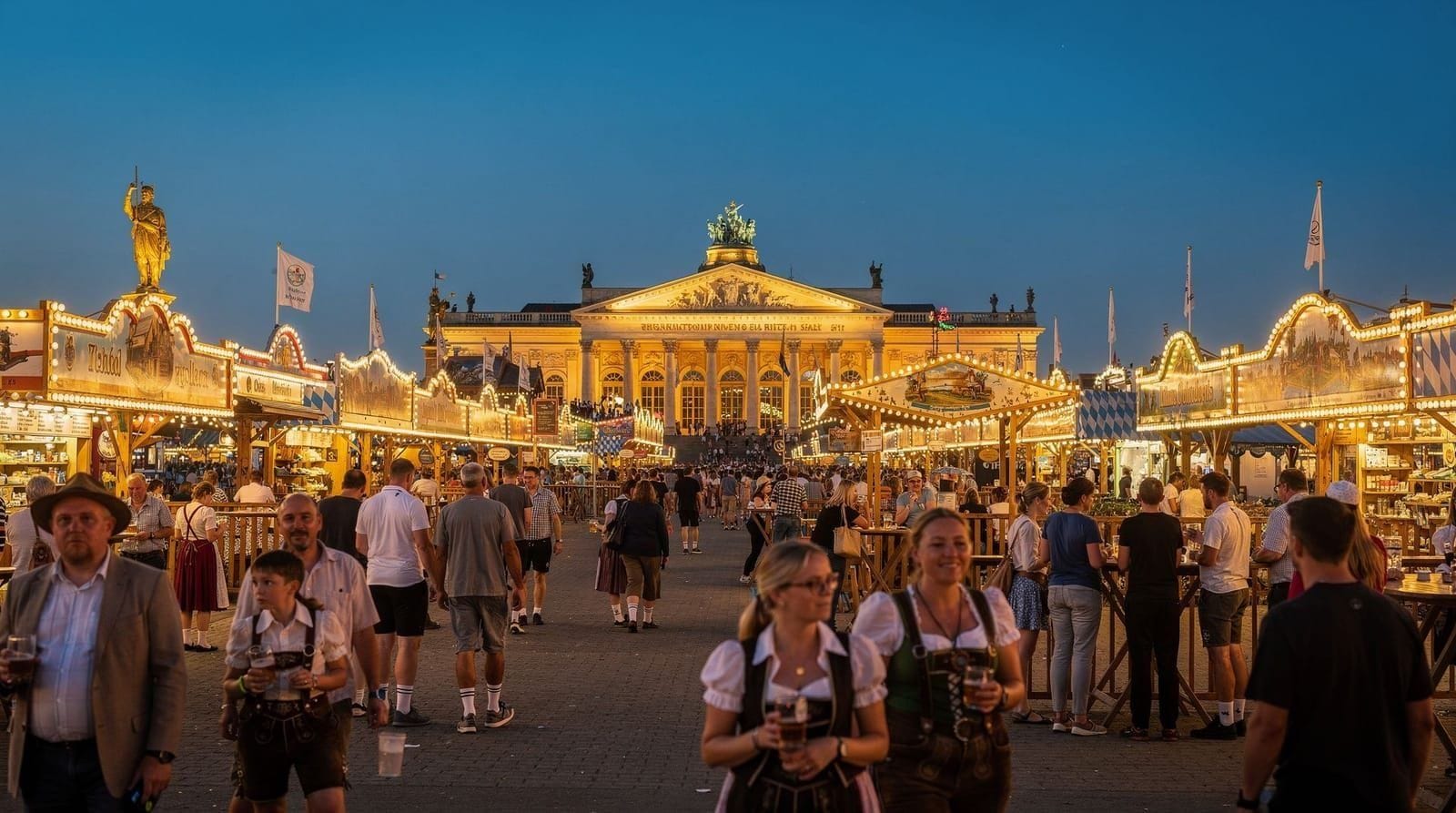
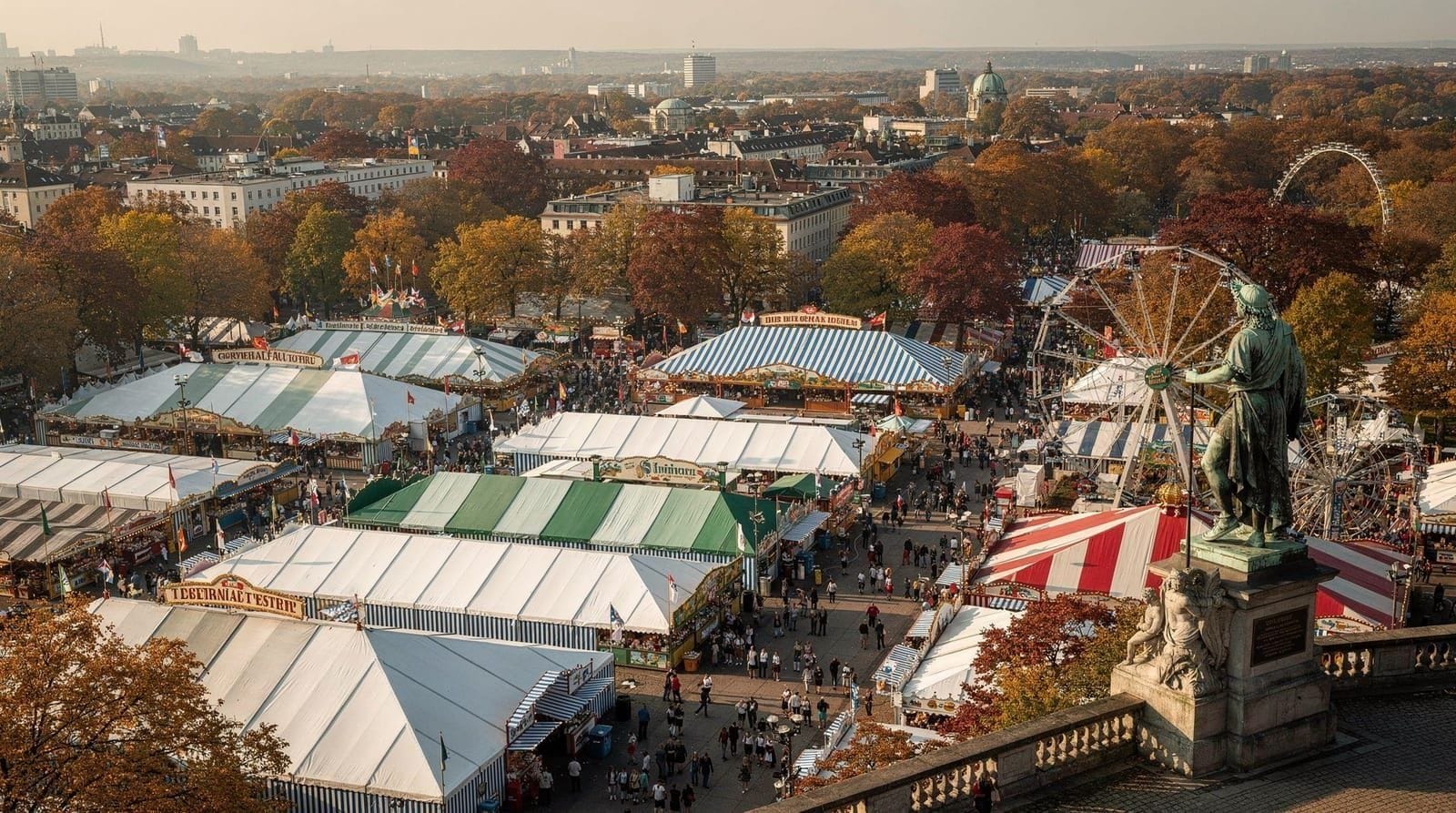
Oktoberfest 2026 runs from September 19 to October 4 — 16 days across two and a half weekends, during which roughly six million visitors descend on Munich’s Theresienwiese fairground for the world’s largest folk festival. The question everyone asks is: when within those 16 days is the experience best? The answer depends on what kind of Oktoberfest experience you are looking for.
This guide breaks it down day by day and period by period, with honest advice on what to expect at each phase of the festival.
| Where | Theresienwiese, Munich (U4/U5 to Theresienwiese) |
| Cost | Around €14–15/Maß; €100–150/person for a full day |
| Time needed | A half day minimum; a full day for tent-hopping |
| Getting there | U-Bahn U4/U5, or a 20-minute walk from Marienplatz |
| Best time | Weekday afternoons, first 10 days |
Oktoberfest 2026: at a glance
- Opening day: Saturday, September 19, 2026
- Closing day: Sunday, October 4, 2026
- Total duration: 16 days
- Beer service starts: 10:00 weekdays, 09:00 weekends
- Last orders: around 22:30 in most tents
- Beer price 2026: approximately €14–15 per Maß (1 litre), all six tents
- Location: Theresienwiese, Munich (U-Bahn U4/U5 to Theresienwiese)
Opening weekend: September 19–20
The first weekend of Oktoberfest is the most ceremonially significant and the most consistently atmospheric. On Saturday morning, the Lord Mayor of Munich taps the first barrel of Märzenbier in the Schottenhamel tent at noon (traditionally with 12 mallet strikes or fewer — fewer is considered better form), after which beer service begins across all tents simultaneously.
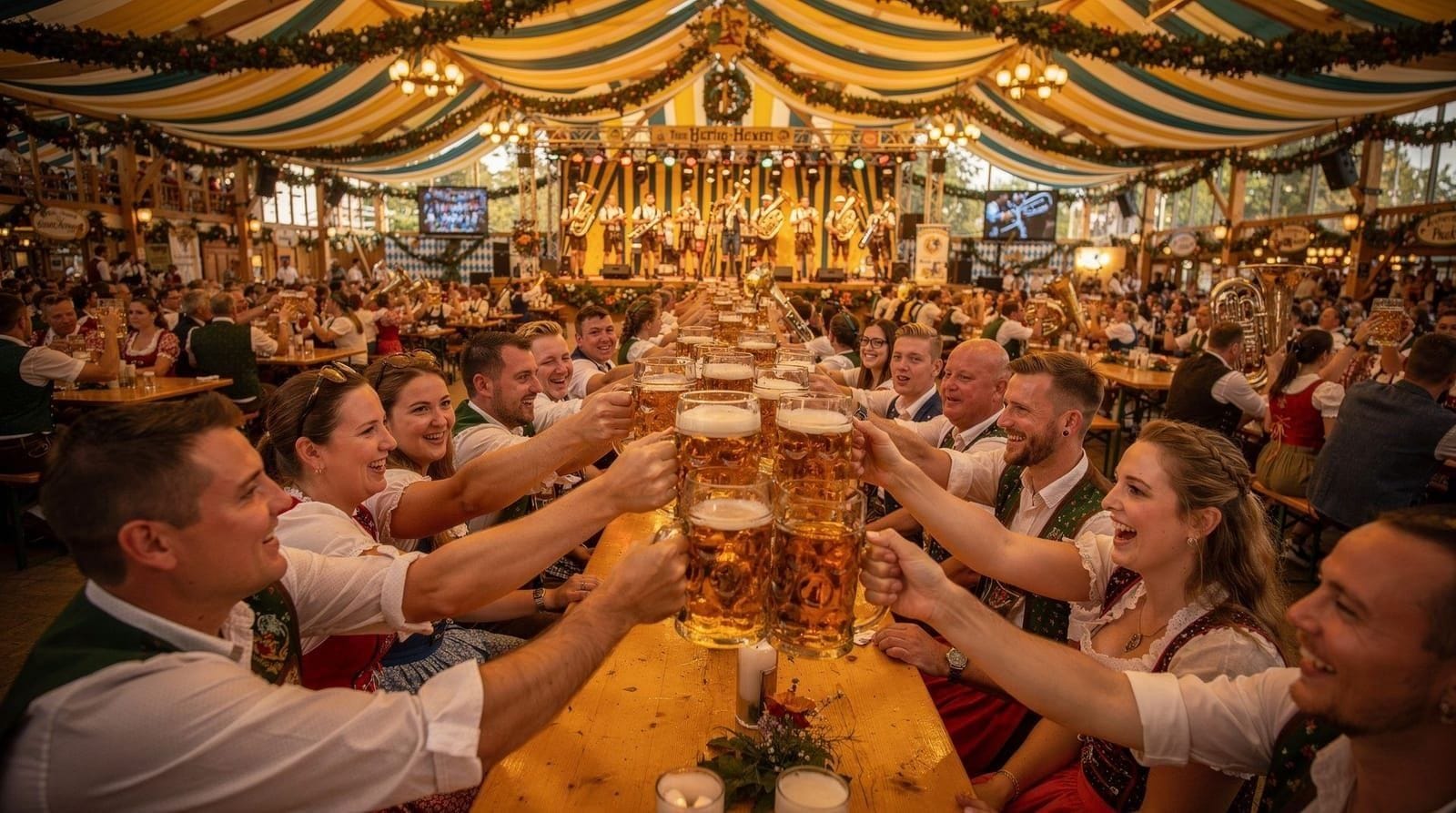
Atmosphere: Extremely high energy, festive, and genuinely celebratory. The opening weekend has a particular electricity that repeat visitors describe as the best of the festival.
Crowds: Very large. The fairground fills quickly after the noon opening, and by early afternoon the main tents are at capacity if you do not have reserved seats. Expect queues at tent entrances.
Recommendation: Opening weekend is for those who prioritise atmosphere over convenience and have either a table reservation or are happy to queue at tent entrances for standing room. If this is your first Oktoberfest, the opening weekend is an unforgettable experience — just plan accordingly.
First week weekdays: September 22–25
The weekdays in the first week of Oktoberfest represent the best value proposition for most visitors — particularly those who do not have a table reservation and want a manageable experience.
Atmosphere: Festive but less frenetic than weekends. The tents are full by midday but not at capacity. You can have real conversations, find seats, and actually taste your Märzenbier rather than simply consuming it. The crowd is more mixed — local Münchners, German visitors from outside Bavaria, and international tourists who have done their planning.
Crowds: Moderate. Arrive at tent opening (10:00) for walk-in seating without a reservation. By 11:30 the popular tents are filling up, and by 14:00 walk-in seating in the main tents is difficult. The outer fairground (rides, food stalls, smaller tents) remains accessible throughout.
Tuesday tip: “Ladies Day” (Wiesndienstag) is the name sometimes given to Tuesdays, when traditionally women dressed in Dirndl met at the festival. In practice the designation has faded, but Tuesday remains one of the quieter weekdays and a good day to visit without the pressure of weekend crowds.
Recommendation: The first week weekdays are the optimal time for visitors who want a genuine Oktoberfest experience without the opening weekend intensity. Tuesday through Thursday are the most manageable.
First weekend: September 26–27
The second weekend of Oktoberfest is typically very busy — slightly less chaotic than the opening weekend but still among the most crowded days of the festival.
Atmosphere: High energy. By this point the festival has hit its stride — the vendors are running smoothly, the bands have their repertoires in place, and the crowd knows the songs. The communal atmosphere in the tents is at a peak.
Crowds: Large. Table reservations are necessary for weekends in all major tents. Without a reservation, arrive at tent opening and be prepared to queue.
Recommendation: If you have a table reservation, the second weekend is an excellent time. Without one, you will spend a significant portion of your day managing the crowds rather than enjoying the festival.
Second week weekdays: September 29 – October 1
Similar in character to the first week weekdays but with slightly more international visitors as October approaches. The weather in late September can begin to turn cooler, which affects the outdoor areas more than the tent interiors.
October 1 (Thursday) is a useful target — the festival has been running for nearly two weeks, everything is operating at full efficiency, and it is the day before the final weekend rush.
Recommendation: A very good time to visit, comparable to the first week weekdays. Slightly cooler weather likely, but the tent interiors are climate-appropriate regardless.
Final weekend: October 2–4
The final weekend is the most intense period of the entire festival. The last Sunday (October 4, 2026) in particular draws enormous crowds of people doing the festival one last time before it closes at 22:30.
Atmosphere: Extremely high energy, sentimental in a Bavarian way — regulars who have been coming for decades, families doing their annual Wiesn tradition, and visitors determined to be there for the finale.
Crowds: The largest of the festival. The Theresienwiese fills to its maximum, and central Munich is very busy on Sunday afternoon.
Recommendation: Only if you are specifically interested in the closing atmosphere or if it is the only time you can visit. The experience is memorable but logistically demanding.
Timing within the day
Beyond which day to attend, the time of day within a visit matters enormously.
Opening (10:00 weekdays, 09:00 weekends): The best time for walk-in seating and a relatively relaxed first Maß. The tents are filling but not yet at capacity, service is responsive, and the atmosphere has the anticipatory energy of a day just beginning. This is the optimal window for arriving without a reservation.
Late morning to early afternoon (11:00–13:00): The main tents fill up quickly during this window on busy days. Walk-in seating becomes very difficult in popular tents by 12:30 on weekends.
Afternoon (14:00–18:00): The tents are at their busiest and loudest. If you have a reserved table, this is the prime social hour — the atmosphere is at maximum intensity. Without a reservation and without having arrived at opening, expect standing in the outer fairground areas.
Evening (18:00–22:30): Slightly quieter than mid-afternoon as some reserved table groups depart, creating openings for walk-in visitors — but this is not guaranteed on busy days. The atmosphere in the evening is less food-focused and more music-and-dancing oriented. Beer service ends at 22:30, the tents close at 23:30.
Table reservations: what you need to know
On weekends, a table reservation is not optional — it is the difference between getting a seat inside the tent and spending your evening in the external fairground. Reservations typically open in late winter (January–February) for the same year’s Oktoberfest and sell out for popular weekends within hours of going live.
How to book: Through each tent’s official reservation system (accessible via the official Oktoberfest website, oktoberfest.de). Each tent has its own allocation and booking process. You typically need to book food alongside the reservation, and a minimum food order per person is common (usually around €25–35 in food vouchers per person).
For visitors who find the official reservation process too complex or who have missed the early booking window, a guided tour that includes a reserved tent table is a viable alternative. Munich Oktoberfest tour with tent reservation, food and beer
Which tent for which visitor
The tent you choose matters as much as the day and time of your visit. A brief guide to the main tents by character:
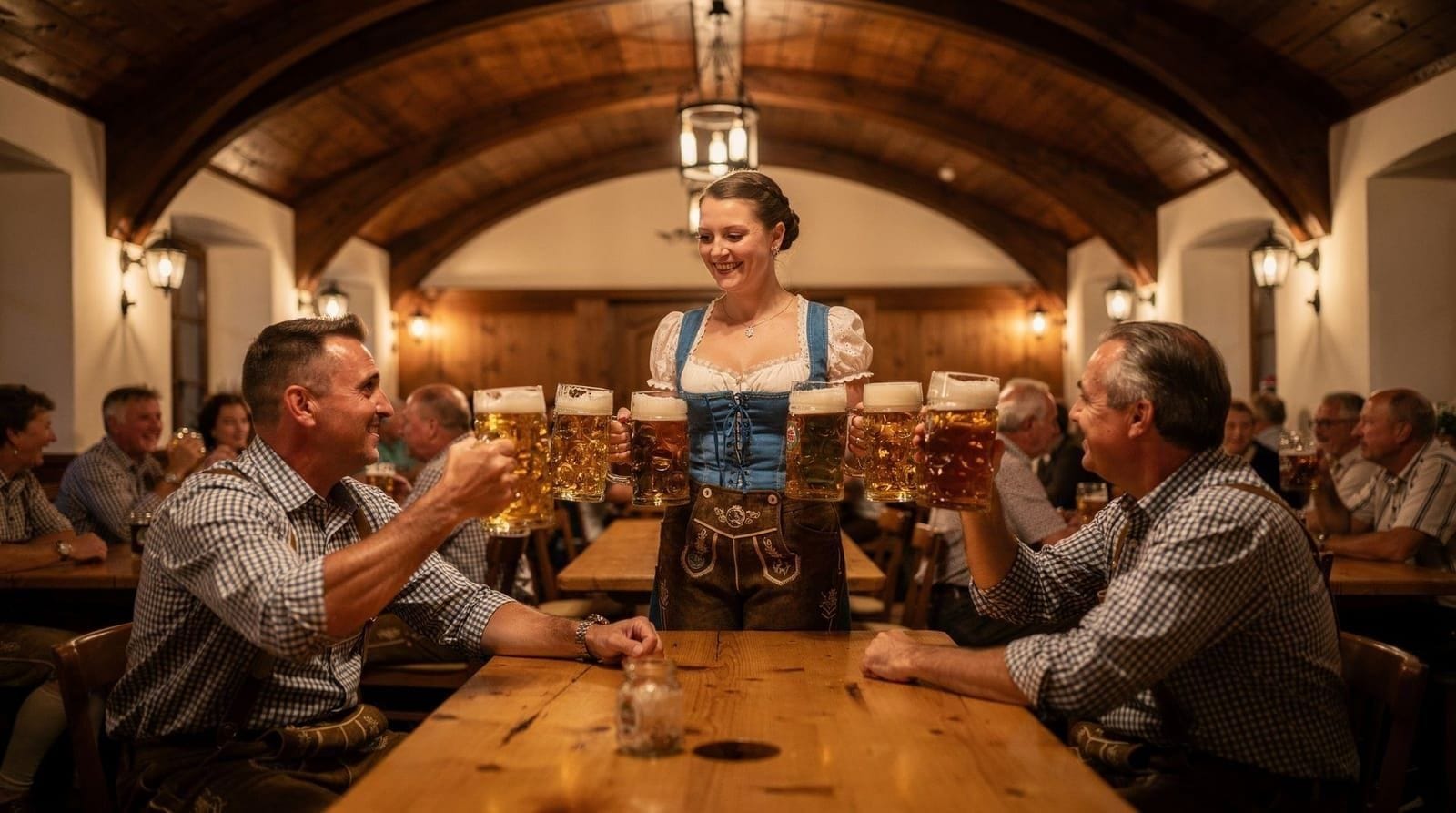
Schottenhamel — The oldest and most traditional tent, where the Lord Mayor taps the first barrel. Popular with Munich locals. Often described as the most authentically Bavarian tent.
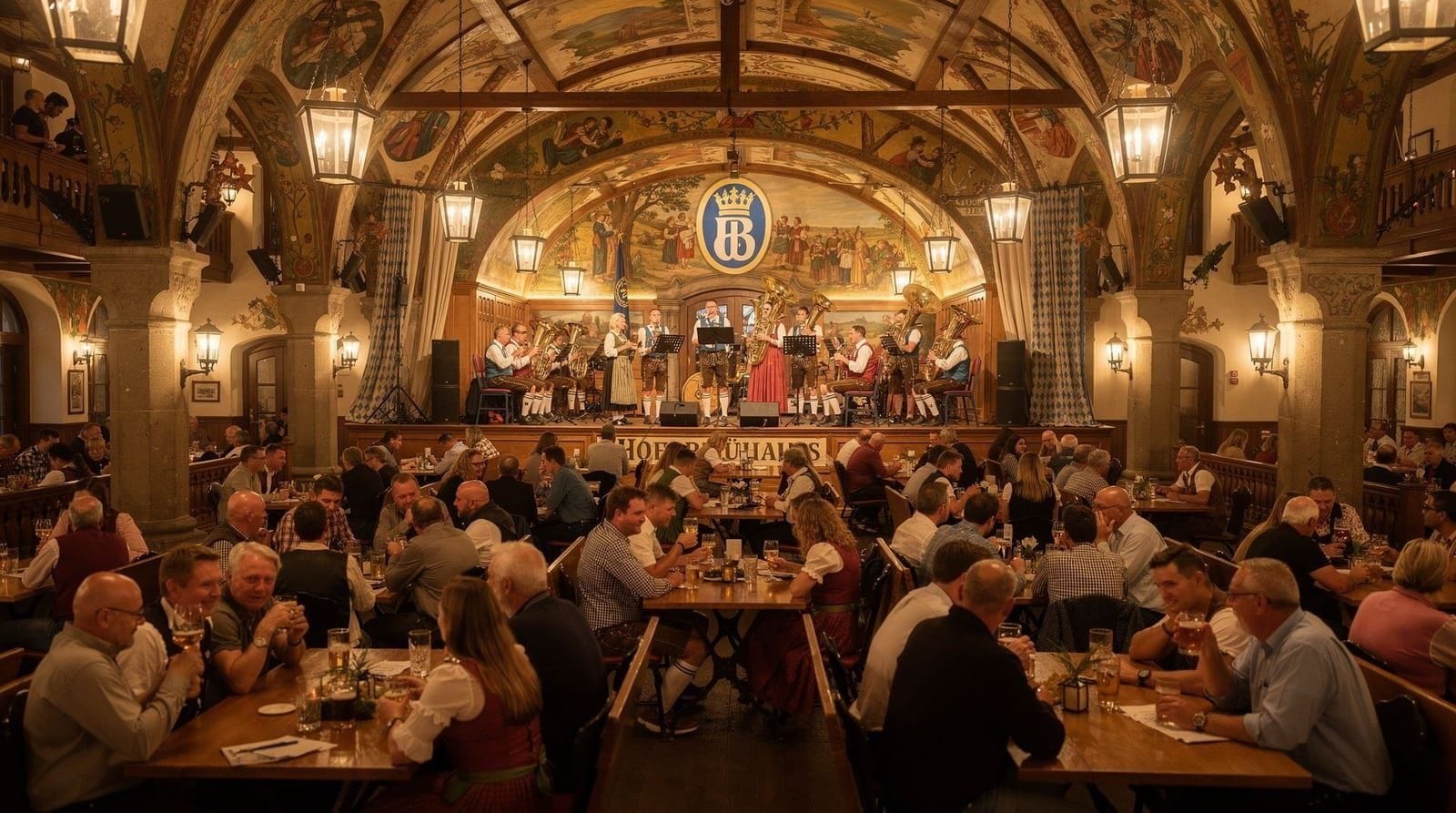
Hofbräu-Festzelt (HB) — The largest and most internationally famous tent. High energy, international crowd, loud music. Excellent for spectacle; less so for a quiet pint.
Augustiner-Festhalle — Wooden barrels rather than steel kegs, which many consider produces a superior pour. More popular with beer enthusiasts and people who have done their research. The Augustiner vs Hofbräu guide covers the beer differences in detail.
Hacker-Festzelt — Known as “Heaven of the Bavarians” (Himmel der Bayern) for its painted ceiling. Traditional Bavarian atmosphere, family-friendly during the day.
Weinzelt — For those who prefer wine. A smaller, slightly quieter alternative to the main beer tents.
Getting there and getting around
The Theresienwiese is served by the U4 and U5 U-Bahn lines (station: Theresienwiese). On busy festival days, trains run at significantly increased frequency. Expect crowded carriages heading to and from the festival, particularly in the afternoon.
Walking from the city centre is possible — about 20 minutes from Marienplatz via Sonnenstrasse. Cycling is popular but bike parking fills early on busy days.
The Munich public transport guide covers ticketing and tram/bus alternatives. The Munich budget guide addresses the significant cost implications of Oktoberfest hotel prices.
Weather at Oktoberfest: September vs October
Munich in late September is typically mild to warm — average daily highs of 17–20°C, with good sunshine and relatively low rain probability. Early October drops to 13–17°C and is more variable.
For outdoor fairground time, late September is clearly preferable. Inside the tents, temperature is regulated by the crowds and ventilation, and weather matters less. But the approach to the Wiesn, the outdoor food stalls, and the beer garden areas are significantly more pleasant in warm September weather.
Dress in layers. Evenings cool quickly even in September — a light jacket is appropriate from dusk onward. See the Munich packing guide for Oktoberfest-specific clothing advice, including the question of Dirndl and Lederhosen (see Munich beer hall etiquette for guidance on traditional dress).
Oktoberfest beer: what you are drinking
All six Oktoberfest breweries produce a special Märzenbier (also called Wiesn-Bier) for the festival — a fuller-bodied, slightly sweeter amber lager at around 6.2–6.5% ABV, distinct from the everyday Munich Helles. The name comes from the original March (März) brewing date when the beer was made and stored for autumn.
A Maß of Märzenbier in 2026 costs approximately €14–15 at all tents — prices are similar across breweries. You are not paying more for better beer; the price reflects the tent overhead, the entertainment, and the Oktoberfest experience itself.
For a guided tasting with context on the different brewery Märzenbier styles before or after the festival: Munich Oktoberfest Museum visit and beer tasting with sommelier
Practical planning summary
| Period | Crowds | Atmosphere | Walk-in seats? |
|---|---|---|---|
| Opening Sat (Sept 19) | Very high | Best of festival | No — need reservation |
| First week weekdays (22–25 Sept) | Moderate | Excellent | Yes, arrive at opening |
| Second weekend (26–27 Sept) | High | Very good | Very difficult |
| Second week weekdays (29 Sept – 1 Oct) | Moderate | Very good | Yes, arrive at opening |
| Final weekend (2–4 Oct) | Very high | Intense/sentimental | No — need reservation |
If you can only pick one day: the honest recommendation
Given a completely free choice across the 16 days, the strongest single-day pick for most first-time visitors is a Tuesday or Wednesday in the first week (September 22–23, 2026). This combines several advantages that rarely align on other days: the festival has settled into its rhythm after opening weekend chaos, weekday crowds are genuinely manageable for walk-in seating if you arrive at opening, weather is typically still warm, and the atmosphere is festive without being overwhelming.
If a table reservation is not a constraint (because you have booked one, or are joining a tour with guaranteed seating), the calculation changes — opening weekend or the second weekend both deliver a more intense, arguably more memorable experience, at the cost of significantly more logistics and crowd management. Munich Oktoberfest tour with tent reservation, food and beer
Combining Oktoberfest with the rest of a Munich trip
Most visitors do not spend their entire Munich trip at the Theresienwiese, and a well-planned itinerary treats Oktoberfest as one full day (or one afternoon and evening) within a longer stay. The Munich autumn and Oktoberfest season guide covers how to structure a 3-4 day trip around the festival, including which sights are quieter during festival week (most of the Altstadt and the museum quarter, since Oktoberfest visitors concentrate at Theresienwiese) and which get busier (transport near the fairground). Booking accommodation away from the immediate Theresienwiese area, but still on a direct U-Bahn line, is often more comfortable and considerably cheaper.
Frequently asked questions about the best time to visit Oktoberfest
Can I visit Oktoberfest without a reservation?
Yes, on weekday mornings by arriving at tent opening (10:00). On weekends this is very difficult. The outer fairground — rides, food stalls, smaller traditional tents — is always accessible without reservation regardless of day.
What is “Wiesn-Tipp” and does it help plan timing?
Wiesn-Tipp is a generic term for insider Oktoberfest advice. The most reliable: go on a Tuesday or Wednesday in the first 10 days, arrive at opening, and have Brezn and Weißwurst with your first Maß. This is the version of Oktoberfest that Munich locals actually do.
Is the first day of Oktoberfest worth attending?
Yes, if you have a table reservation or are prepared to queue at tent entrances for standing room. The noon barrel-tapping moment and the surge of atmosphere when beer service begins across the festival simultaneously is one of the great festival moments in Europe. It is not manageable without a reservation on a budget.
How much does a full Oktoberfest day cost in 2026?
Budget approximately €100–150 per person for a comfortable day: 2–3 Maß of beer (€28–45), food (€20–35), fairground rides optional (€5–20), and incidentals. Transport on the U-Bahn is relatively cheap (day ticket ~€9 with the Bayern-Ticket or MVV day pass). Hotel costs during Oktoberfest are the main budget wildcard — see the Munich budget guide.
What are the alternative beer festivals if Oktoberfest feels too overwhelming?
The Starkbierfest in March is the best alternative — lower crowds, lower prices, and excellent strong beer. The Frühlingsfest (April-May) at Theresienwiese is a smaller version of Oktoberfest with a more local crowd. The Munich beer festivals calendar covers all options through the year.
Can I attend Oktoberfest with children?
Yes. Children are welcome at the festival, particularly in the morning and early afternoon. Family Sundays in October have reduced ride prices. The tents themselves are primarily adult spaces, but children can enter with parents. Note that beer service is adults-only (minimum 16 for beer, 18 for spirits per German law).
Is Oktoberfest 2026 actually happening?
As of June 2026, Oktoberfest has been confirmed for September 19 – October 4, 2026, at the Theresienwiese as usual. For real-time updates and official announcements, check the official Oktoberfest website (oktoberfest.de) and the Munich city authority (muenchen.de).
Top experiences
Bookable activities with verified prices and instant confirmation on GetYourGuide.