Munich free walking tours — the honest guide to tip-based tours
Munich: old town guided walking tour in English
Are Munich free walking tours actually free?
No — and claiming otherwise is misleading. Munich's tip-based walking tours depart without a set price but guides work on tips alone and a €10–15 tip per person is the accepted norm for a 2-hour tour. Budget €15 and you have paid roughly the same as a cheap paid group tour. The difference is that you pay what you think the tour was worth after it ends, not before. Quality varies considerably by guide; the best tip-based guides are excellent, but there is no minimum standard as there is with paid operators.
What “free” actually means in Munich
The phrase “free walking tour” is one of the travel industry’s most persistent misnomers. In Munich, as in most European cities, these tours operate on a tip-only model: the operator charges no upfront fee, guides work without a salary from the company, and income depends entirely on tips from participants.
The system is not fraudulent — it is transparently described by most operators and understood by most participants. But “free” is clearly inaccurate. A reasonable tip for a 2-hour Munich walking tour is €10–15 per person. A group of 25 people each tipping €12 generates €300 for the guide. In a 6-hour workday, that is potentially €600 — but only if groups are full and tips are generous, which varies considerably by season and by luck.
This guide explains how the free tour model works in Munich, who the main operators are, what quality to expect, and when a paid tour is the more rational choice.
| Real cost | Around €10–15 tip per person for a 2-hour tour |
| Meeting point | Marienplatz, Neues Rathaus steps |
| Group size | 20–30+ (tip-based) vs 12–15 (paid) |
| Duration | Approximately 2 hours, ~3 km |
| Booking | Not required for tip-based; recommended for paid tours |
How tip-based tours work in practice
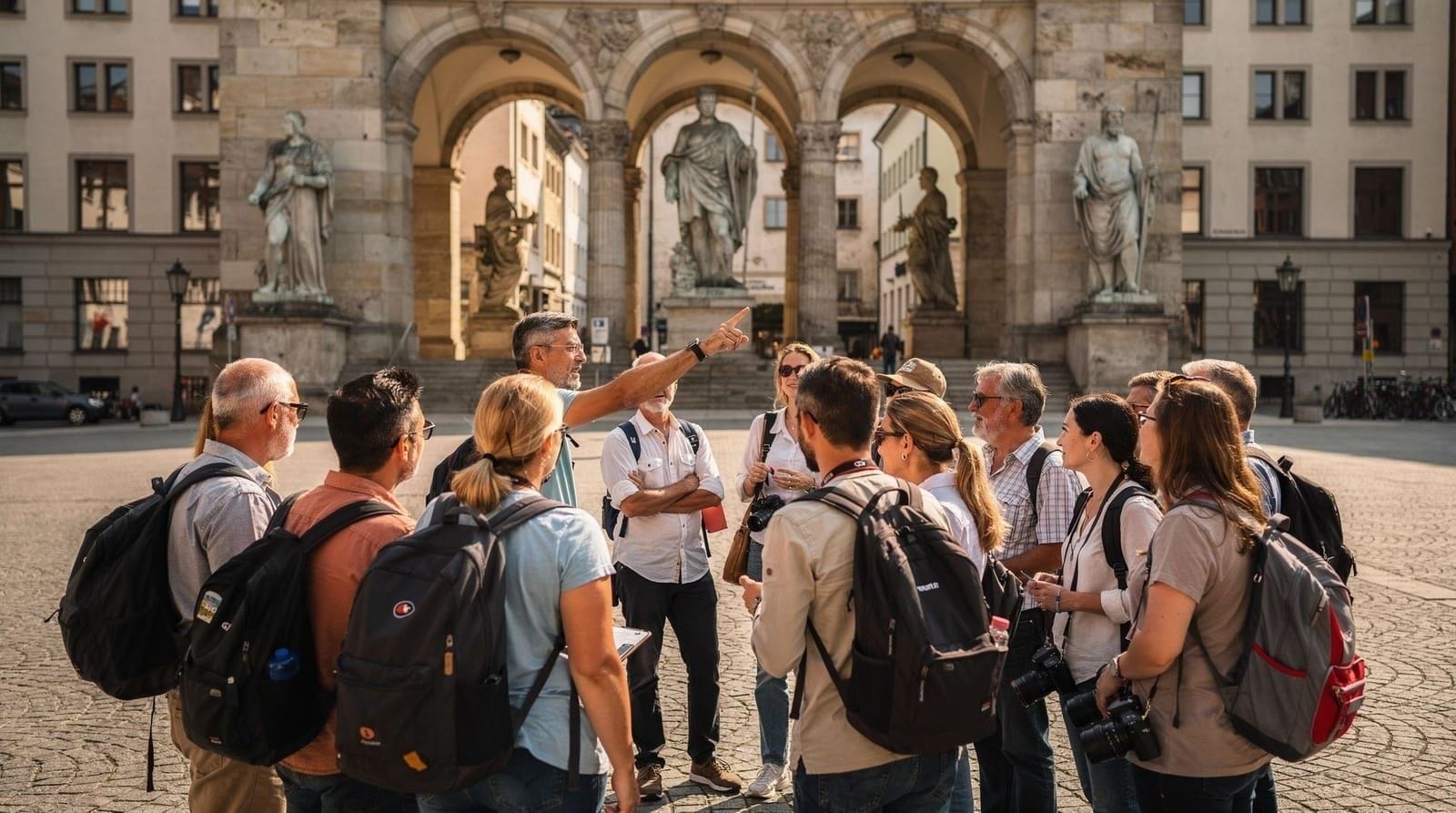
You arrive at Marienplatz (or another meeting point) at the stated time. A guide — often identifiable by a colourful umbrella, a company t-shirt or a hand-written sign — gathers participants and delivers a tour of approximately 2 hours. At the end, they deliver a brief speech about tips and participants decide how much to give, if anything.
The speech at the end is part of the format and is delivered by virtually every tip-based guide in Europe. Some are awkward, some are polished, but the substance is the same: “Pay what you think the tour was worth; I rely on tips to earn a living.” This is factually accurate. Whether you find it uncomfortable depends on your tolerance for the form.
Most participants tip. The social pressure of the group context means very few people tip nothing, even for mediocre tours. This is a known dynamic of the format.
Main operators in Munich
Sandemans Munich
Sandemans is the largest tip-based tour operator in Europe and has operated in Munich for over a decade. Their Munich tours depart Marienplatz at fixed times (typically 10am, 12pm and 2pm) and cover the standard old town circuit: Marienplatz, Frauenkirche, Viktualienmarkt, Hofbräuhaus exterior, Odeonsplatz.
What Sandemans does well: consistent schedule, reliable departure times, brand recognition for first-time backpackers who want a known entity, occasional excellent guides.
What Sandemans does less well: group sizes that regularly exceed 30 people in summer, variable guide quality (no in-depth vetting publicly stated), and a format that inherently includes upselling the company’s paid tours. The Third Reich material is covered superficially on the standard tour.
New Europe Tours
New Europe Tours (now part of the SANDEMANs New Europe group) effectively created the tip-based model in European cities starting in 2004. Their Munich operation is smaller than the main Sandemans brand but broadly similar in format.
Independent guides via GuruWalk
GuruWalk is a platform connecting independent tip-based guides with travellers. Munich has several active independent guides offering old town tours, Schwabing neighbourhood walks and specialist history tours. Group sizes are typically smaller (8–15 people) and guides tend to have more specialised backgrounds. The platform allows you to read guide profiles and recent reviews before choosing. Worth checking for less conventional routes.
Independent licensed guides
Several Munich city-licensed guides offer tip-based tours without affiliation to a major operator. These are typically found through the Munich Visitor Centre on Marienplatz or through hostel recommendation boards. They have passed the official Munich guide licensing examination and often have superior historical knowledge.
What free walking tours cover — and what they skip
A standard Sandemans or similar 2-hour tour covers approximately 3 km and the following sights:
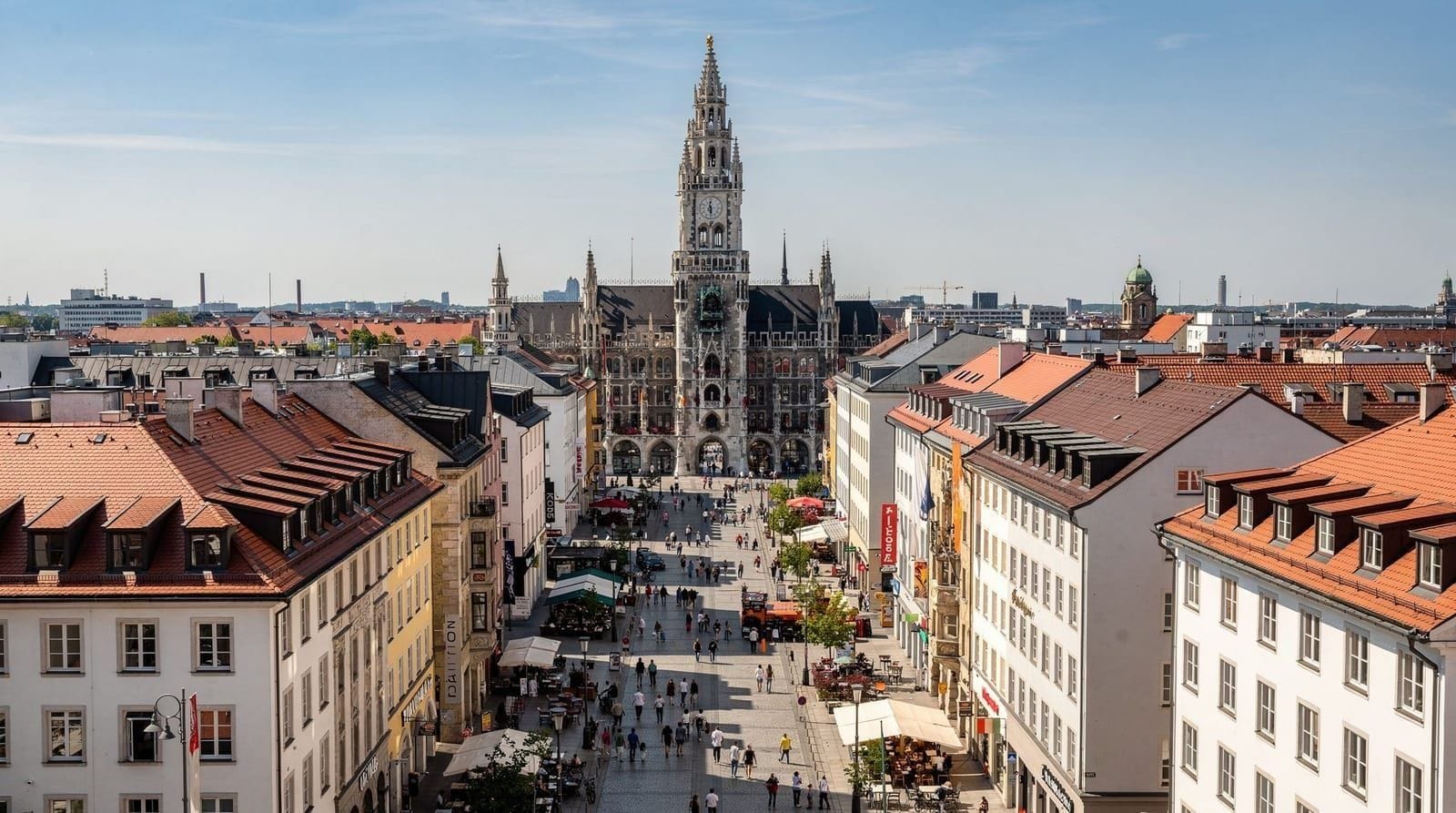
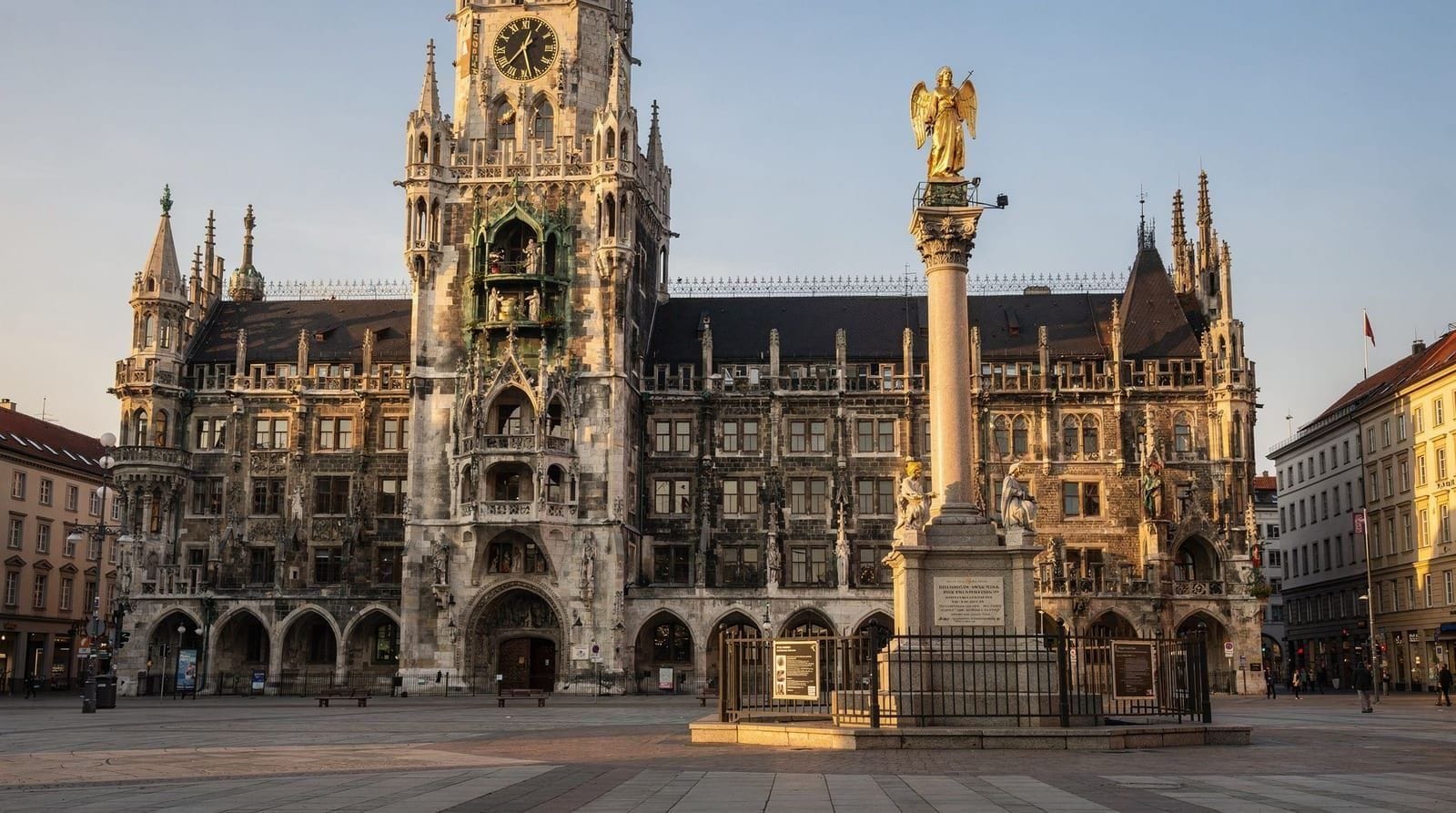
Marienplatz — The central square, Glockenspiel explanation, column history. This section is handled well by most guides because the visual props (the clock tower, the chimes) hold group attention.
Frauenkirche — Exterior and the legend of the Devil’s Footprint inside (the guide can take you in briefly). See our Frauenkirche guide for the detailed history.
Viktualienmarkt — The food market, usually a walking pass-through rather than a stop. The guide explains the history and the beer garden at the centre. For more on the market, see our Viktualienmarkt food guide.
Odeonsplatz and Feldherrnhalle — Where the 1923 Beer Hall Putsch ended. This is the single most historically significant stop on the tour and most guides handle it adequately, though the time pressure of a large group limits depth.
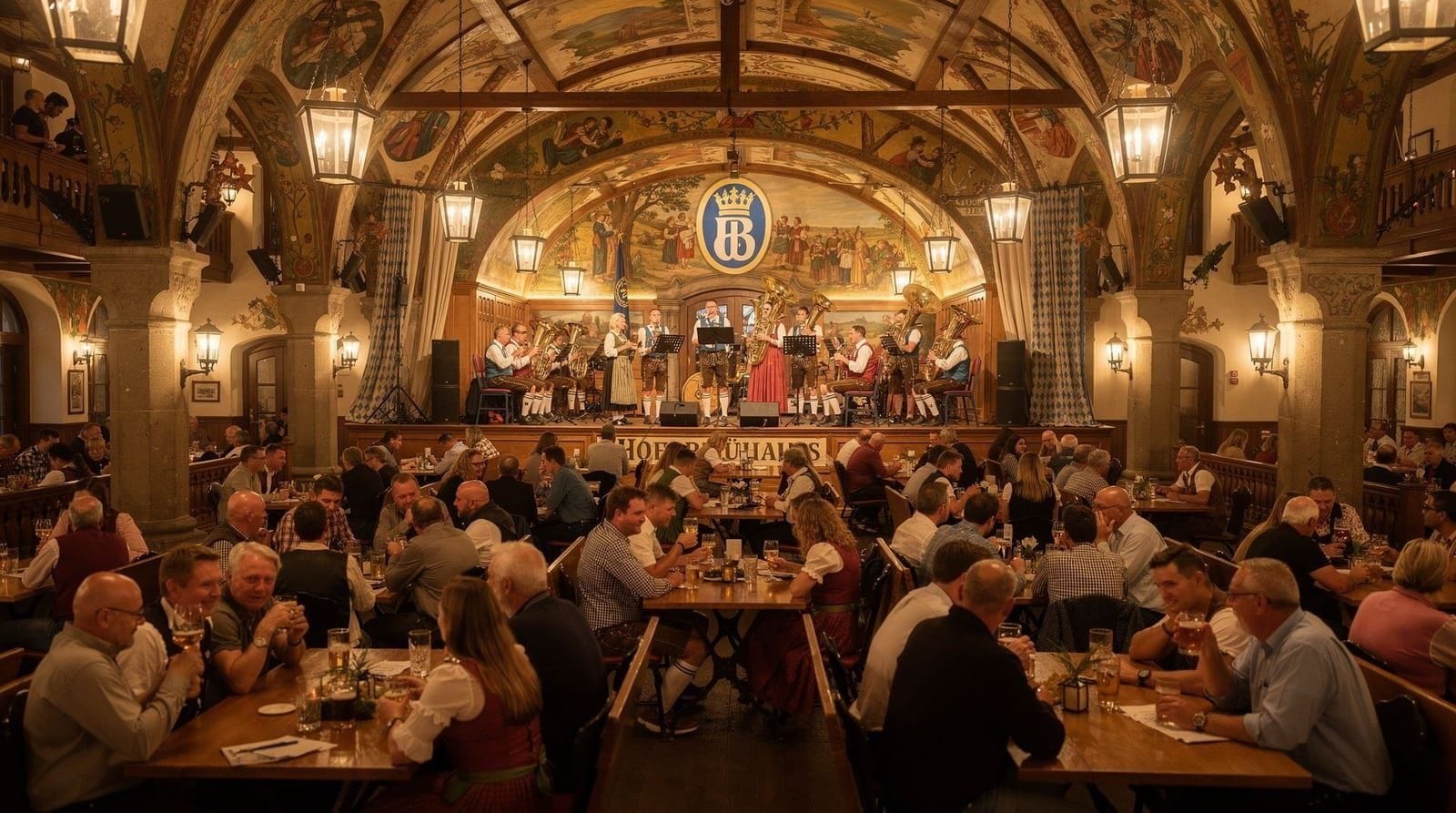
Hofbräuhaus — Usually a pass-by rather than an entry. The guide explains its history as the royal court brewery founded in 1589. Our Hofbräuhaus guide covers what to expect inside.
What gets skipped or compressed:
- Deeper Third Reich history beyond the Feldherrnhalle (requires a specialist tour — see our Munich Third Reich tour guide)
- The Residenz interior (your ticket is your own; the palace requires separate entry)
- Schwabing, Au-Haidhausen and other neighbourhoods
- Jewish history and wartime memory beyond surface coverage
The honest case for paid tours
If you know you want guaranteed quality and appropriate group size, a paid group tour from Radius Tours, Munich Walks or a similar established operator costs €18–25 — comparable to what you would tip on a tip-based tour with a good guide. The differences:
Fixed pricing — You know the cost in advance. No end-of-tour ambiguity about what to contribute.
Smaller groups — Paid operators typically cap at 12–15 people, compared to 30+ for large tip-based tours. You can hear the guide from any position in the group.
Screened guides — Paid operators invest in guide training and consistency. You are less likely to get a guide on their third tour ever.
Better specialist content — For the Third Reich history tour especially, paid specialist guides have deeper knowledge, more considered language and better site-specific details. This matters when the subject requires sensitivity and accuracy.
For the standard old town overview on a budget, a tip-based tour with a good guide is adequate. For anything requiring depth — history, architecture, Jewish Munich, wartime resistance — a paid specialist tour is genuinely better.
Tip-based vs paid tours — the honest comparison
| Tip-based | Paid group tour | |
|---|---|---|
| Upfront cost | €0 (tip €10–15 expected) | €18–25 fixed |
| Group size | Often 20–30+ | Typically 12–15 |
| Guide screening | Variable, no public vetting | Trained and consistent |
| Booking | Show up, no reservation | Recommended in advance |
| Best for | Budget-flexible orientation | Guaranteed quality, depth |
When free walking tours make sense
The tip-based format works best in the following situations:
Arriving without pre-booked plans — If you arrive in Munich on a whim and want an immediate orientation of the old town, the Sandemans daily schedule means you can join a tour within a few hours of arrival without booking.
First morning orientation — A tip-based tour is an efficient way to orient yourself on day one before deciding which paid experiences to invest in. Consider it a preview, not a substitute for deeper engagement.
Budget travel with flexibility — If you are genuinely on a tight budget, tipping €5–8 (less than the expected €10–15 norm) is technically possible, though it comes with the ethical caveat that guides cannot sustain their work if tipping norms erode. If your budget is very tight, a self-guided walking tour using a downloaded map costs nothing.
For more budget planning, see our Munich budget guide.
How to get the most out of a tip-based tour
Arrive early and position at the front — Large groups mean the back cannot hear clearly. Arriving 10 minutes early and positioning near the guide gives a substantially better experience.
Ask about the guide’s background — A good guide will state their qualifications and background early in the tour. If they do not, you can ask directly after the tour begins. Guides with history degrees or specialist training tend to deliver better content.
Tip for performance, not for social pressure — The purpose of the model is to reward quality. If the guide was excellent and you enjoyed the tour, €15 is appropriate. If the group was too large to hear properly and the content felt rushed, you are within the spirit of the model to tip toward the lower end or to note the problem honestly.
Consider a follow-up paid tour — The most effective use of a tip-based tour is as an orientation that leads you to decide which specialist paid tour to book next. Many visitors do a free tour on day one and then book a Third Reich specialist tour or a private guide for day two.
Tipping norms — the practical reality
The gap between “free” and “fair cost” in Munich is significant. A tip-based tour guide working a full day does two or three tours and depends on tips for their entire income. The implicit price that keeps the model functioning is approximately €10–15 per person. Consider the following:
- €5 tip: the minimum that registers as intentional (versus nothing). Below fair value for a 2-hour tour.
- €10 tip: standard and acceptable for an average tour.
- €15 tip: appropriate for a good to excellent tour where the guide visibly added value.
- €20+ tip: for an exceptional guide who exceeded expectations significantly.
Cash is strongly preferred. Some guides accept card payment but it is unreliable. Have small denomination notes (€5 and €10 bills) before joining the tour.
Themed and specialist tip-based tours
Beyond the standard old town circuit, a smaller number of tip-based guides in Munich run themed routes. These are less consistent in availability than the daily Sandemans schedule but worth checking if your interests are specific.
Beer and beer garden walks. A handful of independent guides on GuruWalk run tip-based beer culture walks that combine the Hofbräuhaus and Viktualienmarkt beer garden with commentary on brewing history — a lighter, less formal alternative to a paid brewery tour.
Bike-based tip-based tours. Some Munich operators run bicycle versions of the tip-based model, covering more ground (including Olympiapark and Nymphenburg) than a 2-hour walking route can reach. Group sizes tend to be smaller because of logistics, which improves the guide-to-participant ratio. See our Munich bike tours guide for the paid alternatives if a tip-based bike tour isn’t running on your dates.
Evening and ghost-themed walks. A small number of tip-based evening tours cover Munich folklore and legends rather than history — lighter in tone, shorter (60–90 minutes), and generally tipped at a lower rate (€5–10) reflecting the shorter format.
None of these specialist formats match the consistency of the daily Sandemans old town tour, so treat them as a bonus if your dates align rather than something to plan around.
Old town walking tour route — self-guided alternative
If you decide the tip-based tour format is not for you but a paid group tour does not fit your schedule, the Munich old town is navigable without a guide. The Munich old town history guide explains the context of each major site. The self-guided walk guide provides a printable route covering the same landmarks.
Key stops in order from Marienplatz:
- Marienplatz and Glockenspiel
- Frauenkirche (5-minute walk west)
- Viktualienmarkt (5-minute walk south)
- Isartor (medieval gate, 8-minute walk east)
- Hofbräuhaus (5-minute walk north)
- Odeonsplatz and Feldherrnhalle (10-minute walk north)
- Residenz exterior (adjacent to Odeonsplatz)
Total: approximately 3 km, 90 minutes without stops. Free, flexible and allows you to spend as long as you want at each point. Book a paid historic walking tour for guaranteed quality
Frequently asked questions about Munich free walking tours
Is it rude not to tip on a Munich free walking tour?
Attending a tour and giving nothing is considered disrespectful in the Munich free tour community, regardless of the label applied to the tour. If you genuinely cannot afford a tip, the ethical approach is to not join the tour and instead use a self-guided route. For budget travelers, the municipal tourist office sometimes provides free printed walking trail maps.
Do Munich free walking tours run daily?
Major operators (Sandemans, New Europe) run daily year-round. Independent guides on GuruWalk may not run tours in poor weather or during winter with low demand. Check the specific tour’s schedule before planning around it.
Can I book a Munich free walking tour in advance?
Tip-based tours generally do not require advance booking — you show up at the meeting point. Some operators on GuruWalk allow pre-registration, which guarantees the guide knows how many participants to expect and may improve the likelihood the tour runs on a given day.
Are Munich free walking tours available in other languages?
Most large operators offer English as the primary language. German-language tours exist through local guide associations. French, Spanish and Italian tours are available through some international operators during peak summer months. Check the operator website for current language options.
How long do Munich free walking tours last?
Standard tours run approximately 2 hours. Some operators offer extended premium tours (sometimes paid) of 3 hours that include more sites. If the guide is particularly good and the group is engaged, informal extensions of 15–20 minutes are common but not guaranteed.
What is the departure point for Sandemans Munich?
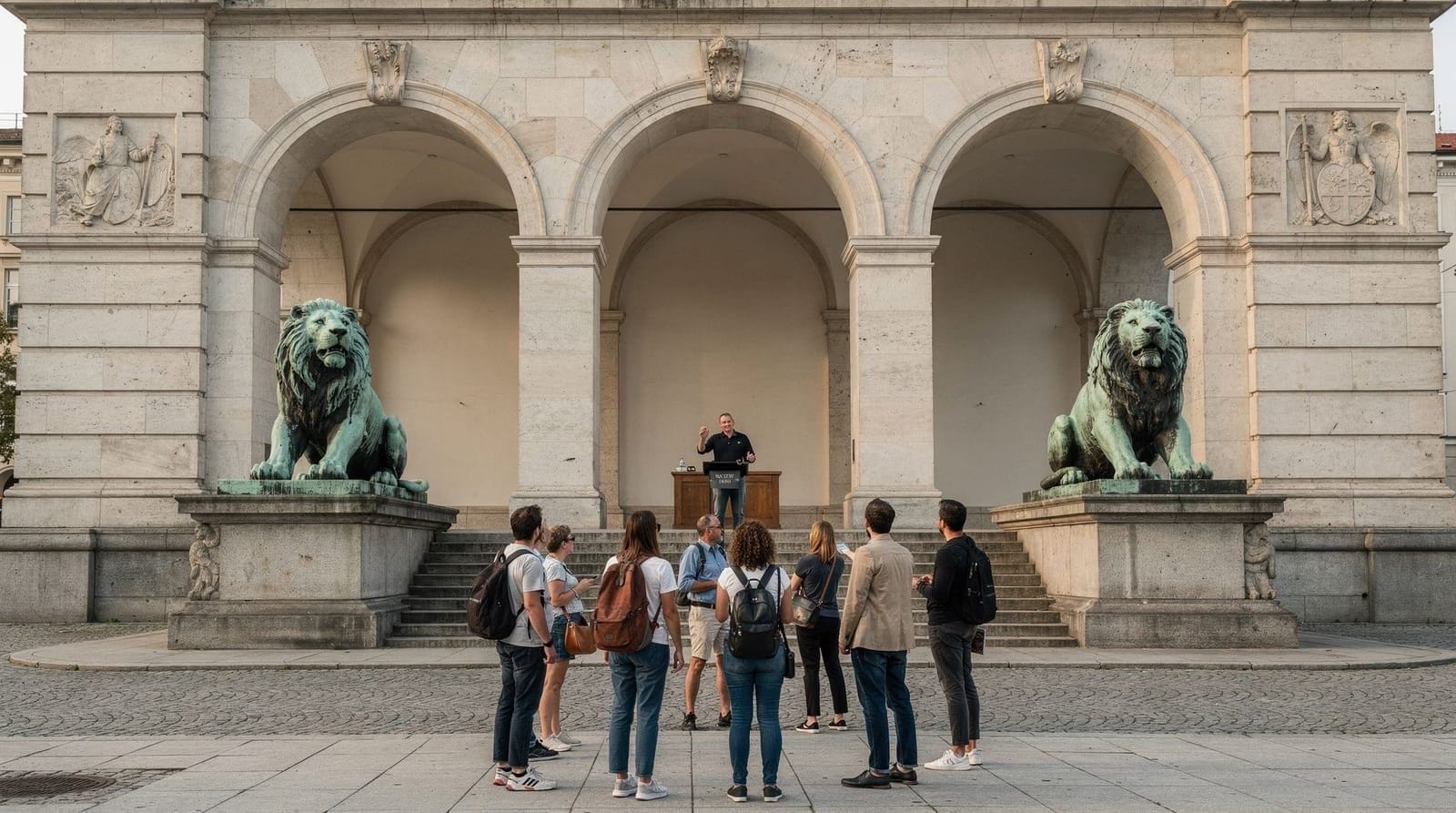
Sandemans Munich departs from Marienplatz, typically from the steps of the Neues Rathaus (the neo-Gothic town hall on the north side of the square). Look for the guide with the Sandemans branded sign or umbrella. Arrive at least 10 minutes before the stated departure time to secure a good position.
Are there specialised free walking tours on topics like Third Reich history?
Occasionally, but rarely with the same quality as paid specialist operators. The Third Reich material requires careful language, deep historical knowledge and site-specific preparation that is hard to deliver consistently in a tip-based format where income is unpredictable. For this topic specifically, a paid specialist tour from Radius Tours or similar is the more reliable option.
Do I need to bring cash for the tip, or can I pay by card?
Bring cash. Most tip-based guides in Munich accept cash only or have unreliable card readers. Have €10–20 in small notes (a €5 and a €10, or two €10s) ready before the tour ends so you aren’t fumbling for change during the tip speech.
What’s the difference between Sandemans and an independent GuruWalk guide?
Sandemans offers a fixed daily schedule and brand consistency but larger groups and variable guide vetting. GuruWalk independent guides typically run smaller groups (8–15 people), have more specialised backgrounds, and let you read reviews of the specific guide before choosing — useful if you want a more personal experience than the largest operator provides.
Top experiences
Bookable activities with verified prices and instant confirmation on GetYourGuide.