Munich street food guide
Munich: old town food tour with 10+ tastings, beer and pretzel
What is the best street food in Munich?
The Leberkässemmel (warm meatloaf roll) is Munich's defining street snack, best bought at Viktualienmarkt or any Metzgerei counter. For variety, the covered Schrannenmarkt on Marienplatz adds currywurst, pretzels, and seasonal market stalls.
What makes Munich street food different from anywhere else in Germany
Munich’s street food culture is rooted in the butcher shop counter, the covered market, and the beer garden — not the food truck. Bavarian working life was built around a mid-morning Brotzeit (bread time), a ritual that survives in every Metzgerei that still sells warm Leberkäse from a heated cabinet behind the counter. The result is a city where excellent, affordable food is accessible at pavement level, but it looks nothing like the street food markets of Berlin or Hamburg.
Understanding this difference saves money and disappointment. A €2.80 Leberkässemmel at a butcher stall on Viktualienmarkt delivers more flavour than a €14 Bavarian platter at a terrace restaurant two streets away. The best street eating in Munich is often standing at a counter or sitting on a low wall with a paper napkin — and that is by design.
| Where | Viktualienmarkt, Schrannenmarkt, bakeries |
| Cost | Around €2.50–8 per item |
| Time needed | A morning to a full day |
| Getting there | 5-minute walk from Marienplatz |
| Cash or card | Cash still expected at market stalls |
The Leberkässemmel: Munich’s essential street snack
The Leberkässemmel (plural: Leberkässemmeln) is Munich’s de-facto street food. Leberkäse translates literally as “liver cheese” but contains neither ingredient in the modern version — the name comes from an older regional recipe. Today it is a smooth, dense loaf of minced pork and beef, seasoned with marjoram and salt, baked in an oblong pan until the top crust caramelises to a deep amber. A slab is cut hot from the loaf, placed inside a crusty Semmel roll, and handed over the counter.
Where to buy the best Leberkässemmel in Munich:
- Vinzenz Murr butchers — a Bavarian chain with multiple city-centre locations including one on Marienplatz and another in the Hauptbahnhof. Consistent quality, sliced fresh per order, €2.50–2.80 with roll and mustard.
- Ludwig Maurer at Viktualienmarkt — one of several butcher stalls at the market, known for using Mangalitza pork in limited batches.
- Butcher counters in Kaufhalle/Edeka supermarkets — less atmospheric but usually the same quality and 30–40 cents cheaper. Perfect if you are catching a train.
The standard accompaniment is medium-hot Bavarian mustard (Bayerischer Senf) served in a small pot. Spicy Dijon or yellow American mustard are not Bavarian and not offered here; do not ask for them.
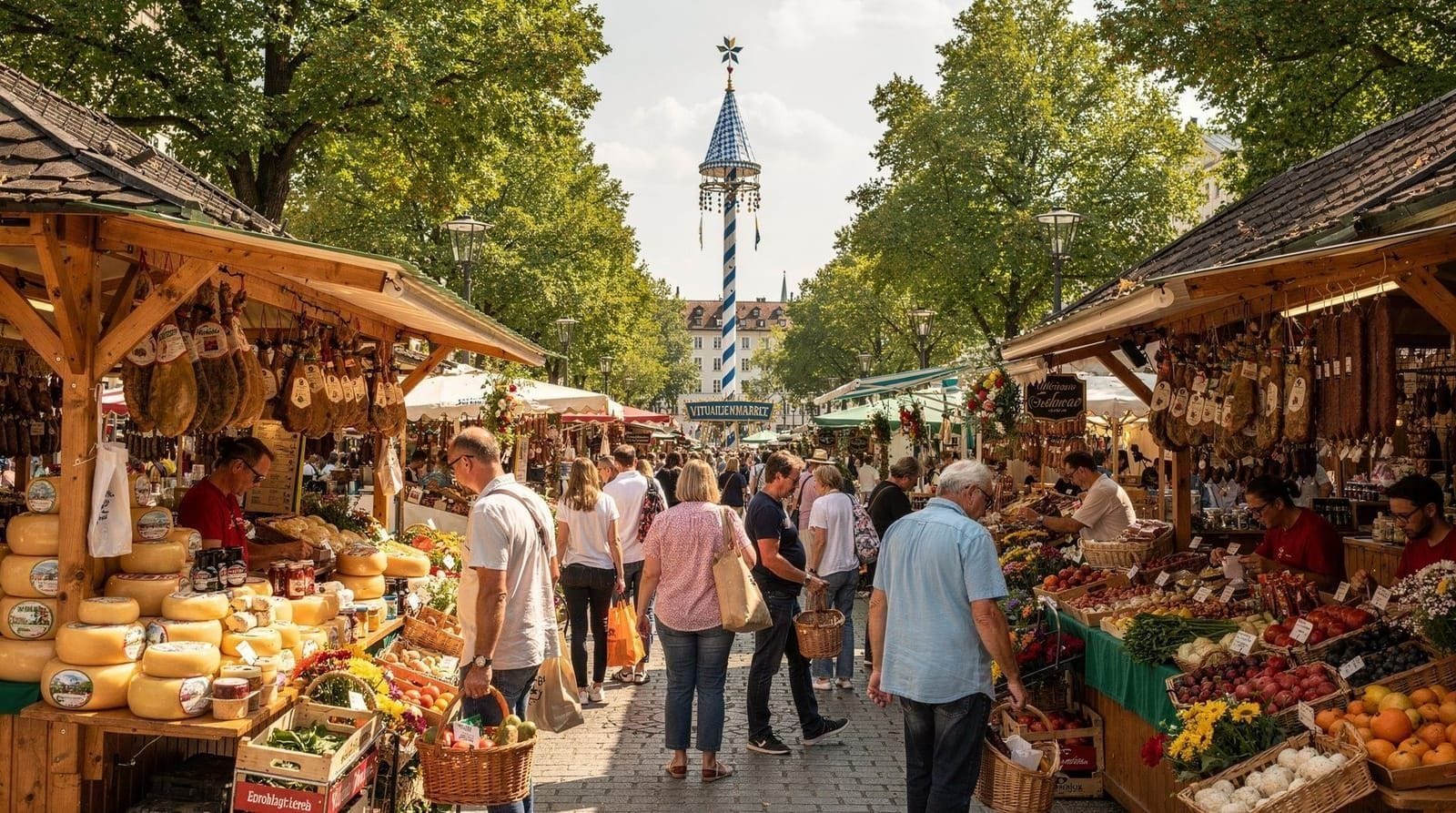
Viktualienmarkt: Munich’s outdoor food market
The Viktualienmarkt occupies a large open square south of Marienplatz and has operated continuously since 1807. Today it has roughly 140 permanent stalls selling produce, dairy, meat, fish, flowers, and prepared food. It is neither cheap nor a tourist trap — it sits somewhere between a high-quality food hall and a neighbourhood market that happens to have millions of visitors per year.
What to eat at Viktualienmarkt stalls:
- Obatzda with radishes and pretzel — a spread made from ripe Camembert, butter, onion, caraway, and paprika, served with a stack of Bavarian radishes (Radieschen) and a laugen pretzel. About €4.50.
- Gulaschsuppe — thick goulash soup served in a bread roll. A filling meal for €5–6, ideal in colder months.
- Fresh Bratwurst — grilled on charcoal at the sausage stalls near the beer garden entrance. A pair with a Semmel costs around €4.
- Käsespätzle — soft egg noodles fried with onions and Emmental, available from the cooked-food stalls. A Bavarian alternative to mac and cheese: €6–8.
- Seasonal produce — white asparagus (Spargel) from April to June, strawberries from late May, Pfifferlinge (chanterelle mushrooms) in August and September.
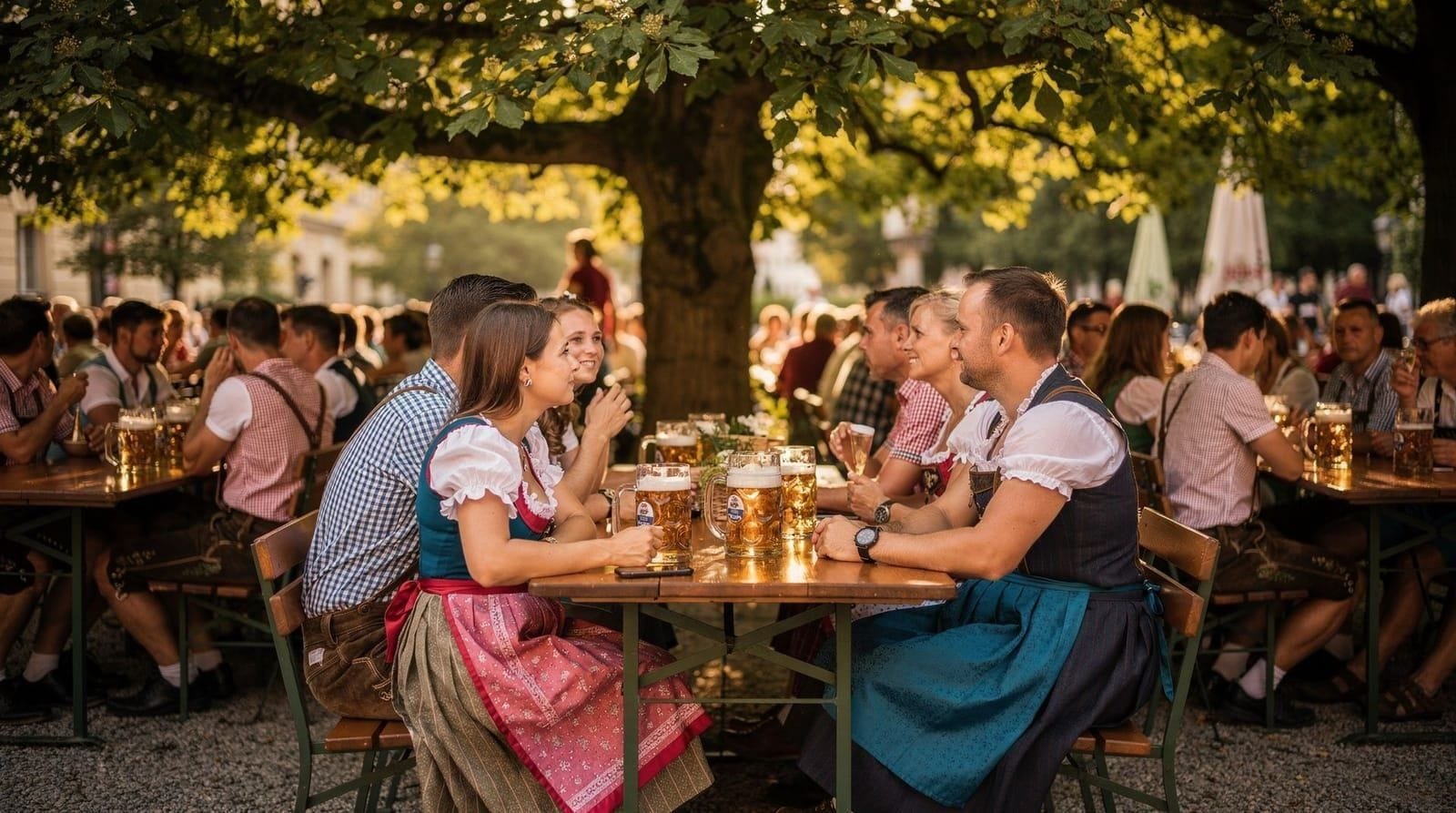
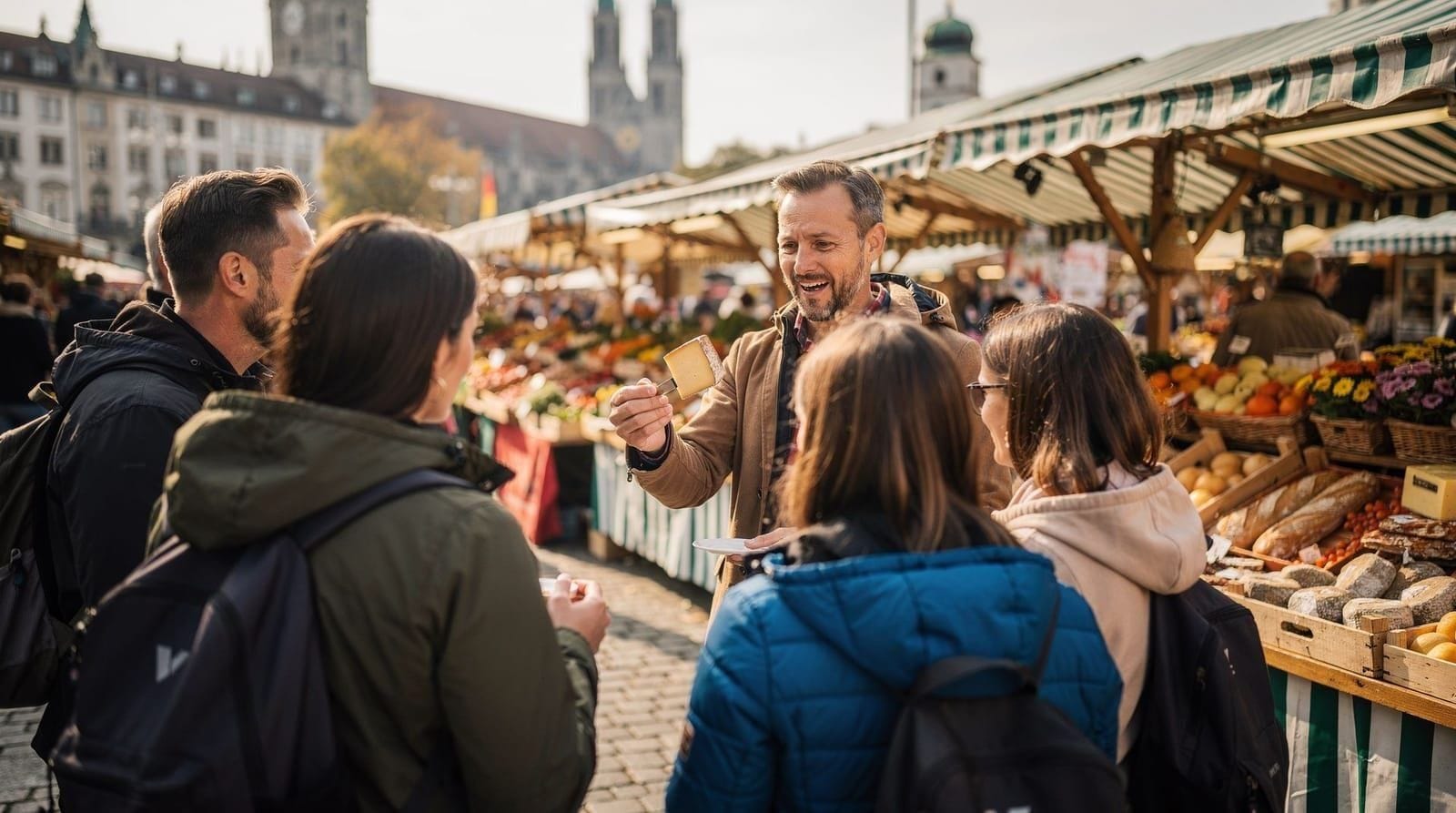
The beer garden attached to the market is managed by the city and rotates its beer licence among Munich’s six main breweries (Augustiner, Hofbräu, Paulaner, Löwenbräu, Hacker-Pschorr, Spaten). Each brewery has a dedicated counter. A 1-litre Mass costs €10.50–11.50 depending on the current licence holder. A guided food tour covering Viktualienmarkt and the old town (10 tastings included) is useful if you want context on what you are eating and which stalls are worth your time.
Schrannenmarkt and the Marienplatz area
The covered glass-and-iron Schrannenmarkt building, directly adjacent to St. Peter’s Church, is Munich’s secondary market hall. The building is a 19th-century reconstruction and houses a mix of food stalls, bakeries, and casual lunch counters.
What to eat at Schrannenmarkt:
- Currywurst — served with curry sauce and fries, €4.50–5.50. This is the spot for it in the city centre without going to a fast-food chain.
- Flammkuchen — Alsatian-style tarte flambée with crème fraîche and bacon, sold by the slice for around €3–4.
- Turkish and Mediterranean stalls — Döner, falafel wraps, and stuffed vine leaves are available and priced at €4–6.
The Schrannenmarkt area fills at lunchtime with office workers from the surrounding law firms and municipal offices. Seating is limited; expect to stand.
Pretzels and bakeries: the underrated street food
Munich has a deep bakery culture and the pretzel (Brezel or Laugenbrezel) is taken seriously. The standard Bavarian pretzel is soft inside, with a chewy, dark-brown alkaline crust — quite different from the dry American mall version. It is usually salted with coarse crystals and served at room temperature.
Top bakeries for street pretzels:
- Josef Bäckerei — several city-centre locations, known for high butter content and well-developed crust. A plain pretzel costs €1.20–1.50.
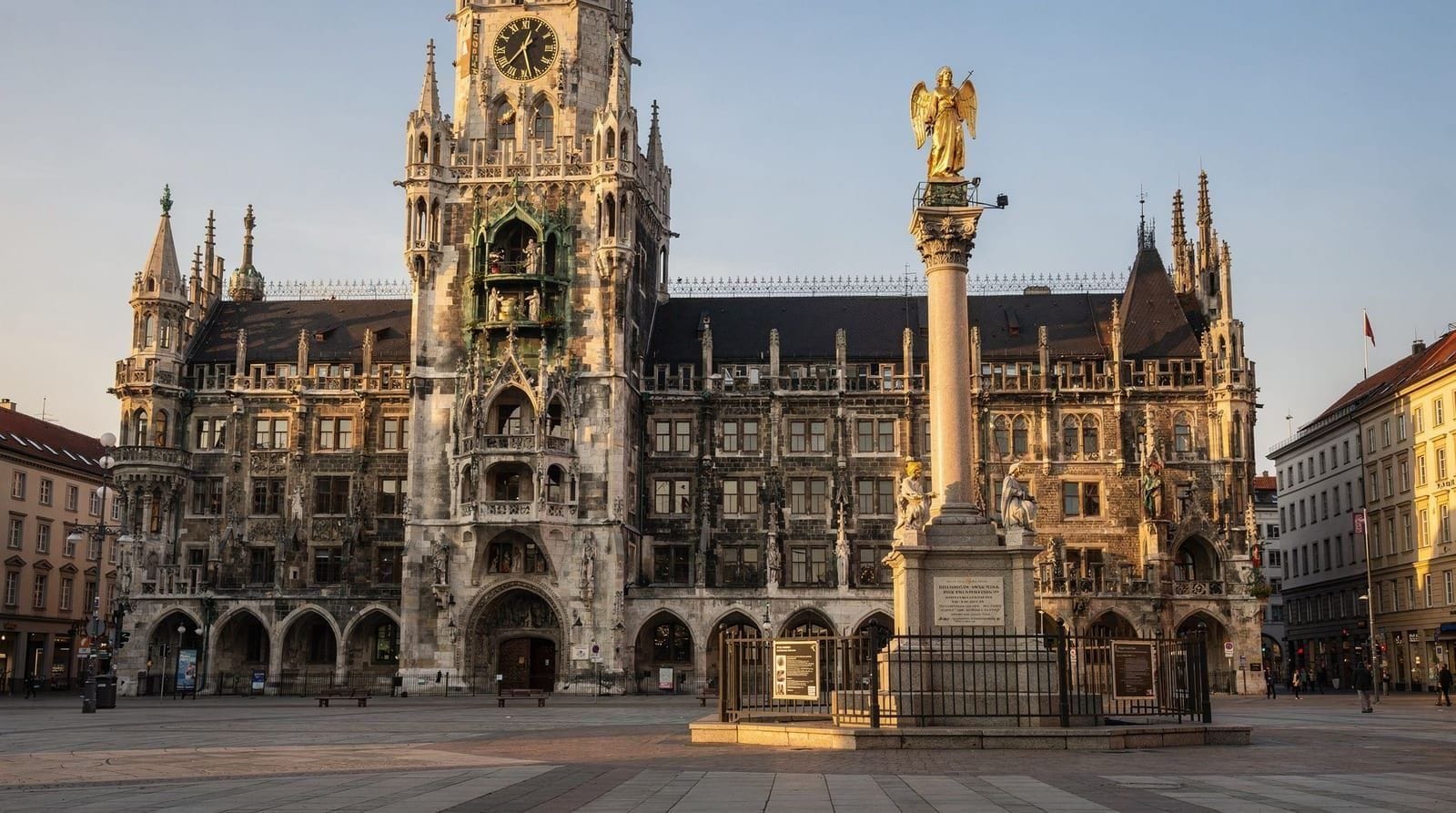
- Rischart — the longest-running Munich bakery chain (since 1883), with a flagship at Marienplatz and a terrace above the square. Pretzel quality is reliable; the upstairs café view over Marienplatz is free if you buy a coffee.
- Hofpfisterei — sourdough specialist with a devoted local following. Pretzels are slightly less traditional but the rye breads are worth a stop.
A pretzel with Obatzda from any decent bakery is genuinely one of the best cheap meals Munich offers — around €3.50 combined.
For visitors staying near Marienplatz or Schwabing, most bakery chains have a branch within a five-minute walk, so a pretzel breakfast rarely requires a special trip — it fits naturally into whatever walking route you are already doing that morning.
Street food beyond the centre: Schwabing and Haidhausen
The Schwabing and Au-Haidhausen neighbourhoods offer street food options that skew more local and slightly cheaper than the city centre.
Elisabethmarkt (Schwabing): A small neighbourhood market on Elisabethplatz, open Tuesday and Friday mornings and Saturday all day. The market is where Schwabing residents actually shop — cheese, organic produce, fresh fish, and a handful of cooked-food stalls. Less impressive than Viktualienmarkt, but more affordable and without tour groups.
Au market (Mariahilfplatz): Open Thursday and Saturday mornings in the historic district of Au. Strong butcher stalls and a good selection of regional cheeses. Get there before 11:00 for the best choice.
Turkish market at Gärtnerplatz: Informal stalls in the Glockenbachviertel on Saturday mornings sell fruit, vegetables, and street snacks at prices below the city-centre average.
These neighbourhood markets are worth the extra travel time specifically because they are not aimed at visitors — the stallholders sell what local households actually buy that week, which shifts the mix of produce and prepared food noticeably compared to the more curated Viktualienmarkt experience.
Seasonal street food: markets and festivals
Munich’s street food changes significantly by season:
Spring (March–May): Auer Dult spring market (late April, Mariahilfplatz) features fairground food including Schmalznudeln (deep-fried dough) and roasted nuts. Spargel season from April means fresh white asparagus at Viktualienmarkt.
Summer (June–September): The English Garden beer gardens, particularly the Chinesischer Turm beer garden seating 7,000, become outdoor dining venues. Street food stalls also appear at Tollwood Summer Festival at Olympiapark — an ethically focused world food market with higher prices but genuine quality.
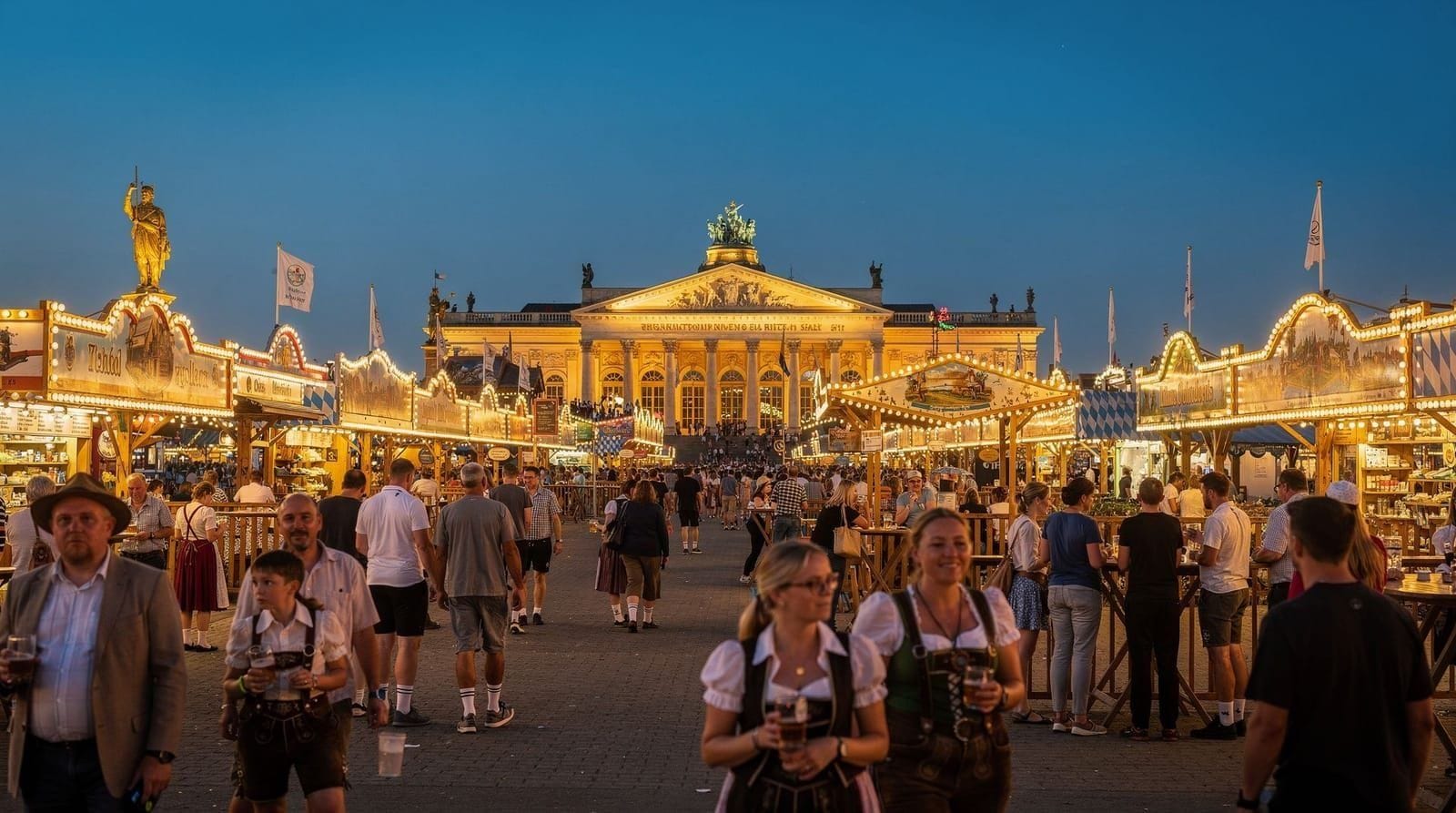
Autumn (October): Oktoberfest stalls inside the Theresienwiese grounds include Hendl (roasted chicken), Steckerlfisch (grilled fish on a stick), Schweinsbraten (roast pork), and Lebkuchenherzen (gingerbread hearts). Prices inside the grounds are elevated: a Hendl costs €14–16.
Winter (November–December): Christmas market food at Marienplatz and the Tollwood Winter Festival. Glühwein (mulled wine) at €4–5 per cup (plus €2–3 refundable deposit on the cup), Bratwurst, Dampfnudeln (steamed yeast dumplings), and roasted almonds. See the Munich Christmas markets guide for the fuller seasonal picture. A dedicated Viktualienmarkt and Altstadt food tour is the most efficient way to cover the main stalls with guidance on what to order and where the value is.
Sausage types you will encounter
Munich’s sausage culture extends well beyond Bratwurst and Weisswurst. Here is a quick field guide:
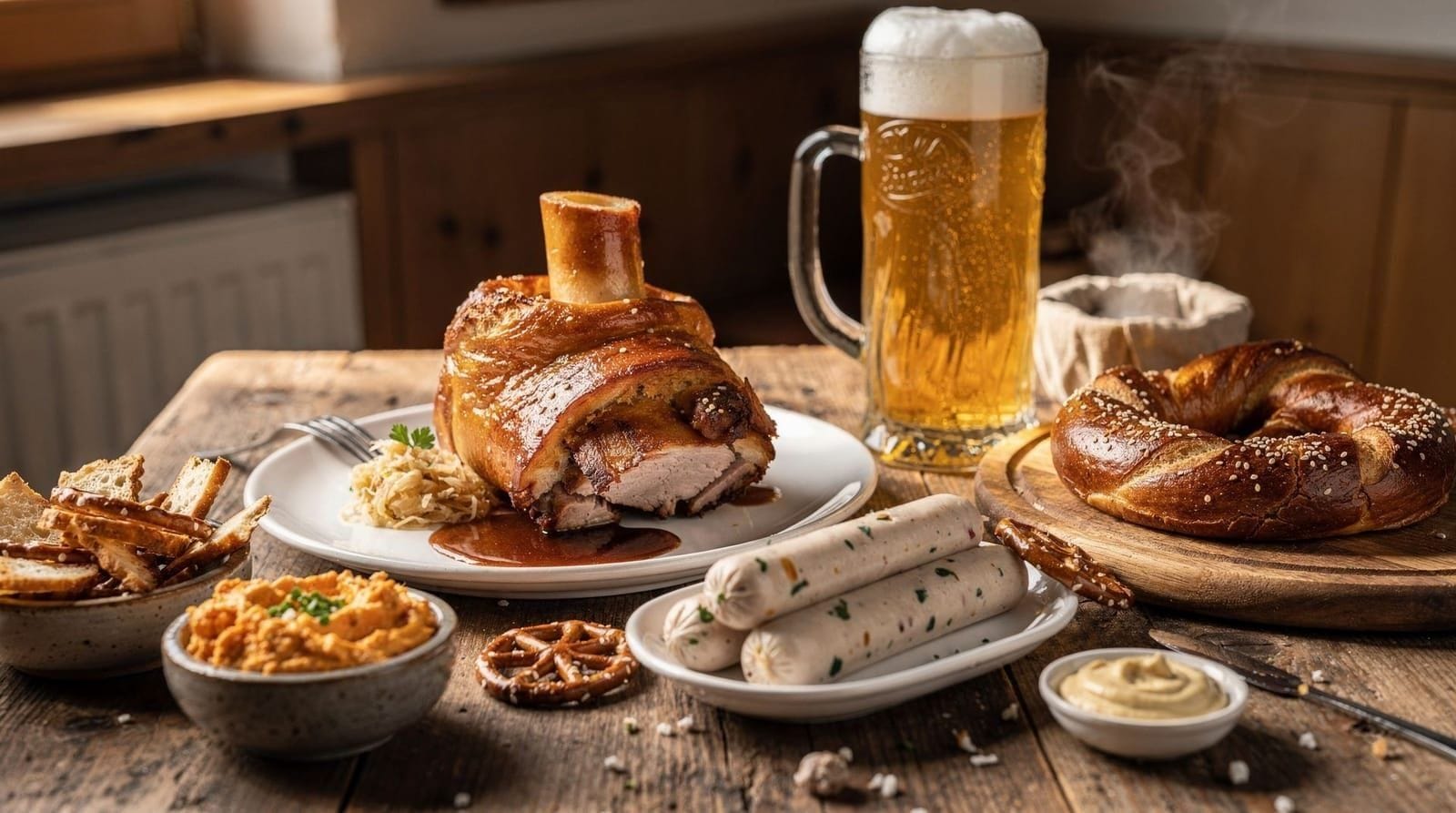
- Weisswurst — white veal and pork sausage flavoured with parsley and lemon. By tradition eaten before noon, peeled from the skin by sucking (Zuzeln) or cutting lengthways. Served with sweet Weisswurstsenf mustard and a pretzel. €3.50–4.50 per pair. Available at the Weisswurst Frühstück (breakfast) in beer halls, not typically from street stalls.
- Bratwurst — grilled pork sausage, sold from stalls at markets. Munich Bratwurst is larger than the Nuremberg variety; a pair with Semmel costs around €4.
- Steckerlfisch — a whole fish (typically mackerel or trout) grilled on a stick over an open fire. Common at Oktoberfest and summer market events. €5–7.
- Schweinswürstel — thin fried pork sausages, common at markets and Christmas fairs.
Honest assessment: what to skip
A few street food traps in Munich worth flagging:
Tourist Bratwurst stalls on Kaufingerstrasse: The pedestrian shopping street between Karlstor and Marienplatz has a handful of sausage vendors who charge €6–8 for a sausage-and-roll that costs €4 everywhere else. The quality is identical.
Prepared “Bavarian” snack trays at Hauptbahnhof shops: These plastic-packaged platters — pretzels, sausage, and cheese in shrink wrap — are poor quality at high prices. Go to the station’s Rewe supermarket butcher counter instead.
Any food stall advertising “authentic Oktoberfest food” outside October: Technically fine, but the Hendl and Schweinsbraten sold at these year-round stalls are usually not made in traditional wood-fired ovens.
Overpriced Airport and station kiosks generally: As with most European transport hubs, anything bought within the Hauptbahnhof concourse itself (rather than the Rewe supermarket counter) carries a meaningful markup for the convenience of the location.
Planning your street food day
A practical Munich street food route:
- Morning (08:30–10:00): Leberkässemmel from Vinzenz Murr near Marienplatz or a pretzel and Obatzda from Rischart bakery terrace.
- Mid-morning (10:00–12:00): Walk Viktualienmarkt stalls. Sample Gulaschsuppe or browse the cheese counters.
- Lunch (12:00–14:00): Beer garden at Viktualienmarkt with a Masskrug and grilled Bratwurst.
- Afternoon: Schrannenmarkt for Currywurst or Flammkuchen, or take the U-Bahn to Elisabethmarkt in Schwabing if you want a local atmosphere.
The Munich food tour guide covers guided options if you prefer structured eating. For context on the bigger picture of Bavarian cuisine, see the best Bavarian food guide and the companion dishes checklist. A combined food and beer walking tour is a strong option for first-time visitors who want to cover multiple neighbourhoods and understand where street food fits into Munich’s wider food culture.
Getting around between markets
Viktualienmarkt and Schrannenmarkt are both walking distance from Marienplatz (5 minutes and 3 minutes respectively). Elisabethmarkt in Schwabing is a 12-minute U-Bahn ride on the U3 or U6 to Münchener Freiheit, then a 5-minute walk. The Au market requires U-Bahn to Fraunhoferstrasse and a 10-minute walk south. For day-planning logistics, the Munich public transport guide covers the ticketing basics.
A 2-day Munich itinerary can incorporate Viktualienmarkt on day one and the English Garden beer gardens on day two without requiring significant travel time.
Street food on a longer trip
If you have three or four days in Munich, spreading street food across neighbourhoods rather than sticking only to Viktualienmarkt is worth the extra travel time — the Elisabethmarkt and Au market versions above are genuinely different in character, not just smaller copies of the centre. Our 3-day Munich itinerary works well with a Viktualienmarkt morning on day one and a Schwabing or Haidhausen wander on day two, so you are not repeating the same stalls. If your trip includes a day at Oktoberfest or Frühlingsfest, budget those days separately — the on-site food is priced differently from everyday Munich street eating and is covered in our Oktoberfest guide.
Prices at a glance (2026)
| Item | Typical price |
|---|---|
| Leberkässemmel | €2.50–3.00 |
| Plain pretzel (bakery) | €1.20–1.50 |
| Pretzel + Obatzda | €3.20–3.80 |
| Bratwurst (pair, with roll) | €3.80–4.50 |
| Gulaschsuppe | €5.00–6.50 |
| Mass beer (1 litre) at Viktualienmarkt | €10.50–11.50 |
| Currywurst with fries | €4.50–5.50 |
| Weisswurst breakfast (2 sausages + pretzel) | €6.50–8.00 |
All prices are from stalls visited in early 2026 and reflect the mid-range of what you will encounter. The Hauptbahnhof area runs €0.50–1.00 higher; Schwabing neighbourhood markets run slightly lower.
Frequently asked questions about Munich street food
Is Munich street food vegetarian-friendly?
Better than you might expect. Pretzels, Obatzda, Käsespätzle, and the produce stalls at Viktualienmarkt offer solid non-meat options. The Munich vegetarian and vegan guide covers restaurant options in more depth, but street food is manageable for vegetarians. Vegans will find it harder — most Bavarian street snacks contain dairy or meat.
Can I buy street food during Oktoberfest?
Inside the Theresienwiese grounds, yes — stalls sell Hendl, Steckerlfisch, Schmalznudeln, and Lebkuchen. Prices are 30–50% above normal Munich street rates. Outside the grounds, the surrounding streets (particularly Bavariaring) have additional stalls.
Do stalls accept card payments?
Increasingly yes at Viktualienmarkt and Schrannenmarkt, but cash is still expected at smaller market stalls. Bring €20–30 in small notes to avoid problems.
Is the Viktualienmarkt beer garden open year-round?
No. The beer garden operates from March or April (when weather allows) through October. In winter the space is used for the Christmas market stalls that surround Marienplatz.
What time does Viktualienmarkt open?
Food stalls open Monday to Saturday from 08:00. The beer garden opens from 11:00 when the weather is acceptable. Everything closes at 18:00 (stalls) and 22:00 (beer garden). Closed Sundays and public holidays.
Is there a street food scene at night?
Munich’s nighttime street food is limited compared to Berlin or Hamburg. The options are mainly Döner and pizza-by-the-slice in the Glockenbachviertel and around the university (Maxvorstadt). The Munich nightlife guide covers late-night eating in more detail.
Can I eat street food inside the English Garden?
The Chinesischer Turm beer garden inside the English Garden operates its own food stalls and is not technically “street food” but functions as an outdoor dining venue. Bring cash; the beer garden occasionally accepts card but it is unreliable.
What is the cheapest way to eat well in Munich?
A pretzel with Obatzda from a bakery, or a Leberkässemmel from a supermarket butcher counter, both deliver genuinely good Bavarian flavour for under €4. Avoid the Kaufingerstrasse tourist sausage stalls and the Hauptbahnhof shrink-wrapped platters — both cost more for a worse product than the same items sold a few streets away.
Is it rude to eat standing up at a market stall in Munich?
Not at all — it is the norm. Viktualienmarkt and Schrannenmarkt are built around counter service and standing tables rather than seated dining, and locals eat this way daily. Sitting on the low walls around the market with a paper-wrapped Leberkässemmel is standard practice, not a tourist workaround.
Top experiences
Bookable activities with verified prices and instant confirmation on GetYourGuide.