Romantic Road day trip from Munich: Rothenburg, Augsburg, and Füssen
From Munich: private guided tour to Rothenburg ob der Tauber
Can you do the Romantic Road as a day trip from Munich?
Yes, but you need to pick a focus. Rothenburg ob der Tauber alone is doable by guided bus tour (returns same day). Covering the full 350km route from Würzburg to Füssen requires 2–3 days. Most day-trippers target either Rothenburg or the Füssen-Neuschwanstein end.
What the Romantic Road actually is — and what nobody tells you before you go
The Romantic Road is not a road in any meaningful sense. It is a tourist marketing route, invented in 1950 by a consortium of Bavarian and Franconian towns looking to revive their postwar economies. The name was chosen in English, specifically to appeal to American GIs still stationed in Germany, who were hungry for medieval Europe and chocolate-box villages. It worked extraordinarily well.
The 350-kilometre route runs from Würzburg in the north down through Franconia and into Bavaria, ending at Füssen on the Austrian border. Along the way it passes through Rothenburg ob der Tauber, Dinkelsbühl, Nördlingen, and Augsburg before reaching the Alpine foothills and the famous castle country around Schwangau. In between those stops: flat agricultural land, unremarkable motorway bypasses, and a lot of farmland.
Knowing this in advance is genuinely useful, because it reframes what you are doing. You are not driving through continuous scenery the way you might on the Amalfi Coast or the Scottish Highlands. You are travelling between a series of individually excellent towns that happen to have been stitched together into a coherent narrative. Some of those towns are tourist-saturated. Some are genuinely overlooked. The route rewards people who know which is which.
From Munich specifically, the Romantic Road presents a particular challenge: it runs roughly northwest-to-north from your starting point, meaning you need to commit some serious distance to reach even the closest highlight. Rothenburg ob der Tauber is about 190 kilometres from Munich. Füssen, the southern terminus, is actually closer at around 130 kilometres — which is why the most popular day-trip combinations tend to focus on one end of the route or the other, not both.
| Where | Würzburg to Füssen, 350km through Franconia and Bavaria |
| Cost | Train €10–30 (Bayern Ticket); guided tours vary by route |
| Time needed | Half day (Augsburg), full day (Rothenburg or Füssen), 2–3 days for the full route |
| Getting there | Train, guided bus tour, or self-drive from Munich Hbf |
| Best time | May, early June, and September for weather and crowds |
The three realistic day-trip targets from Munich
Augsburg — the underrated city
Augsburg is the Romantic Road stop that most visitors from Munich overlook, which is exactly why it is worth considering. At just 40 minutes by direct train from Munich Hauptbahnhof on the RE or IC services, it is significantly closer than any other stop on the route. It is also a proper city — Germany’s third-oldest after Trier and Cologne — with layers of history that most medieval market towns cannot match.
The centrepiece for most visitors is the Fuggerei, a walled city within a city that has been providing subsidised housing to Augsburg’s poorest residents since 1521. It remains occupied and functioning today: 147 small apartments housing around 300 residents who pay an annual rent of 88 cents plus three daily prayers for the soul of Jakob Fugger, the banker who founded it. You can visit the grounds, a reconstructed wartime bunker beneath the complex, and a period apartment for around €5. There is nowhere else in the world quite like it.
The Renaissance Rathaus on Rathausplatz is another genuine highlight — the ornate Golden Hall was restored after wartime bombing and is now used for concerts and civic events. Augsburg also has a lively pedestrian centre, excellent Swabian food at reasonable prices by Munich standards, and almost no tourist crowds compared with Rothenburg. If you are looking for a half-day from Munich that gives you history without the souvenir-shop saturation, Augsburg is the answer.
The honest caveat: Augsburg is a working city rather than a picture-postcard village. If your main draw is the fairy-tale medieval aesthetic — towers, city walls, cobblestones, the whole package — Rothenburg delivers that more completely. Augsburg delivers something more real and arguably more interesting.
Rothenburg ob der Tauber — the famous one
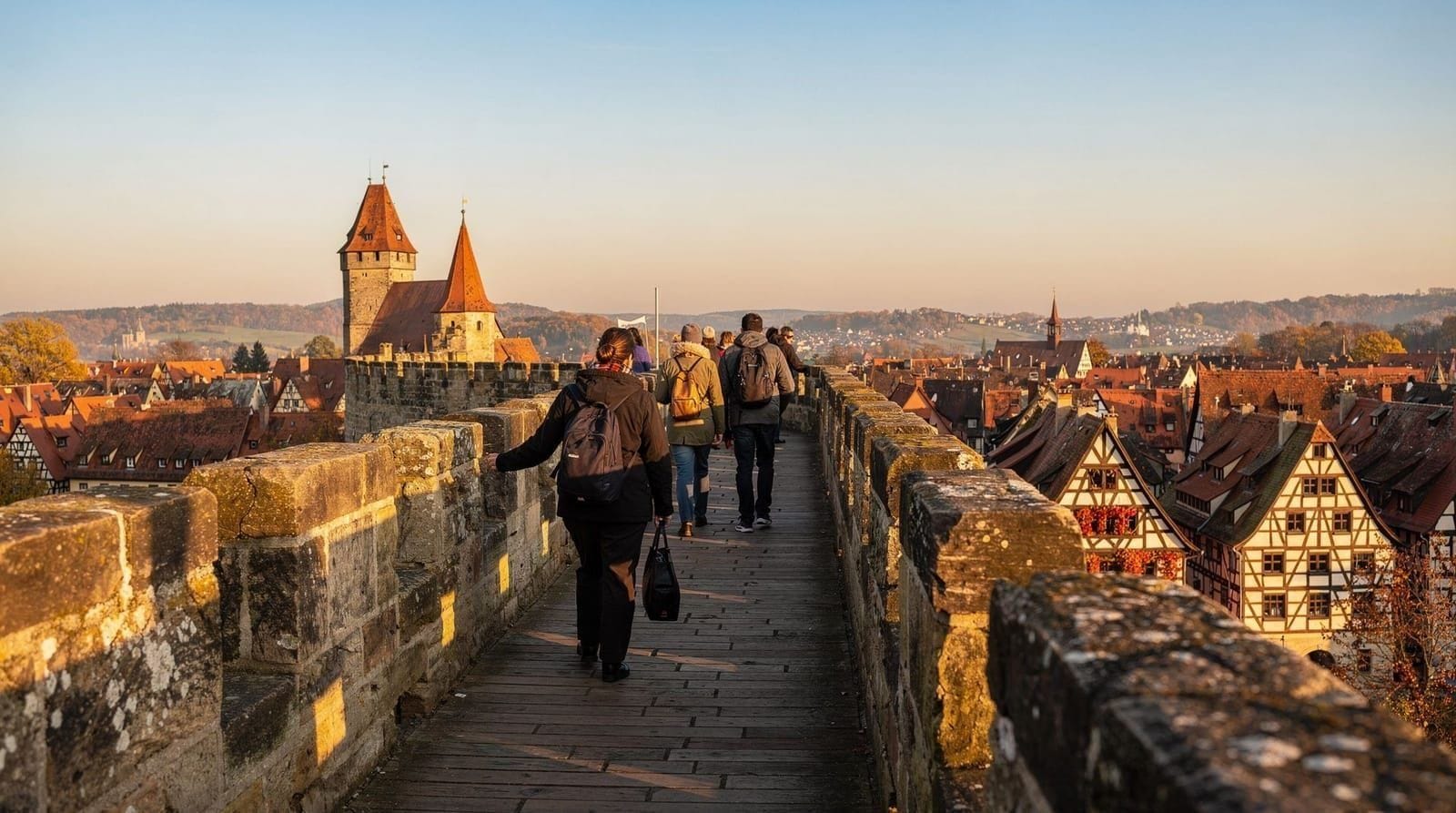
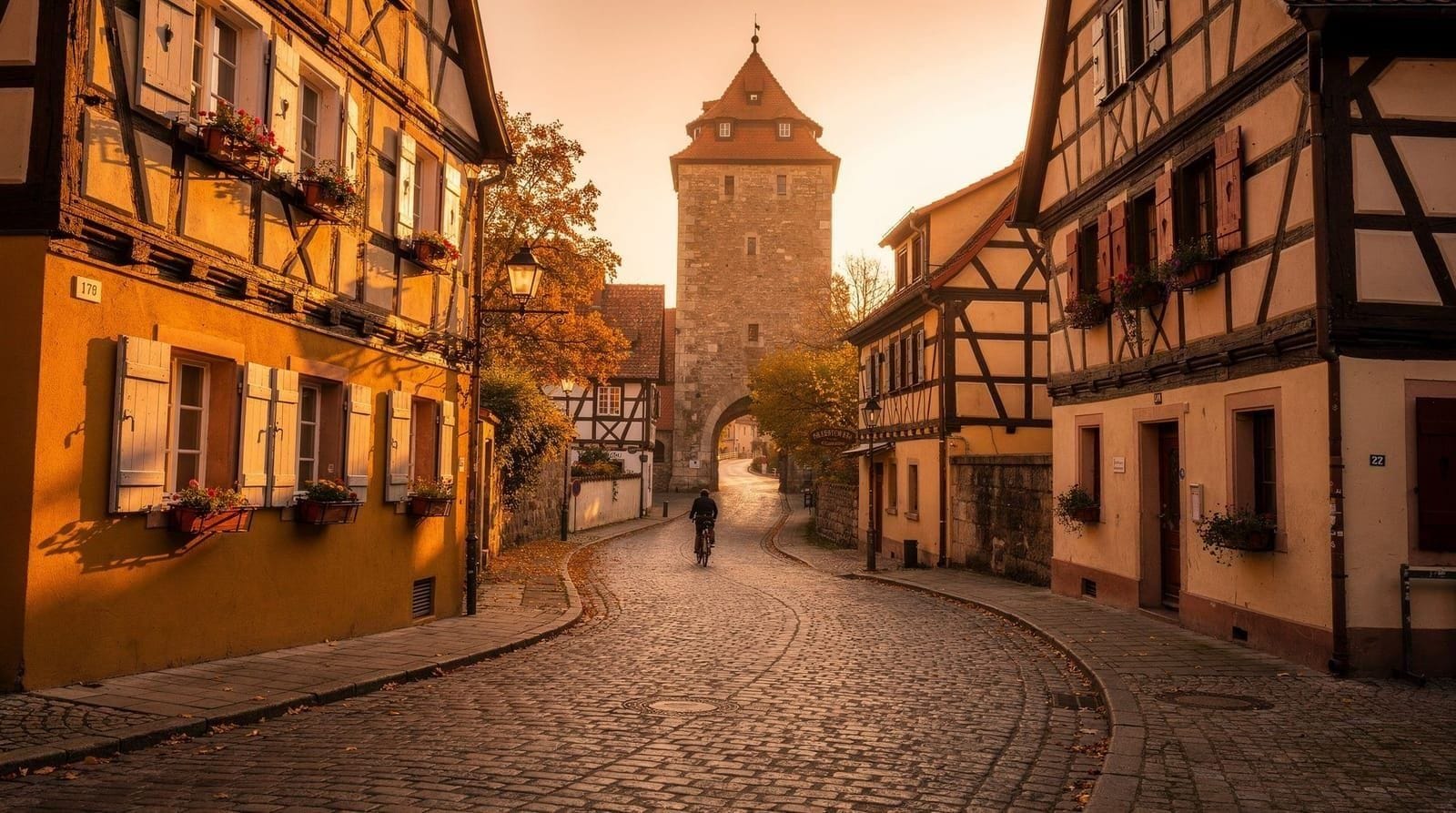
Rothenburg ob der Tauber is the Romantic Road stop that appears on every poster, every calendar, and every tourist brochure Bavaria has ever produced. It earned that reputation honestly. The walled medieval town centre is genuinely exceptional: intact Gothic towers, half-timbered houses in near-original condition, cobblestone lanes narrow enough to touch both walls simultaneously. Walking through the Plönlein — the small square with its junction tower that features in every photograph — on a winter morning with frost on the cobbles is one of those travel experiences that stays with you.
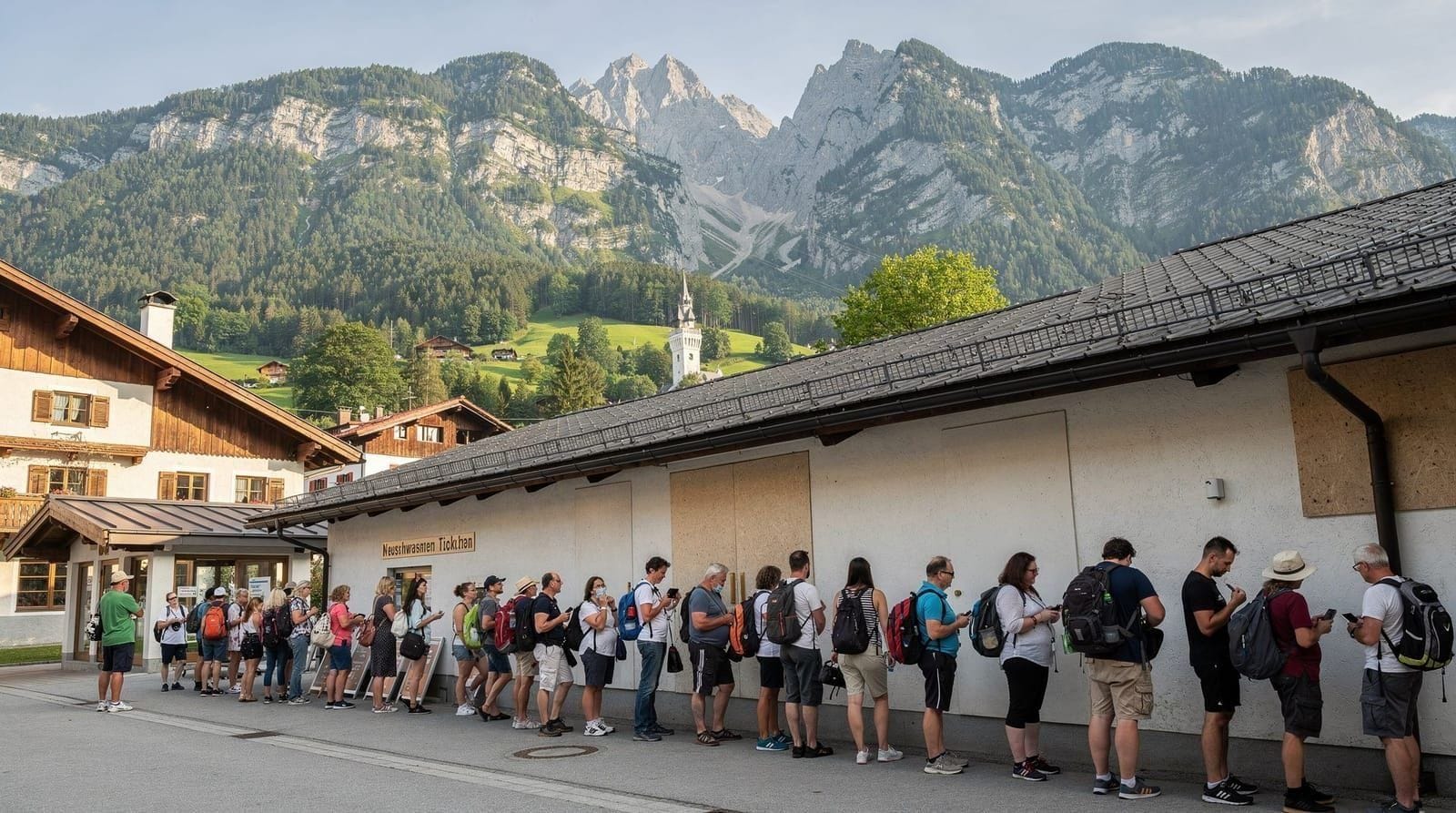
Peak summer is a different story. Rothenburg receives around two million visitors per year. In July and August, the main streets fill with tour groups shoulder-to-shoulder by mid-morning. The Christmas market, which runs from late November through December, is famous but genuinely overwhelming. The souvenir shops selling Schneeballen (fried pastry balls that are considerably less good than they look) and overpriced cuckoo clocks line almost every street in the centre. Hotel prices during peak season are well above what the quality justifies.
None of that makes Rothenburg not worth visiting. It just means you need to go in knowing what you are walking into, and you should try to arrive early. The town is at its best before 9am, when the tour groups have not yet arrived, and after 5pm, when most day-trippers leave. If you are doing a day trip from Munich, aim to arrive by 9am and leave by early afternoon.
Getting there independently by train is possible but cumbersome. There is no direct service from Munich — you need to change at Würzburg or Ansbach, then pick up a connecting train to Steinach bei Rothenburg, and then take another short hop to Rothenburg itself. Total journey time is 2.5 to 3 hours each way, which eats heavily into a day trip. A guided tour from Munich that handles the transport directly is a far more practical solution. Private Romantic Road day trip from Munich to Rothenburg
If you prefer the flexibility of an organised bus tour without committing to a private vehicle, scheduled group departures operate from Munich with guaranteed same-day return. Guided bus tour from Munich to Rothenburg ob der Tauber
Füssen and the castle country — the southern end
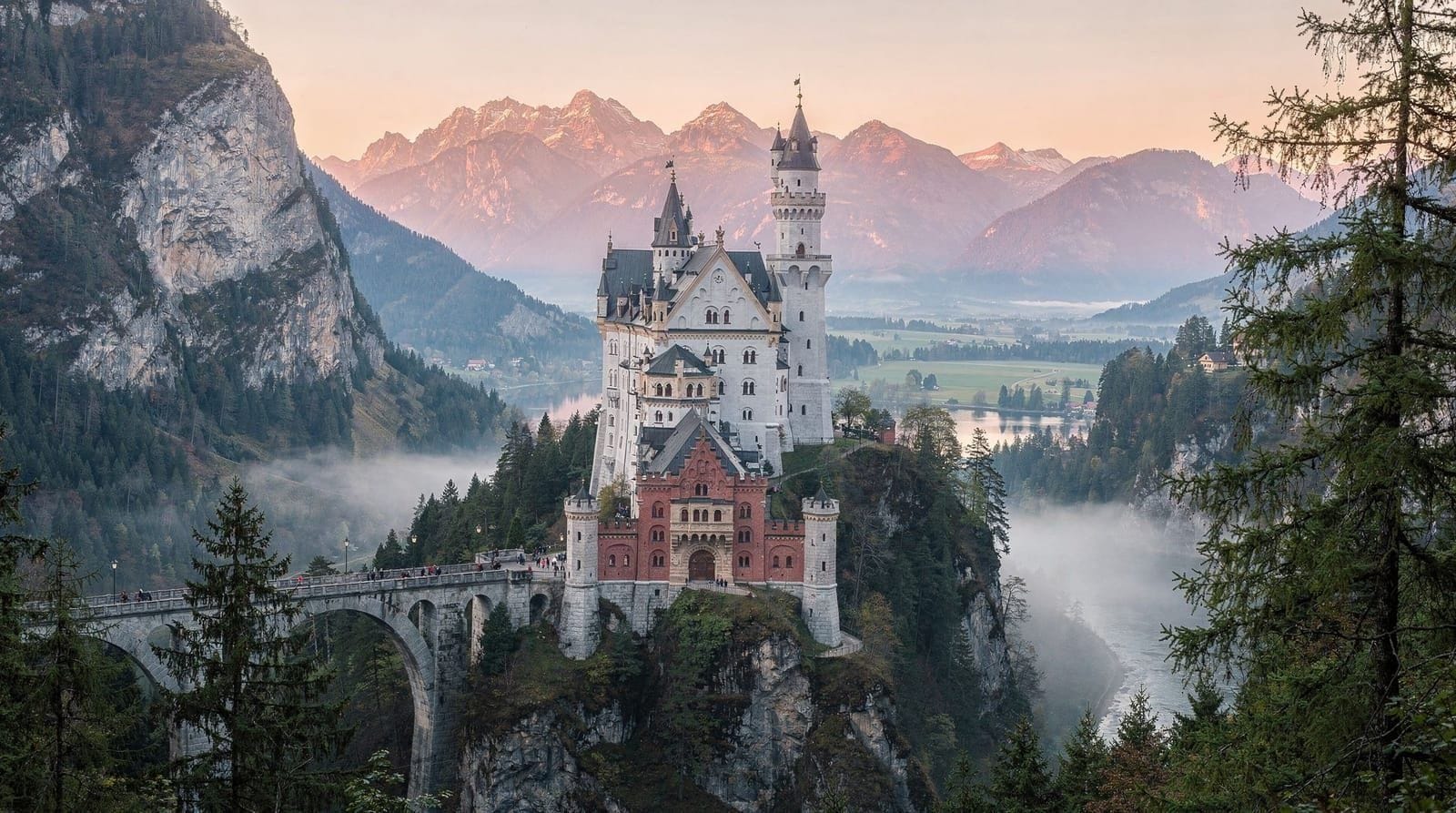
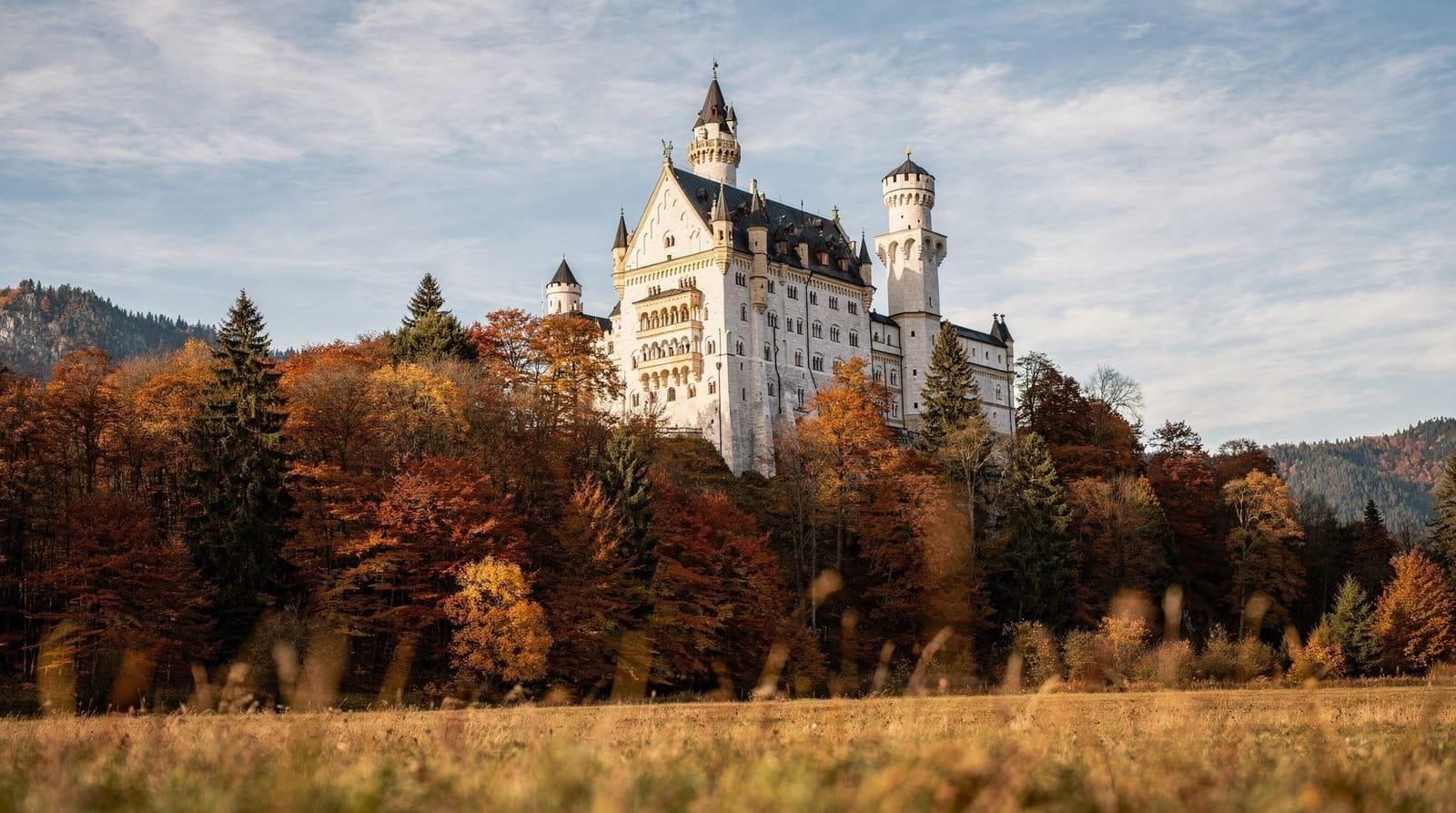
Füssen sits at the southern terminus of the Romantic Road, and it is the stop most closely linked to the region’s single most famous attraction: Neuschwanstein Castle. For many visitors, this combination — the Romantic Road and the fairy-tale castle in one day — is the ideal. The reality is that both destinations are genuinely excellent, and the 5-kilometre distance between Füssen and Neuschwanstein means they slot together naturally.
Füssen itself is a handsome old town on the River Lech, directly on the Austrian border, with a Baroque abbey and a high castle above the town centre that is easily overlooked in favour of the more famous attractions uphill. It deserves at least an hour on its own terms before you head north towards Schwangau.
From Füssen, buses 73 and 78 run directly to the Neuschwanstein ticket centre in around 10 minutes. The castle itself requires a timed interior ticket booked well in advance — in summer 2026, slots are selling out weeks ahead. Adult tickets cost €18. The guided interior tour takes about 35 minutes, and the famous view from Marienbrücke suspension bridge requires a separate 15-minute walk. Our detailed Neuschwanstein visitor guide covers everything you need to know about the castle itself.
For the train journey: Munich Hauptbahnhof to Füssen takes around 2 hours with a change at Buchloe. A Bayern Ticket covers the whole journey. First train from Munich arrives in Füssen around 8.30am — early enough for a full day if you have pre-booked castle tickets. The last direct train back from Füssen to Munich leaves early evening, so check the return timetable before you go.
If you want to combine Neuschwanstein with Linderhof Palace — another of Ludwig II’s extraordinary creations — a guided tour that handles the whole itinerary in one day is the most efficient option. See our King Ludwig II castles guide for an overview of all three royal residences. Full-day tour from Munich covering Neuschwanstein and Linderhof Palace
Doing the Romantic Road by car
Driving gives you options that neither the train nor organised tours can match. You can stop in Dinkelsbühl and Nördlingen — two smaller towns that rarely appear on guided tour itineraries but are genuinely worth visiting. You can park outside the old town walls and walk in at your own pace. And you can adjust the plan spontaneously if somewhere turns out to be better or worse than expected.
The route north from Munich to Rothenburg runs roughly via the A8 towards Augsburg, then north on smaller roads through Dinkelsbühl. Driving time from Munich to Rothenburg is around two hours without stops. Parking in Rothenburg is available in signposted car parks just outside the walls — do not attempt to drive into the medieval centre. The main car parks fill quickly in summer; arriving before 9am usually means you get a space without difficulty.
Driving south towards Füssen is even simpler: the A96 from Munich runs straight to the Füssen area in around 90 minutes. From Füssen, the road to Schwangau and the castle car parks adds another 10 minutes.
A realistic one-day driving itinerary covering both Augsburg and Rothenburg: leave Munich by 7am, reach Augsburg in 40 minutes, spend 2.5 hours exploring the Fuggerei and Rathausplatz, drive north to Rothenburg (around 1.5 hours via Dinkelsbühl), arrive around noon, spend 3 hours in the walled town, and return to Munich by early evening. This works, but it is a long day with a lot of driving, and you will be tired by the end of it.
For drivers who want the castle country rather than the northern towns: combine Füssen with Neuschwanstein and add the Wieskirche pilgrimage church (a UNESCO World Heritage site, easily missed, on the road between Munich and Füssen) for a very full but achievable day.
The three targets, side by side
| Augsburg | Rothenburg ob der Tauber | Füssen / Neuschwanstein | |
|---|---|---|---|
| Distance from Munich | 80km / 40 min train | 190km / 2.5–3hrs train, ~2hrs drive | 130km / ~2hrs train, ~90 min drive |
| Crowds | Low | Very high in summer | High, but manageable with pre-booked tickets |
| Best for | History without the crowds | Iconic medieval aesthetic | Castle-focused visitors |
| Minimum time | Half day | Full day | Full day |
| Public transport ease | Easy, direct train | Awkward, no direct train | Easy, one change |
What to eat along the way
Food on the Romantic Road varies a lot by stop. In Augsburg, look for Swabian classics like Maultaschen (a large regional ravioli, often served in broth) and Spätzle — the old town has plenty of unpretentious restaurants at prices well below Munich’s tourist zones. Rothenburg’s food scene leans heavily touristic: the Schneeballen sold everywhere are more novelty than genuinely good pastry, and restaurants directly on the main squares charge a premium for average food — walk two streets back from Marktplatz for better value. Franconian wine, from the vineyards just north of the route, is worth trying if you find it on a menu. In Füssen, the old town has solid Bavarian standards (Schweinshaxe, Kässpätzle), and it is worth eating there rather than at the more expensive, less characterful cafés near the Neuschwanstein ticket centre itself.
Photographing the towns without the crowds in every shot
Rothenburg’s famous shots — the Plönlein, the town walls, the market square — are genuinely difficult to get without other tourists in frame after about 9:30am in high season. Arriving at opening time (most shops and the town itself are accessible from early morning, even if attractions open later) gives you a window of clear streets for 30–60 minutes. The town walls themselves are usually quieter than the squares even at midday, since fewer visitors walk the full circuit. In Füssen, the classic Neuschwanstein view from Marienbrücke gets crowded fast once tour buses arrive mid-morning — arriving for the castle’s first entry slot and walking to the bridge early is the only reliable way to get an uncrowded shot. Overcast days, counterintuitively, often photograph the half-timbered towns better than harsh midday sun, which creates deep shadows in the narrow lanes.
Comparing the options: what to pick
If you have one day and prioritise iconic medieval scenery: Rothenburg ob der Tauber, via guided bus tour from Munich. Accept the crowds, arrive early, and leave by early afternoon.
If you want something less touristy: Augsburg by direct train. Spend the morning in the Fuggerei and Rathausplatz, have lunch in the old town, and return to Munich for early evening. Low effort, high reward, almost no competition for your time or attention.
If Neuschwanstein is your main goal: Train to Füssen with a pre-booked castle ticket. Combine with a walk around Füssen old town and the view from Marienbrücke. Book Neuschwanstein tickets as early as possible — ideally six to eight weeks ahead for summer visits.
If you are driving and want maximum variety: Augsburg plus Dinkelsbühl on the same day. Dinkelsbühl is smaller and quieter than Rothenburg, equally well-preserved, and almost entirely free of the souvenir-shop saturation that affects its more famous neighbour. It deserves to be better known.
If you want the full Romantic Road experience: You need two to three days, not one. Base yourself in Rothenburg overnight, visit Dinkelsbühl and Nördlingen en route, and allow a full day at the Füssen end. That is the honest version of the trip.
Practical logistics for 2026
Train prices: Munich to Augsburg costs around €10–15 each way on a standard ticket, or is covered by the Bayern Ticket (€29 for one person, covering all regional trains in Bavaria for one day). Munich to Füssen is covered by the Bayern Ticket and costs a similar amount on a single ticket.
Rothenburg by train: No single-day Bayern Ticket covers the full Munich to Rothenburg journey — Rothenburg falls just outside Bavaria into Franconia. You need either a separate ticket or a guided tour that includes transport.
Neuschwanstein tickets 2026: €18 adults, €17 concessions. Book at tickets.hohenschwangau.de. Timed entry slots in summer typically sell out weeks in advance. Our Neuschwanstein tickets guide explains the booking system and what to do if tickets are sold out.
Driving distances from Munich:
- Augsburg: 80km, about 45 minutes
- Rothenburg ob der Tauber: 190km, about 2 hours
- Dinkelsbühl: 150km, about 1.5 hours
- Füssen: 130km, about 1.5 hours
Best time to visit: May, early June, and September offer the best combination of good weather and manageable crowds. July and August are the most crowded months at every stop on the route. Rothenburg in December for the Christmas market is famous but extremely busy — book accommodation months ahead and expect the main streets to be packed.
The stops most people skip — and shouldn’t
Two towns on the Romantic Road get far less attention than Rothenburg and Füssen, but both reward a visit if you are driving through.
Dinkelsbühl is Rothenburg’s quieter cousin: a complete medieval walled town with intact towers and moat, a beautiful Gothic church, and a fraction of the crowds. In the evenings, when Rothenburg is heaving, Dinkelsbühl feels like a different era. It is 45 kilometres south of Rothenburg, making it a natural stop on any drive between the two anchor towns.
Nördlingen sits inside a 15-million-year-old meteor crater — a fact that gives the town an unusual distinction and a geology museum worth half an hour of your time. The old town is entirely encircled by its medieval wall, which you can walk the full circuit of (2.7 kilometres) in about 45 minutes. The crater is not visible from ground level, but knowing you are standing in one adds an odd background note to the whole visit.
Neither town is particularly practical by public transport from Munich. Both are ideal car stops.
Turning it into an overnight trip
If a single day starts to feel like too much ground to cover, staying one night changes the whole experience. Rothenburg after the last tour bus leaves — usually by 5–6pm — is a genuinely different town: quiet lanes, the walls lit at dusk, and a chance to see the Night Watchman’s tour that only runs in the evening. An overnight stay also means you catch Rothenburg early the next morning before the day-trippers arrive, effectively getting two quiet windows instead of none. Dinkelsbühl works similarly well as an overnight base and is considerably cheaper than Rothenburg’s tourist-zone hotels. On the Füssen end, staying overnight lets you take the first castle entry slot of the day without an early train from Munich, and gives time for both Neuschwanstein and a proper visit to Füssen’s own old town and Baroque abbey without rushing. For a full multi-day version of the route, see the best castles near Munich guide for how to sequence castle visits across more than one day.
How this connects to Munich’s wider day-trip scene
The Romantic Road is one strand of a rich web of day trips available from Munich. If you have already done Rothenburg and Füssen, or if medieval towns are not your primary interest, the area around Munich offers extraordinary variety.
The Zugspitze is Germany’s highest mountain and reachable in a day from Munich by the cogwheel railway from Garmisch-Partenkirchen. Chiemsee to the east offers Ludwig II’s third great castle, Herrenchiemsee, on an island in Bavaria’s largest lake. The Tegernsee is the classic local lake escape, less than an hour by train and beloved by Münchners who want to swim in clear Alpine water without the tourist apparatus.
For castle-focused visitors, the question of which castles near Munich are actually worth the journey is worth considering carefully — there are more options than most guides cover. The Hohenschwangau Castle guide covers Ludwig’s childhood home, which sits directly below Neuschwanstein and is often overlooked in favour of the more famous building above.
And if you are combining a castle-and-mountain day trip, the full route through Garmisch and on to the Zugspitze with a Neuschwanstein add-on is possible as an organised tour. Zugspitze, Eibsee, and Neuschwanstein combined day trip from Munich
For a full overview of everything Munich and Bavaria have to offer beyond the city limits, the Munich best attractions guide covers both the city’s highlights and the surrounding region.
Honest summary
The Romantic Road is a genuinely good tourist route that requires realistic expectations. The scenery between towns is not the point — the towns are. Rothenburg is extraordinary and extremely busy. Augsburg is outstanding and almost never crowded. Füssen is the gateway to some of the most spectacular castle scenery in Europe. Dinkelsbühl and Nördlingen are small, beautiful, and largely missed by day-trippers from Munich.
For a single day trip from Munich, pick one end of the route and commit to it properly. Trying to cover Rothenburg and Füssen in the same day by public transport is unrealistic — the logistics do not work. By car, a Rothenburg-Dinkelsbühl combination or an Augsburg-only visit are both achievable without rushing. Füssen plus Neuschwanstein is the most popular single-day combination and works well if the castle tickets are sorted in advance.
The Romantic Road rewards anyone willing to look beyond the obvious. Most visitors arrive in Rothenburg, spend two hours in the same three streets, buy a Schneeball they do not really enjoy, and leave without seeing the less-visited corners of the old town or the countryside outside the walls. Give any of these towns more time than the tour group schedule allows, and they reveal themselves to be something genuinely worth travelling for.
Frequently asked questions about Romantic Road day trip from Munich
How do you get to Rothenburg ob der Tauber from Munich?
There is no direct train. From Munich Hbf take the train to Steinach bei Rothenburg (change at Würzburg or Ansbach), then a local train to Rothenburg. Total journey around 2.5–3 hours each way. A guided bus tour is more practical for a day trip.Is there a Romantic Road bus tour from Munich?
Yes. The Europabus (Romantic Road Coach) runs seasonally from Frankfurt to Munich or reverse, stopping in Rothenburg, Dinkelsbühl, and other towns. You can board in Munich and ride to Rothenburg and back, though connections require planning. Guided day trips are the easiest option.Is Augsburg worth visiting on a day trip from Munich?
Augsburg is only 40 minutes by train from Munich and makes an excellent half-day. It is one of Germany's oldest Roman cities, with the Fuggerei (world's oldest social housing complex, 1521), the Renaissance town hall, and a vibrant pedestrian center. Less touristy than Rothenburg.How far is Füssen from Munich, and can I combine it with Neuschwanstein?
Füssen is about 130km southwest of Munich, roughly 2 hours by train with one change at Buchloe. Neuschwanstein Castle is 5km from Füssen by bus or bike. You can combine both in a long day trip, but castle tickets must be booked weeks ahead in summer 2026.Is car or bus better for the Romantic Road?
Car gives flexibility: you stop anywhere, set your own pace, and can combine multiple towns. Bus tours are stress-free and include commentary. The downside of driving is parking in Rothenburg is limited and the road is largely unremarkable farmland between highlights.What is the Romantic Road actually like?
It is a tourist marketing route created in 1950 linking medieval Bavarian and Franconian towns. The scenery between stops is mostly flat agricultural land. The towns themselves — Rothenburg, Dinkelsbühl, Nördlingen, Augsburg, and Füssen — are genuinely beautiful and worth visiting.What is the Wieskirche and is it worth a stop?
The Wieskirche is a UNESCO World Heritage pilgrimage church between Munich and Füssen, famous for its exuberant Bavarian Rococo interior. It is easy to combine with a Füssen or Neuschwanstein day trip if you are driving, adding around 20–30 minutes of detour. It is genuinely worth the stop for anyone interested in architecture, though it requires a car — there is no practical public transport connection on a day-trip timeline.Can I visit Dinkelsbühl or Nördlingen without a car?
It is difficult. Both towns have limited train connections requiring multiple changes, and neither is realistically reachable as a standalone day trip from Munich by public transport. They work well as stops on a driving itinerary between Munich and Rothenburg, or as part of a multi-day Romantic Road trip with your own vehicle.
Top experiences
Bookable activities with verified prices and instant confirmation on GetYourGuide.