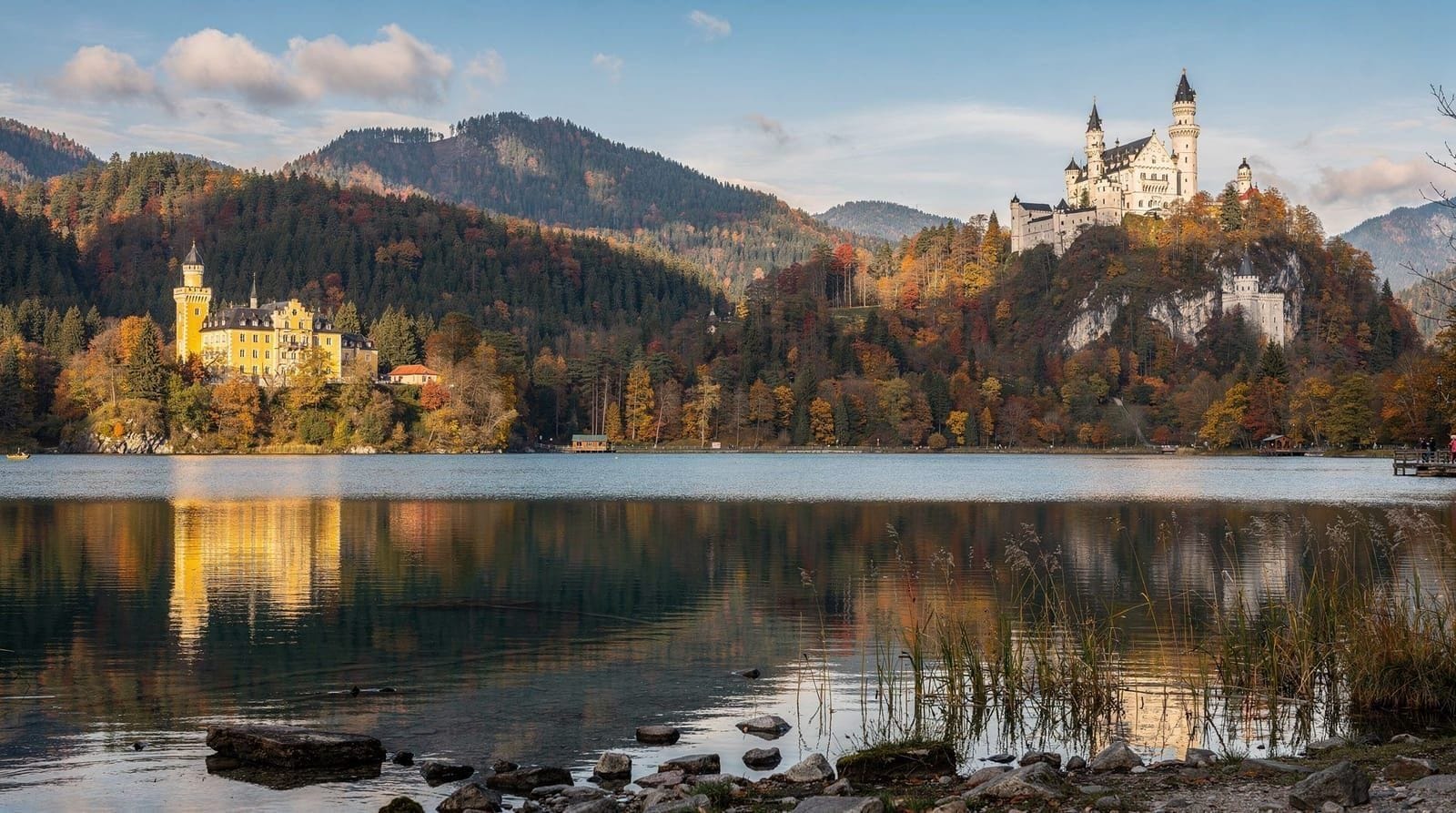
Best castles near Munich: ranked and compared for 2026
From Munich: Neuschwanstein and Linderhof Castle full-day trip
Which is the best castle near Munich to visit?
Neuschwanstein is the most iconic and most visited. For something less crowded with equally impressive interiors, Linderhof or Herrenchiemsee are better choices. Nymphenburg is the easiest to reach — 20 minutes by tram from Munich city centre.
Bavaria’s royal castle circuit: a practical ranking
Bavaria has a disproportionate number of extraordinary castles and palaces for its size, most linked to King Ludwig II of Bavaria and the Wittelsbach dynasty. The problem is not finding them — it is deciding which ones justify a day out from Munich, how to sequence them, and whether the time and cost add up.
This guide ranks the five main castles worth considering, with honest assessments of what each delivers, how difficult they are to reach, and who should bother.
| Where | Neuschwanstein/Hohenschwangau (Fussen), Linderhof (Oberammergau), Herrenchiemsee (Chiemsee island), Nymphenburg (city) |
| Cost | €8–15 per castle; combo/annual passes available |
| Time needed | Half day (Nymphenburg) to full day (the rest) |
| Getting there | Regional train + bus/ferry, or tram 17 for Nymphenburg |
| Best time | May–June and September for lighter crowds |
1. Neuschwanstein Castle — the benchmark
Travel time from Munich: 2 hours (regional train to Füssen + bus 73/78) Adult entry: €15 (2026) Crowding: Very high, June–September
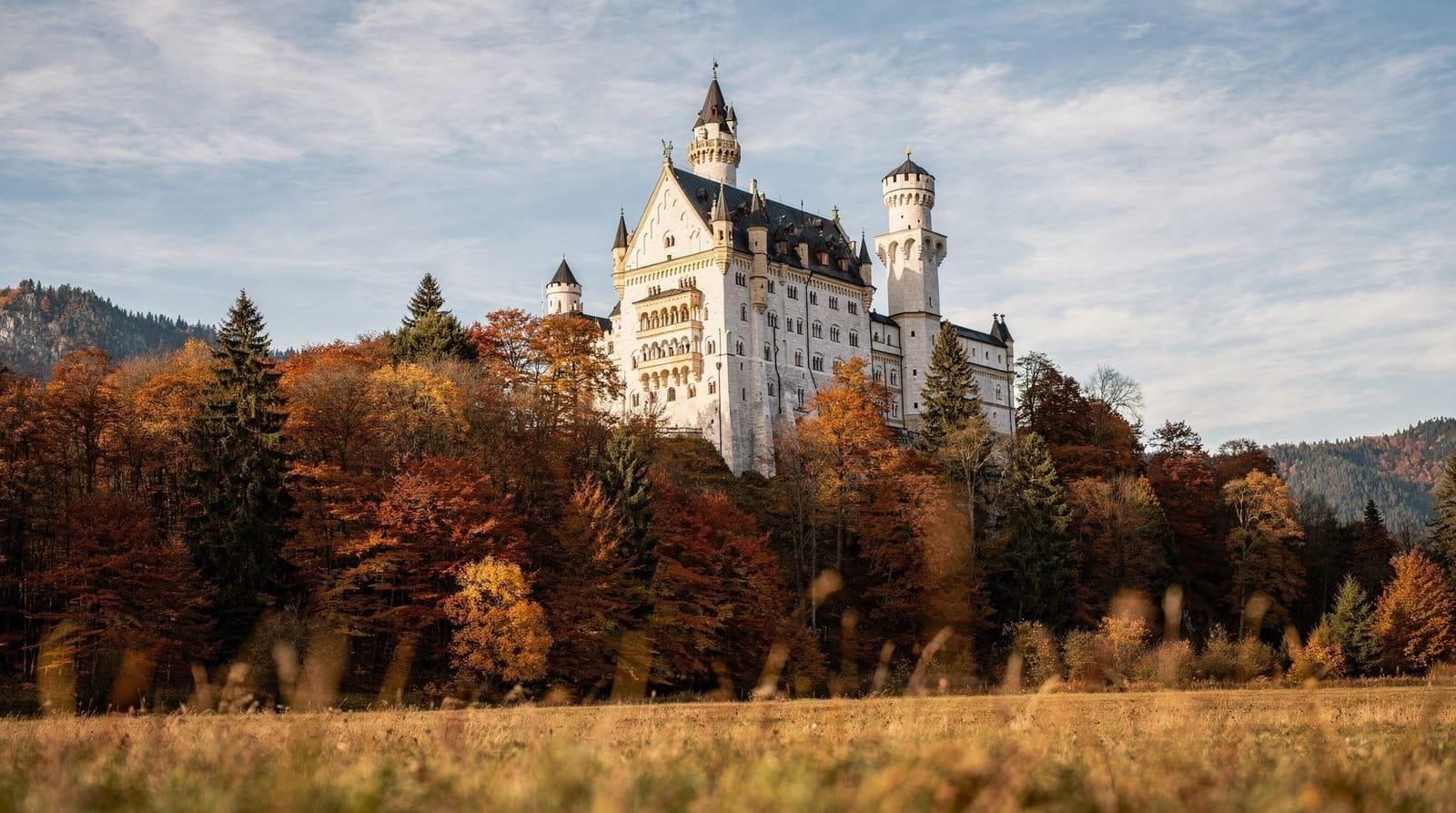
Neuschwanstein is the fairy-tale castle that inspired Disney, sits at 965 metres in the Allgäu Alps, and receives around 1.4 million visitors per year. The silhouette alone — photographed from Marienbrücke bridge — justifies the trip for most people.
The interior is genuinely impressive: the Singers’ Hall occupies the entire fourth floor and was designed for Wagner-era operatic performances that never happened; the Throne Room is a Byzantine extravaganza in gold and lapis lazuli; Ludwig’s bedchamber took 14 craftsmen four years to carve. The catch is that you see a third of the planned rooms — Ludwig died before the castle was finished.
Verdict: Go if this is your only Bavarian castle. Book online well in advance (bayerische-schloesser.de). Avoid July–August if you are crowd-sensitive. Read the full Neuschwanstein guide. 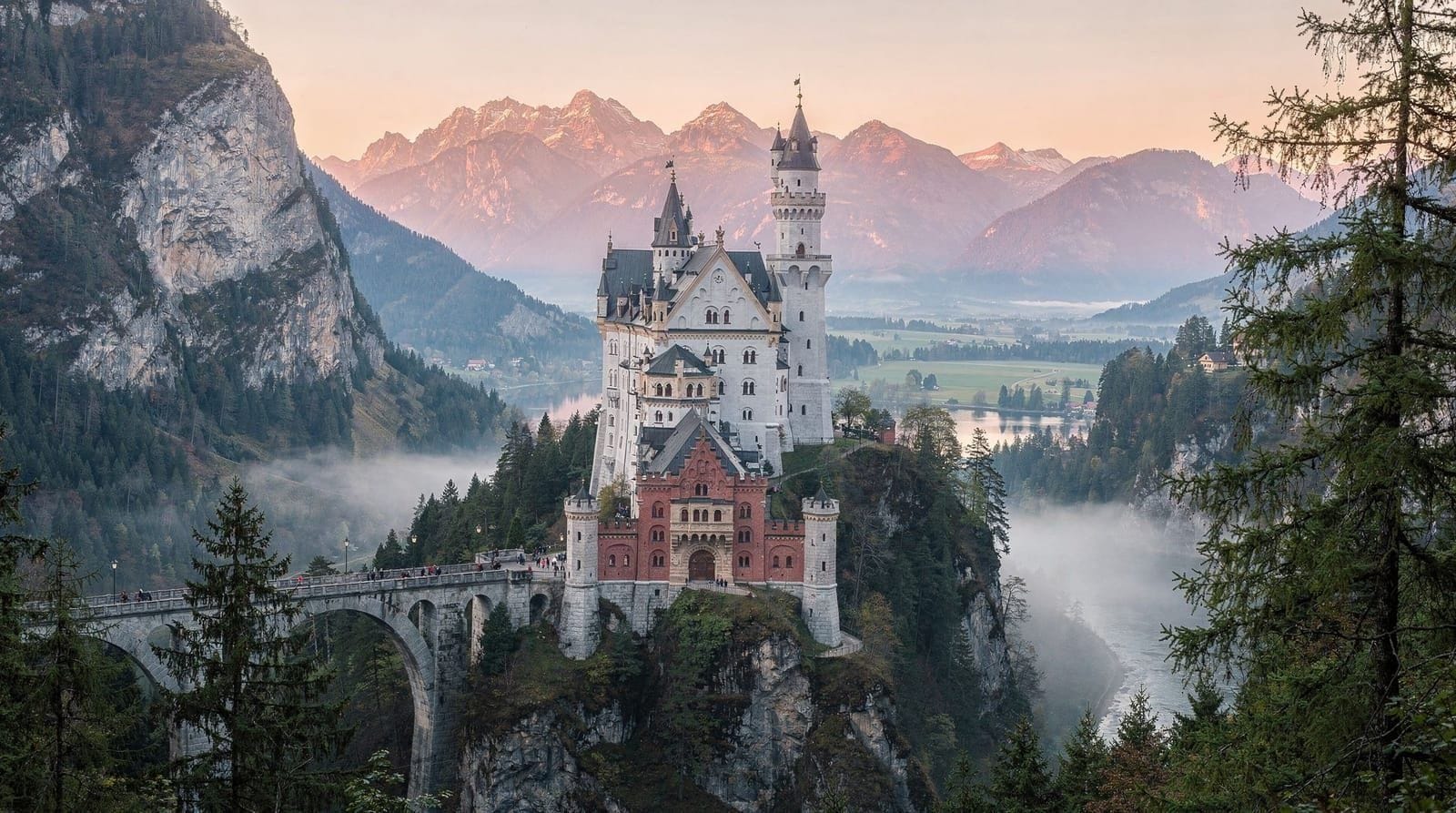 Neuschwanstein and Linderhof Castle full-day tripCheck availability
2. Linderhof Palace — the hidden gem
Travel time from Munich: 2.5 hours (regional train to Oberammergau + taxi/bus, or organised tour) Adult entry: €10 (2026, palace only); gardens included Crowding: Moderate
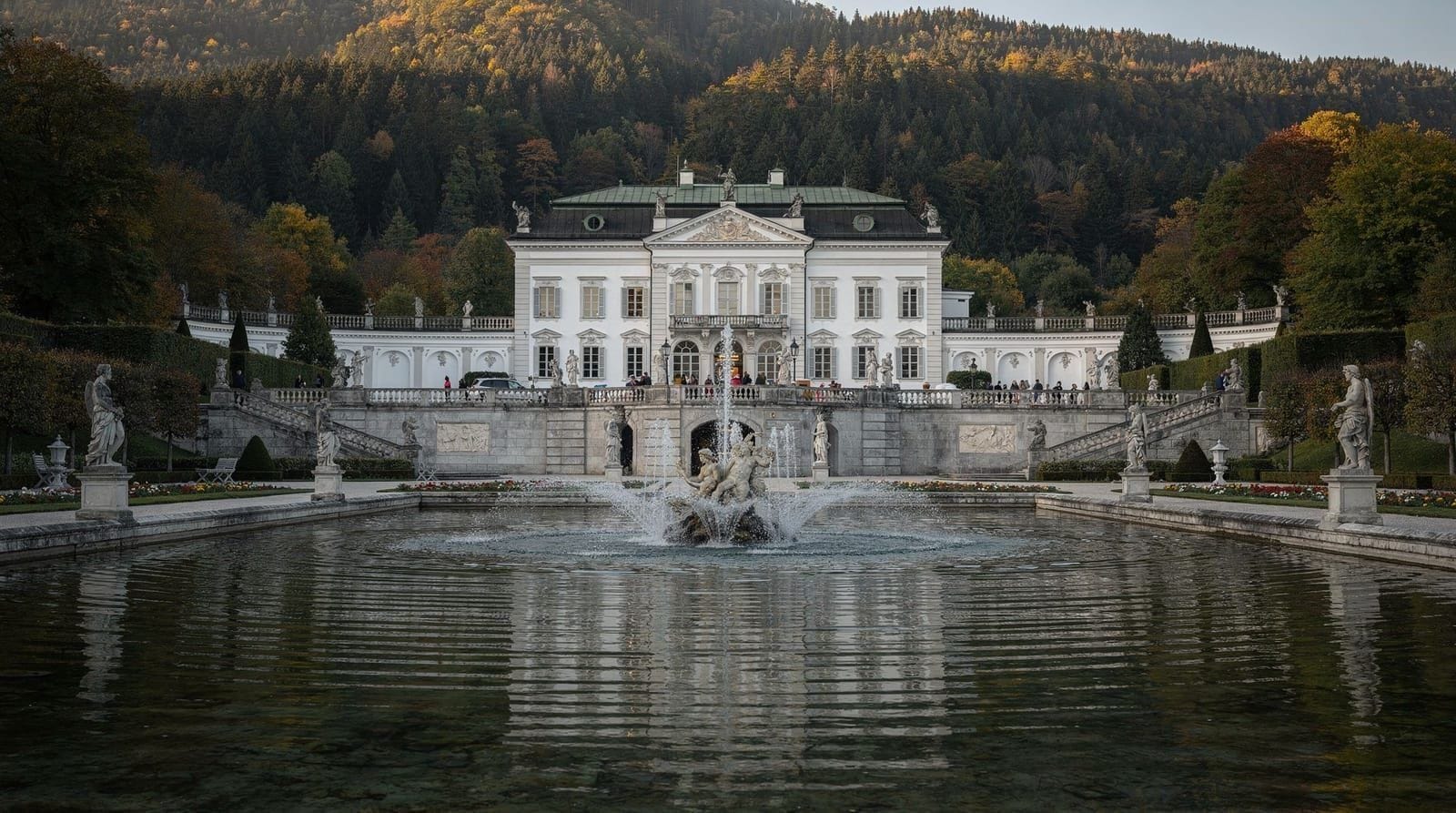
Linderhof is the only castle Ludwig II completed and actually lived in for any length of time. It is small — closer to a hunting lodge than a palace — and set in an alpine valley between Oberammergau and Ettal Monastery. But its interiors are among the most extravagant in Bavaria: a king-size table that could be lowered to the servants’ quarters so Ludwig could dine alone without seeing staff; a Hall of Mirrors; and a bedroom of extreme opulence with a chandelier of 108 candles.
The gardens are elaborate — terraced with a Neptune Fountain, a Moroccan House, and a Moorish Kiosk that Ludwig bought from the 1867 Paris World Exhibition. The Venus Grotto is a man-made stalactite cave with an underground lake and a boat, inspired by the Venusberg in Wagner’s Tannhäuser.
Linderhof is best combined with Neuschwanstein on a long day trip (the castles are about 45 km apart) or as a standalone with time for Oberammergau village and its painted facades.
Verdict: Underrated. Less crowded than Neuschwanstein, more intimate, and Ludwig actually slept here. If you can only visit one Ludwig castle with any depth, Linderhof is the argument. Full guide: Linderhof Palace.
3. Herrenchiemsee Palace — the Versailles of Bavaria
Travel time from Munich: 1.5 hours (regional train to Prien am Chiemsee + ferry to Herreninsel) Adult entry: €11 (2026); ferry extra (€12.50 return approximately) Crowding: Low to moderate (ferry barrier deters casual visitors)
Ludwig II bought the island of Herreninsel in the Chiemsee lake in 1873 to build his tribute to Versailles and Louis XIV of France. The Hall of Mirrors here is longer than the one at Versailles (98 metres, compared to 73 metres at Versailles), and the Grand Staircase rivals anything in Bavaria.
The catch: Ludwig visited only nine days before his death in 1886. The palace was never finished — you tour a central block surrounded by roofless wings. This gives it a haunting, incomplete quality that some visitors find fascinating and others find frustrating.
The journey involves a train to Prien am Chiemsee, a short bus or bike ride to Stock harbour, and a ferry crossing to the Herreninsel (the ferry also stops at Fraueninsel, a small island with an 8th-century monastery). The whole logistics chain takes time but filters out the crowds.
Verdict: Worth it for visitors who want Versailles grandeur without the Paris crowds, who appreciate unfinished ambition, and who enjoy an island setting. Not ideal for visitors short on time. Full guide: Herrenchiemsee Palace. 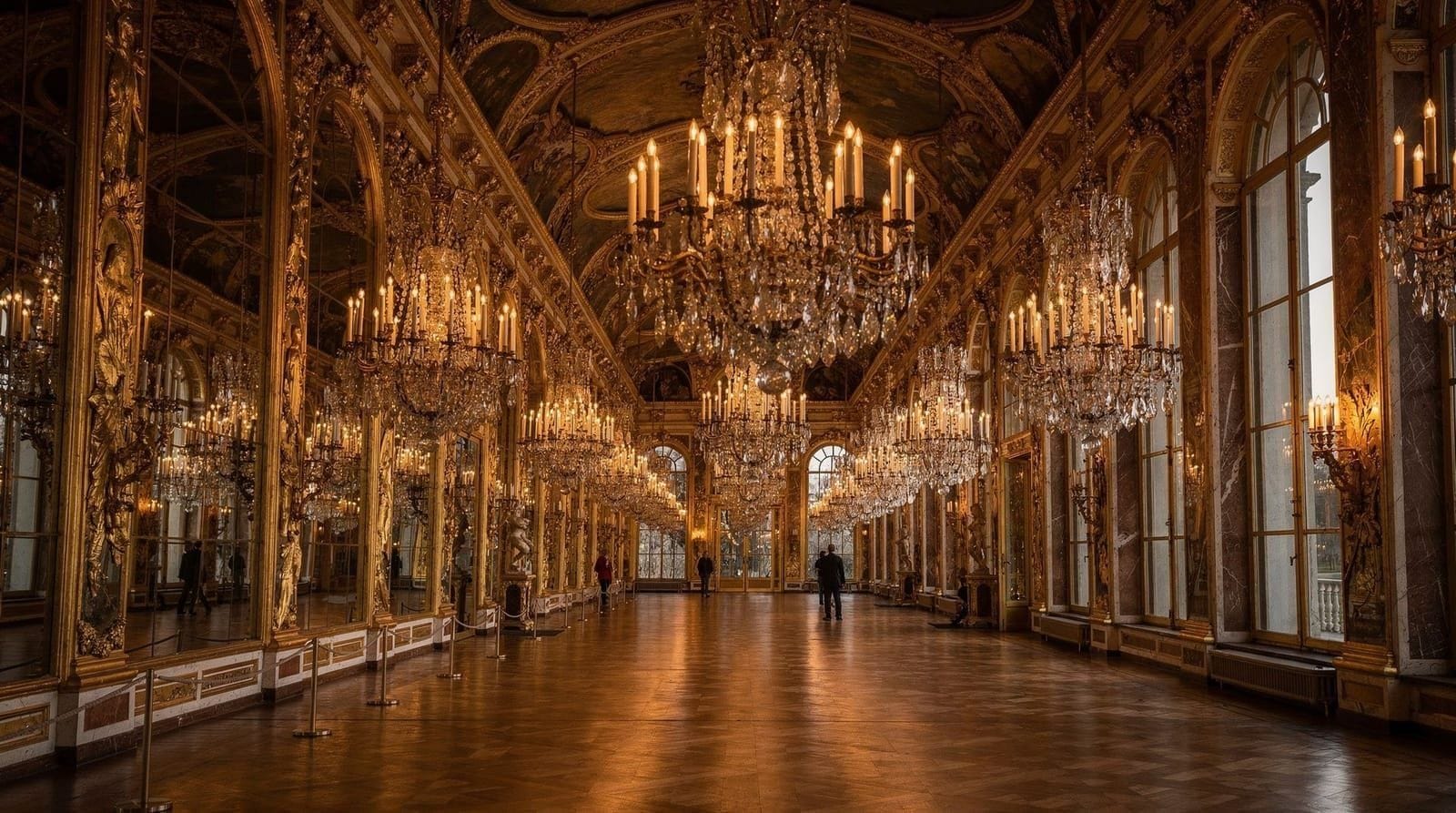 Herrenchiemsee Palace and boat trip day tourCheck availability
4. Nymphenburg Palace — the city option
Travel time from Munich: 18 minutes (tram 17 from Hauptbahnhof to Schloss Nymphenburg) Adult entry: €8 main palace, €15 combo ticket including museums and grounds (2026) Crowding: Moderate; more spread across gardens than interior
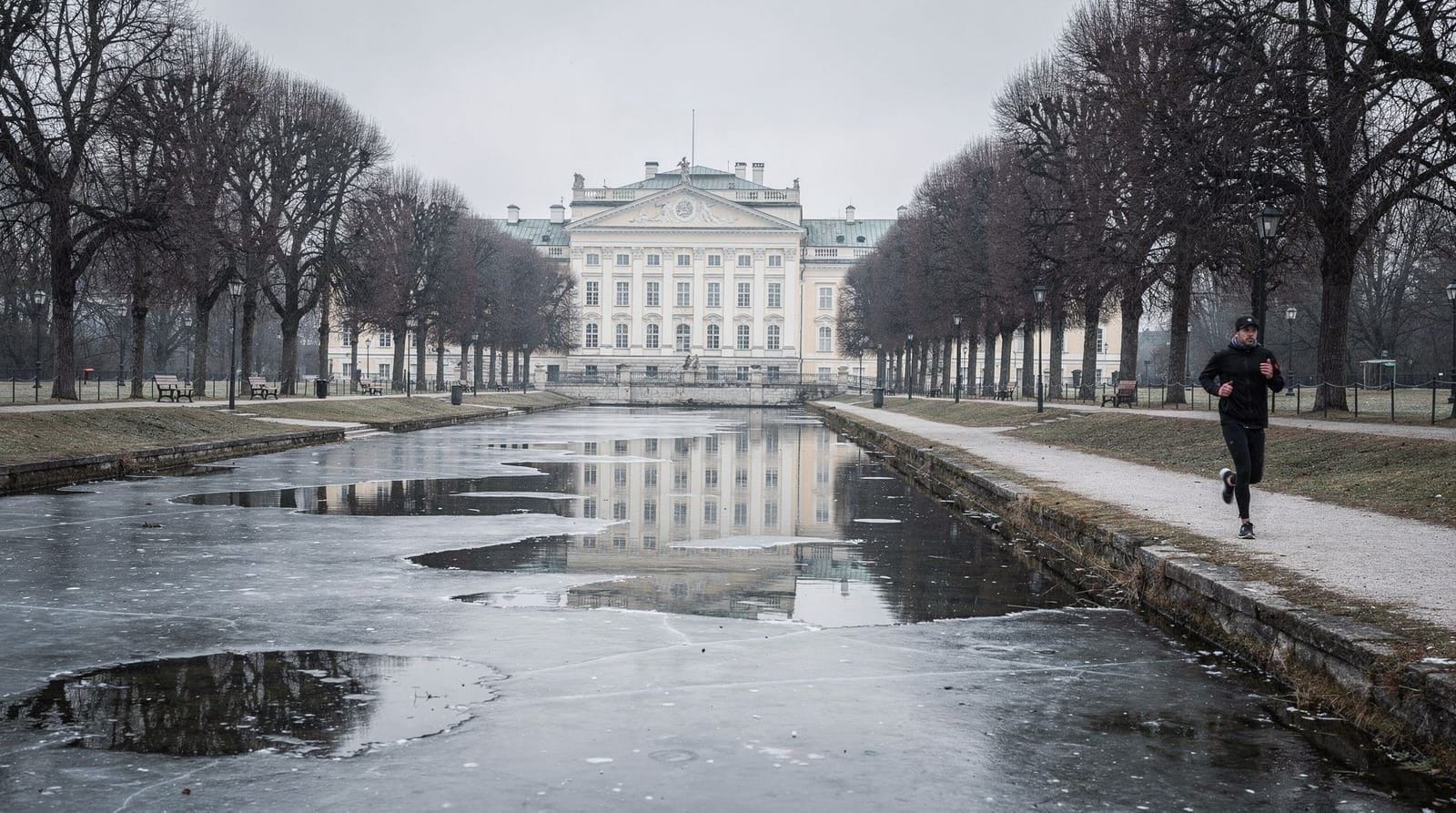
Nymphenburg is the Wittelsbach summer residence that predates Ludwig II by two centuries. Construction began in 1664 under Elector Ferdinand Maria, and the palace expanded through the 18th century into a 632-metre wide baroque complex. Ludwig II was born here in 1845.
The interior includes the Gallery of Beauties — 36 portraits of Munich women commissioned by Ludwig I — and suites decorated in rococo style. But the real draw is the park: 200 hectares of formal gardens, English landscape park, four small garden palaces, and a canal that freezes for ice skating in winter. The Carriage Museum in the south wing houses Ludwig II’s gilded coronation carriage.
Nymphenburg makes the most sense as an add-on to a Munich day rather than a standalone day trip. It is the only castle on this list reachable without leaving the city.
Verdict: Best combined with Munich city sights. For a direct comparison with the Munich Residenz, see Munich Residenz vs Nymphenburg. 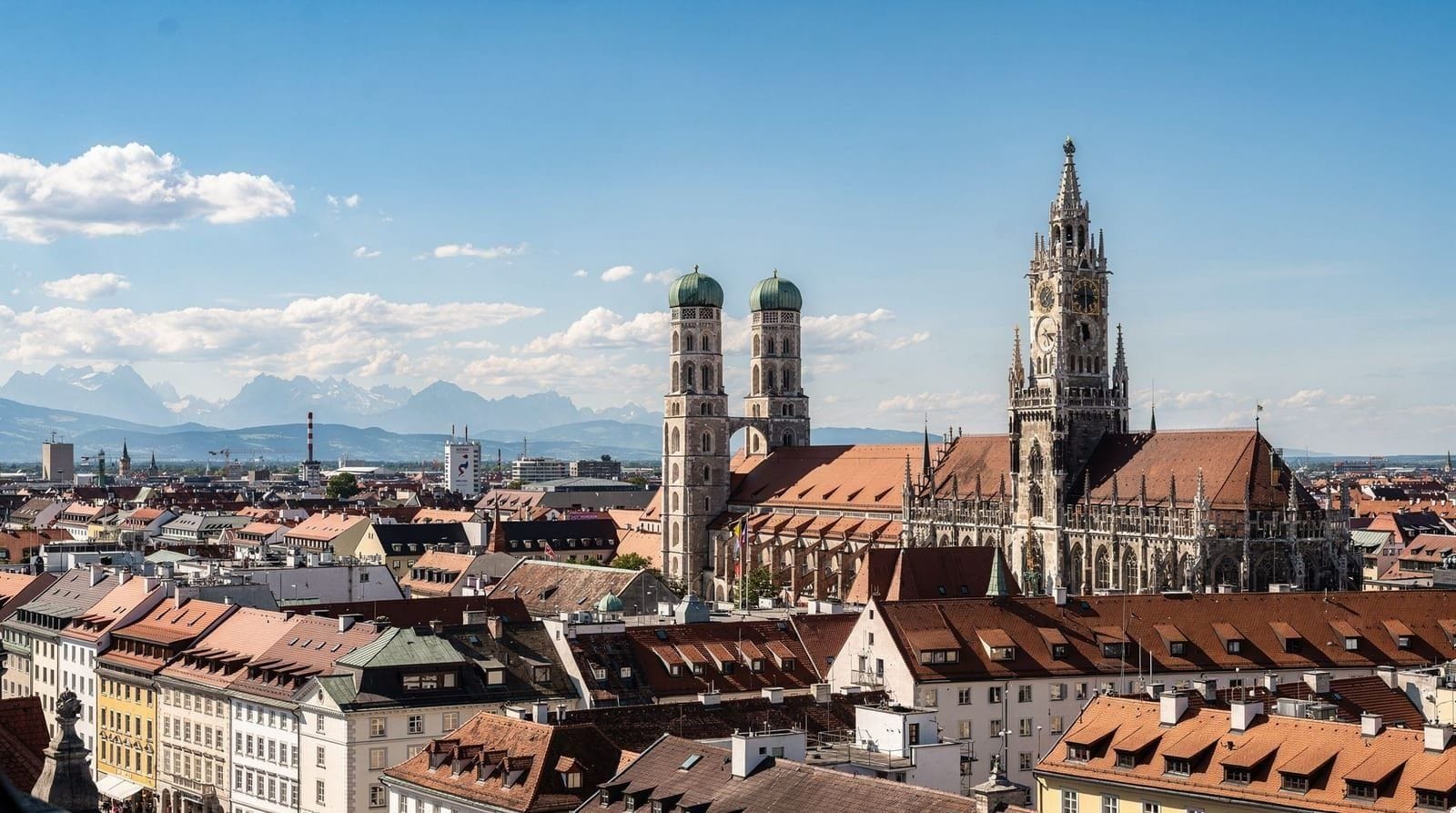 Nymphenburg Palace with official guideCheck availability
5. Hohenschwangau Castle — the childhood home
Travel time from Munich: 2 hours (same route as Neuschwanstein) Adult entry: €15 (2026); combo with Neuschwanstein €25 Crowding: High, but less than Neuschwanstein
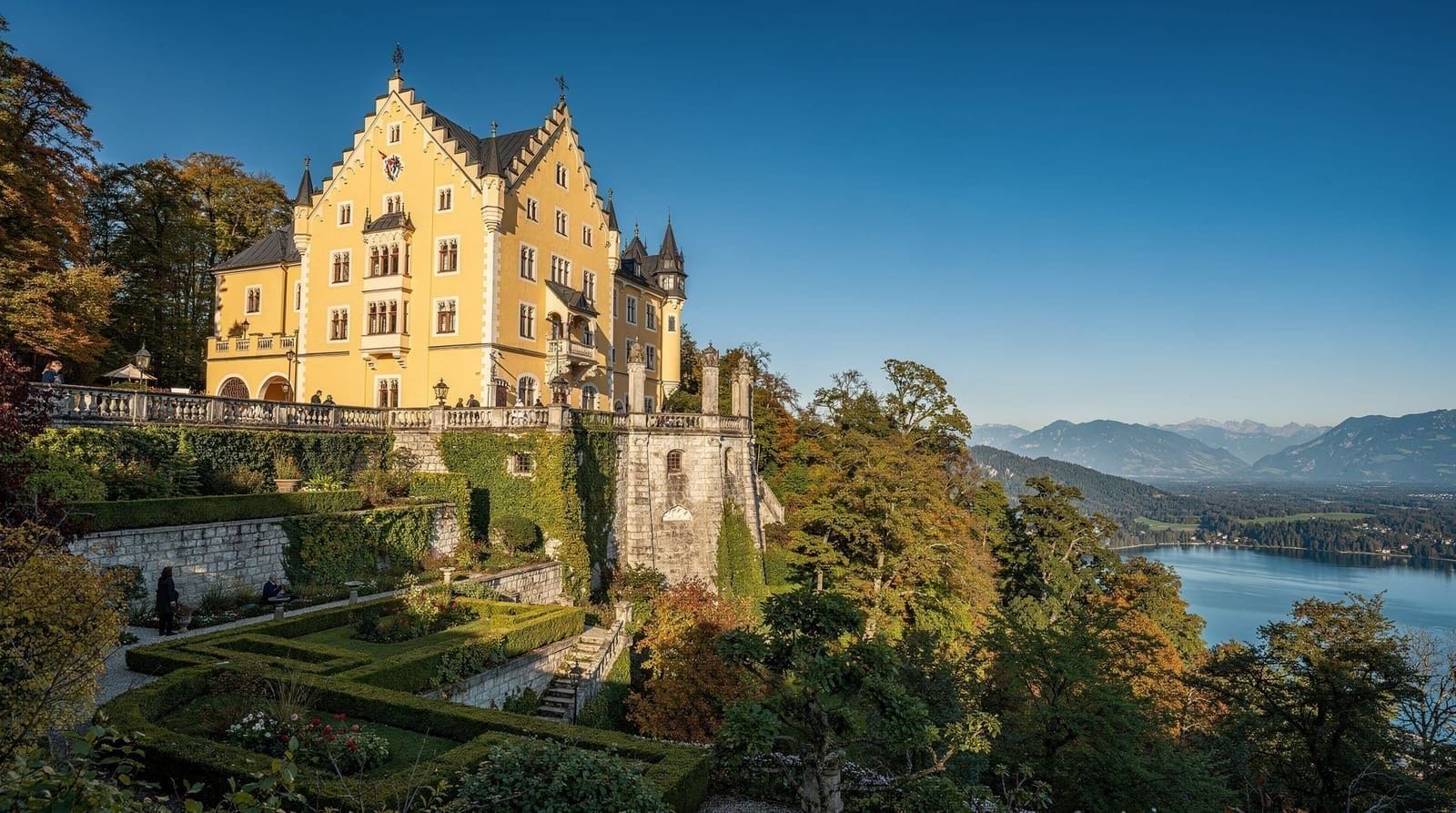
Hohenschwangau is the yellow castle visible from the valley, rebuilt by Ludwig II’s father in neo-Gothic style in the 1830s on medieval foundations. Ludwig grew up here and spent his summers at Hohenschwangau until Neuschwanstein was under construction. The wall murals depicting German legend visibly shaped his architectural imagination.
The interiors feel lived-in rather than theatrical — original furniture, smaller rooms, Ludwig’s actual childhood bedroom. The tour covers more of the building than Neuschwanstein does. It costs the same as Neuschwanstein and the combo ticket saves €5.
Hohenschwangau is best understood as a paired experience with Neuschwanstein rather than a standalone destination. Visiting one without the other misses the biographical thread that connects them. For the full comparison, see Neuschwanstein vs Hohenschwangau.
Verdict: Do not skip Hohenschwangau if you are already at Neuschwanstein. It adds roughly 90 minutes (tour plus walking) and significant context. Full guide: Hohenschwangau.
The story behind the castles: Ludwig II in brief
All five castles on this list share a connection to the Wittelsbach dynasty — Bavaria’s ruling house from 1180 to 1918. But three of them (Neuschwanstein, Linderhof, Herrenchiemsee) are inseparably linked to King Ludwig II of Bavaria, and understanding his story transforms what would otherwise be an architectural sightseeing trip into something more interesting.
Ludwig II became king at 18 in 1864, inheriting a Bavaria increasingly dominated by Prussian politics and the coming German unification under Bismarck. He hated statecraft and preferred opera, architecture, and solitude. He was Richard Wagner’s principal financial backer — his personal funds enabled the composition and premiere of Tristan und Isolde and the entire Ring Cycle. His castles were built as a physical extension of the mythological world he found in Wagner’s operas and in medieval German legend.
He financed all three castles from the Wittelsbach private treasury, eventually borrowing from banks across Europe. By 1885, his debts had reached the equivalent of hundreds of millions of euros in today’s terms. His ministers, with the support of his uncle Prince Luitpold, had him declared mentally incapacitated in June 1886. He was taken to Berg Castle on the Starnberger See, where he died the following evening under disputed circumstances — found floating in shallow water alongside the physician who had signed his incapacity certificate.
He was 40 years old. Neuschwanstein was unfinished. Linderhof was the only one of the three he had actually completed. Herrenchiemsee had been open to him for nine days total.
The castles he left behind became public attractions weeks after his death and have been generating revenue for Bavaria ever since — an irony he would not have appreciated.
For the full historical narrative, see King Ludwig II castles guide and Munich royal history.
Seasonal timing: which castle to visit when
Each castle presents differently across the seasons, and timing matters more than most visitors realise.
Neuschwanstein is most dramatic in winter with snow, but Marienbrücke closes due to ice (November–April). The interior is unchanged year-round. In July and August, the car park fills before 9am. Spring (May–June) and autumn (September–October) are the clearest choices for crowd management.
Linderhof is best from May through June for its garden — the Neptune Fountain runs from April to October, the flower beds are at their best in early summer. The Venus Grotto operates with its stage lighting and colored illumination of the underground lake — this is the most dramatic element and worth timing your visit around the grotto tours.
Herrenchiemsee benefits from calm summer days for the lake crossing. Rough weather on the Chiemsee can make the ferry crossing unpleasant and occasionally suspend service. June through September is best. The Hall of Mirrors is particularly impressive on a bright morning when light streams through the west-facing windows — book an early afternoon tour if possible.
Nymphenburg is the most season-neutral, because the palace is beautiful in all weather and the park is a year-round amenity. The fountain in the formal garden runs from April through October. The canal freezes for ice skating some winters, making it one of Munich’s more unexpected seasonal activities. Christmas and New Year visits to the park are peaceful and underrated.
Hohenschwangau has no seasonal reason to prioritise — it follows Neuschwanstein’s patterns. If you are visiting Neuschwanstein in shoulder season (May or October), Hohenschwangau is equally accessible and usually has walk-up availability.
What good planning looks like: multi-castle itinerary ideas
For visitors with 3–4 days in Munich and Bavaria, here is how to sequence the castles without backtracking or wasted travel time.
Day 1: Nymphenburg — morning visit paired with Munich Altstadt in the afternoon. Minimal travel overhead. See Nymphenburg palace visit guide.
Day 2: Neuschwanstein and Hohenschwangau — full day. Early RB train from Munich to Füssen, bus to castle area, morning Hohenschwangau tour, midday Neuschwanstein tour, afternoon at Marienbrücke for photos, return to Munich by early evening. See castles day trips by train.
Day 3: Herrenchiemsee — standalone day. Train to Prien, ferry to Herreninsel, palace tour, optional Fraueninsel add-on (the small island with its Benedictine monastery), return to Munich for dinner. See Herrenchiemsee palace guide.
Day 4: Linderhof — best combined with Oberammergau and its painted village facades, or Ettal Monastery nearby. Requires careful timetable planning by public transport, or an organised tour. See Linderhof palace guide.
For a dedicated 3-day castle itinerary with full scheduling, see Munich castles 3-day itinerary.
Multi-castle pass: the Bayern14 Annual Ticket
If you plan to visit two or more Bavarian state palaces, the Bayern14 Annual Ticket (Jahreskarte) is worth calculating. At €35 per adult (2026 price), it covers unlimited entry for one year to all 40+ Bavarian state palaces and residences — including all five castles on this list plus the Munich Residenz and its Treasury.
Two visits pay it off: Neuschwanstein + Linderhof alone would cost €25 individually versus €35 for the pass, which then covers everything else for free. If you are visiting Bavaria for a week with castle-heavy itinerary, buy the pass on day one.
Honest logistics comparison
| Castle | Train time from Munich | Walking | Effort level | Crowds |
|---|---|---|---|---|
| Nymphenburg | 18 min (tram) | None | Low | Moderate |
| Hohenschwangau | 2h 15min | 20 min uphill | Medium | High |
| Neuschwanstein | 2h 15min | 30 min steep | Medium-high | Very high |
| Herrenchiemsee | 1h 30min + ferry | 15 min on island | Medium | Low |
| Linderhof | 2h 30min (complex) | Minimal | High (logistics) | Moderate |
For detailed public transport routes to each castle, see castles day trips by train. For route planning across Bavaria, the Bayern-Ticket guide covers the day pass that makes most of these trips financially sensible.
If you are planning a 3-day castle-focused itinerary, see Munich castles 3-day itinerary.
Guided tour or independent by train: which suits your castle day
The five castles split cleanly into two logistics categories, and the right choice changes the value equation.
| Castle | Independent by train | Guided tour | Best pick |
|---|---|---|---|
| Neuschwanstein + Hohenschwangau | Straightforward — train to Fussen, bus 73/78 | Removes ticket-queue stress, adds commentary | Either; tour wins in peak summer |
| Linderhof | Awkward — infrequent bus from Oberammergau | Handles the difficult connection | Guided tour, unless you have a car |
| Herrenchiemsee | Simple — train to Prien, ferry to the island | Adds context on the ferry crossing | Either |
| Nymphenburg | Trivial — tram 17 from the Hauptbahnhof | Rarely necessary | Independent |
| Neuschwanstein + Linderhof same day | Not realistic by public transport | The only practical way to combine them | Guided tour |
For visitors without a rental car who want Neuschwanstein and Linderhof on the same day, an organised tour is genuinely the only sensible option — see castles day trip by train for exactly why the public-transport connection between the two does not work for a day trip. Neuschwanstein and Linderhof Castle full-day tripCheck availability
What to pack and wear for a Bavarian castle day
Castle interiors are strictly controlled environments — no large bags, no flash photography, and often no photography at all inside Neuschwanstein and Linderhof (exterior and grounds photography is always fine). Plan accordingly:
- Footwear: Cobbled courtyards, gravel paths and, at Neuschwanstein, a genuinely steep 30-minute uphill walk from the valley. Trainers or walking shoes, not sandals.
- Layers: Alpine weather changes quickly, particularly at Neuschwanstein and Linderhof, both at higher elevation than Munich. A packable rain layer is worth carrying even on a forecast-dry day.
- Small bag: Large backpacks and suitcases are not permitted inside the interiors and must be left at a bag check or the ticket centre. Day bags are fine.
- Cash and card: Ticket centres and cafés accept cards, but small on-site kiosks (especially at Herrenchiemsee’s island cafés) sometimes prefer cash.
- Printed or downloaded ticket: Mobile signal at Neuschwanstein’s valley ticket centre and on the Chiemsee ferry can be patchy — screenshot your booking confirmation rather than relying on live connectivity.
For the practical transport details behind each of these visits, castles day trip by train and the Bayern-Ticket guide cover routes and current fares.
Frequently asked questions about the best castles near Munich
Which castle is closest to Munich city centre?
Nymphenburg Palace, at 8 kilometres from Marienplatz, is the most accessible. Take tram 17 from the Hauptbahnhof to Schloss Nymphenburg in about 18 minutes. Entry costs €8 for the main palace in 2026.
How far is Neuschwanstein from Munich?
About 130 kilometres southwest by road, or 2 hours by regional train from Munich Hauptbahnhof to Füssen, then bus 73/78 to the castle area. Allow a full day for a comfortable visit.
Which castle is least crowded?
Herrenchiemsee is consistently the least crowded of Ludwig II’s three main castles, because reaching it requires a ferry across the Chiemsee lake. Linderhof is also less crowded than Neuschwanstein.
Can I visit multiple castles in one day?
Neuschwanstein and Hohenschwangau can be combined in a single day. Linderhof can be combined with Neuschwanstein on an organised tour, though it is a long day. Herrenchiemsee works best as a standalone day trip. Nymphenburg is easy to pair with Munich city sights.
Are Bavaria’s royal palaces covered by a single pass?
Yes. The Bayern14 Annual Pass costs €35 per adult and gives unlimited entry to all Bavarian state palaces for one year, including all five castles on this list. For a multi-site visit over several days, it pays for itself quickly.
Which castle has the best gardens?
Nymphenburg has the largest palace gardens in Bavaria — a formal French garden with fountains and a huge English landscape park beyond. Linderhof has elaborate terraced gardens with a Neptune fountain. Neuschwanstein has no formal gardens.
Is Hohenschwangau worth visiting if you’re already seeing Neuschwanstein?
Yes, with a full day. Hohenschwangau provides the childhood context for Ludwig II and is reached from the same ticket centre. The combo ticket saves €5 per adult. See our full Neuschwanstein vs Hohenschwangau comparison for the breakdown.
Top experiences
Bookable activities with verified prices and instant confirmation on GetYourGuide.