Nymphenburg Palace: the complete visitor's guide
Munich: Nymphenburg Palace with official guide
Is Nymphenburg Palace worth visiting in Munich?
Absolutely. Nymphenburg is Munich's largest palace, far less crowded than Neuschwanstein, and the combination ticket at €15 covers the main palace, Ludwig I's Gallery of Beauties, the stunning Marstallmuseum with Ludwig II's gilded sleighs, and the rococo Amalienburg hunting lodge — all set in a free 200-hectare park.
| Where | Schloss Nymphenburg, 8km northwest of central Munich |
| Cost | around €8 palace only, around €15 full combination ticket |
| Time needed | 2-3 hours for palace, Marstallmuseum and Amalienburg; half a day with the park |
| Getting there | Tram 17 to Schloss Nymphenburg, around 25 minutes from the centre |
| Best time | opening time for a quiet Grand Hall; any season for the free park |
Munich’s grandest palace — and its best-kept secret
There is a quiet irony at the heart of Munich tourism. Every year, millions of visitors make the long journey south to Neuschwanstein — queuing for hours, booking months in advance, crowding onto guided tours — while a palace that is larger, older, richer in royal history, and set in a free 200-hectare park sits just 8 kilometres northwest of the city centre, largely undiscovered by the same crowds.
Nymphenburg Palace is not the flashy fairy-tale castle of postcards. It does not perch dramatically on a mountain. But for anyone genuinely interested in Bavarian royal history, decorative arts, or simply a beautiful half-day away from the tourist trail, it is one of the most rewarding places in Munich. The main palace is magnificent. The Marstallmuseum — home to Ludwig II’s gilded sleighs — is extraordinary. The Amalienburg hunting lodge contains the finest rococo interior in Bavaria. And the park, which surrounds everything, costs nothing to enter.
This guide covers everything you need to plan a visit: tickets, transport, what is worth your time, what you can safely skip, and how to combine Nymphenburg with the rest of a Munich trip.
A brief history of Nymphenburg
Nymphenburg’s story begins in 1662, when Electress Henriette Adelaide of Savoy gave birth to a long-awaited male heir — Maximilian Emanuel. In gratitude, her husband Ferdinand Maria, Elector of Bavaria, commissioned a summer villa on the western edge of Munich. Construction began in 1664 and the original central block was completed by 1675. It was small by later standards — an Italian-style five-storey villa with a single grand hall.
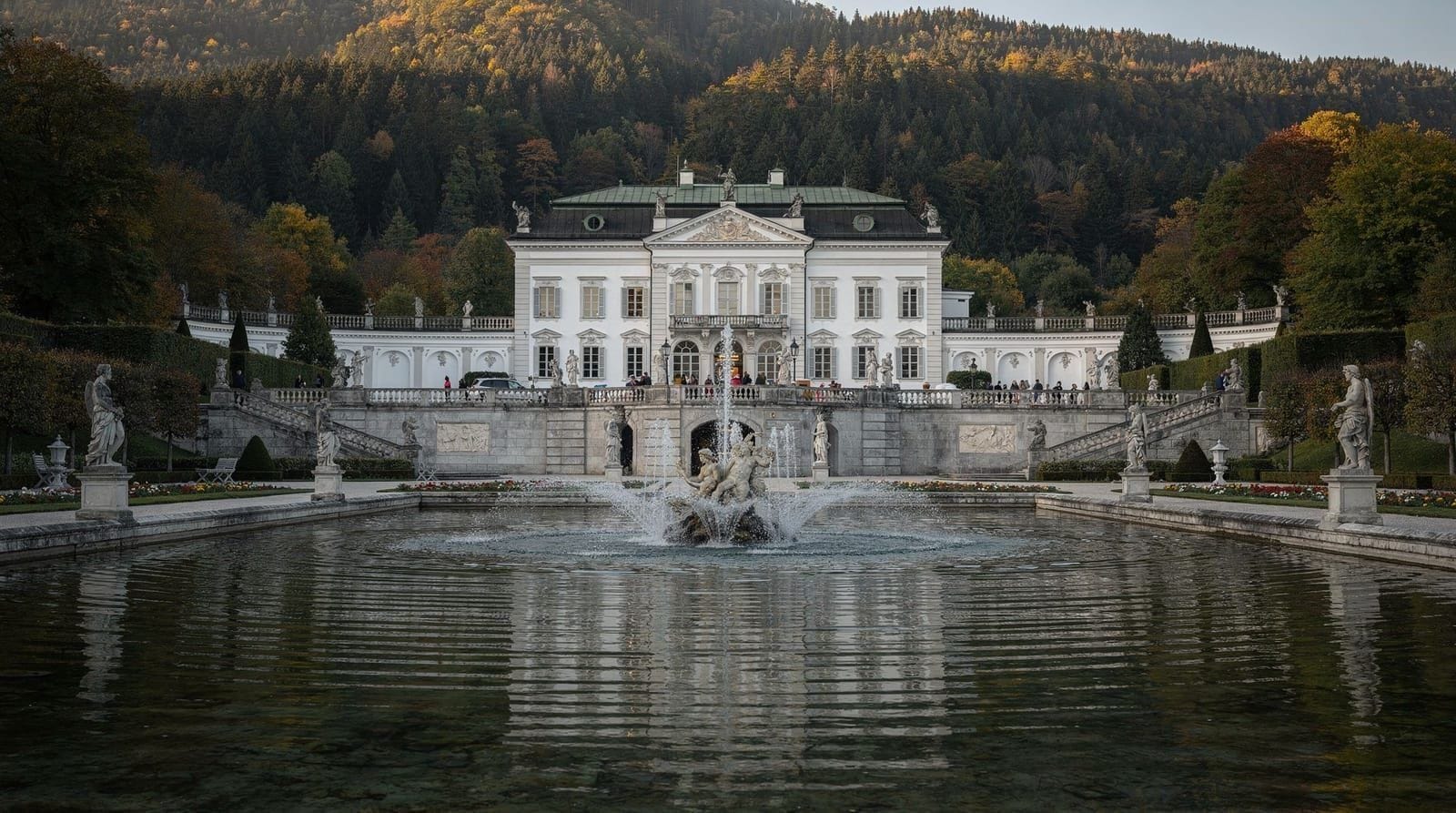
The palace you see today bears little resemblance to that original building. Over the next century, successive Wittelsbach rulers expanded it aggressively. Maximilian Emanuel, the elector who was born there, added the two large residential wings and the distinctive long, curved connecting galleries in the early 18th century. His son Karl Albrecht added the outriding pavilions that gave the facade its current breadth of nearly 700 metres. The result is one of the longest palace facades in Europe, stretching across the formal grounds in a great pale arc.
Throughout this expansion, the palace was redecorated in the prevailing styles of each generation. The Grand Hall at the centre received its elaborate fresco by Johann Baptist Zimmermann in 1755 — a swirling baroque ceiling celebrating the seasons and the ruling family. Other rooms were updated in neoclassical style in the early 19th century under King Maximilian I Joseph and his son Ludwig I, each leaving their imprint on the interiors.
The Wittelsbach dynasty used Nymphenburg as their summer residence for over two centuries. It was here, on 25 August 1845, that the future King Ludwig II was born. Though Ludwig II would go on to build his own personal castles at Neuschwanstein, Linderhof, and Herrenchiemsee, Nymphenburg was never really his project. It was the family home — a dynastic possession rather than a personal obsession. That distinction matters when you visit. The palace reflects three centuries of Wittelsbach taste and power, not the romantic fixation of a single eccentric king.
Getting to Nymphenburg Palace
Nymphenburg is accessible and the journey is straightforward.
By tram: Take tram line 17 from the city centre — stopping at Karlsplatz (Stachus), Rotkreuzplatz, or directly from near the Hauptbahnhof. Ride to the Schloss Nymphenburg stop. The journey takes about 25 minutes from the centre. This is the easiest and most pleasant option.
By car: Free parking is available on the access road near the main gate. If you are combining Nymphenburg with other western Munich attractions, driving gives you flexibility. The palace is well signposted from the ring roads.
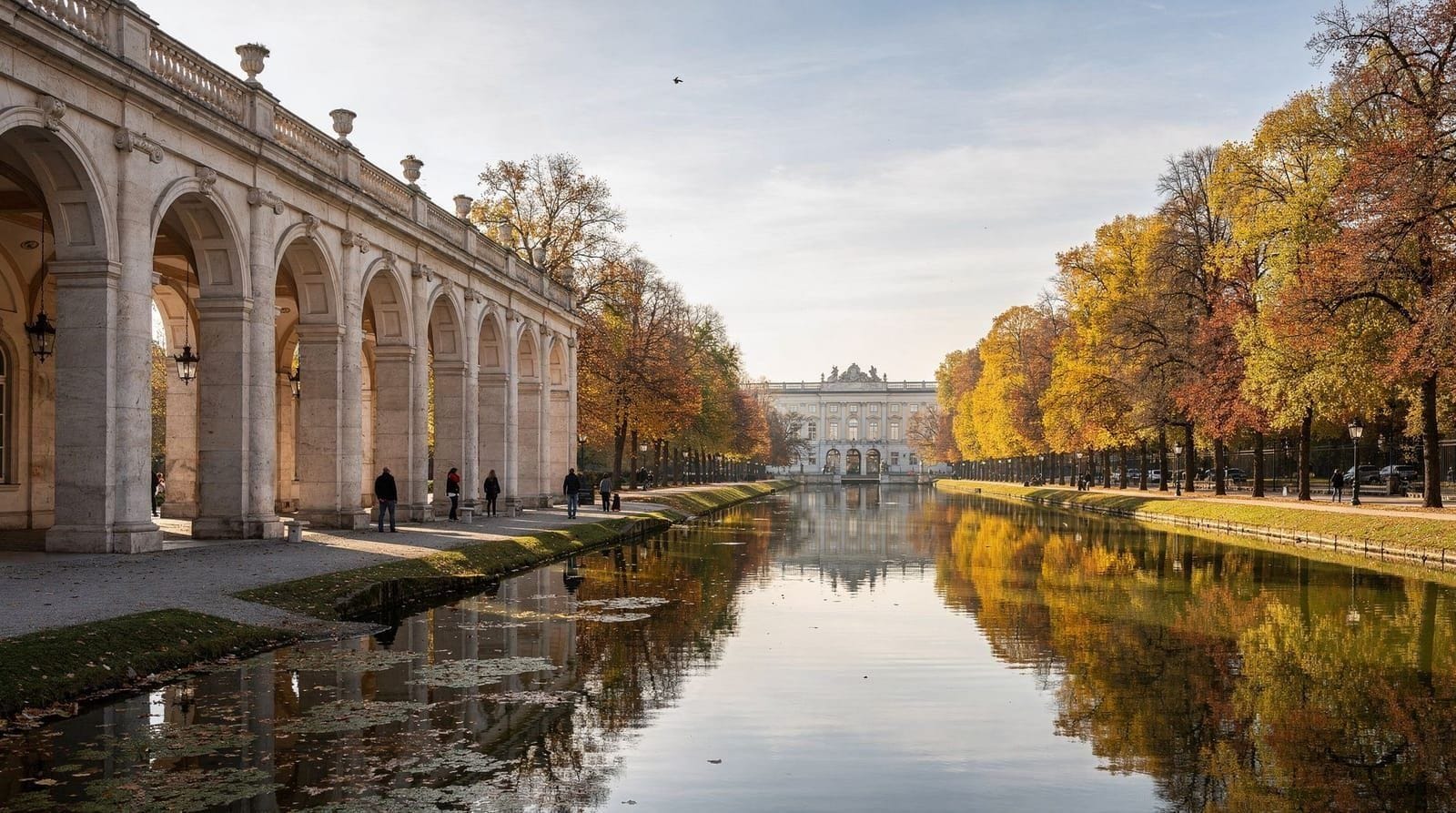
By bike: Munich is an excellent cycling city, and the ride from the centre along the Nymphenburger Kanal — the long formal canal that leads to the palace gates — is genuinely beautiful. Bike rental is available in several places near the palace park.
Avoid rideshare or taxi unless you need the convenience; the tram connection is reliable and drops you practically at the front gate.
Ticket prices and opening hours in 2026
Tickets:
- Palace only: €8 adults, €7 reduced
- Combination ticket (palace + all park museums): €15 adults, €13 reduced
- Under 18: free entry
- Audio guide: €3.50 (strongly recommended — the rooms lack context without one)
The combination ticket is worth buying for almost everyone. The Marstallmuseum and Amalienburg alone justify the price difference, and you can visit the smaller pavilions at your own pace without additional cost.
Opening hours:
- April to mid-October: daily 9am to 6pm
- Mid-October to March: daily 10am to 4pm
- Park: open year-round, sunrise to sunset, free
If you want a guided experience with a local expert who can bring the history to life, a guided tour of the palace and grounds is a worthwhile investment, particularly for first-time visitors unfamiliar with Wittelsbach history.
What to see inside the palace
The Grand Hall
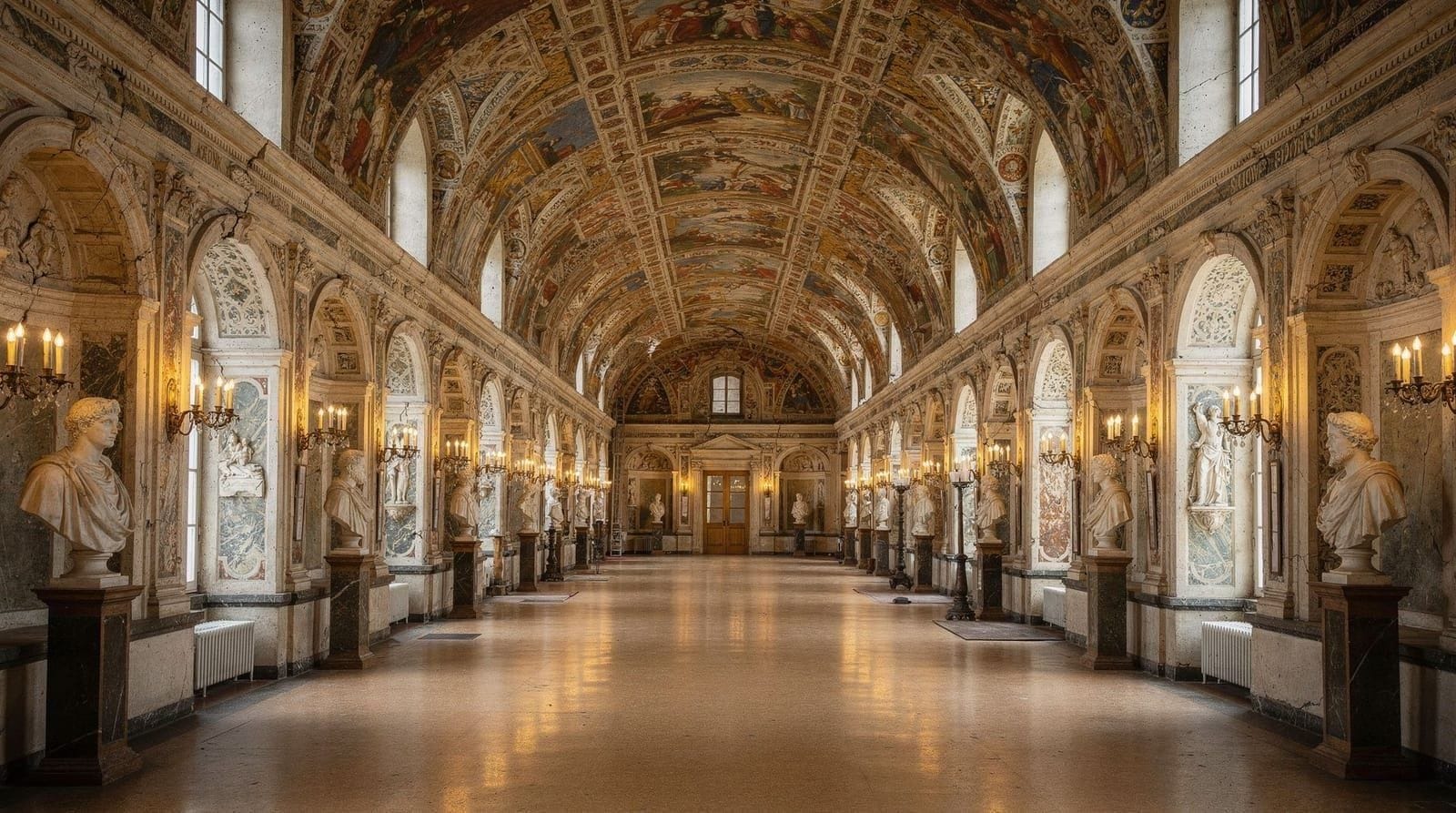
The central hall — the Steinerner Saal — is the showpiece of the main palace building and the first room you enter after the ticket desk. It runs the full height of the building and is crowned by Johann Baptist Zimmermann’s 1755 fresco, an explosion of colour depicting the goddess Flora surrounded by allegorical figures of the four seasons. The walls are stucco, the chandeliers enormous, and on a clear day the light floods in from both the garden-facing and courtyard-facing windows.
Spend time here. It is one of the finest baroque interiors in Bavaria.
The Royal Apartments
Moving outward from the Grand Hall, the royal apartments stretch along the main block in both directions. The rooms progress through the major decorative styles of the 18th and 19th centuries — baroque, rococo, and neoclassical — reflecting the successive generations who lived here.
The most visited of these rooms is the Gallery of Beauties in the southern wing, commissioned by King Ludwig I in the 1820s and 1830s. Ludwig I — grandfather of Ludwig II — asked court painter Joseph Karl Stieler to portray 36 women of Munich society whom the king considered beautiful. The gallery includes noblewomen, bourgeois wives, an actress, and the Irish-born dancer Lola Montez, whose relationship with Ludwig I eventually contributed to his abdication during the revolutions of 1848. The portraits are charming as individual works and compelling as a social document. Whatever else you think of Ludwig I, his eye for talent was not limited to architecture.
The northern wing contains the birth chamber of Ludwig II — a room preserved largely as it was on 25 August 1845, when the future king was born here. There is something striking about standing in this room knowing that the boy who would spend his life fleeing court obligations and building fantasy castles in the mountains began his life in the formal heart of the very dynasty he would later seem to reject. For more on Ludwig II’s own castles, the king Ludwig II castles guide covers all three in detail.
The Marstallmuseum — the best thing on-site
If you visit only one part of Nymphenburg beyond the main palace, make it the Marstallmuseum in the southern wing of the palace outbuildings. This is the Royal Stables museum, and it contains one of the most spectacular collections of royal vehicles in Europe.
The ground floor holds an extraordinary series of state coaches, most notably the gilded coronation coach of Charles VII from the 1740s — a vast golden confection of carved wood and painted panels that conveys the theatrical ambition of 18th-century royal spectacle. Nearby are the travelling coaches used by later Wittelsbach rulers, progressively more restrained as tastes shifted from baroque excess to neoclassical dignity.
But it is the upper floor that stops most visitors in their tracks: Ludwig II’s sleighs. The collection includes several winter carriages commissioned by the king in the 1870s and 1880s, gilded to an almost absurd degree and decorated with carved swans, golden armour, and romantic motifs drawn from Wagnerian opera and Germanic mythology. Ludwig II famously used these sleighs to travel at night through the Bavarian countryside, avoiding courtiers and the public, accompanied only by his footmen. Seeing them in person, under the museum’s lighting, conveys something that photographs do not — the scale of the gold work, the delicacy of the carving, the simultaneous grandeur and melancholy of a king who wanted to disappear into his own fantasies.
A specialist tour of the Marstallmuseum is a good option if the royal carriage collection is your main interest — guides can place the individual pieces in the context of Ludwig II’s psychology and Bavaria’s political history in a way that the museum labels alone cannot.
The Marstallmuseum is included in the combination ticket and is open during the same hours as the palace.
The Porcelain Museum: an easy add-on most visitors skip
Tucked into the main palace building, the Nymphenburg Porcelain Museum displays pieces from the Nymphenburg Porcelain Manufactory, which has produced fine ceramics in the palace’s north wing since 1761 and is still an active workshop today. The 18th-century figures and tableware on display are genuinely high quality, and the museum makes an easy add-on since it sits along the same route as the main palace rooms — there’s no separate walk required, unlike the Marstallmuseum or Amalienburg. It’s a quieter stop than the Grand Hall, usually with only a handful of other visitors, and works well as a short breather between the more crowded highlights. Fans of decorative arts should not skip it; anyone pressed for time can walk through in ten minutes without feeling they’ve missed something essential.
The park pavilions: Amalienburg is the one to see
The Nymphenburg park contains four smaller buildings that are included in the combination ticket. They are scattered through the grounds and require a walk of at least 20 to 30 minutes to visit all of them. If your time is limited, be selective.
Amalienburg — do not miss this
The Amalienburg hunting lodge, tucked into the southern section of the park, is the single most beautiful interior in the entire Nymphenburg complex. Commissioned by Elector Karl Albrecht for his wife Maria Amalia in the 1730s and designed by Francois de Cuvilliés the Elder, it is a masterpiece of south German rococo on a human scale.
The building is small — three main rooms and a few service spaces — but the decoration is overwhelming in the best possible sense. The central Hall of Mirrors is covered floor to ceiling in silver-painted plaster ornament: vines, birds, hunting horns, and mythological figures dissolving into each other in a continuous wave of pale silver on pale blue. It is more delicate and more accomplished than anything in the main palace, and most visitors find it completely unexpected. Even people who come to Nymphenburg mainly to see the Grand Hall or the Ludwig II sleighs often leave saying the Amalienburg was the highlight.
Allow at least 20 minutes here. Come early if you can — the small building can feel crowded with more than a few tour groups inside simultaneously.
The other pavilions
The remaining three pavilions are pleasant if you have time but do not offer the same impact:
Badenburg is a 1718 bathing pavilion with a central heated pool — genuinely unusual for a baroque palace complex and interesting as a piece of social history. The main hall above the pool is well proportioned and relatively intact.
Pagodenburg is a small octagonal retreat built in the chinoiserie style fashionable in early 18th-century Europe, with lacquered panels and Chinese decorative motifs. It is a charming curiosity rather than a major sight.
Magdalenenklause is an artificial hermitage, built to look like a ruined chapel for the elector to retreat to for prayer and reflection. It is atmospheric in an odd way — a deliberately decrepit building constructed to appear ancient. Fans of garden follies will find it interesting; others can safely skip it.
The park: free, beautiful, and genuinely used by Munich locals
One of the things that sets Nymphenburg apart from most palace complexes is that its park is not a tourist attraction — it is a functioning public park used by Munich residents for daily exercise, cycling, weekend walks, and picnics. You will see as many local families and dog-walkers as you will see tourists, which gives the whole experience a relaxed, unselfconscious quality that is very different from the intensity of, say, a visit to Neuschwanstein Castle.
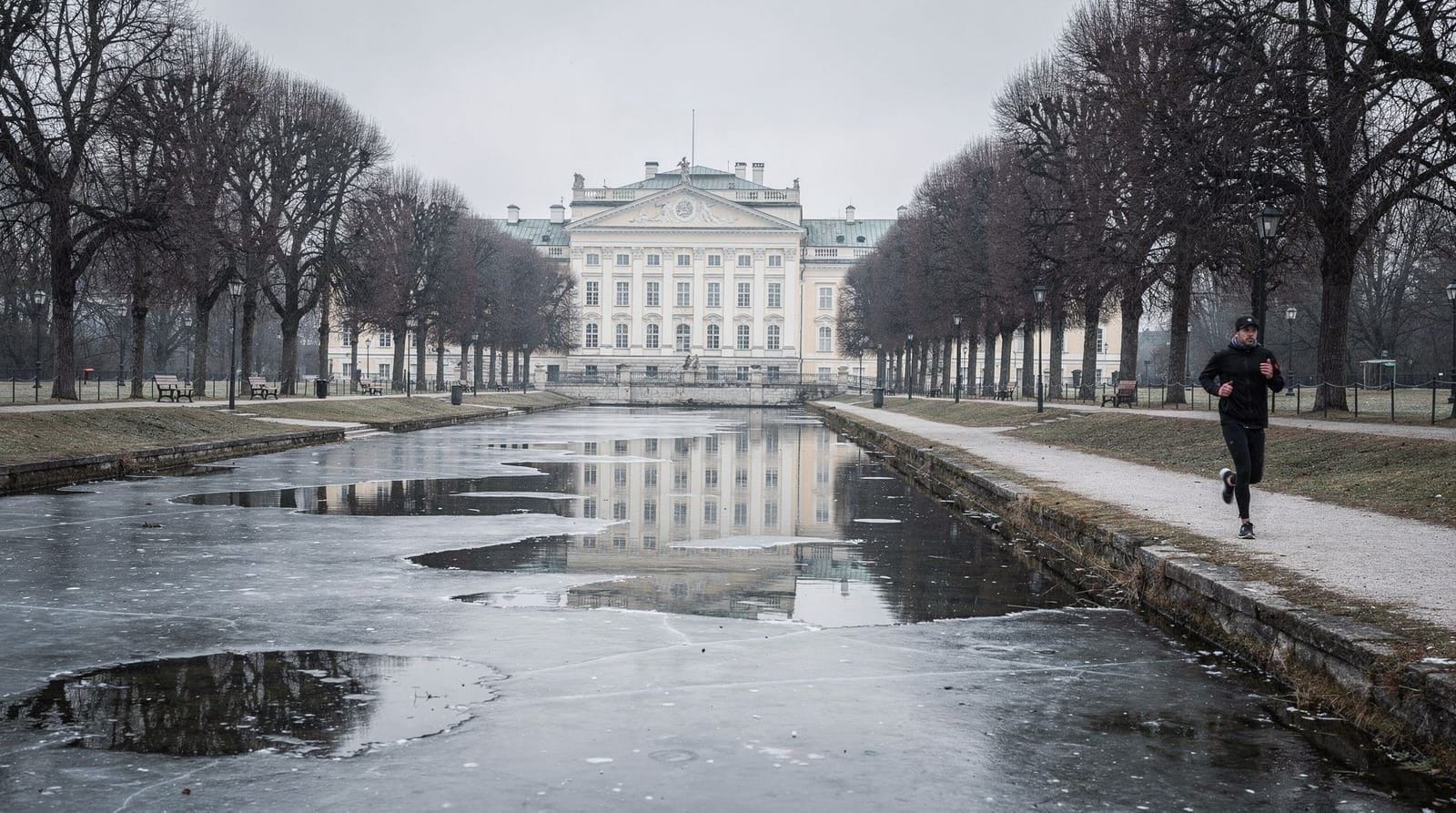
The park covers 200 hectares and is arranged on a formal baroque axis from the main palace gate, with a long canal extending westward through the grounds. Beyond the formal gardens near the palace, the park opens into more naturalistic woodland, with canals, ponds, and meadows. The deer park in the northern section is a quiet area where you can walk for thirty minutes without seeing another visitor.
The park is free to enter at all times, year-round, open from sunrise to sunset. It is genuinely beautiful in every season:
- Spring: Chestnut trees in blossom along the canal paths; ducks nesting on the ponds
- Summer: The formal gardens in full colour; café terraces busy with locals
- Autumn: The woodland section turns vivid gold; far fewer tourists than in summer
- Winter: The canals freeze over some years; the formal gardens have a stark, beautiful quality; the palace facade looks extraordinary under light snow
There is a café inside the palace building serving coffee, cake, and light lunches. Several outdoor kiosks operate in the park during warmer months.
| Season | Park highlight | Crowd level |
|---|---|---|
| Spring (Apr-May) | Chestnut blossom along the canal, nesting ducks | Low-moderate |
| Summer (Jun-Aug) | Formal gardens in full colour, busy café terraces | Highest, esp. weekends |
| Autumn (Sep-Oct) | Woodland turns gold, fewer tourists | Low |
| Winter (Nov-Mar) | Frozen canals some years, stark beauty, pavilions closed | Lowest |
What a half-day at Nymphenburg realistically costs
Budgeting for a Nymphenburg visit is straightforward compared to Bavaria’s bigger castles. The combination ticket runs around €15 per adult, the tram fare each way is a few euros (or covered by a Munich day pass if you’re using public transport elsewhere that day), and the audio guide adds €3.50. A coffee and cake at the palace café or a picnic bought beforehand covers lunch for around €8-12. All told, a thorough half-day visit costs in the region of €25-30 per person including transport — modest compared to a Neuschwanstein day trip, which typically runs €50-90pp once transport and tickets are combined. This is one of the practical arguments for prioritising Nymphenburg on a tighter Munich budget, alongside the shorter travel time.
What to skip if your time is limited
Nymphenburg rewards unhurried visits, but if you only have two hours, focus on three things: the Grand Hall and Gallery of Beauties in the main palace, the Marstallmuseum, and the Amalienburg. These three cover the palace’s best baroque interior, its most historically interesting paintings, and its finest decorative arts.
The smaller pavilions — Badenburg, Pagodenburg, and Magdalenenklause — are worth visiting if you have extra time but can be skipped without regret. The park walk can be shortened to a quick stroll along the main canal rather than a full circuit.
The audio guide at €3.50 is genuinely useful and compensates for the relatively sparse room labelling inside the palace. Pick one up at the ticket desk.
Combining Nymphenburg with the rest of Munich
Nymphenburg works well as a standalone morning or afternoon excursion, and it also combines naturally with several other Munich experiences.
The English Garden is on the opposite (eastern) side of the city centre but is easy to combine in a full day. Many visitors do Nymphenburg in the morning, take the tram back into the centre for lunch, and walk through the English Garden in the afternoon.
For visitors focused on Munich’s palace and museum culture, the Munich Residenz makes an obvious companion. The Residenz is the Wittelsbachs’ city palace — vast, elaborate, and filled with centuries of art and artefacts. It is architecturally and historically different from Nymphenburg, and the two together give you the full scope of Wittelsbach ambition. Our guide comparing Munich Residenz versus Nymphenburg lays out how to choose if you only have time for one.
For visitors planning to see Ludwig II’s more personal castles — the ones he actually commissioned and obsessed over — Neuschwanstein and Linderhof are day trips from Munich. The Neuschwanstein and Linderhof full-day tour from Munich is a popular option if you want to see both in one day without dealing with the logistics yourself. The comparison between all three of Ludwig’s major castles is covered in the king Ludwig II castles guide.
For a broader overview of Bavaria’s castle landscape, the best castles near Munich covers Nymphenburg alongside Neuschwanstein, Linderhof, Herrenchiemsee, and lesser-known options further afield.
If you are planning a multi-day Munich itinerary, both the Munich 2-day itinerary and the Munich 3-day itinerary include Nymphenburg with practical timing advice.
Accessibility in detail
The ground floor of the main palace, including the Grand Hall, and most of the Marstallmuseum are wheelchair accessible via ramps near the main entrance — ask staff at the ticket desk about the current access route, since it can vary depending on which sections are open. The upper-floor Royal Apartments, including the Gallery of Beauties, require stairs with no lift alternative in most areas, which is worth knowing before you commit to the full combination ticket if mobility is a significant concern. Amalienburg’s interior is small and involves a couple of shallow steps at the entrance but is otherwise manageable. In the park, the main formal avenues and the canal path are flat, wide gravel or paved surfaces suitable for wheelchairs and pushchairs; the more naturalistic woodland sections further from the palace have some uneven, unpaved stretches, particularly after rain. For strollers, the palace interior is generally fine on the ground floor, but carrying a pushchair up to the Gallery of Beauties is impractical — consider a carrier for that section if you’re visiting with a very young child.
Booking tours: when a guide makes a difference
Nymphenburg is a palace where context matters enormously. The decorative rooms are beautiful but dense, and without knowing the political and dynastic history of the Wittelsbach family, the Gallery of Beauties is just nice portraits and the Ludwig II sleighs are just very shiny carriages.
For first-time visitors who want to get maximum value from their time, a guided tour with an expert local guide transforms the experience. The good guides cover not only the decorative history of the rooms but the political circumstances behind each building campaign — why the elector felt the need to expand the south wing, what the Gallery of Beauties says about Ludwig I’s character and eventual fall from power, what it meant to commission those sleighs in the context of the 1870s.
For visitors who want to arrive without queuing and skip the ticket desk entirely, a private skip-the-line tour is worth considering during the summer peak season, though Nymphenburg is rarely as crowded as the major Bavarian castles.
If you are planning a broader Bavaria castles trip from Munich, the full-day Neuschwanstein and Linderhof tour handles transport and entry for both of Ludwig II’s major Bavarian palaces — a logical complement to Nymphenburg if you want to complete the picture.
Practical summary
Address: Schloss Nymphenburg 1, 80638 Munich
Transport: Tram 17 to Schloss Nymphenburg (25 min from centre); free parking on-site
Hours: Apr–mid Oct 9am–6pm; mid-Oct–Mar 10am–4pm; park open year-round sunrise–sunset
Tickets: Palace only €8/€7; combination ticket €15/€13; park free; under 18 free
Audio guide: €3.50 at ticket desk — recommended
Best visit length: 2–3 hours for palace + Marstallmuseum + Amalienburg; half-day with park
Crowds: Significantly less crowded than Neuschwanstein; busiest July–August Saturday mornings
Café: In the palace building; outdoor kiosks in the park in season
Photography: Permitted in all areas; no flash inside the palace
Accessibility: Ground floor of palace and Marstallmuseum accessible by wheelchair; park paths are paved on main routes
Frequently asked questions about Nymphenburg Palace
How much does it cost to visit Nymphenburg Palace?
In 2026, the palace-only ticket costs €8 for adults and €7 for reduced-price visitors (students, seniors, and eligible groups). The combination ticket — which covers the main palace and all five museums in the park, including the Marstallmuseum and Amalienburg — costs €15 for adults and €13 reduced. Visitors under 18 enter free. The park itself has no entry fee at all and is open year-round.
Is Nymphenburg Palace less crowded than Neuschwanstein?
Significantly less crowded. Neuschwanstein regularly sells out weeks in advance and involves queuing at a hillside bus stop before a guided tour in a packed group. Nymphenburg has no timed entry system, no advance booking requirement (unless you book a guided tour), and a physical scale that absorbs visitors easily. Even on a summer Saturday you can find quiet corners inside the palace. This is one of its genuine advantages over Bavaria’s more famous castles.
What is the combination ticket and is it worth buying?
The combination ticket at €15 covers the main palace and all five buildings in the park: the Marstallmuseum (royal carriages and sleighs), Amalienburg (rococo hunting lodge), Badenburg (bathing pavilion), Pagodenburg (chinoiserie pavilion), and Magdalenenklause (hermitage). The palace-only ticket is €8. If you have any interest in the Marstallmuseum or Amalienburg — and you should — the combination ticket is clearly worth it. Buy it at the palace ticket desk or from a guided tour provider.
Can I visit the Nymphenburg park without paying?
Yes. The park is free and open every day from sunrise to sunset. You do not need a ticket to enter the grounds, walk the canal paths, visit the café terraces, or see the exterior of the palace and pavilions. The entry fee only applies if you want to go inside the palace building or the park museums.
How does Nymphenburg Palace fit into a wider Bavaria castles itinerary?
Nymphenburg is the best starting point for understanding the Wittelsbach dynasty before visiting Ludwig II’s personal castles. See the Munich castles 3-day itinerary for a detailed plan. Day one covers the Munich Residenz and Nymphenburg; day two takes you to Neuschwanstein and Hohenschwangau; day three adds Linderhof or Herrenchiemsee. The full story of Ludwig II’s own buildings — Neuschwanstein, Linderhof, and Herrenchiemsee — is covered in the king Ludwig II castles guide, and practical train logistics are covered in our castles day trip by train guide.
Is the Amalienburg hunting lodge inside the Nymphenburg park?
Yes. The Amalienburg is a small rococo hunting lodge located in the southern section of the Nymphenburg palace grounds, about a 10-minute walk from the main palace building. It is included in the combination ticket. Despite its small size — three main rooms — it contains what many architectural historians consider the finest rococo interior in all of Bavaria. The Hall of Mirrors in particular, covered in delicate silver-painted plaster ornament on a pale blue ground, is one of the most beautiful interiors in Munich. It is well worth the walk.
What makes Nymphenburg different from the Munich Residenz?
The Residenz in the city centre is the Wittelsbachs’ official town palace — larger in total floor area, containing more rooms across more historical periods, and representing the full breadth of Wittelsbach collecting from the Renaissance onward. Nymphenburg is the summer residence: more coherently baroque in character, surrounded by a real park, and with specific highlights like the Marstallmuseum and Amalienburg that have no equivalent in the Residenz. If you can only visit one, the choice depends on your interests — but if you have half a day for each, both repay the time. Our dedicated Munich Residenz versus Nymphenburg guide walks through the comparison in detail.
How much should I budget for a full Nymphenburg visit including transport?
A thorough half-day visit costs around €25-30 per person: about €15 for the combination ticket, a few euros each way for the tram, €3.50 for the audio guide, and €8-12 for lunch or a coffee and cake at the palace café. This is significantly cheaper than a Neuschwanstein day trip, which typically runs €50-90 per person once transport and tickets are combined, making Nymphenburg a practical choice on a tighter Munich budget.
Top experiences
Bookable activities with verified prices and instant confirmation on GetYourGuide.