Munich Residenz vs Nymphenburg Palace: which to visit?
Munich: Residenz Palace and Hofgarten skip-the-line guided tour
Should I visit the Munich Residenz or Nymphenburg Palace?
The Residenz is the better choice for history and interior grandeur — 130 rooms in the heart of the city, including the Antiquarium and Treasury. Nymphenburg wins for garden space and a lighter baroque atmosphere. With one full day, most visitors can do both.
Two Munich palaces — different in almost every way
Munich has two major royal palace complexes worth a dedicated visit, and they are distinct enough that choosing between them is not straightforward. The Residenz is a city-centre museum — vast, dark, historically dense — in the middle of the Altstadt. Nymphenburg is a baroque summer palace on the western edge of the city with the largest palace park in Bavaria.
Visitors with limited time often want to know which to prioritise. This guide makes the case for each, with honest notes on what you actually see, how long each takes, what each costs, and what kind of traveller benefits most.
| Residenz where | Odeonsplatz, city centre |
| Nymphenburg where | 8km northwest, tram 17 |
| Residenz cost | Around €9–14 |
| Nymphenburg cost | Around €8–15 |
| Time for both | Full day, realistic with an early start |
| Best if short on time | Residenz — no transport needed |
Side-by-side comparison
| Munich Residenz | Nymphenburg Palace | |
|---|---|---|
| Location | Altstadt, city centre | 8km northwest, western edge |
| Getting there | Walk from Marienplatz/Odeonsplatz | Tram 17, around 18 min |
| Time needed | 2–4 hours | 2–3.5 hours incl. gardens |
| Best for | History depth, interiors | Garden space, families |
| Standout room/spot | The Antiquarium | Amalienburg |
| Crowding | Busiest late morning | Park absorbs crowds easily |
The Munich Residenz: 500 years of Wittelsbach power
The Residenz is the largest city palace in Germany. Its construction began in 1385 and expanded through the Renaissance, baroque, and neoclassical periods as successive Wittelsbach rulers enlarged it. The complex covers a full city block between Max-Joseph-Platz and the Hofgarten, with seven courtyards and 130 rooms open to visitors through the Residenz Museum.
What you actually see
The Antiquarium is the centrepiece — a 66-metre barrel-vaulted hall built between 1568 and 1571, the largest Renaissance hall north of the Alps, lined with 119 grotesque-painted niches and busts. Even visitors who find historical rooms repetitive tend to pause here.
The Royal Apartments trace the changing tastes of Wittelsbach rulers through the 17th and 18th centuries: the Reiche Zimmer (Rich Rooms) in blue-and-gold rococo; the Green Gallery hung with 100 portraits; the Stone Rooms with their inlaid marble floors. The private apartments of Ludwig I show neoclassical restraint alongside a personal art collection.
The Treasury (Schatzkammer) is a separate section requiring its own ticket — or the combined ticket — and houses the Wittelsbach crown jewels, gold and enamel work, ivory carvings, and religious regalia accumulated over nine centuries. The 10th-century Bavarian royal crown in Room 1 is the oldest piece in the collection. Allow 45–60 minutes for the Treasury alone.
The Cuvilliés Theatre, one of the finest rococo court theatres in Europe, has limited visiting hours and an additional ticket of €4.50. Mozart’s Idomeneo premiered here in 1781.
Practical details
The Residenz Museum opens daily 9am–6pm (last entry 5pm) from April to mid-October; 10am–5pm (last entry 4pm) the rest of the year. The Treasury keeps the same hours.
Adult ticket prices in 2026: Museum alone €9; Treasury alone €9; combined ticket (Museum + Treasury) €14. Under-18s free. The combined ticket does not include the Cuvilliés Theatre.
Location: Max-Joseph-Platz 3, Munich. Direct access from Marienplatz (8 minutes on foot) or Odeonsplatz U-Bahn station (5 minutes on foot). 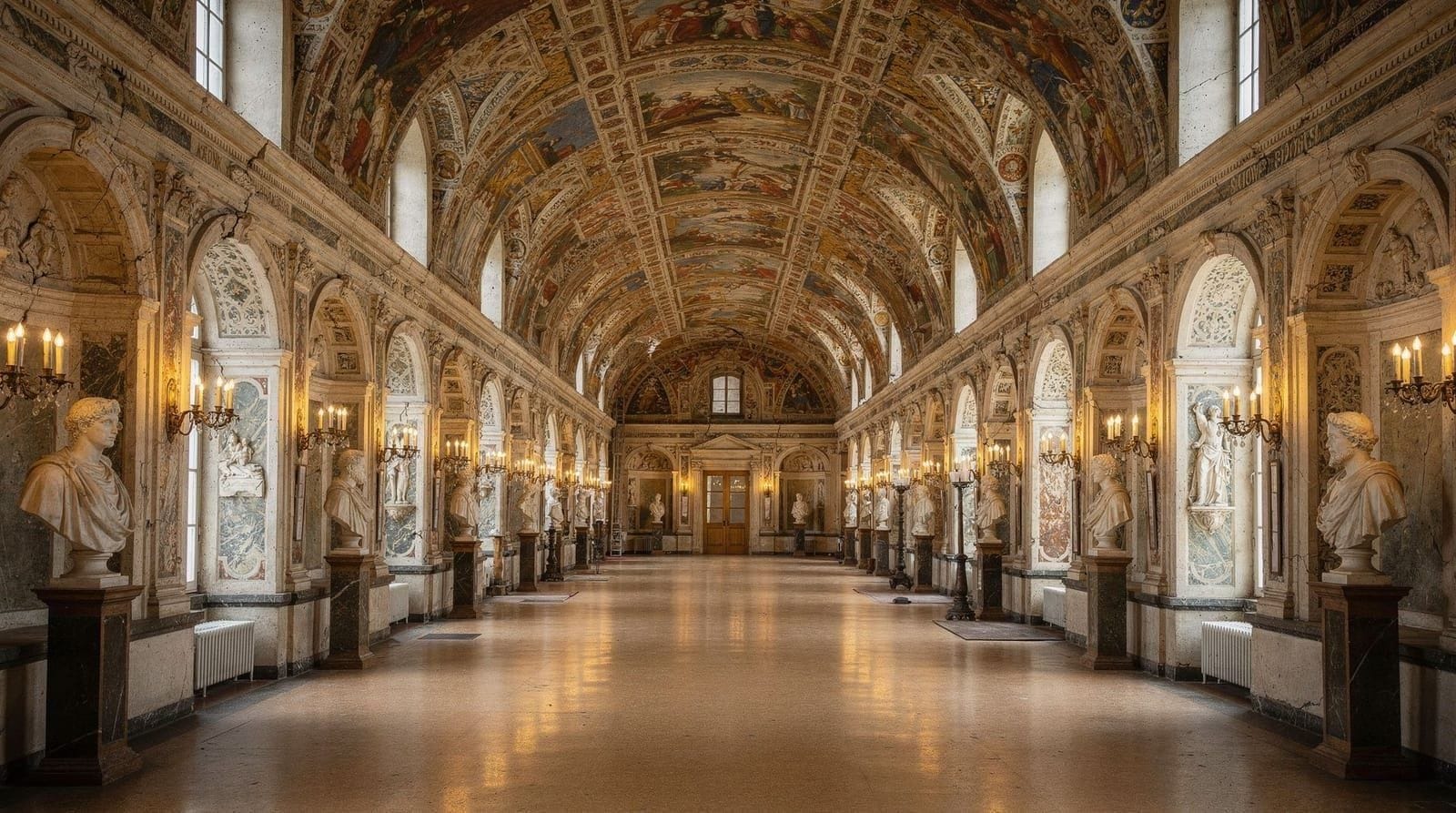 Residenz Palace and Hofgarten skip-the-line guided tourCheck availability
  Residenz Palace, Museum and Treasury private tourCheck availability
Nymphenburg Palace: baroque summer residence
Nymphenburg was the Wittelsbach summer residence from the mid-17th century. Elector Ferdinand Maria began construction in 1664 as a gift to his wife after the birth of their son. The main palace expanded across 150 years into a 632-metre-wide baroque complex. Ludwig II of Bavaria was born here on 25 August 1845 — making it the birthplace of the king who built Neuschwanstein.
What you actually see
The central palace building is the main attraction — enter through the Great Hall, which spans the full depth of the palace with ceiling frescoes by Johann Baptist Zimmermann. The north wing contains the Gallery of Beauties, commissioned by Ludwig I: 36 portraits of Munich women he found beautiful, regardless of social class — a 19th-century royal eccentricity that visitors still find fascinating. The south wing holds the Porcelain Cabinet and royal apartments.
The Carriage Museum in the south wing outbuildings is one of the best in Europe: 40+ state carriages and sleighs spanning three centuries, including Ludwig II’s gilded coronation carriage and several sleighs he used for his nocturnal winter drives through the Alps.
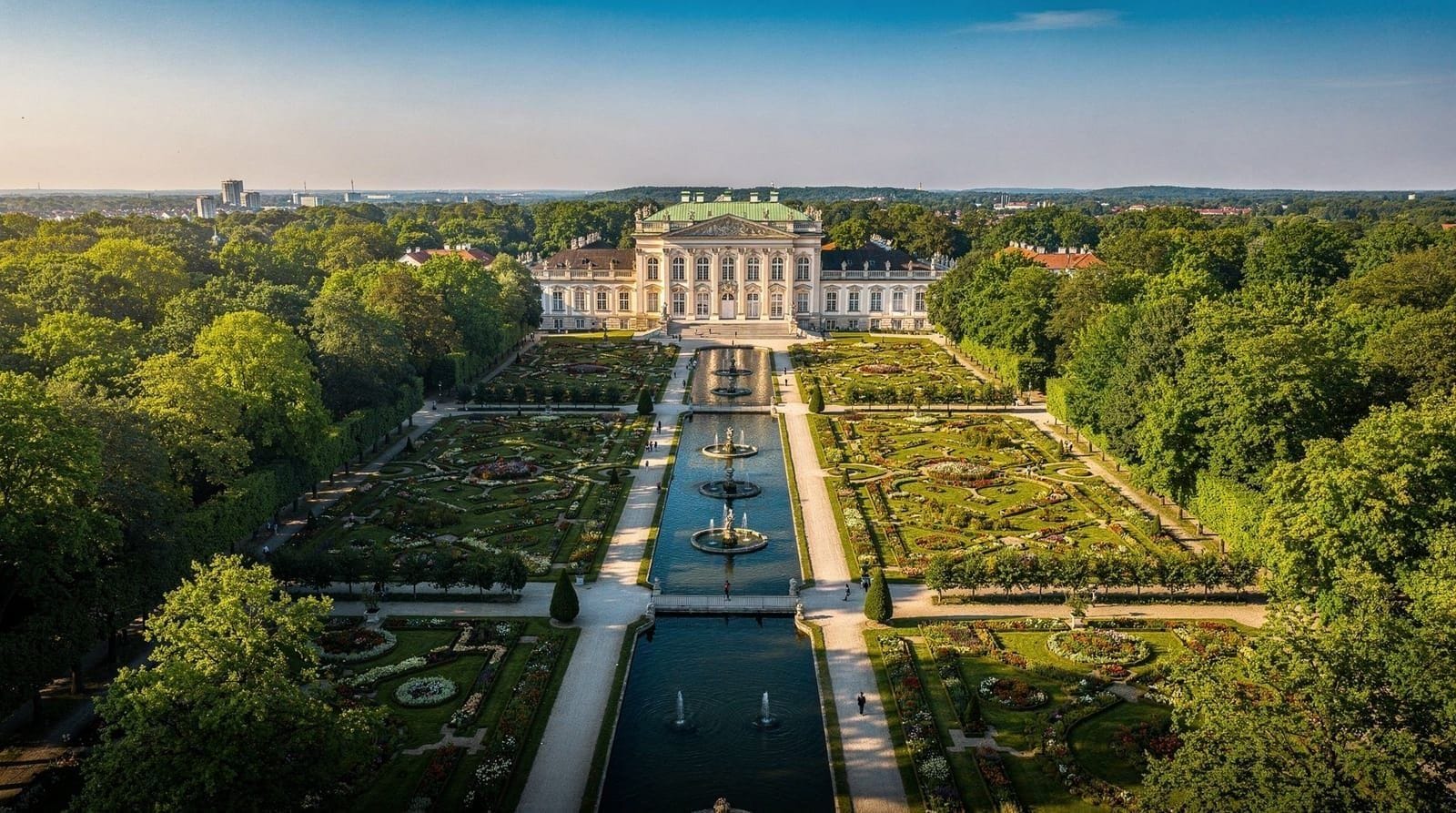
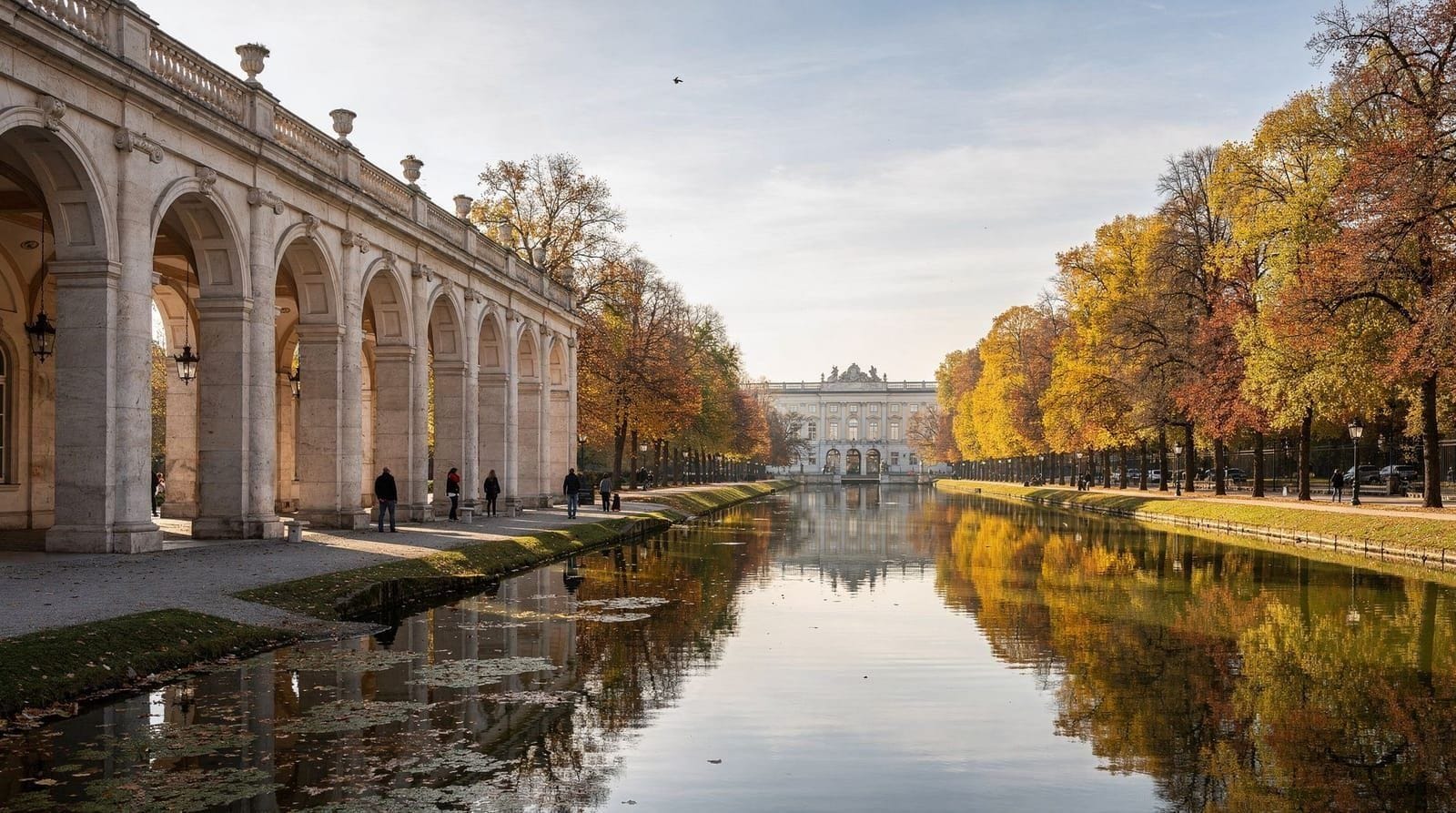
The park is the biggest draw for many visitors. At 200 hectares, it includes formal baroque gardens immediately in front of the palace, a large English landscape park behind, a main canal, and four garden pavilions scattered through the grounds:
- Amalienburg — a small hunting lodge with a rococo Hall of Mirrors that arguably rivals the best room in any Bavarian palace for sheer decorative intensity
- Badenburg — an early 18th-century indoor heated swimming pool, technically one of the first in Germany
- Pagodenburg — a chinoiserie retreat on a lake island
- Magdalenenklause — an artificial hermit’s grotto
The combined ticket (€15) covers the main palace, Carriage Museum, and all four pavilions. The park itself is free and open daily year-round from 6am until dusk.
Practical details
Nymphenburg Palace opens April–15 October 9am–6pm; 16 October–March 10am–4pm. Closed some public holidays — check the official website. Some pavilions have limited opening hours outside peak season.
Adult ticket prices 2026: Main palace only €8; combined ticket (palace + Carriage Museum + pavilions) €15. Under-18s free.
Location: Schloss Nymphenburg 1, Munich. Take tram 17 from Hauptbahnhof (direction Amalienburgstrasse or Romanplatz) to the Schloss Nymphenburg stop — approximately 18 minutes.  Nymphenburg Palace with official guideCheck availability
  Nymphenburg Palace and Carriage Museum fast-track tourCheck availability
Direct comparison: which suits your priorities?
For history depth
The Residenz wins. Five centuries of Wittelsbach rule are documented room by room in chronological sequence. The Treasury collection is irreplaceable. Visitors who want to understand Bavaria’s political and cultural history through its material culture will spend more rewarding hours here.
For architectural drama
The Residenz Antiquarium and the Nymphenburg Amalienburg are comparable high points — both rank among the finest interiors in Bavaria. The Residenz has more rooms with grand interiors overall; Nymphenburg has better single highlights in the park pavilions.
For outdoor space
Nymphenburg is not comparable. The Residenz Hofgarten is a pleasant formal garden of 3.5 hectares, suitable for a short walk. Nymphenburg’s 200-hectare park can absorb an entire afternoon. Families and visitors who find museum fatigue setting in benefit disproportionately from Nymphenburg.
For logistics
The Residenz is unbeatable — central location, walkable from everywhere in the Altstadt, no transport needed beyond arriving in Munich. Nymphenburg requires a tram or bus, which adds 35–40 minutes round trip to your day.
For a quick single visit
With 90 minutes, go to the Residenz for the Antiquarium and at least the Museum rooms; skip the Treasury for time. With 2 hours, add the Treasury. With a full afternoon at Nymphenburg, you can see the palace and Amalienburg.
For crowding
Both are busy in July–August but rarely feel as overwhelmed as Neuschwanstein. The Residenz can feel crowded in the Antiquarium on weekend mornings; Nymphenburg’s park absorbs crowds naturally. Neither requires advance booking for regular entry.
Doing both in one day: a realistic schedule
9:00am — Residenz opens. Arrive early for the Antiquarium without groups. Work through the Museum rooms (allow 2 hours minimum for a curated visit). 11:00am — Treasury. Budget 45–60 minutes. 12:00pm — Lunch in the Altstadt. Try the Hofbräuhaus garden or the Viktualienmarkt food stalls, both a 10-minute walk away. See Viktualienmarkt food guide for options. 1:30pm — Tram 17 from Hauptbahnhof to Nymphenburg (18 minutes). 2:00pm — Nymphenburg main palace (1 hour). 3:00pm — Carriage Museum (30–40 minutes). 3:45pm — Walk through formal gardens to Amalienburg (20 minutes one way). 4:00pm — Amalienburg interior (20 minutes). 4:30pm — Wander back through the English park. 5:30pm — Tram back to city centre.
This schedule is achievable but requires keeping to rough time targets. If you add the other three pavilions (Badenburg, Pagodenburg, Magdalenenklause), add another 90 minutes to the garden section.
For a broader Munich sightseeing context, see Munich best attractions and how many days in Munich. For the wider Bavarian palace picture, see best castles near Munich.
The Wittelsbach context: why these two palaces exist
Both the Residenz and Nymphenburg are expressions of Wittelsbach ambition across different centuries. Understanding the dynasty makes both buildings more legible.
The Wittelsbachs ruled Bavaria from 1180 to 1918 — nearly 750 years. The Residenz in the city centre was their primary seat of government, expanded as Bavaria grew and as successive electors and then kings added wings, halls, and courtyards. By the 18th century the complex was one of the largest palace complexes in Europe, rivalling the Hofburg in Vienna.
Nymphenburg was purpose-built as relief from the formality of the Residenz. Elector Ferdinand Maria began it in 1664 as a summer residence — a place for hunting, for informal court life, and for the elaborate garden culture that was fashionable among European aristocracy in the late baroque period. Successive rulers added the south and north wings, the park pavilions, and eventually the canal system. The last major addition was the English landscape park, redesigned by Ludwig von Sckell in 1804 — the same landscape architect who redesigned Munich’s English Garden.
Ludwig II was born at Nymphenburg, grew up partly at Hohenschwangau, and spent time at the Residenz as a young king. His own castles — Neuschwanstein, Linderhof, Herrenchiemsee — are deliberate departures from the domestic architecture of his predecessors, built far from Munich and government. The Residenz, by contrast, represents everything he was trying to escape.
For the broader context of Munich’s royal history, see Munich royal history and the Wittelsbachs.
What to do near each palace
Near the Residenz
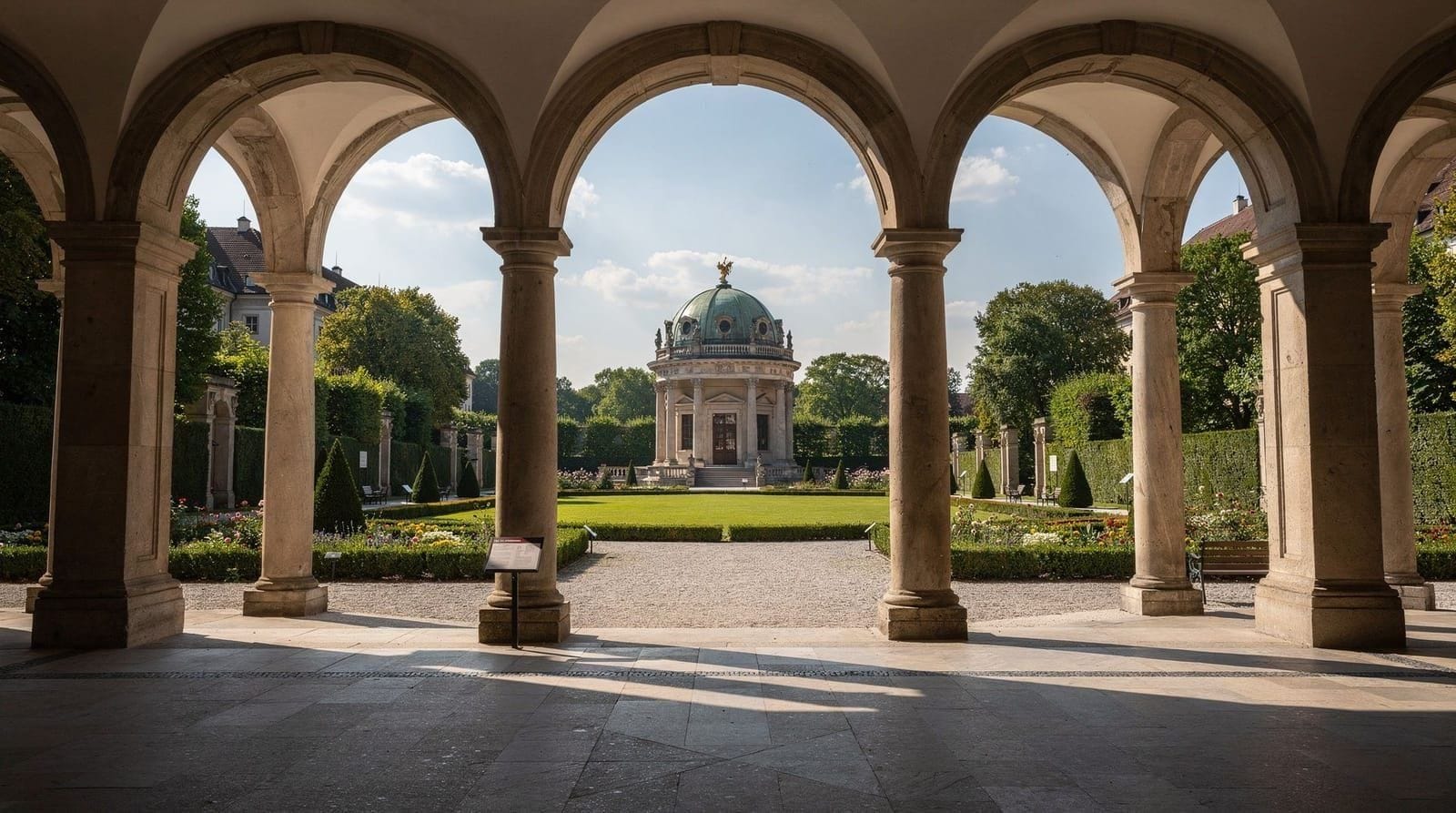
The Residenz sits in the heart of Munich’s Altstadt and is within walking distance of most major city sights. Immediately adjacent is the Hofgarten — a formal Renaissance garden with a central domed temple used as an outdoor concert stage in summer. The Cuvilliés Theatre is part of the Residenz complex.
Five minutes on foot: the Nationaltheater (Munich’s opera house), the Feldherrnhalle (loggia modelled on the Loggia dei Lanzi in Florence), and Odeonsplatz. Ten minutes: Marienplatz and the Frauenkirche. Eight minutes: Viktualienmarkt food market, the best place for lunch before or after the Residenz.
For lunch near the Residenz, the Viktualienmarkt has outdoor food stalls with Bavarian sausages, pretzels, and Obatzda (Bavarian cheese spread) at street food prices (€5–12 for a meal). The Schrannenmarkt indoor market on Blumenstrasse has Italian and international options if you want something lighter. See Viktualienmarkt food guide.
Near Nymphenburg
The palace park is its own afternoon. Beyond it, Schloss Nymphenburg village has limited eating options aimed at day visitors — prices are moderate to high. The Botanical Garden (Botanischer Garten München) is directly adjacent to the palace park’s north side, covers 21 hectares, and has separate entry (€5.50 adults in 2026). It is one of the largest botanical gardens in Germany and worth 45–60 minutes if you have an interest in plants.
The Nymphenburg Porcelain Manufactory (Porzellanmanufaktur Nymphenburg) is in the former court stable buildings within the palace grounds and sells handmade porcelain using techniques dating to 1747. Prices are high — this is not a souvenir shop — but the factory outlet sometimes has seconds (pieces with minor imperfections) at reduced prices. A small museum attached explains the manufacturing process.
For getting back to the city centre, tram 17 runs every 10–12 minutes and takes 18 minutes to the Hauptbahnhof.
If Nymphenburg leaves you wanting more Wittelsbach garden palaces, the same royal building tradition continues further out at Linderhof and Herrenchiemsee, both of which make sense as a separate day trip rather than an add-on to a Munich city day.
Accessibility comparison
Both palaces have limitations for visitors with mobility constraints.
The Residenz Museum involves long corridors and numerous rooms across multiple floors. There are lifts at some points but not comprehensive coverage — some sections require stairs. The Treasury is more accessible. The Cuvilliés Theatre has limited accessibility. Check the official Residenz website for current accessibility details before visiting with a wheelchair or limited mobility.
Nymphenburg’s main palace building has step-free access to the ground floor with a lift available. The carriage museum is accessible. The park is flat and largely paved in the formal garden section; the English landscape park has gravel paths. The garden pavilions (Amalienburg, Badenburg, etc.) generally have steps at entrances — check individually.
Both offer audio guides and guided tours in English. Audio descriptions for visually impaired visitors exist at some sections of the Residenz.
Staff at either ticket desk can point out the most step-free route through that day’s open rooms, which is worth asking for even if you have not booked assistance in advance — the layout changes slightly depending on which circuits and pavilions are open.
For rainy days versus sunny ones
Weather should factor into your choice more than most guides admit. The Residenz is entirely indoors, which makes it the obvious pick on a wet or cold day — you lose nothing by skipping the Hofgarten in poor weather since the museum itself is the point. Nymphenburg is the opposite: the palace interior alone is a fine visit, but a large part of its appeal is the park, and a rainy afternoon there is a genuinely different (and lesser) experience than a sunny one. If your Munich trip has one clearly better-weather day among several, save Nymphenburg for it and use the Residenz as your rain-day fallback alongside options in our rainy day guide for families.
A note on the Munich museums pass
The Tageskarte museums pass is not valid for royal palaces — those are covered by the Bavarian State Palace Administration, separate from city museums. The Bayern14 Annual Pass (€35 adults) covers unlimited entry to both the Residenz and Nymphenburg as Bavarian state palaces, plus Neuschwanstein, Linderhof, and Herrenchiemsee. If you are visiting multiple palaces over a week, buy it on day one. See the museums pass guide for the full breakdown.
Frequently asked questions about Munich Residenz vs Nymphenburg
How much does each palace cost to enter in 2026?
The Munich Residenz Museum costs €9 for adults; the Treasury alone is €9; the combined ticket is €14. Nymphenburg Palace main building costs €8; the combined ticket including Carriage Museum and garden pavilions is €15. Children under 18 are free at both.
How long does each palace take to visit?
The Residenz requires 2–3 hours minimum for the main museum rooms — with the Treasury, allow 3–4 hours. Nymphenburg’s palace building takes 1–1.5 hours; gardens and pavilions require an additional 1–2 hours.
Which is closer to the city centre?
The Munich Residenz is in the heart of the Altstadt, directly behind the National Theatre — walkable from Marienplatz in 8 minutes. Nymphenburg is 8 km northwest, reachable by tram 17 in approximately 18 minutes from the Hauptbahnhof.
Can I visit both in one day?
Yes, with an early start. Do the Residenz first (opens 9am), spend 3–4 hours inside, then tram to Nymphenburg for the afternoon. Allow at least 2 hours at Nymphenburg for the palace and a portion of the gardens.
Which is better for children?
Nymphenburg is generally better for families — the large park allows children to run, and the Carriage Museum tends to hold children’s attention better than the Residenz’s room-after-room of historical furniture and porcelain. Both are free for under-18s.
Is the Residenz Treasury worth the extra cost?
Yes, for most visitors. The Treasury houses one of the finest collections of crown jewels and royal regalia in Europe. If you are doing the Residenz Museum, add the Treasury — the combined ticket saves €4.
Which has better gardens?
Nymphenburg by a wide margin. Its park covers 200 hectares with formal baroque gardens, an English landscape section, a canal, and four smaller garden palaces. The Residenz Hofgarten covers 3.5 hectares.
If I can only pick one, which should it be?
For most first-time visitors with a single free morning or afternoon, pick the Residenz — it needs no transport, fits naturally into an Altstadt day alongside Marienplatz, and delivers the denser historical experience per hour spent. Pick Nymphenburg instead if you have children who need to run, if museum fatigue has already set in, or if the weather is good enough to make the park itself the reward.
Is one palace more photogenic than the other?
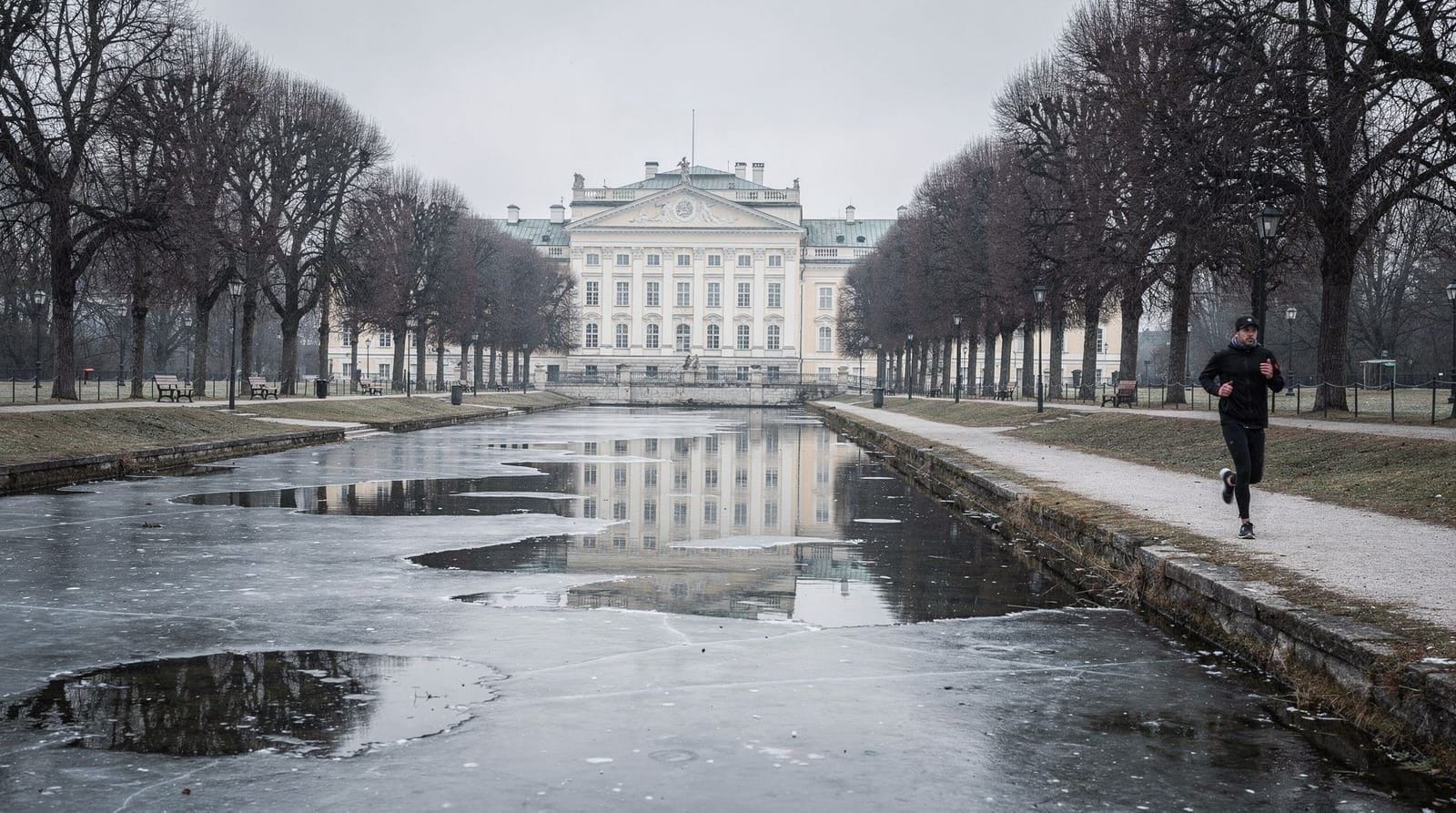
Nymphenburg’s park and the Amalienburg’s Hall of Mirrors are more Instagram-friendly — the symmetry of the canal and the palace facade reflected in water is a classic shot. The Residenz’s Antiquarium photographs beautifully but in lower light, so a phone camera struggles more than in Nymphenburg’s daylight-filled rooms and gardens.
Top experiences
Bookable activities with verified prices and instant confirmation on GetYourGuide.