Munich to Rothenburg ob der Tauber day trip: medieval walls and honest trade-offs
From Munich: private guided tour to Rothenburg ob der Tauber
How do you get from Munich to Rothenburg ob der Tauber by train?
The regional train from Munich Hauptbahnhof to Rothenburg ob der Tauber takes approximately 2 hours 30 minutes with two changes (typically at Ansbach and Steinach bei Rothenburg). The Bayern-Ticket covers the full journey. Direct trains do not exist; the connection via Ansbach is the most common route.
What Rothenburg actually is
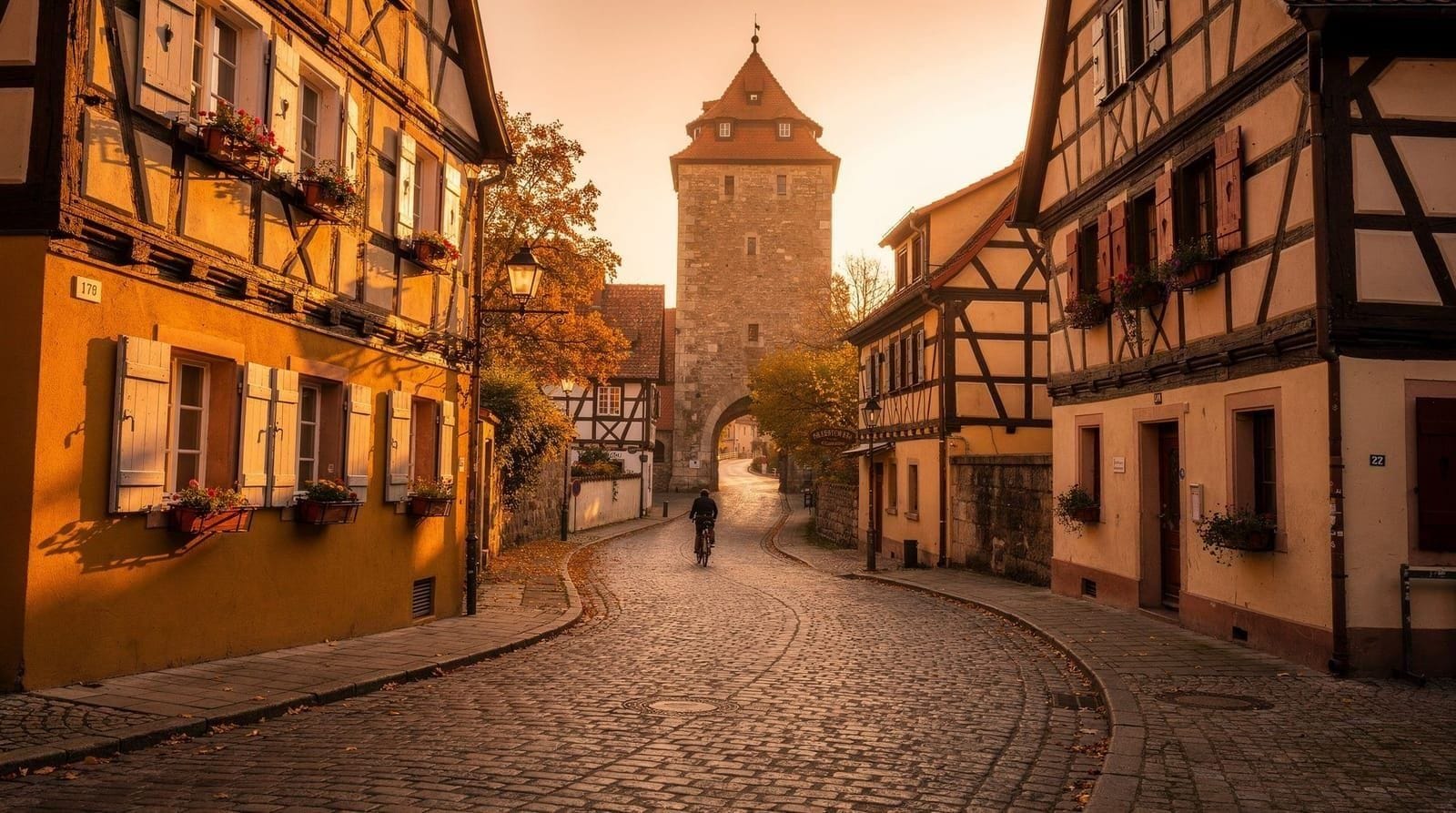
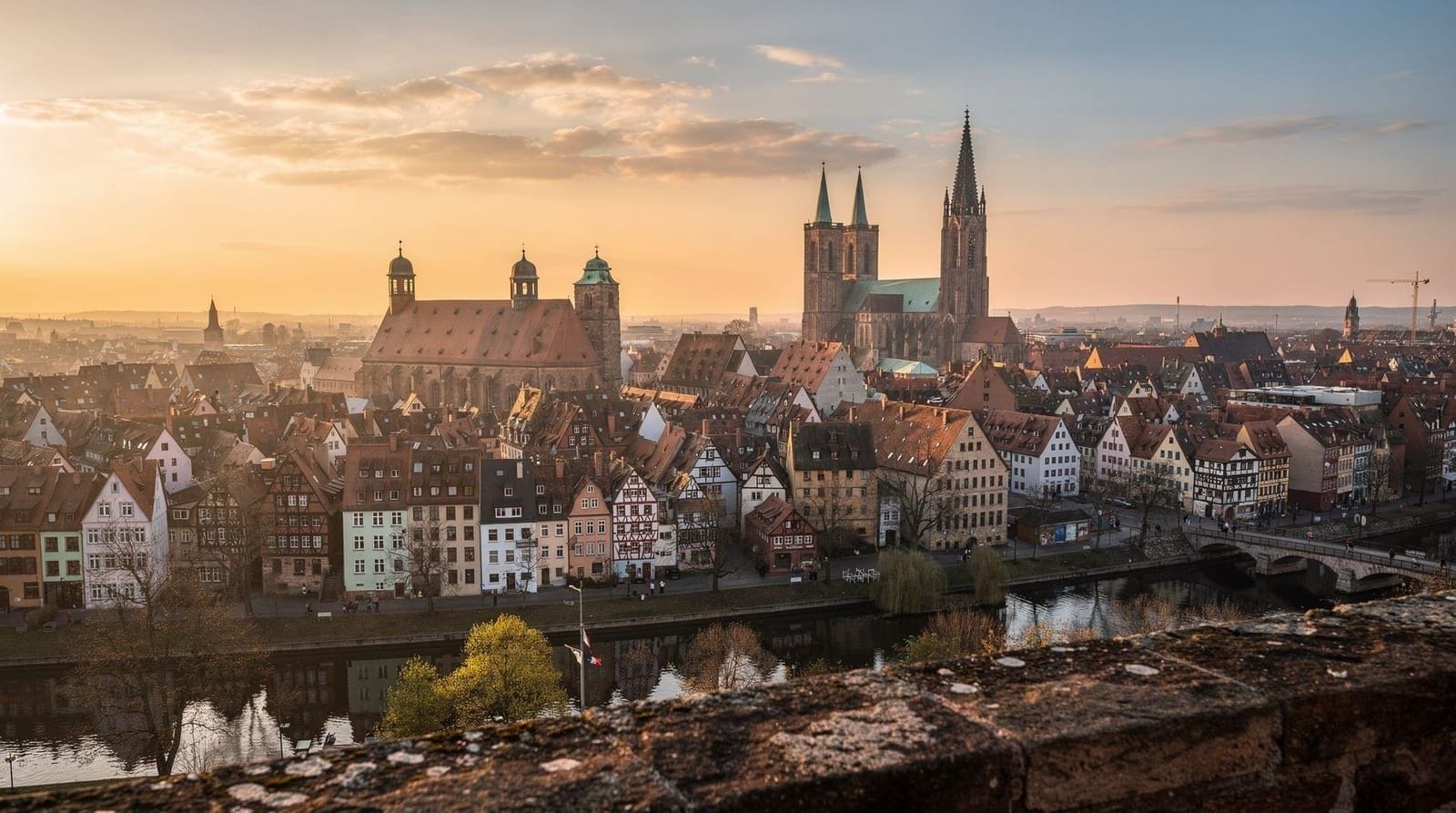
Rothenburg ob der Tauber is the most complete surviving medieval walled city in Germany. The Stadtmauer (city wall) encircles the entire old town for 2.5 kilometres. The Marktplatz is lined with timber-framed and stone buildings dating from the 14th to 17th centuries. The Rathaus (Town Hall) incorporates a Gothic section from 1240 and a Renaissance addition from 1572. The streets behind the main square retain a density of surviving medieval architecture that genuinely earns the term “time capsule.”
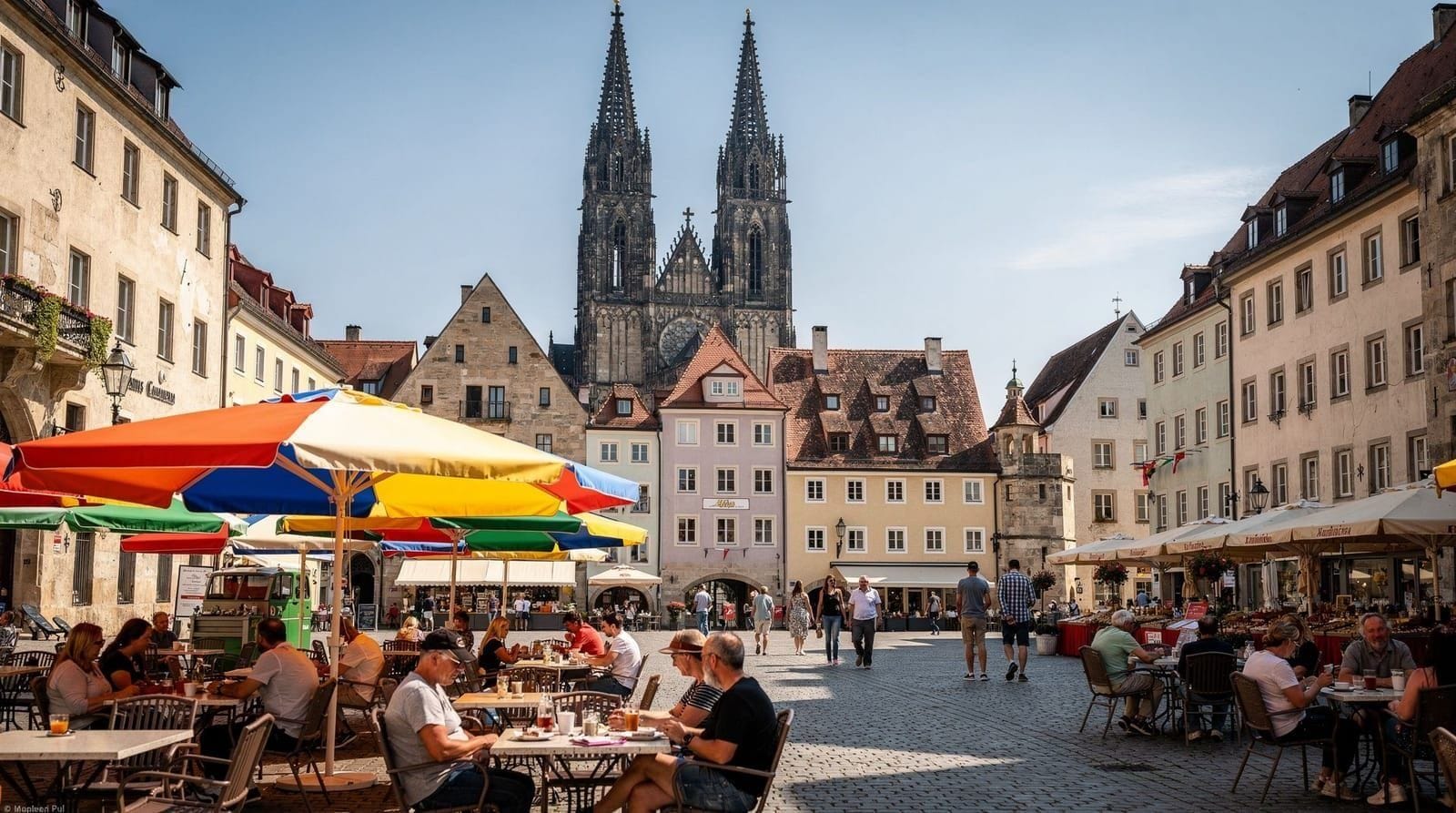
The honest complication is that Rothenburg’s preservation has made it one of the most visited small towns in Germany. On a summer weekend, the main streets between Marktplatz and Herrngasse are shoulder-to-shoulder with visitors. Every second building on the primary tourist route houses a Christmas-themed shop (Kathe Wohlfahrt operates multiple outlets here and has made Rothenburg synonymous with German Christmas kitsch year-round) or a Schneeball vendor.
The question is not whether Rothenburg is worth visiting — it unquestionably is. The question is when and how to visit to get the experience the preserved architecture actually promises rather than a queue at a souvenir counter.
The answer: early morning or late afternoon, or any time in the shoulder season. Private day trip from Munich to Rothenburg and the Romantic Road
| Where | Rothenburg ob der Tauber, Romantic Road, Franconia |
| Cost | Bayern-Ticket ~€29 covers the train; museum entries a few euros each |
| Time needed | 4–5 hours minimum; overnight recommended if possible |
| Getting there | Regional train, ~2h30 with two changes (via Ansbach and Steinach) |
| Best time | Before 9:30am or after 5pm; April–May or Sept–Oct for fewer crowds |
Getting from Munich to Rothenburg ob der Tauber
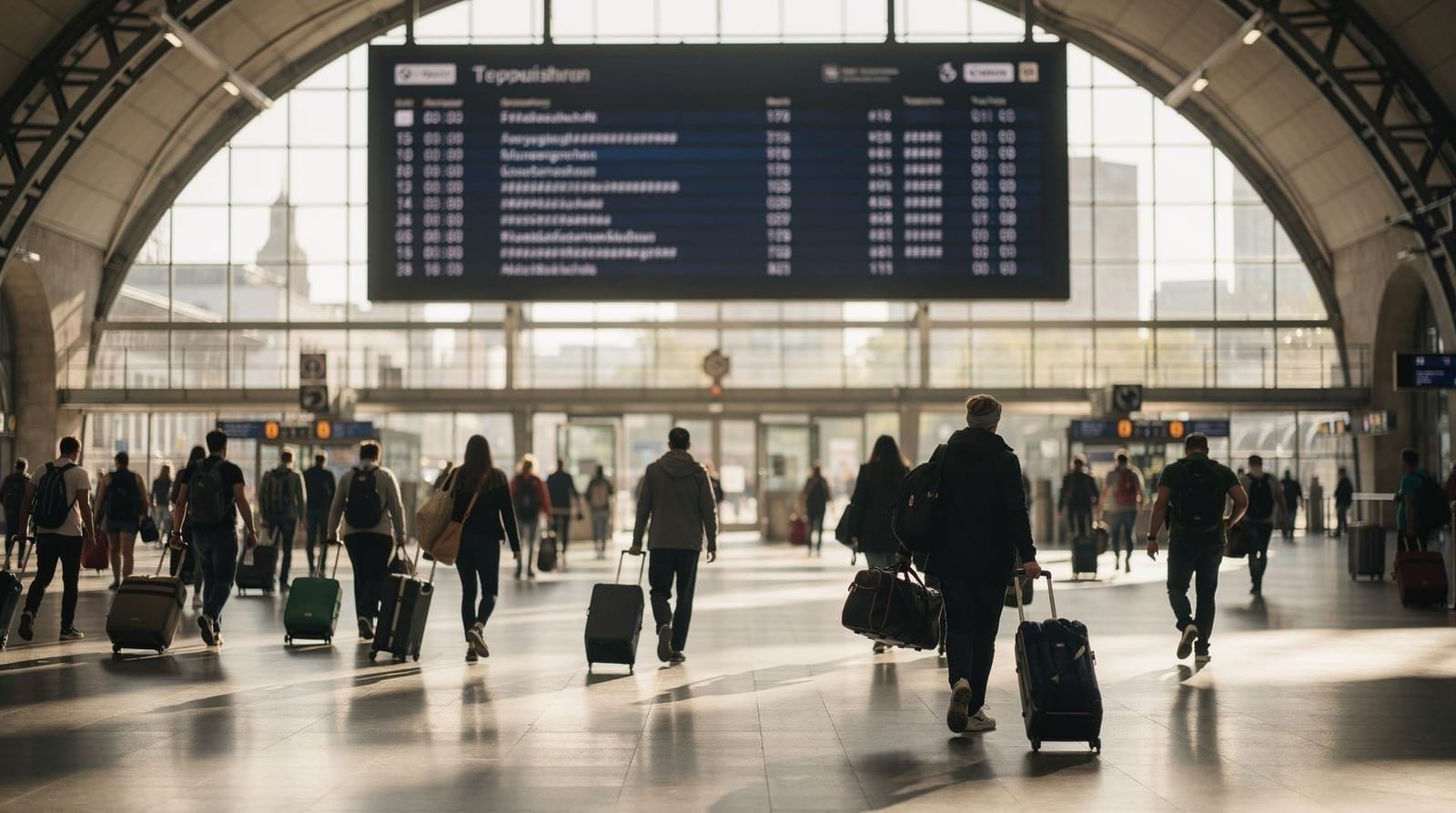
Rothenburg ob der Tauber is not on a major rail route. The connection from Munich requires two changes and takes approximately 2h 30min. The Bayern-Ticket covers the complete journey.
Recommended route from Munich Hbf:
- Munich Hauptbahnhof → Ansbach (approximately 1h 40min, direct regional train)
- Ansbach → Steinach bei Rothenburg (approximately 20min)
- Steinach bei Rothenburg → Rothenburg ob der Tauber (approximately 15min, short branch line)
Total: approximately 2h 30min with good connections. The Steinach-Rothenburg branch line runs infrequently (roughly 4 trains per day each direction), so check the timetable carefully before you leave Munich and confirm your return train from Rothenburg to Steinach.
Key departure times (check DB Navigator for 2026 timetable):
- 7:08 Munich Hbf → arrives Rothenburg approximately 9:42
- 8:08 Munich Hbf → arrives Rothenburg approximately 10:42
- 9:08 Munich Hbf → arrives Rothenburg approximately 11:42
The 7:08 or 8:08 departure is strongly advisable. Arriving before 10am means the main streets are relatively quiet before the Romantic Road coach tours (which run from Frankfurt, Munich, and Nuremberg) arrive mid-morning.
Alternative — organised tour by bus: The Romantic Road bus (EurAide-operated), which runs seasonally between Frankfurt and Munich (and stops at multiple Romantic Road towns including Dinkelsbuhl and Nordlingen in addition to Rothenburg), is a popular option. It allows hop-on hop-off flexibility on the Romantic Road. See the Romantic Road day trip guide for details. For direct Munich-Rothenburg, a private tour (see below) eliminates the complex train connection. Romantic Road bus tour — Rothenburg and Romantic Road towns
The old town: what to see
Rothenburg is small. The historic centre is roughly 500 metres across and can be walked end-to-end in 10 minutes. This means you will be covering the same ground multiple times rather than continuously discovering new streets — plan accordingly.
The Marktplatz
The main market square is the visual heart of Rothenburg. The Rathaus combines the 13th-century Gothic hall with a Renaissance annex from the 16th century; the tower can be climbed for views over the rooftops (entry approximately €3). On the north side of the square, the Ratstrinkstube has a clock with the famous Meistertrunk legend: at noon and specific hours, figurines emerge and reenact the story of Burgermeister Nusch drinking a giant tankard of wine to save the city during the Thirty Years’ War. The legend is almost certainly invention but has been central to Rothenburg’s tourism since the 19th century.
The city wall (Stadtmauer)
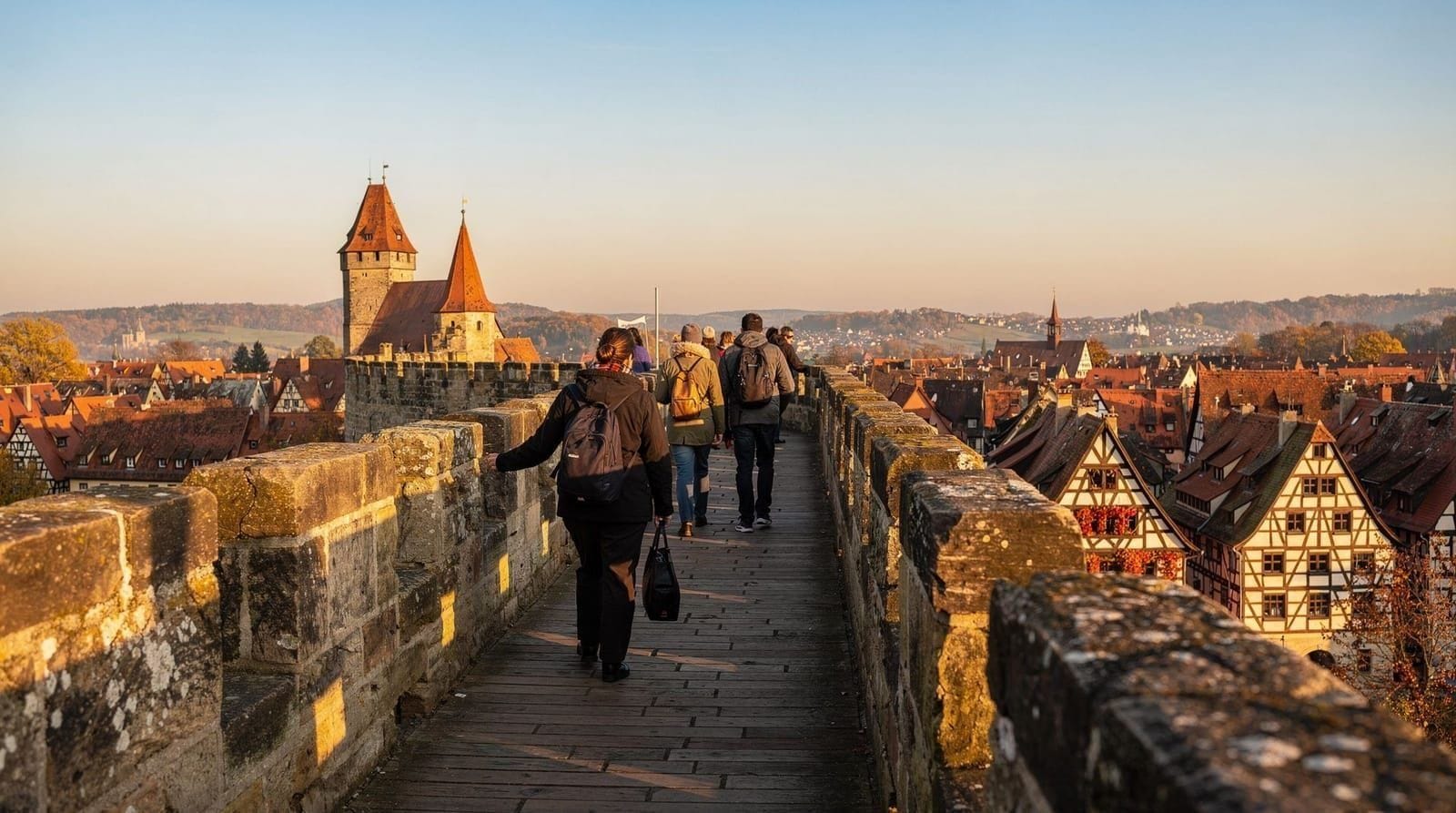
The 2.5-kilometre walkable wall circuit is Rothenburg’s best attraction and entirely free. Access from the Markusturm gate (a few minutes from Marktplatz), the Klingentor, the Spitaltor (at the south end), or several other points. The covered walkway along the top of the wall offers views over the old town rooftops on one side and the Tauber valley farmland on the other. Allow 45-60 minutes for the complete circuit. Early morning (before 9am) the wall is nearly empty and the soft light over the rooftops is the most photogenic version of Rothenburg.
St. Jakob’s Church (Stadtkirche St. Jakob)
The Gothic church on Klostergasse is home to the Heilig-Blut-Altar — Tilman Riemenschneider’s masterpiece carved in limewood in 1499-1505. Riemenschneider was one of the greatest German sculptors of the late Gothic period, and this altar (depicting the Last Supper in the central panel, with beautifully detailed figures) is a genuine work of art rather than a tourist attraction. Entry approximately €3.50. Worth prioritising.
Mittelalterliches Kriminalmuseum
The Medieval Crime Museum (Burggasse 3-5) covers German legal history from the Middle Ages to the 18th century. The collection includes actual (not replica) instruments of punishment and torture: branks, pillories, iron maidens, neck violins, and a substantial collection of documents related to legal proceedings. The curation is academic rather than voyeuristic. Entry approximately €8. Allow 1 hour. Better than it sounds, and less crowded than the main tourist circuit.
Burggarten (Castle Garden)
At the western end of the old town, the Burggarten occupies the site of the former Hohenstaufen castle, destroyed in an earthquake in 1356. What remains is a park at the edge of the cliff above the Tauber river valley, with benches and the Blasiuskapelle (a small chapel used as a charnel house). The views across the valley are among the best in town — and there is no entry fee. At sunset, this is the place to be.
Timing advice: how to actually enjoy Rothenburg
Best times in peak season (June-August):
- Before 9:30am: most tour groups have not arrived. Marktplatz is quiet, the wall is empty.
- After 5pm: day-trippers begin departing. The streets recover something of their atmosphere.
- Avoid 11am-3pm if possible.
Best times overall:
- April-May: Spring light, flowers on the medieval houses, manageable crowds.
- September-October: Harvest season, cooler temperatures, dramatically reduced crowds.
- November-early December: The Christmas market (Reiterlesmarkt, held on Marktplatz from late November) is beautiful and draws crowds for different reasons — authentic rather than summer-tourist.
Staying overnight: If the budget allows, staying one night in Rothenburg is the most effective way to experience it. The Night Watchman English tour runs at 9:30pm (approximately €9 per person) and is excellent — genuinely funny and historically informed. After the tour, the old town is essentially empty and belongs to the overnight guests.
Rothenburg by season:
| Season | Crowds | Notes |
|---|---|---|
| Jun–Aug | Very high, especially 11am–3pm | Coach tours from Frankfurt, Munich and Nuremberg converge midday |
| Apr–May | Moderate | Spring flowers on the timber-framed houses, manageable pace |
| Sep–Oct | Low to moderate | Arguably the best balance of weather and quiet streets |
| Late Nov–24 Dec | High, but different in character | Reiterlesmarkt draws crowds for the Christmas market itself |
| Jan–Mar | Low | Quiet and cold; some businesses reduce hours |
Where to eat and drink in Rothenburg
Zur Höll (Burgergasse 8): A restaurant in a 9th-century building (parts of the cellar are Roman-era) with decent Franconian food and local wine. One of the better non-tourist-trap options in the old town. Reserve in advance in peak season.
Cafe Restaurant Weinsstube zum Pulverer (Herrngasse 31): A more casual option with indoor seating and a wine list emphasising Franconian varieties. Solid rather than remarkable.
Konditorei Friese (Grüner Markt 8): The best Schneeball in Rothenburg, made to a traditional recipe. Buy one here if you want to try it; skip the versions sold at every other shop.
Dinkelsbuhl note: If you are on the Romantic Road and have time, Dinkelsbuhl (45 minutes south of Rothenburg by bus) is comparable in medieval preservation but much less visited. It is worth the detour for a comparison.
The Christmas experience in Rothenburg
Rothenburg’s Reiterlesmarkt (Christmas market on Marktplatz) runs from late November through 24 December. This is one of Bavaria’s better Christmas markets — smaller and more atmospheric than Nuremberg’s, with local crafts alongside the inevitable souvenir stalls. The Kathe Wohlfahrt Christmas Village (Herrngasse 2) is open year-round and is the source of Rothenburg’s reputation as “Germany’s Christmas city.” The store is genuinely impressive in scale (several floors of Christmas decorations) and worth seeing once, particularly if you have children.
Visiting Rothenburg in late November or early December is one of the better times of year — the summer tourist crowds are gone, the market adds genuine atmosphere to the Marktplatz, and the cold and dark evenings suit a medieval walled city well.
What makes Rothenburg different from other Bavarian day trips
Most Bavarian day trips offer either natural scenery (Berchtesgaden, Zugspitze, Konigssee) or city content (Nuremberg, Regensburg, Salzburg). Rothenburg is a rare third category: a completely preserved urban environment from a specific historical period, frozen in time by the circumstances of the Thirty Years’ War and subsequent economic stagnation.
The city became poor after the late 17th century. Poverty meant there was no money to demolish and rebuild in the 18th and 19th centuries in the way that modernised most German towns. When 19th-century Romanticism made medieval Germany fashionable again, Rothenburg was already there — not reconstructed, not curated, simply unchanged. This is the honest explanation for why Rothenburg looks the way it does.
The visitor experience is inevitably shaped by this: you are walking through a genuine 15th-17th century townscape, but one that has been commodified for tourism since the late 19th century. The balance between the authentic and the performative is different in Rothenburg than in most European destinations — both are present simultaneously and in roughly equal measure. How you respond to that depends on your tolerance for tourist infrastructure around genuinely historic fabric.
Getting back to Munich: train planning
Return trains from Rothenburg ob der Tauber to Steinach bei Rothenburg are infrequent — check the timetable carefully before you leave Munich. Missing the connection at Steinach means waiting up to 90 minutes for the next service to Ansbach.
Useful return departures from Rothenburg Hbf (2026 timetable — verify on DB Navigator):
- 14:45 Rothenburg → Steinach → Ansbach → Munich arrives approximately 17:20
- 16:18 Rothenburg → Steinach → Ansbach → Munich arrives approximately 18:49
- 18:18 Rothenburg → Steinach → Ansbach → Munich arrives approximately 20:49
If you plan to attend the Night Watchman tour (9:30pm), the last regular train back to Munich departs Rothenburg around 21:30-22:00 — check this carefully and confirm the connection at Ansbach holds. Staying overnight and returning the next morning removes this timing pressure entirely.
The Romantic Road context
Rothenburg is a keystone of the Romantic Road (Romantische Strasse), a tourist route connecting Würzburg in the north to Fussen in the south — roughly 460 kilometres through Bavaria and Baden-Württemberg. The route passes through Rothenburg, Dinkelsbuhl, Nordlingen, Augsburg, and ends near Neuschwanstein at Fussen. The full Romantic Road day trip guide and Romantic Road itinerary cover the complete route.
For a ranking of all day trips from Munich by value and experience, see Best day trips from Munich.
Frequently asked questions about visiting Rothenburg from Munich
Is Rothenburg ob der Tauber worth visiting as a day trip?
Yes, with timing caveats. The medieval city wall, the Marktplatz, and the preserved architecture are genuinely outstanding. Visit in the early morning, late afternoon, or shoulder season and Rothenburg is remarkable. In peak summer midday the density of tourists diminishes the experience significantly.
Can you walk on the city wall in Rothenburg?
Yes. The Stadtmauer is walkable for almost its entire 2.5-kilometre circuit via a covered walkway. Free to access from multiple gates. Allow 45-60 minutes for the complete circuit. Best experienced early morning before 9am.
What is the Night Watchman tour in Rothenburg?
A guided lantern-light walk of the old town by a guide in period costume. English tours run at 9:30pm nightly (March through December). Approximately €9 per person. One of the best things to do in Rothenburg, but requires arriving before the last train home — so better done on an overnight stay.
What is the Schneeball and should you eat one?
A fried pastry ball coated in powdered sugar. Rothenburg’s signature food souvenir. Most are mediocre and overpriced (€3-5). The best version is from Konditorei Friese (Grüner Markt 8). Worth trying once.
How long do you need in Rothenburg ob der Tauber?
4-5 hours covers the old town, city wall, St. Jakob’s Church, and the Crime Museum comfortably. The city is small — roughly 500 metres across. Staying overnight adds the Night Watchman tour and the early-morning empty-streets experience.
What is the Kriminalmuseum in Rothenburg?
The Mittelalterliches Kriminalmuseum (Burggasse 3-5) covers medieval German law and punishment with genuine historical artefacts. Entry approximately €8. More educational than sensational, and less crowded than the main tourist circuit. Allow 1 hour.
Is it better to take the train or a guided tour to Rothenburg?
Given the two changes and the infrequent Steinach branch line, a guided tour genuinely removes a meaningful amount of stress and risk compared with most other Munich day trips. If you are not confident navigating German regional connections, or if missing a connection would ruin your day, the tour is worth the premium here more than on simpler routes like Regensburg or Garmisch.
How does Rothenburg compare to Dinkelsbuhl?
Dinkelsbuhl, about 45 minutes south of Rothenburg by bus, has comparable medieval preservation with noticeably fewer visitors. It makes a good comparison point if you want to see how a similarly historic Romantic Road town feels without Rothenburg’s crowd pressure, though it requires extending an already long day from Munich.
Top experiences
Bookable activities with verified prices and instant confirmation on GetYourGuide.