Munich Oktoberfest weekend itinerary: Friday to Sunday (2026)
Munich: Oktoberfest tour with tent reservation, food and beer
2026 Oktoberfest dates and basics
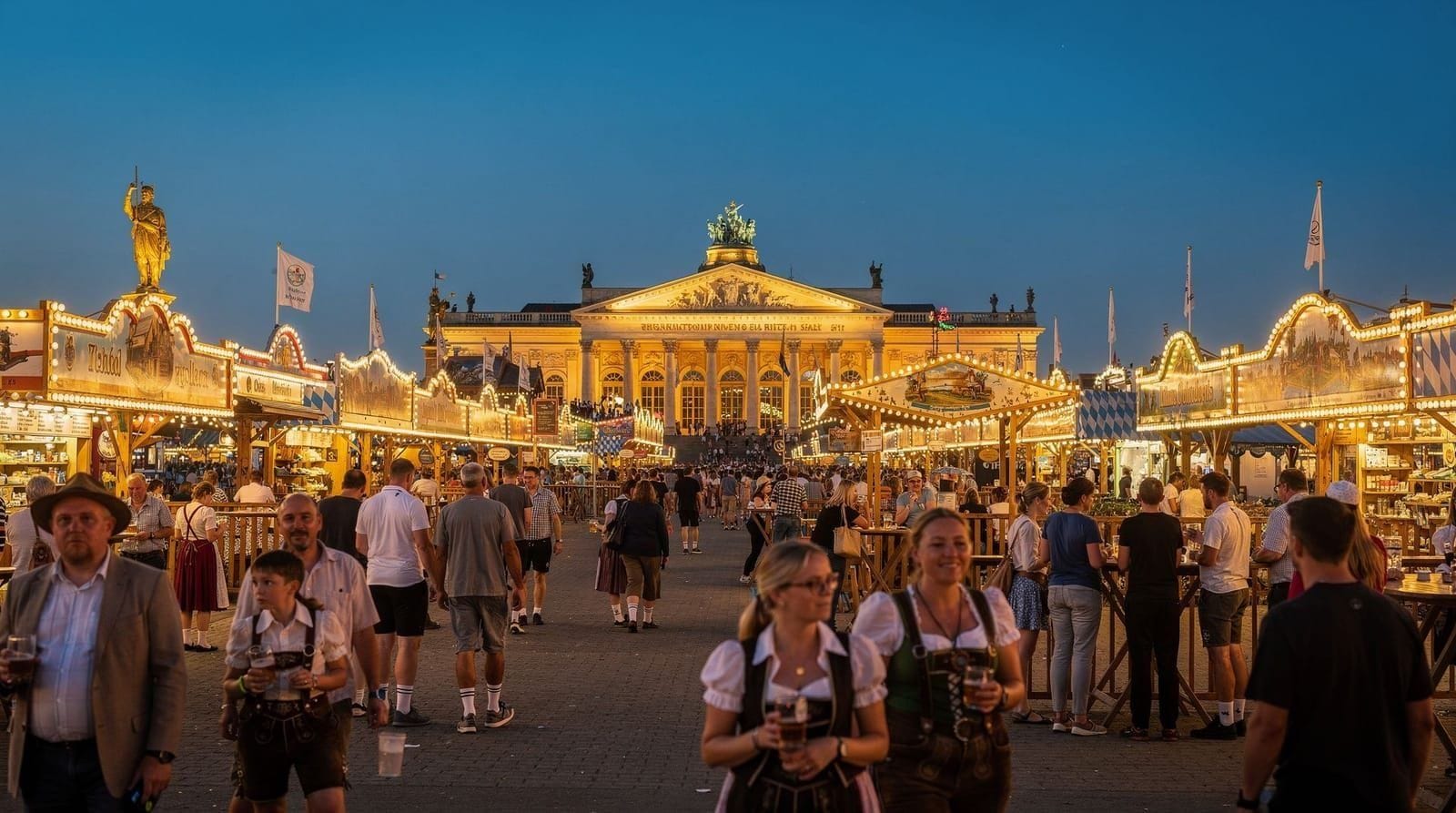
Oktoberfest 2026 runs from Saturday, 19 September to Sunday, 4 October. The festival grounds (Theresienwiese) are in central Munich, reachable on the U4/U5 U-Bahn (Theresienwiese or Goetheplatz stations) or S-Bahn (Hackerbrücke, then 10 minutes on foot). A taxi from Marienplatz costs around €8.
What Oktoberfest actually is in 2026: 6 million visitors, 14 main tents, approximately 7.5 million litres of beer consumed. The beer is Munich-brewed (the six traditional breweries: Augustiner, Hofbräu, Hacker-Pschorr, Paulaner, Spaten, Löwenbräu) and comes in 1-litre ceramic steins called Mass. The 2026 price for a Mass inside the tents is approximately €15.50–16.50 (it increases slightly each year).
Reservations: The main tents require pre-booked table reservations for Saturday evenings (from around 16:00) and Sunday afternoons. Reservations open in January for the following September’s festival and sell out within hours for the most popular tents (Augustiner, Hofbräuhaus, Hacker-Festzelt). Walk-in seating exists on weekday mornings and early afternoons; weekend evenings without a reservation mean standing or not getting in at all.
This itinerary is designed for visitors who have a Saturday evening reservation (or are willing to join a guided tour with reserved seating) and want to experience the festival across an extended weekend.
| Where | Theresienwiese festival grounds, central Munich |
| Cost | Around €600–950/person for 3 nights, excluding flights |
| Time needed | 3 days (Friday arrival to Sunday recovery) |
| Getting there | U4/U5 Theresienwiese or Goetheplatz; S-Bahn Hackerbrücke + 10 min walk |
| Best time | Weekday mornings for walk-in seating; book ahead for weekend evenings |
Friday: arrival and the opening day atmosphere
Morning: fly or train into Munich
Oktoberfest Friday (the first Friday of the festival, or any Friday during the three-week run) is one of the less crowded weekdays. If arriving for the first weekend, try to land by midday.
From Munich Airport (MUC), the S1 or S8 takes 40–45 minutes to Munich Hauptbahnhof (€13.60 single, or covered by the Bayern-Ticket if you are travelling from outside Munich). See our Munich airport to city guide for full transport options.
Check into your hotel. A word on accommodation: central Munich hotels in Oktoberfest season command a 50–100% premium. Expect €150–250 per night for a 3-star hotel that normally costs €90–130. Book 6–12 months ahead for Oktoberfest weekends. Schwabing and Maxvorstadt districts are 15–20 minutes from the festival by U-Bahn and tend to have slightly lower rates than the Altstadt.
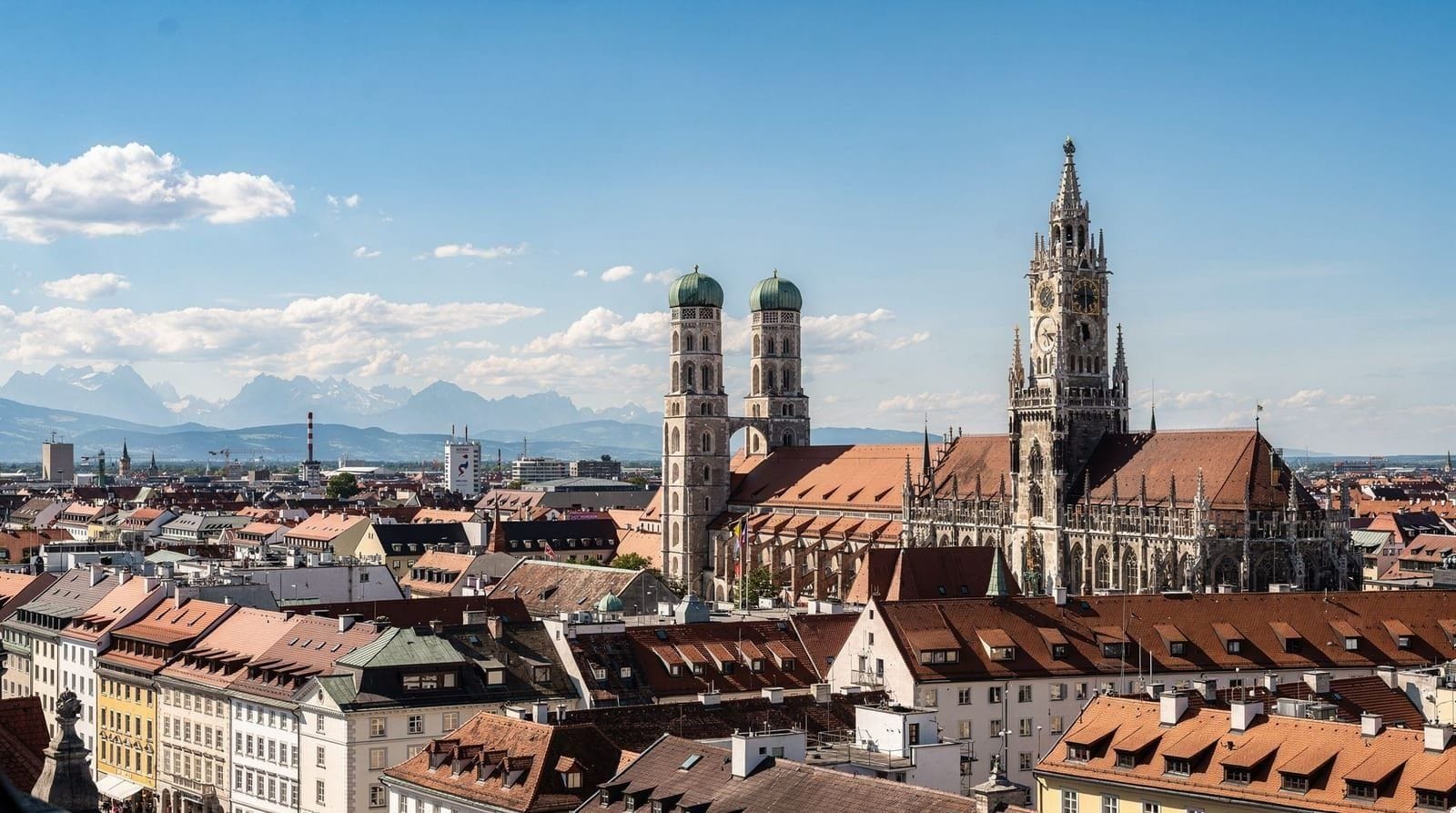
Afternoon: old town and Marienplatz
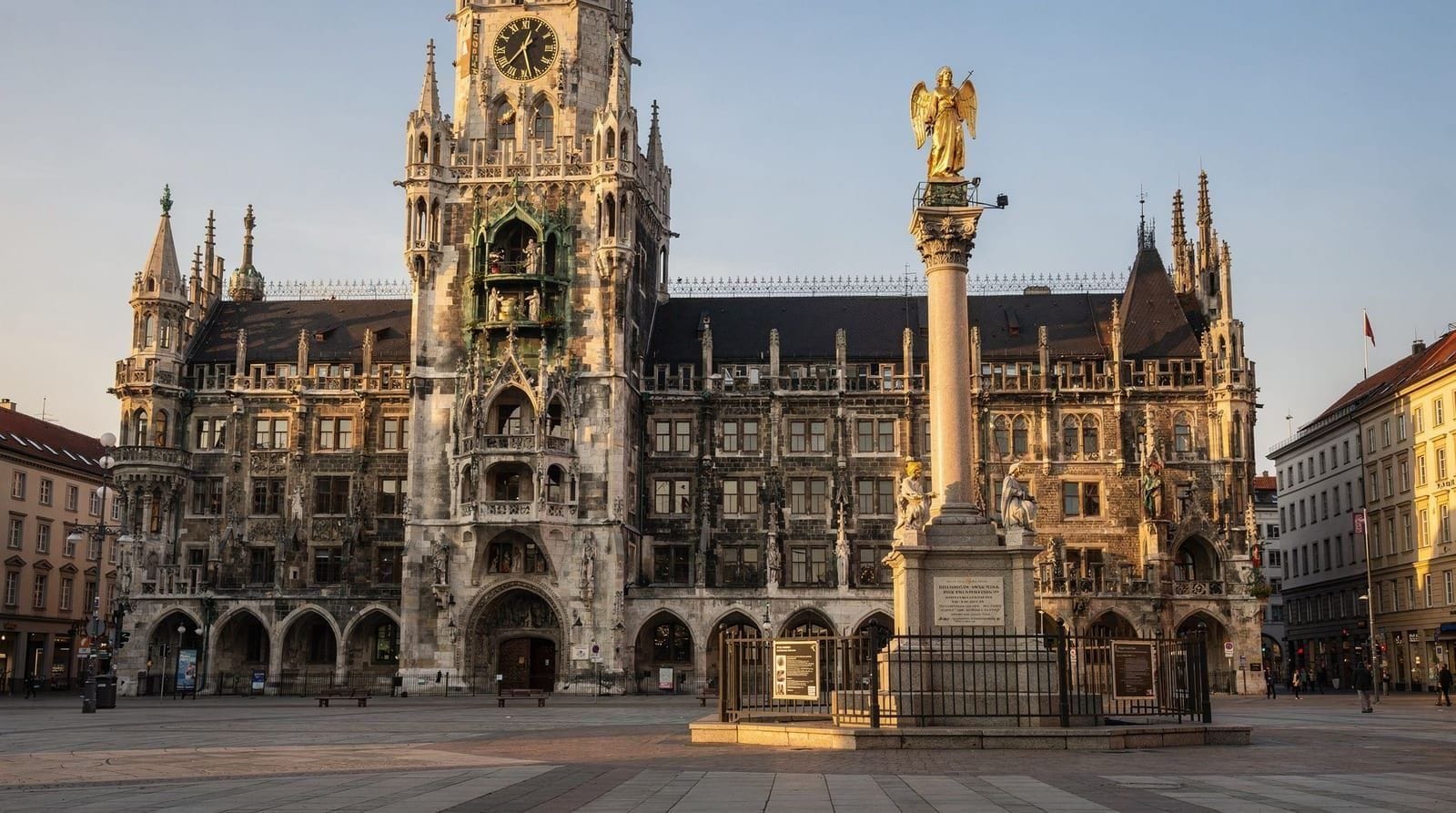
Walk to Marienplatz. On opening day, the official tap ceremony (O’zapft is!) happens at noon in the Schottenhamel tent when the mayor taps the first keg. This is invitation-only for the actual ceremony but the festive atmosphere spreads across the city.
Take a walk through the English Garden — a 30-minute walk from Marienplatz — for a calmer introduction to Munich before the weekend intensity begins. The Chinesischer Turm beer garden in the English Garden is open year-round and is a relaxed alternative to the tent crowds (a Mass costs around €11 here, cheaper than inside the Wiesn).
Evening: Theresienwiese (first visit)
Head to the festival grounds around 17:00 on Friday. If you do not have a reservation, your best chance at seating is to arrive at a tent by 16:30–17:00 when some reserved tables vacate. The Schützen-Festzelt (shooting society) and Fischer-Vroni (fish tent) are often cited as having more walk-in availability than the big brewery tents.
One Mass is enough to gauge your tolerance before Saturday. Drink water between steins — dehydration is the primary cause of the stereotypical festival collapses visible outside the medical tents. Eat a Hendl (roast chicken, €15), Stelze (pork knuckle, €17–20), or Käsespätzle (cheese noodles, €13) inside the tent. Street food outside the tents is also available: roasted almonds, gingerbread hearts, corn on the cob.
Leave by 22:00 if Saturday’s reservation requires you to be sharp. Book an Oktoberfest guided tour with reserved tent seating and food
Saturday: the main event
Morning: pace setting and Maxvorstadt
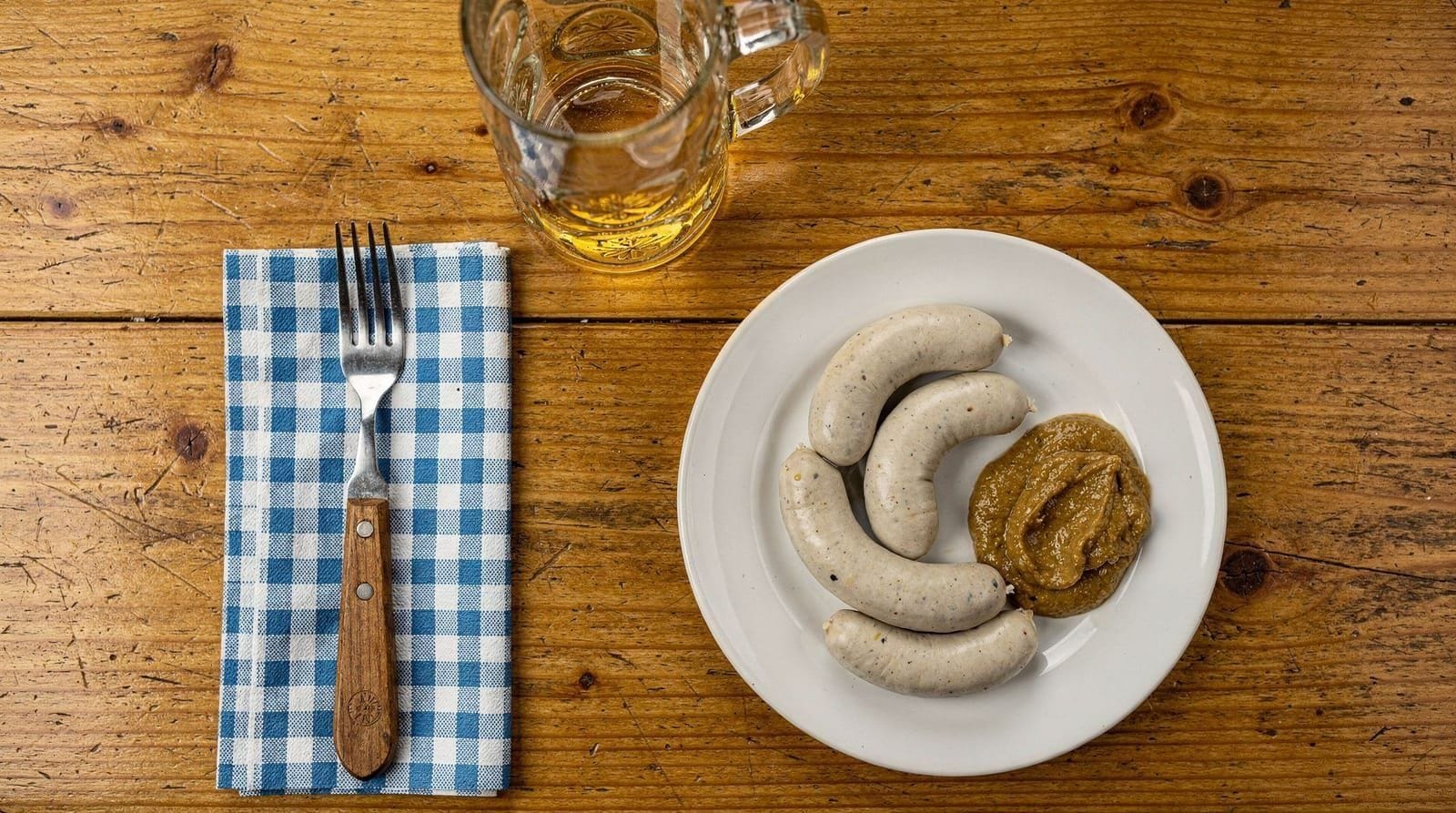
Saturday at Oktoberfest is the most intense day. Eat a real breakfast before going to the festival — empty-stomach drinking at this scale ends predictably. Weisswurstfrühstück (white sausage breakfast with sweet mustard and a Weissbier) is the Munich standard: available at Café Frischhut (Prälat-Zistl-Strasse 8) or the covered Viktualienmarkt stalls for around €8–12.
Visit the Viktualienmarkt beer garden in the morning — it opens at 10:00 and is a sociable outdoor spot before the enclosed tents get loud.
Afternoon: the tent experience
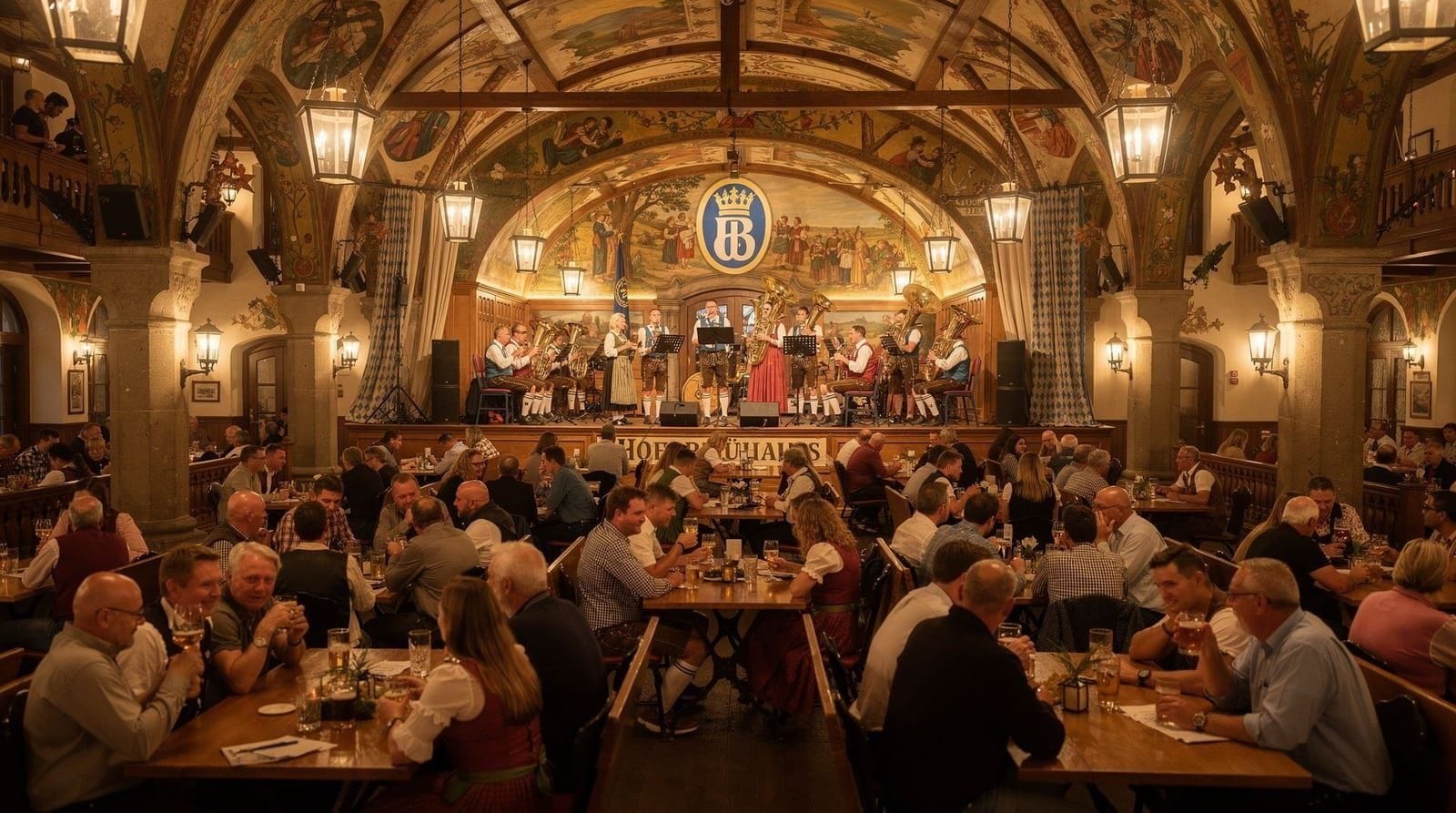
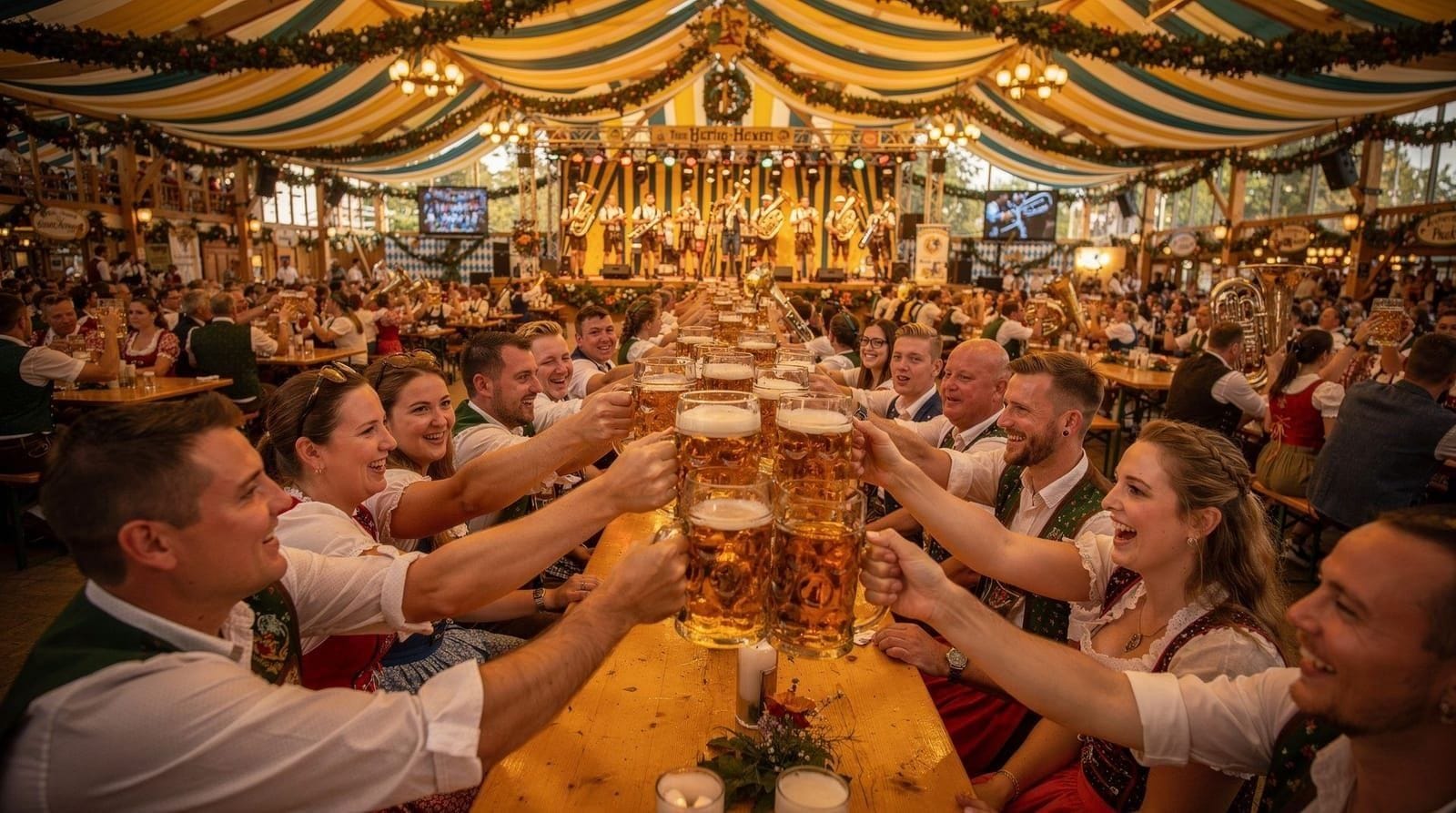
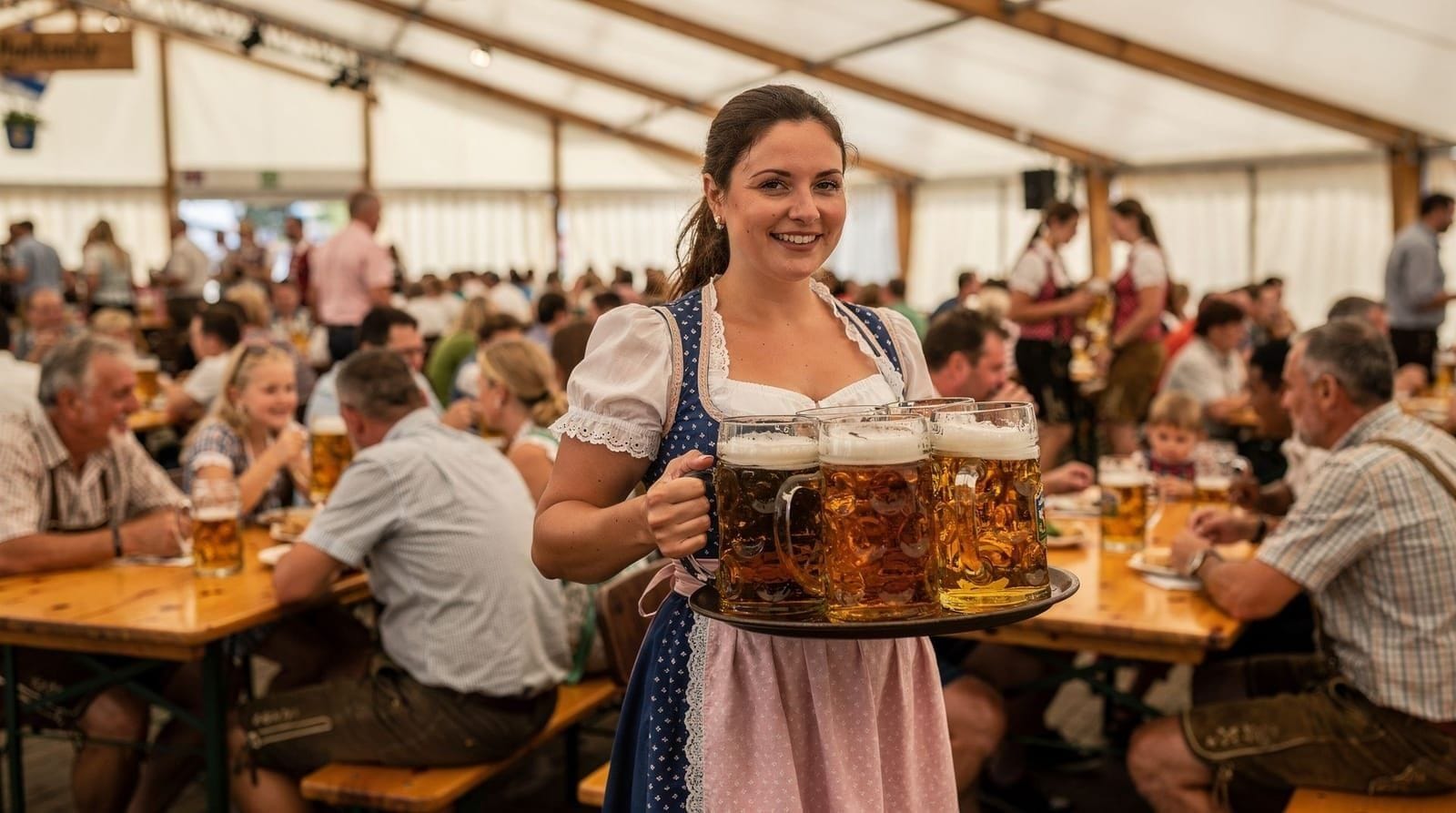
If your reservation is for 16:00 (the typical weekend evening slot), arrive at the grounds by 15:30. Tent entrances get congested. Your waitress will take your reservation card; tipping well early (€2–3 on each round) means you will not wait long for refills. The band plays from approximately 15:00 to midnight; table-standing and sing-alongs start around 17:00.
Which tent? There is no objectively best tent. The Augustiner-Festhalle is favoured by locals for its wooden barrels (the only tent still serving gravity-drawn beer rather than pressurised). Hofbräu-Festzelt is the loudest and most international. Hacker-Festzelt (known as Heaven of Bavaria for its painted ceiling) is strongly favoured by first-timers. Your reservation will determine where you go.
Pace: two Mass per person over 3 hours is sociable drinking. Three is ambitious. The stein weighs over a kilogram when full; if you need to go to the toilet queue (15–25 minutes), leave your stein with your group.
Late evening: return to hotel
Theresienwiese closes at midnight (tents last order around 22:30). U-Bahn is crowded but frequent. The main alternative is walking — if your hotel is within 2 km, it is faster to walk than queue for the U-Bahn.
Sunday: recovery and city exploration
Morning: slow start
Sunday should not include a return to the festival. Take a slow morning, drink water, eat starchy food. The Sunday opening Oktoberfest frühschoppen (morning drinking session starting at 10:00) is genuinely attended by locals but is not for people who drank heavily on Saturday.
Midday: Marienplatz and Residenz
Munich’s Glockenspiel on Marienplatz performs at 11:00 and 12:00 (also 17:00 in summer). It is overrated — 32 figures playing out medieval scenes for 12 minutes — but a useful landmark gathering point. See our Marienplatz guide for the surrounding context.
The Munich Residenz is 5 minutes walk from Marienplatz. Entry with the Schatzkammer (Treasury) costs €11 in 2026. The 130-room palace is the largest urban palace in Germany and its contents — crowns, reliquaries, armour, tapestries — are far richer than most visitors expect.
Afternoon: Pinakotheken or English Garden
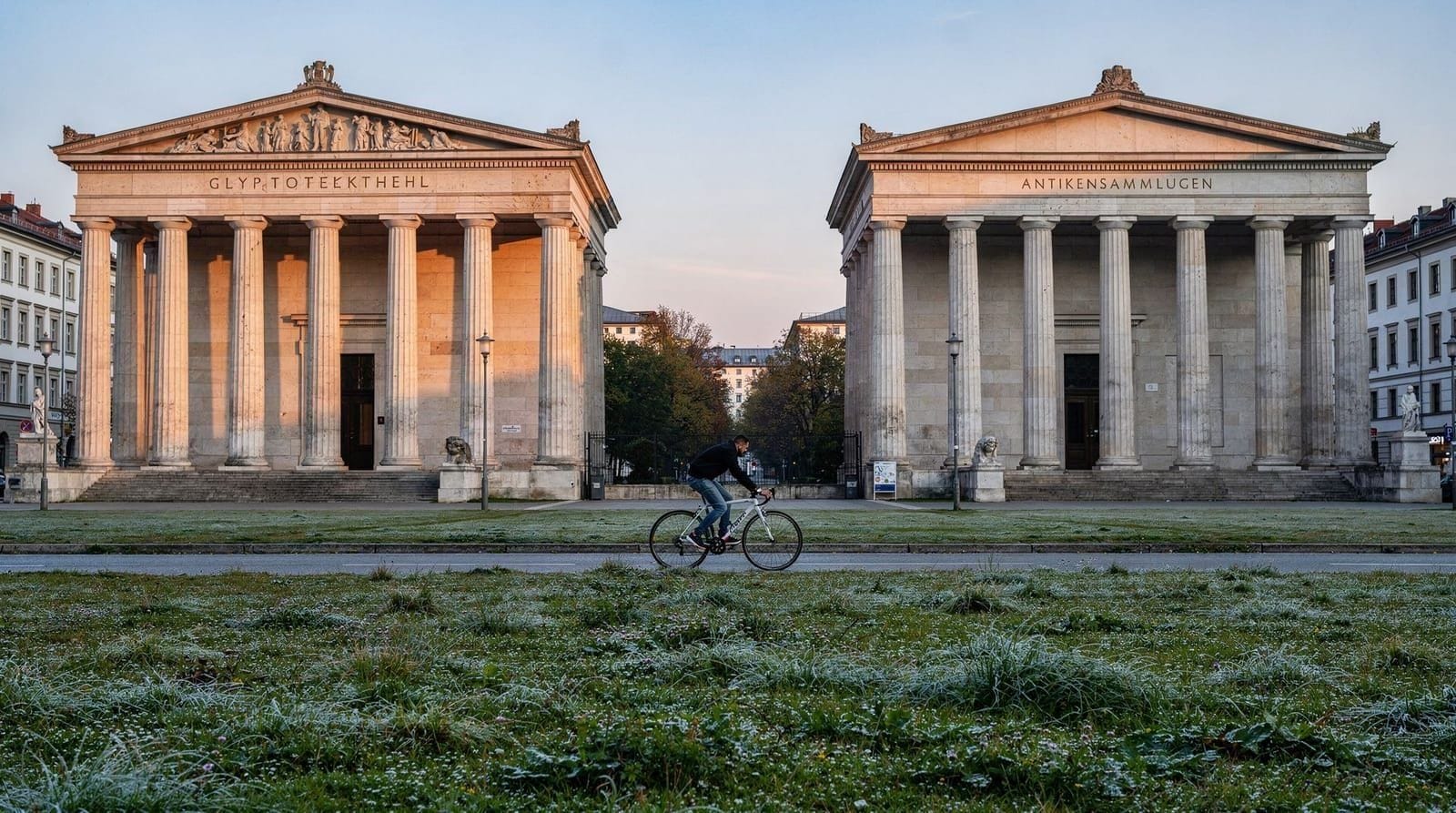
The Pinakothek museums (Alte, Neue, Moderne) in Maxvorstadt are open Sunday until 18:00. Sunday admission is €1 at Alte and Neue Pinakothek — genuinely excellent value for collections that include Rubens, Dürer, Rembrandt (Alte), and Van Gogh, Monet, Klimt (Neue). See our Pinakothek museums guide for which collection suits your taste.
Alternative: rent a bike and cycle through the English Garden to the Chinese Tower beer garden for a gentler afternoon beer. Bike rental from MVAG or Donkey Republic is around €15–20 for 3 hours.
Evening: departure or one more night
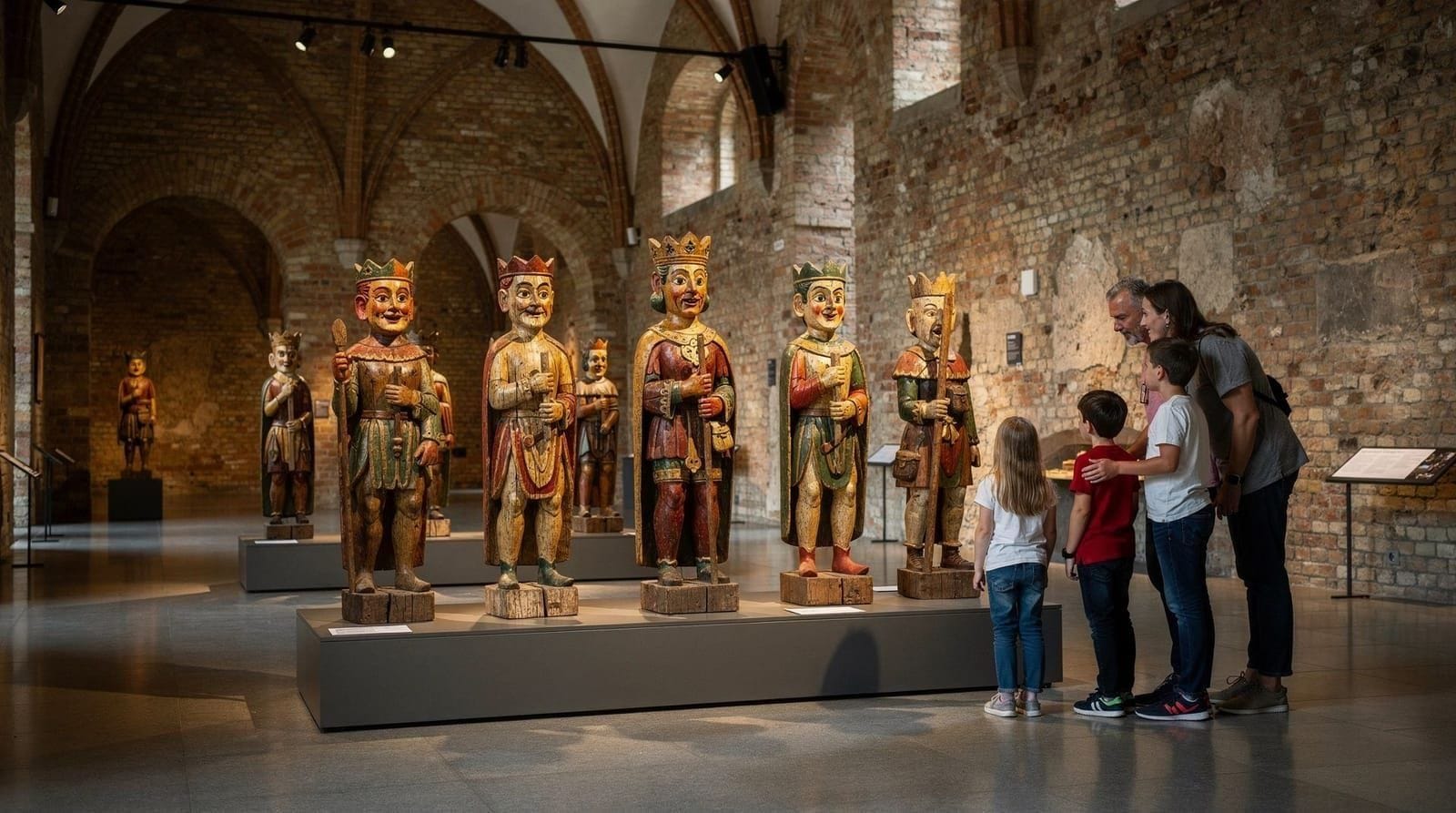
If flying home Sunday evening, note that Oktoberfest traffic means the S-Bahn can be slower than usual — allow extra time. The airport bus (Lufthansa Express, €10.50) from Munich Hauptbahnhof to the airport runs every 20 minutes and is often faster on festival weekends. Visit the Oktoberfest Museum and enjoy a Bavarian beer and food evening in Munich
The 14 main tents: a quick guide
Oktoberfest has 14 large tents (Festhallen) and around 20 smaller tents and specialty stalls. For a first-time visitor, here is what distinguishes the major options:
Augustiner-Festhalle: The only tent still serving beer from wooden barrels (gravity-poured, not pressurised). Considered the most authentic by Munich locals. Slightly calmer atmosphere than the big brewery tents.
Hofbräu-Festzelt: The largest and most international tent. Very loud, very crowded, very good for meeting other travellers. The Hofbräuhaus brewery is the most tourist-oriented of the six.
Hacker-Festzelt (Himmel der Bayern — Heaven of Bavaria): The painted ceiling with stars and clouds is the tent’s distinctive feature. First-time visitors consistently rate this as the most visually impressive.
Schottenhamel: The oldest tent (records from 1867). The Lord Mayor of Munich taps the first barrel here at noon on the opening Saturday to officially begin the festival. The political and social heart of Oktoberfest.
Käfer Wiesn-Schänke: The most expensive and exclusive tent, favoured by celebrities and business guests. Reservations cost significantly more. The food is better quality than in the brewery tents.
Fischer-Vroni: Fish specialist tent. Grilled Steckerlfisch served alongside the beer. Smaller and often slightly easier to get a seat than the brewery tents.
What nobody tells you about Oktoberfest
The beer is stronger than usual. Festival Märzenbier served at Oktoberfest is typically 6% ABV, stronger than standard Helles. Drink water. There is no shame in alternating between beer and water.
The morning sessions are very different. Opening time is 10:00 (Sunday and public holiday frühschoppen from 10:00). Morning sessions are genuinely quieter, the atmosphere is calmer, and walk-in seating is available. Families with children attend in the morning. The music is quieter.
The fairground is substantial. Beyond the tents, Oktoberfest has a large fairground (Schausteller) with rollercoasters, the traditional Teufelsrad (Devil’s Wheel), carousels, and shooting galleries. Entry to the fairground is free; rides cost €3–8 each. The fairground is accessible without entering any beer tent.
Oide Wiesn (Old Oktoberfest): A separately ticketed area within the festival grounds (entry €4) that recreates the 19th-century Oktoberfest atmosphere with traditional rides, folk music, and historical exhibits. Worth 1–2 hours if you want to understand what the festival looked like before it grew to its current size.
Practical costs for Oktoberfest weekend
| Item | Approximate cost (2026) |
|---|---|
| Hotel (3 nights, Oktoberfest season) | €450–750 |
| Beer at Oktoberfest (2 Mass/day x 2 days) | €62–66 |
| Food inside tents (2 days) | €40–60 |
| Transport (3 days, 24-hour U-Bahn pass) | €30 |
| Oktoberfest museum or guided tour | €25–45 |
| Sunday museum entry | €2–12 |
Total budget per person (excluding flights): €609–963
For a budget version: stay in Schwabing or Au-Haidhausen, limit to one tent session (Friday evening, walk-in early), and do free activities (English Garden, Marienplatz, Viktualienmarkt) the other days.
For full ticket and reservation strategies, see our Oktoberfest tickets and tables guide. Our best time to go to Oktoberfest guide covers which weeks and days are least crowded.
Oktoberfest history: what you are actually attending
The festival started in 1810 as a public celebration of the wedding of Crown Prince Ludwig (later King Ludwig I) to Princess Therese of Saxony-Hildburghausen. The name Theresienwiese (Therese’s meadow) commemorates her. The first event was a horse race; beer tents were added later.
By the mid-19th century the event had become primarily about beer and agricultural exhibitions. The agricultural component survived until 1996. The modern large tents (Festhallen) became the dominant feature in the 20th century. Oktoberfest was cancelled 24 times in its history, most recently in 2020 and 2021 due to the pandemic.
The six Munich breweries permitted to serve at Oktoberfest (Augustiner, Hofbräu, Hacker-Pschorr, Paulaner, Spaten, Löwenbräu) are all founded in Munich and all owned now by international beverage corporations — except Augustiner, which remains independently owned and is the only major Munich brewery still under local control. This is part of why Augustiner has a particular reputation among Munich residents.
First-timer mistakes to avoid
Booking flights without checking hotel availability: Munich hotels sell out 8–12 months in advance for peak Oktoberfest weekends. Confirm hotel availability before buying non-refundable flights.
Going only on Saturday evening without a reservation: Weekend evenings without a reservation mean a high probability of not getting seated in any main tent. If you do not have a reservation, plan to attend on Friday evening or any weekday morning/afternoon.
Drinking on an empty stomach: The beer is 6% ABV and served in 1-litre measures. Eat a full meal before entering the tent.
Wearing inappropriate shoes: The tent floors have drainage channels and can be wet and slippery in the evenings. Closed shoes are strongly recommended. Dirndl with sandals looks good in photographs; it is uncomfortable after 4 hours standing.
Not having cash: Most tent food and beer purchases work with card in 2026, but some snack stalls outside still prefer cash. Keep €20–30 in small bills.
Leaving valuables in a jacket on the tent bench: Pickpocketing is common in crowded tents. Keep passports and large cash amounts in front trouser or jacket pockets. Organised tours include safety briefings on this.
Arriving at Theresienwiese by car: Parking near the festival is minimal and expensive. The U4/U5 (Theresienwiese) and U3/U6 (Goetheplatz) are the standard approaches. Avoid driving.
Munich beyond Oktoberfest on the same trip
If you are visiting Munich specifically for Oktoberfest and have not been before, allocating time for one non-festival activity per day is worth it. Sunday is ideal:
- Deutsches Museum (covered on its own page): The world’s largest science museum is 20 minutes from Marienplatz and an excellent half-day.
- Nymphenburg Palace: Take the U1 tram for a 2-hour break from the festival atmosphere. Entry €18 for the full combination ticket.
- Dachau Memorial: 45 minutes from Munich Hauptbahnhof by S-Bahn and bus. Free entry. A sobering counterpoint to the festival, and historically significant.
See our Munich first-time itinerary if you want a full non-Oktoberfest programme alongside the festival.
Where to stay for an Oktoberfest weekend
Proximity to Theresienwiese matters more during Oktoberfest than on a typical Munich trip, since you will be making the trip back and forth at least twice a day and the U-Bahn gets genuinely crowded. The Ludwigsvorstadt and Isarvorstadt districts immediately surrounding the festival grounds are the most convenient but also the most heavily marked up — expect to pay a premium even by Oktoberfest standards. Schwabing and Maxvorstadt, 15–20 minutes away by U-Bahn, offer a better balance of cost and access, and are far enough from the grounds that late-night noise is less of an issue. Avoid booking anything requiring more than one transfer to reach Theresienwiese; after a few Mass, simple logistics become worth paying for. See our Munich where to stay guide for neighbourhood specifics.
How Oktoberfest compares to Munich’s other beer festivals
Oktoberfest is not the only beer festival in Munich’s calendar, and knowing the alternatives helps set expectations if your travel dates do not line up. Starkbierfest (Strong Beer Festival), held in Lent (March), features Doppelbock beers around 7–8% ABV and a more local, less touristy crowd — see our Starkbierfest guide for details. The Frühlingsfest (Spring Festival) in April/May at the same Theresienwiese grounds is essentially a smaller, calmer preview of Oktoberfest with the same fairground format but a fraction of the visitors. Neither replicates the specific scale or global draw of Oktoberfest itself, but both are worth knowing about if your trip dates fall outside the September–October window. Our Munich beer festivals calendar has the full year-round list.
Day-by-day summary at a glance
| Day | Focus | Pace |
|---|---|---|
| Friday | Arrival, old town, first tent visit | Light — one Mass, gauge tolerance |
| Saturday | Main tent reservation, all-day festival | Peak — two Mass over 3 hours is sociable |
| Sunday | Recovery, Residenz or museums, departure | Slow — no return to the festival |
If you can only do two days
Cut Friday’s arrival day and fly in Saturday morning if your reservation is Saturday evening — this is workable but tight, since Munich hotels near Theresienwiese fill fastest and jet lag plus festival intensity on the same day is a rough combination. If you have any flexibility, Friday-to-Saturday with a Sunday morning departure is a better two-day compression than Saturday-to-Sunday, because it keeps the recovery slot intact. Either way, do not schedule a Monday-morning flight after a Saturday tent session — Sunday needs to be a genuine rest day for the trip to feel worth it rather than punishing.
Alternatives if tents are fully booked
If Saturday and Sunday reservations are unavailable by the time you plan your trip, do not assume Oktoberfest is off the table. Weekday sessions (Tuesday–Thursday) have meaningfully more walk-in availability, and a guided tour with pre-arranged seating remains the most reliable fallback for weekend dates. The Oktoberfest tickets and tables guide covers reservation strategy in depth, and the best time to go to Oktoberfest guide identifies which specific days across the three-week run are least crowded — useful if your travel dates have any flexibility at all.
Frequently asked questions about this itinerary
Do I need a reservation for Oktoberfest tents?
For Saturday evenings and Sunday afternoons: yes, without a reservation you will likely not get seated in any of the major tents. Reservations open in January for September’s festival and sell out within hours. If you missed reservations, book a guided tour (like the one linked above) which includes pre-arranged seating, or plan to attend on a weekday morning when walk-in seating is available.
How much does Oktoberfest cost total for a weekend?
Budget €600–950 per person for 3 nights in Munich during Oktoberfest, including accommodation, beer, food, and transport. The beer itself (2 Mass per day on 2 days) costs about €60–65 at 2026 prices. Hotels are the largest expense due to seasonal surcharges.
What is the Oktoberfest dress code?
Lederhosen (men) and Dirndl (women) are worn by many visitors but are not required. Locals do wear them genuinely. Renting is possible at costume shops near the festival (around €30–50/day). Buying a quality Dirndl or Lederhosen costs €80–250. Wearing regular clothes is completely acceptable.
Is Oktoberfest safe for solo travellers?
Generally yes. The festival has medical tents, security, and well-lit exits. Common sense applies: keep your wallet secure, watch your drink, and do not leave incapacitated friends alone. The U-Bahn home after midnight can be rowdy but is heavily staffed during festival season.
When should I arrive at the festival to get a table without a reservation?
Weekdays: arrive by 10:00–10:30. The grounds open at 10:00 and walk-in seating fills by 11:30. Weekend days: practically impossible in the main tents without a reservation. On weekends, the smaller specialist tents (Weinzelt wine tent, Käfer Wiesn-Schänke) occasionally have spots.
What happens if it rains at Oktoberfest?
The tents are permanent structures and all-weather. Bad weather increases the crowd inside the tents significantly. The fairground rides and outdoor areas get quiet. Rain is common in late September in Munich; pack a light jacket.
Can children come to Oktoberfest?
Children are allowed inside the tents until 20:00. The festival also has a large fairground (Oide Wiesn section) with historic rides suitable for families. Under-18s cannot purchase alcohol. The atmosphere Saturday evenings is not suitable for young children.
Is it worth booking an organised Oktoberfest tour instead of going independently?
For first-timers without existing reservations, yes. A guided tour typically includes pre-arranged tent seating (the single hardest thing to secure independently for weekend dates), a set food and beer package, and often a host who explains tent etiquette and pacing. Independent visits work well if you already have a reservation through a contact in Munich or are comfortable with weekday walk-in seating. For a first Oktoberfest with no local connections, the guaranteed seating from a tour is worth the premium over the risk of being turned away at the tent door.
Top experiences
Bookable activities with verified prices and instant confirmation on GetYourGuide.