Oktoberfest 2026 — when it is, where it is, and how to plan your visit
Munich: Oktoberfest tour with tent reservation, food and beer
When and where is Oktoberfest 2026?
Oktoberfest 2026 runs from Saturday September 19 to Sunday October 4, 2026 — 16 days in total. It takes place at Theresienwiese (the "Wiesn"), a permanent festival ground in the Ludwigsvorstadt district of Munich, accessible by U4 or U5 to Theresienwiese station. Entry to the grounds is free every day.
| Where | Theresienwiese, Munich (U4/U5 Theresienwiese) |
| Cost | free entry; around €15.70-16.50 per Maß inside |
| Time needed | one full day for the essentials, two for a fuller visit |
| Getting there | U4/U5 to Theresienwiese, one stop from Hauptbahnhof |
| Best time | Tue/Wed afternoons in the second week for the calmest atmosphere |
Oktoberfest 2026 — dates, location, and what to actually expect
Oktoberfest is one of the world’s most visited events and also one of the most misunderstood. The misconceptions compound: it’s mostly in September, not October. It’s on permanent fairgrounds, not a temporary setup. Entry is free. And the beer, while genuinely good, exists alongside a complete festival ecosystem — fairground rides, traditional food, folk music, a historical section, and a population of locals who have been attending since childhood and regard it as a thoroughly normal part of autumn life.
This guide covers the fundamentals: when exactly it happens, where to find it, how to get there, what the grounds look like, which parts of the calendar to aim for depending on what you want, and the practical logistics of weather, accommodation, and coming from elsewhere in Bavaria.
For the reservation question — how to secure a tent table and what scams to avoid — see the Oktoberfest tickets and tables guide. For the broader cultural and historical context, the Oktoberfest guide covers the full picture.
Dates: Oktoberfest 2026
Opening: Saturday, September 19, 2026 at 12:00 noon Closing: Sunday, October 4, 2026 Duration: 16 days
The festival always opens on a Saturday in mid-to-late September and closes on the first Sunday in October. If October 3 (German Unity Day, a national holiday) falls within the last few days of the festival calendar, the festival extends to include it. In 2026, October 4 is the closing day.
The official opening ceremony takes place at Schottenhamel tent, where the Mayor of Munich — in 2026, Dieter Reiter — taps the first keg at exactly 12:00 and calls “O’zapft is!” (“It’s tapped!”). This is the signal for all tent operators to begin serving beer simultaneously. The ceremony is witnessed by politicians, invited guests, and a tent packed to its 10,000-person capacity. The live television broadcast is a Munich fixture.
Beer is not served on the grounds before 12:00 on opening day. On all subsequent days, the tents open and begin serving from 10:00 (weekdays) and 09:00 (weekends and public holidays).
Closing time: The tents close at midnight (Monday to Saturday) and at 23:30 on Sundays. The grounds close 30 minutes after the tents. The final song in the tents is always a traditional Bavarian farewell — “Ein Prosit der Gemütlichkeit” played for the last time, followed by the Bavarian national anthem.
Location: Theresienwiese, Munich
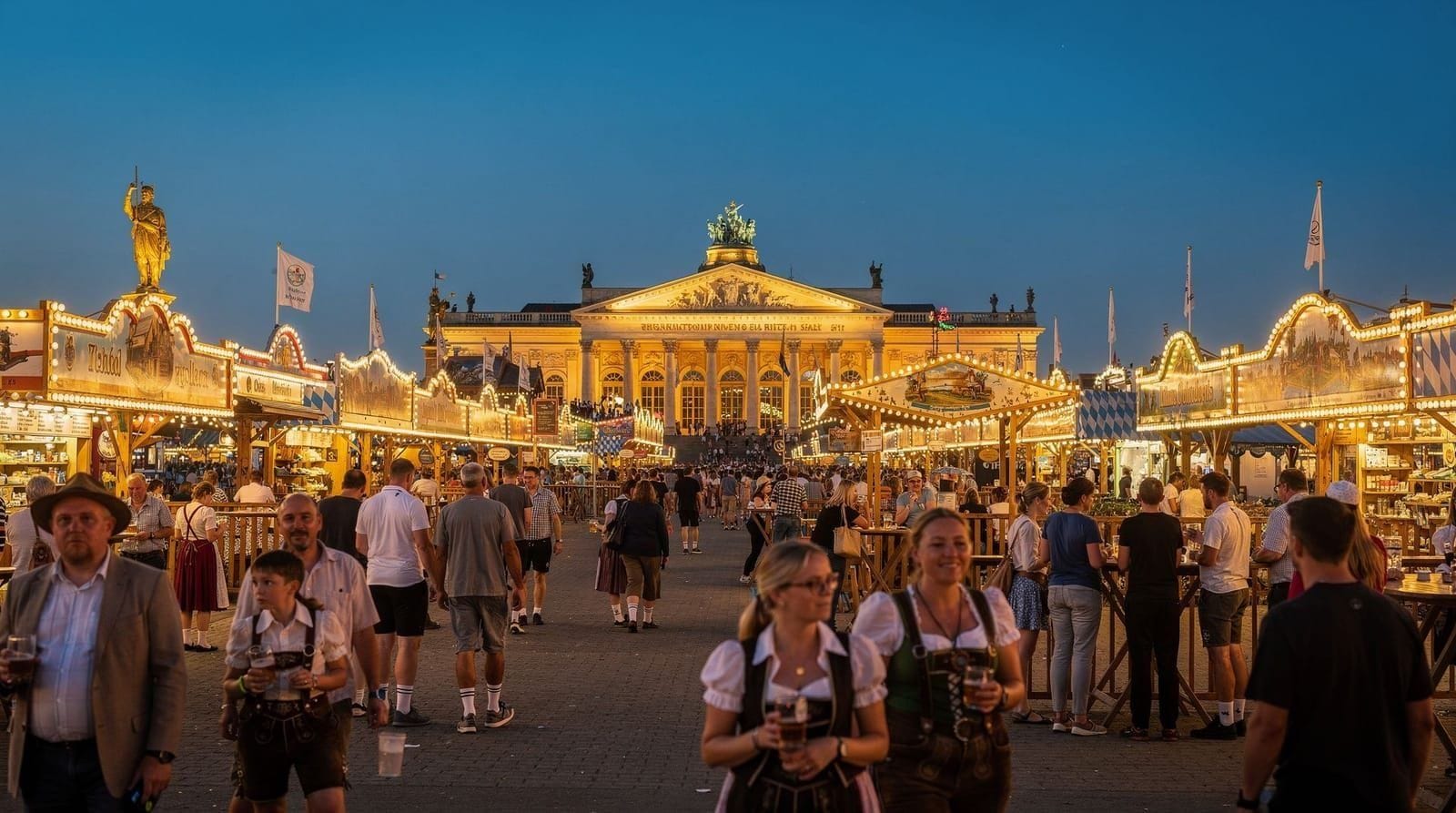
The festival takes place on the Theresienwiese — literally “Therese’s meadow” — a large permanent open space in Munich’s Ludwigsvorstadt-Isarvorstadt district. The grounds were established for the original 1810 horse race celebrating Crown Prince Ludwig’s marriage to Princess Therese of Saxony-Hildburghausen, whose name the meadow still bears.
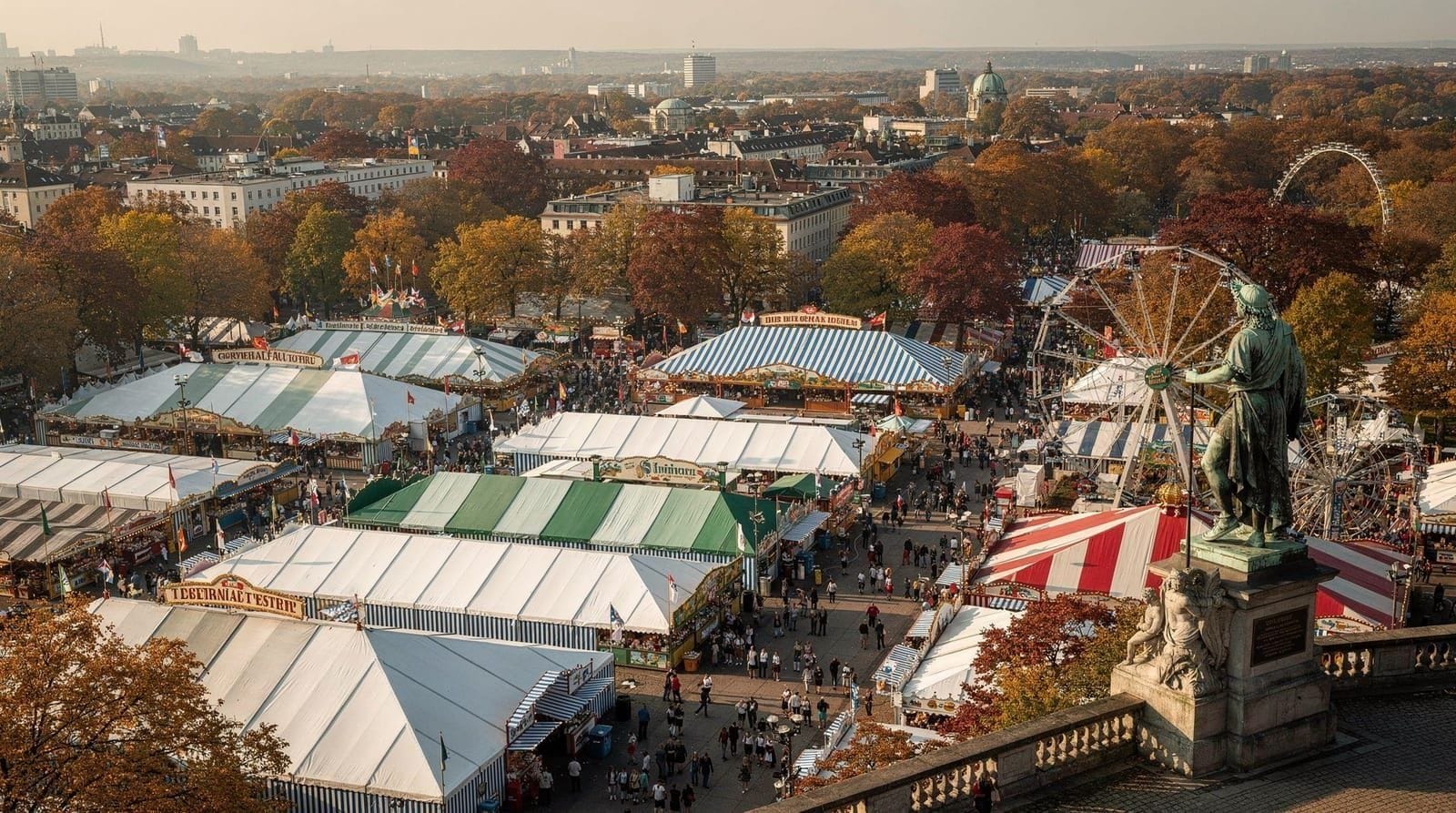
Size: Approximately 420,000 square metres — roughly 42 hectares. This makes it one of the largest festival grounds in the world. Walking from the northern entrance near Theresienwiese U-Bahn station to the southern end where Oide Wiesn is located takes about 15–20 minutes.
Address for navigation: Theresienwiese, 80339 München. On most navigation apps, searching “Oktoberfest” or “Theresienwiese” gives you the correct location.
The statue: The dominant visual landmark is the Bavaria statue at the western edge of the grounds — a 19-metre bronze figure of the personified Bavaria, atop an 11-metre stone base. The viewing platform inside the figure is accessible during the festival for a small fee. The view of the tent rooftops and the city skyline beyond is genuinely good and often overlooked.
Getting to Theresienwiese
By U-Bahn (recommended): The U4 and U5 lines both stop at Theresienwiese station, which exits directly onto the festival grounds. This is the most direct route from anywhere on the Munich U-Bahn network. From Munich Hauptbahnhof, one stop on the U4 or U5 brings you to Theresienwiese in under 3 minutes. The alternative station Schwanthalerhöhe (one stop further west on U4/U5) approaches from the west side of the grounds.
Frequency during the festival: Munich’s Stadtwerke München significantly increases U-Bahn frequency during Oktoberfest weeks. Trains run every 2–3 minutes on the U4/U5 during peak evening periods. Even so, the first trains departing the grounds after tent closing (midnight) can have 30–45 minute waits due to crowd volume.
By S-Bahn: Munich Hauptbahnhof is served by all S-Bahn lines and is a 20-minute walk from the festival grounds, or one U-Bahn stop. If you’re arriving from Salzburg, Garmisch-Partenkirchen, or further afield, S-Bahn to Hbf and then U-Bahn is the standard route.
By tram: Tram line 18 runs to Theresienwiese from the city centre. Slower than the U-Bahn during peak hours but useful if you’re staying in the Glockenbachviertel or western inner city.
By car or taxi: Not recommended during the festival. Traffic around Theresienwiese is heavily restricted during Oktoberfest, and parking within walking distance is extremely limited. Taxis queue extensively. If you must drive, park in the city centre or one of the P+R (park-and-ride) facilities on the S-Bahn network and take public transport for the final leg.
Walking from city centre: From Marienplatz, the walk takes approximately 30–35 minutes through Sendlinger Tor. Pleasant on a warm evening; less so after midnight in the rain.
The layout of the grounds
The Theresienwiese is not randomly laid out. The main beer tents run roughly in two rows along a central axis. Understanding the layout helps you navigate between tents without doubling back.
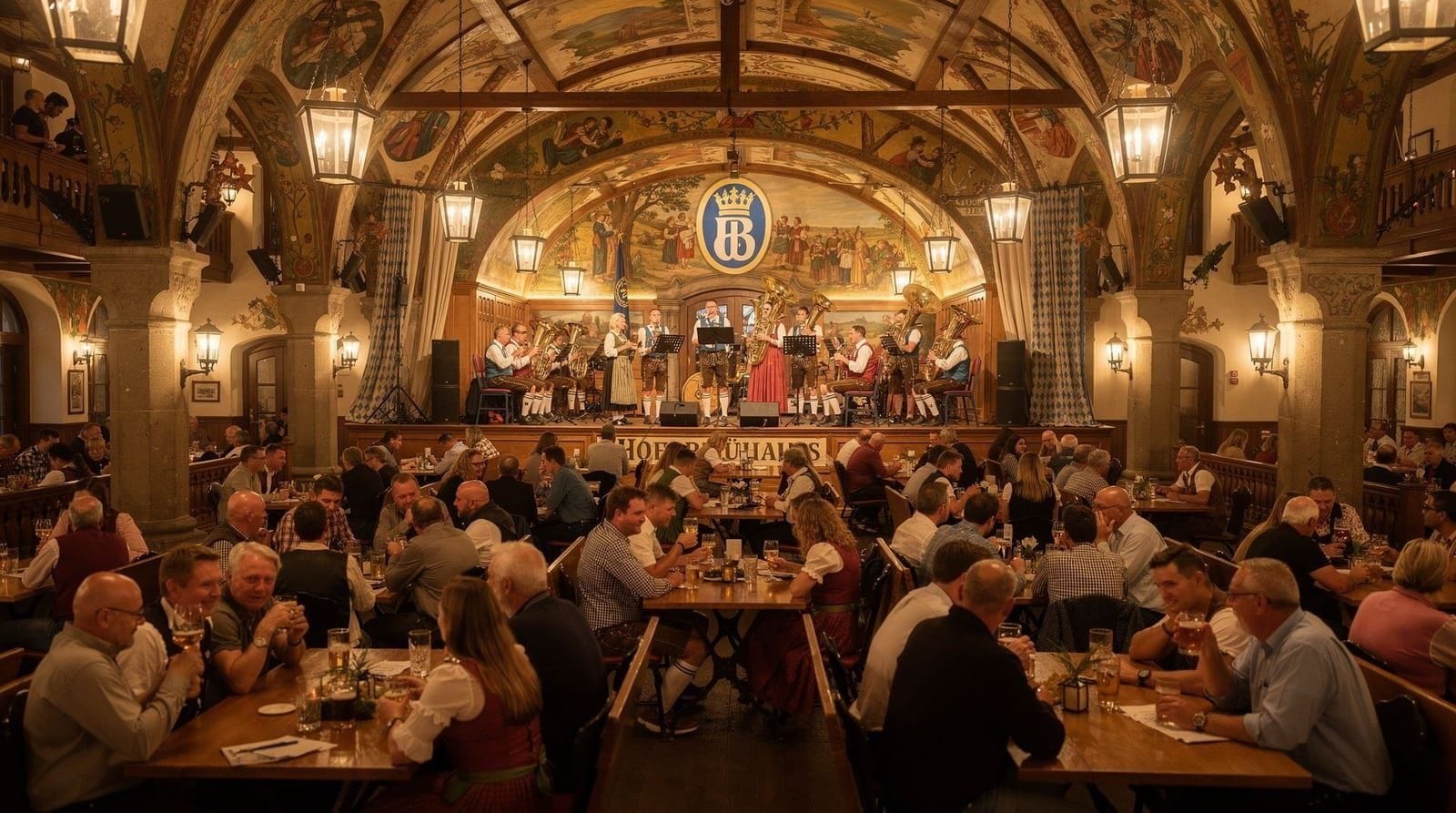
The main tent row (eastern side): The large flagship tents — Schottenhamel, Hofbräu-Festzelt, Hacker-Festzelt, Paulaner-Festzelt, Augustiner-Festhalle, and Löwenbräu-Festzelt — line the main internal street, Wirtsbudenstraße. The Munich beer halls guide covers what distinguishes each tent’s atmosphere and beer character.
Specialty tents: Fischer-Vroni (fish specialities), Weinzelt (wine tent), Käfer Wiesn-Schänke (upscale food), and smaller traditional tents are scattered throughout the grounds. These tend to have a different atmosphere from the main flagship tents — quieter, less crowded, sometimes more interesting for visitors who find the main tents overwhelming.
Fairground rides: Rollercoasters, ferris wheels, gondola rides, and traditional carnival games are concentrated on the eastern and northern edges of the grounds. Entry fees run €3–8 per ride; the larger rides (Olympia Looping, Star Flyer) charge €8–12.
Food stalls: Traditional food stalls line the internal streets — roast chicken, Steckerlfisch (fish on a stick), Brezn, Lebkuchenherzen (gingerbread hearts), sugar almonds, Schmalznudeln (fried pastries). Prices run high relative to Munich restaurants — a half chicken is €14–18, a Schmalznudel around €5.
The Schichtl: A Munich institution since 1869, the Schichtl is a small street theatre at the northern end of the grounds. The performer announces that a member of the audience will be decapitated by guillotine — the performance is comedic and the audience member survives. It runs several shows daily and has been doing essentially the same act for over 150 years.
Oide Wiesn: The southern section of the grounds has a separate €4 entry and hosts the “Oide Wiesn” (Old Fairground), a historical festival recreation with traditional rides, Bavarian folk music and dance performances, and a more subdued atmosphere. It opened permanently in 2010 for the festival’s 200th anniversary and has been part of the programme ever since. Locals who find the main grounds too commercial or crowded often prefer it.
When to go — and what each period is like
The experience of Oktoberfest varies significantly depending on which day and which part of the day you visit.
Opening weekend (September 19–20): The most historically significant period — the Mayor’s keg-tapping on Saturday, the atmosphere of a city collectively recognising that the festival has begun. Also the most crowded. Saturday September 19 is the single busiest day of the festival. Tents fill to capacity by early afternoon. If you want the opening day ceremony, accept that you are trading comfort for historical significance.
First full week (September 21–27): The festival finds its rhythm. Weekday afternoons (13:00–18:00) in the first week offer good access to most tents without a reservation via standing areas. Weather in this week is typically the warmest of the festival. Local attendance is highest proportionally — weekday Oktoberfest before the international tourist peak is when Munich feels most like a Bavarian festival rather than a global event.
Second weekend (September 26–27): Nearly as crowded as the opening weekend. International visitor peak. Tables without reservations are extremely difficult to find in popular tents on Saturday afternoon.
Second full week (September 28 – October 3): This is the sweet spot for most visitors seeking atmosphere without peak crowding. Tuesday and Wednesday afternoons are the calmest days of the entire festival while still being fully operational. October 3 is German Unity Day, a national holiday, which means increased local attendance — treat this as a weekend day in terms of crowd levels.
| Period | Crowd level | Best for |
|---|---|---|
| Opening weekend (Sep 19-20) | Highest | The keg-tapping ceremony and historic atmosphere |
| First week (Sep 21-27) | Moderate, calmer on weekdays | Highest proportion of local attendance |
| Second weekend (Sep 26-27) | Very high | International visitor peak |
| Second week (Sep 28-Oct 3) | Moderate, lowest Tue/Wed | The best balance of atmosphere and access |
| Closing weekend (Oct 3-4) | High, nostalgic | The farewell atmosphere and closing ceremony |
Last weekend and closing day (October 3–4): The final Sunday has a distinct atmosphere — slightly nostalgic, full of Munich locals saying goodbye to the festival for another year. The last Maß is ceremonially poured, tents play their final songs, and the grounds clear relatively quickly after midnight. Closing weekend crowds are significant but not quite at opening levels.
Morning versus evening:
Morning sessions (10:00–14:30) run at a different pace. The band starts playing at 12:00; before that, the tents are quieter and conversation is possible. Local families, older Bavarian visitors, and the morning reserved table crowd dominate. A Weisswurst breakfast — the traditional Munich morning meal, white veal sausages with Brezn and sweet mustard — is available in most tents until 12:00. A Maß before noon sits differently than one at midnight. The best time to attend Oktoberfest guide goes deeper on how each period of the festival compares day by day.
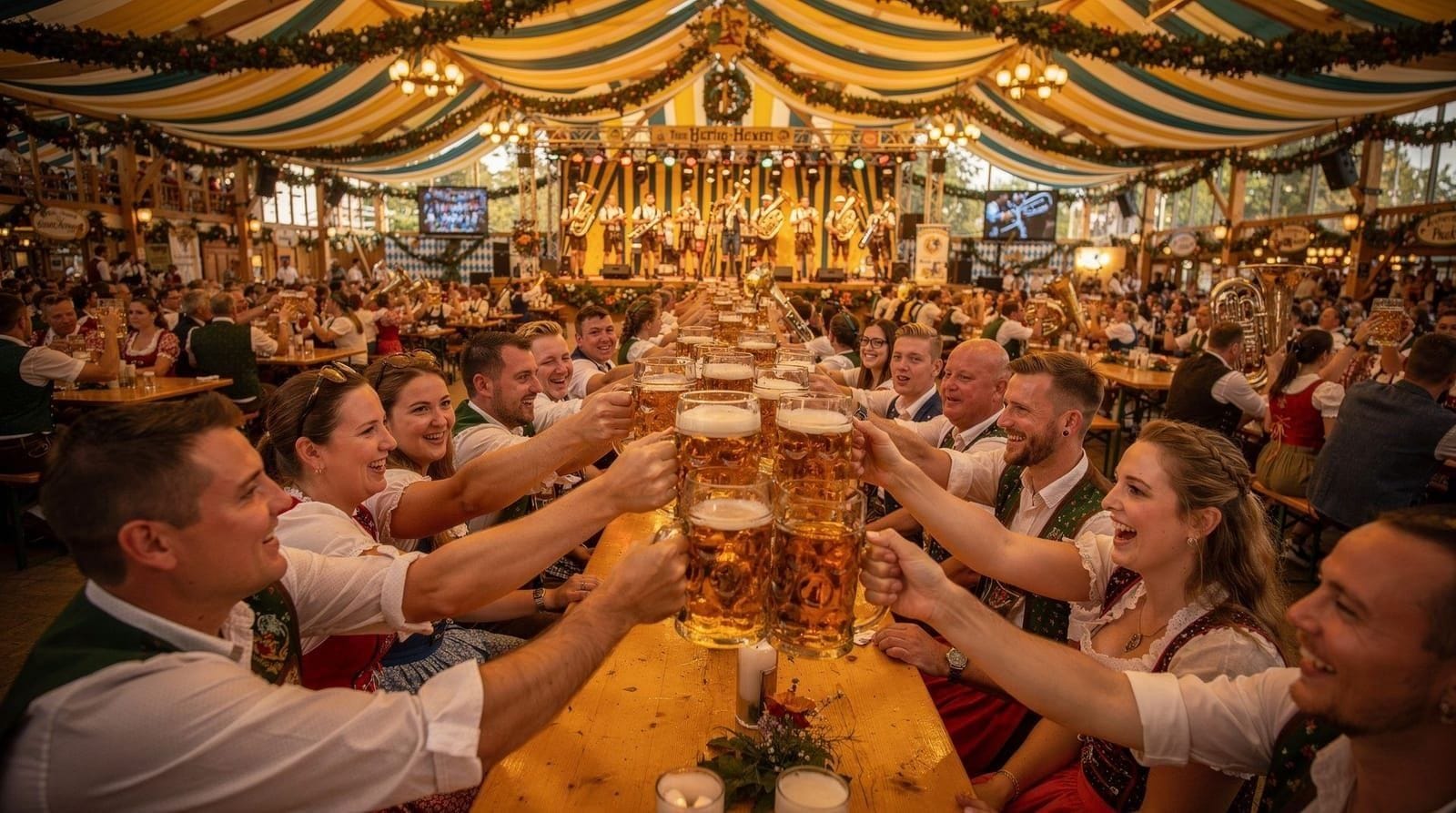
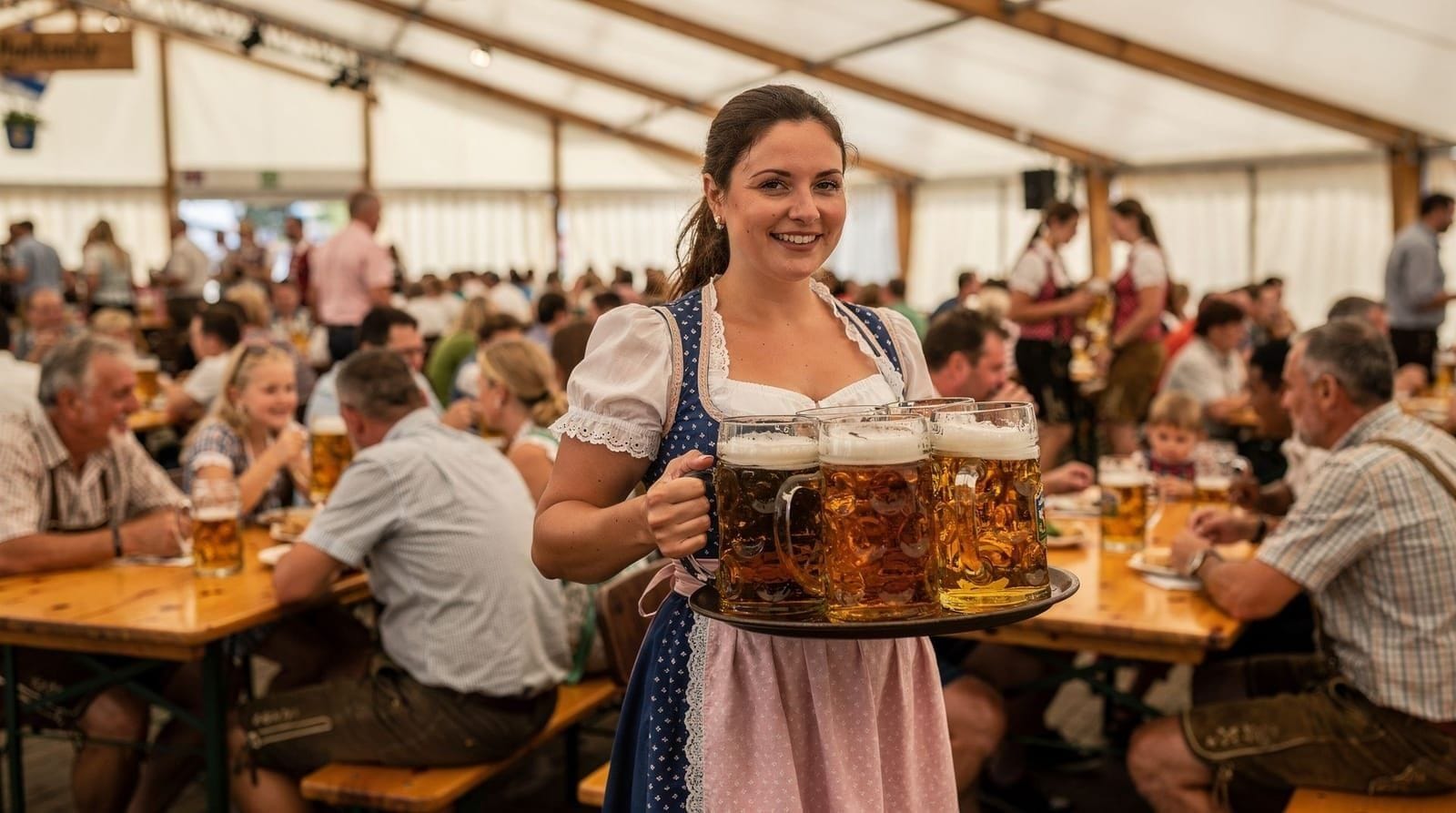
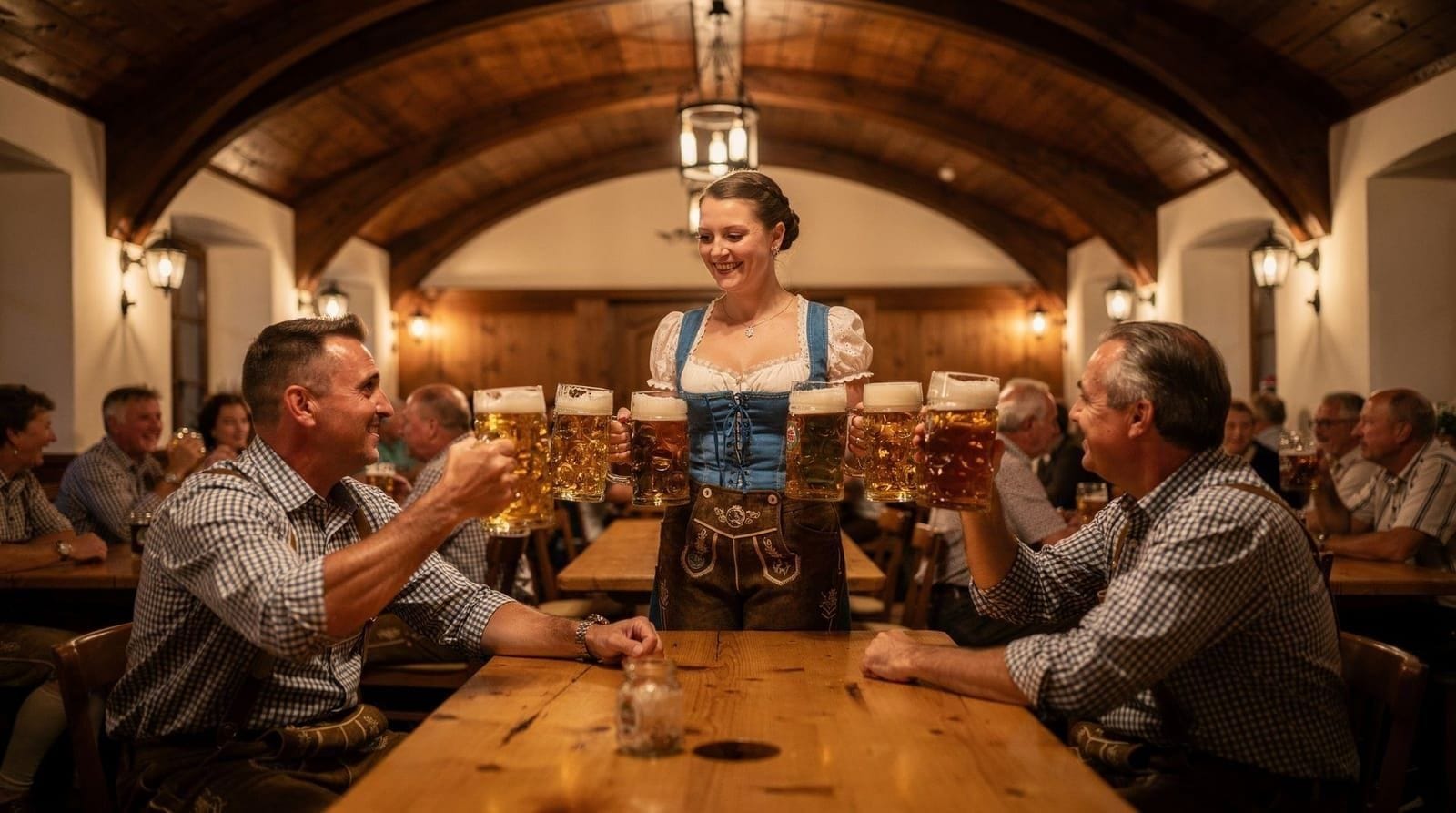
Evening sessions (from 17:00–18:00) are the internationally familiar version of Oktoberfest: packed tents, everyone standing on benches, singing along to pop-folk hybrids from the brass bands, the temperature inside 4°C warmer than outside. This is the version that photographs well and that most first-time visitors are aiming for. Oktoberfest guided tour with reserved tent seating
Phones, photography and connectivity on the grounds
Mobile network coverage at Theresienwiese is notoriously patchy during peak hours despite temporary boosted infrastructure, simply because of the sheer density of devices trying to connect in a 42-hectare space with 6-7 million visitors across the festival run. Expect slow data or dropped connections in the evening inside the busiest tents, and don’t rely on real-time navigation or messaging apps working reliably at the exact moment you need them — agree a meeting point with your group in advance rather than planning to coordinate by phone if separated. Photography is welcome throughout the grounds and inside the tents, and it’s part of the culture — locals in Tracht are generally happy to be in the background of photos, though asking before a close-up portrait is good manners. Selfie sticks are prohibited inside the tents for safety reasons in the dense bench seating. If your phone is your primary camera, a portable charger is worth carrying, since a full day of navigation, photos and patchy signal searching drains batteries faster than a normal day out.
Weather and what to wear
Munich in late September and early October is Central European autumn. The stereotypical Oktoberfest images of warm sunny afternoons in Dirndl exist — they just also coexist with cold evenings, rain showers, and the occasional grey week.
Temperature range:
- Early festival (September 19–25): 15–22°C daytime highs on good days; 8–12°C evenings
- Later festival (September 26 – October 4): 10–17°C daytime; 5–9°C evenings
Rain: September averages around 70mm of rainfall in Munich, typically falling in shorter shower patterns rather than sustained rain. Bring a light waterproof jacket. The inside of the tents is dry and warm from body heat, but getting from tent to tent across the grounds in a downpour without a jacket is uncomfortable.
What to wear:
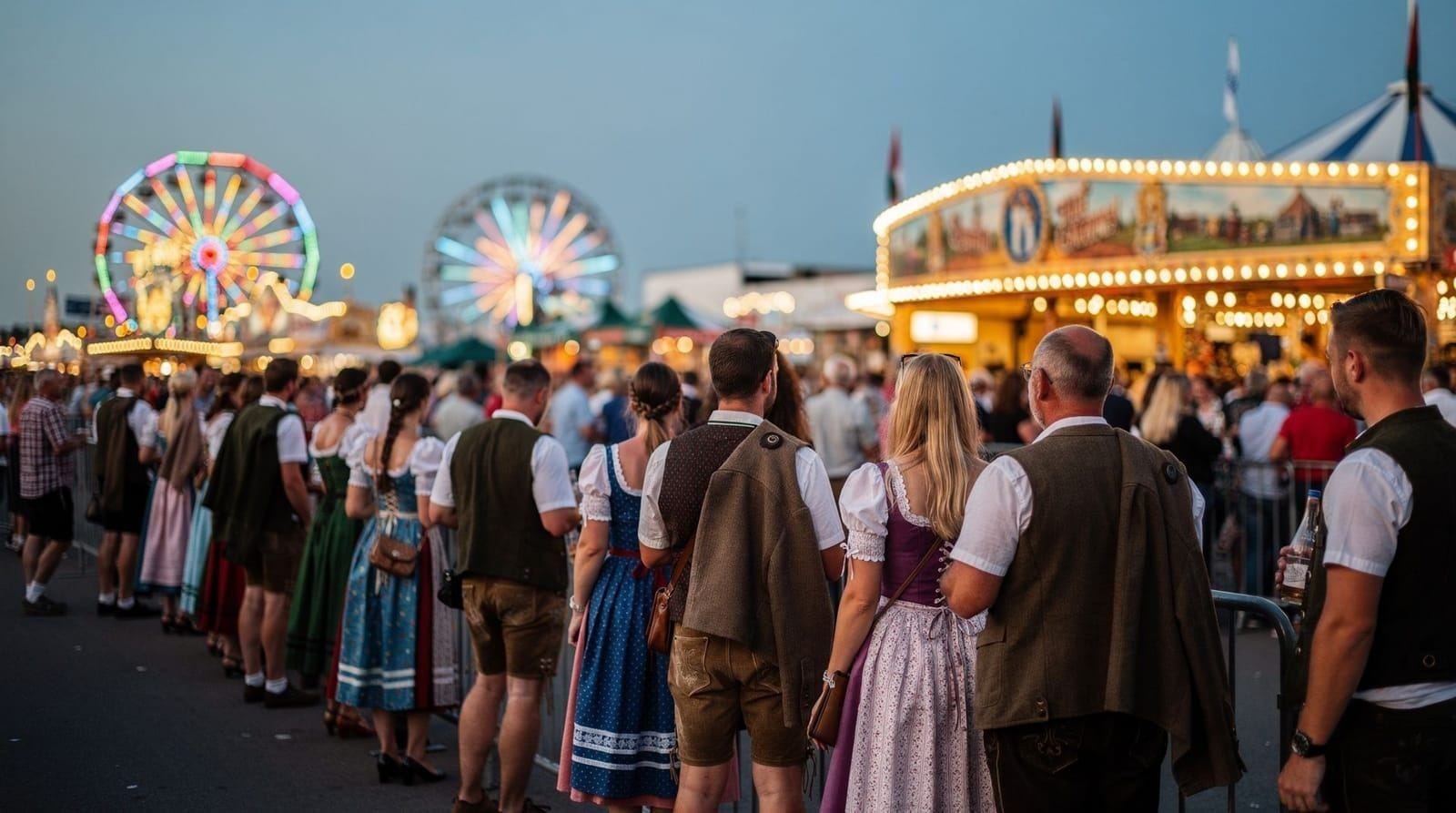
Traditional Bavarian dress — Dirndl for women, Lederhosen for men — is genuinely worn by locals and not considered costume dress at Oktoberfest. Approximately 40–60% of the crowd in the tents wears traditional dress. If you want to wear it, rental is available at many shops near the Hauptbahnhof and Theresienwiese from early September (rental prices €30–60/day; purchasing ranges from €80 for basic quality to €300+ for genuinely well-made traditional garments).
If you prefer normal clothes: wear layers. The tent is warm; the walk between tents and the grounds at night can be cold. Comfortable, sturdy shoes are essential — the tent floors are wet by evening from spilled beer, and standing for hours in poor footwear is unpleasant.
What’s on besides beer
The emphasis on beer is understandable but Oktoberfest is a genuine fairground and cultural event with a full programme that extends beyond the tent experience.
Fairground rides: The ferris wheel (Riesenrad) at approximately €12 per person gives the best aerial view of the grounds. Traditional swing boats, historical carousels, and modern thrill rides all operate throughout the festival. The Olympia Looping — a five-loop steel coaster — is a festival fixture.
Traditional food: Beyond tent food, the external stalls serve roast almonds (Gebrannte Mandeln), Obatzda (a Bavarian cream cheese spread with butter and spices, served with Brezn), Steckerlfisch (mackerel or whole fish grilled on a stick), and Lebkuchenherzen (decorated gingerbread hearts, often with affectionate or mildly rude messages in icing, sold as souvenirs). The Munich food tour guide covers traditional Bavarian food beyond what’s served at the festival.
The Oide Wiesn: Bavarian folk dancing performances, historical rides, and craft demonstrations make this section genuinely interesting as a cultural experience. It is quieter than the main grounds, and the €4 entry effectively acts as a filter against the most chaotic elements of the main festival crowd.
Schichtl: See it at least once. The deadpan announcement of the evening’s guillotine execution of a willing audience volunteer has been running in some form since 1869 and is a piece of genuine Munich absurdist tradition. Munich Bavarian beer walking tour with samples
Accessibility on the grounds
The Theresienwiese is a large, mostly flat open space, which makes wheelchair and pushchair navigation between tents genuinely manageable compared to many European festival sites — the internal streets are wide, paved, and well-lit. Most large tents have accessible entrances and designated wheelchair spaces, though it’s worth contacting the specific tent in advance if you need a guaranteed spot, since these areas are limited and can fill on busy sessions. The U-Bahn station at Theresienwiese has lift access, though during the closing rush at midnight the crush of people can make lift access slow going — arriving or leaving outside the peak exit window is more comfortable for anyone with mobility needs. Toilets with accessible facilities are available at fixed points around the grounds, sign-posted from the main paths. For visitors with sensory sensitivities, the sheer noise and density of the main tent rows in the evening can be overwhelming; the calmer Oide Wiesn section and the morning sessions before the bands start at noon are both considerably gentler alternatives.
Staying nearby — accommodation realities for 2026
Hotels within walking distance of Theresienwiese book out months in advance for Oktoberfest weeks, and prices during the festival are roughly three times their normal level.
The booking window for 2026: If you haven’t booked accommodation yet, check immediately. Hotels within 20 minutes’ walk of the grounds — Ludwigsvorstadt, Maxvorstadt, Neuhausen-Nymphenburg — may still have availability for weekday nights, but weekend availability in these neighbourhoods is effectively exhausted a year ahead of the festival.
Budget-conscious options: Staying further from the grounds (30–45 minutes by U-Bahn) and commuting in is entirely practical and significantly cheaper. Schwabing, Haidhausen, or Bogenhausen offer more normal pricing and U-Bahn connections. Hostels in these areas will have raised their Oktoberfest premium rates but remain far cheaper than hotels near Theresienwiese. For a full cost breakdown see the Munich budget guide.
Day-tripping from elsewhere: Munich’s S-Bahn and ICE network makes day-tripping from nearby cities straightforward:
- Garmisch-Partenkirchen: 1h20 by regional train
- Salzburg: 1h30 by ICE
- Nuremberg: 1h by ICE
The practical approach for day-trippers: arrive by 10:30 for the morning session, attend a tent session or two through the afternoon, depart by 20:00–21:00 to catch normal return trains. Late-night trains from Munich are available but standing-room only on Oktoberfest Friday and Saturday nights.
For Munich trip planning including where to stay and how to structure multiple days, the planning guide covers the full accommodation and logistics landscape.
How many days at Oktoberfest?
One well-planned day covers the essential Oktoberfest experience: two or three tents, a meal, a wander through Oide Wiesn, the fairground, and enough Maß to understand why people make special trips for this.
Two days is the optimum if you want to compare morning versus evening atmosphere, visit different tents, and explore the grounds without rushing. Use the first day for a structured afternoon-to-evening session in two flagship tents; use the second morning for the calmer Weisswurst breakfast culture and Oide Wiesn.
More than two days specifically for Oktoberfest suits people who want to attend multiple different tent events, experience the opening and closing ceremonies, or are simply very enthusiastic about the festival.
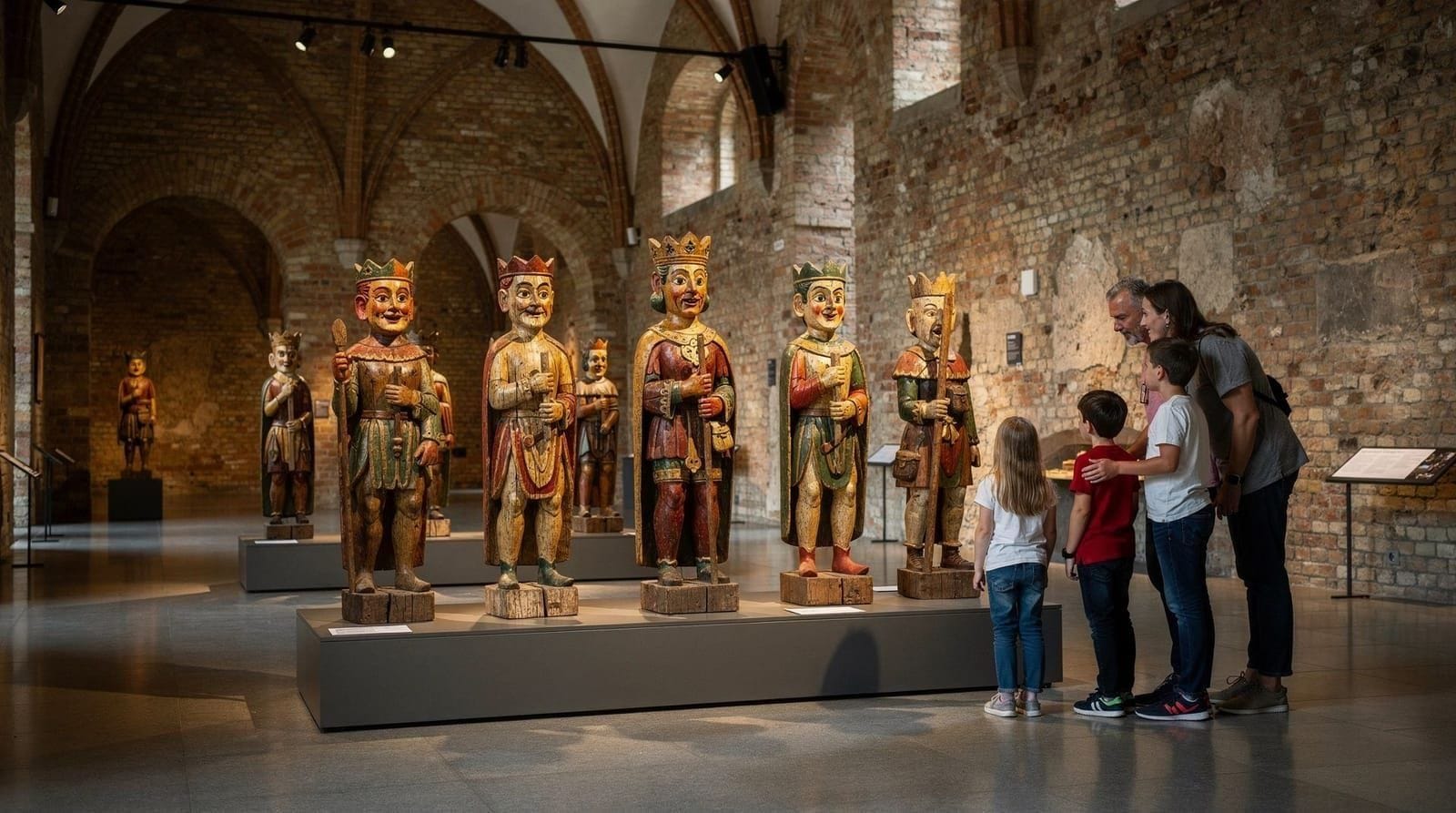
For broader Munich planning around the Oktoberfest season, Munich autumn Oktoberfest season covers what else is happening in the city during September and October. And if it’s your first time in the city, the Munich walking tours guide and Munich old town history guide are good for the days around your Oktoberfest visit. Munich beer and food tour with Oktoberfest Museum visit
Frequently asked questions about Oktoberfest when and where
What year did Oktoberfest start?
Oktoberfest began on October 12, 1810, as a public celebration of the marriage of Crown Prince Ludwig of Bavaria to Princess Therese of Saxony-Hildburghausen. The event included horse races on the fields (later named Theresienwiese in honour of the princess) and was so popular that it was repeated the following year. The horse racing element continued until 1960; the agricultural show — the Central Agricultural Festival — still runs alongside the beer festival every four years. The 2026 festival will be the 187th Oktoberfest (some years were cancelled, including during both World Wars and briefly during the COVID period in 2020 and 2021).
Is Oktoberfest only in Munich?
The original and definitive Oktoberfest is in Munich at Theresienwiese. Several other German cities (and many cities worldwide) hold “Oktoberfest” events, but these have no official connection to the Munich festival. Some are genuine regional beer festivals; others are primarily branding exercises for tourist-oriented beer halls. If you’re planning to attend “Oktoberfest,” clarify whether the event is the Munich original or a local derivative.
Can I visit multiple tents in one day?
Yes. Moving between tents is common and encouraged — there are no restrictions on which tents you enter (subject to capacity limits). Visitors typically spend 1.5–2 hours per tent session, have a Maß or two, then move on. The grounds’ internal streets between tents are lively and the walk between tents is part of the experience.
Is there a quieter, more local version of Oktoberfest?
The Oide Wiesn section (€4 entry, southern grounds) is the most local-skewing part of the main festival. Beyond Oktoberfest itself, Munich has a rich calendar of beer festivals throughout the year — the Starkbierfest in March is a favourite of locals, as is the Frühlingsfest (Spring Festival on the same Theresienwiese grounds in April-May). See Munich beer festivals calendar for the full annual programme.
What happens to the Theresienwiese when Oktoberfest isn’t on?
Outside the festival season, the Theresienwiese is a large public open space used for walking, cycling, dog-walking, and occasional events. The permanent Bavaria statue and the Hall of Fame (Ruhmeshalle) behind it are accessible year-round and free to visit. The Frühlingsfest (Spring Festival, late April to early May) uses the same grounds. The rest of the year it’s a quiet neighbourhood park that gives no obvious indication of what happens to it for 16 days each autumn.
Is Theresienwiese accessible for wheelchairs and pushchairs?
Yes, reasonably. The grounds are flat and paved with wide internal streets, and most large tents have accessible entrances and designated wheelchair spaces, though contacting the specific tent ahead of a busy session is worth doing since space is limited. The Theresienwiese U-Bahn station has lift access, though it’s slower to use during the midnight closing rush — arriving or leaving outside that peak window is more comfortable.
Top experiences
Bookable activities with verified prices and instant confirmation on GetYourGuide.