
Oktoberfest scams and tips: what they don't tell you before you go
Munich: Oktoberfest tour with tent reservation, food and beer
Is Oktoberfest entry free?
Yes — entry to the Oktoberfest grounds (Theresienwiese) is completely free. There are no entrance tickets to buy. The only paid elements are food, beer (currently around €14.80-€15.30 per Maß in 2026), and reserved tent seats which are booked through the official website at oktoberfest.de — not through third-party resellers.
| Where | Theresienwiese, U4/U5 Theresienwiese |
| Cost | free entry; genuine risk is only in unofficial tickets/reservations |
| Time needed | know this before you book anything, ideally months ahead |
| Getting there | book reservations only at oktoberfest.de or a tent’s own site |
| Best time | official reservations typically open March-April for that year |
The basic facts most visitors get wrong about Oktoberfest 2026
Let’s start with the foundational information, because a surprising number of visitors arrive with one or more of these basics wrong — and that’s exactly the vulnerability that scammers exploit.
Oktoberfest 2026 runs from Saturday, September 19 to Sunday, October 4, 2026. It opens on the third Saturday of September, as it has since 1985. The festival takes place at the Theresienwiese, a large fairground in the Ludwigsvorstadt-Isarvorstadt district of Munich, roughly 1.5km southwest of the main train station (Hauptbahnhof). The nearest U-Bahn stop is Theresienwiese on the U4 and U5 lines — it’s a five-minute ride from the Hauptbahnhof, and on busy days the train fills with people in Lederhosen and Dirndl from the very first stop.
Entry to the Oktoberfest grounds is completely free. There is no fence, no turnstile, no scanner. The Theresienwiese is a public space. You walk in. This is the single most important fact to understand, because the entire fake-ticket industry depends on visitors not knowing this.
The festival opens daily at 9am (10am on Sundays) and closes at 11:30pm (midnight on Fridays and Saturdays). The tap is struck at noon on the first day by the Lord Mayor of Munich — that first day is extremely crowded from mid-morning onwards and best avoided if you’re looking for a relaxed introduction.
For a full orientation to the festival layout, tent locations, and what to expect when you arrive, see our complete Oktoberfest guide. For timing strategy — which days and hours work best — the best time to visit Oktoberfest guide covers this in detail.
The fake ticket scam — why Oktoberfest “entry tickets” are always fraudulent
Type “Oktoberfest tickets” into any search engine and you’ll find dozens of websites selling “entrance tickets” for €15 to €50 per person. Some look extremely professional. Some appear in paid advertising slots above legitimate results. Every single one of them is selling you something that does not exist.
There are no Oktoberfest entrance tickets. Because there is no entrance checkpoint. Because entry is free. A website selling you an “Oktoberfest entry ticket” is either selling you a worthless PDF that will do nothing when you arrive, or collecting your payment details under false pretences. Either way, you get nothing of value.
This scam specifically targets visitors from outside Germany and from outside Europe, where the free-entry model is less familiar. The fake sites often use language like “skip the queue” or “guaranteed entry” — there is no queue to skip, and entry requires no guarantee because it’s free to everyone. Some dress up the scam by including a “welcome drink voucher” or a “festival map” — items worth approximately nothing, wrapped in official-looking branding.
What does legitimately exist: reserved seat bookings inside the festival tents, called Reservierungen. These are real, valuable, and genuinely difficult to obtain. They are allocated by the tent operators through the official City of Munich reservation system at oktoberfest.de — the official website, not any third-party site. Reservations for the main tents in a given September typically open in March or April of that year, and the most popular tents (Hofbräu-Festzelt, Augustiner-Festhalle, Schottenhamel) are fully reserved within days or weeks.
Importantly, a tent reservation is not an entry ticket to the festival. It’s a booking for a specific table or bench section inside a specific tent, usually accompanied by a minimum spend on food and drink (typically in the form of pre-purchased vouchers worth €30-€60 per person). You still walk into the festival grounds for free. The reservation just means you have a guaranteed seat inside the tent.
For everything you need to know about how official reservations work, see our guide to Oktoberfest tickets and table reservations.
Reservation reseller fraud — the gray market for tent seats
Tent reservations are real, and they are genuinely scarce. That scarcity creates a secondary market — and where there’s a secondary market, there are people willing to take your money and disappear.
The situation is more nuanced than the fake-ticket scam. Some resellers do hold legitimate reservations and transfer them to buyers. Others hold reservations but sell the same table to multiple buyers, only one of whom will be seated. Others collect payment for reservations they never had in the first place. The buyer has very little way to distinguish between these scenarios before arriving at the tent.
Prices on the resale market are significant. A reservation for six people at the Hofbräu-Festzelt that includes €200 worth of food and drink vouchers might be listed for €600 to €1,200 on resale platforms. Some sellers on classified listing sites ask even more for opening weekend or the final Saturday.
The honest risk assessment: a verified, reputable reseller with a documented track record and buyer protection may be worth using if you have a specific group size, a specific date, and a strong preference for a particular tent. The key words are “verified,” “reputable,” and “buyer protection.” Anonymous listings on platforms without dispute resolution are high-risk. A seller you found on a Facebook group asking for a bank transfer is very high-risk.
The more practical alternative for most visitors is to either book through the official system (which requires patience and speed in March), or to use a legitimately structured tour that includes guaranteed tent access. 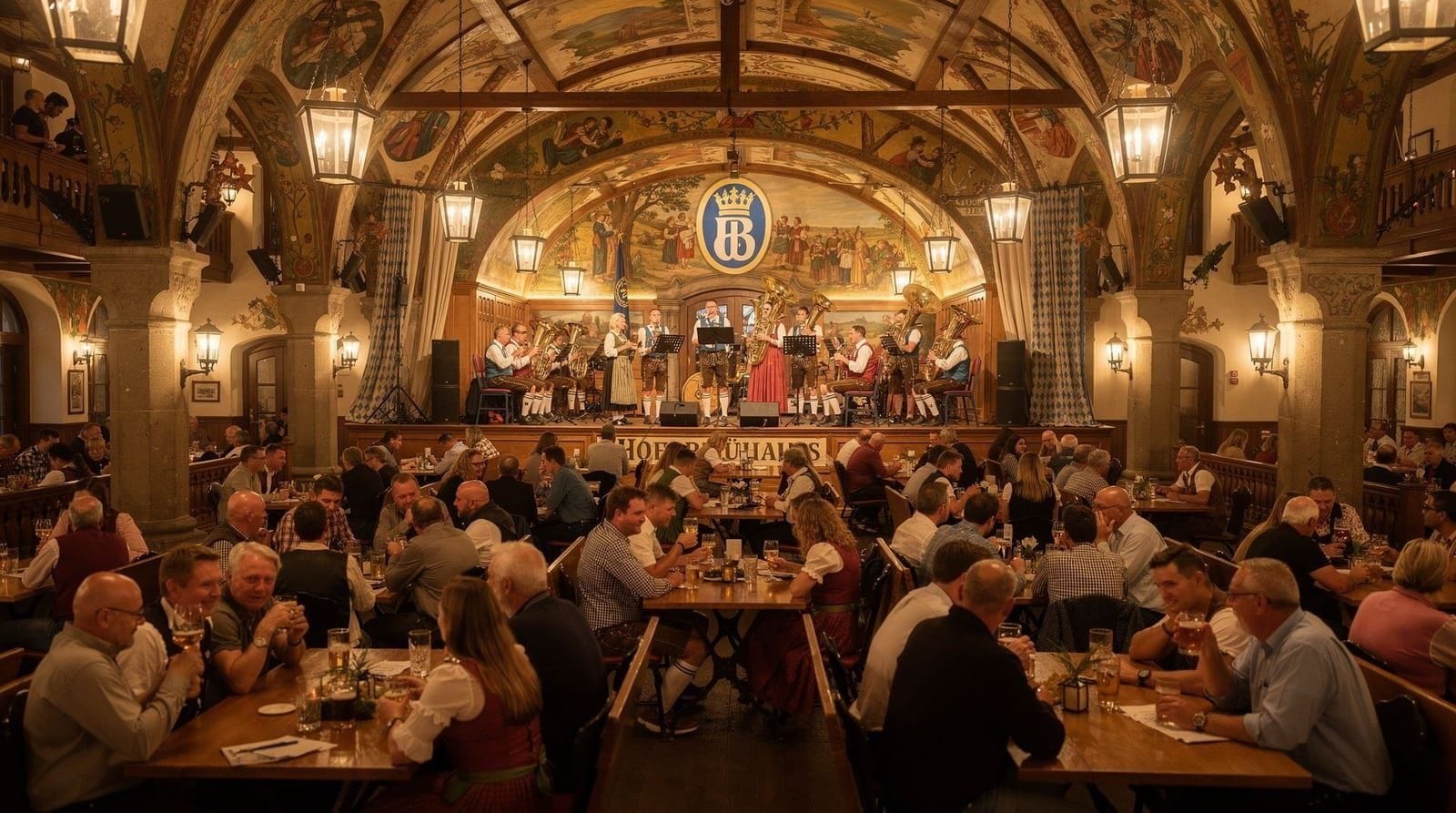 Oktoberfest tour with tent reservation, food and beerCheck availability
This type of guided tour provides a structured route into tent access — your spot is secured as part of the booking, the guide handles logistics, and you’re not navigating the reservation system alone. For first-timers especially, it’s often the most reliable way to actually sit inside a tent on a weekend evening.
For further reading on how reservations work and which tents allocate differently, see the guide to when and where Oktoberfest takes place.
How to spot a fake ticket or reservation site in ten seconds
A handful of quick checks filter out most of the fraudulent sites before you enter any payment details. Genuine tent reservations always come from oktoberfest.de or a domain matching the tent operator’s own brewery (for example, an official Hofbräu or Augustiner booking page linked directly from oktoberfest.de) — never from a generic “oktoberfestbooking” or “munichtickets” style domain. Any site offering an “entry ticket,” “skip-the-line pass,” or “guaranteed entrance” for a fixed euro amount is automatically fraudulent, since entry has no ticket to sell. Genuine reservation confirmations reference a specific tent, table, date, and a food/drink voucher minimum in euros — vague confirmations without these specifics are a red flag. Payment requests via bank transfer to a personal account, rather than a card payment through a proper checkout, are close to a guarantee of fraud. When in doubt, cross-check the seller or site name against oktoberfest.de’s own list of official partners before paying anything.
Beer price reality in 2026
Munich’s tent operators set beer prices annually, and the announcement (usually in March or April) reliably generates national headlines in Germany. For 2026, a Maß — one liter of Oktoberfest beer — costs approximately €14.80 to €15.30 depending on the tent. Prices vary slightly between operators; the most upmarket tents (Käfer Wiesn-Schänke, Weinzelt) may charge more.
This is not a tourist tax or a markup for foreigners. Locals pay exactly the same. The price reflects a combination of the festival’s high operating costs, tent construction and licensing, and the genuine demand economics of a 6-million-visitor event.
Practical budgeting for an evening in a tent: allow €50 to €65 per person for two Maß plus one meal (a half chicken, a Brezn, and a side dish is a typical order). If you have a tent reservation with a minimum spend package, that spend is usually structured to cover roughly this amount per person in vouchers.
Outside the festival grounds, prices are completely normal. Munich’s city beer halls — the Hofbräuhaus, the Augustinerkeller, the Löwenbräukeller — charge €9 to €11 per Maß year-round. Oktoberfest does not increase beer prices in the city. If you want the Oktoberfest beer atmosphere without the Oktoberfest prices, a weekday lunch at one of the city’s traditional beer halls is a legitimate option.
One more thing worth knowing: the Oktoberfest beer itself is brewed specifically for the festival by the six official Munich breweries (Augustiner, Hacker-Pschorr, Hofbräu, Löwenbräu, Paulaner, Spaten). It’s slightly stronger than their standard lagers — around 5.8 to 6.3% ABV depending on the brewery. Two Maß over three hours is a meaningful amount of alcohol for most people; three Maß and you will feel it clearly. The tent atmosphere makes it easy to lose track. Budget and pace accordingly.
Pickpocket reality at Theresienwiese
Oktoberfest is one of the most active pickpocket environments in Europe during the festival weeks. The factors align perfectly: dense crowds, large amounts of cash changing hands, a high proportion of intoxicated and distracted visitors, chaotic bottlenecks at tent exits and U-Bahn entrances. Professional teams work the event systematically every year.
The highest-risk moments are specific. Entry and exit rush at main tents on Friday and Saturday evenings — roughly 6pm to 8pm for entry and 10pm to midnight for exit — creates crush conditions where physical contact is unavoidable and theft is trivial to execute. The Theresienwiese U-Bahn station after 10pm on a weekend night is so crowded that trains sometimes require multiple cycles to board; this is a well-known target zone.
Specific techniques observed over recent years include the “bump and grab” near tent entrance barriers, distraction via spilled drinks (staged), and the “helpful stranger” who assists with a dropped item while an accomplice works pockets. Groups that appear visibly confused or are consulting phones on crowded pathways are targeted preferentially.
Practical protection measures, in order of importance:
- Carry only the cash you plan to spend that evening, plus a small reserve. Leave hotel-safe valuables at the accommodation.
- Use a flat money belt worn under clothing, or a buttoned inner pocket, for your main cash and card.
- Phone in a front trouser pocket (not a back pocket, not an open jacket pocket).
- A small zipped daypack worn on your front in crowded conditions is more effective than most people expect.
- Travel cards (Visa/Mastercard contactless) reduce the need to carry large cash amounts — most tent bars accept cards, though some food stalls remain cash-only.
One specific note on accommodation: the Oktoberfest campsite on the Theresienwiese peninsula has had documented theft incidents in lockers and tents. If you’re camping, don’t store anything valuable on site.
What to do if you’re pickpocketed or scammed
If you discover your phone, wallet or bag has been stolen inside the grounds, the festival’s own security and the Munich police maintain a visible presence and a dedicated lost-and-found and reporting point near the main entrances — ask any staff member in a high-visibility vest, and they can direct you. File a police report (Anzeige) as soon as possible, both for any insurance claim and because it genuinely helps police build a picture of active pickpocket teams during the festival. For stolen cards, call your bank’s block line immediately — most travel cards have a 24-hour international number, which is worth saving in your phone before you travel rather than searching for it after the fact. If you paid a reservation reseller who turns out to be fraudulent, a chargeback through your card provider is the most realistic route to recovering funds; report it to your bank quickly, and keep any correspondence or payment confirmation as evidence. None of this guarantees recovery, but each step meaningfully improves your odds and is far more useful than assuming nothing can be done.
Tent quality varies — the honest rankings
All six official Munich breweries operate tents at Oktoberfest, but they’re not equivalent experiences. If you have a choice, this matters.
Augustiner-Festhalle is consistently ranked first by Münchners themselves. Augustiner is the only major Munich brewery still serving from traditional wooden barrels (Holzfässer) rather than steel pressure kegs — which produces a noticeably different (and to most palates, superior) taste. The tent atmosphere is festive without being aggressive. It’s the local’s choice and worth prioritising if you can get a reservation or arrive early enough for a walk-in spot.
Schottenhamel holds the distinction of hosting the ceremonial first tap — the Lord Mayor of Munich strikes the keg here at noon on opening day. It attracts a more traditional crowd and has a noticeably younger demographic than some other tents. The family section in the late morning is one of the more pleasant walk-in spots during the first week.
Hofbräu-Festzelt is the largest tent and the most internationally known — partly because the Hofbräuhaus in the city centre is such a strong tourist draw. Expect English, Italian, American, and Australian voices. It’s rowdy, energetic, and the most likely tent where you’ll find yourself sitting next to strangers from five different countries. Not a bad experience; just very different from the local atmosphere of Augustiner.
Hacker-Pschorr “Himmel der Bayern” (Heaven of the Bavarians) has the most elaborate tent decoration — a painted sky ceiling that’s genuinely impressive — and tends to attract a slightly more settled, less chaotic crowd than Hofbräu.
Winzerer Fähndl (Paulaner’s tent) is known for above-average food quality alongside its beer, which makes it particularly worth considering if you’re as interested in eating as drinking.
The smaller and more specialised tents — Käfer Wiesn-Schänke and the Weinzelt — offer notably better food, a calmer atmosphere, and significantly higher prices. They’re worth knowing about if you want to eat seriously rather than just drink.
For more on Munich’s beer culture beyond Oktoberfest — including how the year-round beer hall scene compares — see the Munich beer halls guide and our guide to beer hall etiquette.
Walk-in strategy: when and how to get a seat without a reservation
The honest answer is that walk-in tent access on a weekend evening is nearly impossible during peak Oktoberfest. On Friday after 5pm or any Saturday, the main tents fill to licensed capacity and stop admitting people without reservations. Bouncers at tent entrances check reservation printouts. Expecting to walk in on a Saturday evening without a booking is not a strategy; it’s optimism in the face of six million visitors.
What actually works:
Weekday mornings from opening (9am) are the most reliable walk-in option. On a Tuesday, Wednesday, or Thursday, arriving at 9am means you’ll find tent seats without any difficulty. The atmosphere is calm, the staff are relaxed, and you can actually hear yourself talk. By early afternoon it fills considerably; by 4pm on a Thursday it’s moderately crowded. By 7pm on any weekday it’s effectively full in the main tents.
The first week versus the second week also matters. The opening weekend is always the most chaotic and most tourist-heavy. The second week, particularly Tuesday through Thursday, sees more local attendance and somewhat lower overall numbers. The final weekend (October 3-4 in 2026) is a genuine Bavarian farewell party — enthusiastic, emotional, and extremely crowded.
Smaller tents have more walk-in capacity. The Bräurosl (Hacker-Pschorr’s smaller tent) and several of the specialist tents maintain more flexibility for walk-ins throughout the day. They’re also less overwhelming for first-timers.
If your visit falls on a weekend and you can’t secure a tent reservation, there’s a genuinely good alternative: explore the festival grounds for the rides, the outdoor food stands (more on those below), and the beer garden sections outside the tents. You’ll experience the atmosphere without being inside a packed tent. The Oktoberfest Museum and beer tasting is another excellent complement to a festival visit — it contextualises what you’re experiencing in a way that makes the whole thing more interesting. 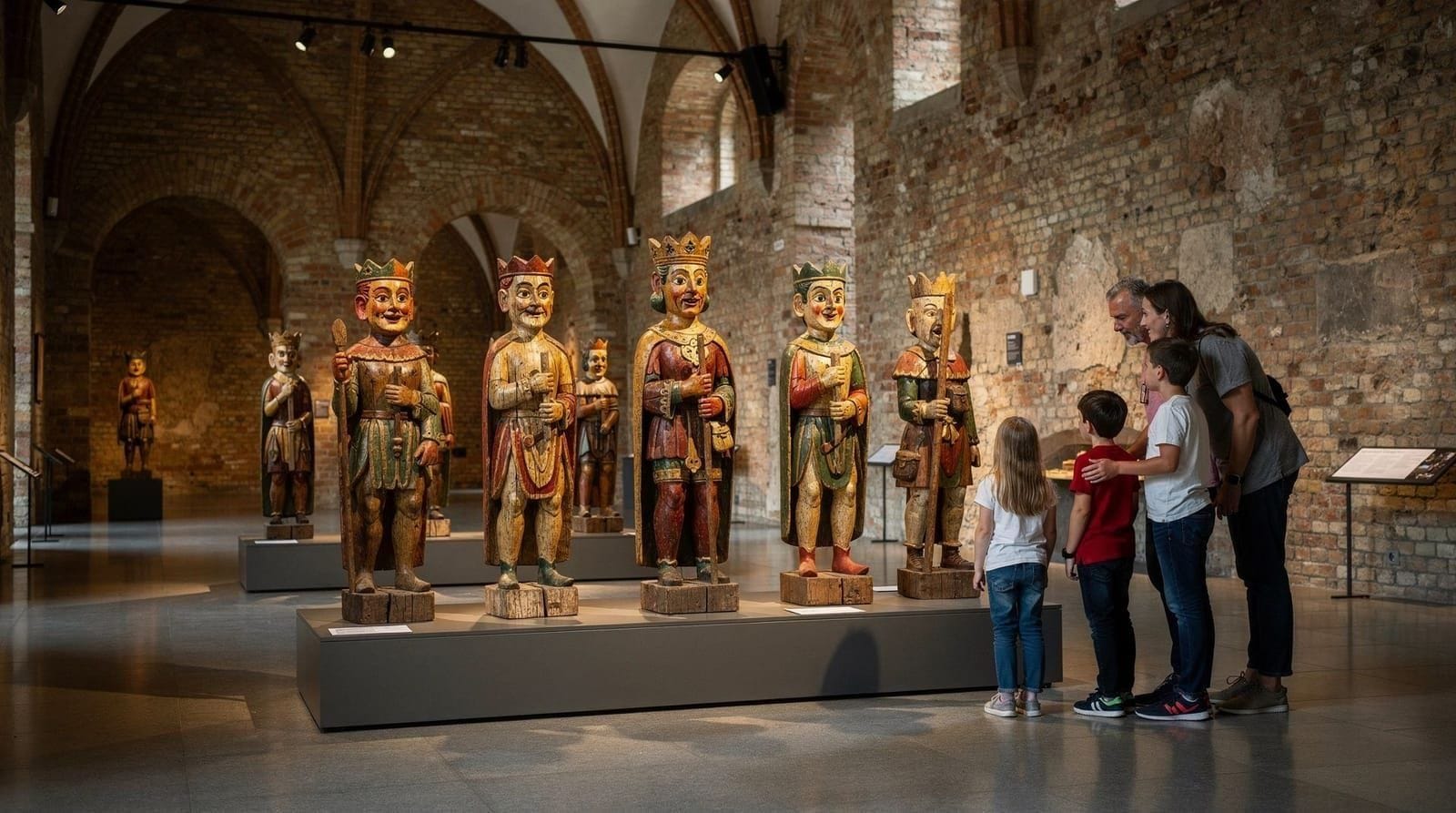 Oktoberfest Museum visit and beer tasting with sommelierCheck availability
The dress code reality
Lederhosen and Dirndl are not required. But they are genuinely popular among Munich locals — this is one of the few cases in Europe where wearing “traditional costume” is what locals actually do, not a tourist affectation. On a busy Saturday, it’s estimated that 60-70% of attendees (locals and tourists combined) are in Tracht.
If you want to participate, the single strongest advice is: do not buy from tourist shops near Marienplatz or at the festival grounds. The items sold at these locations are almost universally machine-made from synthetic fabrics in China or Pakistan. They look passable in photographs and feel uncomfortable within an hour. Prices range from €30 to €80.
Quality Tracht is available from Munich’s specialist shops. Angermaier Trachten (multiple city locations, including one near the Hauptbahnhof) and Moser Trachten on Marienplatz are the two most commonly recommended options. A quality Dirndl starts at around €150 and goes significantly higher for natural fabrics and hand embroidery. Real leather Lederhosen start at around €200-€250. Both shops also offer rental (approximately €30-€50 per day), which is the practical choice for a short visit.
If you’re planning a longer trip and want to see Tracht culture more broadly, a Munich food tour that includes a visit to the Viktualienmarkt often provides context on Bavarian craft traditions including textiles.
Accommodation scams and inflated prices near the festival
A less-discussed but genuine risk is accommodation, not tickets. Munich hotel prices rise sharply during the festival weeks, sometimes tripling versus the rest of the year, and last-minute listings on short-term rental platforms occasionally turn out to be non-existent or double-booked once the festival dates approach and demand peaks. Book accommodation for Oktoberfest dates as early as possible — ideally six months ahead for the popular weekends — through established platforms with buyer protection rather than direct bank transfers to an individual host you found through a classified ad. If a listing’s price looks dramatically cheaper than comparable options for the same dates, that’s usually a sign something is wrong rather than a genuine bargain. Staying slightly further from Theresienwiese, in neighbourhoods reachable by U-Bahn in 15-20 minutes, is a legitimate way to reduce both price risk and the inflated-rate problem without sacrificing much convenience.
Overpriced rides and fair attractions — what’s worth it
The amusement rides at Oktoberfest are largely legitimate entertainment, not scams. Individual ride prices range from €3 to €15, with major thrill rides (the Olympia Looping, Bayern Kurve) at the higher end.
A few specific attractions stand out as genuinely worth your time:
The Teufelsrad (Devil’s Wheel) is a traditional mechanical spinning disc that competitors try to stay on while others try to knock them off with ropes and balls. It’s free to watch and costs a few euros to participate. It’s been a fixture of the festival for over a century and is one of the few attractions that’s clearly more interesting than it sounds.
The Toboggan (Rutsche) is a classic fairground slide — cheap, family-friendly, and a useful way to orient yourself to the grounds from the top.
The game stalls (shooting galleries, ring-toss, etc.) are legal and operated straightforwardly. The mechanics simply favour the house, as at any fairground. The prizes are real. Just don’t plan your budget around winning one.
Food at the outdoor stands is the festival’s best-kept value. A half roast chicken (Hendl) from an outdoor grill stand costs €8 to €12 and is typically better quality than what’s served inside the tents — which prioritise speed and volume. Steckerlfisch (grilled fish on a stick) from the fish stalls runs €8-€10 and is excellent. Giant Brezn (soft pretzels) from vendors cost €3-€5. If your main goal is to eat well, spend time at the outdoor stalls rather than rushing into a tent.  beer and food tour with dinner and Oktoberfest MuseumCheck availability
Frequently asked questions about Oktoberfest scams and tips
Are there real Oktoberfest entrance tickets?
No. Oktoberfest entry is completely free and requires no ticket of any kind. Any website or person selling you an “entrance ticket” is committing fraud. The only bookable items are reserved seats inside specific tents (Reservierungen), which are arranged through the official oktoberfest.de system or through individual tent operators — and even these are not “entrance tickets” to the festival, just seat bookings within a tent. Save your money.
How much does a beer cost at Oktoberfest 2026?
A Maß — one full liter, the only size served inside the festival tents — costs approximately €14.80 to €15.30 in 2026. The exact price varies slightly by tent operator. Half-liters are not available inside the main tents. Soft drinks, Radler (beer mixed with lemonade), and alcohol-free options are available at comparable price points. Budget a minimum of €30 per person for drinks alone if you’re planning a standard evening.
How do I get a tent reservation without using a reseller?
The official reservations for Oktoberfest 2026 tents opened in spring 2026 through oktoberfest.de and directly through individual tent operators. For 2027, the system typically opens in March or April. Set a reminder, act quickly on the opening day, and be flexible on tent choice — the smaller tents have more availability and sometimes better atmosphere anyway. If you missed the official window for this year, a verified guided tour with tent access built in is the most reliable alternative.
Is it safe to walk around Theresienwiese at night?
The festival grounds themselves are well-lit and heavily policed, and violent crime is rare. The primary safety concern is pickpocketing rather than personal safety. Walking from Theresienwiese to central Munich (about 20 minutes on foot) is safe on standard routes. The U-Bahn after 10pm on weekends is extremely crowded and uncomfortable rather than dangerous, though it’s also where most pickpocketing on the transit system occurs. If you’re concerned, taxis and rideshares are available near the Bavariaring exit from the grounds.
What’s the best tent for first-timers?
For first-timers who want genuine atmosphere, Augustiner-Festhalle is the most recommended by people who know the festival well. The beer quality is the best, the atmosphere is festive without being overwhelming, and it offers a more authentic Bavarian experience than the more internationally-famous Hofbräu tent. If you’re visiting with a large group or want the most social, cross-cultural experience, Hofbräu is the livelier choice. See our detailed guide to Oktoberfest when and where for a full tent-by-tent breakdown.
Can I visit Oktoberfest without drinking beer?
Absolutely. The festival grounds are full of food stalls, amusement rides, carnival games, and outdoor entertainment that have nothing to do with beer. Inside the tents, soft drinks, Radler, Weißwurst breakfast (served in the morning with sweet mustard and Brezn), and full meals are all available. Children are welcome inside the tents until 6pm. The Weinzelt serves wine if you’d prefer that to beer. And the Oktoberfest Museum provides cultural and historical context that makes the visit interesting regardless of how much you drink.
When should I arrive to get a walk-in tent seat?
On weekdays during the first week (Monday to Thursday), arriving at opening — 9am — guarantees you a seat in most tents. By noon, the main tents are usually moderately full; by 3pm they’re often at capacity in the popular sections. On weekends, walk-in seats are essentially unavailable after noon. If you’re visiting on a weekend without a reservation, arrive at 9am (they open at 10am on Sundays) or accept that your Oktoberfest experience will be in the outdoor areas rather than inside a tent — which is genuinely enjoyable in good weather and less overwhelming for many visitors.
How can I tell if a ticket or reservation website is legitimate?
Check that the booking comes directly from oktoberfest.de or a domain clearly belonging to one of the six official breweries, and that the confirmation names a specific tent, table and date rather than a vague “entry pass.” Any site selling a generic “entrance ticket,” or asking for payment by bank transfer to a personal account, should be treated as fraudulent. When unsure, cross-reference the seller against oktoberfest.de’s list of official partners before paying.
For full planning resources, start with our Oktoberfest first-timer guide and the Oktoberfest 2026 dates guide. If you’re building a broader Munich itinerary around the festival, the Munich Oktoberfest weekend itinerary and 3-day Munich first-timer itinerary are practical starting points. And if you want to explore Munich’s beer culture beyond Oktoberfest — which runs for exactly 16 days while Munich’s beer halls run year-round — the Munich hub has the full picture.
Top experiences
Bookable activities with verified prices and instant confirmation on GetYourGuide.