Oktoberfest 2026 first-timer guide: what actually matters
Oktoberfest 2026: the essential facts
Dates: Saturday, September 19 to Sunday, October 4, 2026 — 16 days across two and a half weekends.
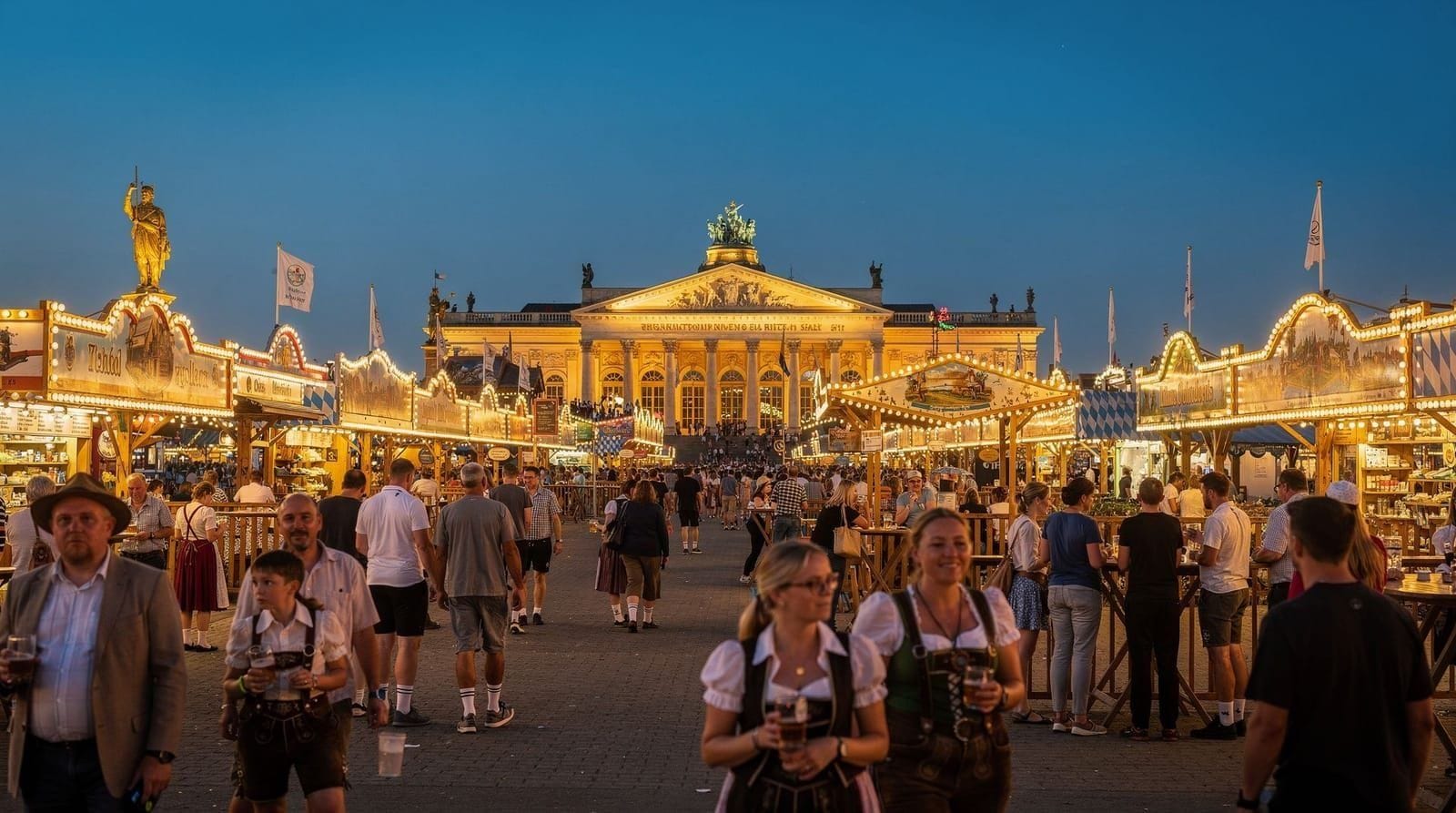
Location: The Theresienwiese (“Wiesn”), 500 metres southwest of Munich Hauptbahnhof. U4/U5 to Theresienwiese, or a 10-minute walk from the main station.
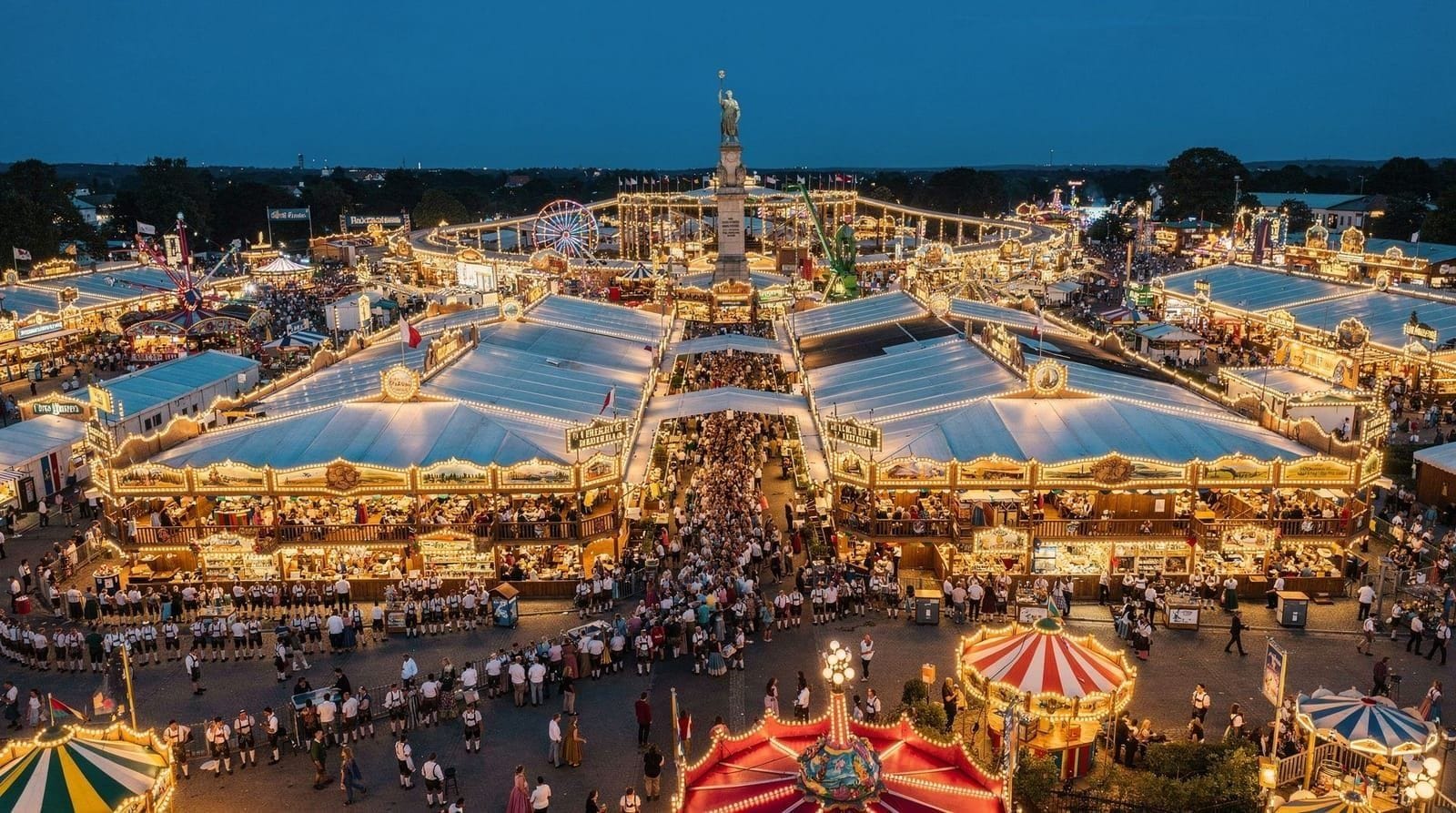
Size: Approximately 6 million visitors annually (pre-pandemic figures), 16 large and 15 smaller tents, fairground rides, food stalls, and beer gardens. The Wiesn covers 42 hectares.
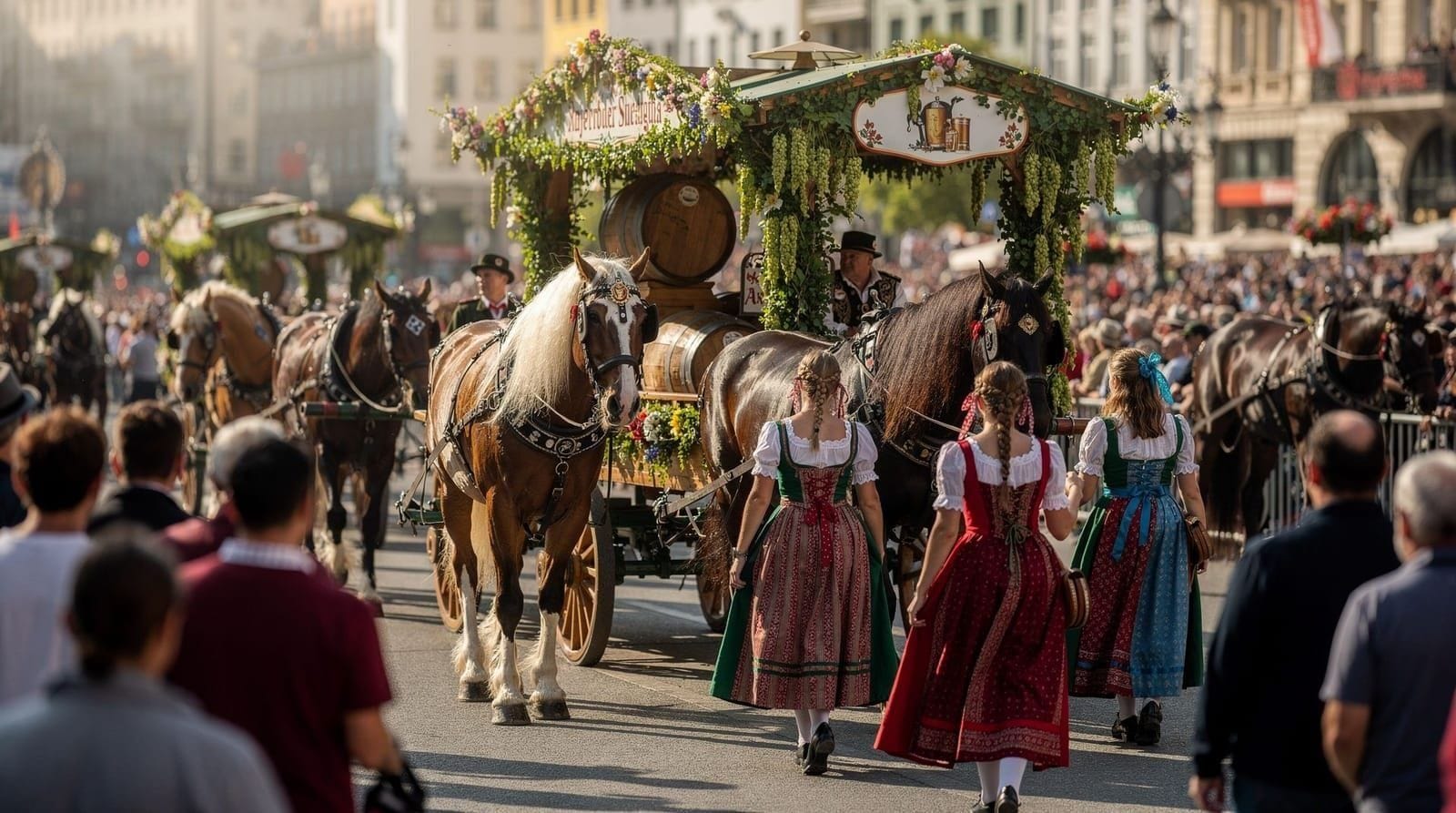
Opening ceremony: The Lord Mayor of Munich taps the first barrel at noon on Saturday, September 19. The traditional phrase — “O’zapft is!” — means “It’s tapped!” Beer is served from that moment.
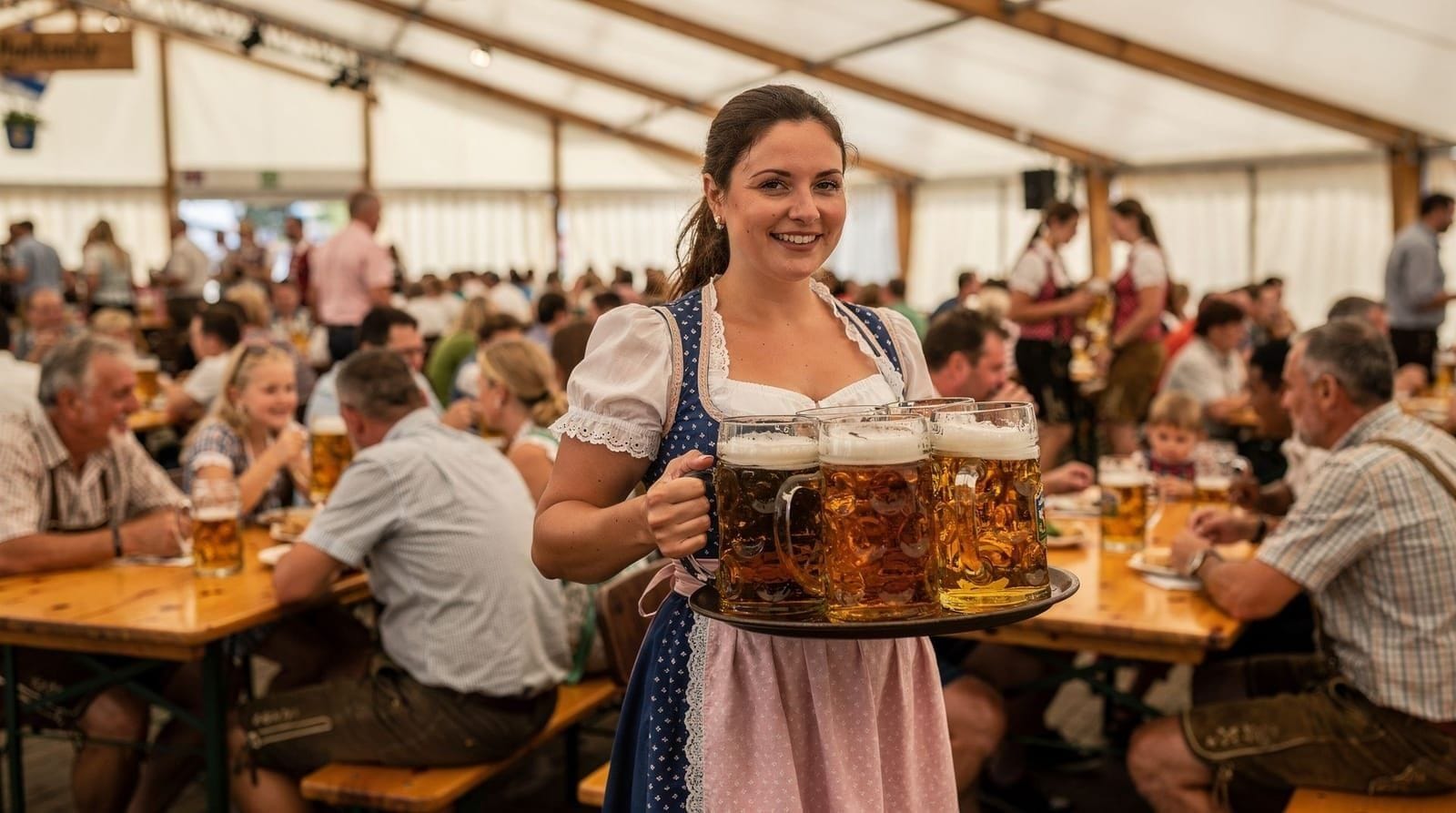
Cost of a Masskrug (1-litre) of beer in 2026: Expected at €15–€17 inside the tents (prices increase each year). In comparison, the same amount of beer in a Munich local bar costs €5–€8.
If this is your first Oktoberfest, this guide covers the practical realities — not the mythology. Here’s what actually matters for a good experience.
| Where | Theresienwiese, 500m southwest of Munich Hauptbahnhof |
| Cost | around €100–150/person for a full day with food and beer |
| Time needed | half a day minimum; a full day if you want the fairground too |
| Getting there | U4/U5 to Theresienwiese, or a 10–12 min walk from Hauptbahnhof |
| Booking | tent tables open the previous autumn — book early or plan around walk-in |
Table reservations: the honest situation
The major Oktoberfest tents are theoretically free to enter. The reality is that reserved tables fill the vast majority of indoor seating. If you arrive at a tent without a reservation on a Saturday in October, you will stand (if you can get in at all) or be turned away.
How reservations work: Table reservations are sold by each tent operator directly. They do not go through a central Oktoberfest website. You must contact each tent individually. Most tent operators open reservations for the following year in late October or November — meaning Oktoberfest 2026 reservations became available around November 2025. They typically sell out within hours for the most popular tents.
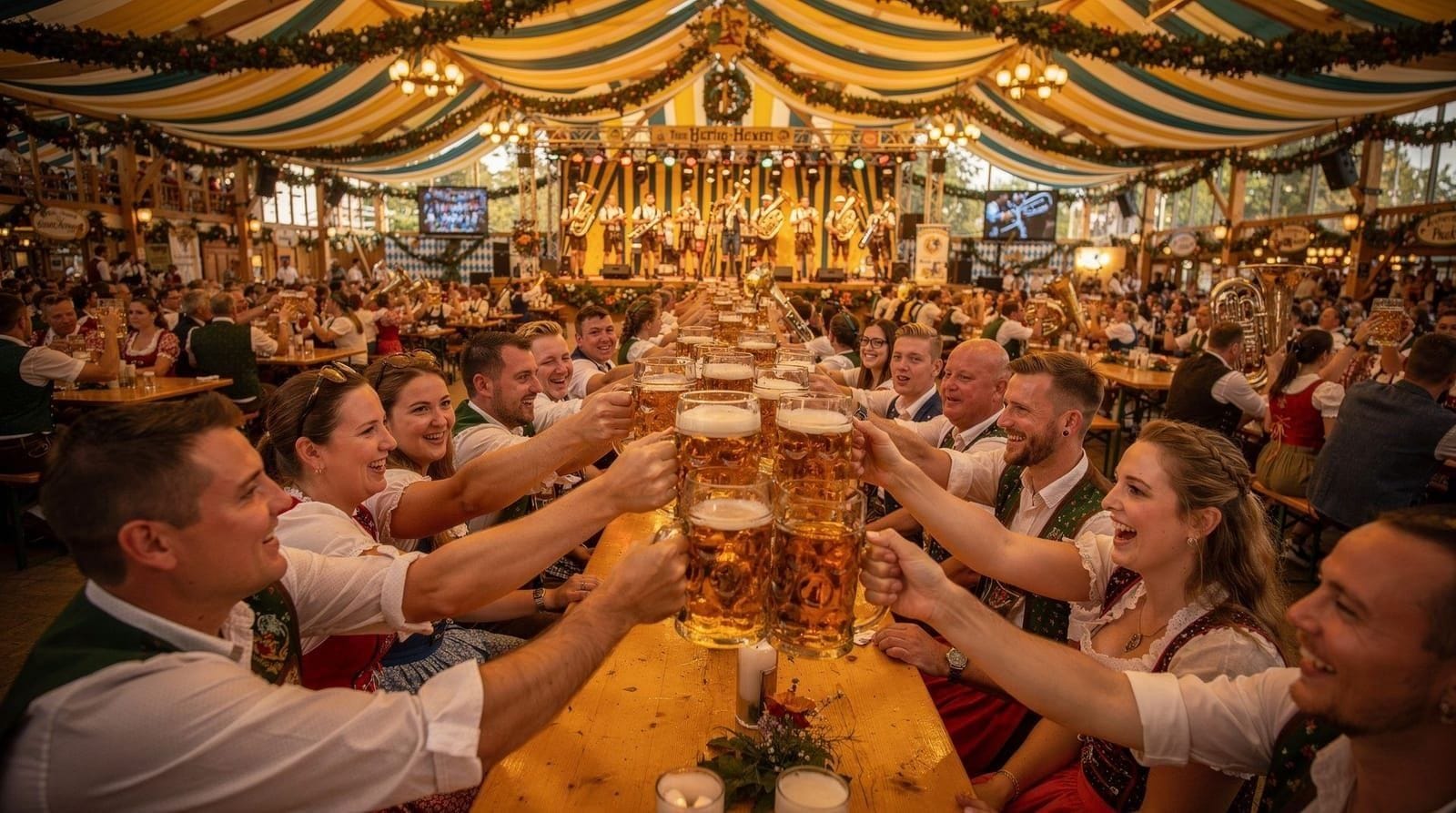
If you’re reading this in 2026 and haven’t booked: check whether any tables have become available through the tent operators’ websites (cancellations happen). Third-party booking services exist but add a significant markup. Oktoberfest tent experience with reserved table
Which tents to target: The major tents each have a different character. The Hofbräu-Festzelt (run by Hofbräuhaus) is the most international — high proportion of tourists, loudest, most chaotic, arguably the least “authentically Bavarian” of the big tents. The Augustiner-Festhalle is more local in feel and serves Augustiner beer direct from wooden barrels (the only tent to do so). The Hacker-Festzelt (“Himmel der Bayern”) has the most theatrical interior. The Schottenhamel tent is where the official opening ceremony happens on the first Saturday.
The full tent guide — all 16 tents, their seating capacity, which beer they serve, reservation contacts — is in the Oktoberfest tents and tickets guide.
Getting in without a reservation
It is possible to attend Oktoberfest without a reservation, particularly on weekdays. The strategy:
- Go early: Tents fill by 10–11am on weekends, by noon on weekdays. Arriving when tents open (9am for the beer service starting at 10am) gives the best chance of finding unreserved bench space.
- Avoid Saturday afternoons: The busiest time all week. Sunday mornings are slightly easier.
- Try the outer tents: Smaller specialty tents (Weinzelt wine tent, Käfer Wiesn-Schänke, Fischer-Vroni for fish) are easier to access without reservations.
- Beer gardens outside the tents: The Wiesn grounds have outdoor beer garden seating. You can bring your own food (not allowed inside the tents) and buy beer at the counter. This is a completely valid Oktoberfest experience — and cheaper per beer than inside.
What to wear
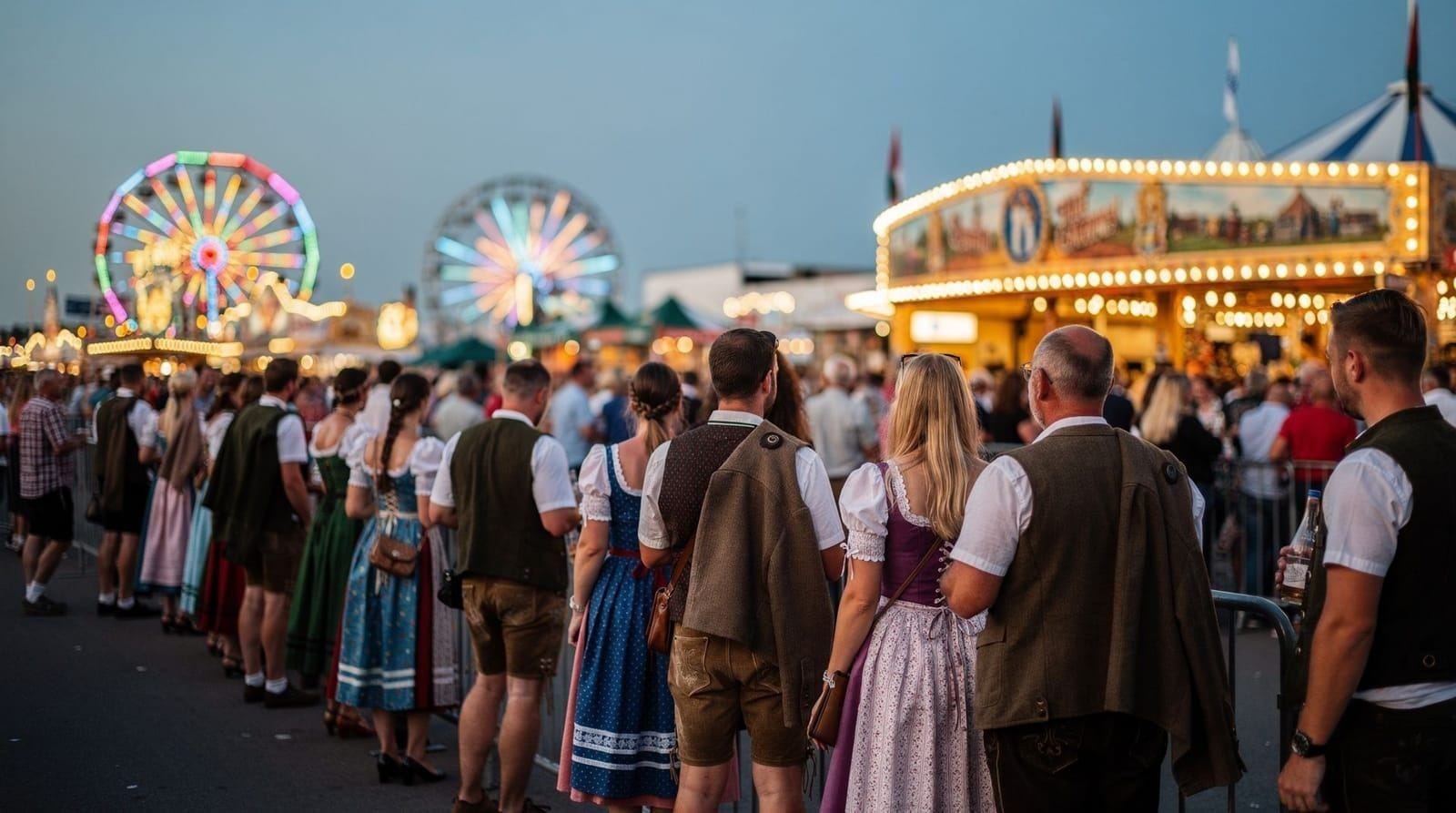
Traditional dress is not required but is strongly recommended. The proportion of visitors in traditional dress has increased significantly over the past decade, and a well-dressed crowd has become part of the Oktoberfest experience.
For women: Dirndl (the traditional Alpine dress). A proper Dirndl consists of a bodice (Mieder), blouse (Bluse), skirt (Rock), and apron (Schürze). Quality varies enormously by price: a very cheap dirndl from a tourist shop will look exactly like what it is. Budget €80–€200 for something that looks right. The bow on the apron has a traditional meaning: tied on the right means the wearer is in a relationship; tied on the left, single; tied at the back, widowed; tied in the center, uncertain.
For men: Lederhosen (leather shorts, either knee-length Bundhosen or short Lederhosen), with an Edelweiss-embroidered shirt (Trachtenhemd). Authentic Lederhosen from good leather outlast synthetic versions and can be worn for decades. Budget €150–€400 for quality. A cheap costume-grade pair from a tourist shop will look cheap.
Where to buy: Kaufhaus Manz and Trachten Angermaier are established Munich shops for traditional dress. H&M and department stores offer cheaper options that are less convincing. Many visitors buy in advance online via specialist Trachten retailers.
What things cost: the honest breakdown
| Item | Approximate cost 2026 |
|---|---|
| Masskrug (1 litre) beer in tent | €15–€17 |
| Half chicken (Hendl) | €16–€19 |
| Obatzda (cheese spread with pretzel) | €8–€11 |
| Schweinsbraten (roast pork) | €20–€24 |
| Admission to Wiesn grounds | Free |
| Reservation deposit | €20–€35 per person (applies to minimum spend) |
| Traditional dress (budget option) | €80–€150 |
| Traditional dress (decent quality) | €200–€400 |
Oktoberfest is expensive. A couple spending one full day at the festival — two Masskrüge each, lunch, and fairground rides — will spend €100–€150 minimum. This is not a budget experience. For strategies to reduce Oktoberfest spending, see the Munich money-saving guide.
Getting there and getting home
The Theresienwiese is easy to reach: U4 or U5 to Theresienwiese station (one stop from Hauptbahnhof on U5, two on U4). The walk from Hauptbahnhof along Bayerstrasse is 10–12 minutes. Don’t take a taxi or Uber to the Wiesn on a busy day — the surrounding streets are closed or gridlocked.
Transport home: Munich’s U-Bahn runs 24 hours on Fridays and Saturdays during Oktoberfest. On weeknights, it closes around 1am; night buses fill the gap. Plan your route before drinking six litres of beer. Taxis are available but in high demand; they charge Oktoberfest surcharges. See the Munich public transport guide for the full night network.
Trains from Munich Hauptbahnhof to the rest of Bavaria and Germany run normally throughout Oktoberfest — the station doesn’t shut. If you’re staying outside Munich and commuting in, the Bayern-Ticket covers regional trains.
Common mistakes (and how to avoid them)
Mixing beer with everything else: Masskrüge are litre glasses. Drinking 3+ litres while also eating is manageable; drinking 3+ litres on an empty stomach is not. Eat properly before and during. The food inside the tents is adequate; the portions are large.
Arriving late on a Saturday: Saturday afternoon is the peak of the peak. Crowds, queues, difficulty finding seating, and the most chaotic tent atmosphere all combine. If you have a reservation, Saturday is fine. Without one, consider Sunday morning or weekday afternoons instead.
Booking accommodation at the last minute: Munich accommodation during Oktoberfest books out months in advance. Prices triple or quadruple versus normal rates. The where to stay Munich guide covers the neighborhoods and distance trade-offs. Budget travellers stay in Augsburg (30 minutes by train) or Nuremberg (90 minutes) and commute in.
Assuming you don’t need a tent reservation because “there must be space”: There isn’t. Not on weekend afternoons. Plan ahead.
Underestimating the fairground: The Wiesn has a full fairground — rides, games, food stalls — that is genuinely enjoyable independently of the beer tents. Families with children can and do attend Oktoberfest. Children’s Day (Kinderoller-Dienstag) is the first Tuesday of the festival with reduced fairground prices.
Not checking the weather: late September in Munich can swing from warm afternoons to cold evenings, and occasional rain is normal for the period. Most tents are covered, but the queues and the fairground are outdoors. A layer you can add after dark and closed shoes for standing on beer-soaked floors are worth packing over anything more fashion-focused.
The Oktoberfest experience beyond beer
The image of Oktoberfest as purely a drinking event is accurate for some visitors but not the whole picture. The festival includes:
- Traditional Bavarian music: oompah bands (Blaskapellen) in every tent, playing a mix of folk music and contemporary songs adapted for brass instruments. The atmosphere generated by 6,000 people in a tent singing “Country Roads” in German at 3pm is something not easily replicated.
- Fairground rides: from traditional carnival attractions to modern thrill rides. The Krinoline carousel (historical fairground ride, dating from 1924 in its current form) is a Wiesn institution.
- Traditional craft displays: smaller areas of the grounds include handcraft demonstrations and traditional Bavarian cultural performances.
- Food culture: beyond beer and pork, the Wiesn has exceptional grilled fish (Fischer-Vroni tent), roasted almonds, Langos (fried bread with various toppings), and Steckerlfisch (grilled fish on a stick over an open fire).
What the Oktoberfest guides never tell you
Toilet queues: the queues for portable toilets and the tent bathrooms are long. Very long on Saturday afternoons. Factor this into timing.
The smell: 6 million people, large quantities of beer, and enclosed tents have a characteristic smell. It’s part of the experience. Outdoor seating avoids the worst of it.
The noise level: tent music and crowd noise reach 90+ decibels. Conversation at a normal volume is impossible. Lean in close, shout, or accept that conversation is secondary to atmosphere.
Monday and Tuesday are the sweet spot: mid-week attendance is lower, tents are more accessible, queues for everything are shorter. The experience is arguably more enjoyable than the weekend crush.
Which day suits your first visit
| Visitor type | Best day | Why |
|---|---|---|
| No reservation, want a seat | Weekday, arrive by 10–11am | walk-in space fills fast but exists on weekdays |
| Want the full ceremonial spectacle | Opening Saturday (Sep 19) | tapping ceremony, but expect serious crowds |
| Travelling with children | Tuesday (Kinderoller-Dienstag) | reduced fairground prices, calmer atmosphere |
| Want the loudest, liveliest party | Any Saturday night | peak energy, peak crowding, plan transport home |
| Prefer a quieter, local feel | Monday or Tuesday, week two | lowest attendance, most Bavarian crowd |
If a full weekend built around the festival appeals, the Munich Oktoberfest weekend itinerary lays out a day-by-day plan that pairs the Wiesn with the rest of the city.
For the full guide to Oktoberfest planning including tent contacts, the history of the festival, and the schedule of special events, see the main Oktoberfest guide and the Oktoberfest dates and where to go guide.