Munich on a budget: real money-saving tips that actually work
Munich’s real price level
Munich is consistently ranked among Germany’s most expensive cities and among the top five most expensive cities in Western Europe for accommodation. The average hotel room costs €130–€200 per night in peak season. A beer in a tourist-area bar runs €6–€8 for a half-litre. A sit-down meal in the old town costs €20–€35 per person including a drink.
These prices are real. Budget travel in Munich is not about pretending the city is cheap — it’s about making deliberate choices that reduce costs without compromising the experience.
This guide is organised by category. Each section gives concrete actions rather than vague advice.
| Daily budget (careful) | Around €43–€65 excl. accommodation |
| Daily budget (mid-range) | Around €98–€130 excl. accommodation |
| Cheapest season | January–March (excl. Fasching week) |
| Most expensive | Oktoberfest, September 19 – October 4, 2026 |
| Best free activity | The English Garden, entirely free |
Transport: the passes that save money
The Bayern-Ticket is the single most useful money-saving tool for visitors to Munich who plan any travel outside the city. One ticket covers one person on all regional trains, S-Bahn, U-Bahn, trams, and buses throughout Bavaria for one day. The single-person price is around €29; each additional person adds about €6.
For context: a single second-class Munich–Garmisch return on a normal ticket costs approximately €54. The Bayern-Ticket at €29 covers that return journey and unlimited other travel that day. If you’re visiting Neuschwanstein from Munich, the Bayern-Ticket covers Munich–Füssen return (normally €38+) plus all city transport.
The Bayern-Ticket does not apply to ICE/IC trains. It’s valid from 9am Monday–Friday, and all day on weekends. See the Bayern-Ticket guide for the current pricing and purchasing options.
City day tickets: If you’re staying entirely in Munich for a day, the Tageskarte for zones M (Munich inner city) costs €9.20 for one person or €18.80 for a group of up to 5. The group ticket is excellent value for pairs or families — divide €18.80 by 2 and you’re paying €9.40 each for unlimited city travel versus €9.20 each on individual tickets. For 3–5 people, the group ticket is a significant saving.
The 2-day and 3-day MVV ticket: Multi-day city tickets exist for 2 and 3 days and cost less than buying individual day tickets. If you’re spending 3 days in Munich city without day trips, calculate whether the multi-day pass versus individual Bayern-Tickets makes sense for your itinerary.
Never buy single tickets for more than one or two journeys. The per-journey price on single tickets is significantly higher than day passes. Buy a day ticket at the start of each day.
Which transport pass actually saves you money
| Situation | Best pass | Why |
|---|---|---|
| Solo, city only, 1 day | Single Tageskarte (€9.20) | Cheapest option if you make 3+ trips |
| Group of 2–5, city only | Partner Day Ticket (€17.30–€18.80) | Splits to under €9.40 per person |
| Solo day trip outside Munich | Bayern-Ticket (from €29) | Covers regional trains plus city transport |
| Group day trip outside Munich | Bayern-Ticket (extra ~€6/person) | Cheapest way to move a group across Bavaria |
| Staying 3+ days, city only | 3-day or weekly MVV ticket | Undercuts buying individual day tickets |
For the full mechanics of each pass, see the Bayern-Ticket guide and the Munich public transport guide.
Seasonal timing: when to visit for the biggest savings
Accommodation is where seasonal timing matters most in Munich — far more than food or transport, which stay roughly stable year-round. January through March (excluding Fasching week) offers the lowest hotel rates of the year, often 30–40% below peak summer pricing. Late April, May, and early June combine reasonable prices with good weather, which is the best trade-off for most visitors. July and August carry premium pricing due to school holidays. Oktoberfest (September 19 – October 4, 2026) is the extreme case: rooms can cost 3–5 times their normal rate, and budget travellers should either avoid these dates or book Augsburg or another nearby town as a base. Late October through December sees prices drop again outside the Christmas market weeks. See best time to visit Munich for the full seasonal breakdown beyond just cost.
Free attractions: the real list
Munich has more free major attractions than most expensive European cities.
The English Garden: 3.7 km long, entirely free. The English Garden contains beer gardens, the Eisbach surfing wave, the Monopteros viewpoint, the Chinese Tower, and extensive parkland. A full afternoon here costs nothing except what you spend at the beer garden.
The Eisbach wave: watching the surfers at the English Garden’s standing wave is free.
Marienplatz and the Glockenspiel: the city center square, the facades of the Neues Rathaus and Altes Rathaus, and the Glockenspiel performance at 11am — all free to observe from the square.
Frauenkirche interior: entry to the interior of Munich’s iconic twin-towered cathedral is free. The tower climb costs around €7 but is optional.
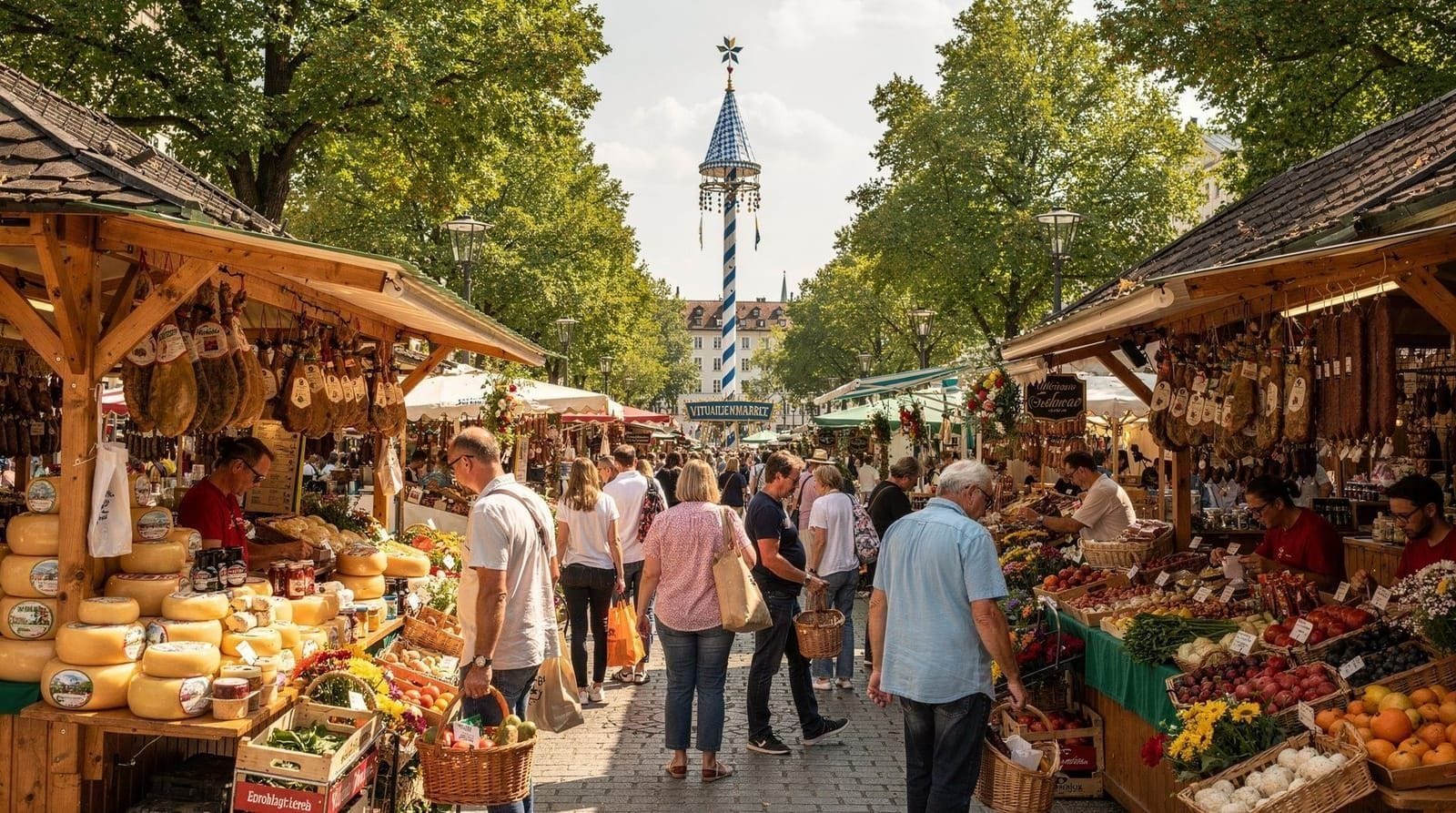
The Viktualienmarkt: the daily food market is free to walk through. Buying anything there is not cheap, but the market itself as an experience costs nothing.
Olympiapark grounds: the Olympic Park’s exterior, grounds, English Garden-style parkland, and the lake area are all free. The tower and stadium tours cost extra but aren’t necessary to experience the park.
Sunday museum discount: most state museums in Bavaria offer €1 entry on Sundays. This includes the Alte Pinakothek (normally €8), Neue Pinakothek (€7), Deutsches Museum (€15), and others. A Sunday in Munich dedicated to museums can cost less than €10 for a full day of world-class collections.
Asam Church: the Asamkirche on Sendlinger Strasse is one of the finest examples of Baroque architecture in Germany — intimate, ornate beyond description, and free to enter. Almost nobody outside art-history enthusiasts knows about it.
Free walking tours: several operators run donation-based walking tours of Munich’s old town. Free walking tours are exactly that — you pay what you think it was worth at the end. Quality varies but the format works well for budget travellers. Munich old town walking tour — paid professional alternative with skip-the-queue tickets included
Eating and drinking: where the money goes
Food in Munich is not inherently expensive, but the geographic distribution of prices is stark. The old town (Altstadt) around Marienplatz charges tourist prices. Walk 10–15 minutes in any direction and prices fall noticeably.
Viktualienmarkt strategy: the market itself charges high prices, but the surrounding neighborhood — particularly along Reichenbachstrasse and into the Glockenbachviertel — has good value restaurants. A three-course lunch at a neighborhood Gasthof in Haidhausen costs €15–€22 per person. The same meal on Marienplatz would be €30–€40.
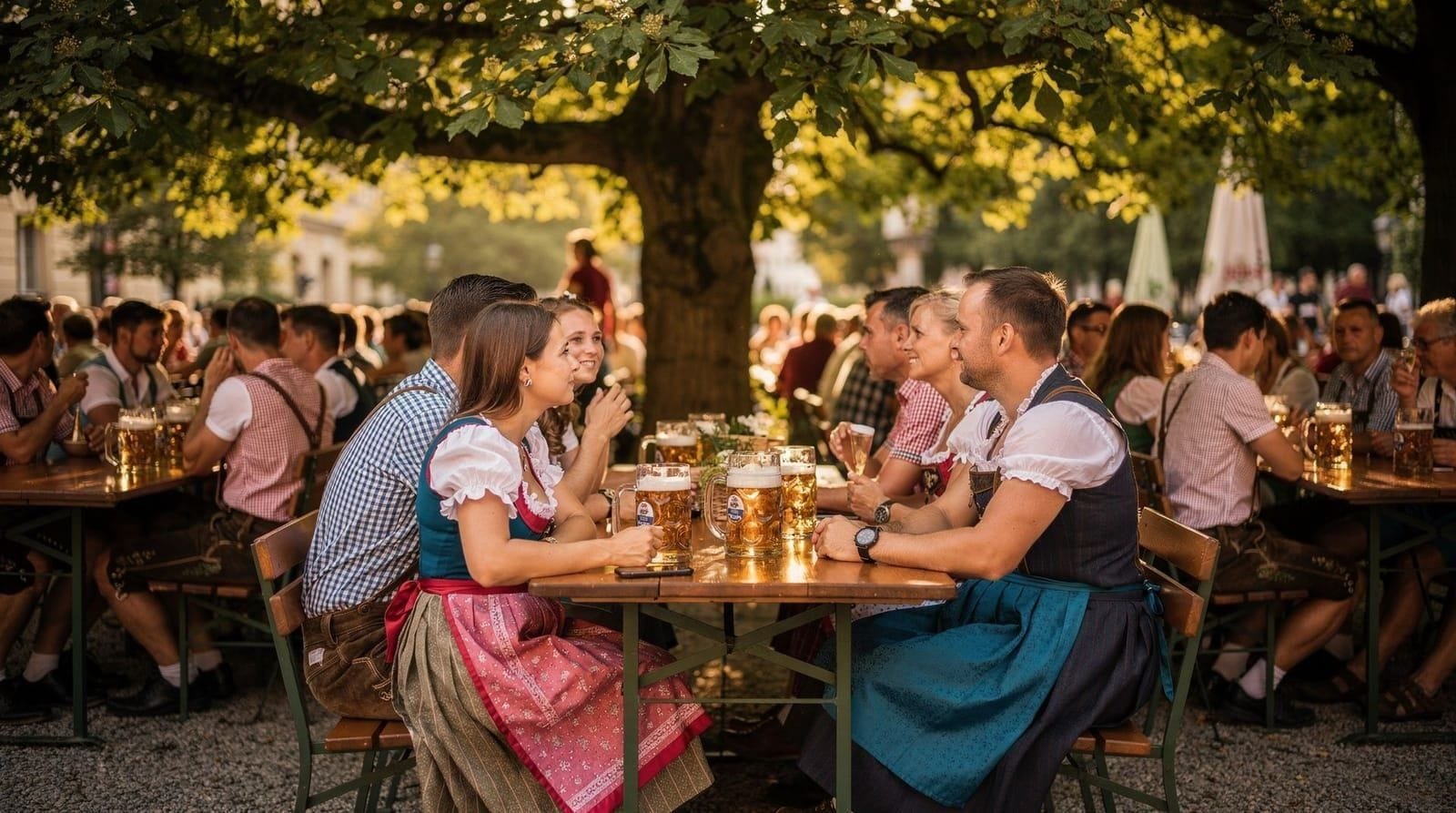
Beer garden economics: Beer in Munich’s beer gardens, sold over the counter, is cheaper than beer inside the tents and generally cheaper than restaurant prices. You can also bring your own food to most beer gardens (a long-standing tradition) — buy bread and cheese from a supermarket or the Viktualienmarkt, buy beer at the counter. This combination is genuinely how many locals spend a summer afternoon. See the best beer gardens guide for the ones worth visiting.
Supermarket lunch: Rewe, Edeka, and Aldi stores throughout Munich (including locations near Hauptbahnhof and in the old town) sell good sandwiches, salads, and prepared food for €3–€6. This isn’t exciting, but it frees your budget for the one or two meals a day worth spending on. Look for the Rewe on Kaufingerstrasse, 3 minutes from Marienplatz.
Lunch over dinner: Munich restaurants typically offer a Mittagstisch (lunch menu) with 2–3 courses for €10–€15 — significantly cheaper than the same restaurant at dinner. Eating your main meal at lunch and having a lighter, cheaper evening meal (beer garden, supermarket, or takeaway) halves the food spend for the day.
The Viktualienmarkt beer garden: Sit at the market’s central beer garden during the week (not weekends when it’s crowded). Beer at the counter is €5–€6 for a 0.5L — cheaper than most surrounding bars — and you can bring your own food from the market stalls.
Accommodation: the honest picture
Timing is everything: Munich accommodation rates vary by a factor of 3–4 across the year. The cheapest time is January–March (excluding Fasching week), when 3-star rooms drop to €70–€100/night. The most expensive is Oktoberfest (September 19–October 4, 2026) when rooms in Munich city go for €300–€600+/night and may require minimum stays of 3+ nights.
For a general visit, travelling in late April, May, early June, or late October dramatically reduces hotel costs versus July and August.
Stay outside the Altstadt: Hotels in Maxvorstadt, Schwabing, Haidhausen, or Neuhausen-Nymphenburg are 15–30% cheaper than equivalent hotels in the old town, and all are within 3 U-Bahn stops of the center. The where to stay in Munich guide covers the neighborhood trade-offs.
Hostels: Munich has well-regarded hostels in central locations. The Wombat’s Hostel (near Hauptbahnhof) and Easy Palace City Hostel (near Goetheplatz) consistently offer dorm beds at €30–€45/night including lockers and decent facilities. Private rooms in hostels run €80–€120, comparable to budget hotels but often in better locations.
Augsburg as a base for Oktoberfest: If you’re visiting during Oktoberfest and haven’t booked Munich accommodation, Augsburg is 30 minutes from Munich Hauptbahnhof by regional train and drops in price significantly during the festival. The Bayern-Ticket covers the Augsburg–Munich journey.
Attractions: what to pay for and what to skip
Pay for: The Munich Residenz Treasury and State Rooms (€15 combined) — genuinely extraordinary, impossible to replicate elsewhere. Neuschwanstein (€17 timed entry ticket) — worth the price if you haven’t seen it. Zugspitze if the weather is clear.
Consider skipping or finding free days for: BMW Welt (the showroom is free; the museum costs €10). The Alte Pinakothek on Sundays (€1 vs €8). Olympia Tower (€11 for city views you can approximate for free from other vantage points). The Marienplatz tower climb (similar view, €7, similar to the Frauenkirche tower at €7 — pick one).
Skip entirely: Double-decker tourist buses (similar route to the U-Bahn at several times the price). Guided tours of sites where free audio guides are available. Sightseeing boat tours on the Isar within Munich (not particularly scenic, expensive for what they are).
Money-saving summary: example day budget
| Budget day | Mid-range day |
|---|---|
| Transport (group day ticket ÷ 2): €9 | Transport (1-day solo): €9 |
| Lunch (supermarket): €5 | Lunch (Mittagstisch): €14 |
| Afternoon (English Garden, free): €0 | Afternoon (Residenz): €15 |
| Beer garden (2 x 0.5L, brought food): €11 | Beer garden (beer + food): €25 |
| Dinner (neighborhood Gasthof): €18 | Dinner (old town restaurant): €35 |
| Daily total: €43 | Daily total: €98 |
Both are genuine Munich experiences. The budget version misses nothing essential — the English Garden is better than any paid attraction for a summer afternoon, and a beer garden dinner is an entirely authentic Munich experience.
For the comprehensive budget breakdown including accommodation, see the Munich budget guide.
Frequently asked questions about saving money in Munich
What’s the single biggest money-saver in Munich?
Timing your accommodation booking outside Oktoberfest and peak summer weeks. Hotel rates swing by a factor of 3–4 across the year, dwarfing any savings possible on food or transport.
Is it worth buying a Munich city pass to save money?
Only if you’re doing several paid museums or attractions back-to-back over 2–3 days. If your plan leans on free attractions like the English Garden and Sunday museum discounts, a pass usually doesn’t pay for itself — do the maths on your specific itinerary first.