Surfing in the English Garden: Munich's Eisbach wave explained
The wave that shouldn’t exist
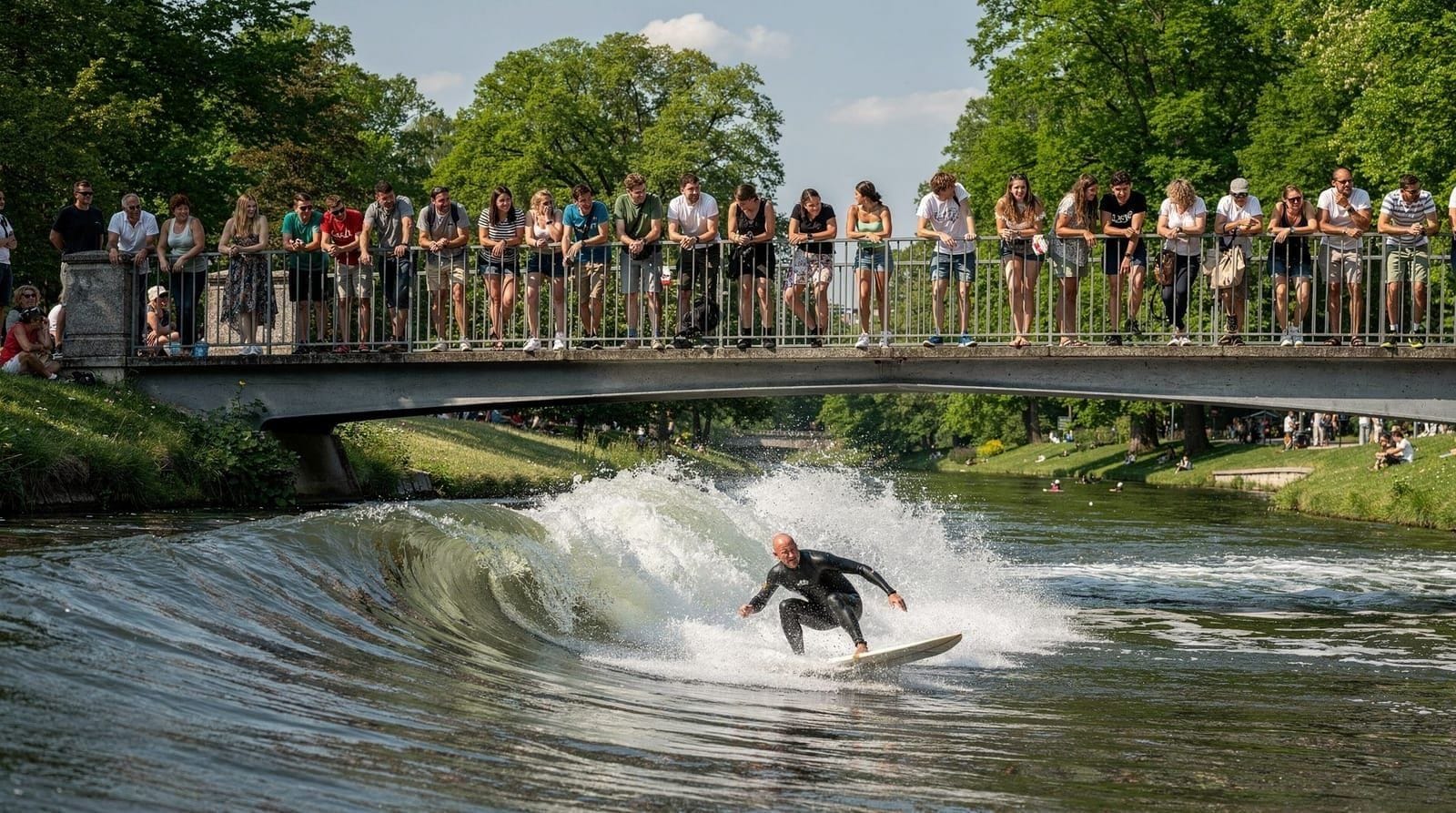
The Eisbach is a man-made channel running south through the English Garden — the vast urban park north of Munich’s old town. In 1972, the year Munich hosted the Olympics, the water management infrastructure that feeds the channel was completed, and a standing wave formed near the southern entrance at Prinzregentenstrasse. Nobody planned it. Surfers noticed it.
For decades, the city of Munich tried to suppress the surfing. Safety signs were erected, the wave was occasionally modified to reduce it. The surfers kept coming. By 2010 the city officially relented: surfing on the Eisbach is now permitted, a surfboard storage facility exists nearby, and the wave has become one of Munich’s most photographed and genuinely surprising sights.
The wave runs every day, 365 days a year, in summer heat and in snow. The Eisbach — an Isar tributary — is fed by the controlled flow of the river, not by rain or snowmelt. Cold, grey January mornings see surfers riding the same wave as July’s afternoon crowds.
| Where | Southern entrance to the English Garden, near Prinzregentenstrasse |
| Cost to watch | Free, no ticket or booking |
| Time needed | 15–30 minutes to watch; longer if combined with a park walk |
| Getting there | U-Bahn Lehel (U4/U5), 5-minute walk |
| Best time | Weekday late morning for short queues, summer weekend afternoons for atmosphere |
What the wave is actually like
The Eisbach wave is a single stationary wave approximately 2 metres wide. The channel at this point is narrow — maybe 8 metres — and flanked by stone walls. The wave is powerful: the water is glacially cold (typically 8–14°C depending on season) and the current is intense.
This is not a wave for learners. The Eisbach is considered a serious surfing challenge. You need competent surf skills before attempting it — not because of height (the wave is 1–1.5 metres) but because of the nature of standing waves: if you fall, the current flushes you downstream immediately. The banks are stone walls. There is no gradual beach entry.
The skill level of regular Eisbach surfers is notably high. You will see people there on most days who have been surfing this specific wave for years, and who make it look easy. It is not easy.
The unwritten queue system
There is no formal queue to surf the Eisbach, but an unwritten etiquette has developed that locals enforce fairly strictly.
You wait at the edge of the channel. The current surfer rides until they exit (fall off or step off voluntarily). The next person drops in. There’s no shouting, no cutting, no extended sessions during busy periods — surfers who stay on too long are politely asked to rotate.
On weekdays in late morning, waits are short — maybe 5–10 minutes. On summer weekend afternoons, the queue can stretch to 30–45 minutes. Most regulars know this and plan accordingly. Watching is the activity for most visitors; the small concrete viewing area at the bridge above the channel offers an excellent vantage point.
When to visit
Best for watching: Saturday and Sunday afternoons in summer draw the most surfers and the biggest crowds of spectators. The atmosphere is lively, the skill level is high, and the backdrop of the English Garden is at its finest.
Best for photographs: Late afternoon in summer gives golden side-light on the wave. The wave faces roughly east-west, so morning light comes from behind the wave (useful for silhouettes) and afternoon light is front-lit.
Quietest time: Weekday mornings in winter. You may see two or three surfers on a February Tuesday at 10am. The contrast between the snow-edged banks and the surfers in wetsuits is striking — and the light in winter can be extraordinary when the Föhn wind clears the air.
The wave in rain: The Eisbach runs regardless of weather. Surfers don’t typically skip a session for rain. If you visit on a rainy day and expect the wave to be empty, you may be surprised.
How to find the Eisbach wave
The wave is at the southern entrance to the English Garden, near the intersection of Prinzregentenstrasse and Ismaninger Strasse. The nearest U-Bahn station is Lehel (U4/U5) — a 5-minute walk. Alternatively, from Marienplatz, it’s a 20-minute walk northeast through the park.
There is a small parking area nearby but parking in this part of Munich is difficult; public transport is recommended. The Munich public transport guide covers the U-Bahn and S-Bahn network in detail.
There is no charge to watch. The viewing area is on the bridge above the channel. It can get crowded on summer weekends — arrive early or stand at the channel edge rather than the bridge for a less congested view.
A second, quieter wave: the Floßlände
Fewer visitors know that a second, larger standing wave exists further into the English Garden at the Floßlände (boathouse area) near the northern part of the park. This wave is gentler, wider, and has a much lower queue. It’s also less photogenic and harder to reach by foot from the city center — about 45 minutes’ walk from the Eisbach, or accessible by U6 to Studentenstadt then a walk.
The Floßlände attracts a mix of serious surfers who want more wave time and intermediates for whom the Eisbach is too intense. If surfing is your goal and you have your own board, the Floßlände is worth investigating.
Can tourists try surfing the Eisbach?
There are no rental boards or lessons at the Eisbach itself. The wave has no school infrastructure. To surf it, you need to:
- Bring your own surfboard (specifically a river-surf board — the shorter, finless or small-fin designs used for standing waves)
- Have intermediate or advanced surfing skills
- Know the etiquette and respect the queue
Munich has a river surf community that has grown significantly over the past decade. If you want to learn river surfing specifically, some outdoor sports shops in Munich occasionally organise coaching sessions at less intense standing waves in Bavaria, but these are arranged through specialist channels rather than standard tour operators. Munich old town walking tour — see the city before heading to the English Garden
If watching from the bank is more your speed than paddling in, a guided bike tour is the easiest way to see the wave alongside the rest of the park in one go. English Garden and Nymphenburg Palace bike or segway tour
The English Garden beyond the wave
The wave is 5 minutes from the park entrance. The English Garden itself is enormous — 3.7 kilometres long, 1 kilometre wide — and worth several hours. From the Eisbach, walk north:
- Monopteros (Greek temple) sits on a small hill 15 minutes north — one of Munich’s iconic viewpoints and a favourite local sunbathing spot.
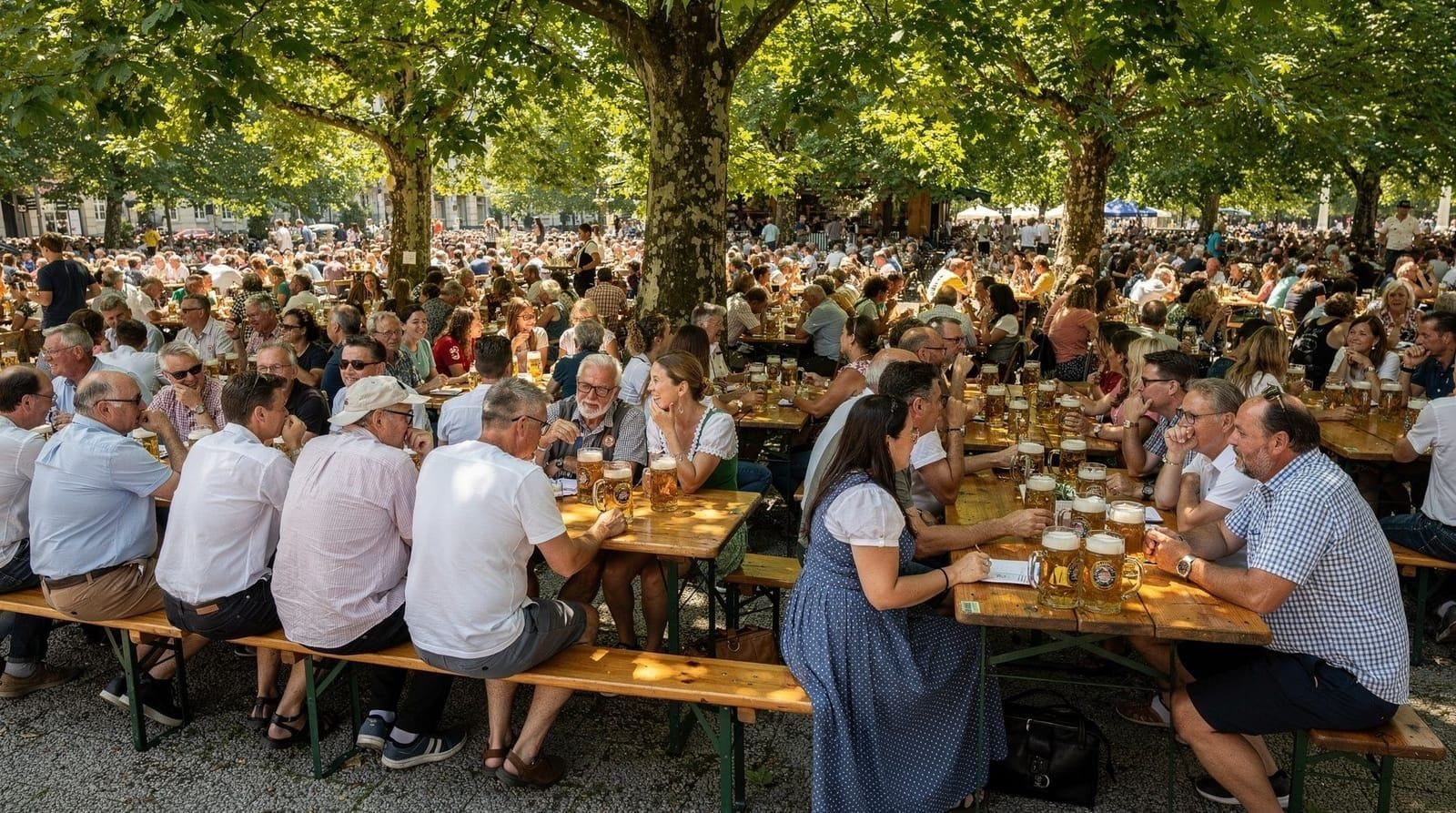
- Chinese Tower (Chinesischer Turm) beer garden, 25 minutes north, seats 7,000 and is one of Munich’s most famous beer gardens.
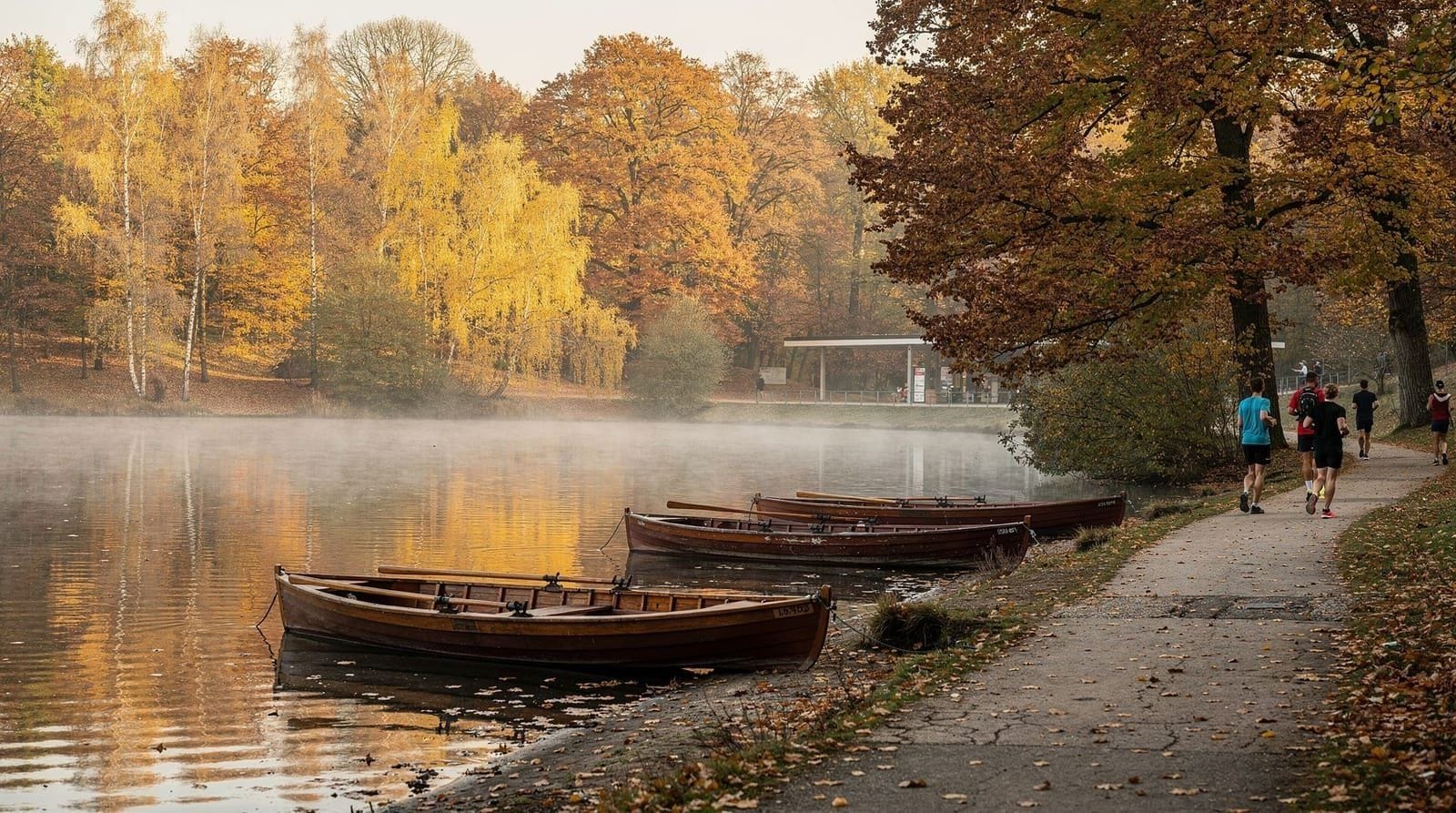
- Kleinhesseloher See (lake), 35 minutes north, has rowing boats for hire and the quieter Seehaus beer garden.
The full north-south walk through the English Garden takes 75–90 minutes at a relaxed pace. The park is flat and easy cycling terrain — bike rental is available in central Munich; our Munich bike rental guide covers the practical options if you’d rather cycle the whole length than walk it.
The wave itself is also one of the city’s most reliably photogenic spots — it makes several appearances on our Munich Instagram spots guide alongside the more obvious Marienplatz and Frauenkirche shots.
Winter surfing: what it looks like
The Eisbach in winter deserves special mention because it genuinely surprises most visitors. On cold mornings with frost on the ground, surfers in 5mm wetsuits (sometimes gloves and hoods) ride the same wave that draws summer crowds. The water temperature stays around 8°C year-round — the Isar feeds it and the flow is managed to maintain the wave.
The English Garden in winter has its own beauty: fewer people, cleaner air, snow-covered Japanese Garden and pagodas in the north. The Eisbach wave becomes an even more improbable sight with snow on the banks.
For the full seasonal picture of what else changes at this time of year, see the Munich in winter guide and, for the opposite extreme, the Munich in summer guide covers why the wave gets so busy on hot weekends.
How the Eisbach fits into a Munich itinerary
Most visitors reach the Eisbach as a short detour rather than a dedicated outing — it pairs naturally with a walk from the Altstadt or as the start of an English Garden afternoon before a beer garden. Fifteen minutes is enough to watch a few rides and take photos; budget an hour or more if you’re continuing north through the park to the Chinese Tower or Kleinhesseloher See. It’s a genuinely free, no-planning-required stop that works at almost any point in a Munich day.
Practical FAQ
Is it free to watch the Eisbach surfing?
Yes, completely free. No ticket, no barrier, no registration. Just walk to the bridge or the channel edge and watch.
Is the water safe to swim in?
The Eisbach and other Isar channels through the English Garden are used for swimming and wading in summer, though swimming specifically at the wave location is not recommended due to current. The Isar river to the south, between Marienplatz and the Deutsches Museum island, has designated swimming and sunbathing areas on the gravel banks that are very popular with locals in summer.
What is the Eisbach wave made of?
It is a natural-ish formation: the wave is caused by water accelerating over a concrete step in the channel, creating a hydraulic jump. The infrastructure was built for flood management in the 1970s. The wave was not designed — it emerged from the hydrology of the installation.
When is the Eisbach busiest with surfers?
Weekends in June, July, and August see the most surfers and spectators. Go before 10am for a shorter queue and less crowded viewing. The wave itself is at its most consistent in spring and early summer when Isar water levels are managed to maintain optimal flow.
Do I need to book anything to watch the surfing?
No. There’s no reservation, ticket, or queue system for spectators — just walk up to the bridge or channel edge whenever the park is open, which is effectively all day, every day.
Is the Eisbach the same water as the Isar river swimming spots?
They’re connected but distinct. The Eisbach is a narrow, fast, cold channel built for the standing wave and not intended for casual swimming. The wider Isar river south of the English Garden, with its gravel banks near the Deutsches Museum island, is where Münchners actually swim and sunbathe in summer — a completely different, gentler experience.