Oktoberfest 2026: dates, tents, tickets, and what nobody tells you
Oktoberfest 2026 at a glance
Dates: Saturday, September 19 to Sunday, October 4, 2026 (16 days) Location: Theresienwiese, Munich (U4/U5 Theresienwiese stop, or 20-minute walk from Hauptbahnhof) Entry to grounds: Free Beer price: Approximately €16–17 per Mass (1 litre) inside tents in 2026 Tapping ceremony: Saturday, September 19, noon — “O’zapft is!” (It’s tapped!) by the Lord Mayor of Munich
These are the confirmed parameters for 2026. Oktoberfest always runs from the third Saturday of September to the first Sunday in October, so the September 19 – October 4 window is fixed.
| Time needed | half a day at minimum, a full evening for the tent experience |
| Getting there | U4/U5 to Theresienwiese, or a 20-minute walk from Hauptbahnhof |
| Booking window | reserved tables open early in the year; walk-in standing space needs an early arrival |
| Typical total cost | around €100–130 per person for an evening with food and beer |
For the fuller seasonal context around the festival — weather, what else is happening in Munich that month — see the Munich autumn and Oktoberfest season guide.
A brief, non-romanticised history
Oktoberfest began as a royal wedding celebration in 1810, when Crown Prince Ludwig married Princess Therese of Saxony-Hildburghausen. The horse races on the meadow (Theresienwiese — literally “Therese’s Meadow”) became an annual tradition, then evolved into an agricultural fair, then the beer festival the world knows today.
The current format — massive wooden tents (each dismantled and rebuilt every year), a fixed set of Munich breweries, and a strict beer quality rule — is 20th-century in origin. Only six Munich breweries are permitted to serve: Augustiner, Hacker-Pschorr, Hofbräu, Löwenbräu, Paulaner, and Spaten. This is not a marketing gimmick; it is a city regulation, and it means quality floors exist even in the most tourist-heavy tents.
The festival attracts around 6 million visitors in a normal year, of whom roughly 40% are international. It is not primarily a tourist event — most tent seats on weekdays are occupied by Bavarians and Germans, which is part of what makes it more interesting than it might sound.
The tents: what you’re actually choosing between
There are 14 large tents and around 20 smaller ones. Understanding the character of each saves you a bad evening.
Augustiner-Festhalle (6,000 capacity): The most respected tent among Münchners. Augustiner is the only brewery that still uses traditional wooden barrels (not pressure-line kegs), which makes the beer taste different — softer, less carbonated. The tent has the most local crowd and the best atmosphere. It is also the hardest to get a reservation for.
Schottenhamel (10,000 capacity): The traditional opening tent, where the Lord Mayor taps the first keg. Young crowd, very lively, first weekend is insane. If you’re 22 and want to party, this is your tent.
Hofbräu-Festzelt (10,000 capacity): The international tourist tent, for better or worse. The beer is fine. The crowd is loud, mixed, and more chaotic. Walk-in is easier here than at Augustiner. If you just want the experience quickly, start here.
Winzerer Fähndl (Paulaner, 8,450 capacity): Good beer, loyal Bavarian following, slightly less chaotic than Hofbräu. The Paulaner Salvator (dark beer) is available here and worth trying.
Hacker-Festzelt (9,300 capacity): Known as “Bavarian Heaven” (Der Himmel der Bayern) with a painted sky ceiling. Mid-range crowd, good value reservation compared to Augustiner.
Käfer’s Wiesenschänke (1,300 capacity): The expensive, upmarket tent preferred by business guests and celebrities. Table service, better food, quieter atmosphere. Reservations are even harder to get.
| Tent | Capacity | Crowd | Reservation difficulty |
|---|---|---|---|
| Augustiner-Festhalle | 6,000 | most local, best atmosphere | hardest |
| Schottenhamel | 10,000 | young, first-weekend party crowd | very hard |
| Hofbräu-Festzelt | 10,000 | international, loud, mixed | easiest walk-in |
| Winzerer Fähndl (Paulaner) | 8,450 | loyal Bavarian following | hard |
| Hacker-Festzelt | 9,300 | mid-range, good value | moderate–hard |
| Käfer’s Wiesenschänke | 1,300 | upmarket, business/celebrity | hardest |
For the fuller tent-by-tent and table-booking mechanics, see the Oktoberfest tickets and tables guide and best time for Oktoberfest guide.
Tent reservations: the honest reality for 2026
Tent reservations for 2026 Oktoberfest opened in early 2026 through each brewery’s official website. For the first and last weekends, most prime tables were claimed within hours. If you’re reading this in June 2026:
- First weekend (Sep 19–20): Fully booked at all major tents for seated reservations.
- Last weekend (Oct 3–4): Similarly fully booked.
- Weekdays (Mon–Thu): Some walk-in standing table space is available. Arrive before 11am to queue, or between 8–9pm when some groups leave.
- Mid-week (Tue–Thu after first week): Best chance for a reserved table from cancellations — check tent websites directly.
Reservations typically require a minimum food and drink spend per person (around €30–40). This is not optional — it is billed automatically.
Third-party “reservation services”: Treat with extreme caution. Legitimate tour operators can book seats at official table rates; unofficial resellers charge significant premiums for the same thing. Always verify you’re booking with the brewery or a licensed operator. Book a reserved table at Oktoberfest
What Oktoberfest actually costs in 2026
The event grounds are free to enter. Beer is not.
| Item | Approximate cost 2026 |
|---|---|
| 1 Mass (1L beer) inside a tent | €16–17 |
| Hendl (half roast chicken) | €17–19 |
| Brezn (pretzel) | €5–7 |
| Schweinebraten (roast pork) | €22–26 |
| Full evening (4 beers + food) | €100–130 per person |
| U-Bahn day ticket | €9.20 (inner zone) |
| Hotel per night during Oktoberfest | €220–400+ in central Munich |
The beer price is regulated but high. Outside tents on the grounds, some smaller stalls serve beer at the same price. There is no cheap beer at Oktoberfest — €16+ is the floor.
Crowd management: when to go and when to avoid
Best days to visit if you want to actually sit down and enjoy yourself:
- Any Tuesday or Wednesday after September 25
- Thursday during week two (Sep 24–25)
- Opening Monday at lunchtime (before American and Australian groups fill tents)
Days to avoid if crowds bother you:
- Any Saturday (absolutely packed from noon)
- September 19 (opening day, ceremonial chaos)
- October 3 (German Unity Day public holiday — enormous)
- October 4 (closing Sunday — emotional and packed)
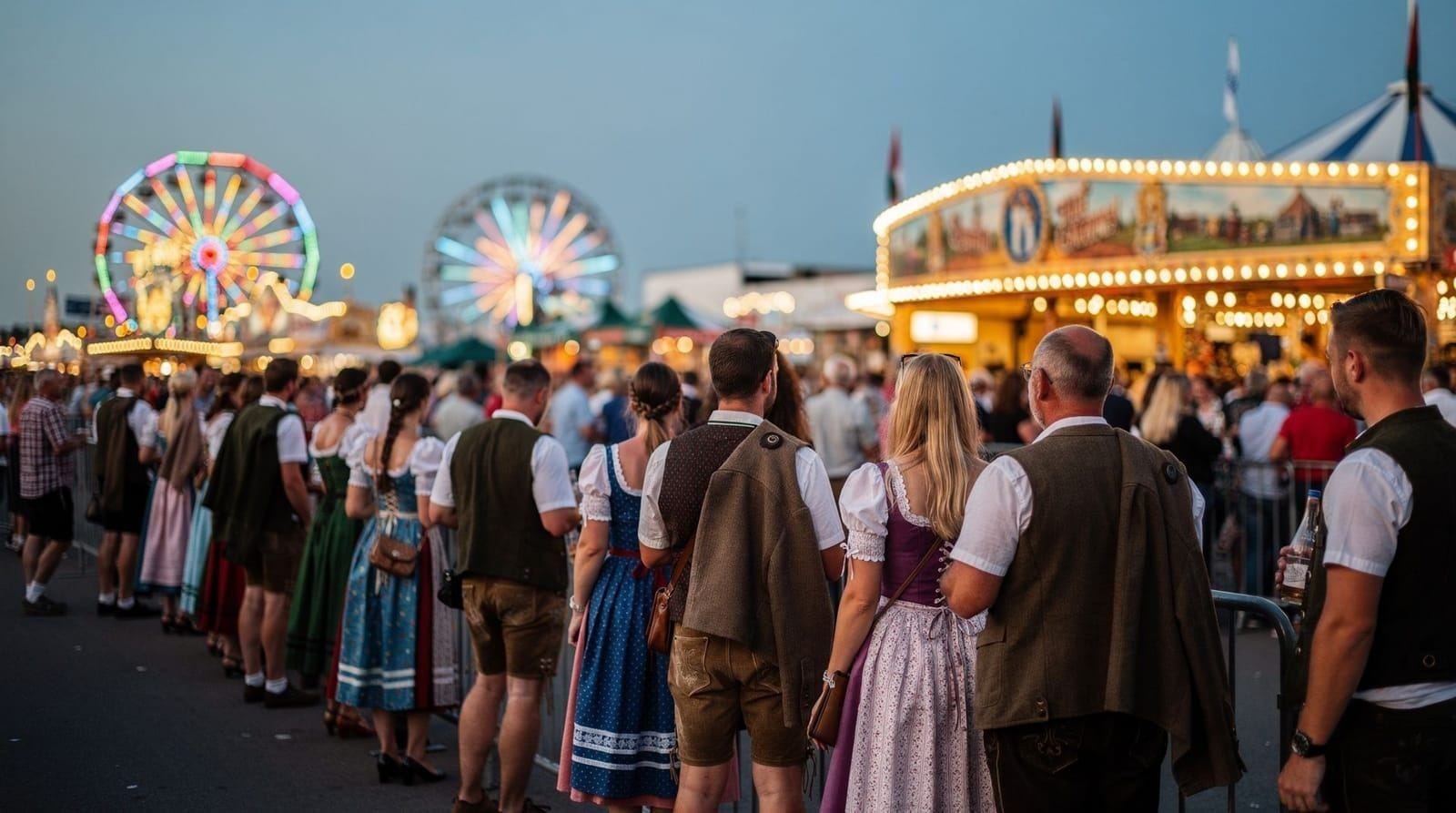
What “packed” actually means: Tent doors can close if capacity is reached. On peak Saturdays, the Hofbräu tent closes by early afternoon. People queue outside. At the Augustiner tent, door closure on Saturday afternoons is common from September 2 onwards. Plan to arrive by 11am or accept the risk.
What the tourist guides don’t always tell you
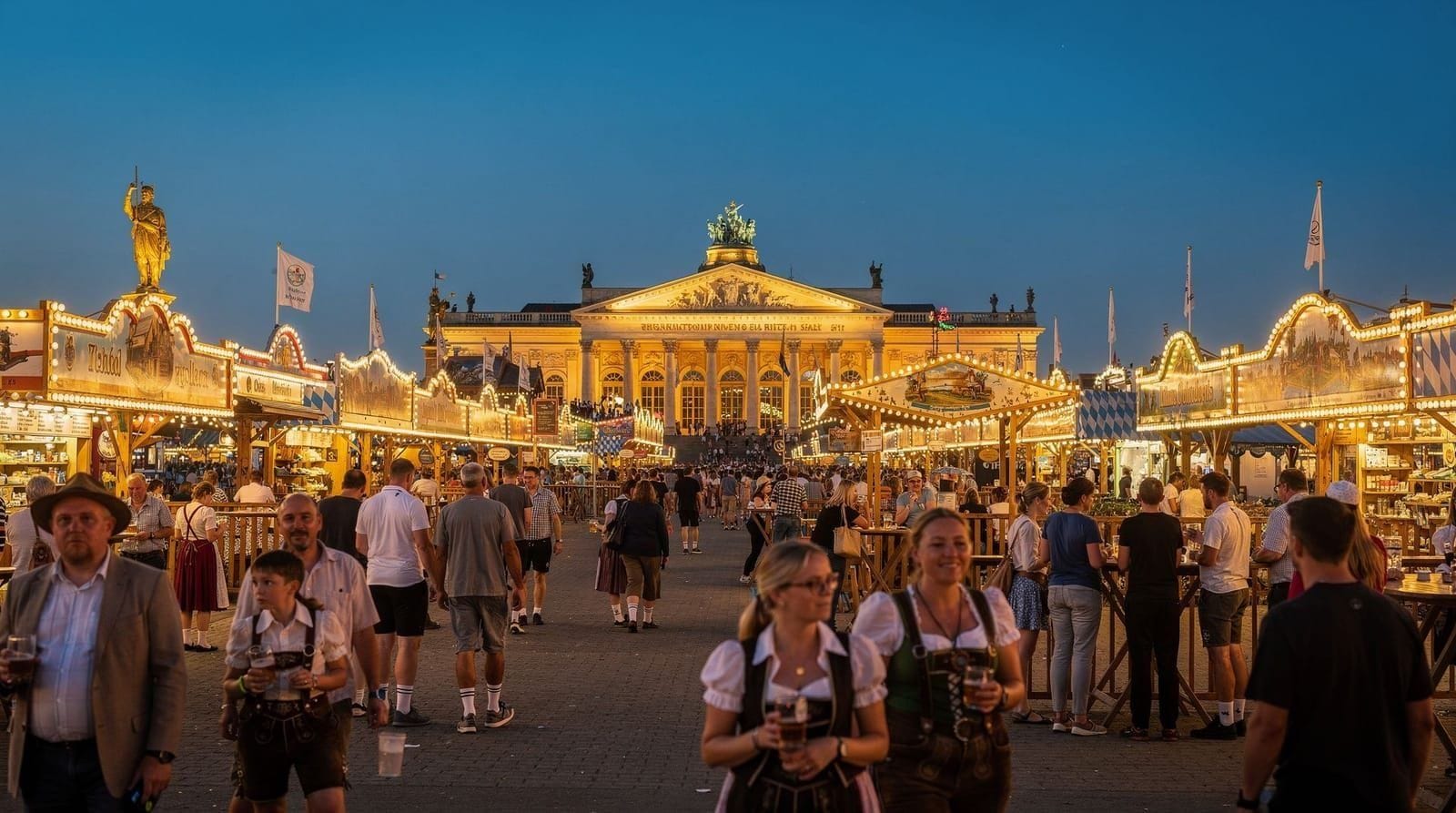
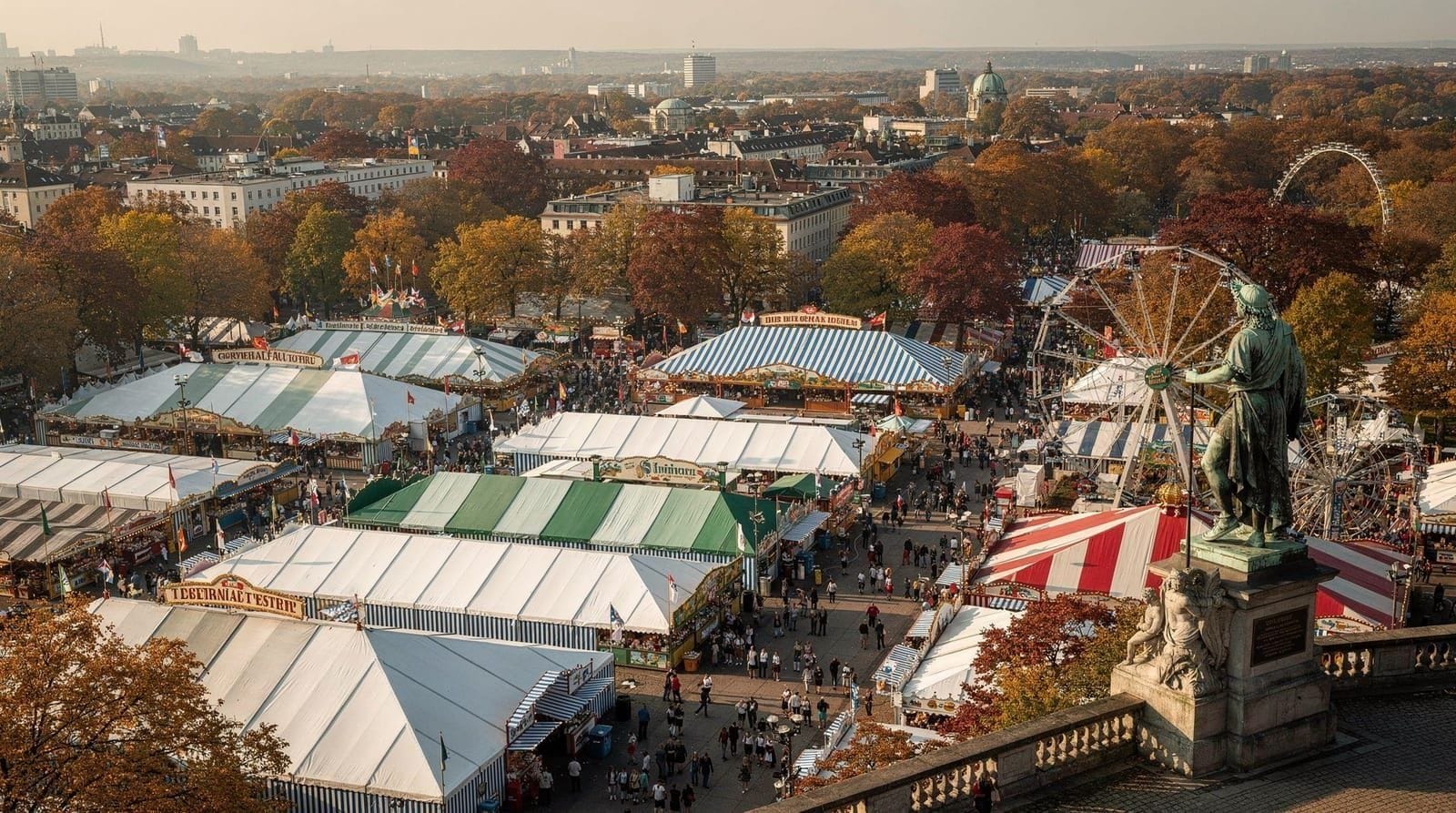
The fairground is excellent and free to wander: Surrounding the tents is a full German funfair — traditional rides (including the original 1910 carousel style), shooting galleries, gingerbread stalls, and food booths. Entry is free. The Toboggan slide, the fun house, and the antique carousels are worth an hour regardless of whether you go in a tent.
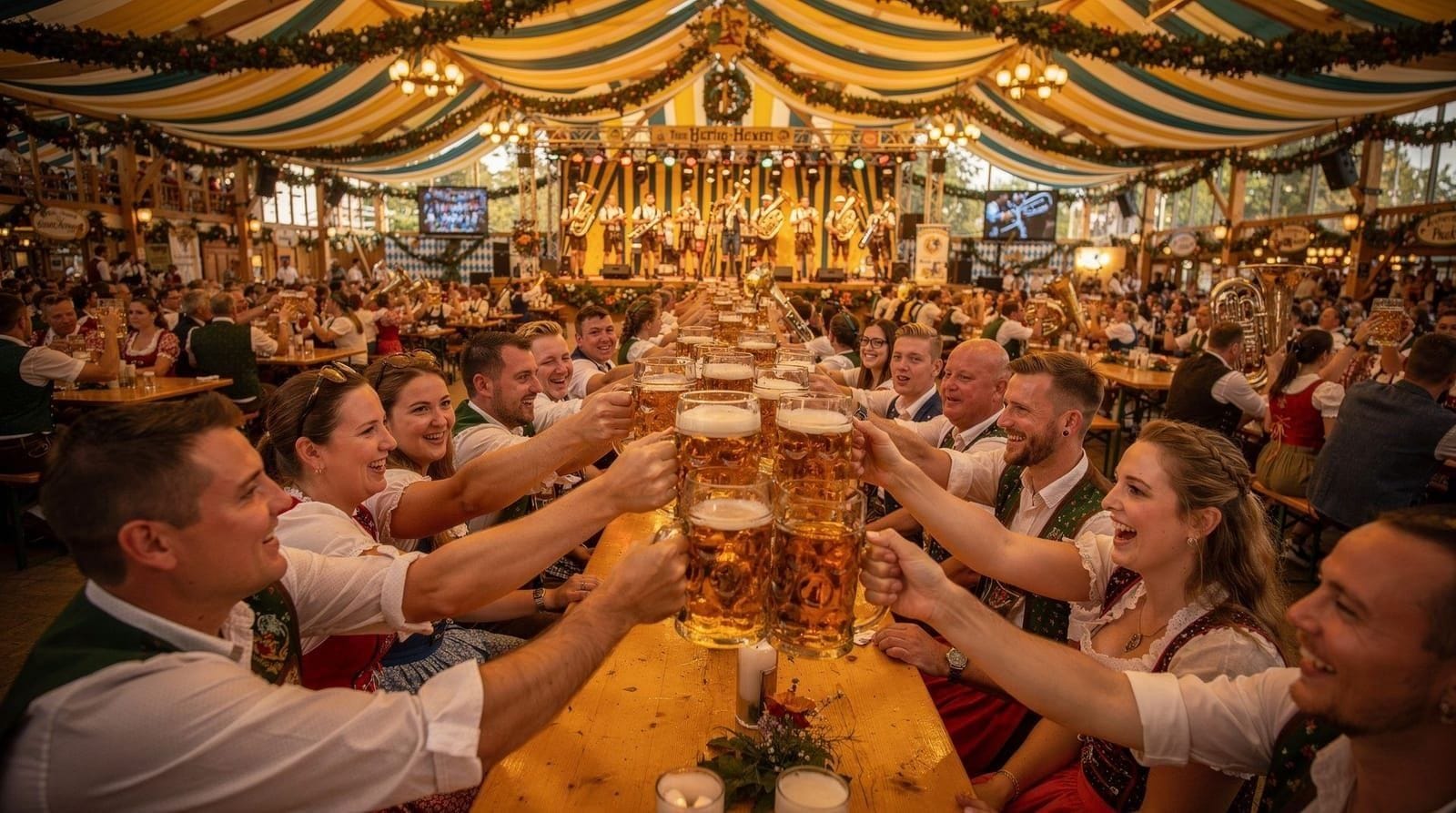
The atmosphere after 10pm degrades: The best of Oktoberfest is the communal singing, Bavarian folk bands, and convivial energy between about 4pm and 9pm. After 10pm, intoxication levels rise and the experience becomes more unpredictable. If you want to leave with good memories, leave before midnight.
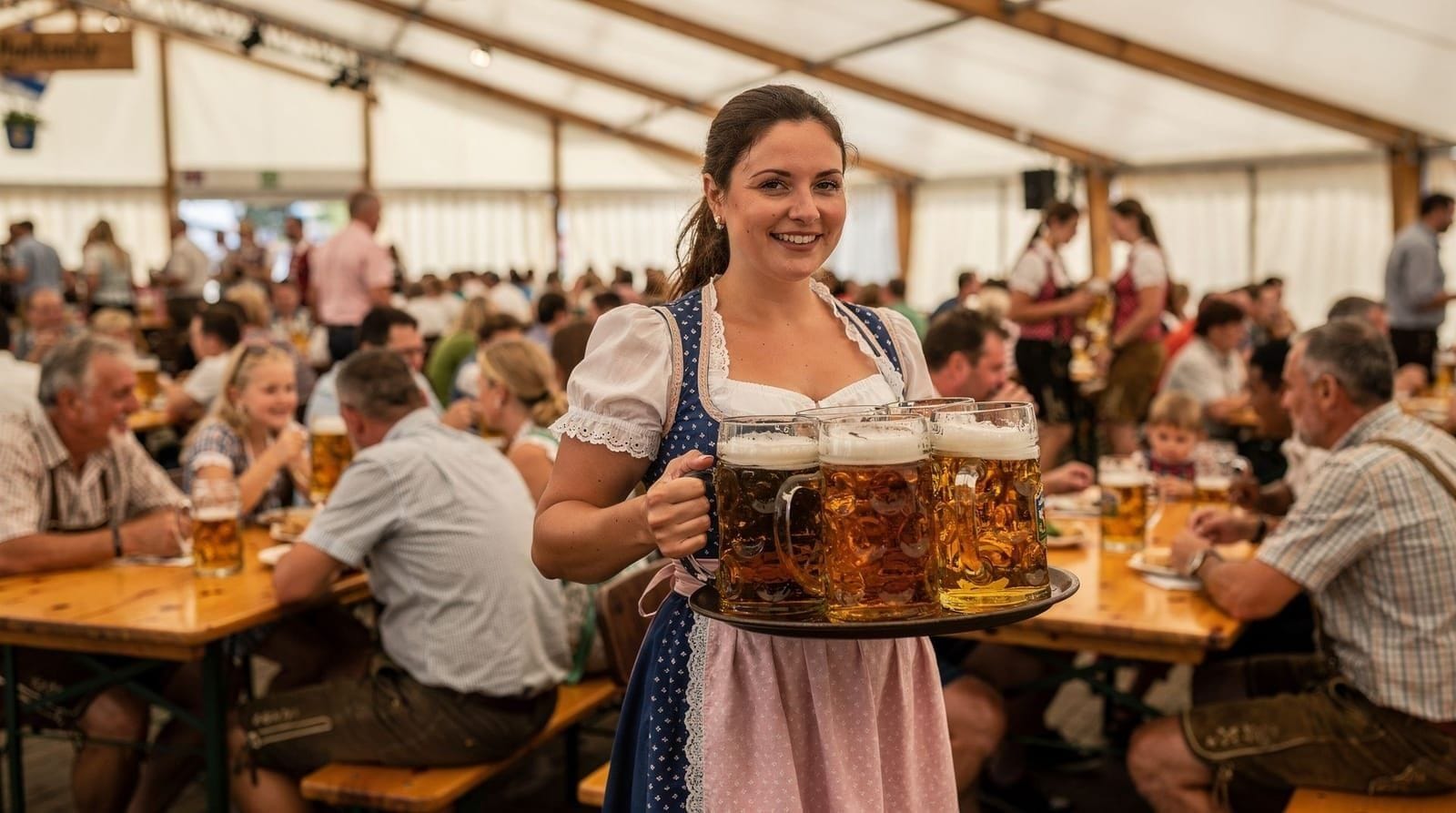
Dirndls and Lederhosen are not tourists dressing up: The vast majority of people wearing traditional clothing are German and Bavarian. The clothing industry around Oktoberfest is significant — a quality Dirndl costs €200–500, Lederhosen €300–600. Wearing Oktoberfest-specific costume is an expression of local identity, not a theme park performance. Visitors who make an effort to dress appropriately are generally better received in tents.
The security bag check creates queues: Since 2017, bags must be searched at tent entrances. Backpacks over a certain size are not allowed in. Pack light.
Oktoberfest beer is stronger: The Wiesn-specific beer brewed for Oktoberfest has an ABV of around 6–6.5% compared to the standard 5–5.4% of normal Munich Helles. One Mass has roughly the same alcohol as two standard pints. Pace accordingly.
Getting there and around during the festival
The Theresienwiese U-Bahn stop (U4 and U5 lines) puts you 200 metres from the main entrance. On weekends, trains are packed; the walk from Hauptbahnhof (about 20 minutes) is often faster and calmer.
The Bavarian Railway (DB) runs additional trains to Munich during Oktoberfest from Nuremberg, Augsburg, Salzburg, and Innsbruck. Long-distance trains on Friday evenings and Saturday afternoons fill up fast — book DB tickets in advance.
Do not drive to the Wiesn. Parking in the area is minimal and the U-Bahn serves it well. Taxis and rideshares are expensive and slow after 8pm due to traffic.
Oktoberfest for non-drinkers
This is a genuine question and the answer is: it’s perfectly enjoyable. The food is excellent — Hendl, Schweinsbraten, Steckerlfisch (grilled fish on a stick), and Sauerkraut are all non-alcoholic reasons to visit. Non-alcoholic beer (Alkoholfrei) is available at most tents. The fairground is completely separate from the beer-drinking. The spectacle — the crowds, the music, the traditional clothing — is entertaining regardless of what you’re drinking.
Beyond the tents: Munich’s Oktoberfest adjacent experiences
Munich Oktoberfest museum and beer dinnerThe Oktoberfest Museum on Kaufingerstrasse, in the old town, has a small but worthwhile permanent collection tracing the festival’s history. Entry is around €4. It is not a major attraction but provides context.
The Löwenbräukeller on Stiglmaierplatz runs a parallel beer festival during Oktoberfest — outdoors, significantly cheaper than on the Wiesn, and with a more local crowd. Worth an evening if you want the experience without the full tourist intensity.
If Oktoberfest is your main reason for a Munich trip, the Munich beer halls guide covers the year-round venues worth visiting outside the festival window, and the Munich trip planning guide helps fit Oktoberfest into a wider itinerary.
More details: Oktoberfest 2026, Oktoberfest 2026, and Oktoberfest scams and tips
Frequently asked questions about Oktoberfest 2026
What are the exact Oktoberfest 2026 dates?
September 19 to October 4, 2026. The tapping ceremony is on Saturday, September 19 at noon. The festival closes on Sunday, October 4 after the final service.
Do I need a ticket to enter Oktoberfest?
No — entry to the Theresienwiese grounds is free. You need a reservation (with a minimum spend) to sit at a reserved table inside a tent. Without a reservation, you can try your luck at standing tables, which are first-come, first-served and limited.
How much does beer cost at Oktoberfest 2026?
Approximately €16–17 per Mass (1 litre) inside the main tents. Prices for 2026 were set by the breweries in early 2026 and represent a steady increase from previous years.
Which tent is best for first-timers?
The Hofbräu-Festzelt is the most accessible for first-timers — largest walk-in capacity, most international crowd, easiest to navigate. The Augustiner-Festhalle is the best experience if you can get a reservation.
Is it safe to go alone?
Yes. Solo visitors are common, especially on weekdays. The communal bench seating at Oktoberfest means you will be sitting with strangers anyway. Personal safety on the grounds is generally good, but watch your pockets — pickpocketing in crowded areas is a real risk, and keep your bag in front of you.
Can children attend Oktoberfest?
Children are allowed on the grounds and in the fairground area. They can enter tents before 8pm. After 8pm, tents are adults-only (18+). The fairground rides have age and height requirements that vary by ride.
Is Oktoberfest cheaper on weekdays?
Not on drink and food prices — those are fixed across the festival. It’s cheaper in practice because weekdays don’t require a paid reservation with a minimum spend; you can more easily find standing table space and avoid the pressure to keep ordering that comes with a reserved table’s minimum-spend requirement.