Munich 1972 Olympics guide: the cheerful games and the tragedy
Munich: BMW Welt, Allianz Arena, and Olympic Park tour
What happened at the 1972 Munich Olympics?
The 1972 Summer Olympics ran from 26 August to 11 September 1972 in Munich. They were designed as 'the cheerful games' — open, accessible and architecturally optimistic, a deliberate contrast to the 1936 Berlin Olympics. On 5 September 1972, members of the Palestinian Black September organisation took 11 Israeli athletes and coaches hostage at the Olympic Village. A failed rescue attempt at Fürstenfeldbruck airfield ended with all 11 hostages killed, along with one West German police officer and five of the eight attackers.
The games designed to heal, and the attack that shattered them
The 1972 Summer Olympics were conceived as a political act as much as an athletic event. Germany was hosting the Olympics for the second time — the first had been in Berlin in 1936, a propaganda exercise for the Nazi regime that Leni Riefenstahl filmed and the world watched with varying degrees of discomfort. The West German organising committee was acutely conscious of this history. Their explicit ambition was to produce something the 1936 Games were not: open, transparent, joyful, architecturally generous and politically conscious of democracy rather than power.
They came very close to succeeding. The tent roof over the Olympic complex remains one of the great achievements of 20th-century engineering and architecture. The competition itself produced extraordinary athletic performances — Mark Spitz’s seven gold medals, Olga Korbut’s gymnastic revelation, Lasse Virén’s long-distance running. For 10 days, the games functioned as their designers had intended.
Then came 5 September 1972. What happened that morning in the Olympic Village and that night at Fürstenfeldbruck airport left 11 Israeli athletes and coaches dead, one West German police officer dead, five of the eight attackers dead, and the notion of the “cheerful games” permanently damaged.
This guide covers both: the architectural and athletic achievement, and the tragedy that overshadowed it, with equal weight and accuracy.
| Where | Olympiapark, north Munich, U3 to Olympiazentrum |
| Cost | park entry free; Olympiaturm around €9, stadium tours priced separately |
| Time needed | 2–3 hours for the park and memorial, longer with the tower |
| Getting there | U3 to Olympiazentrum (~20 min from Marienplatz) |
| Best time | clear days for Olympiaturm Alps views; year-round for the memorial |
Background: West Germany hosting the Olympics
Munich was awarded the 1972 Summer Games at the IOC session in Rome in 1966, defeating Detroit, Madrid and Montreal. The bid was strongly supported by the West German government, which saw the Olympics as an opportunity to demonstrate the Federal Republic’s distance from the Nazi period.
The organising committee was chaired by Willi Daume, president of the National Olympic Committee of Germany. Daume’s vision for the Games was captured in a phrase that became the event’s unofficial motto: “die heiteren Spiele” — the cheerful games. The emphasis on openness was deliberate. Security at the 1972 Olympics was consciously minimal: police wore pale blue uniforms and were instructed to be approachable; armed guards were largely invisible; the Olympic Village was accessible to accredited visitors without strict barriers.
In retrospect, this openness facilitated the attack. At the time, it was a principled choice that reflected genuine values.
The Olympiapark: architecture as political statement
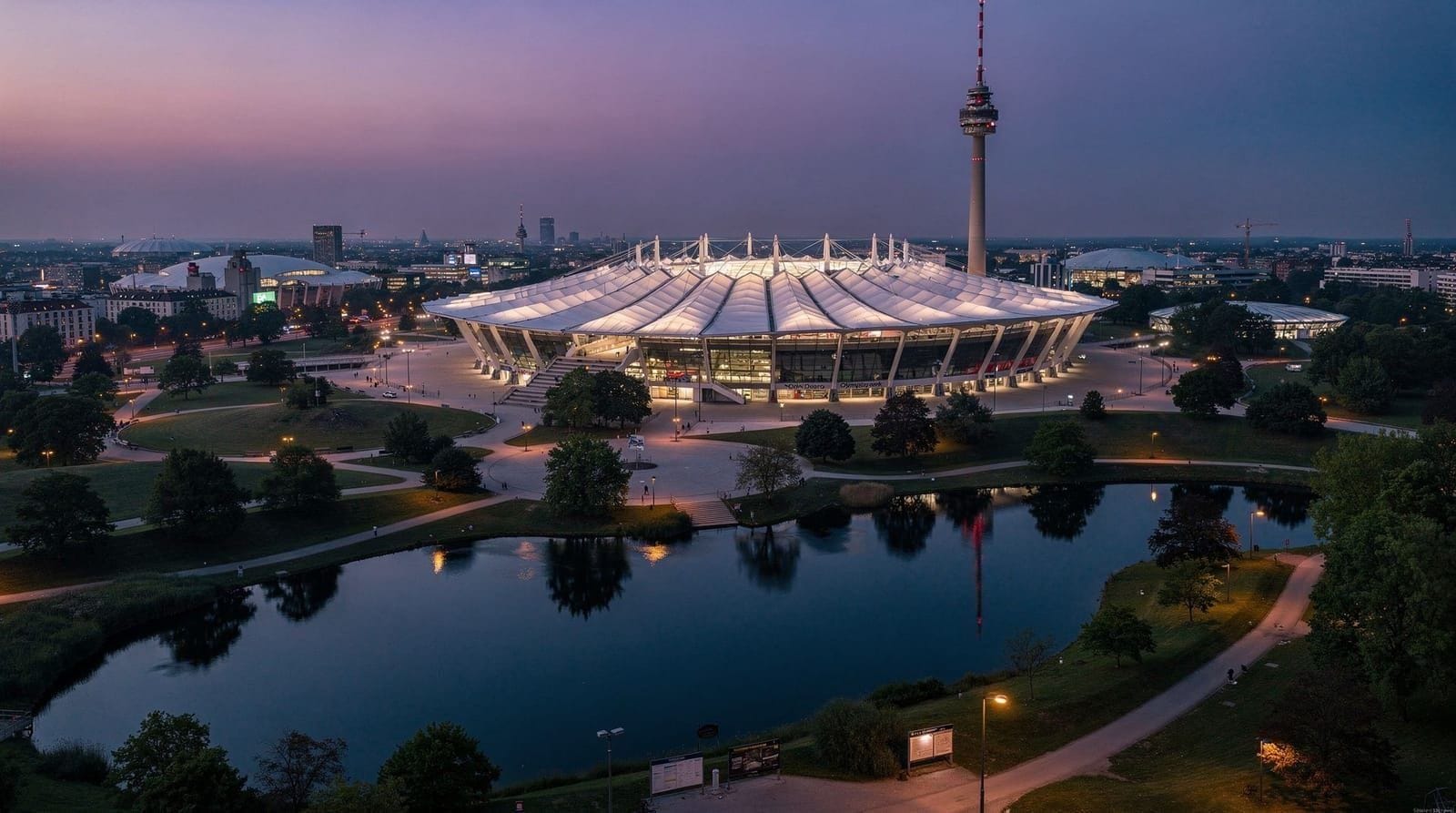
The Olympiapark was built on the Oberwiesenfeld, a former airfield north of the city centre used as a dumping ground for WWII rubble after the war. The mounds of rubble were landscaped into artificial hills; the Olympiasee (Olympic Lake) was created by excavation. Landscape architect Günther Grzimek designed the park itself, creating a continuous green landscape that flowed around and beneath the built structures.
The architectural commission went to the firm of Günter Behnisch and Partners after a limited competition. Their design was developed in close collaboration with Frei Otto, an engineer-architect who had been working for a decade on tensile structures — roofs held up by cables in tension rather than conventional columns and beams.
The tent roof structure covers three primary venues:
- Olympiastadion: the main athletics and opening ceremony venue, seating approximately 69,000
- Olympiahalle: the main indoor arena for gymnastics, boxing and other indoor events
- Schwimmhalle: the swimming and diving venue
The roof panels are made of acrylic glass (Plexiglas) — a material chosen for its translucency, which allows natural light while providing weather protection. The panels are held in tension by a network of cables attached to ten primary masts, with secondary cable networks distributing the load. The total covered area is approximately 74,800 square metres.
The engineering required solving problems that had never been solved at this scale before. Frei Otto’s previous tensile structures had been smaller research and exhibition pavilions. Scaling up to cover a 70,000-seat stadium required physical modeling — hanging chain models that found natural equilibrium shapes through gravity — as well as early computer calculation. The complexity of the project meant that final construction documentation was completed only weeks before the opening ceremony.
The aesthetic effect is of lightness, openness and organic form — the roof appears to float rather than stand. Architectural historian Kenneth Frampton has described it as one of the defining achievements of 20th-century structure-led design. Munich: BMW Welt, Allianz Arena and Olympic Park tour
The athletes: Mark Spitz, Olga Korbut and the records
Before September 5, the 1972 Olympics were a story of extraordinary athletic achievement.
Mark Spitz was the dominant figure. The American swimmer, competing in his second Olympics (he had won two golds and two bronzes at Mexico City in 1968), entered Munich with a realistic possibility of winning four or five gold medals. He won seven, setting a world record in each. The events were the 200m freestyle (1:52.78), 200m butterfly (2:00.70), 100m freestyle (51.22), 100m butterfly (54.27), 4x100m freestyle relay, 4x200m freestyle relay and 4x100m medley relay. The achievement was not equalled until Michael Phelps in 2008.
Olga Korbut, a 17-year-old Soviet gymnast from Grodno (in today’s Belarus), won four Olympic medals including three golds and became an international sensation. Her routine on the uneven bars included a back flip from the high bar — a skill subsequently named the “Korbut flip” — that was unprecedented in competition gymnastics. Her combination of technical ambition and expressive personality changed how gymnastics was perceived by non-specialist audiences.
Lasse Virén of Finland won both the 5,000m and 10,000m — the latter after falling mid-race and recovering to set a world record.
Frank Shorter of the United States won the marathon, sparking the American running boom of the 1970s.
The 1972 Olympics also saw the “Heist of the Century” in basketball: the Soviet Union defeated the United States in a controversial final in which the clock was reset twice in the final seconds. The American team refused their silver medals; the medals remain in a Swiss vault to this day.
5 September 1972: the attack on the Israeli team
At approximately 04:10 on 5 September 1972, eight members of the Palestinian militant organisation Black September (connected to Yasser Arafat’s Fatah) scaled the fence of the Olympic Village at Connollystrasse, using athletes as unwitting assistance to carry their weapons in sports bags through security earlier that day.
They entered the building at Connollystrasse 31, where the Israeli delegation was housed. Moshe Weinberg, the Israeli wrestling coach, was the first to encounter the attackers as he returned to the building after a night out. He attempted to resist and was shot and seriously wounded; he died shortly after. Yossef Romano, a weightlifter, was killed during the initial takeover when he attempted to charge the attackers.
Nine Israeli athletes and coaches were taken hostage: wrestlers Eliezer Halfin and Mark Slavin, weightlifters Ze’ev Friedman and David Berger, weightlifting judge Yakov Springer, wrestling referee Yossef Gutfreund, shooting coach Kehat Shorr, fencing coach Andre Spitzer and athletics coach Amitzur Shapira. Several other Israeli athletes escaped through windows or other exits.
The attackers initially demanded the release of 234 Palestinian prisoners held in Israeli jails and two German prisoners — Andreas Baader and Ulrike Meinhof of the Red Army Faction. The German government’s position, supported by Israeli Prime Minister Golda Meir, was that no negotiations would involve prisoner exchange.
The negotiations and the failed rescue
German Interior Minister Hans-Dietrich Genscher and Bavarian Interior Minister Bruno Merk personally participated in negotiations at the Olympic Village fence. Munich’s Chief of Police, Manfred Schreiber, led the operational response. The West German government offered unlimited money and the substitution of German hostages — both were refused.
Over 18 hours of negotiation, the attackers’ demands evolved and deadlines were extended. Eventually, an agreement was reached to transfer the hostages and attackers by helicopter to a military airfield — the attackers believed they would be flown to Egypt, where further negotiations would occur.
Two helicopters flew five attackers and nine hostages to Fürstenfeldbruck airfield. German authorities had arranged the airfield as an ambush site — sharpshooters were positioned with instructions to kill the attackers when they stepped off the helicopters.
The operation failed at multiple levels. There were eight attackers and five snipers had been assigned; two attackers were supposed to inspect a waiting Boeing 727 and be shot, but the inspection plan changed and the two who approached the plane returned. The snipers opened fire before the attackers were in clear shooting positions. The attackers, realising they were in an ambush, threw grenades into the helicopters where the hostages were bound.
All nine remaining hostages were killed — five in one helicopter by the grenade explosion, four in the other by shooting. One German police officer, Anton Fliegerbauer, was also killed. Three of the eight attackers survived and were taken into custody.
The continuation of the Games
At 03:00 on 6 September, IOC President Avery Brundage announced that the Games would continue after a 34-hour suspension. A memorial ceremony was held in the Olympic Stadium at 10:00 on 6 September, attended by approximately 80,000 people. Brundage’s speech at the ceremony controversially equated the attack on the Israeli athletes with an IOC decision to exclude Rhodesia from the games, drawing sharp criticism.
The Israeli Olympic delegation withdrew from the Games. Competition resumed later on 6 September.
The decision to continue remains one of the most controversial in Olympic history. The argument that the Games must not be surrendered to terrorism has been made by successive IOC presidents. Critics — including many of the 1972 survivors’ families — have argued that the resumption demonstrated a hierarchy of priorities in which a sporting event took precedence over the immediate aftermath of mass murder.
The IOC did not formally recognise the victims of the attack at an Olympic ceremony until the 2021 Tokyo Games — 49 years after the event.
The aftermath: Operation Wrath of God and the three survivors
Three Black September members survived the Fürstenfeldbruck ambush: Mohammed Safady, Adnan Al-Gashey and Jamal Al-Gashey. They were taken into German custody and imprisoned. Six weeks after the attack, on 29 October 1972, a Lufthansa Boeing 727 was hijacked and the West German government released all three as a condition of the plane’s release. The decision was not publicly acknowledged for years.
Israel’s response was Operation Wrath of God — a covert campaign to assassinate those responsible for planning the Munich attack. The campaign continued for years and is documented in considerable historical detail, though Israeli governments have never officially confirmed its existence.
The three survivors of Fürstenfeldbruck lived for decades afterward. Adnan Al-Gashey died in 1999 of natural causes. Jamal Al-Gashey, who participated in Steven Spielberg’s documentary research period for the 2005 film “Munich,” was still alive as of the mid-2010s. Mohammed Safady’s subsequent history is less documented in public sources.
The Olympiapark today
The Olympiapark is Munich’s most-used recreation venue for ordinary residents, and one of its most distinctive attractions for visitors. The tent roof still stands and functions as the roof of active venues. The Olympiastadion hosts concerts, events and occasional FC Bayern matches. The Olympiahalle is a major indoor concert venue.
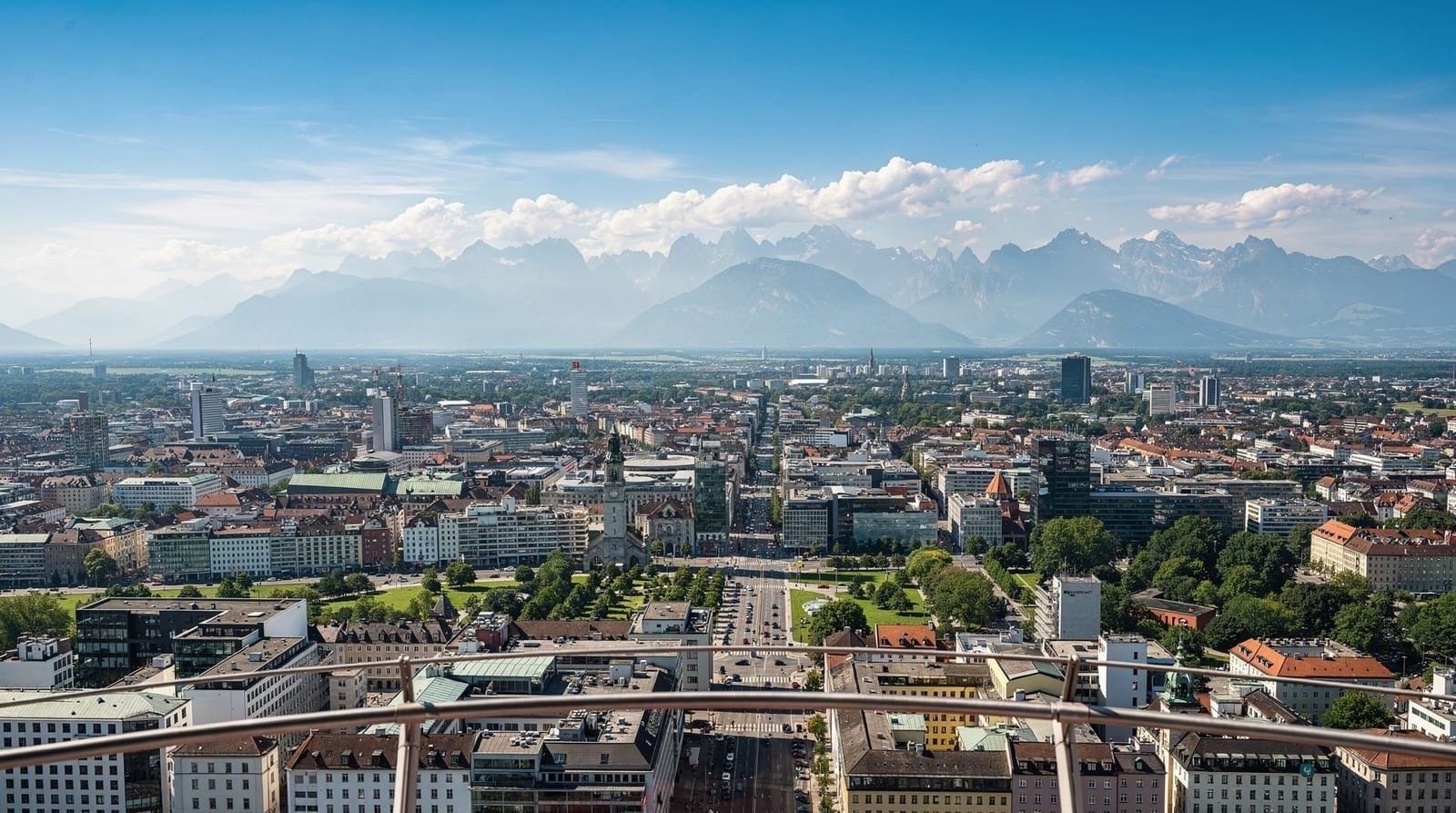
The Olympiaturm (Olympic Tower, 291 metres) has a public viewing platform at 190 metres and a rotating restaurant. The view encompasses the entire Olympic Park, the city, and — on clear days — the Alps. Tickets are approximately 9 euros.
The Olympic Stadium tours allow access to the field and stands, with historical context provided. Group tours are available through the Olympiapark website.
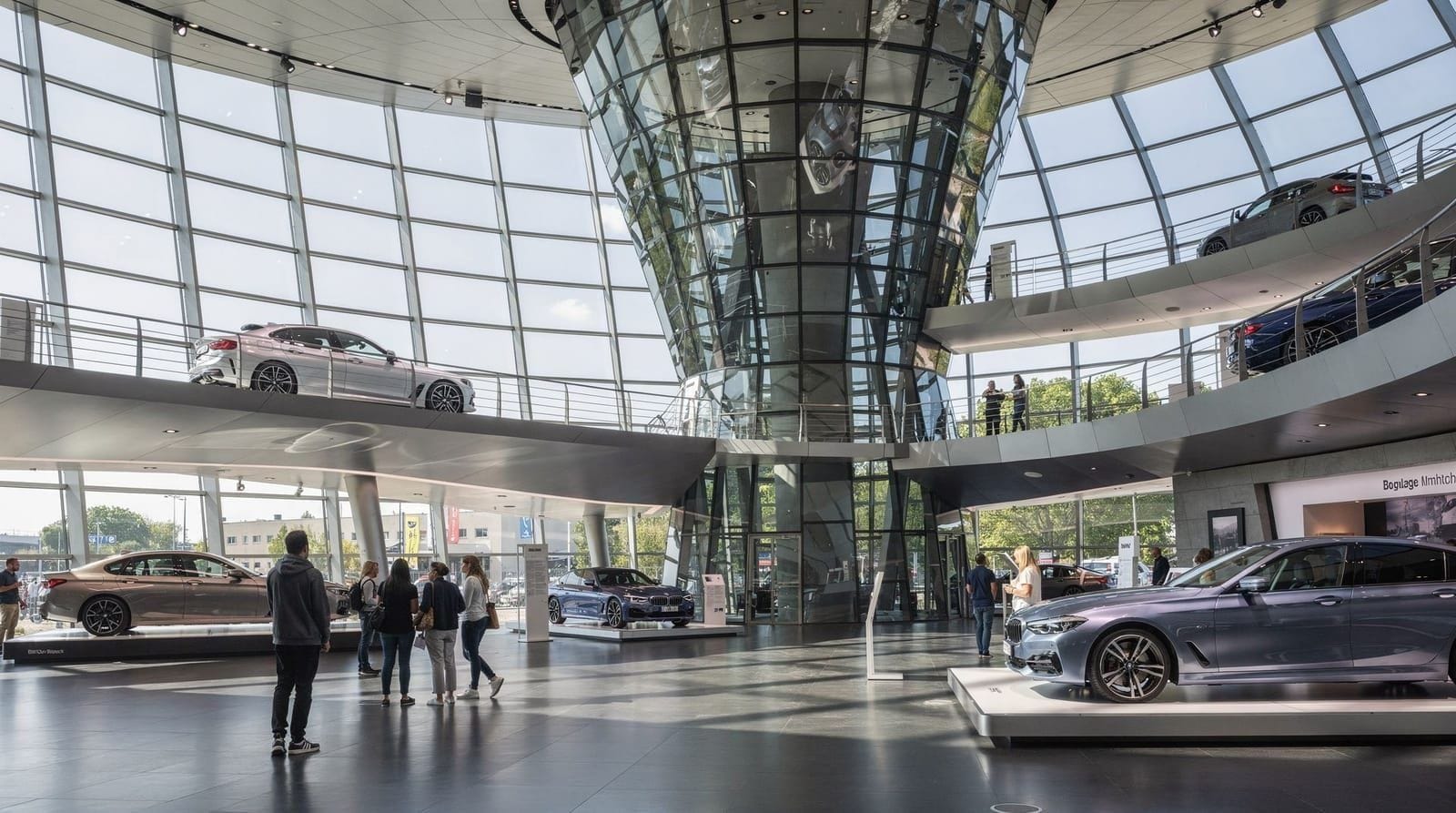
The BMW complex adjacent to the Olympiapark — the BMW Museum, BMW Welt and the main plant — is architecturally continuous with the Olympic area. The BMW Welt and BMW Museum guide covers the BMW venues.
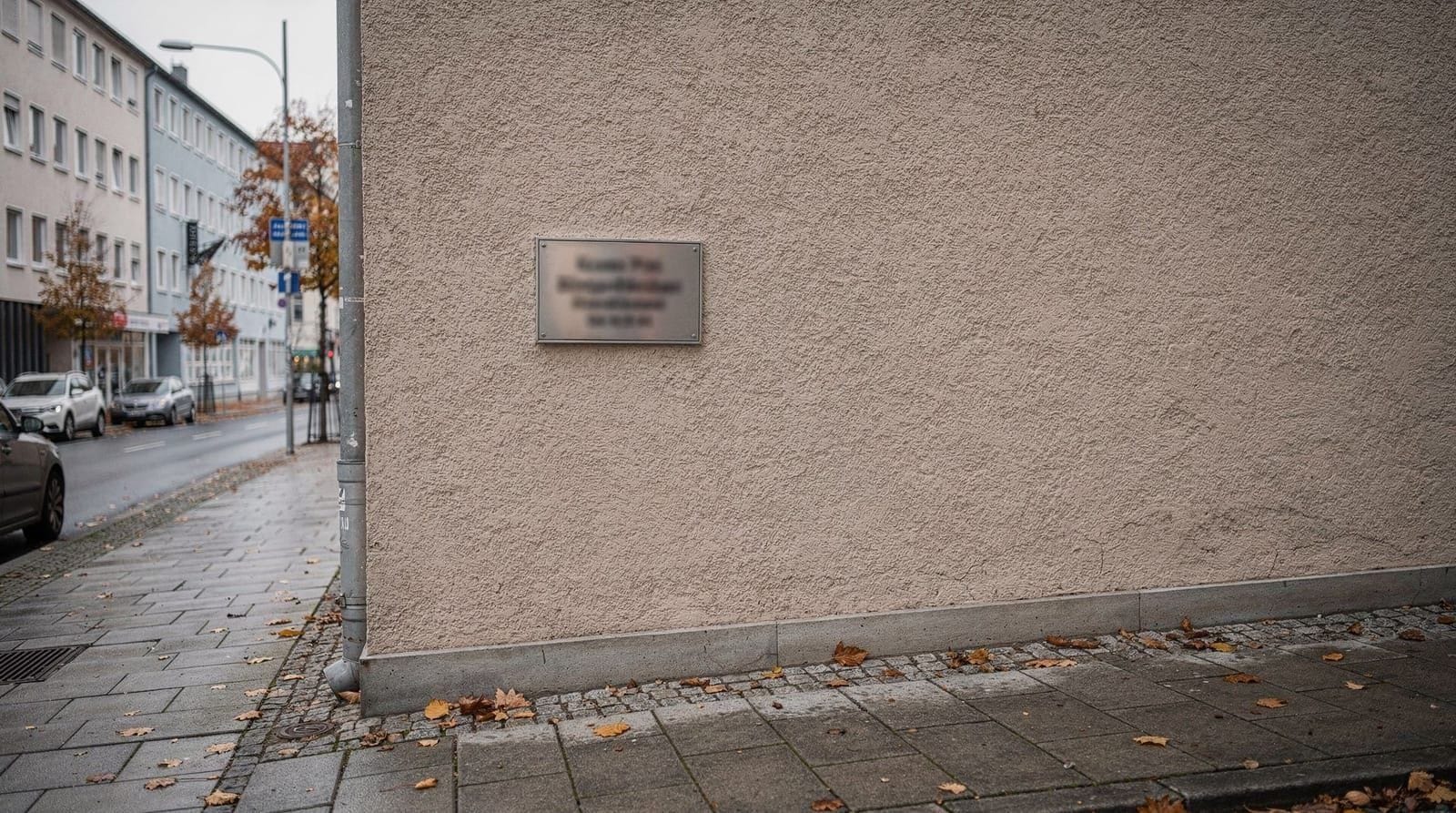
The memorial at Connollystrasse 31 is in the residential area that was the Olympic Village, now called the Olympisches Dorf. The building has a commemorative plaque. The neighbourhood is easily walkable from the Olympiapark. Guided walking tour of Munich — combine with Olympiapark exploration
Visiting the Olympiapark: practical information
The Olympiapark is in the north of Munich, easily reached by U3 to Olympiazentrum station. The park itself is free to enter and open at all times. The venues (stadium, hall, tower) have admission charges.
The olympiapark-guide has comprehensive practical information: opening hours, ticket prices, how to combine venues, and the best seasons to visit.
For architectural context on the tent roof and Frei Otto’s work, the Munich architecture guide provides the broader design history.
Honest assessment: engaging with the tragedy
The 1972 attack is not a comfortable subject, and some visitor presentations of the Olympiapark treat it as a footnote. This is a mistake. The events of September 5 are part of the same site as the tent roof and the athletics track; they cannot be separated.
The memorial at Connollystrasse 31 is genuinely moving and understated — a plaque and a garden in a now-ordinary residential building. The contrast between the residential normality of the Olympisches Dorf today and the events of 1972 is itself a form of historical reflection.
For visitors who want deeper engagement with the history, the Spielberg film “Munich” (2005), while a dramatisation rather than a documentary, is based on substantial research. The documentary “One Day in September” (1999, Kevin Macdonald) is a more directly factual account and won the Academy Award for Best Documentary Feature.
The families of the victims have engaged extensively with the German government and the IOC over decades. In 2022, the 50th anniversary was marked by a formal ceremony and an agreement between the German government and victims’ families on a settlement of 28 million euros — the families had long argued that the West German government bore responsibility for the failures of the rescue operation.
Frequently asked questions about the 1972 Munich Olympics
How many countries participated in the 1972 Munich Olympics?
121 countries participated, with 7,134 athletes (6,075 men and 1,059 women) competing in 195 events across 21 sports. The 1972 Games were also marked by the suspension of Rhodesia (over its apartheid-like policies) and the absence of several nations that boycotted for various political reasons.
Was security increased after the attack for the remainder of the 1972 Games?
Yes. After the attack, the West German government significantly increased security forces at all Olympic venues. Police and military personnel were deployed in numbers that fundamentally changed the atmosphere of the Games for their final six days — the openness that had been a design principle was effectively abandoned. All subsequent Olympics have maintained substantially higher security profiles.
What was Willi Daume’s role and how was he remembered?
Willi Daume (1913–1996) was the president of the National Olympic Committee of Germany and the driving force behind Munich’s successful bid for the 1972 Games. He had been involved in German sport since before World War II (a fact that received some critical scrutiny later in his life) and was regarded as one of the most effective sports administrators in Olympic history. His vision for the cheerful games was genuinely innovative even if its security assumptions proved catastrophically wrong.
Was anyone held legally accountable for the deaths?
In Germany, no one was prosecuted for the failures of the rescue operation. The three Black September survivors who were imprisoned were released six weeks after the attack following the Lufthansa hijacking. The German government’s handling of the aftermath, including the release of the three survivors, was the subject of sustained criticism from Israel and from victims’ families.
Is the Olympiastadion still in use?
Yes, but with reduced frequency for major events. FC Bayern München played at the Olympiastadion until 2005, when they moved to the Allianz Arena in Fröttmaning. The stadium now hosts concerts (it has excellent acoustics under the tent roof), occasional athletics events and other large-format events. It is part of the regular Olympiapark tour.
How do I get from the city centre to the Olympiapark?
U3 to Olympiazentrum is the standard route from Marienplatz, taking approximately 20 minutes. The park entrance is immediately outside the station. Alternatively, a direct walk from the English Garden takes about 40 minutes and passes through interesting residential districts.
Is the Olympiapark worth visiting if I’m not interested in the 1972 history?
Yes. The tent roof is one of Munich’s most striking pieces of architecture and the park is a genuinely pleasant place to walk, cycle, or picnic, with lake views and the city skyline visible from the artificial hills. The Olympiapark guide covers the practical visiting details — hours, tickets, and how to combine venues — independent of the historical context.
How does the Olympiapark connect to the rest of Munich’s WWII and history sites?
The Olympiapark’s own history is separate from WWII but connects to Munich’s broader pattern of confronting difficult 20th-century history openly. For a fuller picture of the city’s WWII sites, see the Munich WWII history guide, and for the Nazi-era rise in Munich specifically, the beer hall putsch history guide covers the earlier period.
Top experiences
Bookable activities with verified prices and instant confirmation on GetYourGuide.