Munich in 2 days: the honest itinerary that actually works
Why 48 hours in Munich works better than you’d expect
Munich is a compact city. The historic core — Marienplatz, the Residenz, the English Garden, Maxvorstadt’s museums — fits within walking distance or a single U-Bahn stop of each other. Two days is enough to understand the city, eat well, sit in at least two beer gardens, and see the highlights without the frantic pace of a one-day sprint.
This itinerary is built around what genuinely rewards time in Munich, not what every listicle tells you to tick off. Some famous things are genuinely worth it. Others are overpriced and easily skipped. This guide is honest about both.
| Where | Munich Altstadt, English Garden, Maxvorstadt |
| Cost | Around €110–€150 per person for 2 days (excl. accommodation) |
| Time needed | 2 full days |
| Getting around | U-Bahn/S-Bahn on a 2-day Isarcard, around €19 |
| Best time | April–June or September–October for fewer crowds |
Day 1: the old town and the English Garden
Morning — Marienplatz and the Residenz (2.5 hours)
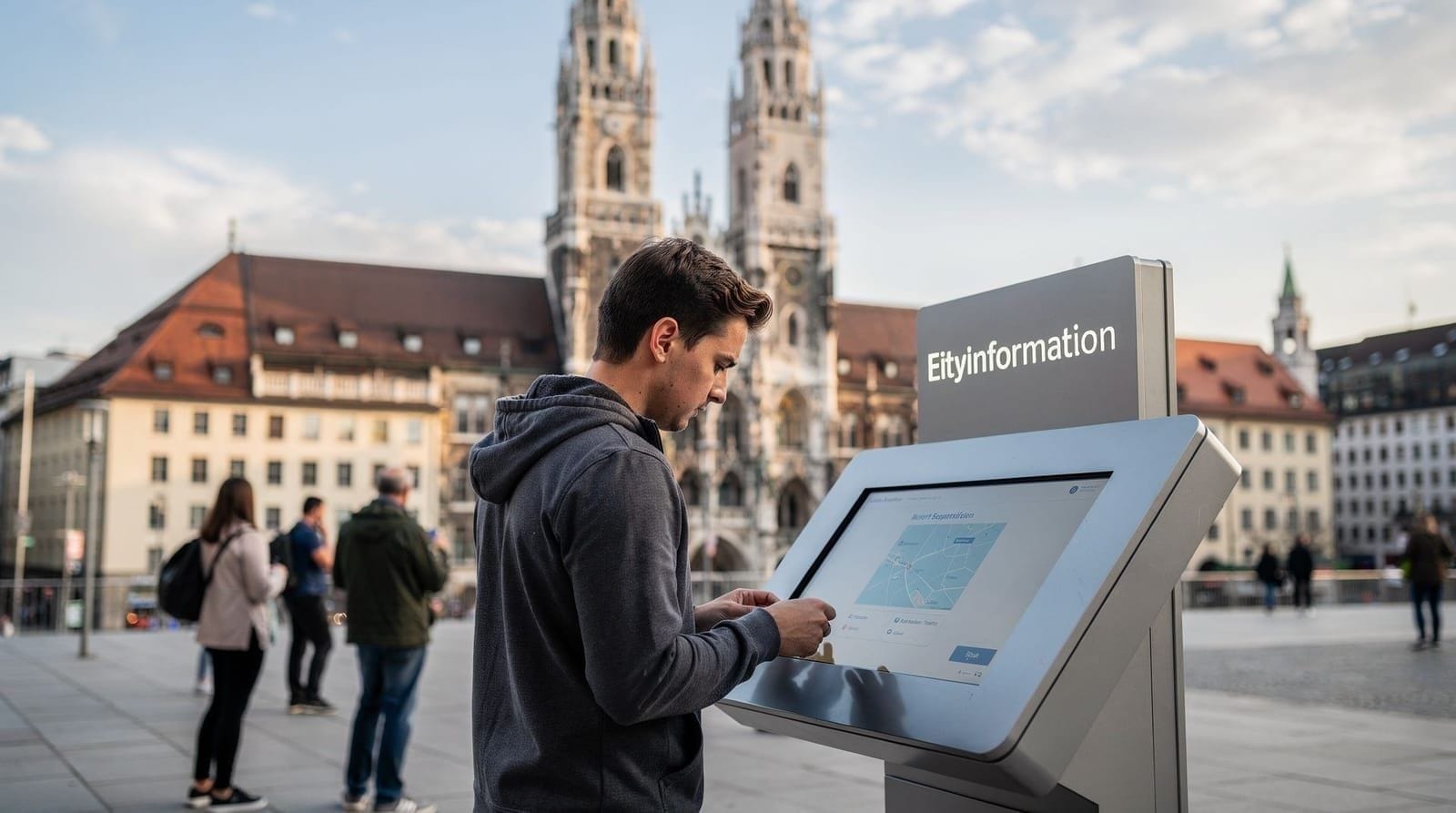
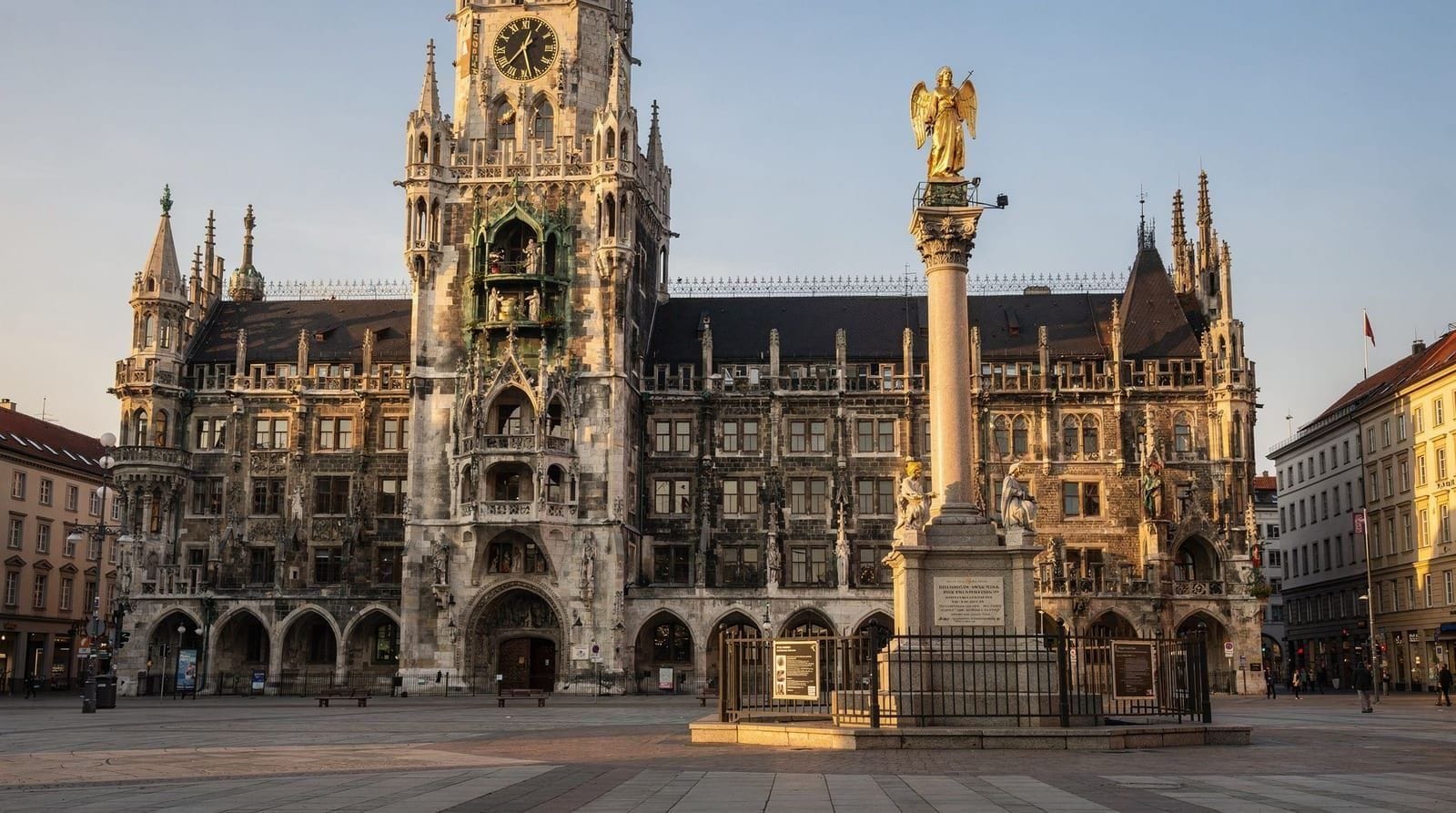
Start at Marienplatz, the city’s central square, early — before 9am if possible. The neogothic Neues Rathaus (New Town Hall) and the older Altes Rathaus are striking, and the Glockenspiel at 11am is fine once but not worth building a morning around.
From Marienplatz, walk north through the pedestrian zone to the Munich Residenz, the former palace of the Wittelsbach rulers and one of Europe’s great palaces. The permanent collection inside — 130 rooms including the magnificent Antiquarium and the Treasure House — is genuinely extraordinary and still underrated. Budget 90 minutes for the highlights. Entry runs around €9–€15 depending on what you include.
Honest note: many visitors skip the Residenz for the Nymphenburg Palace, which is bigger and prettier on the outside. The Residenz wins on interior content, especially for history. If you only have one palace, pick the Residenz.
Late morning — Viktualienmarkt (30 minutes)
Walk south from Marienplatz five minutes to the Viktualienmarkt, Munich’s daily outdoor market. It’s touristy around the edges but the produce stalls, butchers, and cheese vendors are real. The beer garden at the center operates year-round (11am onwards); a Masskrug of beer at around €10 is the authentic Munich version of a morning drink.
Don’t eat a full meal here — it’s expensive for what it is. Grab a Weisswurst (white veal sausage, traditionally eaten before noon) and a pretzel, and save your appetite.
Midday lunch — Augustiner am Dom
Walk west from Marienplatz toward the Frauenkirche to find Augustiner am Dom, one of the most authentic beer halls in the city. The beer is brewed by Augustiner, Munich’s oldest brewery (founded 1328), and the food — Schweinsbraten (roast pork), Schnitzel, Käsespätzle — is honest Bavarian cooking at fair prices. Expect to pay €14–€20 for a main course with a half-litre.
Avoid the Hofbräuhaus for a sit-down meal. It’s fine as an experience, but the food quality is below what you pay, and the clientele is almost entirely tourists.
Afternoon — English Garden (2 hours)
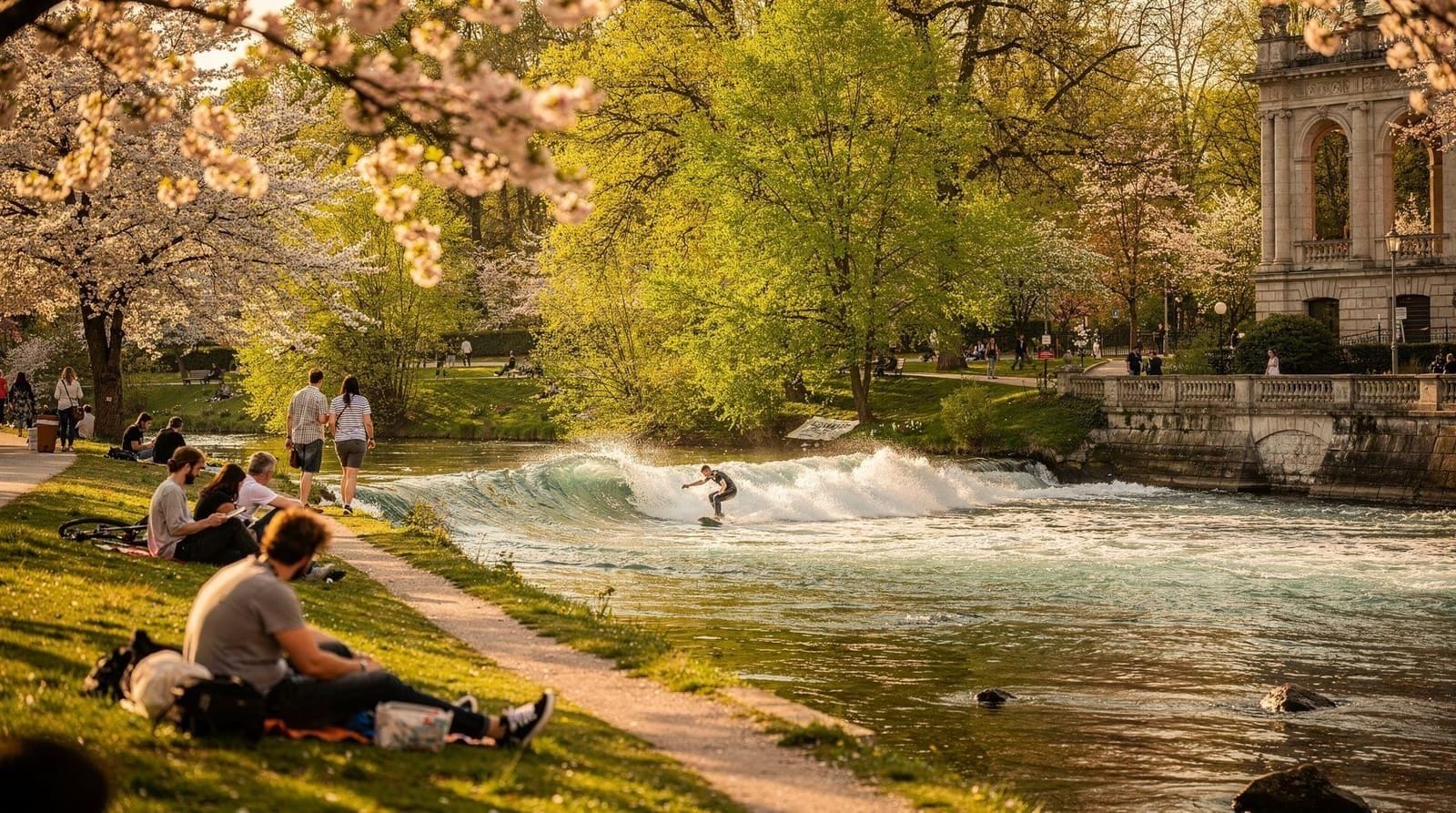
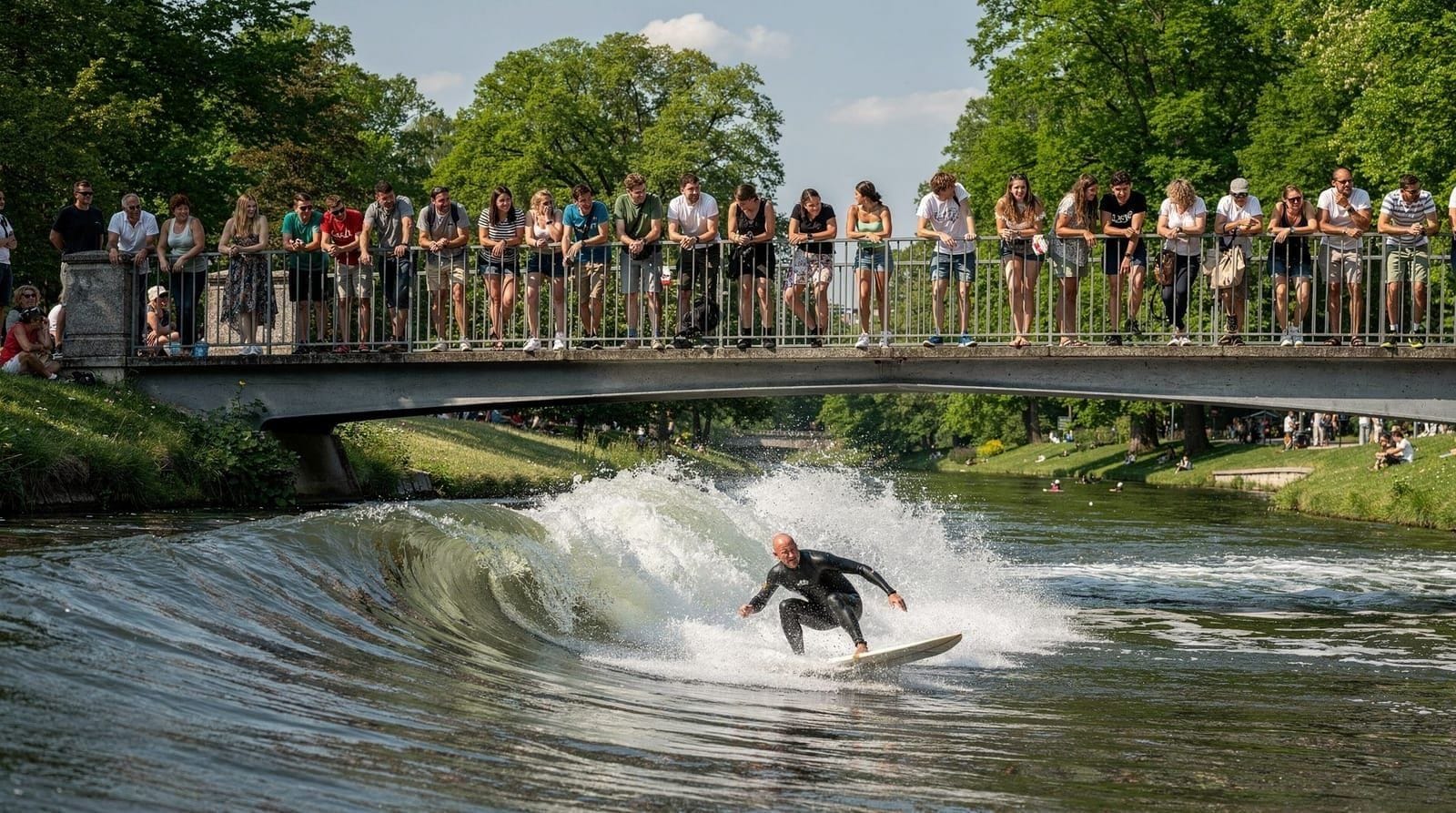
The English Garden is one of the world’s largest urban parks — larger than Central Park — and it’s free, entirely walkable from the old town. Head to the Eisbach channel near the southern entrance at Prinzregentenstrasse to watch surfers riding the standing wave (see our separate post on English Garden surfing for full details). The wave runs year-round.
Continue north to the Chinese Tower (Chinesischer Turm), which has Munich’s largest beer garden seating around 7,000. Buy a beer at the counter, find a table, and sit for as long as you like. In summer, the surrounding park is full of locals sunbathing, cycling, and swimming in the Isar.
Evening — dinner in Maxvorstadt or Schwabing
Head to the Maxvorstadt neighborhood north of the old town for dinner. This is Munich’s student and arts quarter, and the restaurants here are notably more local and better value than the old town. Try Weinstadl for Bavarian food, or Tantris Sala for something more refined. Budget €18–€35 per person for a sit-down dinner with a drink.
Consider a post-dinner walk through Schwabing — Munich’s bohemian neighborhood — which connects to the English Garden to the east.
Day 2: castles, museums, or day trips
Day 2 depends on your interests. Three different directions work well.
Option A — Nymphenburg Palace and museums (city-focused)
The Nymphenburg Palace sits in the western suburbs, accessible by tram 17 from the city center. It’s the summer residence of the Bavarian kings, with extensive formal gardens, the Carriage Museum (genuinely impressive), and the Schönheitengalerie (Gallery of Beauties) inside. Budget 2.5–3 hours. Entry around €8–€15.
Combine with the Pinakothek museums in the afternoon — three galleries (Alte, Neue, and Pinakothek der Moderne) within 10 minutes’ walk of each other. The Alte Pinakothek contains one of Europe’s finest collections of Old Masters. Sunday entry is €1.
Option B — Neuschwanstein day trip
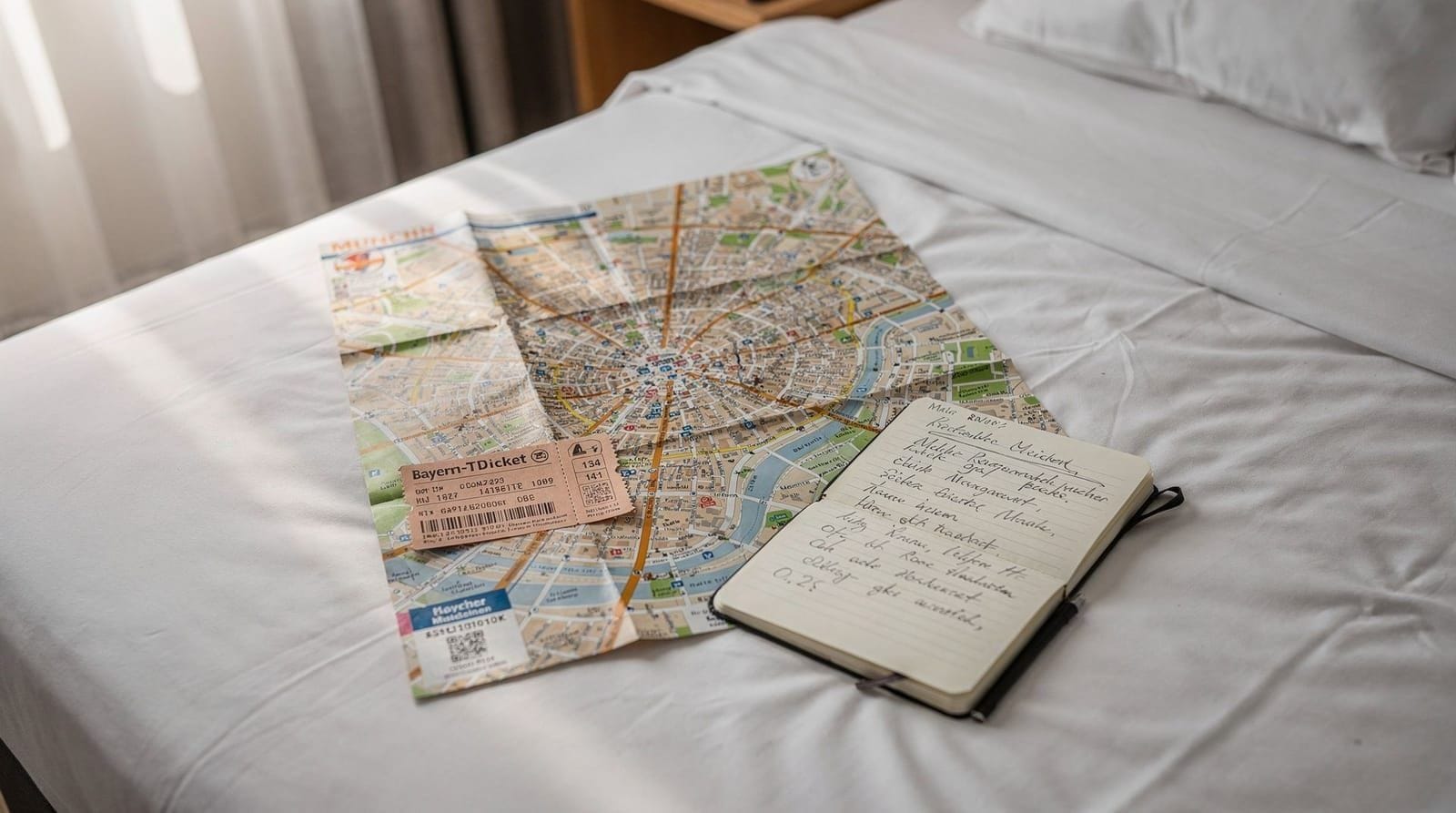
If you haven’t been to the castles, day 2 can be a Neuschwanstein day trip. The journey from Munich to Füssen takes 2 hours by train (€27 each way, or covered by the Bayern-Ticket at €29 for the whole group), then a 10-minute bus ride. Book timed tickets online in advance — the castle books out weeks ahead in summer. The views from Marienbrücke are as famous as the castle itself. Neuschwanstein guided day trip from Munich by train
For everything you need to know about planning this visit, see our Neuschwanstein day trip guide.
Option C — Dachau and the Deutsches Museum
For a more historically weighted second day, the Dachau Memorial is 45 minutes by S-Bahn from Munich Hauptbahnhof (S2 to Dachau, then bus 726). Entry is free. It is a sobering, carefully curated site that rewards several hours. This is not a light half-day — plan 2.5–3 hours minimum.
Pair the afternoon with the Deutsches Museum back in Munich, the world’s largest science and technology museum on an island in the Isar. It’s enormous — you’ll see a fraction in 2 hours, so be selective (the aviation, marine, and chemistry sections are the strongest).
Itinerary at a glance
| Time | Day 1 | Day 2 (Option B — castles) |
|---|---|---|
| Morning | Marienplatz + Residenz | Train to Füssen / Neuschwanstein |
| Midday | Viktualienmarkt + lunch at Augustiner am Dom | Castle tour + Marienbrücke |
| Afternoon | English Garden, Eisbach, Chinese Tower | Return train to Munich |
| Evening | Dinner in Maxvorstadt or Schwabing | Dinner back in the city |
What to do if it rains
Munich gets its fair share of rain, and the itinerary above holds up reasonably well even then. The Residenz, the Pinakothek museums, and the Deutsches Museum are all indoor and substantial enough to fill half a day each. The English Garden is less pleasant in heavy rain, but the beer gardens with covered sections — the Chinese Tower among them — still function, just with fewer people outside. If day 2 is a genuine washout and you’d planned Neuschwanstein, consider swapping to Option A (Nymphenburg and the Pinakothek museums) instead — both are far more comfortable in bad weather than a day trip involving an outdoor castle approach and a 10-minute bus queue in the rain.
Practical details: getting around
Munich’s public transport (MVV) is excellent. The U-Bahn and S-Bahn cover every attraction in this itinerary.
For 2 days, buy a 2-day Isarcard for zones M (Munich inner city) at around €19. This covers unlimited travel on U-Bahn, S-Bahn, trams, and buses within Munich. The Bayern-Ticket (€29 per day for one person, €6 extra per additional person) extends this to regional trains across Bavaria — useful if you’re doing day trip Option B or C.
Day tickets for 1 person run around €9.20 for the inner city. Groups of up to 5 people can use the Gruppen-Tageskarte (around €18.80), which is significantly cheaper per person.
See the Munich public transport guide for route planning detail.
Where to stay
The most convenient areas for a 2-day visit are Maxvorstadt (museum quarter, walkable to the old town) and the Altstadt/Lehel neighborhood. Prices in Munich are among the highest in Germany — expect €90–€200 per night for a 3-star property outside Oktoberfest season. The neighborhood overview and where to stay guide cover this in detail.
Book well ahead for June through September. Prices double or triple during Oktoberfest (September 19 – October 4, 2026).
What to skip in 2 days
The Hofbräuhaus as a meal: see it briefly, but don’t eat there unless you’re specifically after the tourist experience. The food-to-price ratio is poor.
The Glockenspiel bell performance: worth 5 minutes if you happen to be at Marienplatz at 11am, but not worth planning around. The figures are small and the show lasts 12 minutes.
Double-decker tourist buses: the hop-on hop-off buses cover the route well but the public transport system is faster and cheaper for the same destinations.
BMW Welt if cars aren’t your thing: the BMW Museum and BMW Welt are genuinely impressive if you care about automotive design or Bavarian industry. If you don’t, skip it — two days doesn’t leave room for things you’re neutral about.
Budget summary for 2 days
| Item | Approx. cost per person |
|---|---|
| 2-day transit pass | €19 |
| Residenz entry | €15 |
| Nymphenburg (Day 2A) | €12 |
| Neuschwanstein train + ticket | €55–€70 |
| Beer and food (2 days) | €60–€100 |
| Total (Day 1 + Day 2A option) | €110–€150 |
Munich is not a budget city, but it’s also not as expensive as London or Paris for food and drink. Beer garden culture keeps costs manageable if you eat and drink where locals do.
FAQ: two days in Munich
Is 2 days enough for Munich?
Two days is enough to understand Munich and see the main sights without rushing. It’s not enough to explore the neighborhoods deeply or take meaningful day trips. Three days allows the English Garden, old town, one castle, and one museum quarter day with comfortable pacing.
Can I do Neuschwanstein as a day trip from Munich in 2 days?
Yes, but it uses most of one day. The journey is around 2 hours each way plus at least 2 hours at the castle. Plan Day 2 entirely around this trip and return to Munich for dinner. Don’t try to combine it with other full attractions.
Is Munich worth visiting for only 2 days?
Genuinely, yes. Munich rewards even a short visit. The density of quality experiences — the Residenz, the English Garden, the beer garden culture, the food market, the museum quarter — in a compact walkable core means two days delivers a real experience of the city. It’s not a “tick it off” destination where two days leaves you frustrated.
What’s the best free thing in Munich?
The English Garden. Two days in Munich without sitting in a beer garden for an afternoon is time wasted. The Chinese Tower beer garden is the most famous; the Seehaus am Kleinhesseloher See in the northern English Garden is better for atmosphere.
Should I book the Neuschwanstein trip in advance?
Yes, always. Timed entry tickets for Neuschwanstein sell out weeks ahead in summer, and turning up without one risks losing most of day 2 to a wasted trip. Book the castle ticket and, ideally, a guided option that bundles the train and entry together.