Bavaria road trip: 7 days by car from Munich
Why Bavaria is excellent road trip territory
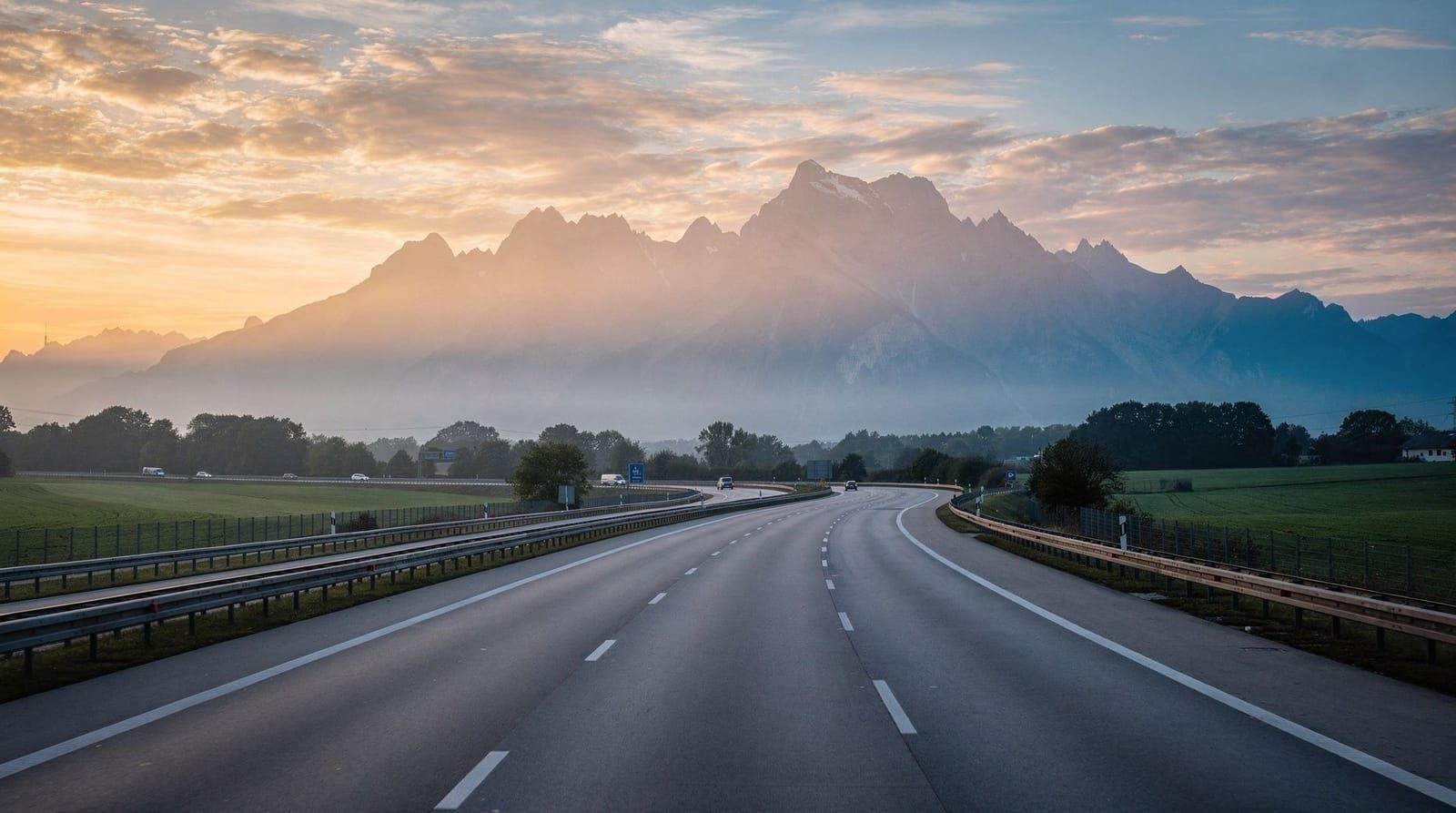
Bavaria has the infrastructure, the scenery, and the density of worthwhile stops to make a 7-day road trip genuinely satisfying. Roads are in outstanding condition. The Autobahn network connects the major cities quickly; the smaller Bundesstrassen through the Alps and countryside are among the best driving roads in Europe. Parking exists at most destinations, often free or cheaply priced outside peak tourist sites.
The challenge is the scale of ambition versus the reality of driving time. Many Bavaria road trip plans overestimate how much ground can be comfortably covered. This itinerary is built around realistic daily distances with room for stops, meals, and walking — not a list of places to drive past.
Total distance: approximately 1,000–1,100 km depending on variant choices.
Car rental base rate: €350–€600 for 7 days for a standard car (without GPS, which isn’t necessary with a smartphone). Munich Airport and Munich Hauptbahnhof both have major rental offices.
Fuel: Germany has fast Autobahn speeds and diesel/petrol prices around €1.60–€1.90 per litre in 2026. Budget €60–€100 for a week’s fuel.
See the Munich car rental guide for the best places to book.
| Loop starts/ends | Munich (Airport or Hauptbahnhof rental return) |
| Driving difficulty | Easy — mostly Autobahn plus well-maintained mountain roads |
| Best months | May–June or September; July–August is busiest and hottest |
| Ideal for | Travellers who want castles, Alps and historic cities without repacking daily |
Here’s the route at a glance before the day-by-day detail below:
| Day | Route | Overnight |
|---|---|---|
| 1 | Munich → Garmisch-Partenkirchen (90 km) | Garmisch or Mittenwald |
| 2 | Garmisch → Füssen via Oberammergau (80 km) | Füssen |
| 3 | Neuschwanstein & Hohenschwangau (day trip, no driving) | Füssen |
| 4 | Füssen → Chiemsee/Herrenchiemsee (100 km) | Prien am Chiemsee |
| 5 | Chiemsee → Berchtesgaden (80 km) | Berchtesgaden |
| 6 | Berchtesgaden → Regensburg (200 km) | Regensburg |
| 7 | Regensburg → Nuremberg → Munich (170 km) | — |
Day 1: Munich to Garmisch-Partenkirchen (90 km south)
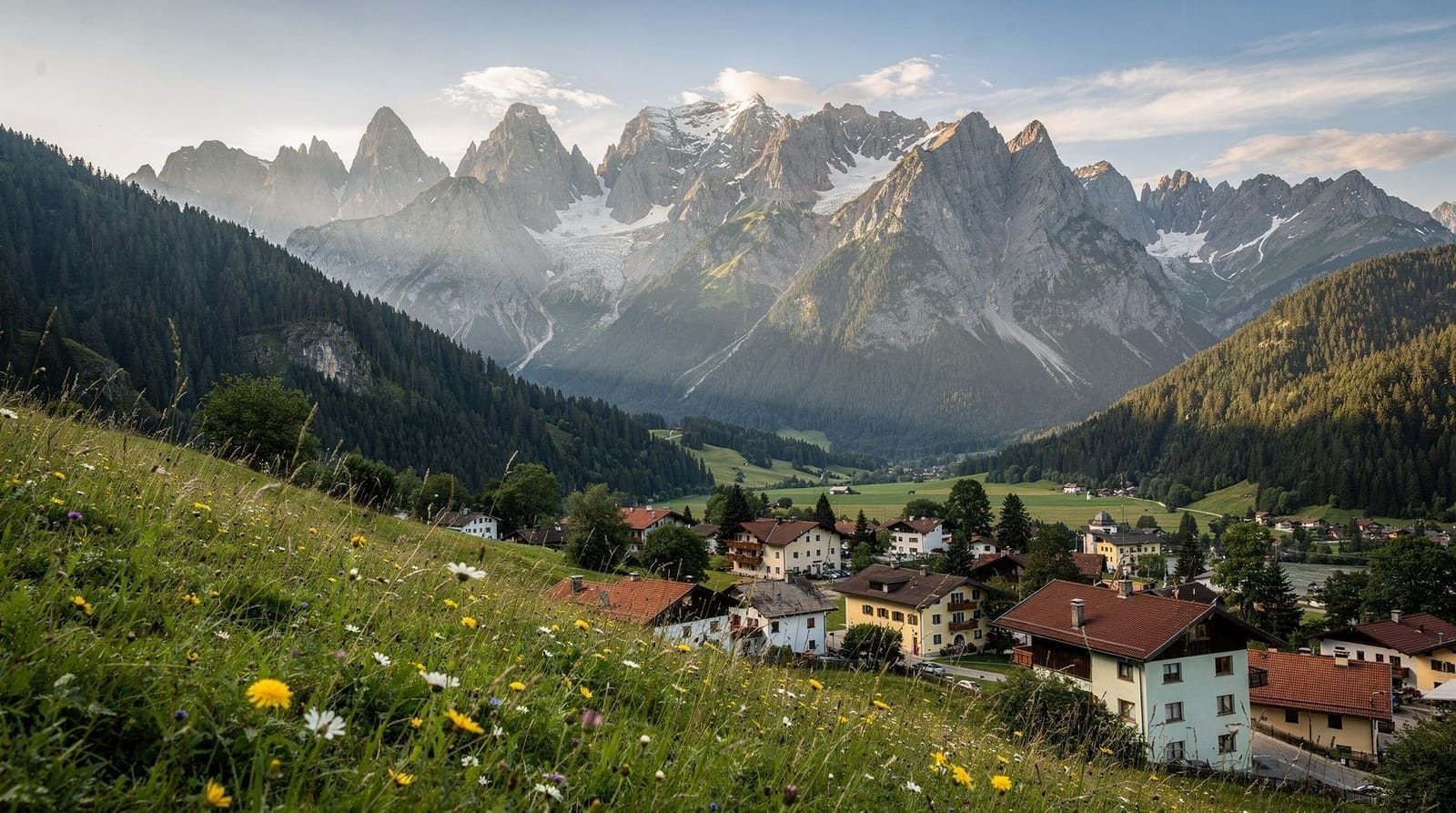
Leave Munich on the A95 Autobahn heading south. The road passes through the flatlands of Upper Bavaria before the Alps appear ahead — the transition from plain to mountain is abrupt and striking on clear days.
Garmisch-Partenkirchen (jointly a town, originally two villages that were merged for the 1936 Winter Olympics) sits at the foot of the Zugspitze, Germany’s highest mountain at 2,962 metres. It’s a practical base and worth at least half a day.
Options for Day 1 afternoon:
- Zugspitze summit: the cog railway (Bayerische Zugspitzbahn) departs from Garmisch station and takes 75 minutes to the summit, where a cable car connects to the Zugspitze Gletscher ski area. Return ticket around €73 adult. Views, on a clear day, are exceptional — up to 400 km on the best days. The Zugspitze day trip guide covers the options in detail.
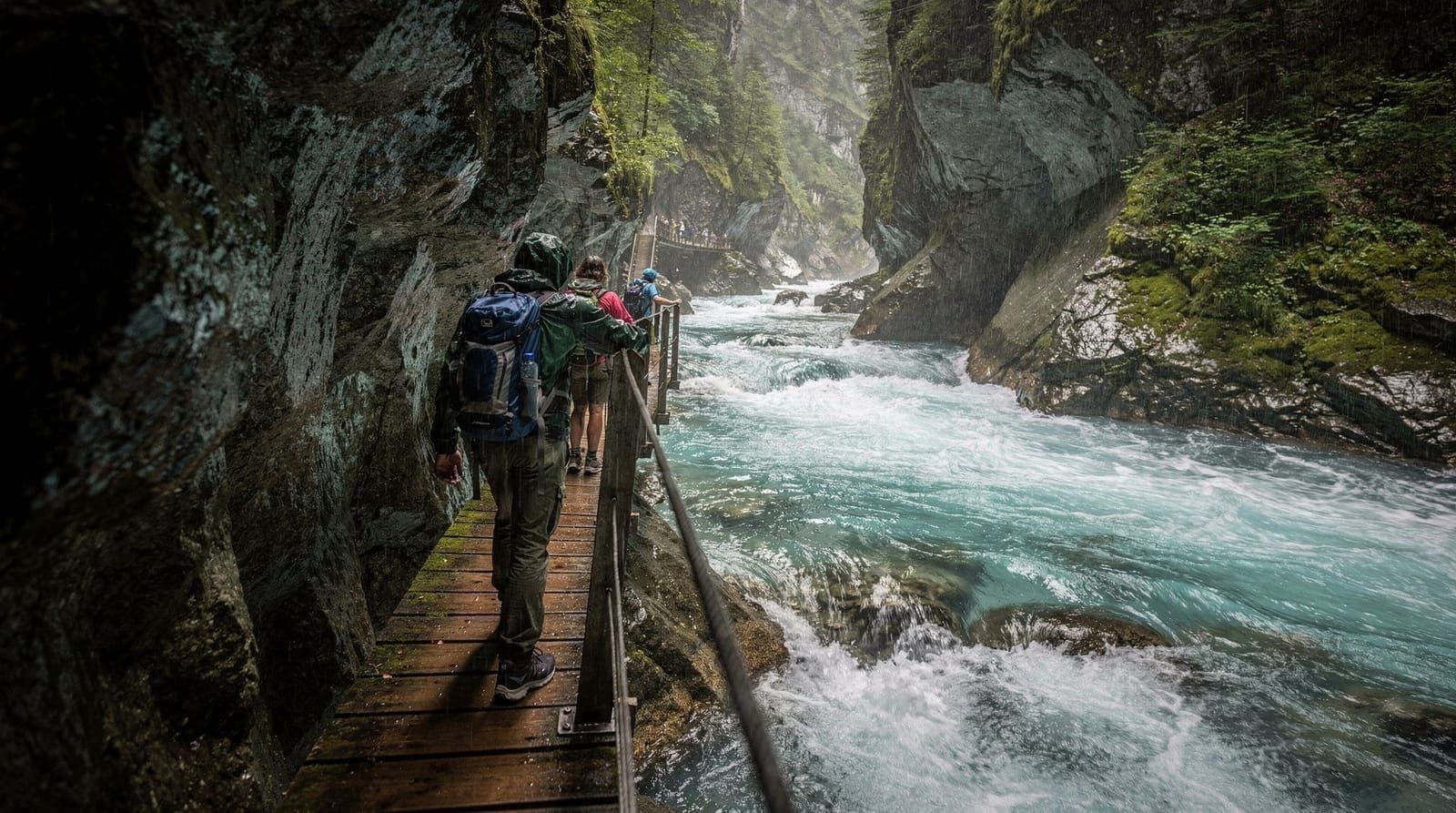
- Partnach Gorge: a shorter, cheaper option. The gorge is a 700-metre-long river canyon cut into the rock, a 30-minute walk from town. Entry around €6. Dramatic regardless of season.
Sleep in Garmisch-Partenkirchen (or in nearby Mittenwald for a quieter option — a 20-minute drive further into the Karwendel valley, with an equally scenic old town and fewer coach groups).
Day 2: Garmisch to Füssen via Oberammergau (80 km)
Drive west from Garmisch on the B23, passing through Oberammergau — famous for its Passion Play (performed every 10 years, next in 2030) and for Lüftlmalerei, the painted house-façade art that covers virtually every building in town. The Pilgrimage Church of the Wies (Wieskirche), just north of the road toward Füssen, is a UNESCO World Heritage Site — a rococo church set improbably in a meadow. It takes 30 minutes and is free to enter.
Arrive in Füssen mid-afternoon. Füssen is the closest town to Neuschwanstein and Hohenschwangau castles. The old town itself is pleasant — a small medieval center with the Hohes Schloss (High Castle) overlooking it.
Evening: book a restaurant table in Füssen (not the castle area). Restaurant Zum Hechten is a solid local option for Bavarian food at fair prices.
Day 3: Neuschwanstein and Hohenschwangau
This is the castle day. Allow the full day.
Both Neuschwanstein and Hohenschwangau require pre-booked timed tickets — particularly Neuschwanstein, which sells out weeks or months ahead in summer. Book on the official Bayern Ticket Service website (bayerische-schlösser.de) before departure. Walk-up tickets are rarely available in peak season.
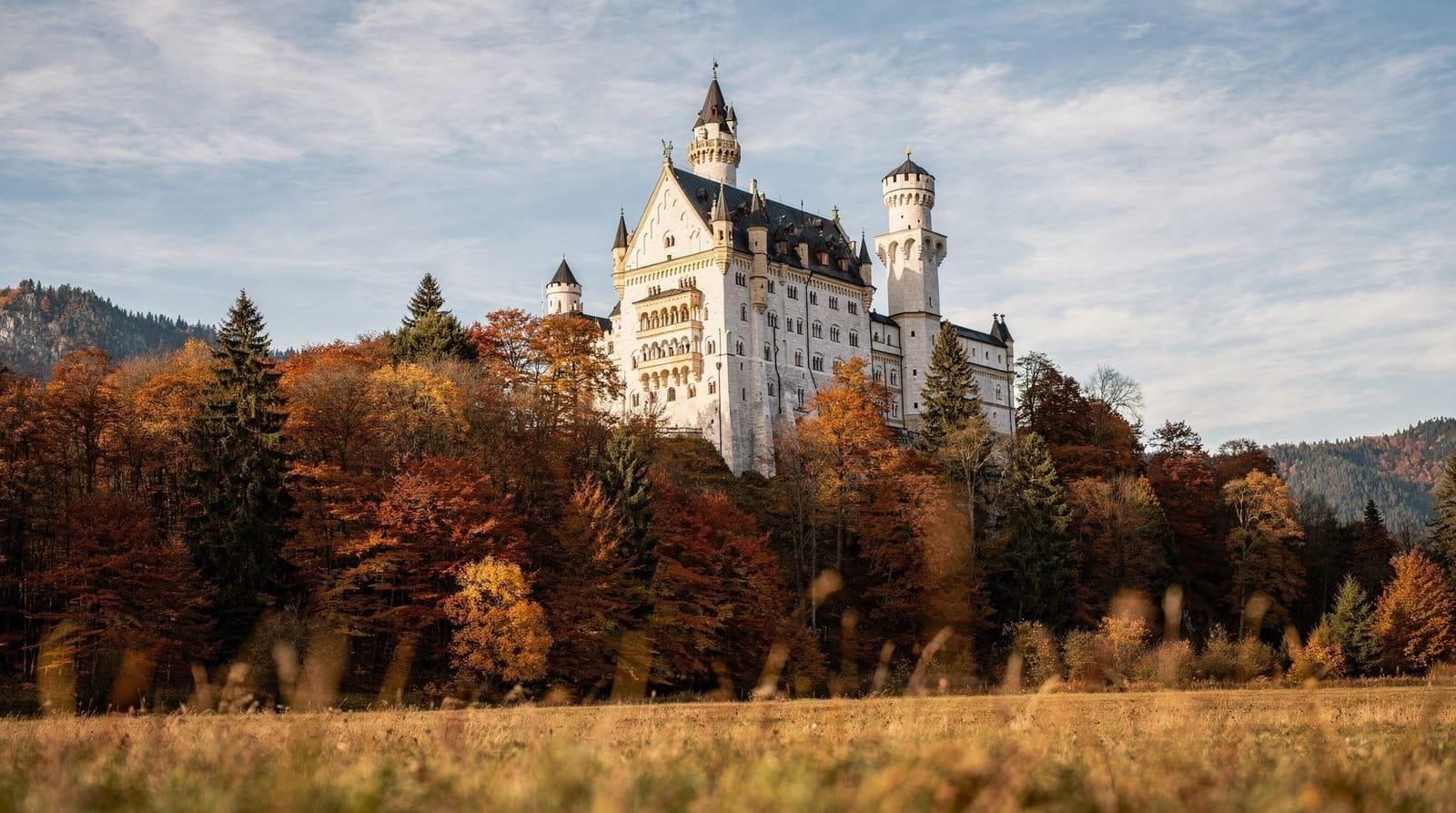
The logistics: The ticket center is in the valley. Castle access is uphill — either on foot (30 minutes), by horse carriage (paid, slow), or by shuttle bus (paid, faster). Most people combine Hohenschwangau (lower, older, better-preserved interiors) in the morning and Neuschwanstein (higher, more dramatic exterior, famous view) in the afternoon. Tours inside each castle are guided only, lasting approximately 35 minutes. Neuschwanstein and Hohenschwangau combination ticket
Marienbrücke: the iron footbridge above the Pöllat Gorge gives the famous Neuschwanstein photograph. It is exactly as dramatic as the photos suggest and worth the uphill walk. It can be crowded at midday; go early morning or late afternoon.
Night 3: Stay in Füssen again, or drive to the Chiemsee area (2 hours east) if you want to make progress toward Day 4.
Day 4: Chiemsee and Herrenchiemsee Palace (100 km east of Füssen)
Drive east on the B17 (Romantic Road direction) and then east on the A8 to reach the Chiemsee, Bavaria’s largest lake at 80 km². The journey takes about 1.5 hours.
The main attraction here is Herrenchiemsee, King Ludwig II’s most ambitious building project — a replica of Versailles, built on an island in the lake. Access is by ferry from Prien am Chiemsee or Stock (short boat crossing). The interior — particularly the Hall of Mirrors (actually longer than its Versailles original) — is extraordinary. Tours are guided only; entry plus ferry costs around €15–€20.
Ludwig II died in 1886 with the palace only partially complete. What exists is enough to understand the scale of his ambitions. The Herrenchiemsee Palace guide provides full visit details.
Afternoon: the Chiemsee shoreline offers swimming, cycling, and boat trips. The towns of Prien and Gstadt have lakeside restaurants. This is a slower afternoon deliberately — the road trip benefits from variety of pace.
Sleep: Prien am Chiemsee or Rosenheim.
Day 5: Berchtesgaden and the Eagles’ Nest (80 km southeast)
Drive south from the Chiemsee on the B305 through the pre-Alpine countryside to Berchtesgaden. This is one of the most dramatic landscape changes in the whole road trip — the narrow valley entry into Berchtesgaden, surrounded by 2,000+ metre peaks on three sides, feels genuinely Alpine.
Königssee: the electrically-powered boats on this fjord-like lake (electric since 1909 — no motor pollution) run to the St. Bartholomew pilgrimage church on the far shore. The round trip takes 90 minutes and the scenery — sheer rock walls dropping directly into the water — is exceptional. See the Königssee guide for what to expect.
Eagles’ Nest (Kehlsteinhaus): the former Nazi mountain retreat sits at 1,834 metres above Berchtesgaden. It is now a restaurant and memorial site accessible only by a dedicated bus from the Dokumentation Obersalzberg (a museum covering the Nazi history of the area). The access involves a bus up a vertiginous mountain road built in 1938, then an elevator through 124 metres of solid rock. Open May–October only. Allow 3–4 hours including the Dokumentation. Berchtesgaden full day tour including Eagles’ Nest and WWII history
Honest note: the Eagles’ Nest gets very crowded on summer weekends. The Dokumentation Obersalzberg is the more substantive historical experience; the Eagles’ Nest itself is a building with views. Plan the historical context first.
Sleep: Berchtesgaden town. Hotel Grünberger or the centrally located Vier Jahreszeiten are reliable options.
Day 6: Regensburg (200 km north, with route variation)
Leave Berchtesgaden and head north — this is the longest driving day. The A8 connects to the A9 toward Regensburg, or you can take scenic routes through the Bavarian Forest.
Regensburg is one of Germany’s best-preserved medieval cities and a UNESCO World Heritage Site. The old town survived World War II almost entirely intact — the only major medieval city in Germany that did — and the density of Romanesque and Gothic architecture within walking distance is remarkable.
What to see: The Dom (Cathedral of St. Peter) with its two towers and 500 years of construction history; the Steinerne Brücke (Stone Bridge, 1135 — one of the oldest bridges in Germany); the Alte Kornmarkt; and the Wurstküche, a sausage kitchen operating on the same Danube riverbank since at least the 12th century. The sausages are real: around €5 for six, eaten at outdoor tables facing the river.
Sleep: Regensburg old town — Hotel Bischofshof is inside a medieval bishop’s palace and offers an unusual experience at fair prices.
Day 7: Nuremberg to Munich (170 km, with stops)
Drive northwest on the A3 to Nuremberg, then south on the A9 back to Munich.
Nuremberg warrants at least a half-day. The medieval Altstadt (largely rebuilt after wartime destruction but effectively recreated) includes the Imperial Castle (Kaiserburg), the Germanic National Museum (largest museum of German cultural history), and the beautiful St. Lorenz and St. Sebald churches. The Nuremberg Christmas market is Germany’s most famous (relevant if travelling in late November/December).
The Nuremberg Documentation Center at the Nazi Party Rally Grounds is serious historical territory — a museum inside one of the Nazi-era congress halls, covering the Nuremberg Laws, the trials, and the full arc of National Socialism. Allow 2–3 hours.
For full day trip planning between Munich and Nuremberg, see the Munich to Nuremberg day trip guide.
Drive back to Munich via the A9 (2 hours from Nuremberg). Return the rental car at Munich Airport or Hauptbahnhof.
If you only have 5 days, not 7
Cutting this loop down is straightforward without losing the highlights. Drop Day 6 (Regensburg) and Day 7’s Nuremberg detour, driving straight from Berchtesgaden back to Munich instead (about 2.5 hours on the A8/A99). You keep the Alps, the castles, Chiemsee and the Eagles’ Nest — the historic-cities half is what gets cut. If Regensburg or Nuremberg matters more to you than the mountains, our best day trips from Munich guide has both as standalone train trips you can do another time. For a Munich-based alternative that skips the car entirely, see the Munich and Bavaria 7-day itinerary built around trains and day tours.
Which direction to drive the loop
This itinerary runs clockwise (south to the Alps first, north through the historic cities last), which front-loads the scenery while you’re fresh and saves the longer driving days (6 and 7) for when you’re used to German roads. Running it counter-clockwise works too, and can make sense if you’re arriving from the north or want to end on Neuschwanstein rather than Nuremberg — just mirror the day order. Either way, book Neuschwanstein tickets as early as possible regardless of which day you assign it, since availability — not driving logistics — is the real constraint.
Practical notes for the road trip
Speed limits: Germany’s Autobahn has no blanket speed limit on many sections, but advisory limits (Richtgeschwindigkeit) of 130 km/h apply on all sections. Some sections have fixed limits. Mountain roads and town entries drop to 50 km/h. Speed cameras exist but are less pervasive than in France or the UK. Speed limit signs are clearly marked.
Parking at major sites: Neuschwanstein has a large paid parking area in the valley near the ticket center (around €7 per day). Berchtesgaden’s Eagles’ Nest access requires using the dedicated bus from the Dokumentation — private cars cannot drive to the top. Most town centers have covered parking garages.
Fuel: Fill up at Autobahn service stations or at supermarket-attached stations in towns (usually 10–15 cents cheaper than motorway stations).
Tolls: Germany’s motorways have no toll for passenger cars (trucks pay). Austria (accessible from Berchtesgaden via Bad Reichenhall) requires a Vignette toll sticker — buy at the Austrian border or at service stations before crossing.
Bayern-Ticket alternative: If you prefer not to rent a car, the Bayern-Ticket covers most of this route by regional train — though some Alpine routes (Königssee, Eagles’ Nest access) require additional buses and the timing is less flexible. The day trips by train guide covers the rail alternatives.
FAQ: Bavaria road trip
Do I need an international driving permit to drive in Bavaria?
If your licence is from the EU, no. Non-EU visitors from countries without a bilateral agreement with Germany typically need an International Driving Permit alongside their home licence — check your country’s status before booking the rental, since Munich car rental desks will refuse cars without the correct documents.
Can this itinerary work in winter?
Partially. The Alpine sections (Zugspitze, Königssee boats, Eagles’ Nest) either close or run reduced schedules from November to April, and mountain roads can require winter tyres or chains. If you’re set on a winter version, swap Day 5 for more time in Berchtesgaden town and check each attraction’s seasonal hours before you leave Munich.