Münchner Stadtmuseum: Munich city history, puppets, and the Nazi origins gallery
Munich: old town guided walking tour in English
Is the Münchner Stadtmuseum worth visiting?
Yes, particularly for the Nazism in Munich permanent gallery and the puppet collection, which is one of the largest in the world. It is smaller and less famous than the Deutsches Museum or the Pinakotheken, but it covers Munich's own history in a way no other museum does. Entry is around €7, and the first Sunday of the month often has reduced admission.
Munich’s self-portrait in a museum
At St.-Jakobs-Platz 1, three minutes south of Marienplatz on foot, the Münchner Stadtmuseum occupies a complex of interconnected historic buildings — a former armoury, a granary, and later additions — that have served the city since the 15th century. The museum opened in its current form in 1888, and since then it has accumulated what amounts to Munich’s self-portrait: the objects, images, and records through which the city understands its own history.
It is not the most famous museum in Munich. Visitors tend to gravitate toward the Deutsches Museum for science and technology, the Pinakotheken for fine art, or the BMW Welt for industrial design. The Stadtmuseum serves a different function. It is the place to understand how Munich became what it is — its medieval origins, its 19th-century transformation under King Ludwig I, its central role in the rise of National Socialism, and its postwar reinvention. No other Munich institution covers that ground as directly.
In 2026, the museum is in the middle of a phased renovation programme. Some galleries are closed or reconfigured, and the overall visitor experience is more fragmented than it would normally be. This guide is honest about that limitation. The core permanent collections — particularly the Nazism in Munich gallery and the puppet and marionette collection — are typically among the most stable during renovation phases, but you should check stadtmuseum.de before visiting to confirm what is currently accessible.
| Where | St.-Jakobs-Platz 1, 3 minutes south of Marienplatz |
| Cost | Around €7 (reduced first Sunday of the month) |
| Time needed | 90 minutes to 2 hours during renovation |
| Getting there | Marienplatz U-Bahn/S-Bahn, 3–4 min walk |
| Best for | Nazism in Munich gallery, puppet collection |
| 2026 note | Phased renovation — check stadtmuseum.de before visiting |
The building and the site
St.-Jakobs-Platz takes its name from the medieval church of St Jakob, which stood here until it was demolished in the early 19th century. The square is now flanked on one side by the Stadtmuseum and on another by the Jewish Museum of Munich (Jüdisches Museum München), opened in 2007. The visual relationship between the two institutions — a city history museum and a museum of Jewish life in Munich — is not incidental. The proximity acknowledges that any serious account of Munich’s past must integrate Jewish history, not treat it as a separate strand.
The Stadtmuseum building itself is worth a moment of attention before you enter. The oldest part, the former armoury (Marstall), dates to 1491 and was later used as a dance hall and exhibition space. The interconnecting buildings were expanded and adapted through the 19th and 20th centuries. The complex is not architecturally unified — various periods sit alongside each other with visible seams — but that layering feels appropriate for a museum about a city’s long accumulation of history.
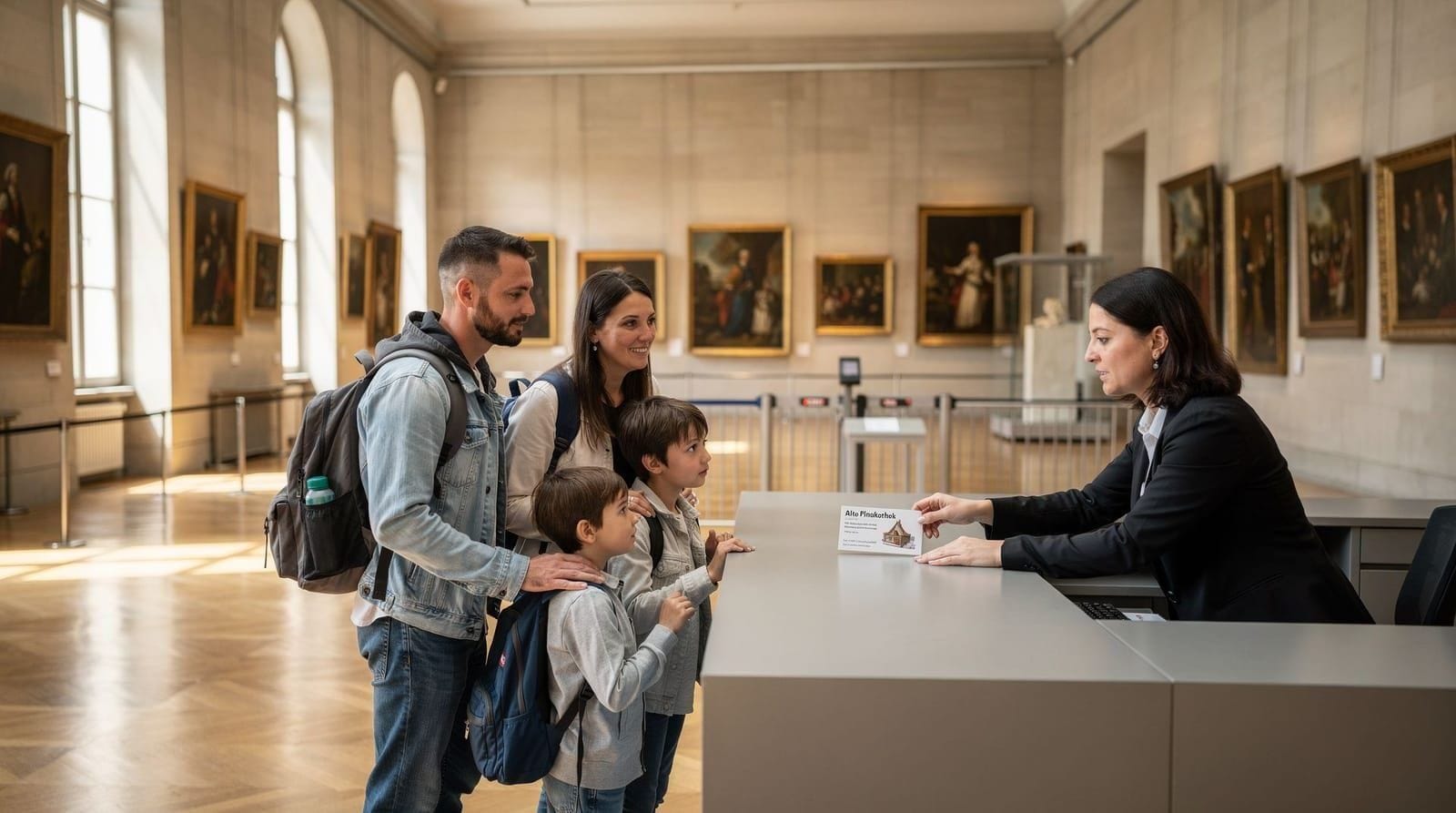
The entrance is on St.-Jakobs-Platz. The ground floor includes the ticket desk, a small museum café, and the museum shop. The permanent collections are distributed across multiple floors in different wings, which is one reason the renovation phase creates some navigational complexity.
The Nazism in Munich gallery: the most important permanent exhibit
The “Nationalsozialismus in München” gallery is the Stadtmuseum’s most historically significant permanent collection, and for many visitors it is the primary reason to come.
Munich’s relationship with National Socialism is both foundational and specific. The city was not simply a place where the Nazi movement operated — it was where the movement began, where Hitler established himself in the early 1920s, and where the ideology was developed and tested before it spread nationally.
The key events with direct Munich connections include the founding of the NSDAP (National Socialist German Workers’ Party) in Munich in 1920; the Beer Hall Putsch of November 1923, in which Hitler attempted and failed to seize power by marching from the Bürgerbräukeller to the Feldherrnhalle on Odeonsplatz (16 supporters were killed); Hitler’s subsequent trial and imprisonment, during which he wrote Mein Kampf; the establishment of the Dachau concentration camp (16 kilometres northwest of central Munich) in March 1933, the first in the Nazi system; and Munich’s designation as the “Capital of the Movement” (Hauptstadt der Bewegung), a title the regime officially conferred on the city.
The gallery addresses all of this with scholarly seriousness. The approach is documentary rather than sensationalist: original documents, photographs, newspaper front pages, propaganda materials, witness testimonies, and artifacts from the period. Particular attention is paid to local perpetrators, bystanders, and resisters — the gallery does not allow abstraction into generic Nazi villainy but grounds everything in specific Munich individuals, institutions, and locations.
One of the strongest sections traces the postwar period: denazification, the reconstruction of civic identity, and the long process by which Munich engaged — or avoided engaging — with its own history as the movement’s birthplace.
As of 2026, this gallery’s precise configuration and location within the museum may be affected by renovation. The exhibition materials have been subject to ongoing scholarly revision, and some sections may be reorganised or temporarily relocated. It is worth asking at the ticket desk which portion of the Nazism in Munich gallery is currently accessible.
For visitors who want to connect this history to physical locations in Munich — the streets where events happened, the buildings that survived or were demolished — a dedicated Third Reich walking tour covers the relevant sites in the city. The context from the Stadtmuseum gallery makes those physical locations considerably more meaningful. Munich Third Reich and World War II walking tour
The Jewish Museum of Munich on the same square provides the essential complementary perspective — the history of Jewish life in Munich from the medieval period through the Holocaust and its postwar aftermath. The two museums are most usefully visited together, and the proximity makes that straightforward. A guided tour of the Jewish Museum and surrounding quarter is a good way to connect the institutions with a broader sense of the neighbourhood’s history. Munich Jewish Museum and quarter guided tour
The puppet and marionette collection
The Münchner Stadtmuseum’s Puppentheatersammlung is one of the world’s largest collections of theatrical puppets, marionettes, and related objects, with over 40,000 items acquired from across Europe, Asia, and the Americas.
The collection began in the late 19th century when Munich’s active tradition of puppet theatre — particularly the Marionettentheater companies that performed in the city’s inns and theatres — began to be documented and preserved. It has grown through acquisition and donation ever since, and today it includes objects from traditions that include Javanese shadow puppets, Turkish Karagöz shadow theatre, French Guignol hand puppets, English Punch and Judy, Central European marionettes, and a substantial collection of Bavarian Kasperl puppets (the rough-edged local trickster figure analogous to Punch or Guignol).
For visitors with a serious interest in theatrical history, puppetry, or material culture, the collection is genuinely exceptional. For general visitors, particularly families with children, it works well as a visual and imaginative experience — the scale and variety of the objects, the range of facial expressions and body types across different traditions, and the stage sets and backdrops that accompany some items make it more engaging than a simple display of objects in cases.
The gallery includes displays on the mechanics of different puppet types: how marionettes are strung and controlled, how shadow puppet screens work, how hand puppets are constructed. These technical sections are useful if you want to understand the objects as performance instruments rather than just decorative items.
As with other permanent galleries, check in advance which sections of the puppet collection are open during renovation.
The collection’s international scope is worth understanding before you visit, since it is easy to assume a “puppet museum” means only Bavarian Kasperl theatre. In practice, the Javanese wayang kulit shadow puppets — intricately cut leather figures used in performances that can run all night in their country of origin — sit alongside 19th-century European marionette theatres complete with miniature stage machinery, and the collection includes rod puppets, glove puppets, and string marionettes spanning several centuries of European court and folk entertainment. For visitors who have seen puppet collections in other cities, the breadth here — rather than depth in any single tradition — is the distinguishing feature.
Fashion, film, and musical instruments
The museum’s other permanent collections cover three areas that represent distinct approaches to city history.
Fashion collection (Modesammlung): Munich was a significant centre of fashion design and manufacture in the 19th and early 20th centuries, before that role shifted to Düsseldorf and later to other European cities. The fashion collection documents this history through garments, accessories, pattern books, and photography. It is not a costume museum in the theatrical sense — the emphasis is on fashion as social history, showing how dress codes changed with shifts in class, commerce, and politics. Some of the 19th-century court dress items are remarkable as objects; others are more significant as documentation.
Film collection (Filmmuseum): Munich has had a film industry since the early silent era, and the Stadtmuseum’s film collection includes cameras, projection equipment, film posters, and documentation of Munich’s studios and productions from the 1890s onward. Attached to the museum is the Filmmuseum München, a cinema in the basement that screens archive films, retrospectives, and silent films with live musical accompaniment. The cinema operates independently of the main museum (separate tickets) and is worth checking for programme if you have an evening in Munich during your visit.
Musical instruments: A collection of historical instruments from European makers documents the development of instrument manufacture in Bavaria and the broader German-speaking world. The collection is less comprehensive than the Deutsches Museum’s science instruments or the major instrument museums in Berlin or Brussels, but it includes some interesting items from Munich’s own instrument-making history.
City history collection: This is the core of the museum in the broadest sense — objects documenting Munich from its 12th-century founding through the 20th century. It includes maps, paintings, scale models of the city at various historical periods, civic furniture, guild objects, and records of major events. The most impressive single object in this section is typically a large-scale historical city model showing Munich as it appeared at different periods, useful for understanding how the city’s footprint and character changed over time.
The museum café and practical logistics
A small museum café operates on the ground floor during museum hours. It is adequate for a coffee and a light meal — sandwiches, soup, cake — but it is not a destination in itself. The selection is limited and quality is average. If you want a proper lunch, the Viktualienmarkt is a 3-minute walk east and has a much wider range of food options, including the market’s own beer garden in season.
The museum shop stocks the usual range of catalogues, postcards, and themed merchandise, plus a well-curated selection of books on Munich history, Bavarian design, and the museum’s specific collections.
Photography is permitted in most gallery areas without flash. Some display cases containing fragile paper documents or light-sensitive objects may have photography restrictions indicated by signage.
Bags larger than a small day pack are generally required to be left in the cloakroom lockers (typically coin-operated, coins returned on exit). The cloakroom is on the ground floor near the entrance.
Wheelchair and pushchair access varies by wing given the building’s layered historical construction — some sections have step-free routes and lifts, others in the older Marstall wing have level changes that are harder to navigate. If accessibility is a concern, it is worth calling ahead or checking the museum’s accessibility page, particularly given how the renovation may have temporarily altered standard routes through the building.
Honest assessment: what the renovation means for your visit
The Stadtmuseum is worth visiting in 2026, but the renovation means you should calibrate your expectations. The museum at full capacity — all permanent galleries open, the displays in their intended configurations — is a more satisfying experience than what is currently available. If you have been before and found it impressive, a return visit may feel reduced.
If this is your first visit, the most reliable approach is to prioritise the Nazism in Munich gallery and the puppet collection, verify they are open before you go, and treat anything else accessible as a bonus. The building itself, the courtyard, and the ground floor orientation are all worth your time regardless of which galleries are operating.
The Stadtmuseum is considerably smaller and less overwhelming than the Deutsches Museum, which requires at least half a day to engage with meaningfully. A focused Stadtmuseum visit of 90 minutes to 2 hours is realistic during renovation. For context on the range of Munich’s museum options and how to prioritise them, the Munich museums pass guide compares which institutions are covered under different passes and at what cost. Munich City Pass covering 45 attractions and museums
The neighbourhood context: St.-Jakobs-Platz and what surrounds it
The area around St.-Jakobs-Platz is one of the most historically layered parts of central Munich, and the Stadtmuseum fits into a broader geography worth understanding.
Jewish Museum of Munich: Directly on the square, the museum opened in 2007 in a modern glass-and-concrete building. It covers Jewish life in Munich from the medieval period through the present, with particular attention to the Holocaust and its aftermath, including the postwar re-establishment of Munich’s Jewish community. Entry is around €6. A combined visit with the Stadtmuseum is the most complete way to understand Munich’s complex 20th-century history. The Munich museum quarter history guide traces how this particular concentration of cultural institutions developed in the Altstadt.
Viktualienmarkt: Munich’s main open-air food market is immediately east of the Stadtmuseum, beyond a short block of streets. Operating Monday to Saturday from early morning (most stalls open by 08:00, with the market at full capacity from about 09:00), it sells fruit, vegetables, cheese, meat, bread, flowers, and regional specialities. The central beer garden, shaded by large trees, is open from spring through autumn. The Viktualienmarkt is also the starting point for several food tours of the Altstadt. The Munich Altstadt guide covers both the market and its surrounding streets in more detail.
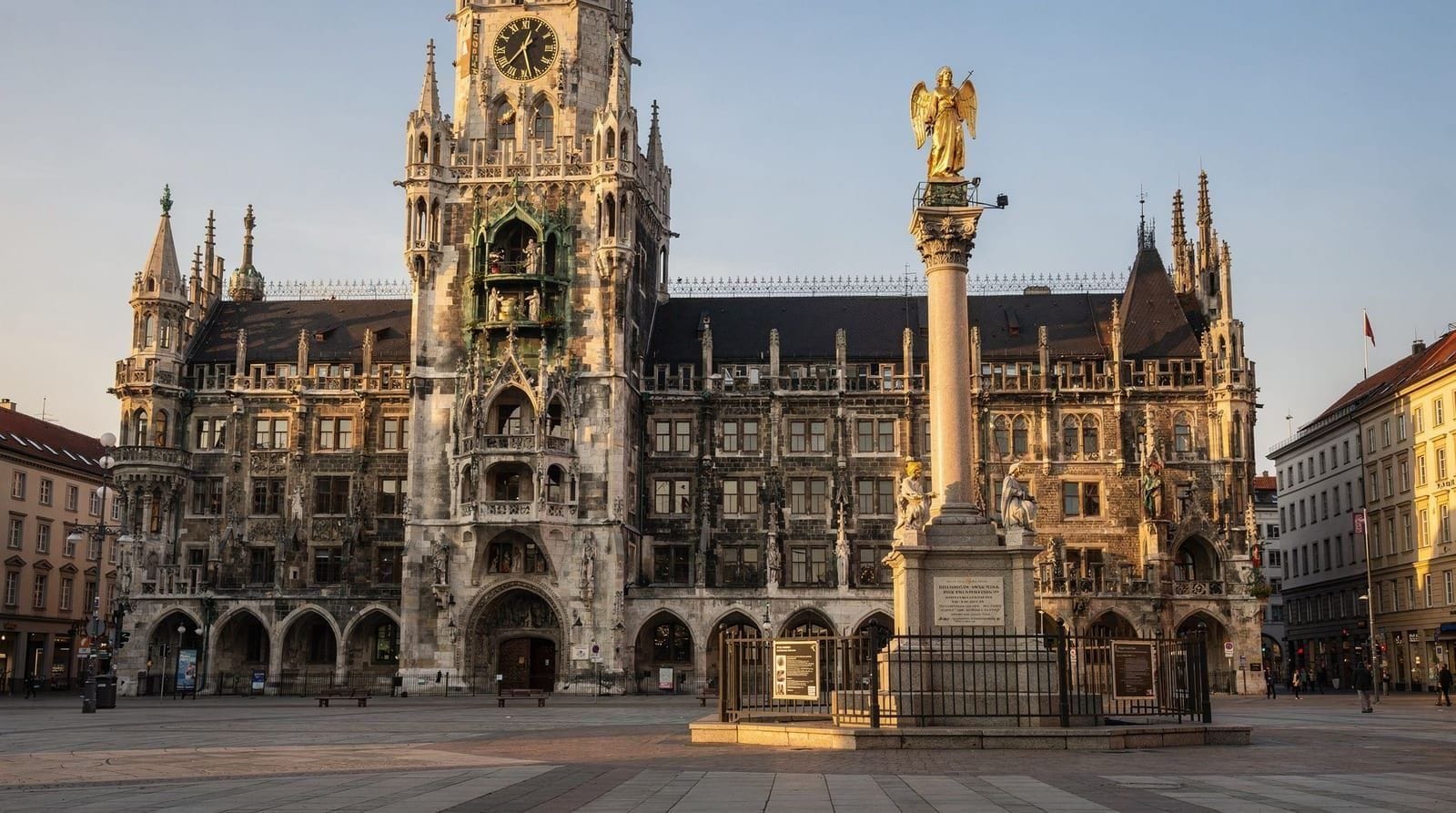
Marienplatz: The central square is a 3-minute walk north through the Rindermarkt. The Stadtmuseum visit pairs well with a morning on Marienplatz — the Glockenspiel chimes at 11:00 and 12:00 (and 17:00 in summer), and the square itself is worth time to understand the New Town Hall, the Mariensäule column, and the daily life of the city’s centre. The Marienplatz guide covers the square’s individual elements.
Asamkirche: About 10 minutes southwest on Sendlinger Strasse, the small Baroque private chapel built by the Asam brothers (1733–1746) is free to enter and takes 15–20 minutes to visit. It is one of the most concentrated pieces of Baroque art in Germany. The Asamkirche guide covers the building in full.
A guided walking tour of the Old Town that includes this part of the Altstadt provides the most efficient way to connect these sites with historical context. Munich Old Town guided walking tour
Getting to the Munich City Museum
Address: St.-Jakobs-Platz 1, 80331 Munich.
On foot from Marienplatz: Walk south through the Kaufingerstrasse underpass to the Rindermarkt, continue south on Rosental or through the pedestrian lanes to St.-Jakobs-Platz. Total: approximately 3 minutes.
U-Bahn: Marienplatz (U3, U6, all S-Bahn lines) is the closest station, 3–4 minutes on foot. Sendlinger Tor (U1, U2, U3, U6) is a 5-minute walk north from the opposite side of Sendlinger Strasse.
Tram: Several tram lines stop near Sendlinger Tor, within easy walking distance.
There is no parking lot directly at the museum. The central Altstadt is a pedestrian zone for much of its area, and driving to the museum is impractical. The Munich public transport guide covers MVV ticket options, including day passes that cover all U-Bahn, S-Bahn, and tram lines in the inner zone.
Planning a visit: timing and itinerary suggestions
The museum is least crowded on Tuesday and Wednesday mornings. Weekend afternoons, particularly in summer, attract larger numbers, though the Stadtmuseum is rarely as crowded as Marienplatz or the Deutsches Museum.
If you are visiting Munich for the first time and have limited time, the Stadtmuseum is best positioned in an itinerary as a half-morning complement to a Marienplatz start. Spend the first hour in the Altstadt, then visit the Stadtmuseum from 10:00 for 90 minutes, then continue to the Viktualienmarkt for lunch.
For a more focused historical visit — particularly for visitors interested in modern German history — pairing the Stadtmuseum’s Nazism in Munich gallery with a Third Reich walking tour of the city and the Dachau concentration camp memorial makes a serious and substantial day. The Dachau memorial is accessible in about 25 minutes by S-Bahn (S2 from Hauptbahnhof to Dachau, then bus 726 to the KZ-Gedenkstätte).
For general Munich itinerary planning, the Munich trip planning guide covers seasonal considerations, neighbourhood priorities, and the sequencing of major sights. The Munich 1-day itinerary and Munich 2-day itinerary both include the Stadtmuseum area as part of an Altstadt circuit.
For visitors interested in Munich’s broader museum landscape — the Lenbachhaus for German Expressionism, the three Pinakotheken for European painting, the Deutsches Museum for science — the Munich best attractions guide compares the institutions by time commitment, cost, and appeal. The Deutsches Museum guide and the Pinakothek museums guide are the relevant resources for those specific institutions.
Is the Munich City Pass worth it for this museum alone?
The Stadtmuseum’s €7 entry is modest enough that a multi-attraction pass rarely pays for itself on this ticket alone — the pass makes sense when the Stadtmuseum is one of four or more paid attractions in your plan, not as a standalone justification. Run the numbers against your actual itinerary before buying: if your day also includes the Deutsches Museum (€15), the Residenz (€9), and Nymphenburg (€15), the combined ticket cost starts to make the pass genuinely worthwhile, as covered in the Munich museums pass guide referenced above.
How the Stadtmuseum fits a themed history day in Munich
For visitors specifically interested in 20th-century German history rather than general sightseeing, the Stadtmuseum’s Nazism in Munich gallery is the natural starting point for a deliberately structured day. A logical sequence: begin at the Stadtmuseum in the morning for historical grounding, walk to the Jewish Museum of Munich on the same square for the complementary perspective, then either join a walking tour that connects the physical sites around the city — Odeonsplatz, the former Bürgerbräukeller site, the NS-Dokumentationszentrum on Brienner Strasse — or extend the day to Dachau via a 25-minute S-Bahn ride.
This is a demanding day emotionally and logistically, and it is worth being honest about that before committing to it. Spreading the Stadtmuseum and Jewish Museum over one day and Dachau over a separate day is a reasonable alternative to compressing everything into a single exhausting itinerary. The Munich WWII history guide covers how to sequence this kind of visit across a longer stay.
Frequently asked questions about the Munich City Museum
Does the Munich City Museum cover the whole history of Munich or just specific periods?
The permanent collection spans Munich’s entire history from its 12th-century foundation as a market settlement on the Isar through the late 20th century. Different galleries focus on specific themes (fashion, film, puppetry, instruments, city development) rather than presenting history chronologically. The Nazism in Munich gallery is the most focused, covering the 1918–1945 period in depth. No single gallery attempts a comprehensive chronological narrative of all of Munich’s history.
How does the Munich City Museum compare to the Documentation Centre for the History of National Socialism?
The NS-Dokumentationszentrum (Documentation Centre), which opened in 2015 on Brienner Strasse near Königsplatz, is entirely dedicated to the history of National Socialism and provides the most comprehensive academic treatment of that subject in Munich. The Stadtmuseum’s “Nazism in Munich” gallery is focused specifically on Munich’s local role as the movement’s birthplace, while the NS-Dokumentationszentrum covers the movement’s broader history. For visitors with a serious interest in this subject, visiting both institutions makes sense. For visitors who want an introduction, the Stadtmuseum’s version is more accessible and shorter. The Munich museum quarter history guide places both institutions in their neighbourhood contexts.
Is the Munich City Museum suitable for children?
The puppet and marionette collection is genuinely engaging for children of most ages. The city history and fashion collections have moderate child interest depending on age. The Nazism in Munich gallery contains disturbing historical material that is appropriate for older children (roughly 12 and above) with parental guidance but is not suitable as a general family exhibit. The Munich with kids guide covers family-appropriate museum options across the city.
Can I visit the Munich City Museum and the Jewish Museum on the same day?
Yes, easily. Both are on St.-Jakobs-Platz, 50 metres apart. Allow 90 minutes for the Stadtmuseum (with renovation in mind) and 60–90 minutes for the Jewish Museum. That is a demanding 3-hour combination thematically, but logistically straightforward. Many visitors find it useful to break the two visits with a short walk around the Viktualienmarkt. The Jewish Museum is open Tuesday to Sunday 10:00–18:00, same days as the Stadtmuseum.
Is the Filmmuseum in the basement part of the main museum ticket?
No. The Filmmuseum München, which screens archive films in the basement cinema, operates on a separate ticketing system. It is not included in the standard museum admission. Programmes change weekly and include silent films with live musical accompaniment, retrospectives, and documentary screenings. Check the museum’s website for the current cinema schedule.
What should I read before visiting to get the most from the Nazism in Munich gallery?
Prior familiarity with the broad outline of the Nazi period makes the Munich-specific gallery more meaningful. Ian Kershaw’s biography of Hitler (particularly the early volumes) covers Munich in significant detail. David Clay Large’s Where Ghosts Walked: Munich’s Road to the Third Reich (1997) is specifically about Munich’s role. Neither is required, but even a brief review of the Beer Hall Putsch and Munich’s early Nazi history before visiting helps you understand what you are looking at.
How long should I budget for the Munich City Museum during the 2026 renovation?
90 minutes to 2 hours is realistic for a focused visit prioritising the Nazism in Munich gallery and the puppet collection. Add 60–90 minutes if you’re also visiting the adjacent Jewish Museum of Munich. Visitors with a serious interest in either subject, or who arrive expecting the museum at full pre-renovation capacity, should allow more time and check stadtmuseum.de in advance for which galleries are open.
Is the Munich City Museum worth it if I’ve already visited the NS-Dokumentationszentrum?
Yes, for a different reason — the NS-Dokumentationszentrum covers the movement’s broader national and ideological history, while the Stadtmuseum’s gallery is grounded specifically in Munich locations, individuals, and institutions. Visitors who found the Dokumentationszentrum valuable often find the Stadtmuseum’s more localised approach a useful complement rather than a repeat, particularly if they plan to also visit the physical sites around the city.
Top experiences
Bookable activities with verified prices and instant confirmation on GetYourGuide.