Munich to Innsbruck day trip: trains, tips, and what to see
Munich: Innsbruck private 1-day trip by car
How do you get from Munich to Innsbruck by train?
Direct trains run from Munich Hauptbahnhof to Innsbruck every 2 hours, taking about 1 hour 50 minutes. The Bayern-Ticket is NOT valid for this route as Innsbruck is in Austria. You need a standard ticket, which costs around €29–€49 each way depending on how far in advance you book.
Crossing the border: what makes the Munich–Innsbruck run special
The train south from Munich Hauptbahnhof to Innsbruck is one of the most rewarding short rail journeys in central Europe. You leave a German city of nearly 1.6 million people and arrive, 1 hour 50 minutes later, in the compact Tyrolean capital of around 130,000 — a city wedged into a narrow valley between two ranges of Alps, with a medieval old town, a Habsburgs-era imperial palace, and a cable car that departs practically from the city center to a 2,256-metre summit. The contrast is sharp and it makes for an exceptionally satisfying day out.
| Where | Innsbruck, Tyrol, Austria |
| Cost | Train around €19–€49 each way (not Bayern-Ticket eligible); Nordkette cable car ~€43.50 |
| Time needed | Full day; 8–12 hours in Innsbruck depending on train times |
| Getting there | Direct Railjet, around 1h50, roughly every 2 hours |
| Best time | Book weeks ahead for the cheapest fares; clear mornings for the Nordkette |
Unlike many alpine day trips from Munich, this one crosses an international border. Austria is in the Schengen Area so there is no passport check, but you do need to carry your ID card or passport. And the international border has one very important practical implication that catches a significant number of visitors off guard every year: the Bayern-Ticket does not work here.
Before anything else — the trains, the sights, the food — read the next section.
The Bayern-Ticket trap: why you cannot use it to Innsbruck
This deserves its own section because it is the single most common and frustrating mistake on this route.
The Bayern-Ticket is a tremendous deal for travel within Bavaria. It covers nearly all regional trains, S-Bahn lines, and many buses in the state for a flat daily fee. It is perfect for reaching Garmisch-Partenkirchen, the Zugspitze area, or Chiemsee. It is useless for Innsbruck.
The reason is simple: the Bayern-Ticket is a Bavarian regional ticket. It covers DB Regio trains operating within Bavaria. The Munich–Innsbruck service is a cross-border international route operated by ÖBB (Österreichische Bundesbahnen, the Austrian Federal Railways) and Deutsche Bahn jointly. The moment you cross into Austria, you are outside the Bayern-Ticket’s validity zone. ÖBB conductors will ask for your ticket in Austria, find the Bayern-Ticket, and issue a penalty fare.
The fix is straightforward: buy a standard point-to-point ticket from Munich Hauptbahnhof to Innsbruck Hauptbahnhof. Book via DB (bahn.de) or ÖBB (oebb.at). Booked four to six weeks in advance, you can find fares as low as €19–€29 each way. Booking a day before, expect to pay €39–€49 each way. The price difference between early booking and last minute is substantial on this route.
If you prefer a guided experience without any of the logistics, a private guided day trip handles transfers, border requirements, and local expertise in one package. 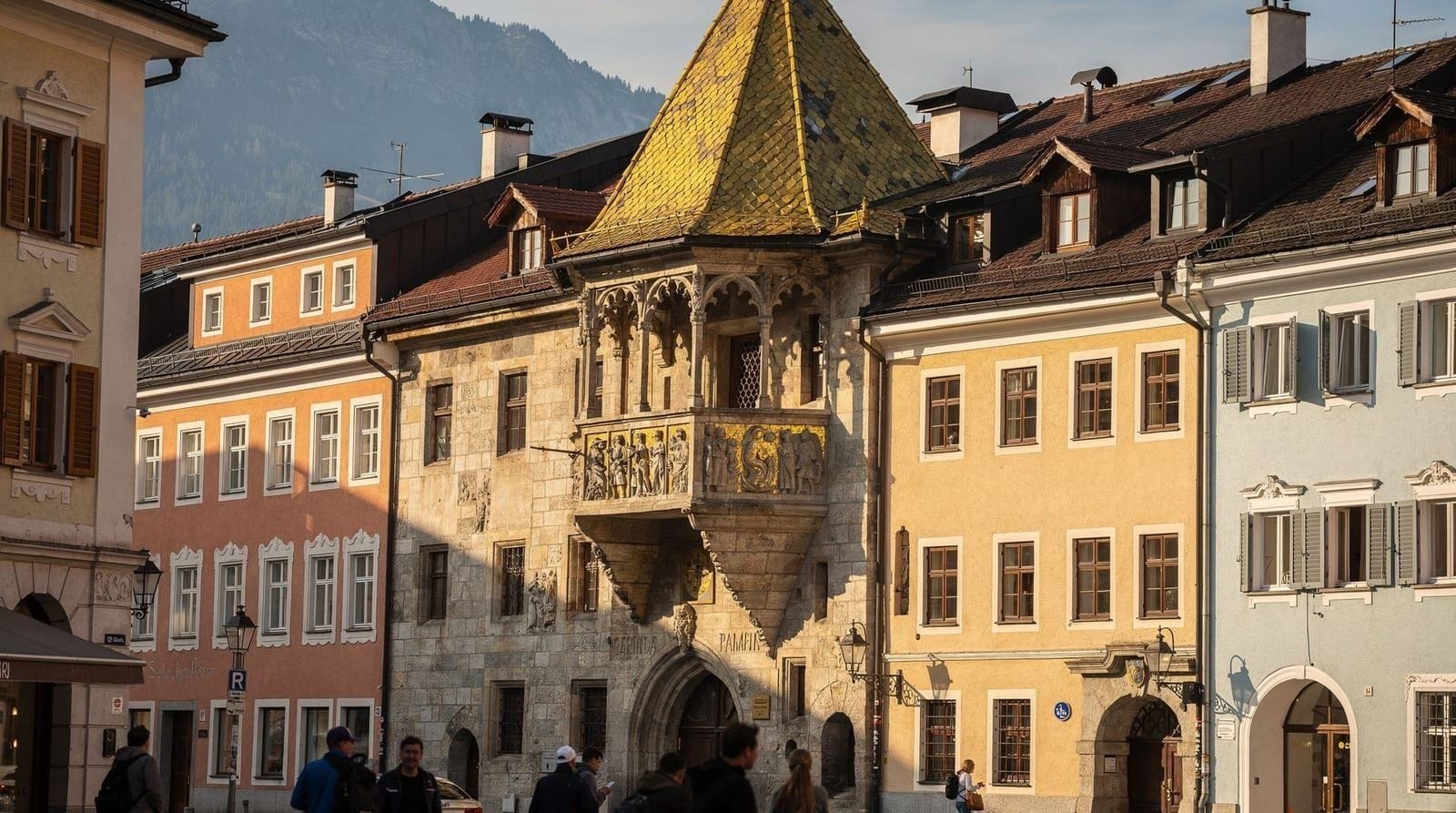 Innsbruck private 1-day trip by carCheck availability
Train options: Railjet, regional, and everything in between
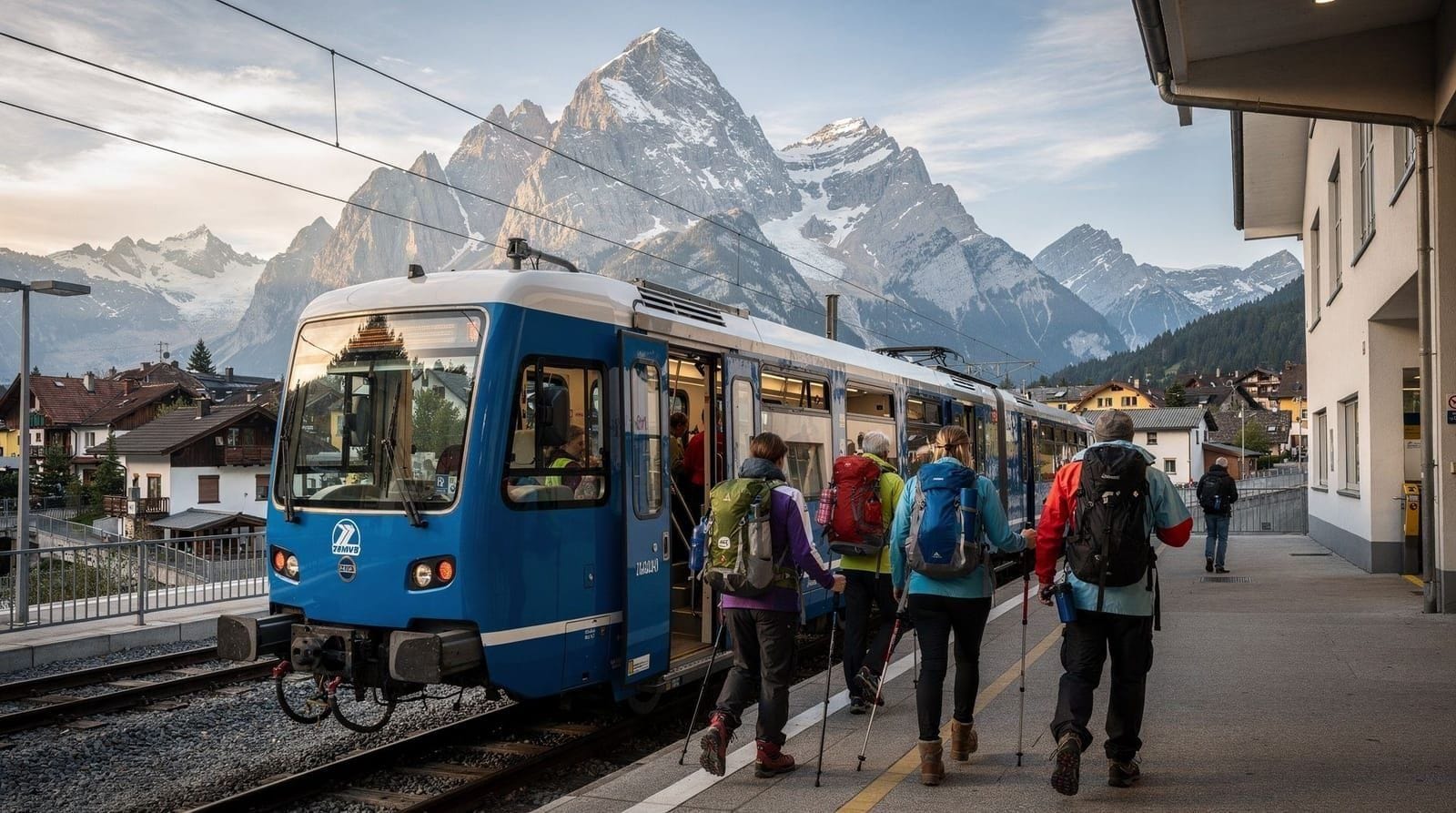
The main service is the ÖBB Railjet, a modern high-speed train that runs from Munich Hauptbahnhof to Innsbruck Hauptbahnhof roughly every two hours. Journey time is approximately 1 hour 50 minutes. The Railjet has three classes: Economy, First, and Business (the premium quiet class). Economy is perfectly comfortable for under two hours. First class offers wider seats and a power socket at every seat — useful if you want to work or charge devices on the way.
Trains typically depart Munich Hbf at around 06:30, 08:30, 10:30, and so on through the day. The last practical return from Innsbruck is around 20:00–22:00, giving you between 8 and 12 hours in Innsbruck depending on which departure you take from Munich.
There is also a slower regional option via Kufstein, which takes around 2.5 hours with a change. The journey is more scenic through the lower Inn valley, but the extra 40 minutes each way eats into a day trip significantly. Stick to the direct Railjet unless you specifically want the slower route.
The ride itself is genuinely pleasant. South of Munich the landscape opens into rolling foothills, then the Inn valley begins to narrow and deepen as you approach the Austrian border at Kufstein. The mountains close in on both sides and you get the first real sense of alpine drama before you even reach Innsbruck. By the time the train rolls into the station, the Nordkette range is already filling the view to the north.
Arriving in Innsbruck: first impressions and orientation
Innsbruck Hauptbahnhof is a ten-minute walk from the old town. Walk south from the station exit and you will reach Maria-Theresien-Strasse, the main boulevard, within minutes. The city is compact enough that you can cover the core sights on foot. Public trams and buses exist but you will rarely need them for the central area.
The setting is immediately striking. Unlike most Alpine cities, Innsbruck has barely any suburban sprawl between the historic center and the mountains. The Nordkette range rises directly from the edge of the old town — the cable car station is a 15-minute walk from the Golden Roof. This intimacy between city and mountain is what makes Innsbruck feel unique, even compared to other Alpine capitals.
Pick up a map at the station or at the Innsbruck Information office on Burggraben, a two-minute walk from the Golden Roof. The staff there speak excellent English and can advise on current opening hours and any temporary closures.
The old town: what to see and in what order
The Innsbruck Altstadt is small by European standards, which is an advantage on a day trip. The main sights are clustered within a few hundred metres of each other.
The Goldenes Dachl — the Golden Roof — is the city’s signature image. It is a late Gothic oriel window built in 1500 to celebrate Emperor Maximilian I’s second marriage, decorated with 2,657 gilded copper tiles. It sits on the Herzog-Friedrich-Strasse, the pedestrianised spine of the old town. In person it is smaller than many photos suggest, but the craftsmanship is extraordinary and the context — narrow medieval streetscape, mountain backdrop — is photogenic from almost any angle. There is a small museum inside with exhibits on Maximilian’s reign.
Maria-Theresien-Strasse runs south from the old town into the more modern city. It is the main commercial street but it has genuine visual appeal, framed at its south end by the Triumphpforte, the Triumphal Arch built in 1765 to mark the marriage of Archduke Leopold to Maria Ludovica. The arch has two faces: one side celebrates the wedding, the other mourns the death of Emperor Franz I during the festivities. Walk the full length and back — it takes about 15 minutes and gives you a feel for how the city transitions between historic and contemporary.
The Hofburg Imperial Palace is worth an hour of your time. Entry costs €10 and covers the imperial apartments, the Giants’ Hall, and a temporary exhibition space. The Giants’ Hall — painted ceiling, life-size portraits of Maria Theresa’s 16 children — is the highlight. The palace is less visited than its Viennese equivalent but the collection is strong and the crowds are manageable.
The Hofkirche (Court Church), adjacent to the Hofburg, contains the elaborate cenotaph of Emperor Maximilian I, surrounded by 28 oversized bronze statues of historic figures. Free to enter with the Hofburg ticket. The bronze figures, known locally as the “black men,” are among the finest examples of German Renaissance bronze casting.
The Nordkettenbahn: Innsbruck’s mountain cable car
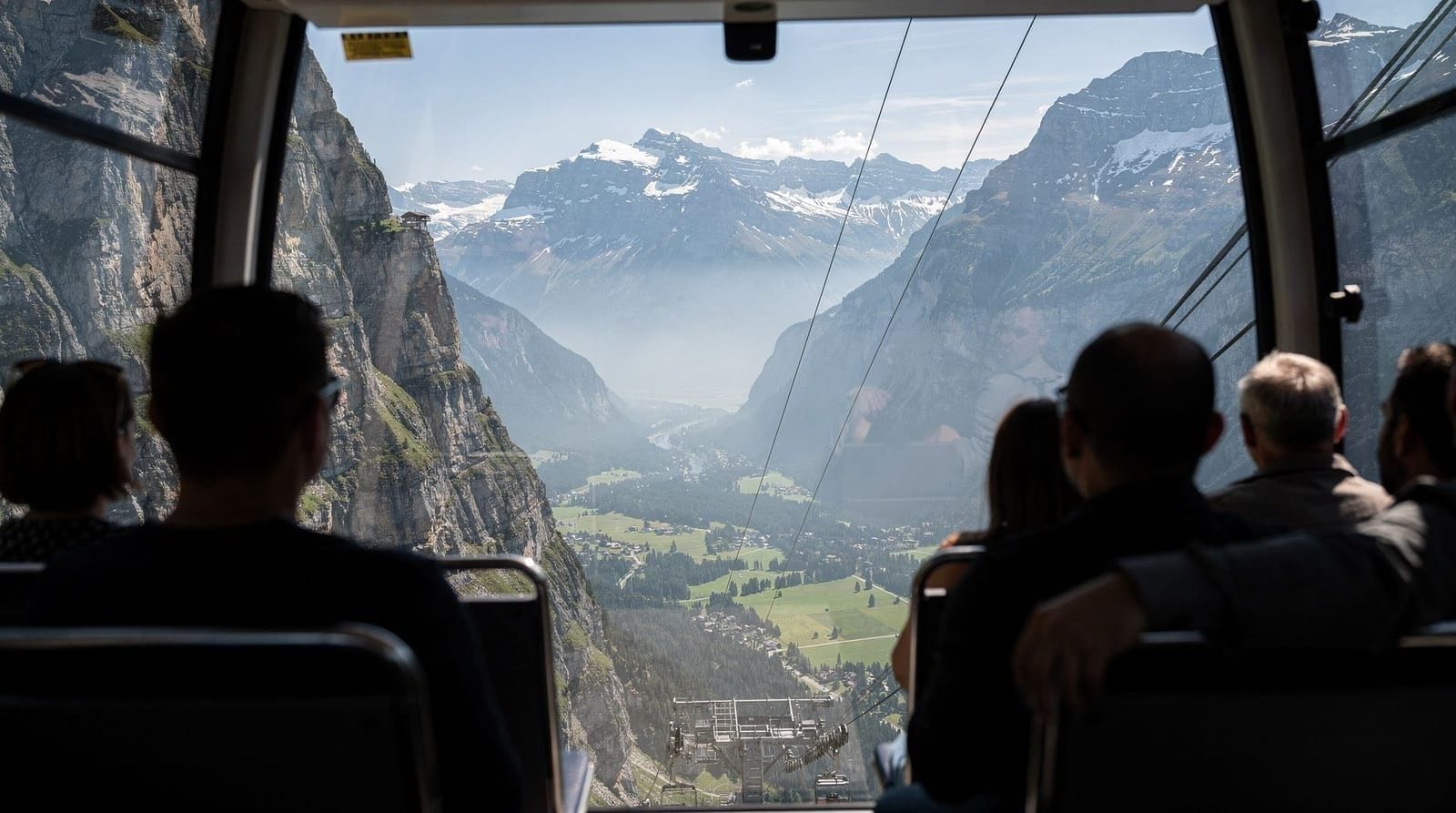
What makes Innsbruck genuinely different from other Alpine cities is the Nordkettenbahn — a two-stage funicular and cable car system that rises from a station in the Congress quarter of the old town to the Seegrube at 1,905 metres, and then onward to the Hafelekar summit at 2,256 metres.
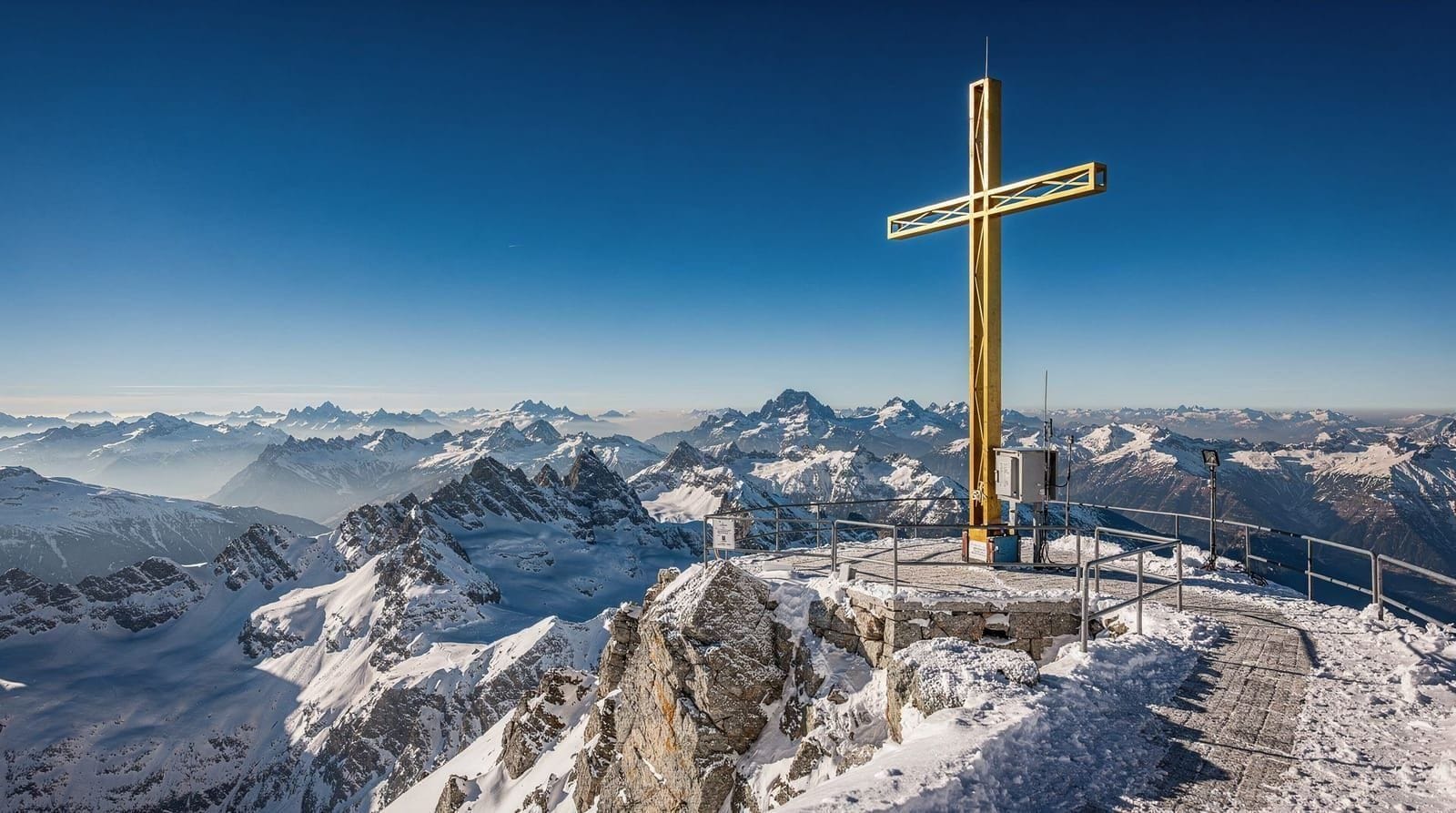
The lower Hungerburgbahn section is a funicular designed by Zaha Hadid, with striking curved glass stations that have become an architectural landmark in their own right. The ride up through the forest is steep and fast. From Seegrube, the cable car climbs the final section to Hafelekar — a genuinely exposed Alpine summit with 360-degree views over the Inn valley, the city spread below, and the Stubai Alps to the south.
Return fare from the Congress station to Hafelekar is approximately €43.50 for adults in 2026. Budget 30 minutes each way, plus time at the top. Seegrube has a restaurant and sun terrace; Hafelekar is more exposed and windswept. Take a windproof layer regardless of the weather in the city below — the summit can be 10–15 degrees colder.
Adding the Nordkette to your day trip creates a very full schedule. If you arrive on the early train, you can do the cable car before lunch, then spend the afternoon in the old town and Hofburg. If you take a later morning train, choose either the Nordkette or a longer city visit, not both.
For those interested in the broader world of Alpine cable cars and how they compare, the Bavarian Alps cable car guide covers the options on the German side of the border, including the Zugspitze and several less-visited alternatives.
Swarovski Crystal Worlds: a side trip worth considering
Swarovski Kristallwelten in Wattens is 18 kilometres east of Innsbruck and reaches in around 45 minutes by shuttle bus. The shuttle departs from Innsbruck Marktplatz roughly every hour; the return shuttle costs approximately €8. Entry to the Crystal Worlds is around €22 for adults (2026 prices).
Kristallwelten is genuinely surprising if you go without expectations. It is not simply a Swarovski showroom. The complex, conceived by artist André Heller and expanded over several phases, consists of 17 “Chambers of Wonder” — immersive installations by artists including Keith Haring, Salvador Dalí collaborators, and contemporary designers. There is a crystal dome, a courtyard garden, and a restaurant. It reads as absurdist in the best sense: theatrical, carefully lit, and unlike anything else in the region.
The honest caveat: adding Swarovski to your day means sacrificing significant time in Innsbruck. The 90-minute round trip on the shuttle plus two hours inside Kristallwelten accounts for 3.5 hours. If you want to combine city sightseeing, the Hofburg, and Kristallwelten in a single day, you will need the earliest Munich train and a clear plan.
A guided tour that combines Innsbruck and the Swarovski Crystal Worlds takes the logistics off your hands entirely. Swarovski Crystal Worlds and Innsbruck day tripCheck availability
Tyrolean food: what to eat and where
Innsbruck’s cuisine overlaps with Bavarian food — both are rooted in Alpine cooking traditions — but there are differences worth knowing. The default lunch should be a Tiroler Gröstl, a pan-fried dish of potatoes, beef or pork, onions, and a fried egg. It is hearty, cheap, and found on virtually every traditional menu in the city. Pair it with a glass of local Austrian wine or a Tyrolean lager.
Knödel appear here as in Bavaria but the Tyrolean versions lean more heavily on bread and are often served in broth or alongside roasted meats. Kaiserschmarrn — the shredded pancake dessert with plum compote — is shared across Austria and Bavaria and is excellent in both countries.
For lunch, Maria-Theresien-Strasse and the streets immediately east of the old town have multiple traditional restaurants. Avoid the most obvious tourist traps directly facing the Goldenes Dachl; walk two streets back and the prices drop and the quality improves. Budget around €14–€20 for a main course and a drink.
The old town has several good wine bars serving Austrian wines, which are underrated and worth trying. Grüner Veltliner from Niederösterreich and Riesling from the Wachau region pair well with anything on the lunch menu.
Practical information for the day
Documents: Austria is in the Schengen Area. The train does not stop at the border for passport control. However, you are technically crossing an international border and should carry an EU/EEA ID card or passport. In practice you will not be asked, but carry it.
Currency: Austria uses the euro, the same as Germany. No exchange needed. Cards are accepted in most restaurants, museums, and shops. Keep €20–€30 in cash for market stalls, smaller cafes, and the Nordkette ticket machine if you prefer not to queue at a staffed desk.
Language: German is the official language in Innsbruck. The Tyrolean German dialect is distinctive — closer in some sounds to Swiss German than to standard Hochdeutsch — but English is widely spoken in tourist areas, and staff at major sights are accustomed to visitors from across Europe.
Connectivity: Austrian SIM data works the same as German SIM data for EU roaming. Google Maps works well for navigation around the compact city center. Download an offline map before you go in case you lose signal in the Inn valley.
Weather: The Inn valley can funnel strong winds, and the Nordkette creates its own microclimate. Even on warm summer days, bring a layer. Afternoon thunderstorms are common in July and August. Check the summit weather forecast (Zamg.at) before committing to the Nordkette ascent.
Is it worth staying overnight instead of a day trip? For most visitors basing themselves in Munich, a day trip captures the essentials — the old town, the Hofburg, and the Nordkette are all realistically doable between an early morning and late evening train. An overnight stay adds value mainly if you want to add Swarovski Crystal Worlds without rushing, or if you want to catch the old town at dusk when the Golden Roof and surrounding facades are lit and the day-trip crowds have thinned. If your Munich itinerary is already tight, the single-day version loses very little.
How the Innsbruck day trip compares to other options from Munich
Innsbruck is one of several excellent day trips south of Munich, each with a different character. For pure mountain scenery, the Zugspitze remains the most dramatic single objective — Germany’s highest peak, accessible by cogwheel train and cable car from Garmisch. The Garmisch hiking guide covers the valley trails and the Partnach Gorge, which is one of the most accessible dramatic gorge walks in the Alps.
For a different alpine town experience, Munich to Garmisch is shorter and cheaper — Garmisch-Partenkirchen is 90 minutes by train and the Bayern-Ticket is valid. The best alpine views near Munich guide compares several viewpoints and helps you match the right destination to your interests.
For urban history with mountain access, Innsbruck is arguably the strongest option. No other day trip from Munich delivers a Habsburg palace, a medieval old town, and an alpine cable car in the same package. The closest comparison would be Salzburg, which is similarly rich in history and accessible from Munich in about 1 hour 40 minutes, but Salzburg sits in a wider valley and lacks the immediacy of Innsbruck’s mountain setting. If you are considering both, the Sound of Music Salzburg tour guide and the Innsbruck trip make a compelling two-day pairing on separate days.
For those interested in winter options, the Munich skiing day trips guide covers the main ski areas reachable from the city, several of which are closer to Innsbruck than to Munich.
Innsbruck vs Salzburg vs Garmisch, at a glance:
| Innsbruck | Salzburg | Garmisch | |
|---|---|---|---|
| Journey time | ~1h50 | ~1h30–2h | ~1h22 |
| Bayern-Ticket valid? | No (Austria) | No (Austria) | Yes |
| Character | Habsburg old town + cable car from city center | Baroque old town, music history | Bavarian alpine town + Zugspitze |
| Best for | Mountains and history combined | Architecture, Mozart, Sound of Music fans | Highest-altitude experience, hiking |
Suggested itinerary: making the most of a single day
Here is a practical sequence for a day trip that covers the core Innsbruck experience without rushing:
06:30 departure from Munich Hbf — earliest practical train, arrives Innsbruck around 08:20.
08:30–09:30 — walk from the station to the old town, coffee and breakfast at a cafe near the Goldenes Dachl.
09:30–11:30 — Nordkettenbahn ascent to Hafelekar. Return to the city by 11:30–12:00.
12:00–13:00 — lunch at a traditional restaurant on or near Maria-Theresien-Strasse.
13:00–15:00 — Hofburg Imperial Palace and Hofkirche.
15:00–16:30 — afternoon walk through the old town, Triumphpforte, browse the shops on Herzog-Friedrich-Strasse.
16:30–19:00 — wine bar or early dinner in the old town before heading to the station.
19:30–21:20 — return train to Munich Hauptbahnhof.
This gives you roughly 11 hours in Innsbruck with a comfortable pace. If you add Swarovski Crystal Worlds, shift the schedule to omit the Nordkette or accept a faster city walk.
For those who would rather not manage train tickets, timetables, and itinerary planning independently, a guided day trip with a local expert is the lowest-stress way to experience Innsbruck. The guide handles the logistics and adds historical and cultural context that you will not get from a map. Innsbruck private 1-day trip by carCheck availability
Return and what to look forward to on the ride back
The return journey to Munich carries a different quality in the evening light. Heading north, the Alps recede into the dusk and the Bavarian plateau opens up ahead. The Inn valley, golden in late afternoon or orange-lit at dusk in summer, is arguably even more beautiful northbound than south.
The last comfortable return trains leave Innsbruck at around 20:00 and 22:00. Check the exact schedule on bahn.de or oebb.at for the day you travel — some services do not run on Sundays or public holidays. Austrian public holidays do not always align with Bavarian ones, so verify before you go.
The Munich–Innsbruck route is one of the most rewarding day trips from any major German city. Innsbruck earns its reputation: the combination of compact historic center, Habsburg heritage, and immediate mountain access is difficult to match anywhere in the Alps. Plan the Bayern-Ticket issue correctly, book your train in advance, and the rest of the day takes care of itself.
For further day trip inspiration from Munich, the Tegernsee day trip guide covers the most scenic lake option south of the city, and the Munich best attractions guide helps you plan what to see in the city itself before you head for the hills.
Frequently asked questions about Munich to Innsbruck day trip
Is the Bayern-Ticket valid to Innsbruck?
No. The Bayern-Ticket is only valid within Bavaria on regional trains. Innsbruck is in Austria, and the Munich–Innsbruck route is operated by ÖBB (Austrian Federal Railways) and requires a separate ticket. Expect to pay €29–€49 each way. Book in advance via DB (bahn.de) or ÖBB (oebb.at) for best prices.How long is the train from Munich to Innsbruck?
The direct Railjet train takes approximately 1 hour 50 minutes from Munich Hauptbahnhof to Innsbruck Hauptbahnhof. Trains depart roughly every 2 hours throughout the day. There are also slower regional services with a change in Kufstein taking around 2.5 hours.What is worth seeing in Innsbruck in one day?
Focus on the Altstadt: the Golden Roof (Goldenes Dachl), Maria-Theresien-Strasse, the Hofburg Imperial Palace, and the views from the Old Town north to the Nordkette mountains. The Nordkette cable car is a spectacular option. Budget around 4–5 hours for the city center.Is Swarovski Crystal Worlds worth including on a day trip?
Swarovski Kristallwelten is 45 minutes by bus from Innsbruck in Wattens. Entry is €22 for adults. It is a genuinely surreal and well-executed experience — not just a shop. Worth it if you enjoy design and spectacle. Skip it if you want more time in Innsbruck itself.Can you visit the Nordkette mountains from Innsbruck in a day trip from Munich?
Yes, but it adds cost and time. The Nordkettenbahn funicular and cable car from Innsbruck old town to the 2,256m Hafelekar summit costs €43.50 return (2026). The views over the Inn valley are spectacular. Combined with city sightseeing, your day will be very full.What currency is used in Innsbruck?
Innsbruck is in Austria, which uses the euro. No currency exchange needed if you are arriving from Germany. Cards are widely accepted, though some smaller cafes and market stalls prefer cash.Is Innsbruck or Salzburg the better day trip from Munich?
They offer different experiences. Innsbruck has the more dramatic mountain setting, with a cable car rising directly from the old town to a 2,256-metre summit. Salzburg has richer musical and Baroque architectural history and a slightly shorter journey. If you can only do one, choose based on whether mountains or music-and-architecture history matters more to you; both are excellent.Do I need to book Innsbruck train tickets in advance?
It is strongly recommended. Unlike the Bayern-Ticket routes, Munich-Innsbruck fares rise sharply closer to the travel date, from around 19-29 EUR each way booked weeks ahead to 39-49 EUR or more booked the day before. Book via bahn.de or oebb.at as soon as your date is fixed.
Top experiences
Bookable activities with verified prices and instant confirmation on GetYourGuide.