Munich on a budget — how to visit without overspending
What a realistic budget looks like in Munich
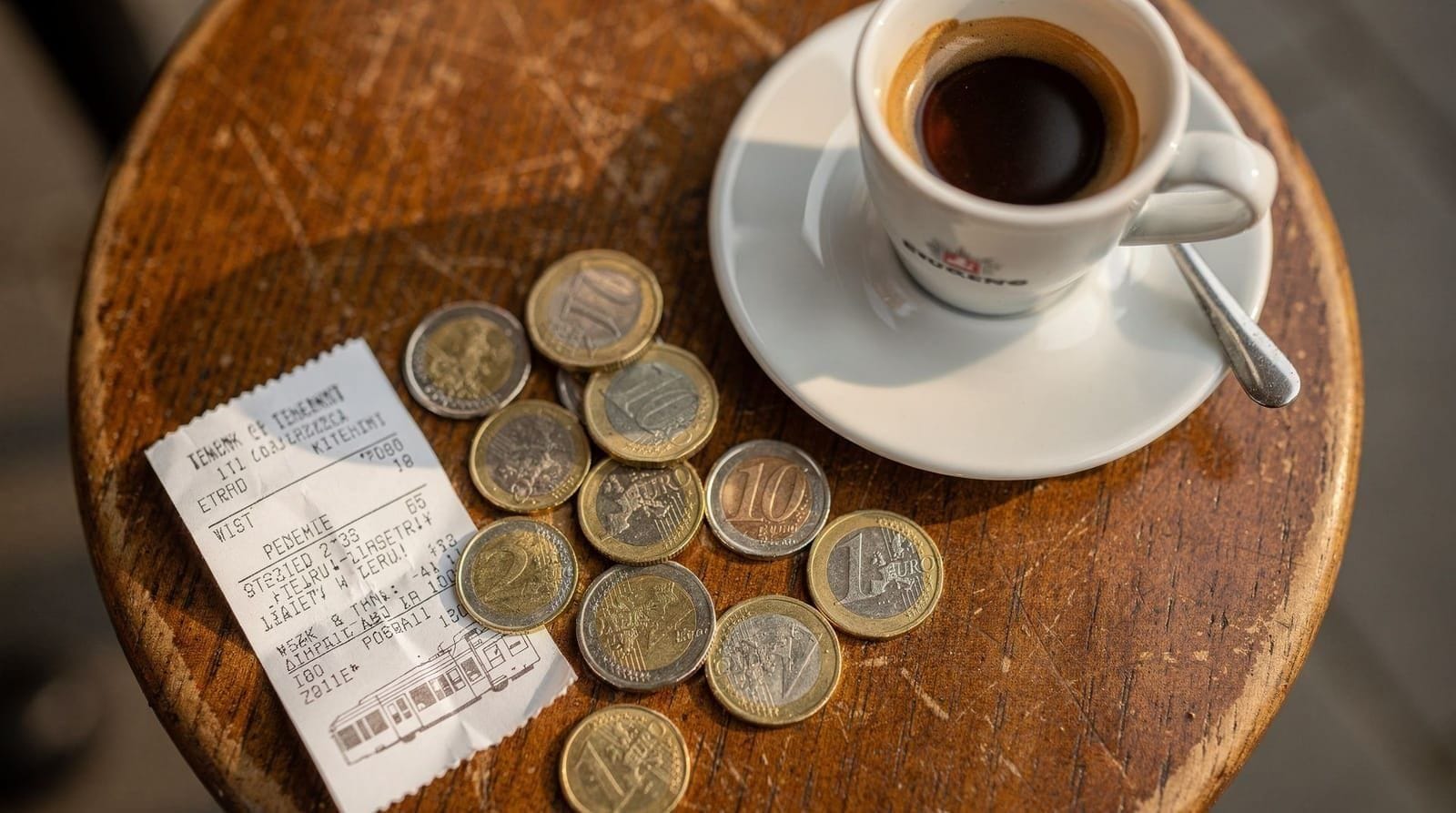
Let’s be honest upfront: Munich is not a cheap city. It consistently ranks among the top five most expensive cities in Germany, and accommodation alone can devour a travel budget quickly. That said, plenty of travelers do Munich on 60–90 EUR per day — accommodation included — if they make the right calls. This guide tells you exactly how.
| Daily budget target | Around 60–85 EUR/day outside Oktoberfest |
| Cheapest sleep | Hostel dorm, 28–40 EUR |
| Cheapest transport | Tageskarte, 9.20 EUR (or Bayern-Ticket from 29 EUR) |
| Best free day | Sunday (1 EUR museum entry) |
| Avoid | Oktoberfest dates unless budgeted separately |
The biggest mistake budget travelers make in Munich is arriving without a plan and falling into the tourist-trap circuit: overpriced beer at the Hofbräuhaus, timed castle tickets purchased last-minute at a markup, and restaurant meals at Marienplatz where you pay a tourist premium just for the postcode. None of that is necessary.
A realistic daily budget breakdown (2026 prices)
- Hostel dorm: 28–40 EUR
- Budget guesthouse (private room): 65–90 EUR
- Meals (3 per day, eating smart): 18–30 EUR
- Public transport day ticket: 9.20 EUR (or Bayern-Ticket from 29 EUR for longer trips)
- Museums and sights: 0–15 EUR (most big museums have free days)
- Beer (1 Maß at a beer garden vs. Hofbräuhaus): 5.20–5.80 EUR vs. 13–15 EUR
Total for a budget traveler doing it right: around 60–85 EUR/day outside Oktoberfest season.
Free and near-free things to do
Munich has more free attractions than most visitors realize. The trick is knowing where to look.
Sunday museum admission
Many of Munich’s best state museums drop their admission to 1 EUR on Sundays. That includes the Deutsches Museum (normally 15 EUR), the Alte Pinakothek, the Neue Pinakothek, and several others run by the Bayerische Staatsgemäldesammlungen. If your trip includes a Sunday, plan your heaviest museum day around it. You can read the full breakdown in our museums pass guide.
The English Garden
The English Garden is free and enormous — at 3.75 km² it’s larger than New York’s Central Park. In summer you can watch surfers riding the Eisbach wave near the Haus der Kunst, wander to the Chinese Tower beer garden (Chinesischer Turm) for one of the cheapest Maß in the city at around 5.80 EUR, and walk through meadows where locals sunbathe with no entrance fee required.
Marienplatz and the Glockenspiel
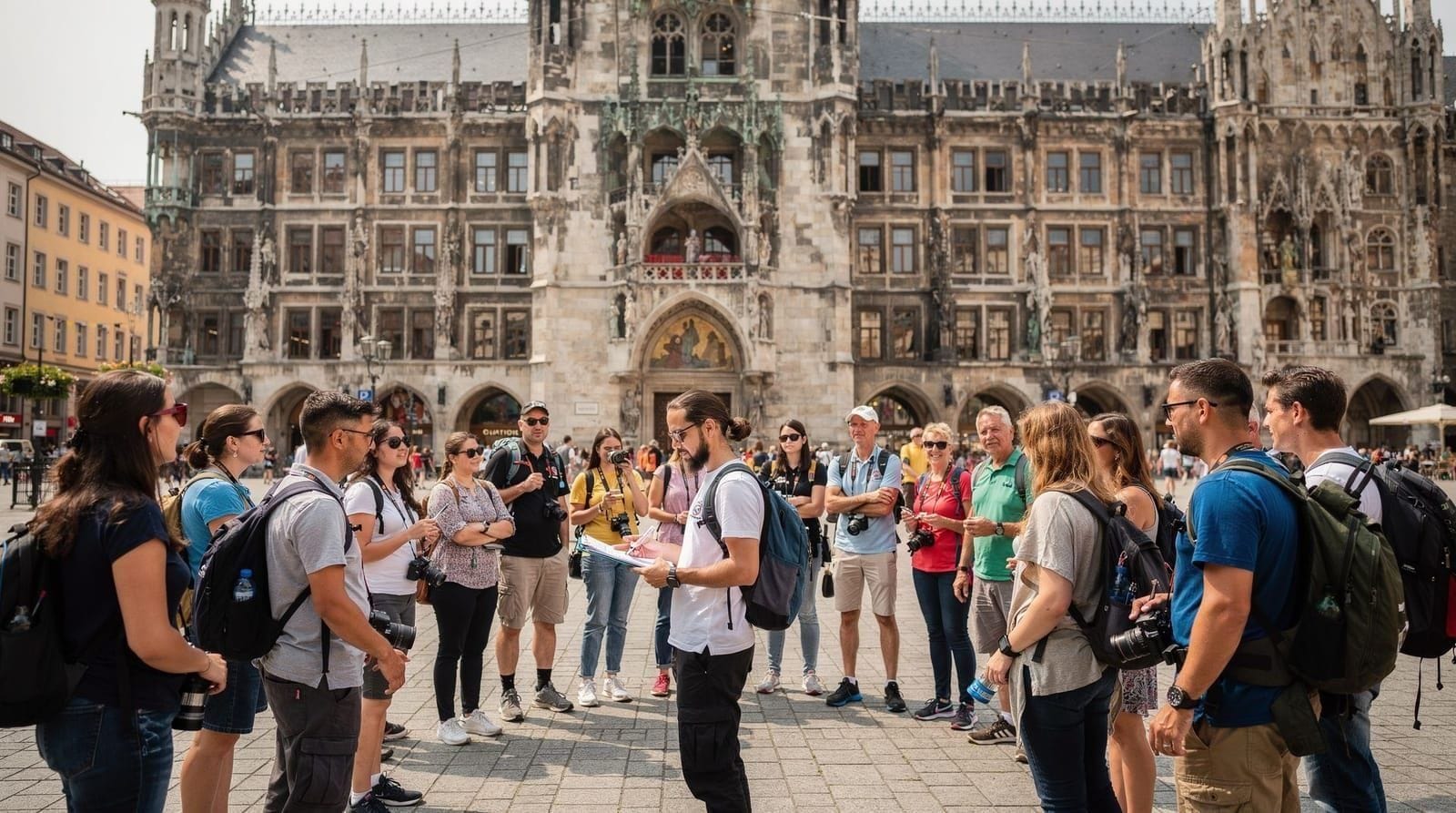
Standing in Marienplatz costs nothing. The famous Glockenspiel on the Rathaus facade plays daily at 11:00 and 12:00 (and at 17:00 from March to October). It’s touristy and takes about 15 minutes, but it’s free and worth seeing once. You can read more in our Marienplatz guide.
Nymphenburg Palace grounds
Entering the formal gardens and the park around Nymphenburg Palace is free. The palace interior costs 8.50 EUR, but walking the grounds, visiting the canal, and seeing the exterior facades cost nothing. It’s a genuine half-day if you bring a picnic.
The Viktualienmarkt
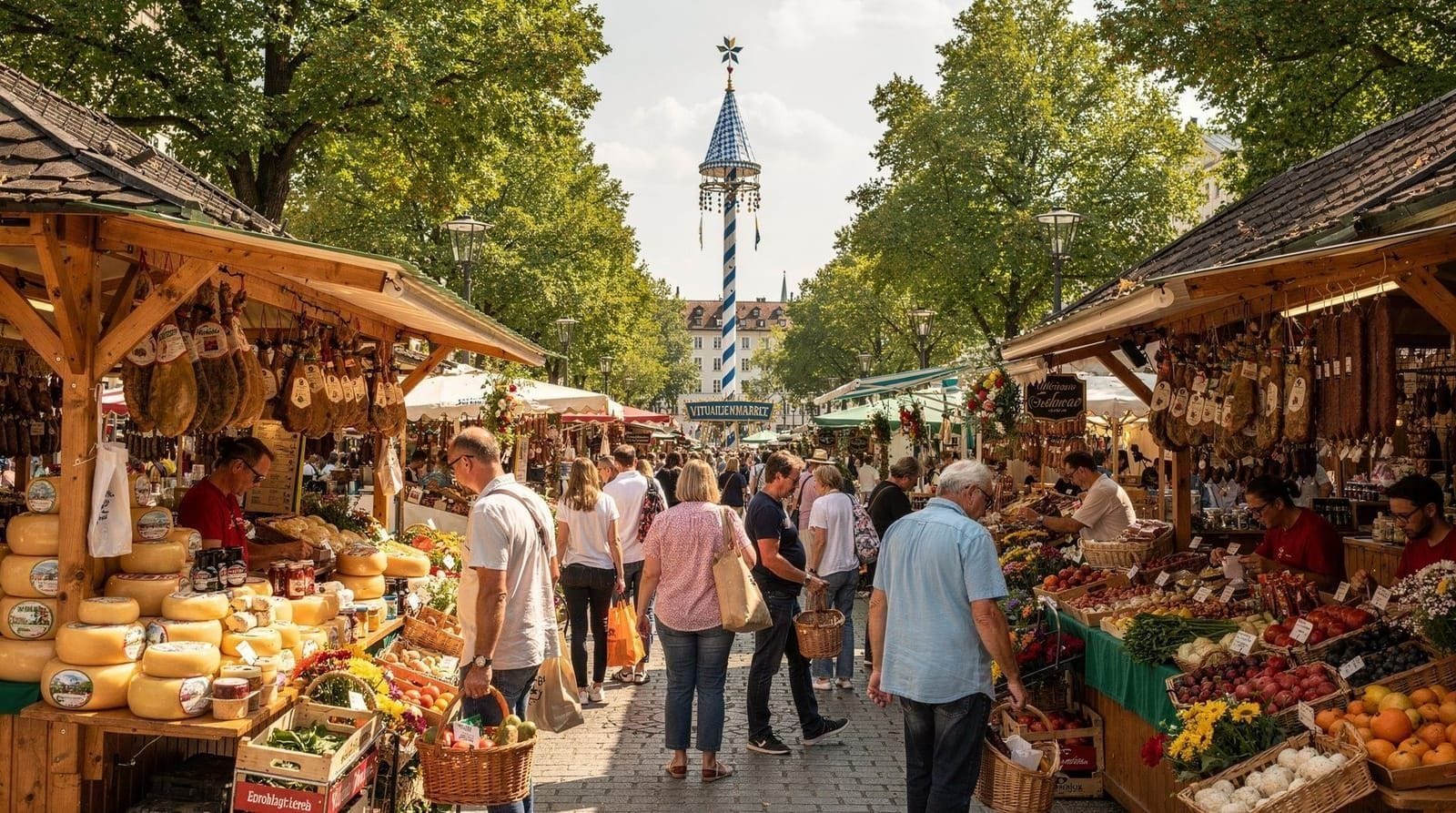
The Viktualienmarkt is Munich’s famous outdoor food market. Wandering through it is free. You’ll find Bavarian cheeses, sausages, pretzels, and produce at prices that are reasonable by Munich standards (if not as cheap as a supermarket). The small beer garden in the center has standard market prices. Sit here for a Maß instead of at any restaurant on Marienplatz and you’ll spend about half as much.
Eating cheap in Munich
Eat at the market, not at the restaurants facing it
The restaurants immediately adjacent to Marienplatz and the Viktualienmarkt apply a location premium. Walk two or three streets away and prices drop noticeably. The area around Gärtnerplatz and the Glockenbachviertel has a denser concentration of affordable local places.
Grab a Leberkäse at a butcher counter
Leberkäsesemmel — a thick slab of warm Leberkäse (a type of Bavarian meatloaf) in a bread roll — costs around 2.50–3.50 EUR at any Metzgerei (butcher shop). It’s filling, it’s local, and it’s what Munich office workers eat for lunch. Vinzenzmurr is a common chain with multiple locations across the city. Avoid the tourist-oriented sausage stands near Marienplatz where the same thing costs 6–7 EUR.
Lunchtime specials (Mittagsmenü)
Many sit-down restaurants offer a Mittagsmenü on weekdays between 11:30 and 14:00 — a full meal with a drink for 9–13 EUR. The same meal at dinner would cost 18–25 EUR. If you want a proper Bavarian restaurant experience, make lunch your main meal.
Supermarkets for picnic supplies
Aldi, Lidl, Penny, and Rewe all have central locations. A proper picnic lunch — bread, cheese, cold cuts, a Radler — costs under 6 EUR and can be eaten in the English Garden or at any of the city’s parks.
Transport on a budget
The 9-Euro day ticket vs. Bayern-Ticket
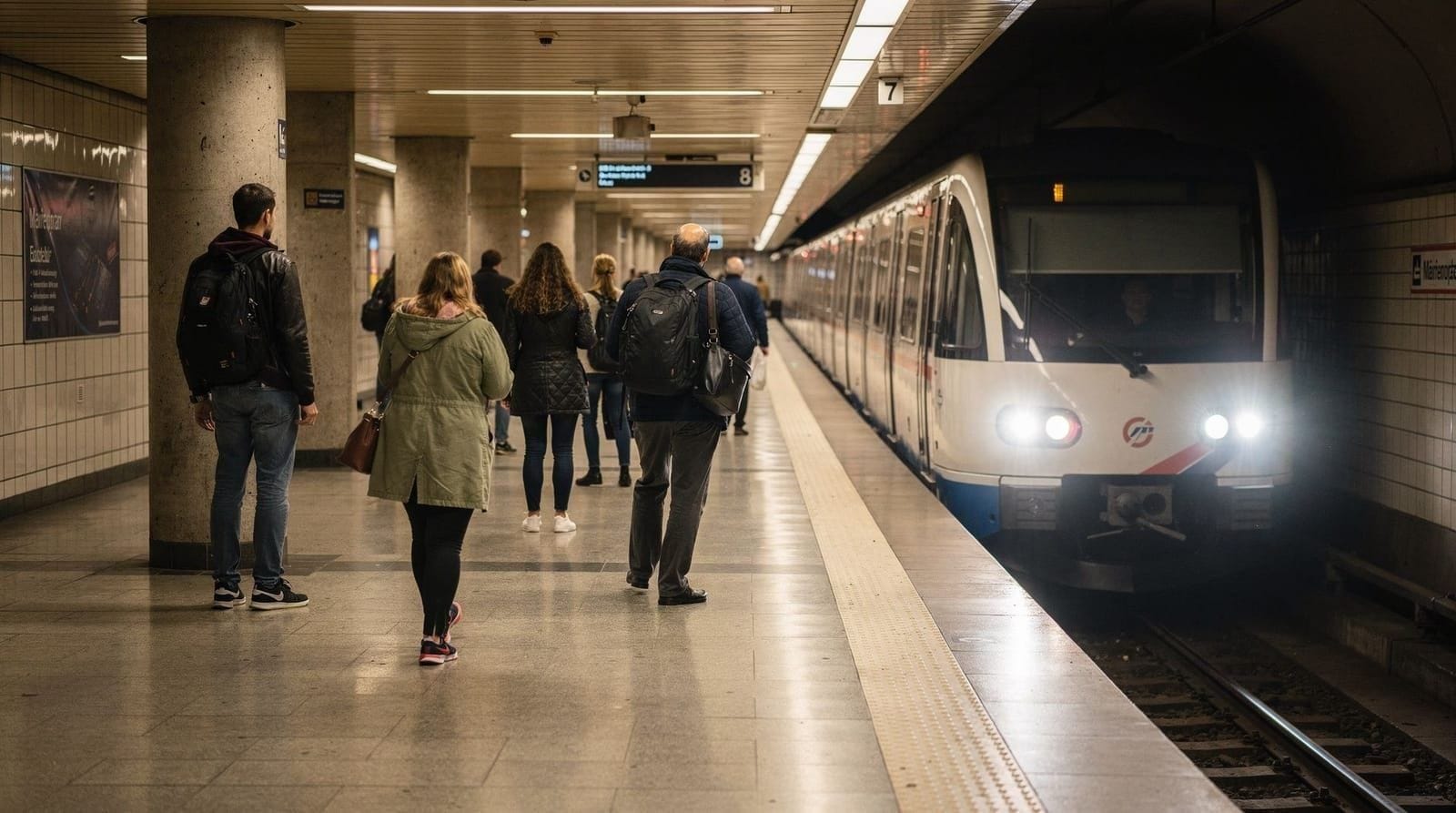
The Munich Tageskarte (day ticket) for the city zone M costs 9.20 EUR and covers all S-Bahn, U-Bahn, tram, and bus services within Munich. If you’re doing a day trip to somewhere like Salzburg or Regensburg, the Bayern-Ticket is the better option — from 29 EUR for one person, covering all local and regional trains in Bavaria for a full day.
You can read the full breakdown in our Bayern-Ticket guide and our Munich public transport guide.
S-Bahn to and from the airport
The S1 and S8 S-Bahn lines connect Munich Airport (MUC) to the city center for 13.60 EUR each way (or covered by a day ticket). The Lufthansa Airport Bus is faster but costs 13 EUR without covering any onward city journeys. The S-Bahn is the smarter choice for anyone on a budget unless every minute counts.
Walk the Altstadt
The historic center of Munich is compact. From Marienplatz to Odeonsplatz is a 10-minute walk. Odeonsplatz to the English Garden entrance is another 10 minutes. The Altstadt is easily navigated on foot and buying a transit ticket just to go one stop is unnecessary.
Where to drink cheaply
Beer gardens, not beer halls. That’s the rule.
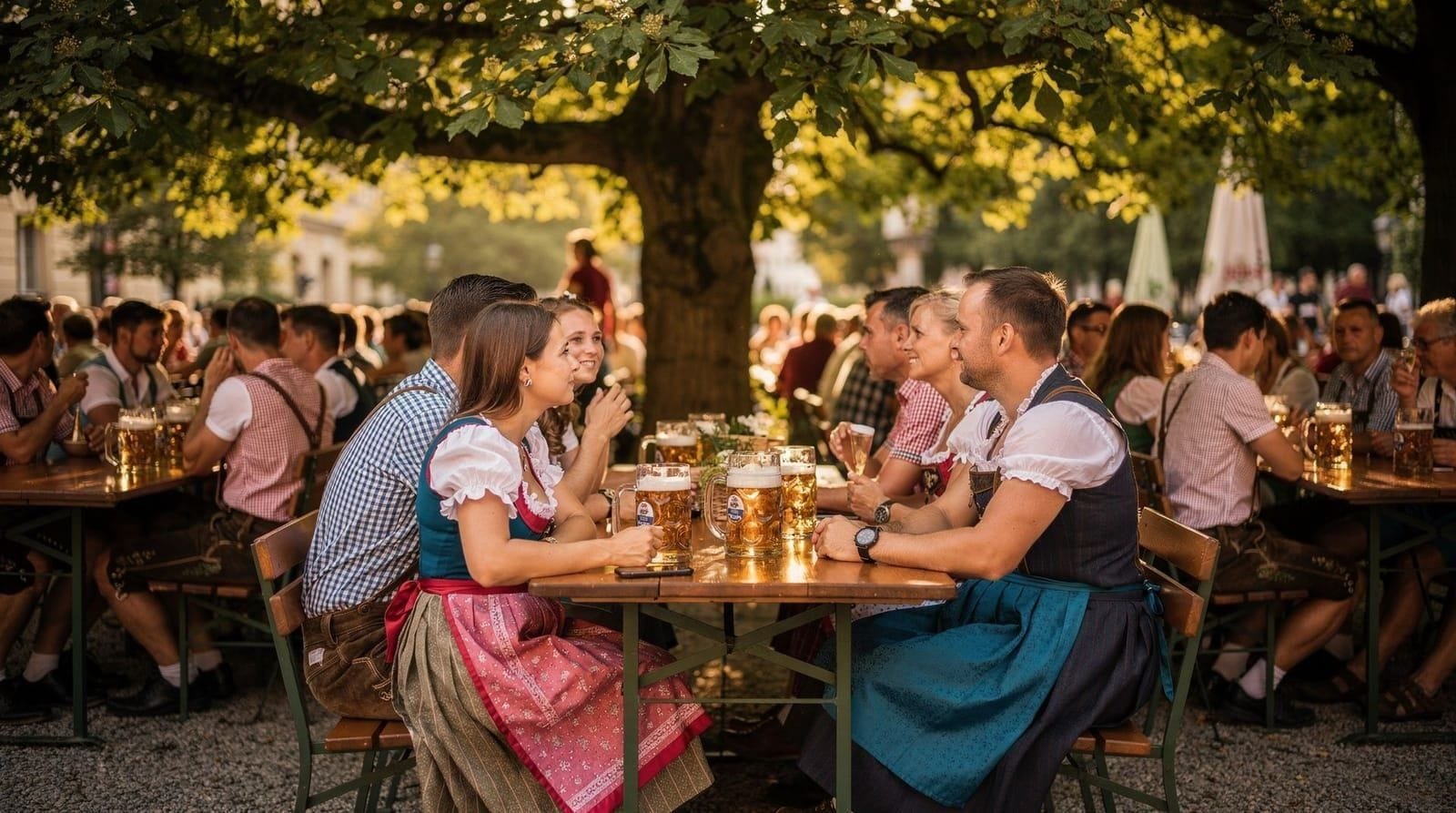
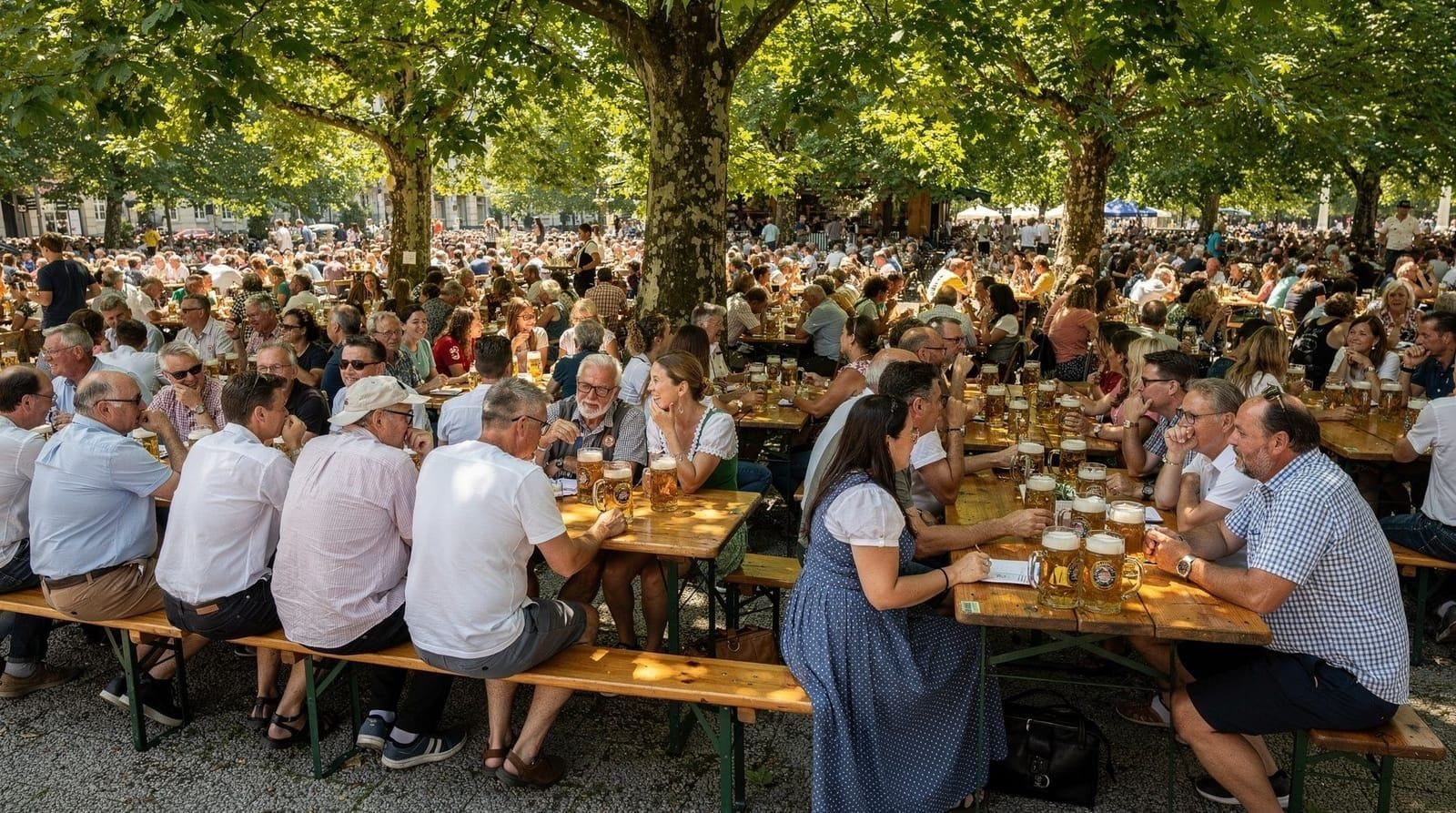
A Maß (1-liter stein) at Hofbräuhaus runs 13–15 EUR and you’ll likely be seated next to a stag party from Bristol. The same Maß at the Augustiner Keller beer garden on Arnulfstraße costs around 5.20–5.80 EUR, and you’re surrounded by Munich locals on summer evenings.
Other reliable budget beer gardens include:
- Chinesischer Turm in the English Garden (affordable by Munich standards, can get crowded on weekends)
- Hirschgarten — the largest beer garden in Munich, around 5.30–5.80 EUR per Maß
- Flaucher on the Isar riverbank — very local, very relaxed, cheapest vibes
Our best beer gardens guide covers them all with current prices.
Day trips on a budget
Day trips are where budgets can spiral if you’re not careful, since ticket prices for regional trains climb fast without the right pass. The Bayern-Ticket (from 29 EUR for one person) is the single most important tool here — it covers a Munich–Füssen return (normally 38+ EUR) for Neuschwanstein, a Munich–Salzburg return, or a Munich–Regensburg return, all for less than a single one-way full-price ticket in some cases. Groups benefit even more: each additional traveler adds only around 6 EUR to the same ticket. Skip taxis and private transfers for any of these trips — the train network covers all the popular day-trip destinations directly, and the savings from the Bayern-Ticket alone can fund a museum day or two extra meals. See Salzburg and Regensburg for two of the better-value Bayern-Ticket day trips from Munich.
Free or near-free evenings
Evenings don’t have to mean club entry fees and cocktail prices. A beer garden evening — bring your own Brotzeit, buy a Maß at the counter — costs a fraction of a bar crawl and is arguably the more authentic Munich evening anyway. The English Garden’s beer gardens stay lively into the evening in summer at no extra cost beyond what you drink. Free walking tours in the evening are rarer than daytime ones, but a self-guided walk through the illuminated Altstadt — Marienplatz, the Frauenkirche, Odeonsplatz — costs nothing and is genuinely atmospheric after dark.
Museum savings strategies
The 1-EUR Sunday deal
As mentioned above — state-run museums drop to 1 EUR on Sundays. Plan your itinerary around this.
The Munich City Pass
If you’re visiting several paid museums back-to-back over 2–3 days, the Munich CityTourCard or a city pass can save money. But do the math honestly. If you’re mainly doing free activities, a pass won’t pay off. Our museums pass guide breaks down exactly when it makes sense.
Skip the Hofbräuhaus tour
You don’t need to pay for a guided tour of the Hofbräuhaus. You can walk in for free, look around, and leave. The beer hall itself has no entrance charge — only the tour products that get sold through platforms do. Read our Hofbräuhaus guide for what’s actually worth doing there versus what isn’t.
Budget accommodation in Munich
Munich’s hostel scene is concentrated in the areas around the main station (Hauptbahnhof) and near the English Garden. The Wombat’s Munich is a reliable option with dorm beds starting around 28–35 EUR. Meininger Hotel at Hauptbahnhof has decent private rooms from around 65 EUR. Avoid the boutique hotels in Maxvorstadt and Schwabing unless you’re finding a flash sale — their rack rates are for a different budget tier.
Booking 2–3 weeks in advance generally gets you 20–30% better rates than last-minute. During Oktoberfest (late September to mid-October), add roughly 200–300% to any accommodation price and book months ahead.
Things worth paying for
Not everything in Munich should be cut to the bone. Some things are genuinely worth the money:
- A professional walking tour — The context you get from a knowledgeable guide, especially for the Third Reich history or the Old Town, changes how you understand the city. A free walking tour is available where you pay what you think it’s worth.
- Neuschwanstein if it’s your priority — The castle tickets are 15 EUR and sell out fast. If you want to go, buy in advance. Going all the way to Füssen and not getting in would be expensive in a different way. See our Neuschwanstein tickets guide.
- One proper Bavarian dinner — Weissbier, Schweinshaxe, and Knödel at a place like Augustiner am Dom or Zum Franziskaner is worth doing once. Budget 25–35 EUR per person including drinks.
Frequently asked questions about Munich on a budget
Is Munich cheaper than other German cities?
No. Munich is consistently the most expensive major city in Germany, ahead of Hamburg and Frankfurt. Berlin is significantly cheaper. That said, smart planning keeps Munich manageable.
What’s the cheapest way to see Neuschwanstein?
Buy tickets directly from the official ticket center at neuschwanstein.de to avoid reseller markups. Take the train on a Bayern-Ticket to Füssen (included in the day pass) and walk up to the castle rather than taking the bus or horse carriage (both cost extra). Total extra spend above the train ticket: 15 EUR admission.
Are there free walking tours in Munich?
Yes. Several operators run tip-based free walking tours departing daily from Marienplatz. The quality varies — check recent reviews before joining. See our free walking tours guide for current operators.
How much does a Maß of beer cost in Munich in 2026?
At a traditional beer garden, expect 5.20–6.00 EUR. At the Hofbräuhaus or tourist-heavy beer halls, 12–15 EUR. At Oktoberfest (if you manage to get a seat), around 14.90 EUR per Maß in 2025 — 2026 prices will be announced in spring.
Can I do Munich in a day on a budget?
One day is tight but doable. Walk from Marienplatz to the English Garden, grab a Leberkäsesemmel from a butcher shop, have a Maß at the Chinesischer Turm beer garden, then walk back through Maxvorstadt past the Pinakothek museums. Cost outside of accommodation: under 25 EUR.
Is a Bayern-Ticket worth it if I’m only staying in Munich city?
No — if you’re not leaving the city, a standard Tageskarte at 9.20 EUR is cheaper and covers everything you need. The Bayern-Ticket only pays off once you add a regional train journey, such as a day trip to Neuschwanstein, Salzburg, or Regensburg.