3 days in Munich: an honest, practical itinerary for 2026
Before you pack: the honest caveat about 3-day itineraries
Three days in Munich covers the essentials but leaves significant territory unvisited. The Deutsches Museum alone deserves a full day. Neuschwanstein is 2 hours away by train. Choosing between them means deciding what kind of traveller you are. This itinerary gives you a working structure — adapt it to your actual priorities.
What this plan prioritises: Munich’s historic centre (Day 1), a day trip to Neuschwanstein and Hohenschwangau (Day 2), and either the Englischer Garten area or a Munich museum and beer hall deep-dive (Day 3). If you would rather substitute Zugspitze or Dachau for one of these, the transport advice transfers directly.
| Where to base yourself | Maxvorstadt, Gärtnerplatzviertel, or the inner Altstadt |
| Cost for 3 days | Around 150–220 EUR/person for food, transport, entries and the Neuschwanstein day trip |
| Getting around | Isarcard 7-day (~€30) or single tickets (€3.70) plus the Bayern-Ticket on Day 2 |
| Best time to try this plan | May, June or September for fewer crowds and better weather |
Day-by-day summary before the full detail below:
| Day | Focus | Key stops |
|---|---|---|
| 1 | Old town and Residenz | Marienplatz, Viktualienmarkt, Asamkirche, Residenz, beer hall evening |
| 2 | Neuschwanstein day trip | Train to Füssen, Hohenschwangau, Neuschwanstein, Marienbrücke |
| 3 | Museums or English Garden | Pinakotheken/Maxvorstadt OR Deutsches Museum/Isar |
Day 1: The old town, Residenz, and an evening in a beer hall
Morning: Marienplatz and the old town
Start at Marienplatz, the central square that has been Munich’s heart since 1158. The Neues Rathaus (New Town Hall) — completed in 1909, so “new” is relative — fills the north side of the square. Its Glockenspiel chimes at 11am and noon (also 5pm in summer), running for about 15 minutes. The mechanism is 32 life-sized figures acting out two stories from Munich’s 16th century. Watching it once is worthwhile; the square fills with tourists who all look at their phones during it.
From Marienplatz, walk south on Kaufingerstrasse and turn right to reach the Viktualienmarkt. This is Munich’s daily open-air food market and one of the most genuine public spaces in the city centre. It has operated continuously since 1807. The central beer garden — run by the six Oktoberfest breweries on a rotating basis — is a good breakfast or mid-morning stop. A Mass of beer costs around €11.50–12.50 here, significantly cheaper than the Oktoberfest tents.
The nearby Asam Church (Asamkirche) on Sendlingerstrasse is a genuinely overwhelming piece of Baroque interior — two architect brothers built it as a private chapel in the 18th century and the result is maximal. Entry is free. Worth 15 minutes.
See: Munich and Marienplatz guide
Afternoon: Munich Residenz
The Munich Residenz is the former royal palace of the Wittelsbach dynasty, containing over 130 rooms of state apartments, treasure chambers, and ceremonial halls. It occupies a full city block north of the old town and is one of the largest palace complexes in Germany.
Entry in 2026 costs around €9 for the main Residenz, €9 for the Treasury, or a combined ticket around €16. The Treasury contains the crown jewels of the Bavarian kings, including the Crown of the Kingdom of Bavaria (1806) and elaborate reliquary crosses predating the 16th century. Spend two hours minimum here.
The attached Hofgarten (Court Garden) is a symmetrically laid-out park with an octagonal temple at its centre. Free to enter, good for a 20-minute walk before dinner.
Evening: Hofbräuhaus or Augustiner-Keller
Two real options, significantly different in character.
Hofbräuhaus is the most famous beer hall in the world, located a 10-minute walk from Marienplatz. It seats 3,500 people across three floors and has existed in various forms since 1589. The ground floor Schwemme (tap room) is tourist-heavy but genuinely atmospheric. The upstairs rooms are quieter. Beer is served by the Mass (1 litre) — Hofbräu Original, Dunkel, or Weissbier — at around €12–13 in 2026. The food (Brezn, Hendl, Schweinebraten) is average-to-decent and not the reason to go.
Augustiner-Keller on Arnulfstrasse is a 25-minute walk or short tram ride from the centre. Larger, more local crowd, under chestnut trees in summer, and the best traditional beer in Munich. If the weather is good, go here instead. The Augustiner beer is lighter and less carbonated than most Munich beers because of the wooden barrel service.
Day 2: Neuschwanstein and Hohenschwangau
Getting there (and the important ticket advice)
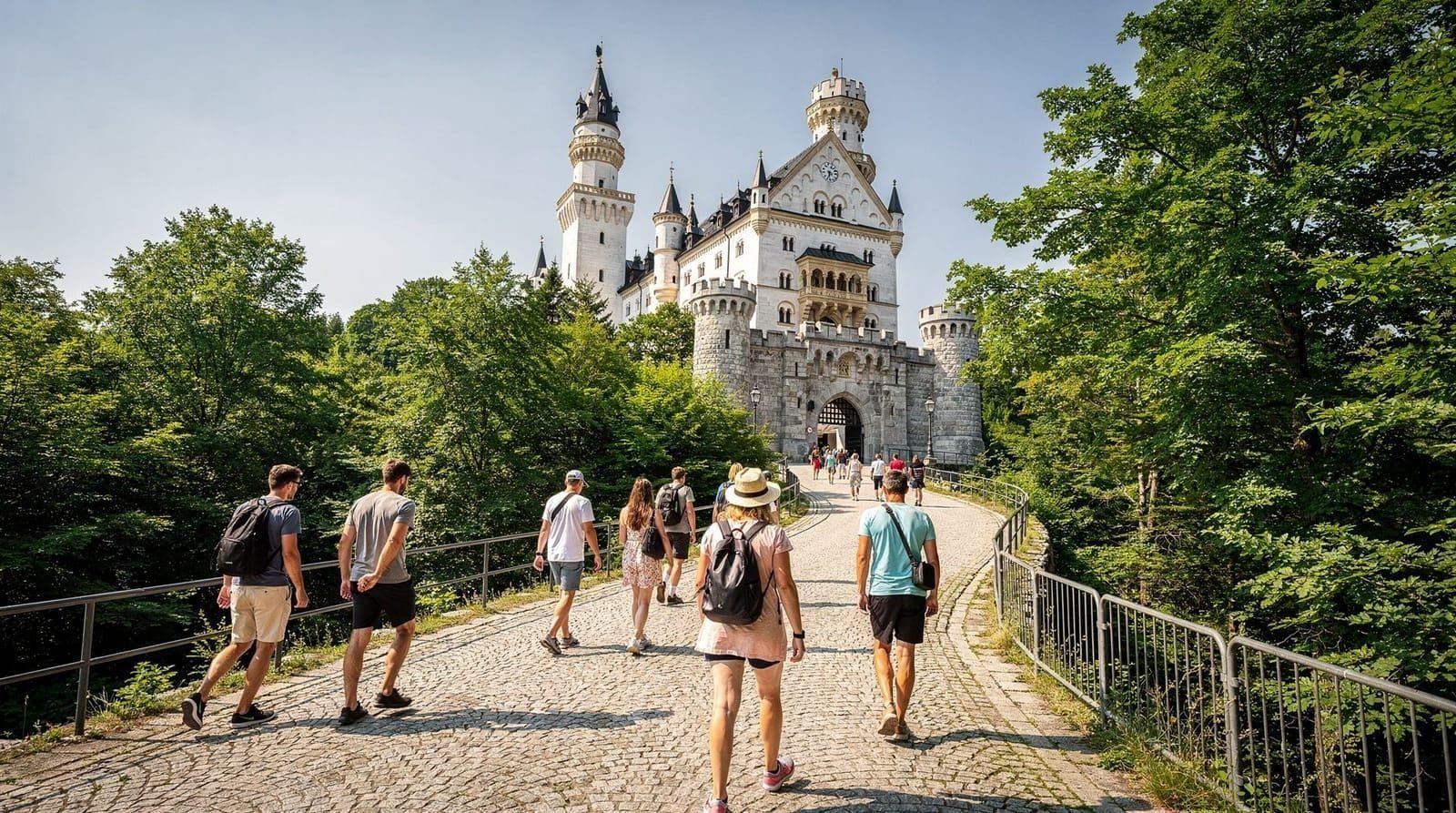
This is the most logistically demanding day. Neuschwanstein Castle is in Schwangau, near Füssen, about 130km southwest of Munich.
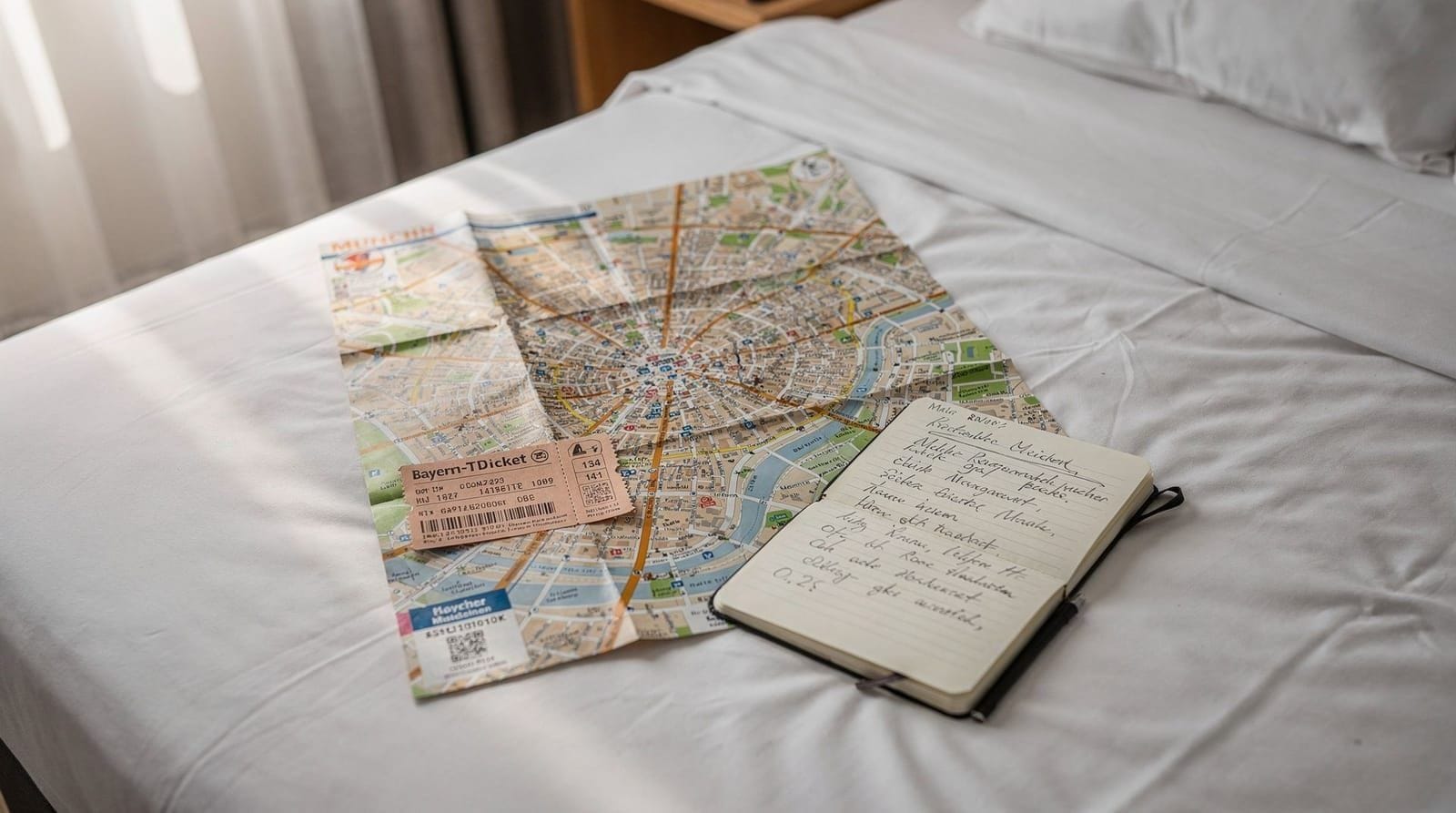
Train route: S-Bahn to Munich Hauptbahnhof, then direct regional train to Füssen (2 hours, runs every 2 hours from Hauptbahnhof, first train around 6:40am). A Bayern-Ticket covers this entire journey for up to 5 people at a flat rate. See: Bayern-Ticket guide and the dedicated Munich to Neuschwanstein day trip guide for the full step-by-step.
Timed entry tickets: These are mandatory at Neuschwanstein and sell out, often weeks in advance. Book at www.hohenschwangau.de — the official ticket site. You select a specific 15-minute entry window. The ticket window at the base of the hill (Ticket Centre Hohenschwangau) sells same-day tickets but they are frequently sold out by 9am. Do not leave this to chance.
From Füssen station to the castles: Bus 73 or 78 from Füssen station to Hohenschwangau, or a 5km bike ride. From the ticket centre at the bottom, it is a 40-minute uphill walk to Neuschwanstein (or a horse-drawn carriage for around €8, queues can be long). Neuschwanstein full-day guided tour from Munich
Neuschwanstein: what you’re actually visiting
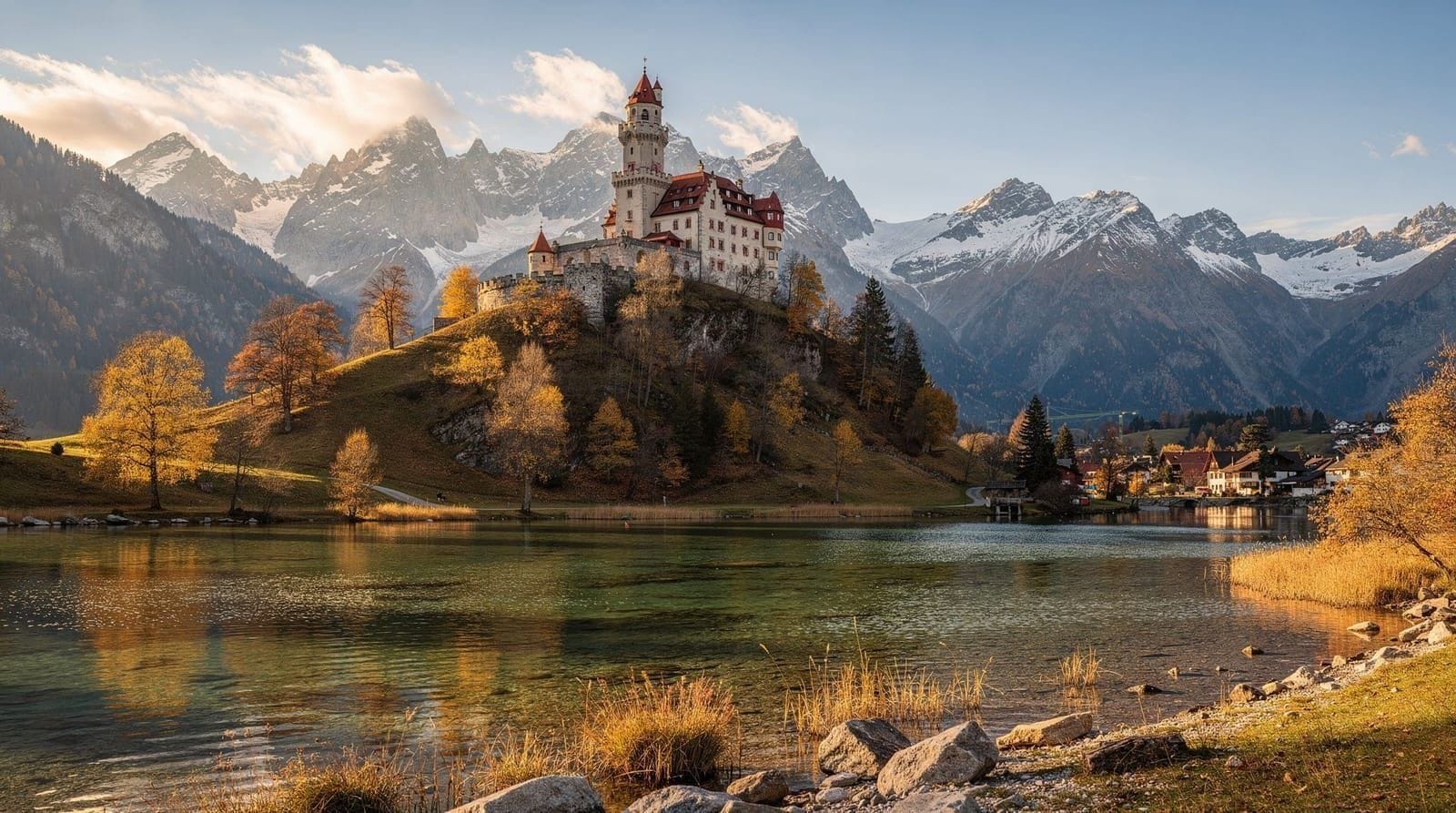
Ludwig II commissioned the castle in 1868 as a personal retreat and in honour of Wagner’s operas. He lived in it for only 172 days before his mysterious death in 1886. Most of the planned rooms were never finished. The guided tour (30 minutes) takes you through the Throne Room, King’s bedroom, Singer’s Hall, and kitchen — you see roughly 15 rooms of the 200 planned.
The most photographed view is from the Marienbrücke (Mary’s Bridge), a footbridge over the gorge 200 metres uphill from the castle entrance. The view from here looking down at the castle and across the Alpine foothills is legitimately spectacular. The bridge gets crowded by mid-morning; arrive early or arrive after 4pm.
Hohenschwangau Castle, at the base of the hill, is where Ludwig II grew up. Less famous but more complete — all rooms are furnished and finished. The tour covers more ground than Neuschwanstein and gives better context for Ludwig’s obsession with medieval legend and Wagner. Many visitors skip it for time reasons; it is worth two hours if you have them.
See: Neuschwanstein Castle, Neuschwanstein castle, Neuschwanstein vs Hohenschwangau
Return and evening
Füssen itself has a small old town worth 45 minutes if you arrive back before sunset. The Hohes Schloss (High Castle) above the town is impressive from the outside and has a gallery inside. Return train to Munich runs until around 10pm.
Day 3: Choose your focus
Option A — Englischer Garten, Pinakotheken, and Maxvorstadt
The Englischer Garten (English Garden) is 4km of urban parkland north of the city centre — larger than New York’s Central Park. The Eisbach wave at the southern entrance has year-round surfers on a standing wave; a crowd always gathers. Inside the park: the Chinese Tower beer garden (MO–SU, from 10am, about 7,000 seats), the Japanese Teahouse, and the Monopteros (a Greek temple on a hill with good city views).
From the southern edge of the Englischer Garten, Maxvorstadt is Munich’s museum district. The Alte Pinakothek holds one of the world’s best collections of Old Masters (Rubens, Raphael, Dürer). The Neue Pinakothek covers 18th–19th century European art. The Pinakothek der Moderne includes 20th century and contemporary works plus a design museum. Entry to each is around €7, free on Sundays. All three in one day is ambitious; pick one or two.
See: English Garden Munich guide and Munich’s Pinakothek museums guide
Option B — Deutsches Museum and the Isar
The Deutsches Museum on Museum Island in the Isar river is one of the world’s largest science and technology museums. It covers everything from historic mining operations to early aviation, marine navigation, musical instruments, and chemistry. There is a full-scale replica of a U-boat. Budget 3–4 hours minimum; serious enthusiasts spend a full day.
Entry in 2026: around €16 for adults. The museum is open 9am–5pm daily.
After the museum, the Isar riverbanks south of the city centre are worth an afternoon. Locals swim in the Isar in summer (water is clean and fast-moving). The area around the Flaucher beer garden and the Thalkirchen swimming area is genuinely local Munich rather than tourist Munich.
Practical logistics for 3 days
Getting around: The Munich U-Bahn and S-Bahn network is excellent. The Isarcard (7-day zone M pass) covers all inner-city travel for around €30 and is worthwhile for a 3-day visit if you are using transport daily. Single tickets cost €3.70 for inner zones.
Where to eat beyond beer halls: The city has more than pretzels and Hendl. Takeaway on the hoof: Käsesemmel (cheese roll) from any bakery chain (Hofpfisterei, Rischart) for €3–4. Sit-down lunch under €15: Café Luitpold on Brienner Strasse (good pastries and salads), Schnitzelwirt on Pestalozzistrasse (classic Bavarian portions), and Beim Sedlmayr near Karlsplatz.
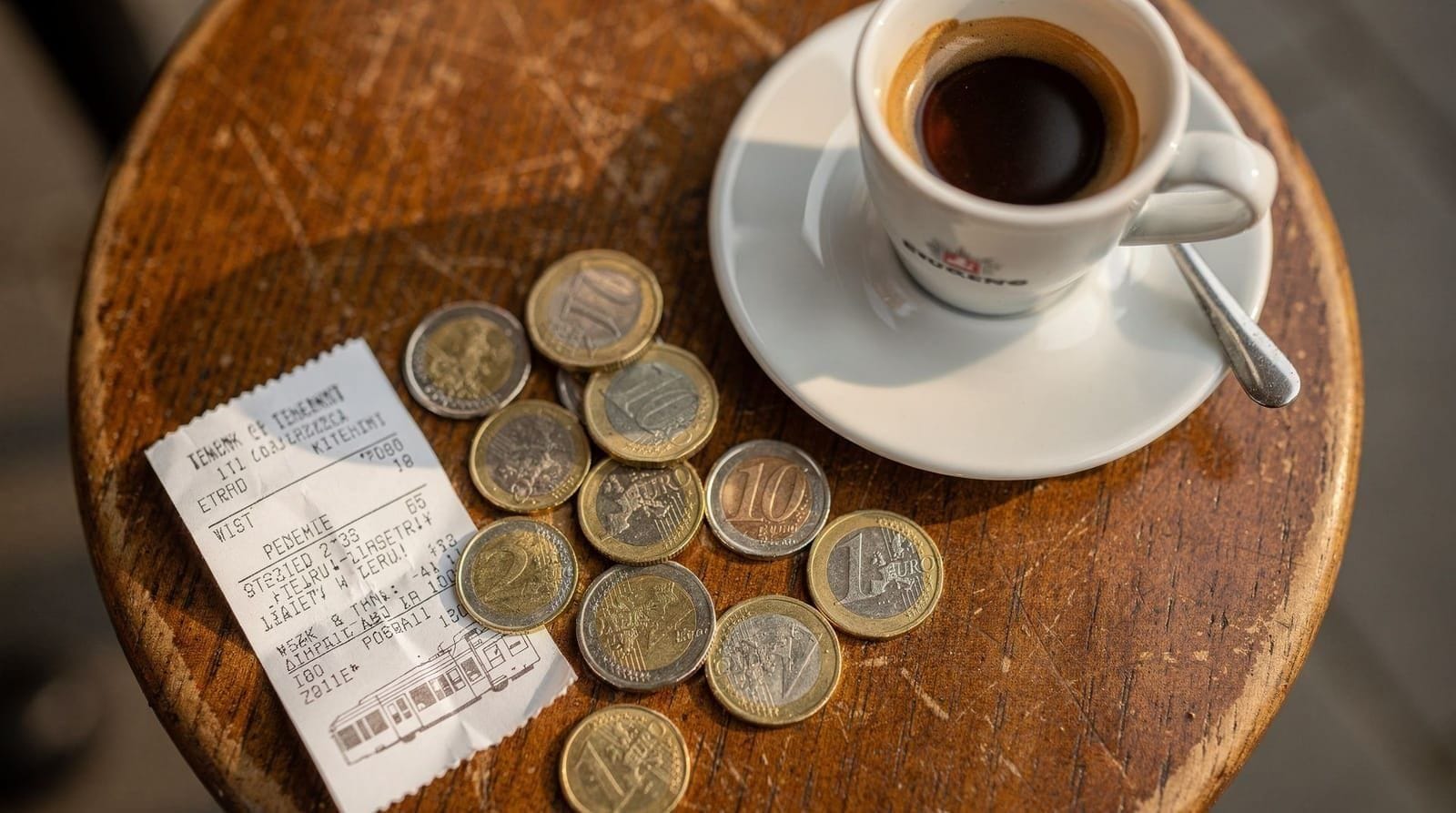
Coffee: Munich has a genuine coffee culture separate from the tourist trail. Vits in Maxvorstadt, Man versus Machine in Glockenbachviertel, and Woolloomooloo on Amalienstrasse are the three most serious specialty coffee shops.
Water: Munich tap water comes from the Mangfall valley in the Alps and is excellent. Use a refillable bottle.
Getting between neighbourhoods: This itinerary relies on the U-Bahn and S-Bahn network more than walking alone; our Munich public transport guide covers ticket types, apps, and the difference between Zone M and the extended zones you’ll need for Day 2.
See planning guides: Munich trip planning guide and Munich budget guide 2026
Where to stay for this itinerary
You don’t need a single “correct” neighbourhood, but proximity to the U-Bahn matters more than proximity to Marienplatz itself. Maxvorstadt puts you closest to Day 3’s museum option and still a short ride from the Altstadt. Gärtnerplatzviertel (Glockenbachviertel) has better evening atmosphere and good food options within walking distance of the Day 1 beer hall stops. Full neighbourhood breakdown in our where to stay in Munich guide.
If you want a longer or shorter version
Compressing this into 2 days means dropping either Neuschwanstein or the Day 3 museum block — our 48 hours in Munich itinerary shows how that trade-off plays out without the day trip. Extending to 4 or 5 days lets you add Zugspitze, Dachau, or a second museum day without cutting anything from the plan above — see how many days in Munich for a duration-by-duration breakdown.
What 3 days won’t cover
Three days in Munich without a car means you have to make real choices. You cannot visit Neuschwanstein AND Zugspitze AND Dachau in three days without the trip becoming an exhausting logistics exercise. Pick one significant day trip and commit to it.
If you have a car or are comfortable with complex public transport: Dachau Concentration Camp Memorial is 25 minutes by S-Bahn from Hauptbahnhof. It is free to enter, has extensive documentation, and represents an essential counterpart to the beer-and-castles narrative of Bavaria. The memorial is open Tuesday to Sunday.
See: Dachau Concentration Camp Memorial Site and Dachau
Frequently asked questions about 3 days in Munich
Is 3 days enough for Munich?
For a first visit focused on the city centre and one day trip, yes. You will miss a lot — the museum district deserves more time, day trips to Berchtesgaden or Garmisch each need a full day — but you will come away with a genuine sense of what Munich is.
Should I buy a Munich CityTourCard?
The CityTourCard includes unlimited public transport and discounts at attractions. Run the numbers against your planned itinerary. If you are visiting 4–5 paid attractions in 3 days, it is usually worth it. If you are spending most of Day 2 in Neuschwanstein, where transport is already covered by the Bayern-Ticket, the math changes.
What is the best neighbourhood to stay in?
Maxvorstadt (near the museum district) and Gärtnerplatzviertel (Glockenbachviertel) offer the best balance of central location, local atmosphere, and reasonable prices. The immediate surroundings of Hauptbahnhof are convenient but not pleasant.
How expensive is Munich for food and drink?
More expensive than other German cities, comparable to Amsterdam or Vienna. Budget around €40–60 per day for food if eating mid-range. A sit-down Bavarian lunch with a beer costs around €25–35 per person. Street food and bakery lunches can cut this to €8–12. Our Munich street food guide has the fuller list of cheap, genuinely good options beyond the bakery staples mentioned above.
Can I fit Zugspitze into this exact 3-day plan?
Not without cutting something. Zugspitze needs a full day like Neuschwanstein does, and this itinerary already allocates Day 2 to the castles. If Zugspitze matters more to you than Neuschwanstein, simply swap it in for Day 2 — the transport logic (train to Garmisch, Bayern-Ticket covers most of it) is similar in structure even though the destination differs.