Best Bavarian castles ranked: an honest assessment of all 7 worth visiting
The honest premise: not all Bavarian castles are equal
Bavaria has over 300 castles, fortresses, and palaces. Most are ruins, private property, or minor regional attractions that do not justify a day of travel time. A handful are genuinely exceptional. This ranking focuses on the seven that are worth including in an itinerary, ordered by the quality of the overall experience — not fame, not size, not photo opportunities.
The ranking criteria: interior quality and completeness, ease of access without a car, value for money, crowd level, and what the visit teaches you that you would not get elsewhere.
| Where | Spread across Bavaria — closest is Nymphenburg (in Munich), furthest is Herrenchiemsee (Chiemsee) |
| Cost per castle | Around €7–€15 entry, some with combined tickets |
| Time needed | Half a day per castle including travel; a full day for Neuschwanstein + Hohenschwangau |
| Getting there | Train + bus/boat for most; a car or guided tour helps most for Linderhof |
| Best time | May, October, or winter weekdays to avoid the worst crowds |
Quick comparison of all seven before the detail below:
| Rank | Castle | Best for | Crowd level | Entry |
|---|---|---|---|---|
| 1 | Herrenchiemsee | Most complete, opulent interior | Low–moderate | ~€10 + €5 boat |
| 2 | Linderhof | Intimate scale, Venus Grotto | Moderate | ~€10 + extras |
| 3 | Neuschwanstein | Iconic exterior, Marienbrücke view | Very high (summer) | ~€15 |
| 4 | Hohenschwangau | Biographical context for Ludwig II | Moderate | ~€15 |
| 5 | Nuremberg Kaiserburg | Medieval imperial history | Moderate | ~€7 |
| 6 | Residenz Munich | 700 years of Wittelsbach power | Moderate | ~€9–€16 |
| 7 | Nymphenburg | Easiest access, Gallery of Beauties | Low–moderate | ~€8–€15 |
1. Herrenchiemsee Palace — the best castle experience in Bavaria
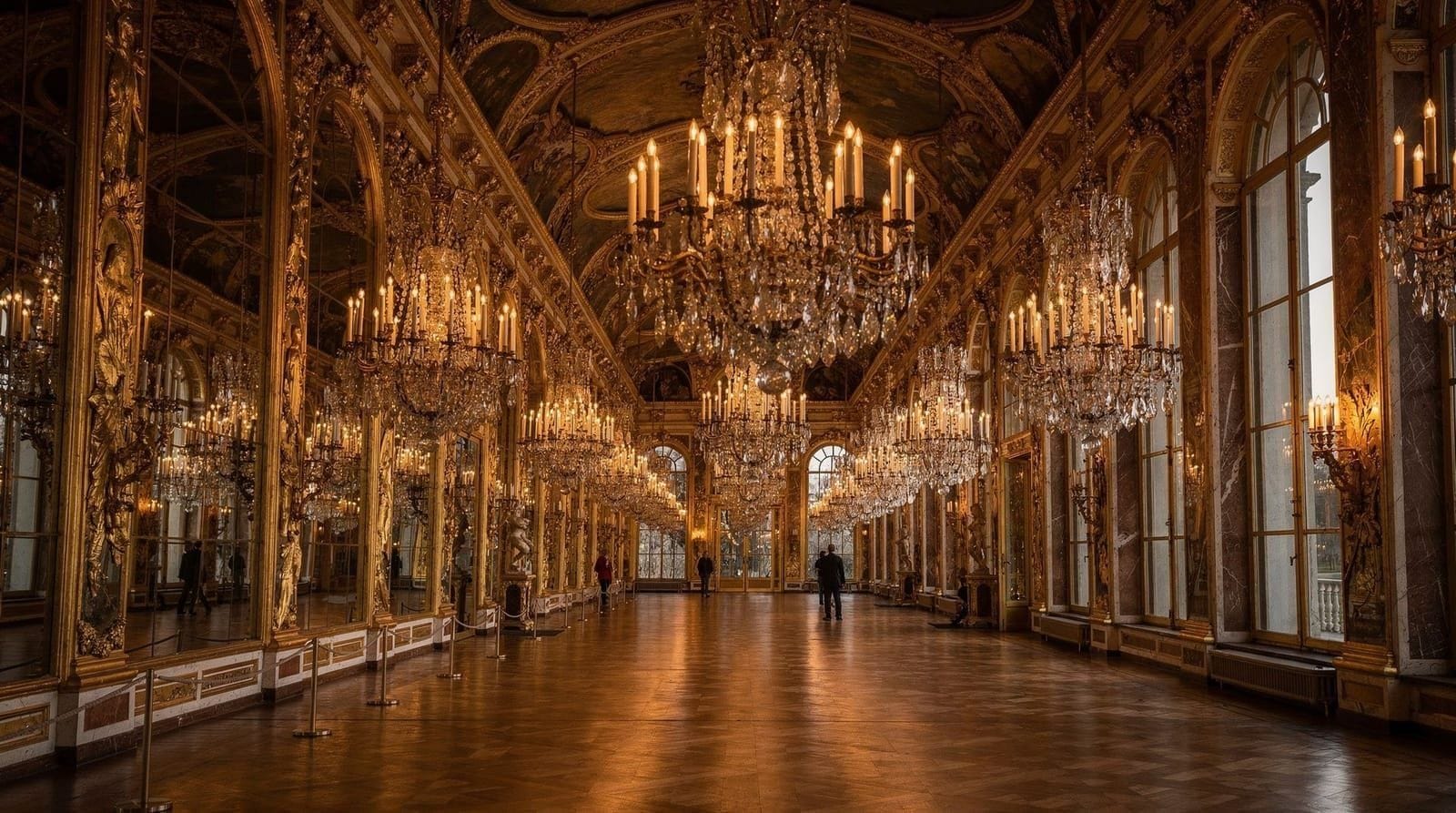
Why it tops the list: Herrenchiemsee is Ludwig II’s most complete and most spectacular interior achievement, yet receives a fraction of Neuschwanstein’s visitors. It sits on an island in the Chiemsee lake, accessible only by boat, which means even in summer the crowd is manageable. The palace is modelled explicitly on Versailles — Ludwig built it as a monument to Louis XIV and the idea of absolute monarchy — and the State Bedroom and Hall of Mirrors are among the most opulent rooms in Germany.
What makes it different: Unlike Neuschwanstein, which is theatrical and unfinished, Herrenchiemsee was designed to be lived in and is complete. The room proportions, the gilding, the painted ceilings — it is maximally ambitious and succeeds.
Getting there: Munich Hauptbahnhof → Prien am Chiemsee (1 hour by regional train, Bayern-Ticket valid) → local bus or bike to the ferry → 20-minute boat crossing to Herreninsel. Total journey approximately 2 hours.
Entry: Adults approximately €10 (palace) + €5 return boat. Guided tour included.
Crowd level: Low to moderate (the island location naturally limits visitor numbers)
See: Herrenchiemsee Palace and Herrenchiemsee palace Herrenchiemsee palace and boat trip from Munich
2. Linderhof Palace — small, perfectly formed, and often underestimated
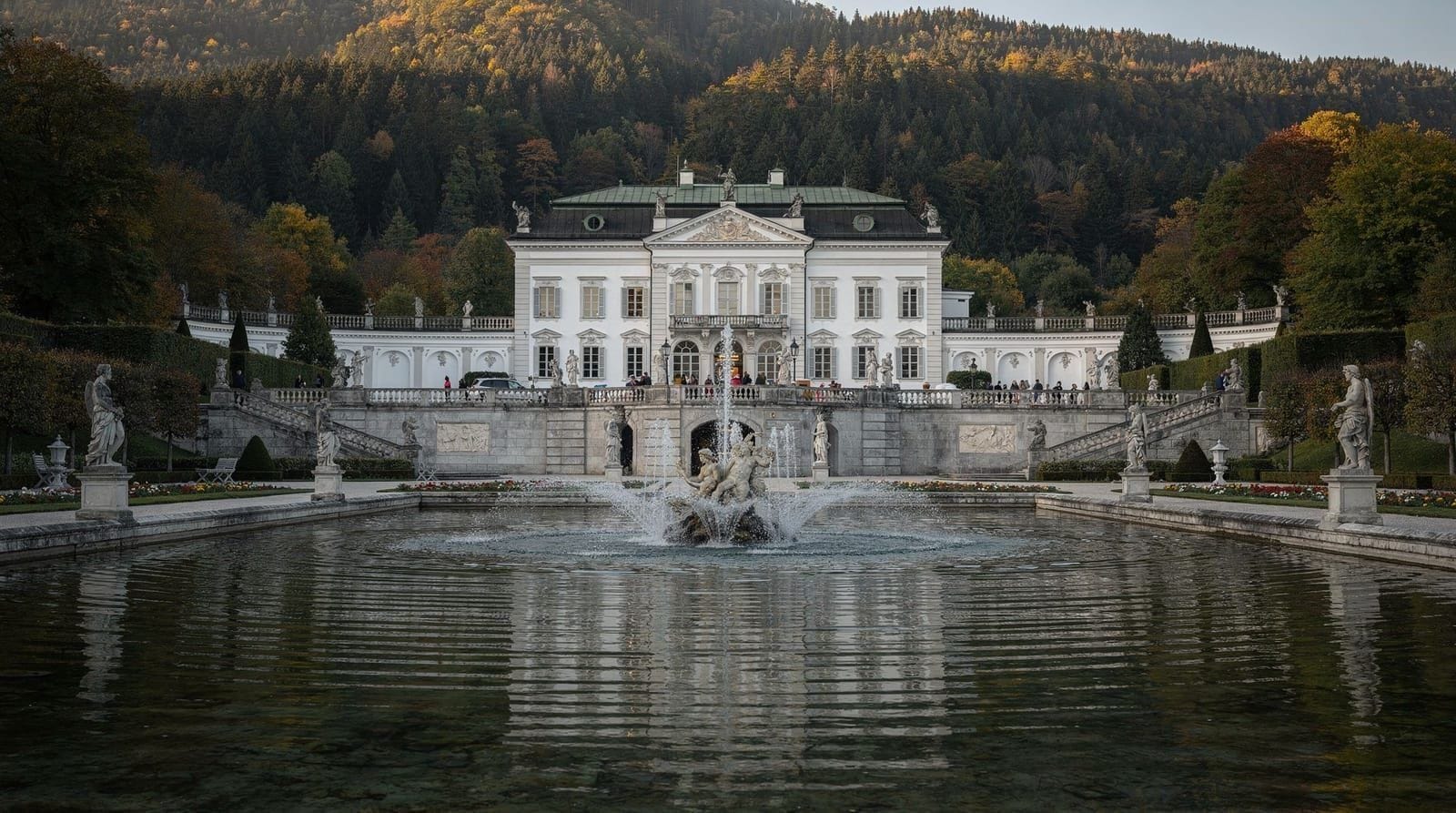
Why it ranks second: Linderhof is the smallest of Ludwig II’s three castles but the only one he completed and lived in. It shows his personality most clearly. The French Rococo style is lavish but the scale is intimate — you can actually imagine someone inhabiting these rooms. The surrounding formal garden, with its Venus Grotto (an artificial stalactite cave with coloured lighting and a swan boat) and Moorish Kiosk, is eccentric in the best possible way.
What makes it different: The Venus Grotto is genuinely bizarre and genuinely fascinating — an artificial cave 25 metres long, lit by coloured electric lights (one of the first uses of electric light in Bavaria), built entirely to recreate a scene from Wagner’s Tannhäuser. It has recently reopened after restoration and is currently in better condition than it has been in decades.
Getting there: Best reached by car. By public transport: Munich → Murnau or Oberammergau by regional train, then bus (journey time approximately 2h30m total, requiring a connection). This is one case where renting a car or booking a guided tour is genuinely more efficient. If you’re driving, our Munich car rental guide covers where to book.
Entry: Adults approximately €10 (palace) + separate garden entry in summer (~€4). Venus Grotto is a separate ticket approximately €6.
Crowd level: Moderate, significantly lower than Neuschwanstein
See: Linderhof Palace and Linderhof palace Linderhof Palace full day trip from Munich
3. Neuschwanstein — the most famous castle in Germany, for complicated reasons
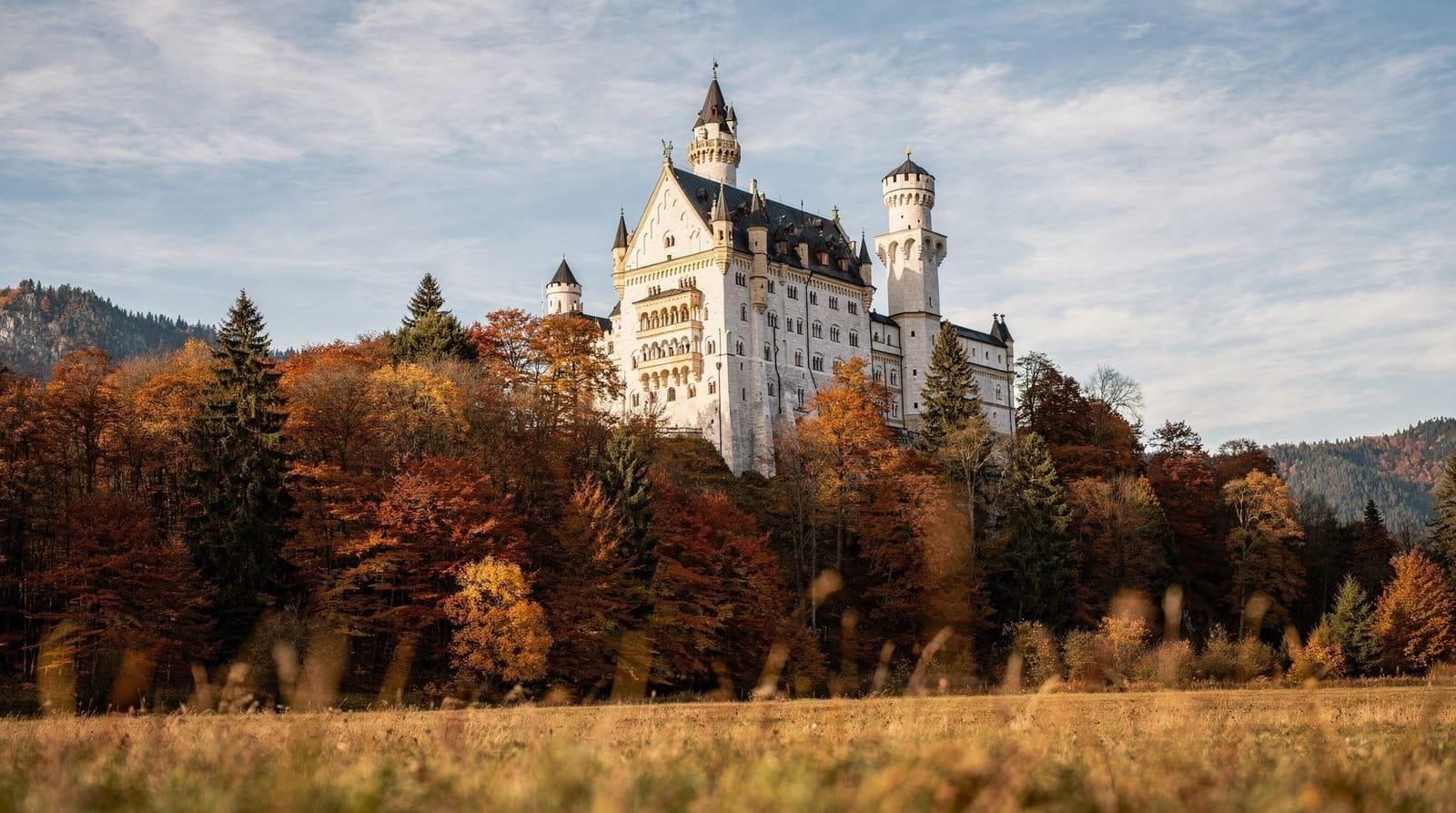
Why it ranks third despite being the most famous: Neuschwanstein is genuinely extraordinary. Its hilltop position, its white limestone exterior against Alpine backdrop, the scale of its ambition — these are real. Ludwig II’s design brief to stage designer Christian Jank rather than a trained architect resulted in something theatrical and unprecedented. The Singer’s Hall (Sängersaal) and the Throne Room are spectacular.
It ranks third rather than first because the experience is complicated by the crowds and the format. The 35-minute guided tour through 15 rooms with 20 strangers does not allow you to absorb the space. The most famous view — from the Marienbrücke — involves competing with hundreds of other photographers. The overall visitor management is professional but the sheer volume changes the character of the visit.
What makes it irreplaceable: The exterior and setting are genuinely unlike any other castle in Europe. The Marienbrücke view at golden hour is legitimately one of the great photographic compositions in Germany. The story of Ludwig II — isolated, obsessive, building fantasy castles while Bavaria modernised around him, dying under mysterious circumstances at 40 — is one of the most compelling personal narratives in European royal history.
Entry: Adults approximately €15. Timed tickets mandatory, book well in advance at hohenschwangau.de.
Crowd level: Very high, June–August. Manageable in May, October, and winter. Our Neuschwanstein crowds — the honest picture covers exactly how bad peak season gets and how to avoid the worst of it, and Neuschwanstein tickets guide walks through the booking process step by step.
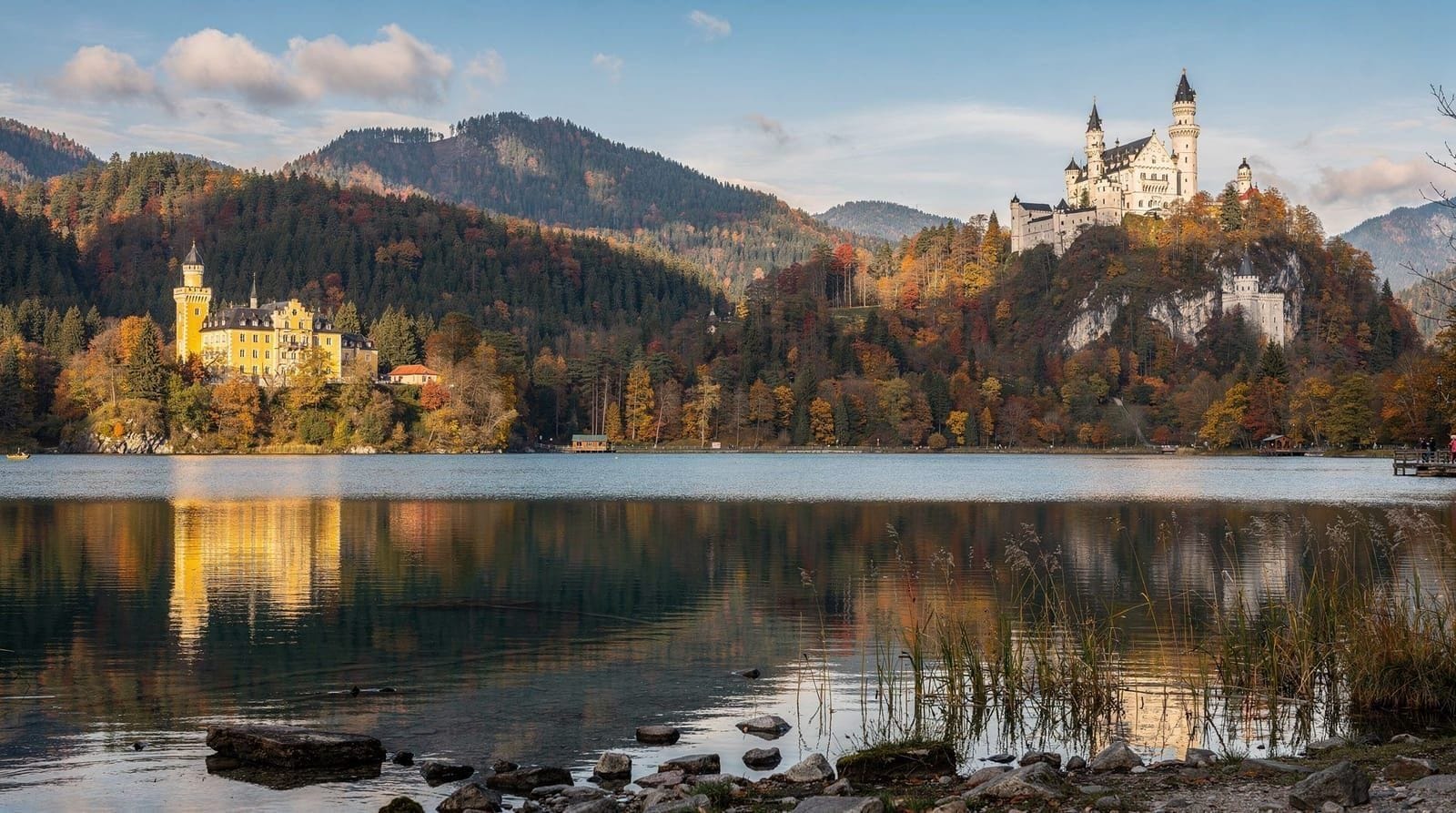
See: Neuschwanstein Castle and Neuschwanstein castle
4. Hohenschwangau — the castle people skip and shouldn’t
Why it deserves more attention: Hohenschwangau is Neuschwanstein’s neighbour and is consistently overlooked because the white castle is more photogenic. This is a mistake. Hohenschwangau was built by Ludwig II’s father, King Max II, and is where Ludwig grew up. It is fully furnished, completely finished, and provides essential biographical context. The murals depicting medieval German legend that cover the walls of the royal bedrooms are the direct source material for Ludwig’s later obsessions.
If you understand Hohenschwangau, Neuschwanstein makes sense. If you visit Neuschwanstein without Hohenschwangau, you are missing the foundation of the story.
Getting there: Same journey as Neuschwanstein — Füssen by regional train, then bus to Hohenschwangau village. The castle is at the base of the hill rather than the top, making it easier to reach physically.
Entry: Adults approximately €15. Combined ticket with Neuschwanstein approximately €28.
Crowd level: Lower than Neuschwanstein, though they share the same base village
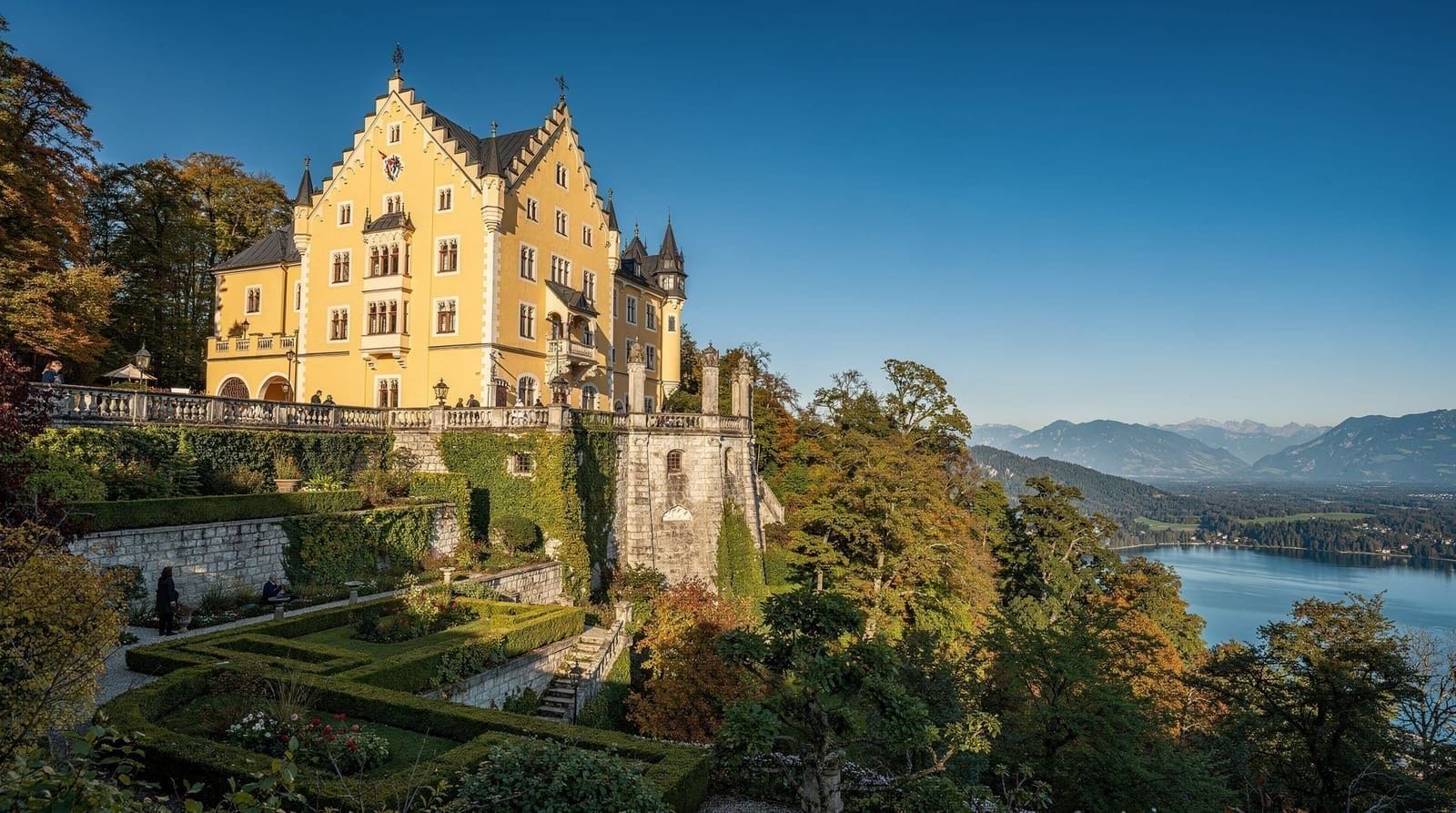
See: Hohenschwangau castle and Hohenschwangau Castle
5. Nuremberg Castle (Kaiserburg) — medieval imperial power, zero Ludwig II
Why it makes the list: Nuremberg’s Imperial Castle (Kaiserburg) is not a Wittelbach royal palace but a medieval imperial fortress occupied by Holy Roman Emperors for over 400 years. It sits on sandstone rock above Nuremberg’s old town, commands exceptional views, and has a double-chapel (Doppelkapelle) — an architectural innovation where two superimposed chapels served different social classes simultaneously.
What it teaches you that no other Bavarian castle does: what actually made Bavaria powerful before the Romantic-era castle building of the 19th century. The medieval reality versus Ludwig II’s fantasy is a useful counterpoint.
Getting there: Nuremberg Hauptbahnhof is 1 hour from Munich by ICE (Bayern-Ticket does not cover ICE — use a Sparpreis ticket) or 1h45m on regional trains (Bayern-Ticket valid). The castle is a 15-minute walk uphill from the main train station.
Entry: Adults approximately €7 (Imperial Apartments and Well), extra for special exhibitions.
Crowd level: Moderate — Nuremberg is well-visited but the castle is only one of several major attractions.
See: Nuremberg
6. Residenz Munich — the most important castle that isn’t called a castle
Why it belongs here: The Munich Residenz is not technically called a castle (it’s a palace/Residenz) but is by far the most historically significant royal residence in Bavaria. The Wittelsbach dynasty ruled from here for 700 years. The complex contains 130 rooms including the Treasury, which holds crowns, jewels, and religious relics of genuinely extraordinary historical value — things that have survived wars, thefts, and revolutions.
Unlike the romantic hilltop castles built as retreats, the Residenz is where actual political power operated for centuries. The Antiquarium (the oldest surviving Renaissance hall north of the Alps), the Ancestral Gallery, and the Herkulessaal give a fundamentally different picture of Bavarian history than Neuschwanstein.
Getting there: Central Munich. Walking distance from Marienplatz.
Entry: Adults approximately €9 (Residenz), €9 (Treasury), or €16 combined.
Crowd level: Moderate — busy in summer, manageable in winter
7. Nymphenburg Palace — the summer palace Munich overlooked
Why it completes the list: Nymphenburg is Munich’s summer palace — a long baroque structure with a 2km facade on the western outskirts of the city. It is easily accessible (15 minutes from the city centre by tram), beautiful in summer when the formal garden and canal are at their best, and contains the famous Gallery of Beauties (Schönheitengalerie) — a collection of 36 portraits of women considered beautiful by King Ludwig I, including the famous portrait of Lola Montez.
The Marstallmuseum (royal stables museum) inside Nymphenburg contains Ludwig II’s actual coronation coaches and sleighs — the physical evidence of Wittelsbach court life that makes the whole historical narrative tangible.
Getting there: Munich city, tram 17 from Karlsplatz (Stachus) directly to Schloss Nymphenburg stop. 15–20 minutes.
Entry: Adults approximately €8 (palace) or combined ticket ~€15 including all pavilions and museums.
Crowd level: Low to moderate; far fewer visitors than Neuschwanstein
See: Nymphenburg Palace guide and Munich Nymphenburg Palace guided tour
How to combine castles on a trip
Most efficient castle itinerary for a 5-day Munich trip:
- Day 2: Neuschwanstein + Hohenschwangau (full day, train to Füssen)
- Day 3: Linderhof + optional Oberammergau (car or guided tour recommended)
- Day 4: Herrenchiemsee (half day, train to Prien + boat)
- Day 5 morning: Nymphenburg (central Munich, 2–3 hours)
- Day 1 afternoon or Day 5 afternoon: Residenz Munich (city centre)
This covers all 7 in 5 days without a car for most of it. Linderhof is the exception where a car or guided tour saves significant time.
If you only have one castle day: Neuschwanstein plus Hohenschwangau as a combined visit is the conventional choice and the conventional choice is not wrong. If crowds bother you and you have flexible dates: Herrenchiemsee in May or October.
Full guide: King Ludwig II castles and Bavaria’s castles by train
If you can only pick two
Most first-time visitors ask this directly, so here’s the honest answer: Neuschwanstein + Hohenschwangau if you want the iconic photo and the full Ludwig II story in one train trip. Herrenchiemsee + Nymphenburg if crowds matter more to you than fame — both are genuinely beautiful, far less busy, and Nymphenburg needs no day-trip planning at all since it’s inside Munich. Either pairing fits comfortably into a single day. For more castle options ranked by proximity to the city, see best castles near Munich.
Frequently asked questions about Bavarian castles
Which castle is closest to Munich?
Nymphenburg Palace is within Munich itself (west of the city centre). The Residenz is in the city centre. For a castle outside Munich, Dachau has a historic castle site, but the closest major castle is Neuschwanstein at 130km south.
Do I need a car to visit Bavarian castles?
No — Neuschwanstein, Herrenchiemsee, and Nymphenburg are all accessible by public transport (train + bus or boat). Linderhof is the exception, where the bus connection from Oberammergau exists but is infrequent. A guided tour covers Linderhof most efficiently.
Which castle is least crowded?
Herrenchiemsee, by a significant margin. The boat journey naturally limits visitor numbers. Linderhof is the second least crowded of the major castles.
Is Neuschwanstein really worth the hype?
The exterior and the Marienbrücke view: genuinely yes. The interior tour: yes, but understand you are getting 35 minutes and 15 rooms with a group. Manage expectations for the interior and the exterior will deliver.
Can I visit multiple castles in one day?
Neuschwanstein and Hohenschwangau can be combined on one day (they are in the same village). Other combinations require significant travel and are difficult to do without a car. Neuschwanstein + Linderhof in one day is ambitious even with a car.
Which castle did Ludwig II actually live in?
Linderhof is the only castle Ludwig II completed and actually lived in — he spent the most time there. He lived at Neuschwanstein for only 172 days before his death in 1886. Herrenchiemsee was never fully completed during his lifetime.
Is it worth combining a castle visit with Garmisch or Zugspitze?
Not on the same day. Neuschwanstein/Hohenschwangau and the Zugspitze are in different directions from Munich and each needs a full day on its own. If you have more time, our Bavaria road trip guide shows how to sequence castles and the Alps across a full week without the rush.
Which castle has the best photo opportunities?
Neuschwanstein from the Marienbrücke is the single most photographed view in Bavaria, and deservedly so. For fewer people in your shot, Herrenchiemsee’s lakeside approach by boat and Linderhof’s Venus Grotto both photograph beautifully with a fraction of the crowd.