Munich Third Reich walking tour — honest review and what to expect
Munich: Third Reich and WWII walking tour
This is one of the more emotionally demanding things you can do in Munich, and also one of the most valuable if approached with the right preparation. Below is a quick logistics summary, followed by the full route breakdown, honest pros and cons, and how to pair it with Dachau or the NS-Dokumentationszentrum.
| Where | Central Munich, from Marienplatz/Odeonsplatz to Königsplatz |
| Cost | Group tours around €15–25; private tours around €80–150 for two |
| Time needed | 2.5–3 hours group; 3.5–4 hours private |
| Getting there | Meets centrally, typically Marienplatz or near the Residenz — check operator |
| Best time | Book several days ahead in summer; walk-in rarely available July–September |
Munich’s role in the rise of National Socialism
Before booking any tour, it helps to understand why Munich is central to this history. Berlin is where the Third Reich governed; Munich is where it was born. Hitler arrived in 1913 and never had a meaningful connection to any other German city. The NSDAP was founded here. The Beer Hall Putsch of 1923 was launched here. The first concentration camp was built at Dachau, 16 km northwest. The city’s connection to the Nazi period is not incidental — it is structural, and a guided walking tour is one of the most effective ways to understand how it unfolded in specific streets and buildings that still exist.
This creates a particular atmosphere on these tours. You are not visiting ruins or a museum built at a distance from events. You are standing on Odeonsplatz where people were shot in 1923, or on Brienner Strasse where the Nazi party headquarters operated, surrounded by functioning streets and shops. A good guide makes that continuity visible and unsettling in exactly the right way.
What the tour covers
Most group Third Reich walking tours follow a similar route through the city centre and take between 2.5 and 3 hours on foot, covering 3 to 5 km.
Marienplatz — Typically the starting point. Guides explain Munich’s political history in the Weimar period and why it became fertile ground for extremist politics during the economic instability of the early 1920s.
Hofbräuhaus — The world-famous beer hall was the site of early NSDAP rallies, including Hitler’s first public appearance as party speaker in 1919. The guide will walk you past the building and explain the significance — though the beer hall today is primarily a tourist venue, and the guide will likely address that contrast directly.
Residenzstrasse and Odeonsplatz — The route of the Beer Hall Putsch march on 9 November 1923 and the site where it was stopped. The Feldherrnhalle is explained in its historical context, including the SS guard requirement under the Third Reich and the Viscardigasse detour used by local residents. See our Beer Hall Putsch history guide for more background.
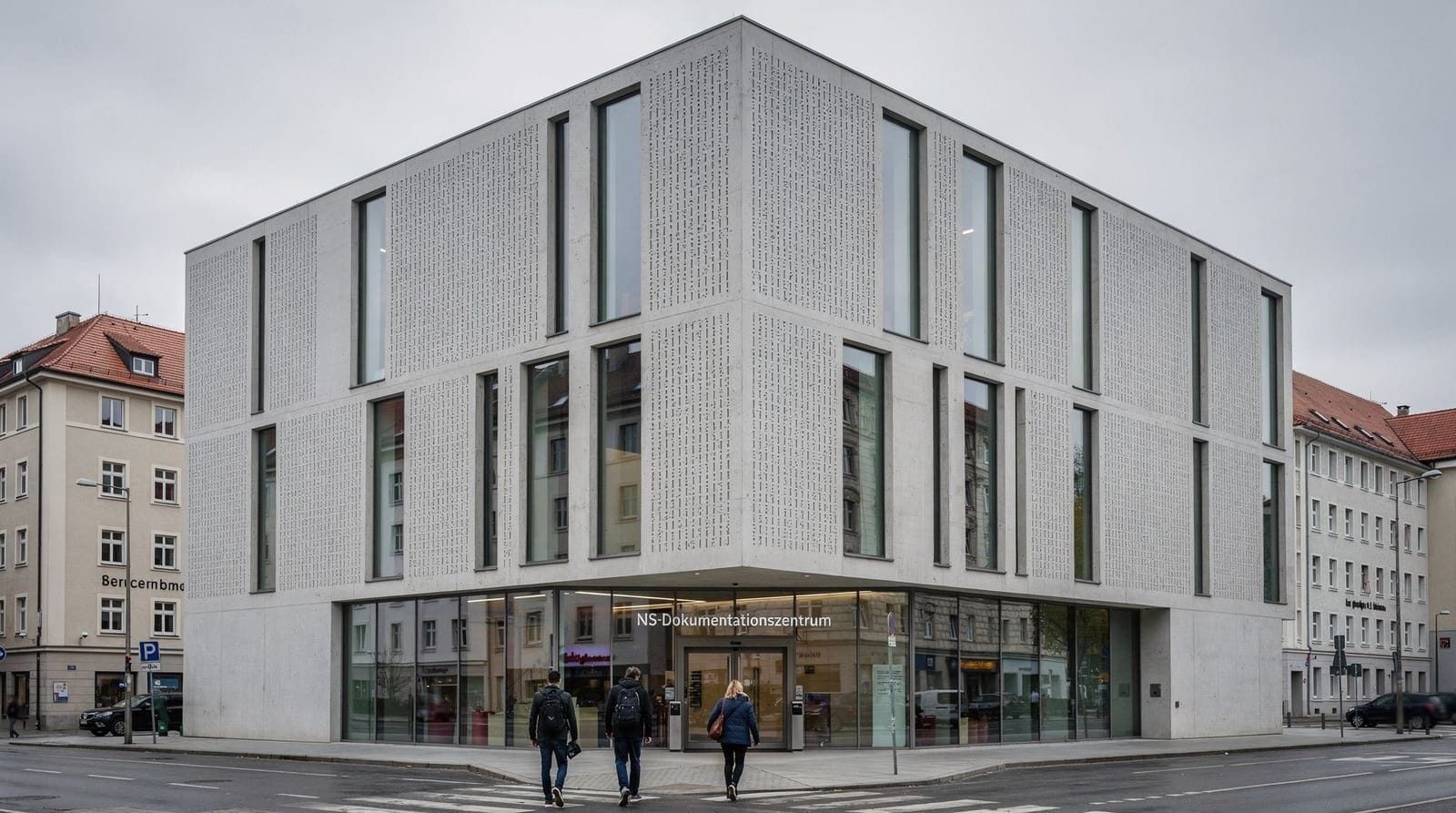
Brienner Strasse — The former Nazi party administrative heartland. The buildings that housed the NSDAP headquarters were largely demolished after the war; the NS-Dokumentationszentrum now stands at the former site of the Nazi “Brown House.” Guides explain what stood here and what has replaced it.
NS-Dokumentationszentrum — Most tours pass the exterior and explain the documentation centre’s role. Entry is usually not included in the tour price — guides typically suggest visiting independently after the tour ends. Our Nazi documentation centre guide covers what to see inside.
Königsplatz — The neoclassical square was redesigned by the Nazis as a ceremonial space. The Ehrentempel (Honour Temples) that stood here were demolished by the Americans after 1945; the bases remain visible. The Glyptothek and Antikensammlungen on the square pre-date the Nazi period and are worth visiting in their own right.
Platz der Opfer des Nationalsozialismus — A memorial square to victims of National Socialism, near Brienner Strasse. Often included in longer tours.
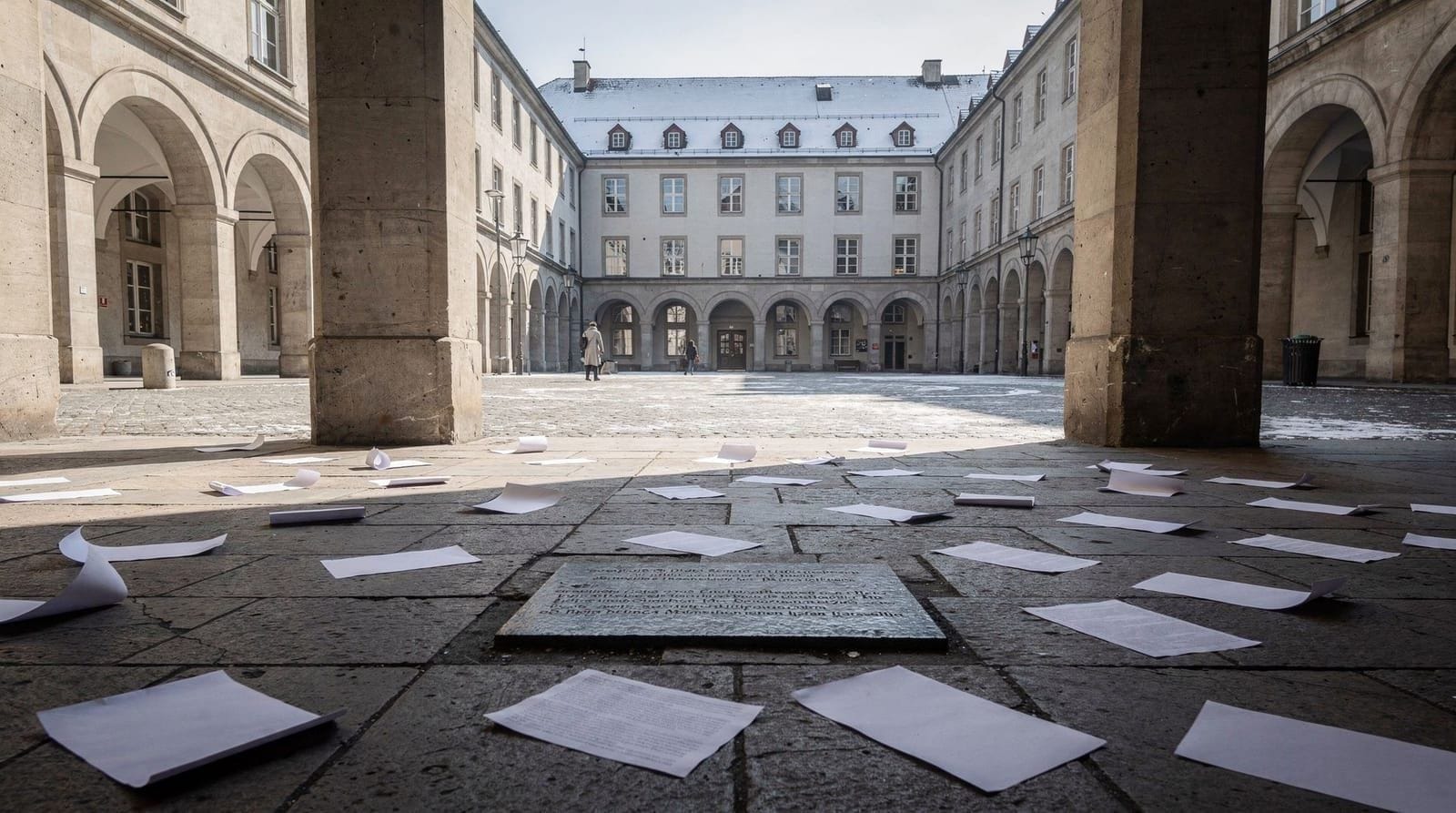
Some tours also visit Ludwig Maximilian University, where the White Rose student resistance group distributed leaflets in 1943 before their arrest. For more on this history, our White Rose resistance guide covers the group in depth. Book Munich Third Reich and WWII walking tour
Emotional preparation — what to expect
This is not a tour for casual sightseeing. The content is historically serious and guides approach it with gravity. You will hear accounts of persecution, political violence, and the mechanisms by which ordinary German citizens became complicit in or victims of the Nazi state. A good guide will avoid sensationalism while making the material genuinely affecting.
Most visitors leave the tour quieter than they arrived. That is appropriate and is arguably what the tour is designed to achieve. Guides from reputable operators are trained to handle questions sensitively, including questions from German visitors grappling with family history.
If you are likely to find extended exposure to this material distressing — particularly if you have family history connected to the Holocaust — be aware of what the tour involves before booking. The Dachau Memorial Site, covered in our Dachau memorial guide, is significantly more intense emotionally and requires similar preparation.
Comparing the tour formats at a glance
| Format | Duration | Price (per person) | Best for |
|---|---|---|---|
| Group walking tour | 2.5–3 hours | €15–25 | First visit, budget-conscious travellers |
| Private walking tour | 3.5–4 hours | €40–75 (scales with group) | Tailored focus, families with older teens |
| Segway tour | 3 hours | Similar to group walking | Visitors who want ground covered without walking |
Group tour vs private tour
Group tours (typically 10–25 people) cost €15–25 per person. They offer less flexibility but allow the shared experience of processing difficult history with other visitors, which some people find valuable. The guide sets the pace and depth.
Private tours cost €80–150 for two people, scaling by group size. They allow the guide to focus on your specific questions, adapt the route to your interests (more focus on Jewish history, or the resistance, or the post-war legacy), and to spend more time at sites that resonate with you. If you are visiting Munich in part specifically for this history, a private tour is worth the extra cost. Book private or group Third Reich and WWII tour
What the tour does not cover
Walking tours focused on Munich are necessarily limited to the city centre. They do not include visits to Dachau Concentration Camp Memorial Site, which requires a separate half-day trip northwest of Munich (S-Bahn plus bus from Munich Hauptbahnhof, total around 45 minutes each way). See our Munich to Dachau day trip guide for logistics.
The tours also do not cover Nuremberg, where the Nazi party rallies were held and where the post-war trials took place. Our Nuremberg trials guide and Munich to Nuremberg day trip guide cover those options for visitors who want to extend their historical itinerary.
The Eagle’s Nest and Berchtesgaden require a separate full day and are covered under a different set of tours focused on the Alpine context of the Nazi leadership’s wartime operations.
Honest pros and cons
Pros:
- Covers sites you would not find or contextualise without a guide
- Well-qualified English-language guides with solid historical backgrounds
- Walking route covers the actual streets and buildings where events occurred
- Appropriate tone — educational without sensationalism
- Small group sizes on better operators keep the experience from feeling impersonal
Cons:
- Quality varies significantly by operator and individual guide — read recent reviews carefully before booking
- Some tours cover a lot of ground quickly; if you want depth, a private tour is better
- The NS-Dokumentationszentrum interior is not included in most tour prices
- Route is entirely outdoors — challenging in heavy rain without a layer
Pairing with the NS-Dokumentationszentrum
The walking tour and the NS-Dokumentationszentrum work well together as a full-day programme. Do the walking tour in the morning (departures typically at 10:00 and 14:00 for group tours), then spend 90 minutes to two hours in the documentation centre in the early afternoon. The documentation centre covers the same material in much greater archival detail through documents, photographs, and interactive displays across four floors. The combination gives you both the spatial understanding from the walking tour and the documentary depth from the centre.
Planning your visit
Tours depart from various central points in Munich — typically Marienplatz or near the Residenz. Check the operator’s meeting point carefully, as different tours use different starting locations within the same square kilometre.
Dress for walking: comfortable shoes and weather-appropriate layers. The route involves no steps or accessibility obstacles beyond normal pavement surfaces, but flat shoes are recommended as some areas have cobblestones.
For visitors with more time, combine this tour with a visit to Dachau on the following day and a browse through the Munich Jewish history guide to understand the community that was destroyed in this city. The combination makes for a more complete picture of what the Nazi period meant for Munich’s residents.
See also: Munich WWII history guide · Munich old town history · Munich museum quarter history
Booking, weather, and what to bring
Confirm the meeting point precisely — operators cluster around Marienplatz and the Residenz within the same few hundred metres, and arriving at the wrong statue costs you the departure. Bring water and, in summer, sun protection; the route is entirely outdoors with limited shade on Königsplatz and Odeonsplatz. In winter, dress warmly — a slow-moving group standing still to hear commentary feels colder than walking briskly.
If you’re building a full day around this history, a realistic pairing is the walking tour in the morning, a self-guided visit to the NS-Dokumentationszentrum in the early afternoon, and — if you have appetite left — a quiet browse of the Munich Jewish history guide material in the evening rather than another site visit. Trying to add Dachau to the same day is not realistic; treat it as a separate half-day, ideally with a night’s gap to process the walking tour first.
Frequently asked questions about Munich Third Reich walking tours
What does the Munich Third Reich walking tour cover?
Standard tours visit the Feldherrnhalle on Odeonsplatz, the site of the former NSDAP headquarters on Brienner Strasse, the NS-Dokumentationszentrum, the Platz der Opfer des Nationalsozialismus memorial, and often the Hofbräuhaus where early Nazi rallies took place. Some tours extend to sites near the Königsplatz or the White Rose memorial at Ludwig Maximilian University.
How long does the tour last?
Standard group tours run 2.5 to 3 hours on foot. Private tours can be extended to 3.5 to 4 hours and cover more sites in greater depth.
Is it appropriate for teenagers?
Yes, for teenagers aged 14 and above. Guides handle the material with educational rigour and do not sensationalise. Younger children would find the subject matter difficult to contextualise.
Do I need to book in advance?
Yes. Quality small-group tours book up several days ahead in summer. Walk-in spaces are rarely available on the day, particularly in July, August, and September.
What is the Feldherrnhalle and why is it significant?
The Feldherrnhalle on Odeonsplatz is a 19th-century loggia modelled on Florence’s Loggia dei Lanzi. On 9 November 1923, police dispersed Hitler’s Beer Hall Putsch march here, killing 16 Nazi marchers and four policemen. Under the Third Reich, SS guards were posted at the site and pedestrians were required to give the Nazi salute when passing.
Can I visit the NS-Dokumentationszentrum independently?
Yes. The centre at Brienner Strasse 34 is open Tuesday to Sunday from 10:00 to 19:00. Entry costs €7 for adults. Budget 90 minutes to two hours for the permanent exhibition.
Is there a Segway or bike version of this tour?
Yes. A 3-hour Segway tour covering similar Third Reich-era sites is available for those who prefer not to walk. It covers more ground geographically but spends less time at each site.
Should I do the walking tour before or after visiting Dachau?
Most guides recommend the city walking tour first — it establishes the political context in Munich that makes Dachau’s origins as the first camp make sense — then Dachau on a separate day. See the Munich to Dachau day trip guide for logistics.
Are these tours available in languages other than English?
Group tours run predominantly in English, the language with the most consistent departures. German-language and other-language tours exist but are less frequent — check the specific operator’s schedule, or book a private tour if you need a specific language guaranteed.