Munich and Salzburg 2-day itinerary: the best of both cities
From Munich: Salzburg day trip by train
Why Munich and Salzburg make a natural pair
Munich and Salzburg are 140 km apart. The train journey from Munich Hauptbahnhof to Salzburg Hauptbahnhof takes 1 hour 35–45 minutes on a direct IC or railjet service. The Bayern-Ticket (€29/person, valid on regional trains) covers the journey if you travel on an RE train (about 2 hours). The two cities share a cultural and geographic zone — southern Bavaria and the Austrian Alps — and complement each other well. Munich is the city; Salzburg is the baroque Austrian contrast.
This 2-day itinerary works best with one night in each city. Alternatively, base both nights in Munich and do Salzburg as a long day trip (arriving by 11:00, leaving by 18:30). The day-trip version is well-established and fully workable.
Train booking: Book at bahn.de or at the Munich Hauptbahnhof ticket office. IC/railjet seats cost €19–35 per person one-way at advance prices in 2026. Walk-up prices can be €40–55. The Bayern-Ticket (€29 for 1 adult, €6 extra per additional adult) covers RE trains and is valid from 09:00 on weekdays, all day on weekends.
| Where | Munich (night 1) and Salzburg (day 2 or overnight) |
| Cost | Around €27.50–32/person for Salzburg entries, plus €19–55 train fare each way |
| Time needed | 2 days (or a long day trip from Munich if basing both nights there) |
| Getting there | Munich Hauptbahnhof to Salzburg Hauptbahnhof: 1h35–45 IC, or 2h RE with Bayern-Ticket |
| Best time | Shoulder season (April–May, September–October) for fewer crowds and lighter rain |
Day 1: Munich
Morning: Marienplatz and the Altstadt
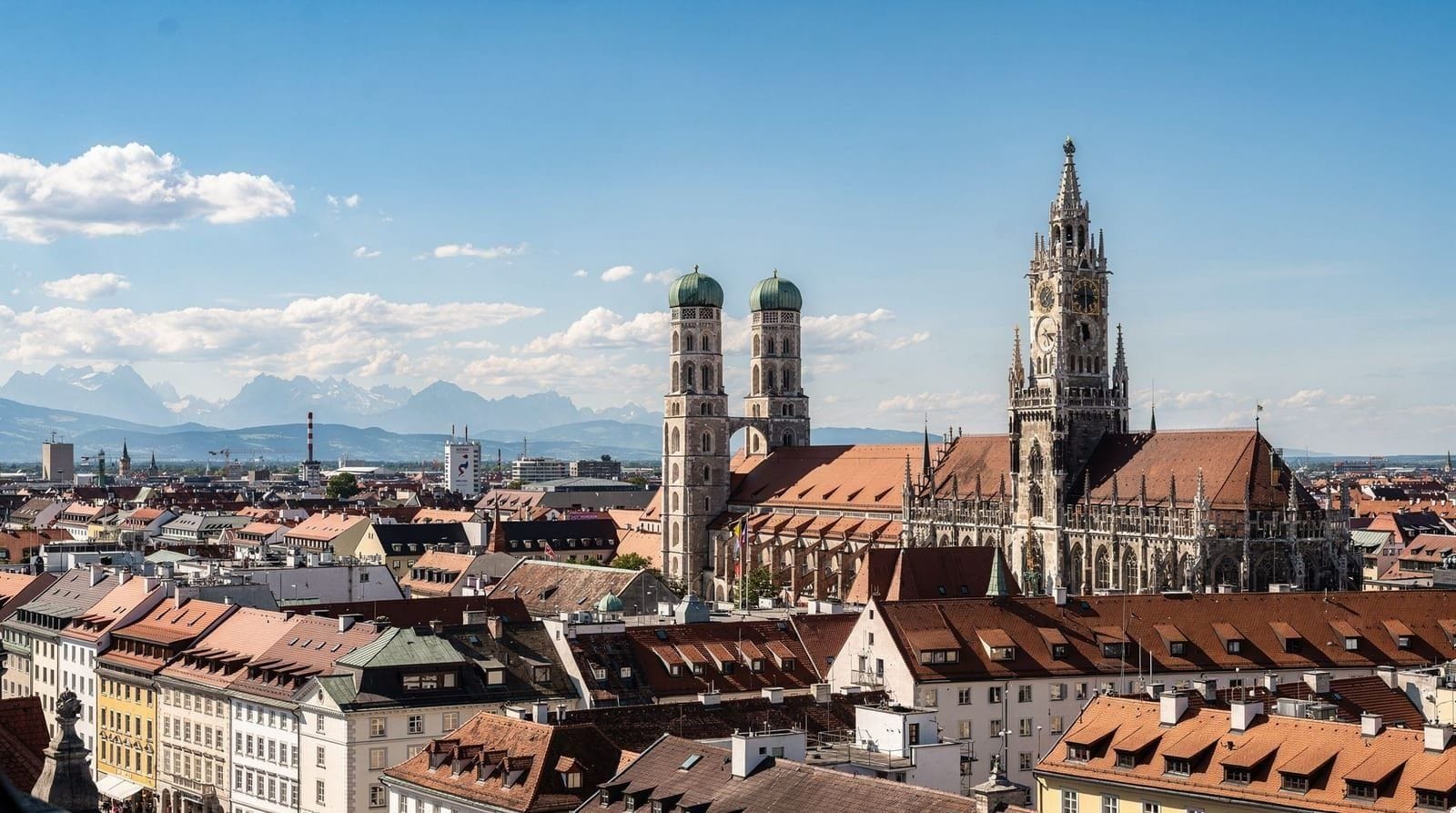
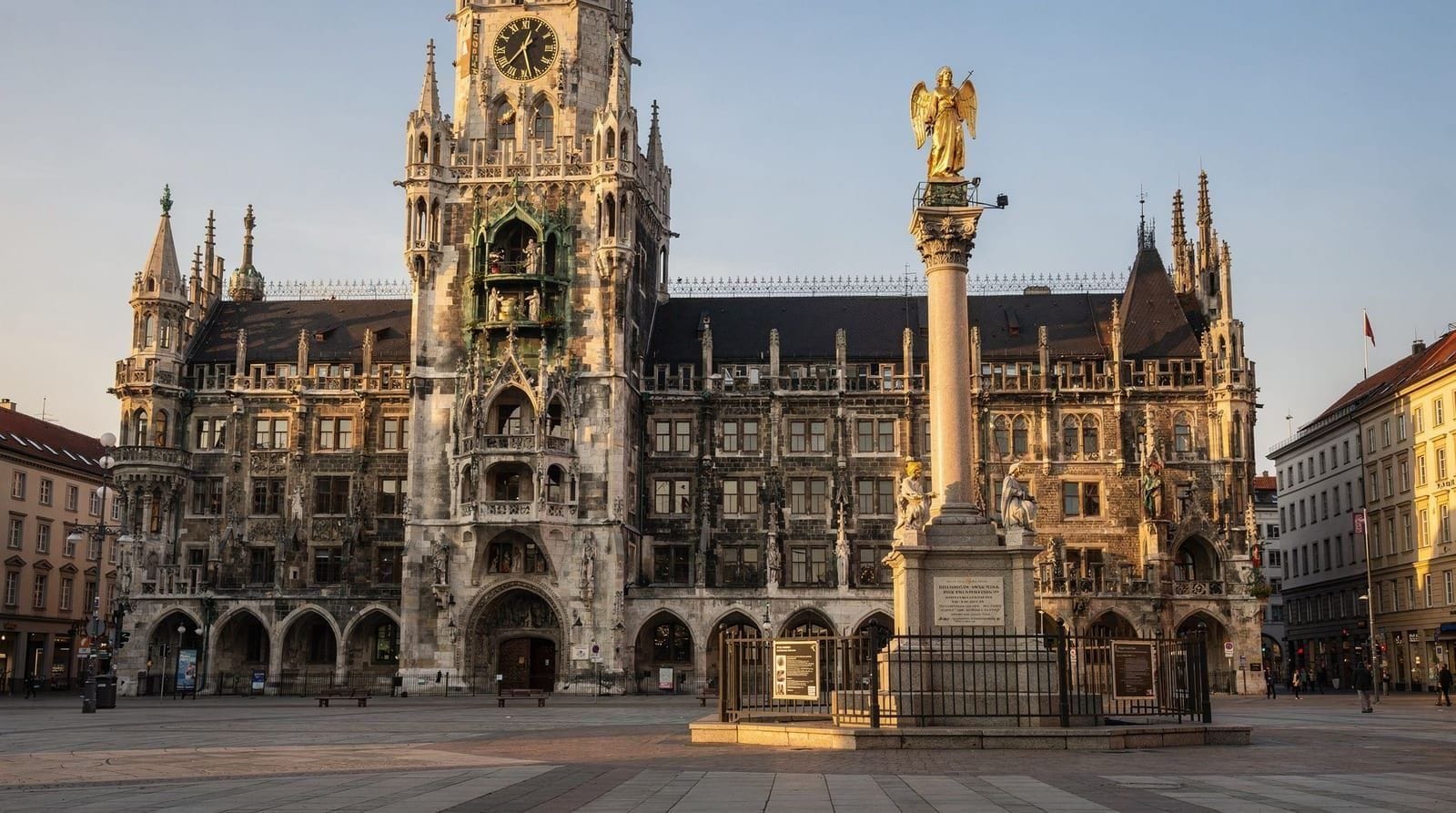
Begin at Marienplatz, Munich’s central square. The Neo-Gothic Neues Rathaus (New Town Hall) on the north side dominates the square. The Glockenspiel mechanical figures perform at 11:00 and 12:00 (and 17:00 in summer). It runs for 12 minutes; watch it once but do not rearrange your schedule for it.
Walk through the square to the Viktualienmarkt — Munich’s historic daily market, 200 metres south of Marienplatz. The covered stalls sell cheeses, meats, Bavarian specialities, and wine. The central beer garden (open year-round) serves half-litre Mass at around €10 — a good mid-morning stop if you arrived early. Our Viktualienmarkt food guide covers what to buy and what to skip.
Climb the Peterskirche tower (Alter Peter, at the Rindermarkt end of the market) for the best free view of Munich centre — 299 steps, admission €5. Alternatively, the Frauenkirche towers (€7.50, admission by reservation) give panoramic views including the Alps on clear days.
Midday: Residenz Palace
The Munich Residenz at Max-Joseph-Platz 3 is the most historically significant building in Bavaria — the seat of Wittelsbach power for five centuries. Entry to the Residenzmuseum and Schatzkammer (Treasury) costs €11 combined (2026). The Treasury alone is worth the visit for its medieval crown jewels, religious reliquaries, and personal effects of the Wittelsbachs.
Allow 1.5–2 hours. The Antiquarium (a barrel-vaulted Renaissance hall from 1568) and the Cuvilliés Theatre (a rococo gem rebuilt after WWII bombing) are highlights. See our Residenz Palace guide for room-by-room guidance.
Afternoon: English Garden
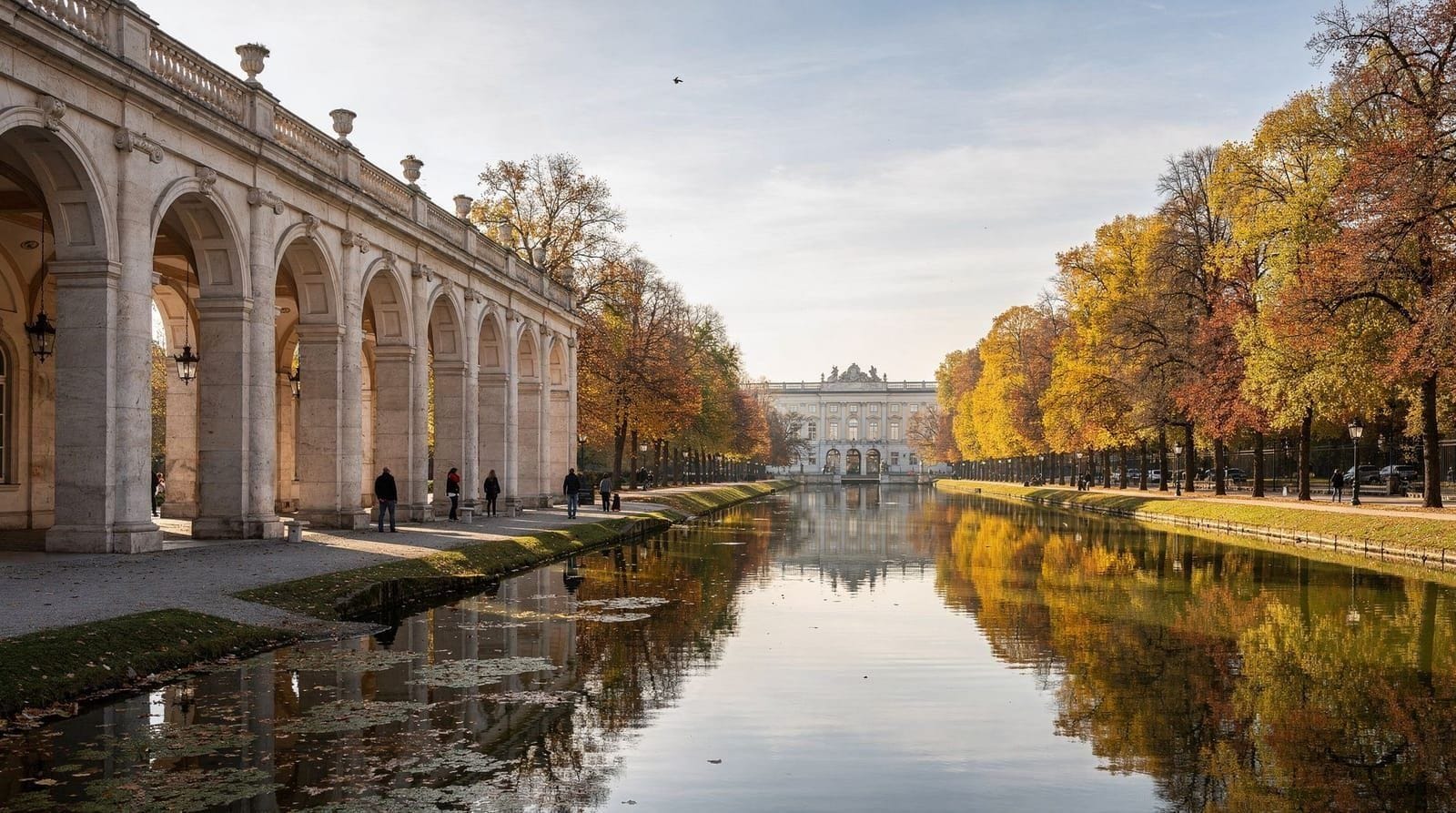
Walk northeast from the Residenz to the English Garden — 3 minutes on foot. The garden covers 370 hectares and was laid out in the 1790s. In summer, the Eisbachwelle near the Haus der Kunst is a standing river wave where surfers ride. It is not staged — local surfers use it year-round, even in winter.
The Chinesischer Turm beer garden is 20 minutes walk inside the garden. A Mass costs €10.50 here versus €15+ inside Oktoberfest tents. Order Obatzda (spiced Camembert spread) with a Brezn (pretzel) to eat alongside.
Evening: beer hall dinner
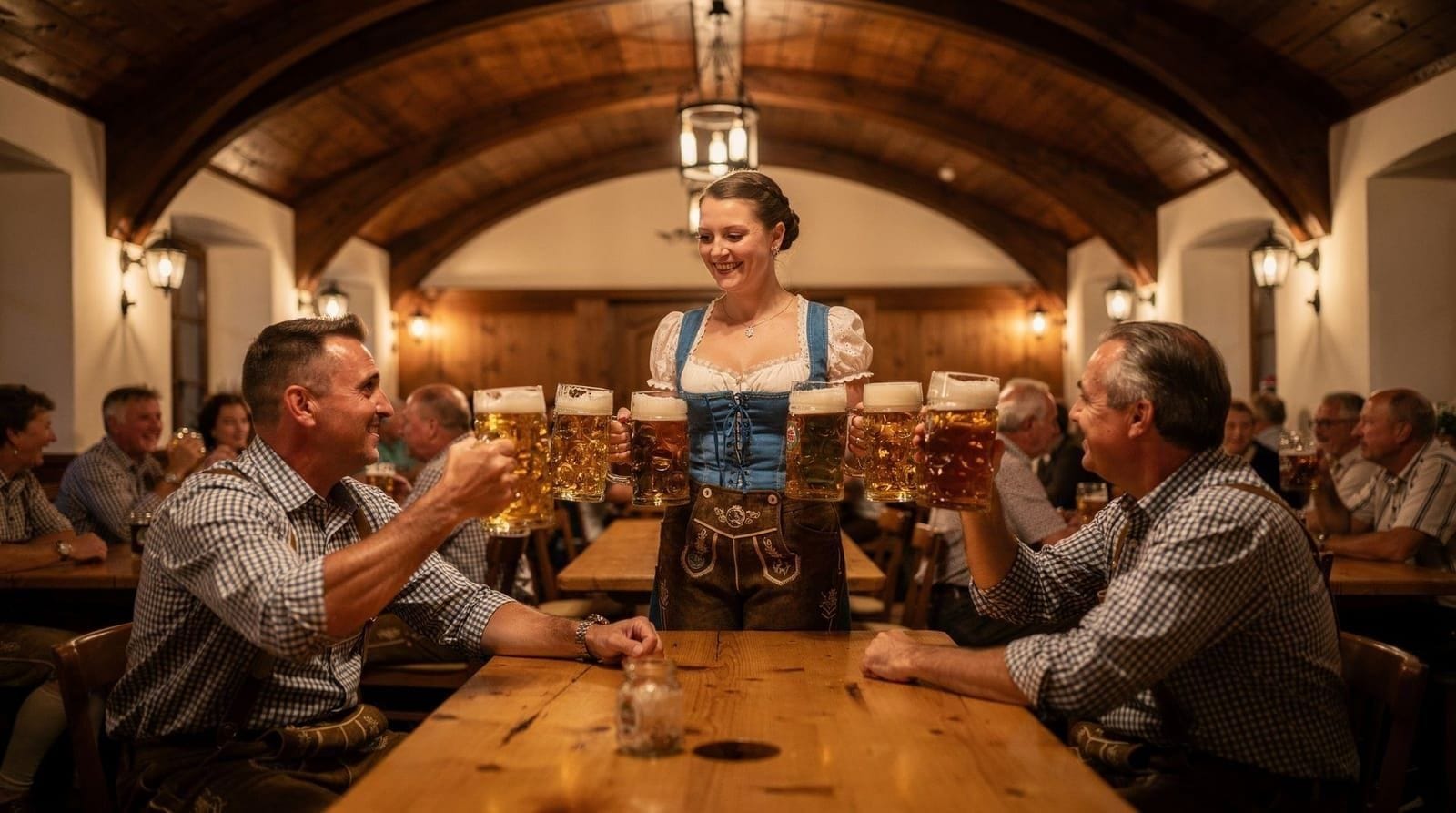
Munich has six main historic beer halls. Weisses Bräuhaus at Tal 7 (between Marienplatz and the Isartor) is less touristy than Hofbräuhaus and is where Munich locals actually eat Weisswurst. Expect to spend €16–22 per person for dinner with a beer. Hofbräuhaus (Am Platzl 9) is the famous option — undeniably touristy but historically legitimate and worth one visit for the scale and atmosphere.
Day 2: Salzburg
Train journey and arrival
Take the 08:20 or 09:00 departure from Munich Hauptbahnhof to Salzburg. Arriving by 10:00–10:30 gives you 7–8 hours before a comfortable return by 18:30 or 19:00.
Salzburg Hauptbahnhof is 15 minutes from the Altstadt by bus (routes 1, 3, 5, 6, 25 from the station). Alternatively, walk along the Salzach river in 25 minutes — pleasant in good weather.
The Salzburg Card (24 hours: €32, 48 hours: €44) covers all public transport, the Hohensalzburg Fortress, Mozart’s Birthplace, and Hellbrunn Palace. If you plan to see more than two of these sites, it is good value. Single entry prices are higher — Hohensalzburg alone is €15.50.
Morning: Getreidegasse and Mozart’s Birthplace
Getreidegasse is the main shopping street of Salzburg Altstadt, running east-west through the old town. It is heavily commercialised but genuinely attractive — multi-storey guild signs hang over the street in wrought iron. Mozart’s Birthplace (Geburtshaus) is at Getreidegasse 9; entry €12. The three-floor museum has period instruments, family portraits, and original furniture. It is compact (allow 45 minutes) and most interesting for visitors with a genuine interest in Mozart’s life rather than just a connection to the name.
Walk through the Getreidegasse to the Alter Markt and the Residenzplatz. The Salzburg Cathedral is free to enter and worth 15 minutes — the baroque interior was designed by Italian architect Santino Solari in 1628.
Midday: Hohensalzburg Fortress
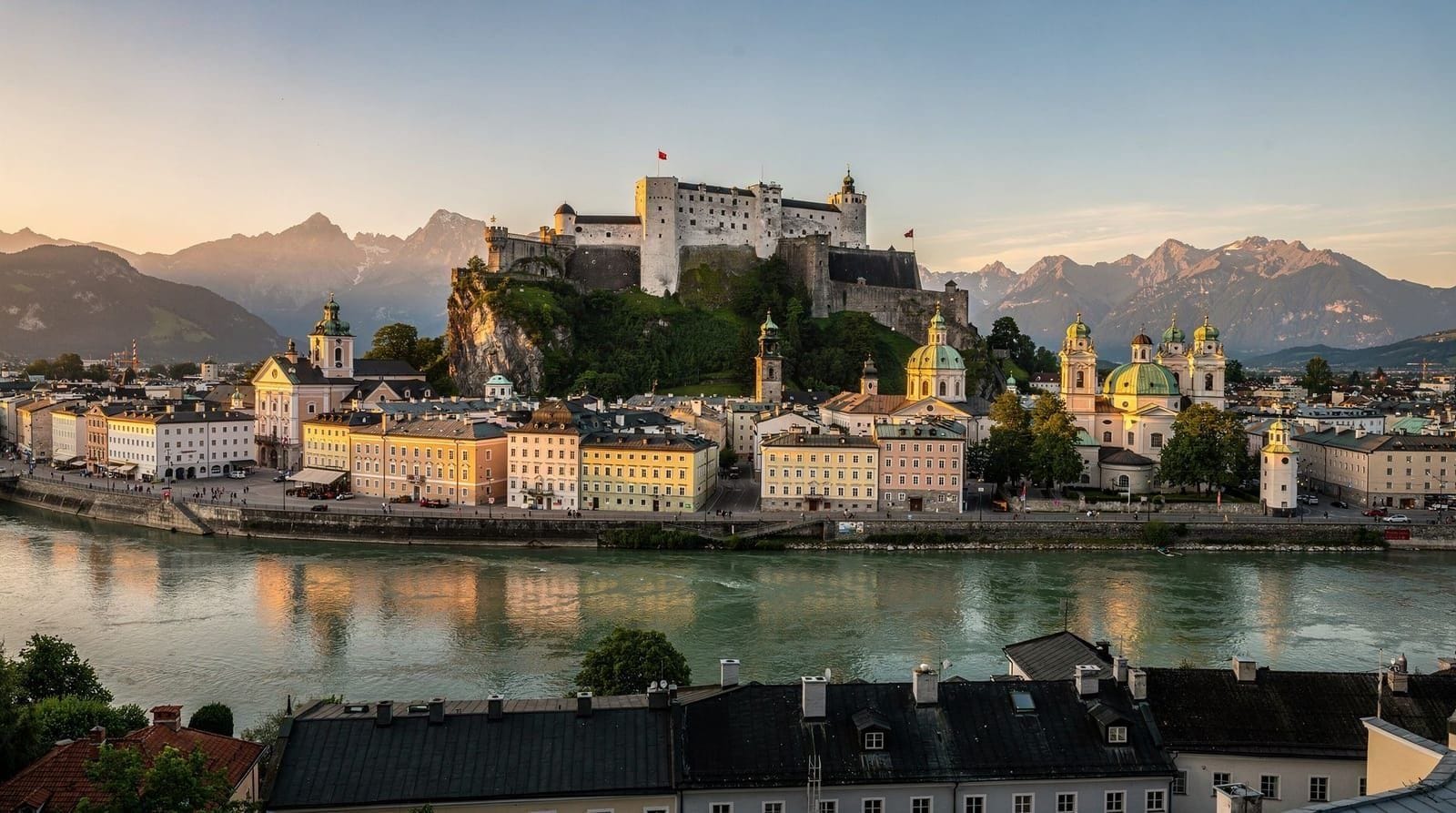
The funicular to Hohensalzburg (Festungsbahn) runs from Festungsgasse near the Cathedral. Combined funicular + fortress entry costs €15.50 per adult (2026). The fortress dates from 1077 and has uninterrupted panoramic views of the city and Alps. The Torture Museum inside is historically dubious but has queues; the State Rooms and the Rainer Regiments Museum are more legitimate.
Allow 1.5 hours. Lunch at the fortress café is expensive and mediocre — better to eat at Zum Eulenspiegel at Hagenauerplatz 2 in the old town (traditional Austrian food, mains €14–20).
Afternoon: Sound of Music sites and Mirabell Palace
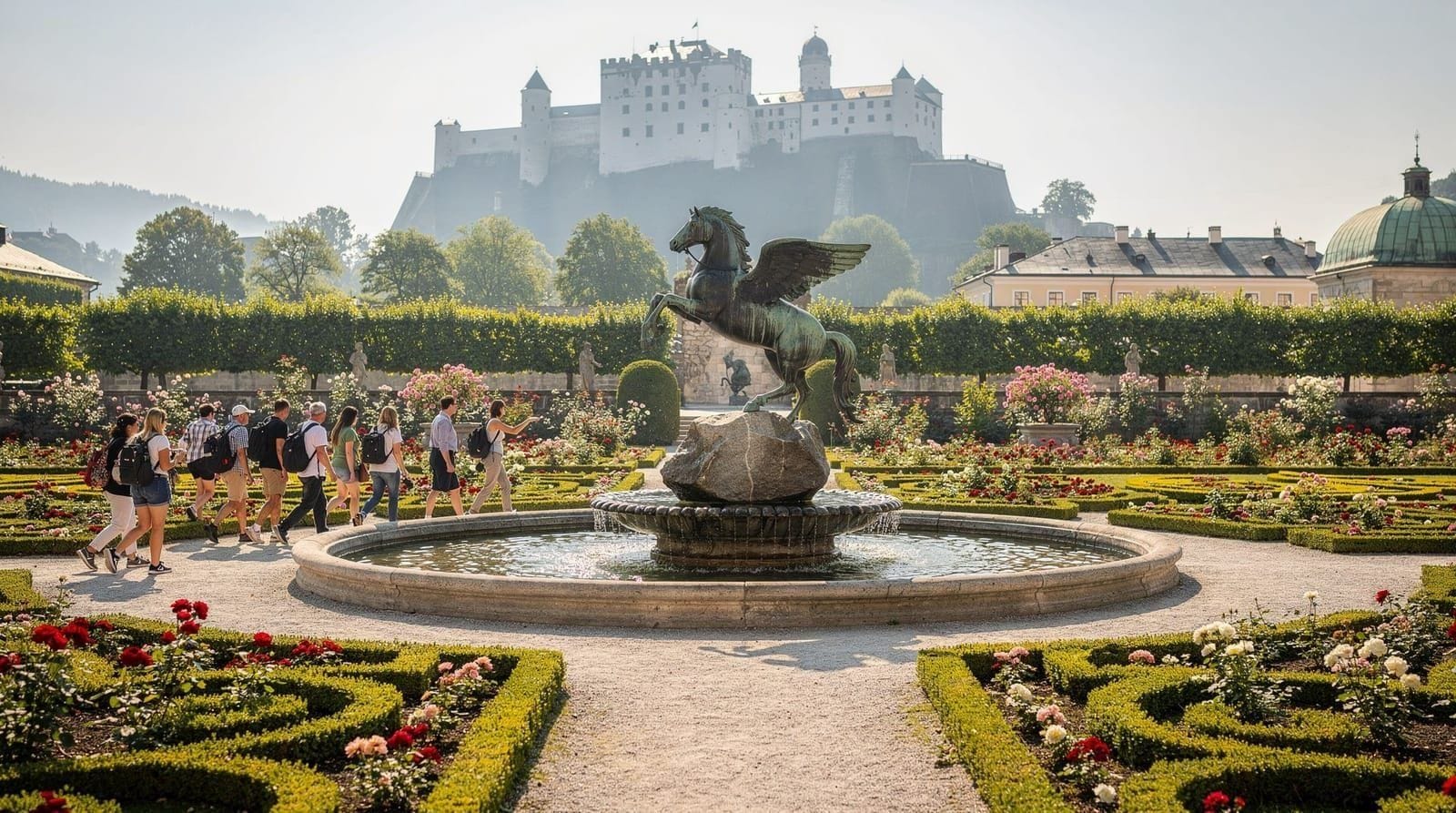
Mirabell Palace and its gardens are free to visit. The Do-Re-Mi staircase used in the film “The Sound of Music” (1965) is in the formal gardens — recognisable to anyone who has seen the film. The palace itself houses government offices and is not open to visitors.
For Sound of Music filming locations, the Leopoldskron Palace (filmed exterior of the villa) is viewable from the lakeside path of Leopoldskron-Weiher lake (15 minutes walk from Mirabell). The lake and gardens around it appear in several scenes. Organised Sound of Music tours (€45–60) cover more locations including the Nonnberg Abbey and the Salzkammergut locations.
The Salzkammergut detour: If you want to extend the day, Hallstatt and the Wolfgangsee lake are 1–1.5 hours from Salzburg by bus/boat. This makes for a very long day from Munich. Our guided tour option below covers this combination.
Evening: return to Munich
Take the 18:30 or 19:00 train back to Munich. Arrival is approximately 20:00–20:30. This gives a relaxed end to the day in Salzburg without rushing. Book a guided Salzburg day trip from Munich by train with an English-speaking guide
What Munich and Salzburg have in common
Both cities were shaped by the Wittelsbach dynasty (Munich) and the Prince-Archbishops of Salzburg — competing but culturally overlapping Catholic powers in the same Alpine-Bavarian region. Both have baroque palaces and churches from the same architectural movement (the Archiepiscopal Residence in Salzburg is contemporary with Munich’s Residenz). Mozart was born in Salzburg but premiered several works in Munich. The shared cultural context makes the pairing feel natural rather than arbitrary.
Language note: Austria speaks German, but the dialect differs slightly from Bavarian German. The currency is the euro, same as Germany. Credit cards are accepted at all hotels and tourist sites in both cities. Some smaller restaurants and market stalls in Salzburg prefer cash.
Salzburg beyond Mozart and The Sound of Music
Travellers who come to Salzburg only for Mozart associations or Sound of Music filming locations miss a genuinely interesting Baroque city with a serious art and music culture. A few highlights worth knowing:
Stift Nonnberg (Nonnberg Abbey): One of the oldest continuously inhabited monasteries in the German-speaking world, founded around 714 AD. Free to visit the church. The exterior appears in The Sound of Music, which is why most tourists go, but the early Romanesque crypt and frescoes predate the film by about 900 years. Open to visitors in the mornings.
Hellbrunn Palace and trick fountains: 3 km south of the Altstadt. Entry €16.50. Elector Marcus Sitticus built this as a summer pleasure palace in 1615 and commissioned hydraulic trick fountains designed to surprise and drench guests. The Water Games (Wasserspiele) tour is 45 minutes and involves getting wet — go prepared. Children find it hilarious; adults who forget it is coming do too.
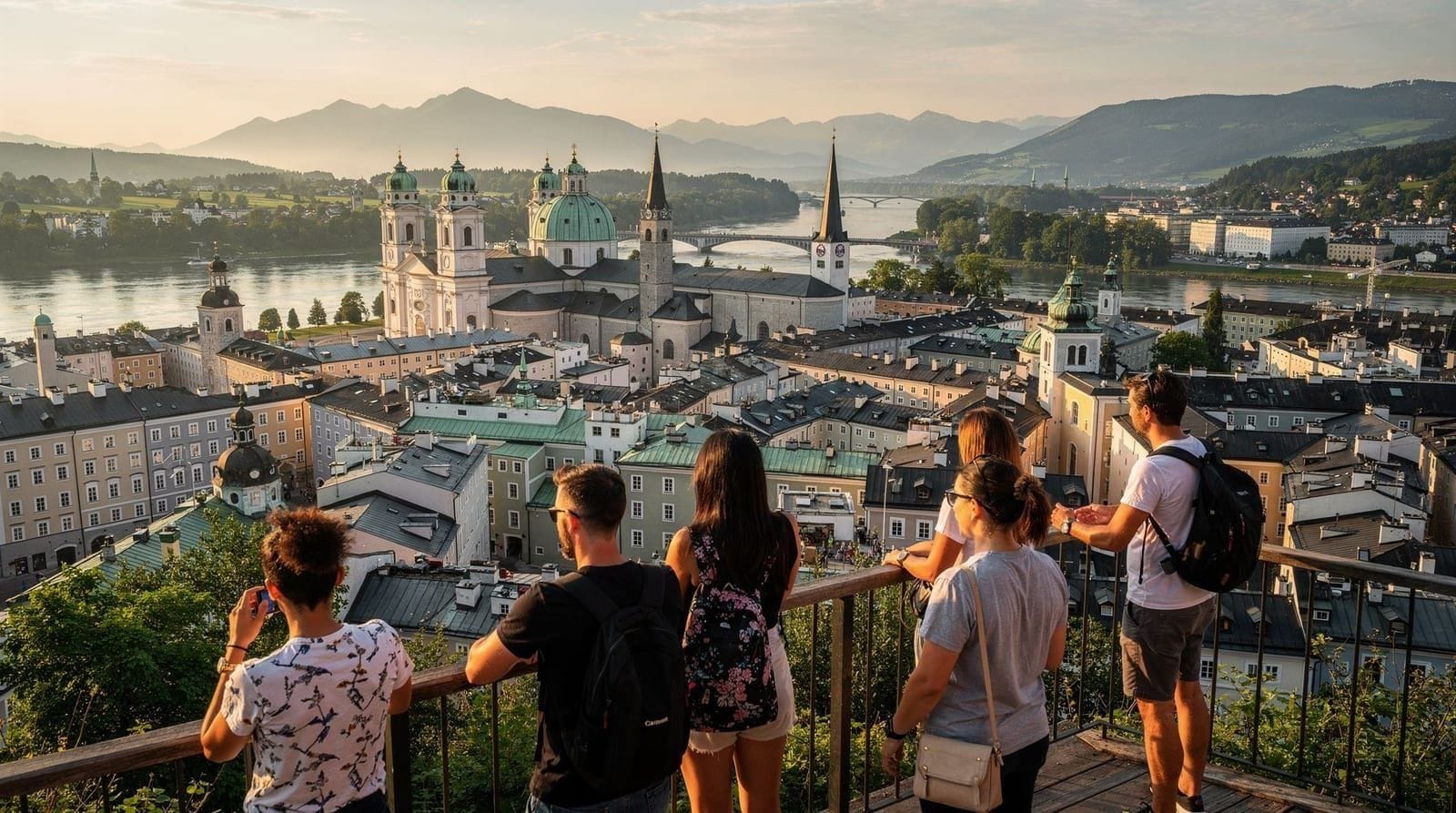
Kapuzinerberg: A forested hill on the east bank of the Salzach river. Free to climb (30 minutes to the summit). Views over Salzburg from the opposite side to the postcard angle, which makes the panorama more interesting photographically.
DomQuartier (Cathedral Quarter): Interconnected museum spaces around Salzburg Cathedral including the Cathedral Museum, Residenz State Rooms, and St. Peter’s Abbey. Combined entry €16. The State Rooms have original Baroque furnishings. Allow 2 hours.
Practical information
Train tickets: Reserve seats on IC/railjet services at bahn.de. Bayern-Ticket covers RE regional trains at €29/person (valid from 09:00 weekdays). The RE journey takes about 2 hours versus 1h40 by IC.
Salzburg entry budget: Mozart’s Birthplace €12, Hohensalzburg (funicular+fortress) €15.50, Mirabell gardens free, Cathedral free. Total without Salzburg Card: €27.50. With the 24-hour Salzburg Card (€32): covers both plus unlimited transport — marginally worth it if you visit the Cathedral museum and a second site.
Weather note: Salzburg is in an Alpine bowl and receives more rain than Munich. Pack a compact umbrella.
Day-trip version: If basing both nights in Munich, take the 08:20 train and return at 18:52 or 20:22. This gives 8–9 hours in Salzburg, which is enough for the Getreidegasse, Mozart’s Birthplace, the Fortress, and Mirabell.
Luggage note: If you are splitting the trip with one night in each city, both Munich Hauptbahnhof and Salzburg Hauptbahnhof have staffed and locker luggage storage (around €5–8/day per bag), useful if your Salzburg hotel check-in is later than your morning train arrival. Most 3-star hotels in both cities will also hold bags before check-in or after checkout at no charge — ask when booking.
For the full context on making the most of the Salzburg day, see our Munich to Salzburg day trip guide and the Sound of Music Salzburg tour page. For a comparison of Munich’s two main palaces while you are in the city, see our Munich Residenz vs Nymphenburg guide. Combine Salzburg with Wolfgangsee and Hallstatt on a guided day trip from Munich
Where to stay in each city
In Munich, Schwabing and Maxvorstadt are the best value for a one-night stay near the Residenz and English Garden, with 3-star rooms running €90–140. If you prefer to be closer to Hauptbahnhof for an early Salzburg train, the station district has plenty of options, though it is less atmospheric in the evening. In Salzburg, staying inside or just outside the Altstadt puts Getreidegasse and the Fortress within walking distance; expect €100–160 for a comfortable double. Budget travellers can look toward the area around Salzburg Hauptbahnhof, a 15-minute bus ride from the old town, for meaningfully lower rates without losing much convenience.
Munich day 1 in more depth
The English Garden: what you are actually visiting
The Englischer Garten was designed by Benjamin Thompson (Count Rumford, an American-born British military officer and physicist who served the Bavarian government) and Friedrich Ludwig von Sckell, starting in 1789. It was one of the first public parks in Europe open to all social classes — a radical concept at the time.
The garden is not a formal English landscape garden in the traditional sense but a naturalistic park with meadows, streams, wooded hills, and lakes. It is larger than Central Park in New York (3.7 km²) and runs 6 km north from the city centre.
Specific landmarks inside the garden that are often missed:
- Monopteros: A circular Greek temple on an artificial hill, built 1838. Views over the southern park toward the city. 10-minute walk from the southern entrance at Prinzregentenstrasse.
- Rumford Cottage: Near the northern end of the garden, the small house built as a model garden cottage for Count Rumford himself.
- Kleinhesseloher See: The central lake, where paddle boats can be rented (€8/30 minutes) and the Seecafé serves food with water views.
- Eisbachwelle: The surfing wave where Isar river water is channelled into a standing wave. Surfers ride it in 2-minute rotations throughout the year. Best viewed from the Prinzregentenstrasse bridge.
Beer in Munich: what to actually order
Munich has six brewing traditions and approximately 50 beer types on tap across the city at any given time. For a first visit:
Helles: The Munich standard. A pale, malty lager. Less bitter than the German Pilsner from the north. The correct beer to order at Augustiner or Hofbräuhaus.
Märzenbier: A darker, stronger lager traditionally brewed in March and served at Oktoberfest. Now available year-round at most Munich pubs. 5.5–6% ABV.
Weissbier (Hefeweizen): Wheat beer served in 500 ml or 1-litre glasses. Cloudy, fruity, banana-clove aroma. Weisses Bräuhaus at Tal 7 is the best-known producer; also try Schneider Weisse.
Dunkles: Dark lager, toasty and malty. Less common than Helles but worth trying. Available at Augustiner Keller and Hofbräuhaus.
Avoid: Novelty themed beers and anything served in plastic cups at tourist stalls. The quality beer in Munich is at the brewery restaurants, not at takeaway stands.
Salzburg day 2 in more depth
The Festung Hohensalzburg: what is worth your time
The fortress is large — 250 metres long and multiple buildings on different levels — and not everything inside merits time. Prioritise:
State Rooms (Fürstenzimmer): These rooms on the upper level of the palace wing date from around 1500 and retain original carved wooden ceilings and tile stoves. The Golden Chamber and the Golden Hall are the most impressive. Included in funicular+fortress ticket.
The Rainer Regiment Museum: Covers the history of the Salzburg Rainer Infantry Regiment from 1682 to 1918. Military history enthusiasts will find it detailed and well-presented. Others can skip.
Marionette Exhibition: Hohensalzburg has a small collection of marionettes from the famous Salzburg Marionette Theatre (founded 1913), which still performs in the city. An unexpected highlight.
Avoid: The Torture Museum at the fortress. It presents historical instruments with dubious accuracy and exists primarily as a revenue-generating attraction.
The view: The terrace at the top of the funicular offers the most famous view of Salzburg — the city, the Salzach, and the Alps beyond. Best photographed in morning light (east-facing position). In July and August, the viewpoint is crowded from 10:30 onwards.
Day-by-day summary at a glance
| Day | City | Focus |
|---|---|---|
| 1 | Munich | Marienplatz, Residenz, English Garden, beer hall dinner |
| 2 | Salzburg | Getreidegasse, Mozart’s Birthplace, Hohensalzburg Fortress, Mirabell Gardens |
If you have a car instead of the train
Driving is possible (the A8 motorway covers the distance in about 1 hour 30 minutes, faster than the train), but it removes one of this itinerary’s biggest advantages: both city centres are dense, walkable, and awkward to park in. Salzburg’s Altstadt in particular has very limited and expensive parking, and several streets are pedestrianised. If you do drive, park at one of the P&R (Park & Ride) facilities on Salzburg’s outskirts and take the bus in, rather than attempting to park centrally. For most travellers without onward car needs elsewhere in Bavaria, the train remains the simpler choice for this specific two-day pairing.
Extending to three days
A third day gives real breathing room, and the most natural addition is the Salzkammergut lake district — Hallstatt or Wolfgangsee, both reachable from Salzburg by bus and boat in 1–1.5 hours. This turns the trip into a genuine Alpine lakes excursion rather than just two cities, though it does mean a second night in or near Salzburg to avoid an exhausting round trip from Munich. Alternatively, use a third day to explore more of Munich itself before or after the Salzburg leg — the Munich first-time itinerary covers a fuller city programme that pairs well as a lead-in to this one.
Frequently asked questions about this itinerary
How long does the train from Munich to Salzburg take?
Direct IC or railjet services take 1 hour 35–45 minutes from Munich Hauptbahnhof to Salzburg Hauptbahnhof. Regional RE trains take about 2 hours and cost less (covered by the Bayern-Ticket at €29). Trains run at least hourly, more frequently at peak times.
Is one day enough for Salzburg?
One day is enough for the key sites: Mozart’s Birthplace, Hohensalzburg Fortress, Getreidegasse, Mirabell Gardens, and the Cathedral. If you want to also see Hallstatt or the Salzkammergut, add a second day in Salzburg or take an early train.
Do I need a visa to enter Austria from Germany?
Both Germany and Austria are in the Schengen Area. EU/EEA citizens and most passport-carrying nationals travel freely with no additional documentation beyond what they need to enter Germany. Non-EU visitors should check specific requirements at the Austrian embassy website.
Is the Salzburg Card worth buying?
For a full day including Hohensalzburg, Mozart’s Birthplace, and at least one museum, the 24-hour card at €32 saves money versus buying individual tickets. If you only plan to visit one or two sites, individual tickets are cheaper.
Where should I stay for a Munich-Salzburg trip?
If you have 2 nights, one in each city is the ideal split. If you have only one base, Munich has more hotel options and better transport connections. The Schwabing and Maxvorstadt districts offer good value. A central Salzburg option (near the Altstadt) is more convenient for the city itself but limits your first-day Munich time.
What are the best Mozart connections in Salzburg?
Mozart’s Birthplace at Getreidegasse 9 and Mozart’s Residence at Makartplatz 8 (entry €12 each, combo €18) are the two main museums. Concerts at the Mozarteum or the Mirabell Palace Marble Hall (Marmorsaal) run year-round — tickets from €30. The Salzburg Festival (July–August) features Mozart productions at higher prices.
Should I visit Munich or Salzburg first?
Either order works logistically, but Munich first is the more common choice since most international flights land in Munich. Starting in Munich also means your Salzburg day arrives fresh rather than at the end of a longer trip, which suits the fortress climb and walking-heavy Altstadt better. If your flight patterns favour Salzburg or you are arriving from Austria, reversing the order works equally well — nothing about the itinerary depends on a specific sequence.
Can I do Munich and Salzburg in 2 days without a car?
Completely. Both cities are compact and walkable. The Munich-Salzburg train connection is excellent. In Salzburg, the Altstadt is small enough to walk everywhere. Public buses cover the outskirts. A car adds nothing for these two cities.
Top experiences
Bookable activities with verified prices and instant confirmation on GetYourGuide.