Munich night tours — the honest guide for 2026
Munich: night watchman torch tour with ghost stories
What are the best night tours in Munich?
The night watchman torch tour is the standout pick — a costumed guide leads a 90-minute lantern-lit walk through the old town with ghost stories and medieval history. Evening Segway tours cover more ground in the same time. Both run year-round and cost €15–25 per person.
Why Munich comes alive after dark
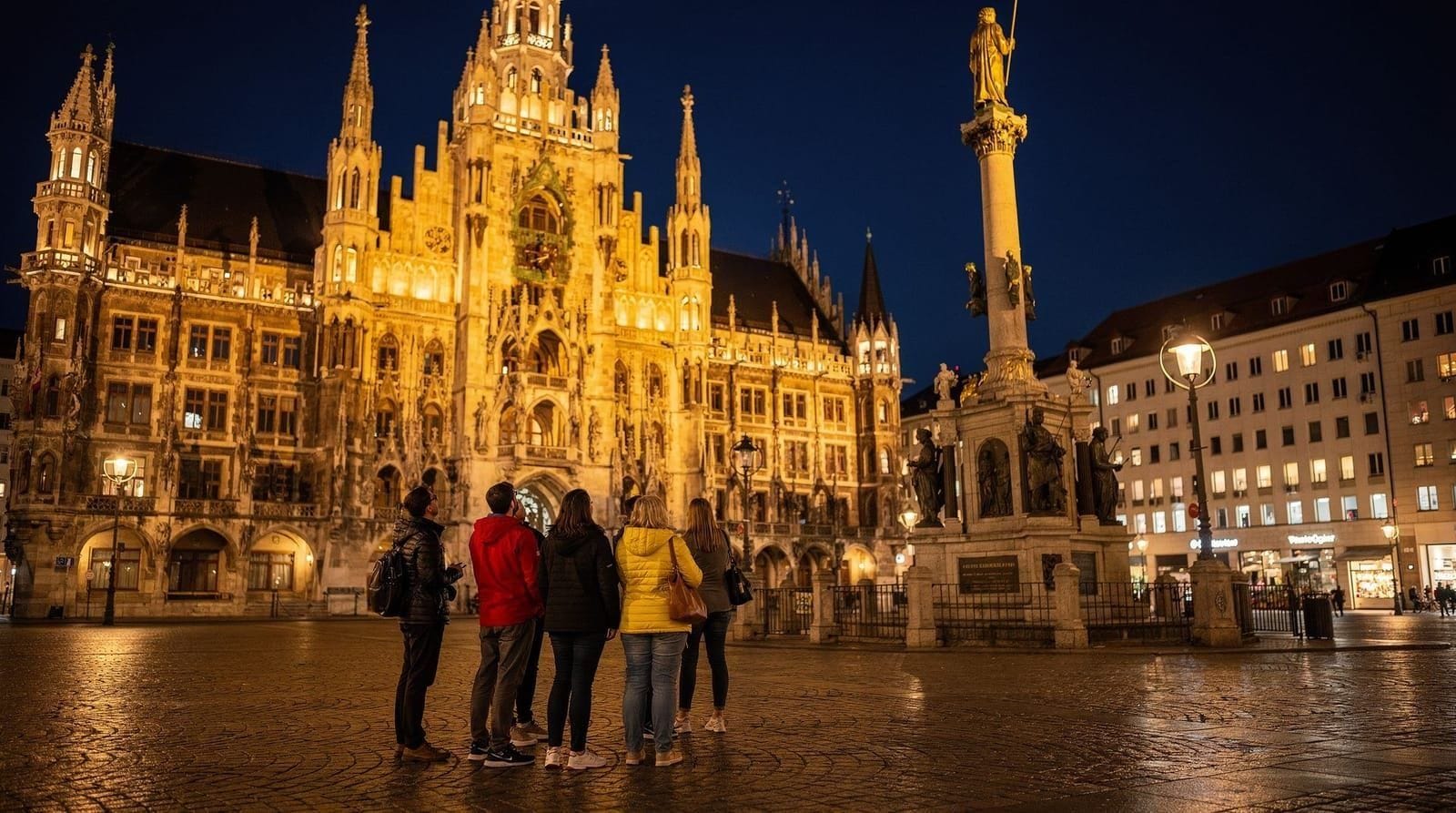
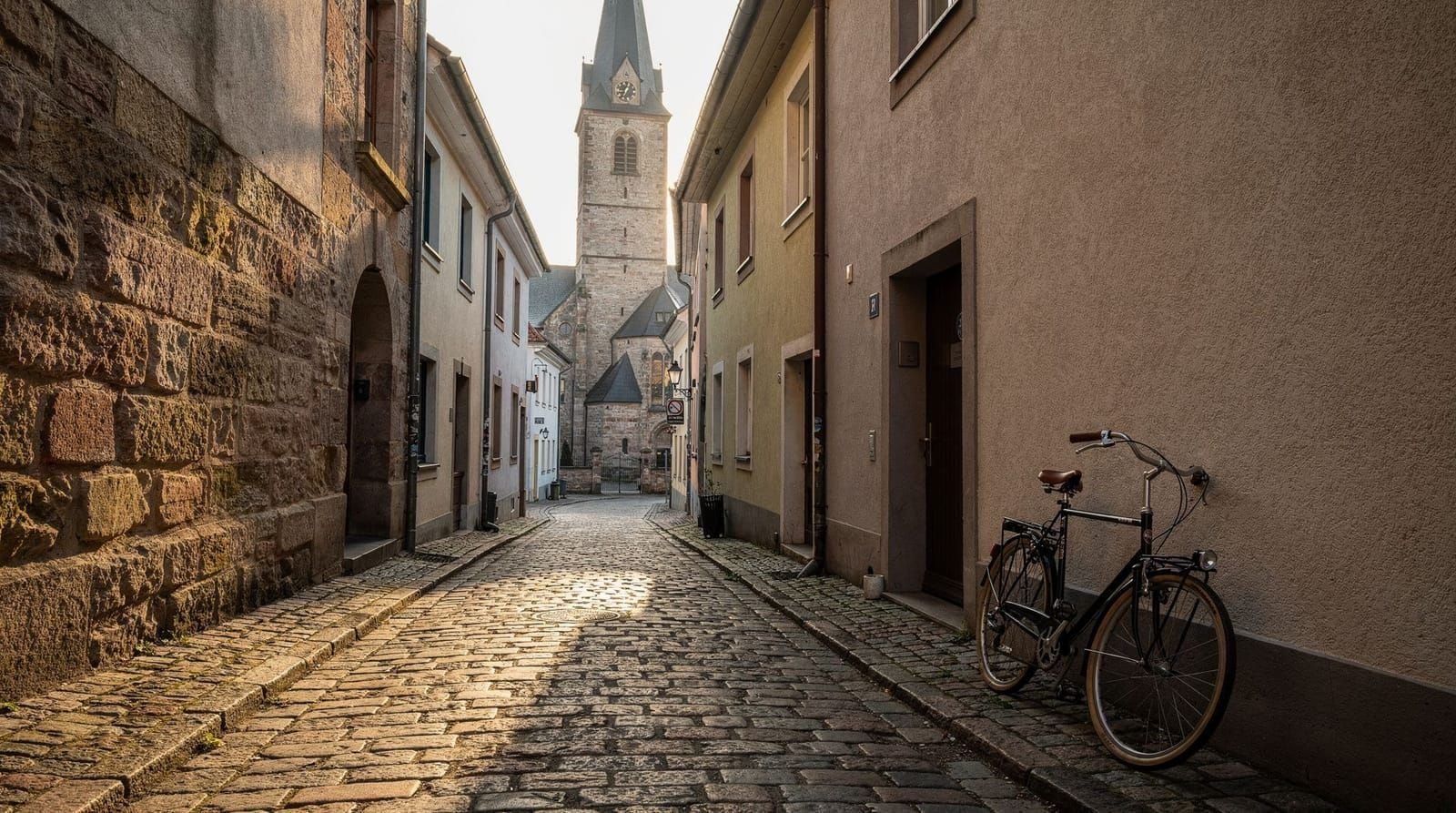
Munich during the day is a polished, well-lit city with excellent signage. Munich after dark is something else. The narrow lanes of the Altstadt lose their tourist throng, lanterns cast long shadows across cobblestones worn smooth over eight centuries, and the buildings — Neues Rathaus, Frauenkirche, the old Augustiner cellars — carry a weight that bright afternoon light tends to flatten. Night tours exploit this shift in atmosphere deliberately, and the best of them give you a version of the city that daytime guided walks simply cannot replicate.
This guide covers every legitimate night-tour format currently operating in Munich: the night watchman walking tours, ghost and legend routes, and evening Segway sessions. Prices are current for 2026. Where operators have mixed track records, that is noted.
| Where | Meets near Marienplatz, Munich Altstadt |
| Cost | around €15–25/pp walking tours; €45–65/pp Segway |
| Time needed | 90 minutes to 2 hours |
| Getting there | U3/U6 to Marienplatz |
| Best time | year-round, evenings from around 8–9pm |
Night watchman walking tours
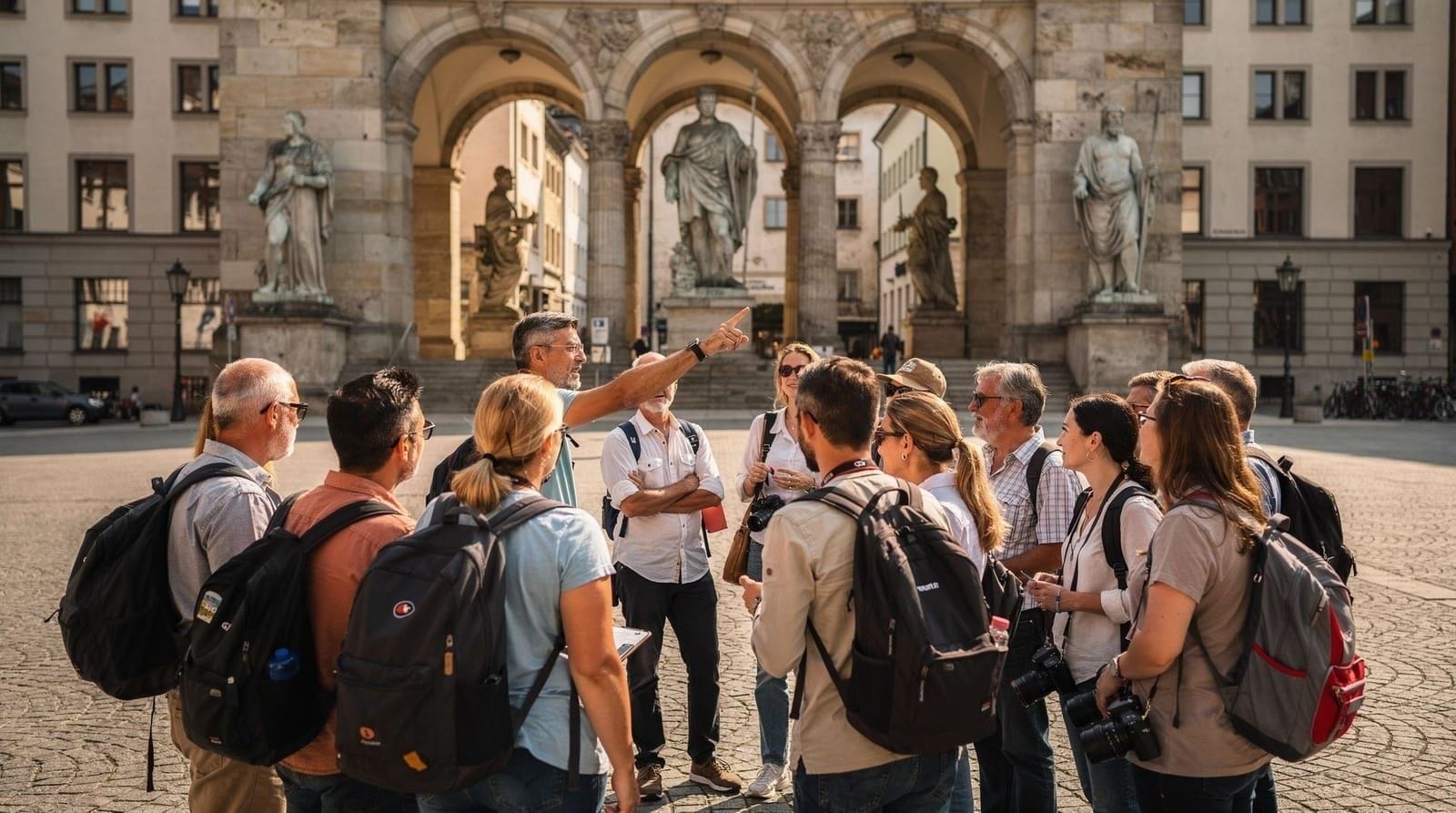
The night watchman concept originated in Rothenburg ob der Tauber but Munich has developed its own solid version. A costumed guide — dressed in the dark robes of a medieval night watchman and carrying a horn lantern — leads a group of up to 20 through the Altstadt while narrating the city’s shadier medieval and early modern history: plagues, executions, guild rivalries, and the legends that grew around Munich’s oldest churches.
What the tour covers
The typical route runs roughly 2.5 km over 90 minutes and visits or passes by: Marienplatz and the Fischbrunnen fountain (where Munich’s water supply and its superstitions about illness intersected); the Altes Rathaus tower, scene of a notorious 1938 speech; the Viktualienmarkt district and its predecessor market; the Peterskirche churchyard; and the streets behind the Frauenkirche where the city’s legends about the Devil’s footprint were born. The tour is not a simple ghost story retelling — the best guides weave the legend of each site into genuine historical context, so you leave knowing something factual alongside the supernatural colour.
Which night watchman tour to book
Several operators run this format. The torch-lit ghost stories variant, which adds props and theatrical delivery to the standard route, is the most reviewed option and consistently delivers: Munich: night watchman torch tour with ghost stories
For a more straightforward historical narration in English, this option runs dedicated English-language slots and keeps the group size small: Munich: night watchman tour in English
Honest notes on quality
The theatrical torch tour is the better experience for travellers who want atmosphere over strict history. If you are particularly interested in medieval Munich’s actual administrative and social structures, seek out a guide with a history qualification — a few operators do specifically note this in their guide bios. Avoid any tour that advertises more than 25 participants in a group; at that size the back rows lose the guide’s voice entirely on busy evenings.
Ghost and legend tours
Distinct from the night watchman format, ghost tours in Munich focus specifically on supernatural lore, urban legends, and the city’s more macabre incidents. The best ones are well-researched and entertaining rather than cheap jump-scare theatrics.
What makes a good ghost tour
Munich’s legends are genuinely interesting: the Frauenkirche’s Devil’s footprint (left, according to legend, when the Devil entered the church and saw no windows — he was standing on the one spot where the pillars blocked his view), the ghost of a child said to haunt the Sendlinger Tor area, and various plague-era stories from the Altstadt. A competent ghost tour uses these as windows into the city’s social history, not as props for actors jumping from doorways.
The middle-ages night watchman tour blends both formats well — costumed character, ghost material, and enough historical grounding to feel worthwhile: Munich: middle ages night watchman walking tour
What to skip
Avoid any operator that cannot name the specific legends or sites they cover in advance. Some budget ghost tours in Munich are effectively a guide walking quickly between sites while reading from a script — the content is thin and the atmosphere is not created. Check recent reviews specifically mentioning the guide by name, which is a reliable signal that the experience is consistently good rather than variable.
Evening Segway tours
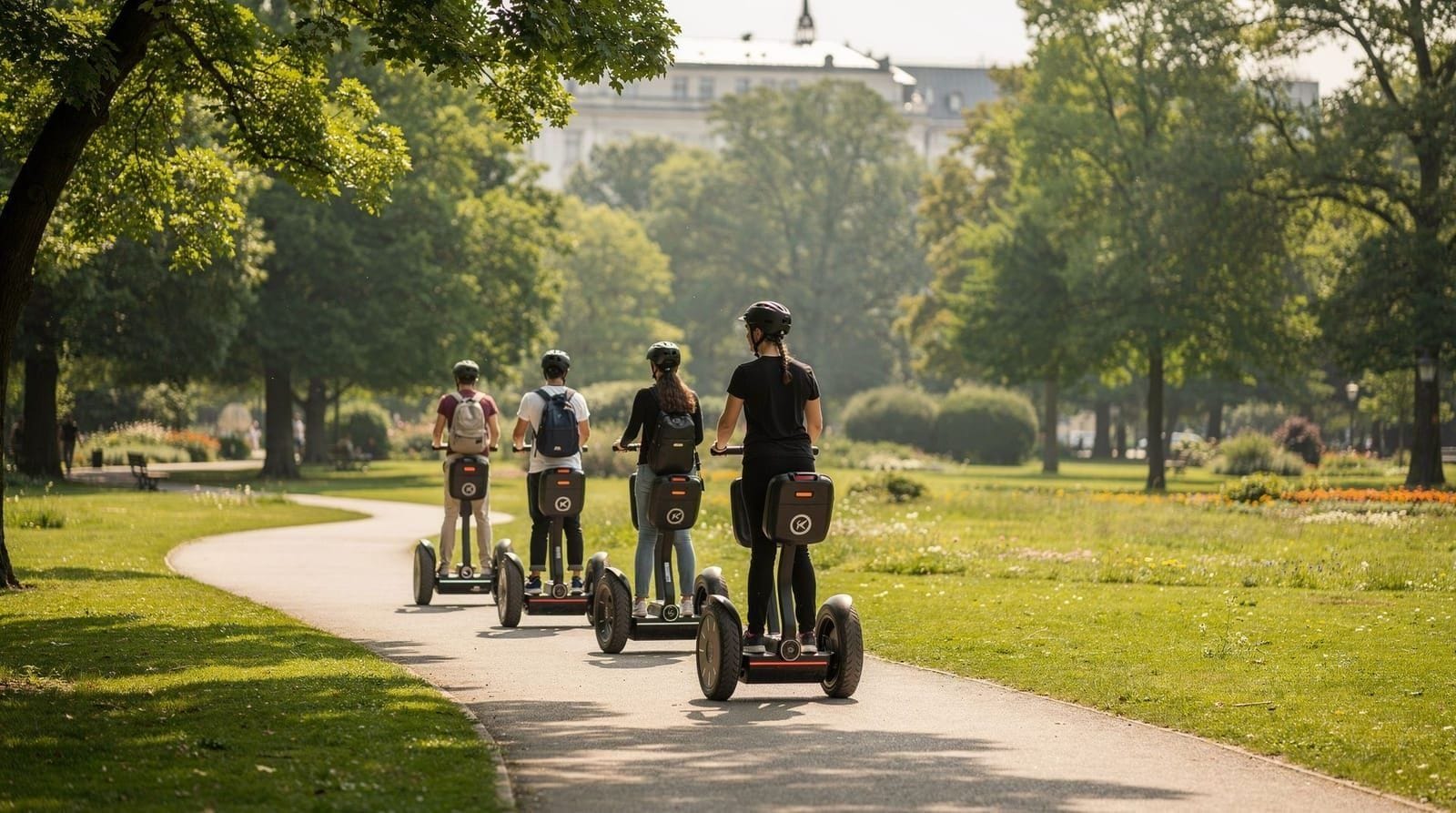
Segway tours offer a different proposition from the walking formats: you cover significantly more of Munich — typically 8–12 km — in the same 2-hour window, visiting not just the Altstadt but the Englischer Garten fringes, Odeonsplatz, and sometimes Nymphenburg-adjacent areas. In the evening, when traffic is lighter, the Segway format works particularly well.
The evening Segway experience
Most operators include a 20-minute safety briefing and practice session before departure, so factor that into your overall time. The actual guided ride is around 90 minutes. Participants need to be at least 12 years old; most operators also set a maximum weight limit (usually 130 kg). The cost is higher than a walking tour — typically €45–65 per person — but the experience is qualitatively different and covers significantly more ground. Munich: 2-hour guided city highlights night tour by Segway
Evening vs daytime Segway tours
The evening format has one clear advantage: fewer pedestrians on Munich’s main pedestrian zones mean the guide can actually move freely rather than constantly stopping to let foot traffic pass. The main disadvantage is that some of Munich’s best visual sights — the Nymphenburg Palace facade, the Englischer Garten’s wide lawns — are less dramatic in darkness. Both formats are good; the evening version is better for those who find daytime Segway tours feel rushed or crowded.
Comparing night tour formats
| Format | Duration | Price (2026) | Group size | Best for |
|---|---|---|---|---|
| Night watchman torch tour | 90 min | €15–18/pp | Up to 20 | Atmosphere + legend |
| English night watchman | 90 min | €14–16/pp | Up to 20 | History + English clarity |
| Ghost/legend tour | 90 min | €15–20/pp | Up to 25 | Supernatural stories |
| Evening Segway | 2h | €45–65/pp | Up to 12 | Covering more ground |
For most first-time visitors, the night watchman torch tour is the right call: it is the best value, the atmosphere is genuinely strong, and the content rewards a visitor who already knows Munich’s basics from a daytime walk. If you have already done a standard old town tour during the day, consider the Segway format for evening — you will see different parts of the city.
Practical information for night tours in Munich
Booking timing
Book night watchman tours 3–7 days ahead in July and August. In spring, autumn, and winter, same-day or next-day booking is usually possible but not guaranteed on Fridays and Saturdays.
What to wear
Munich nights are cool even in summer — bring a layer. From October to March, a proper winter coat is necessary: tours do not shelter, and standing still while the guide tells a story is colder than walking. Comfortable flat shoes are essential; cobblestones in the Altstadt are uneven, and the light is low.
Language options
Most night watchman tours run in German with a dedicated English-language slot, usually once or twice per evening in peak season and once daily off-season. Confirm the specific language of your slot at booking — the English night watchman tour listed above guarantees English throughout, while the general torch-tour listing may run in German on some evenings. Ghost and legend tours are more commonly bilingual, with the guide alternating key points in both languages.
Getting to the meeting point
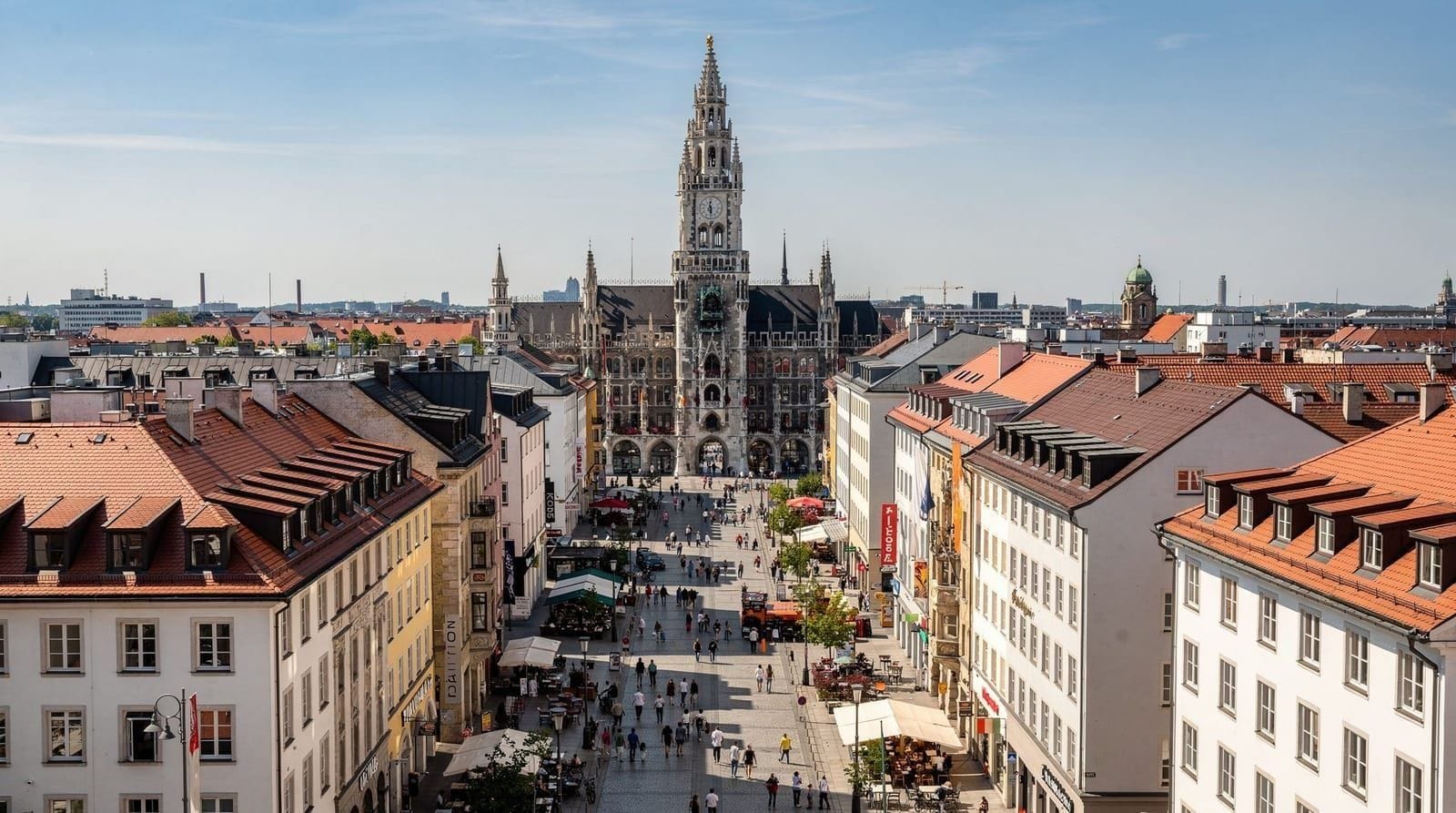
Most night tours meet at or near Marienplatz. The U3/U6 Marienplatz U-Bahn stop is directly underneath and runs until after midnight. From the city’s main train station (Hauptbahnhof), it is a 6-minute U-Bahn ride or a 12-minute walk east along Kaufingerstrasse.
Photography
Low-light photography in Munich’s Altstadt is genuinely rewarding — the lanternlit facades of Neues Rathaus and the interior passages near Hofbräuhaus photograph beautifully with a smartphone night mode. Ask your guide before using flash, as it can disrupt the atmosphere for other participants.
Night tours in context: pairing with other Munich evenings
A night tour works well as a second evening activity after you have oriented yourself during the day. A logical first evening in Munich is a beer garden or beer hall — see the best beer gardens in Munich guide for current options — followed by a night watchman tour at 9pm. The combination gives you both the social and the atmospheric sides of Munich in one evening.
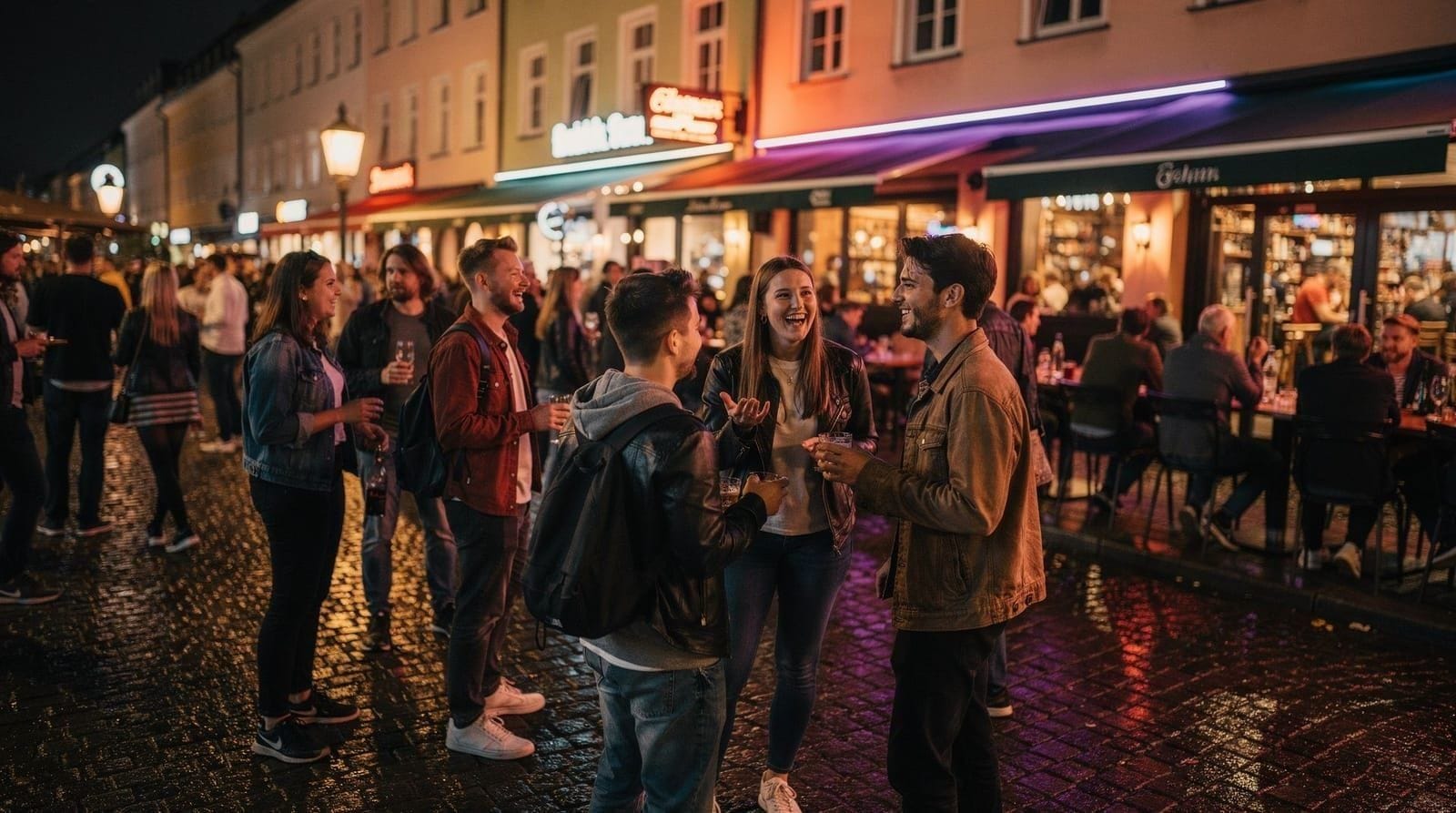
For nightlife after a ghost tour, the Altstadt has multiple bars within a five-minute walk of Marienplatz. The Munich nightlife guide covers the neighbourhoods and what to expect at each. Alternatively, the areas around Glockenbachviertel are livelier for late-night options.
If you are planning a broader Munich itinerary, the 3-day Munich itinerary suggests how to fit a night tour into a structured trip without cramming too much into one day.
Frequently asked questions about Munich night tours
Do Munich night tours run in bad weather?
Yes — all night watchman and ghost tours run in rain, wind, and cold. They are outdoor experiences with no shelter. Cancellations happen only in extreme weather such as thunderstorms. Most operators will give at least a few hours’ notice of cancellation via the contact email on your booking.
Can I join a night tour without booking?
Technically yes for some tours that accept walk-ups at the meeting point, but this is unreliable in summer. The guide will turn away participants once the group is full. Booking online is always the safer option and typically costs the same price.
How does the night watchman know so much about Munich’s history?
The best night watchman guides are trained historians or local guides with formal accreditation from the Bavarian tourism authority. Look for tour descriptions that mention guide credentials, and check recent reviews for comments on the depth and accuracy of the content.
Are tips expected on Munich night tours?
For paid tours, a tip is appreciated but not expected — €2–5 per person for an excellent guide is reasonable. For nominally tip-based tours (which are rare in this segment), €10–15 per person is the accepted norm.
Is the Segway night tour safe?
Modern Segways are stable machines and the safety briefing covers all the basics. The main risk is from inattentive pedestrians crossing paths — which is why the evening format, with fewer pedestrians, is arguably slightly safer than the midday equivalent. Accidents on reputable tours are rare. Do not book operators that skip or shorten the safety briefing.
Do night tours run during Oktoberfest?
Yes, and they run at full frequency, but plan around timing carefully. Oktoberfest crowds spread through the Altstadt in the evenings even though the festival itself is at Theresienwiese, so meeting points near Marienplatz can be busier than usual. Booking further ahead than the usual 3–7 days is sensible during the festival, and evening Segway routes may be adjusted to avoid the most congested pedestrian zones.
Can I combine a night tour with dinner beforehand?
Yes, and it is the most common way visitors structure the evening. A beer hall or beer garden dinner finishing by 8:30–8:45pm leaves comfortable time to walk to a Marienplatz meeting point for a 9pm tour start. See the best beer gardens in Munich guide for options within easy walking distance of the Altstadt.
What is the Devil’s footprint story at the Frauenkirche?
According to Munich legend, the Devil visited the Frauenkirche to check that the builder had kept his promise to build the church without any windows visible from the entrance. Standing in the nave at the spot now marked by a footprint, the Devil saw only pillars — and was pleased. In fact, the windows are visible from almost anywhere else in the church; he was standing on the one spot where the pillars blocked his view. The footprint is real and can be seen just inside the main entrance. Most night watchman tours include this story.
Are there private night tours available?
Yes. Several operators offer private night tours for couples or small groups, typically starting at €120–180 for up to 4 people. Private Segway tours in the evening are also bookable. Private tours allow more flexibility in pace and route, and work well for special occasions.
How do Munich night tours differ from daytime walking tours?
The most important difference is atmosphere. Daytime walking tours in Munich are excellent for orientation and historical detail — the guide can point to a facade and you can read the date inscribed on it, look at architectural details, and understand the spatial relationship between buildings. At night, that clarity is replaced by selective illumination: the floodlit Neues Rathaus tower, the dark outline of Frauenkirche against a lit sky, lanternlit alleys where the far end is dark. Good night watchman guides exploit this contrast deliberately, pausing at corners where the architecture is most dramatic in low light. The content on a night tour also differs — stories of plagues, hauntings, and medieval crime fit the dark format more naturally than a history of Bavarian dynastic succession. Think of daytime tours as encyclopaedic and night tours as curated.
The Munich Altstadt after dark: what to expect independently
Even without a formal night tour, Munich’s Altstadt rewards a slow evening walk. The pedestrianised core empties significantly after 9pm in non-Oktoberfest periods, and many of the city’s best illumination effects are visible only after dark.
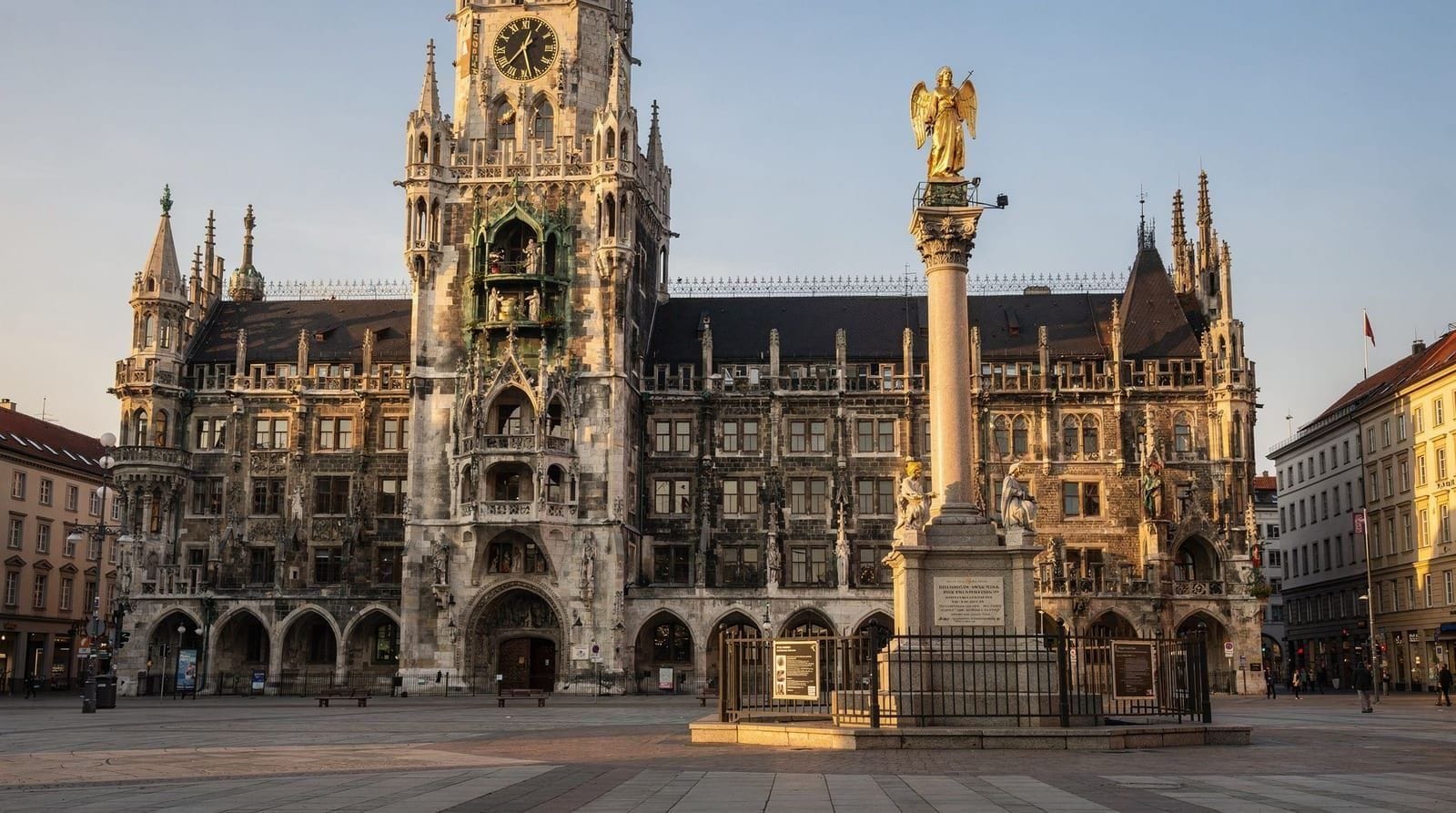
The Neues Rathaus on Marienplatz is floodlit from dusk until midnight. Frauenkirche is lit on the tower bases. Odeonsplatz, with the yellow facade of Theatinerkirche and the Feldherrnhalle columns, is one of the most atmospheric spaces in the city in artificial light. Hofgarten closes at dusk in winter but stays open until midnight in summer, and the Diana Temple at its centre reflects light well.
The practical advice: if you have booked a 9pm night tour, arrive in the Altstadt at 7:30–8pm and walk freely for an hour first. You will appreciate the tour more with your own observations in hand, and you will have already seen the key sites at dusk — the transitional light that is, arguably, even better than full darkness for photography.
For evening options that are not formally structured, the Munich nightlife guide and Munich rooftop bars guide cover places that are best after 8pm. The Munich best bars guide includes options in the Altstadt that work as a pre- or post-tour drink.
Booking for groups, families and special occasions
Most night watchman and ghost tours accept children, though the pace and standing-still storytelling format suits ages 8 and up better than toddlers — check the Munich with kids guide if you are weighing a night tour against an earlier family-friendly evening instead. Larger groups (10+) should book directly with the operator in advance to confirm a private or semi-private slot rather than joining an open group, since the standard maximum of 20–25 participants fills quickly on weekend evenings.
For a special occasion — an anniversary, a proposal, a milestone birthday — the private night watchman or private evening Segway options are worth the premium over a group tour. The guide can adapt pace, stop longer at requested sites, and avoid the interruptions of a larger group. Book at least a week ahead for private slots in summer.
How a night tour fits a first-time Munich itinerary
For visitors with 2–3 days in Munich, a night tour works best on the first or second evening, after a daytime walk has already given you a mental map of the Altstadt — see the Munich old town walking route for a self-guided version of that orientation walk. Doing the night tour too early, before you have any daytime bearings, means some of the historical references land less clearly. The best Munich tours for first-timers guide places the night tour within a broader sequence of recommended first-visit experiences.
Top experiences
Bookable activities with verified prices and instant confirmation on GetYourGuide.