Munich Christmas markets itinerary: Marienplatz, Tollwood, and a Nuremberg option
From Munich: Nuremberg day trip by train
Munich Christmas markets in December
Munich’s Christmas markets (Christkindlmärkte) run from late November through 24 December. The main Marienplatz market traditionally opens on the Friday before the first Advent Sunday — in 2026, that is 27 November. Most markets close at 19:00–21:00 on weekdays and run until 20:00–22:00 on weekends.
Munich operates approximately 30 individual Christmas markets across the city, from the famous central market at Marienplatz to neighbourhood markets in Schwabing, Maxvorstadt, and Haidhausen. This itinerary covers the three days needed to see the major markets without rushing, including an optional day trip to Nuremberg’s Christkindlesmarkt — historically the most famous Christmas market in Germany.
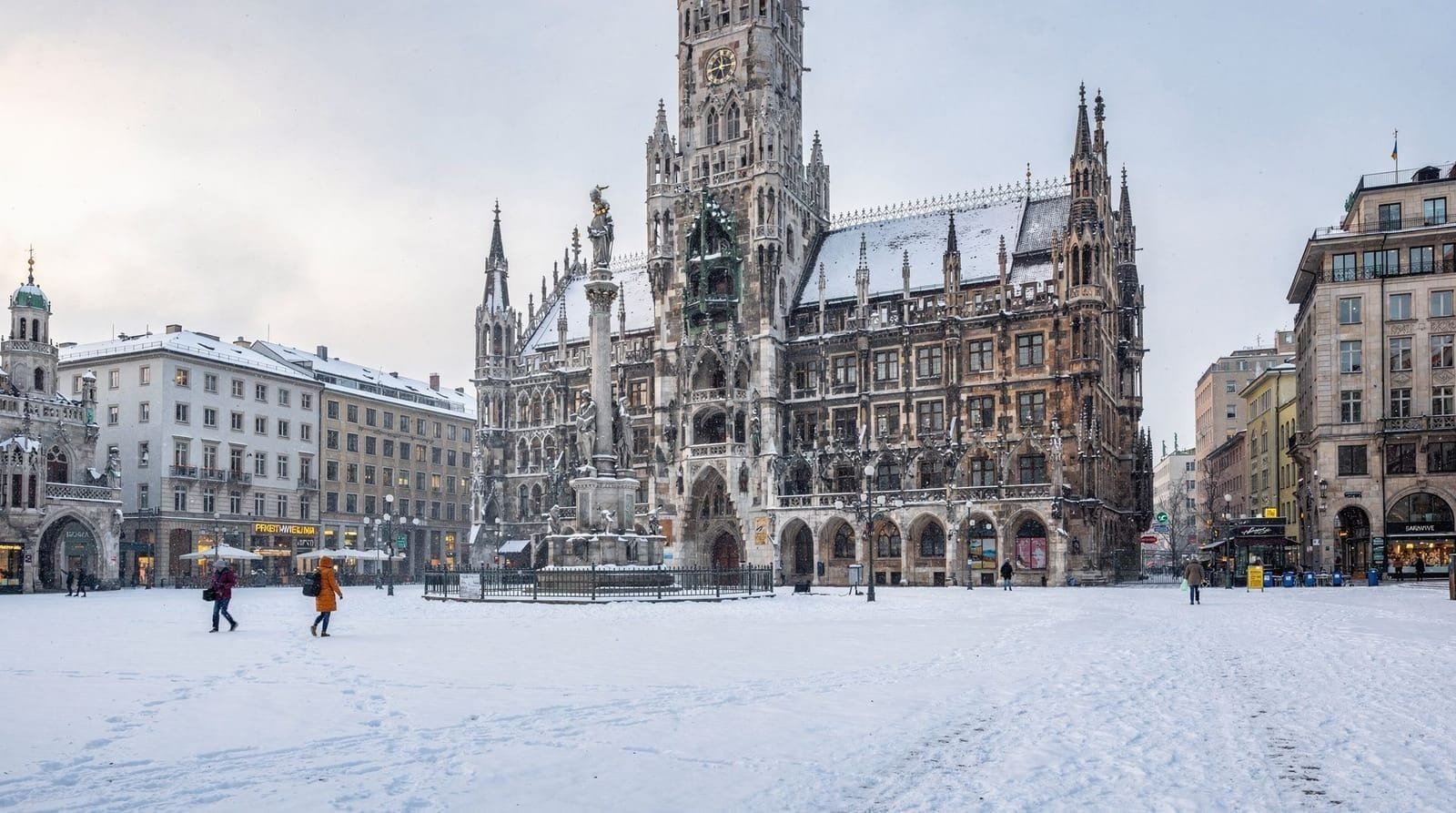
Weather in December: Munich averages 1–5 C in December. Snow is possible but not guaranteed. Bring a warm coat, waterproof footwear, and layers. The markets operate in all weathers and actually look best in light snow.
Accommodation: Central Munich hotels in December (outside Oktoberfest season) run €90–150/night for a 3-star room. The Advent weeks are busy and advance booking is recommended, but it is not as extreme as Oktoberfest.
| Where | Marienplatz, Schwabing, Haidhausen, Tollwood at Olympiapark, optional Nuremberg day trip |
| Cost | Free entry; around €30–50/person/day for food and Glühwein |
| Time needed | 3 days (2 in Munich, 1 optional day trip to Nuremberg) |
| Getting there | Munich Airport–city: 40 min S-Bahn; Munich–Nuremberg: 1h10 ICE or 2h15 regional |
| Best time | Weekday mornings (10:00–13:00) to avoid weekend crowds |
Day 1: Marienplatz and Rindermarkt Christmas markets
Morning: arrive and settle in
If flying into Munich, use the first morning to check in and get your bearings. Munich Airport to the city takes 40 minutes on the S-Bahn. December is Munich’s quietest month for tourists (outside Christmas markets themselves), so check-in is usually efficient.
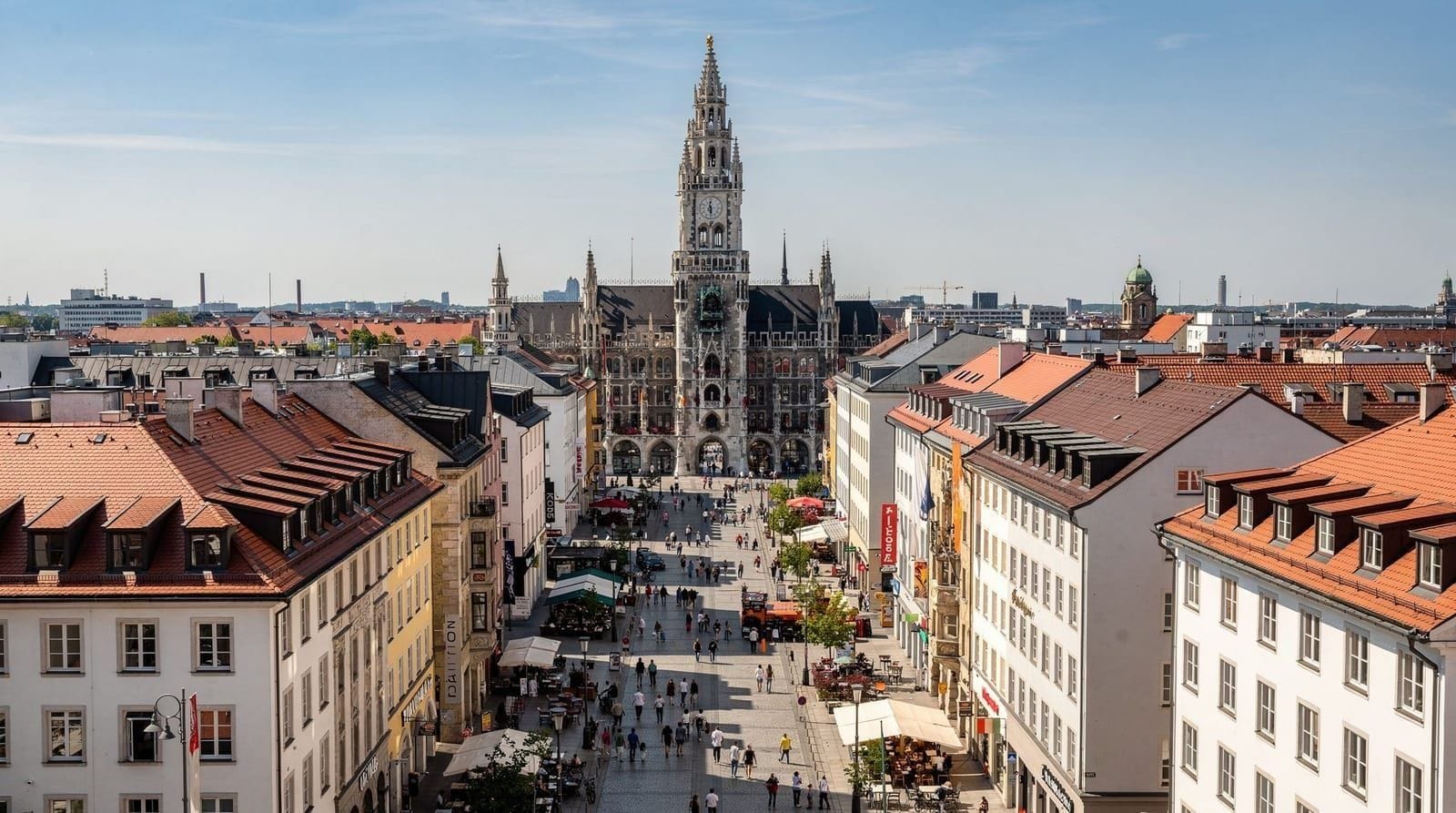
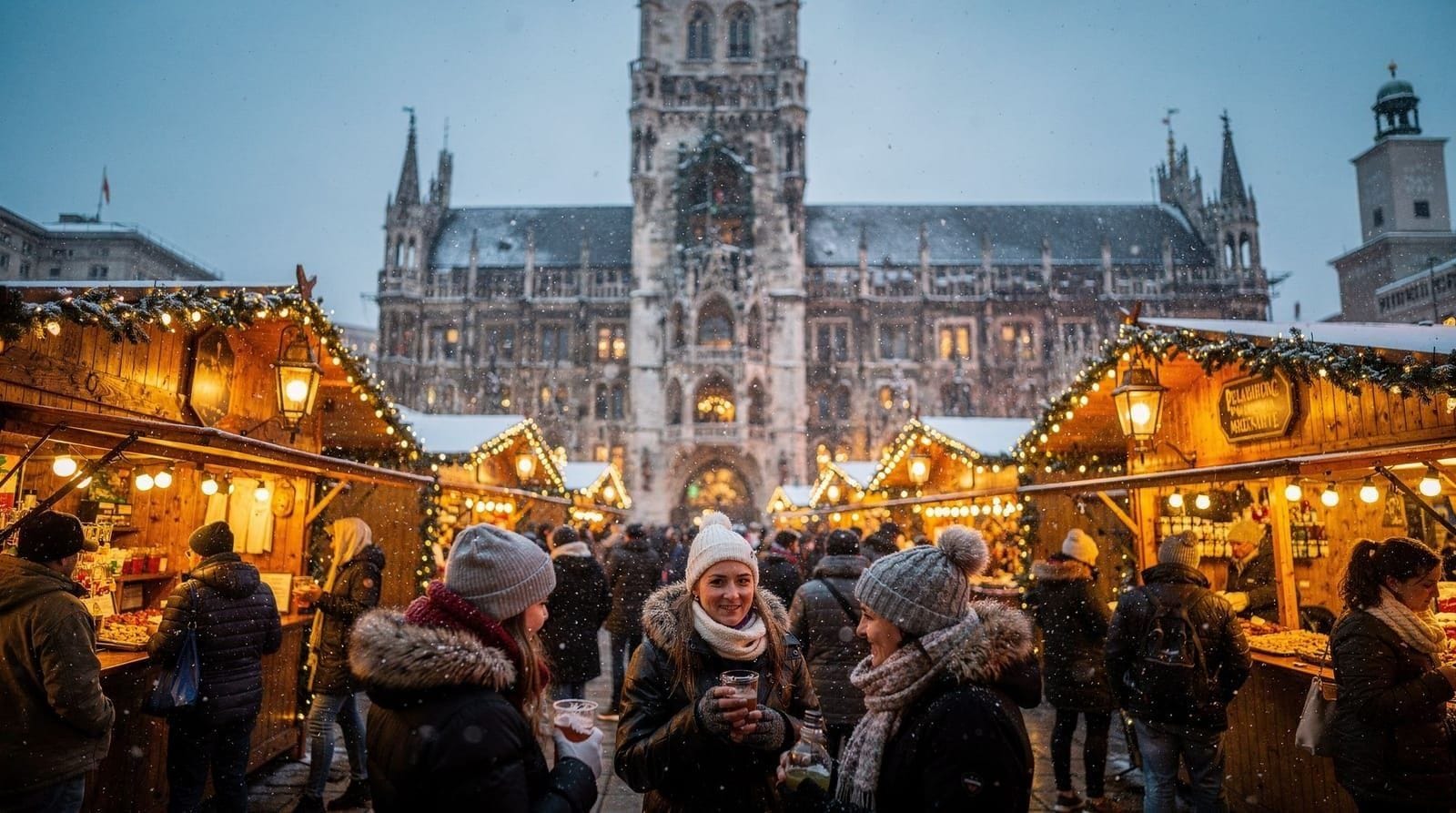
Walk to Marienplatz by mid-morning. The Christmas market here has roughly 90 stalls arranged around the square and the Neues Rathaus facade, which is illuminated from dusk. The market sells the usual German Christmas goods: glass ornaments (Christbaumschmuck), wooden nutcrackers, carved nativities, and spiced gingerbread (Lebkuchen). Prices at Marienplatz are tourist-pitched — the ornaments are genuine but 20–30% more expensive than at neighbourhood markets.
Essential food at the market: Glühwein (mulled wine) in a ceramic Tasse, about €4–5 (the mug is refundable for €2–3). Gebrannte Mandeln (glazed almonds, €5 for a paper cone). Lebkuchen (gingerbread heart, €5–12 depending on size and message). Steckerlfisch (fish on a stick, grilled over charcoal, €8) is a Munich Christmas market specialty not found widely elsewhere.
Afternoon: Rindermarkt and Pferdegebirge markets
The Rindermarkt market (adjacent to the Marienplatz area) is smaller and less crowded. The market at the Schrannenhalle in the Victuals Market area includes stalls inside the historic iron-and-glass hall. The Haidhausen market in Au-Haidhausen (U-Bahn to Max-Weber-Platz) is a neighbourhood market with a more local character and lower prices.
Residenz detour: If you have not visited the Munich Residenz, the December period is one of the better times — shorter queues than summer. Entry costs €11. The Treasury’s gold and gemstone objects complement the Christmas atmosphere.
Evening: Tollwood Winter Festival
Tollwood is Munich’s large alternative Christmas and cultural festival, held at Olympiapark (subway to Olympiazentrum on the U3). It runs from late November to 31 December. The festival covers several large heated tents with live music (folk, jazz, world), art installations, and market stalls selling handmade rather than mass-produced goods.
Entry to the market grounds is free. Most concerts inside the tents have a ticket price (€10–35). The food tents serve a genuinely international range — Ethiopian, Peruvian, Indian, alongside Bavarian — at better quality than the Marienplatz market food. A meal here costs €12–18.
Tollwood feels different from the traditional Christmas markets — more festive music venue than gift shopping, and more mixed in crowd. It is worth a dedicated evening. Join a Bavarian food and market tour with 3-course meal in Munich
Day 2: neighbourhood markets and the Christkindlmarkt circuit
Morning: Schwabing and Maxvorstadt markets
The Weißenburger Platz Christmas market in Haidhausen and the Schwabing market near Münchner Freiheit are two of the best neighbourhood markets. The Schwabing market (U-Bahn to Münchner Freiheit) runs on the square outside the Münchner Freiheit station. It is smaller, less commercial, and attended by local families. Prices are 15–25% lower than Marienplatz. The handcrafted ceramics and knitwear stalls here are from regional artisans.
The Maxvorstadt museum quarter around Königsplatz has a small market in December near the Staatliche Antikensammlungen. The juxtaposition of Greek temple facades with Christmas stalls is distinctive.
Midday: Munich’s food market traditions
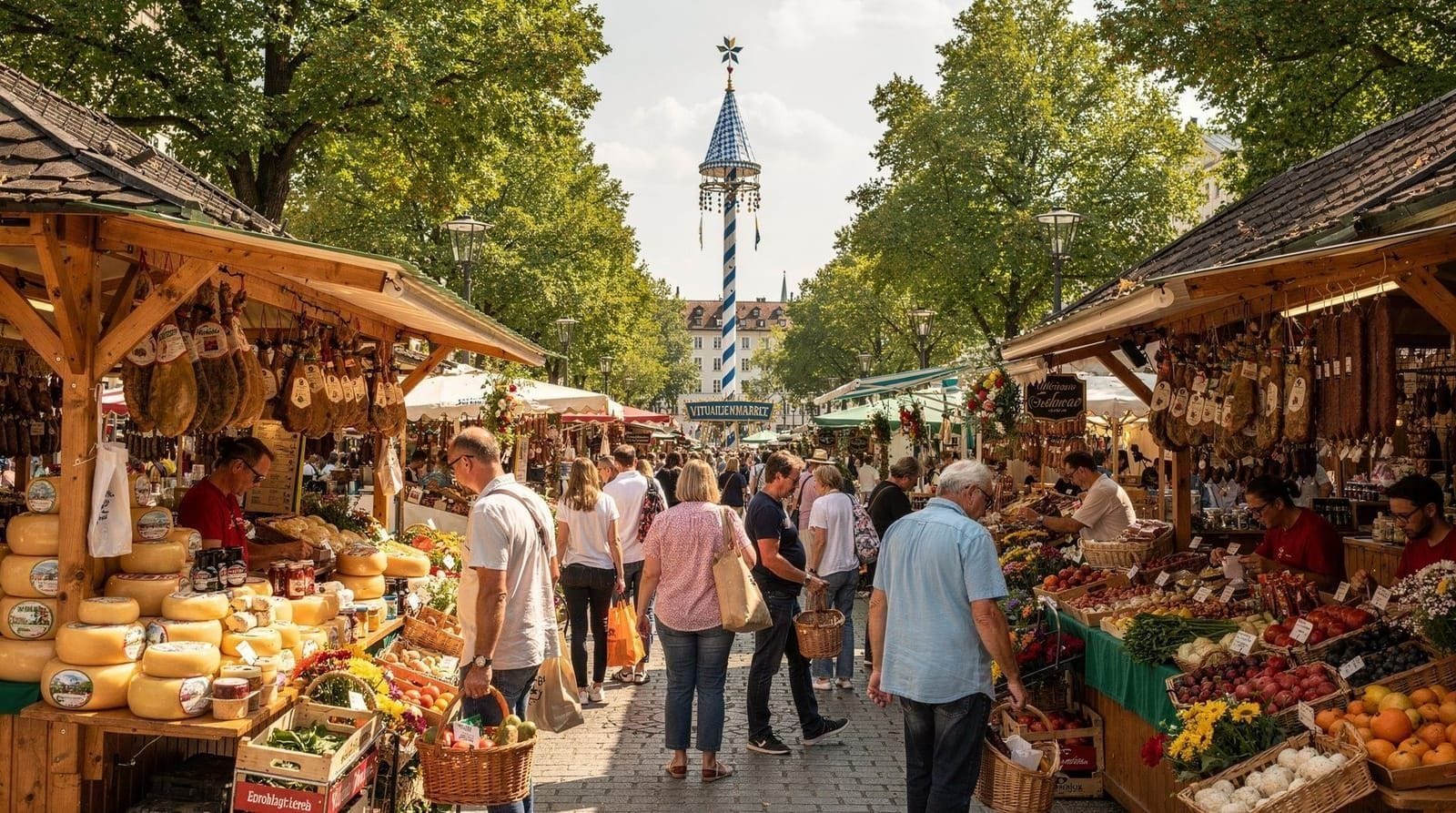
Viktualienmarkt Christmas shopping: The daily market at Viktualienmarkt does not transform into a Christmas market per se, but the regular vendors sell seasonal products throughout December: Stollen (Christmas fruitcake), Lebkuchen, Hutzelbrot (dried fruit bread), and Christmas-spiced spirits. The beer garden in the centre is open until mid-December when temperatures permit. Our Viktualienmarkt food guide covers what to look for.
Lunch: Bratwurst from the Nordsee stalls or a hot Leberkäse (meat loaf, eaten in a bread roll) from a bakery counter — around €4–6. This is what Munich office workers eat for lunch in December.
Afternoon: Sendlinger Tor and Mittlerer Ring markets
The medieval Sendlinger Tor area has a modest market running through Advent. The city’s Mittlerer Ring Christmas trail connects several smaller markets; a printed map is available from tourist information offices at Marienplatz.
Münchner Christkindlmarkt at the Marienplatz gets most photogenic at dusk (around 16:00 in December) when the lights on the Rathaus facade fully illuminate. This is the time to take photos and buy gifts.
Evening: Night watchman tour
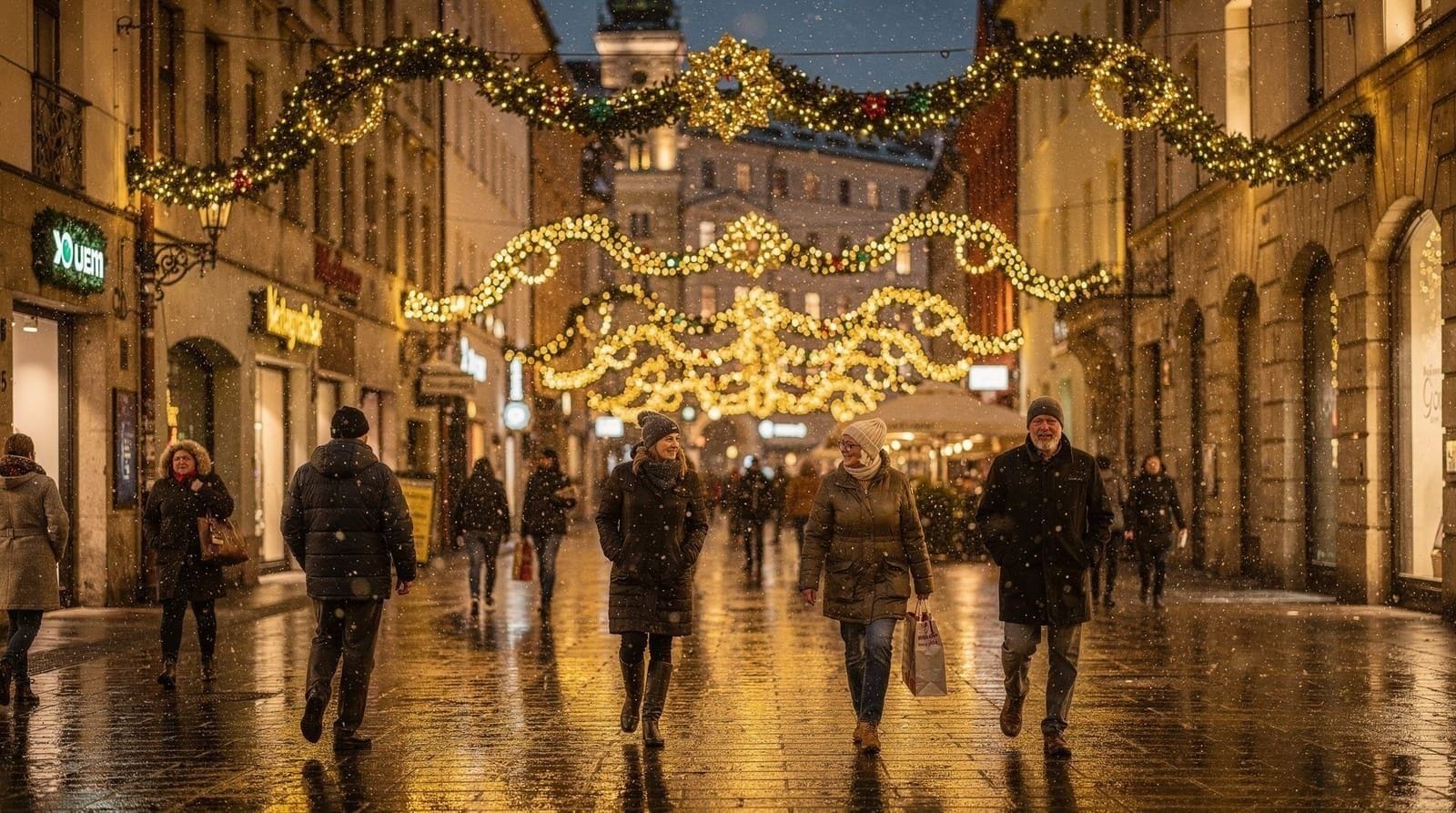
Munich’s old town looks particularly atmospheric in winter with Christmas decoration. The Night Watchman walking tour in English covers medieval history and stories of the old city by torchlight. Tours run several evenings per week in December. Our Munich night tours guide covers scheduling. Join the Munich night watchman tour in English through the historic old town
Day 3: Nuremberg Christmas market day trip (optional)
The Christkindlesmarkt — Germany’s most famous Christmas market
Nuremberg’s Christkindlesmarkt runs from the Friday before the first Advent Sunday until 24 December (2026 dates: approximately 27 November – 24 December). It occupies the entire Hauptmarkt square in Nuremberg’s medieval old town.
The market is historically significant: records of a Nuremberg Christmas market date to 1628. The Christkind — an angel-like figure chosen by public vote every two years — opens the market from the Frauenkirche gallery with a traditional proclamation at 17:30 on opening day.
Getting to Nuremberg: Munich Hauptbahnhof to Nuremberg Hauptbahnhof, ICE service: 1 hour 10 minutes. Regional RE train with Bayern-Ticket: 2 hours 15 minutes (€29 covers the whole day). The ICE ticket costs €30–55 depending on how far in advance you book.
Nuremberg Christmas market essentials: Lebkuchen (Nuremberg is the Lebkuchen capital of Germany, and the quality is noticeably superior to mass-produced versions). Zwetschgenmännle (dried plum figurines, a local tradition). Glühwein in the distinctive Nuremberg ceramic mug. Bratwurst — Nuremberg has its own smaller sausage style (Nürnberger Rostbratwurst), three to a roll, served at €4–5.
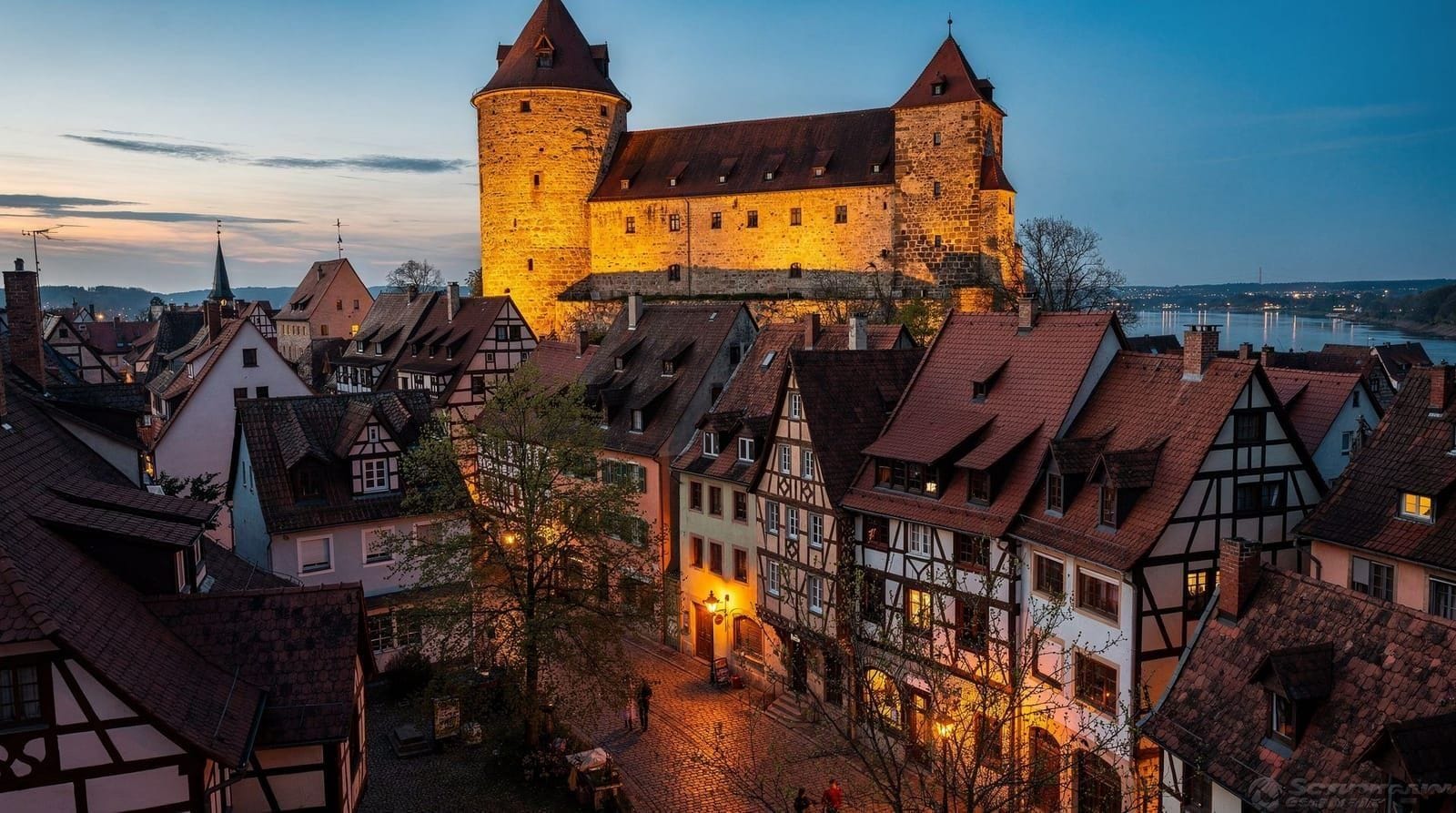
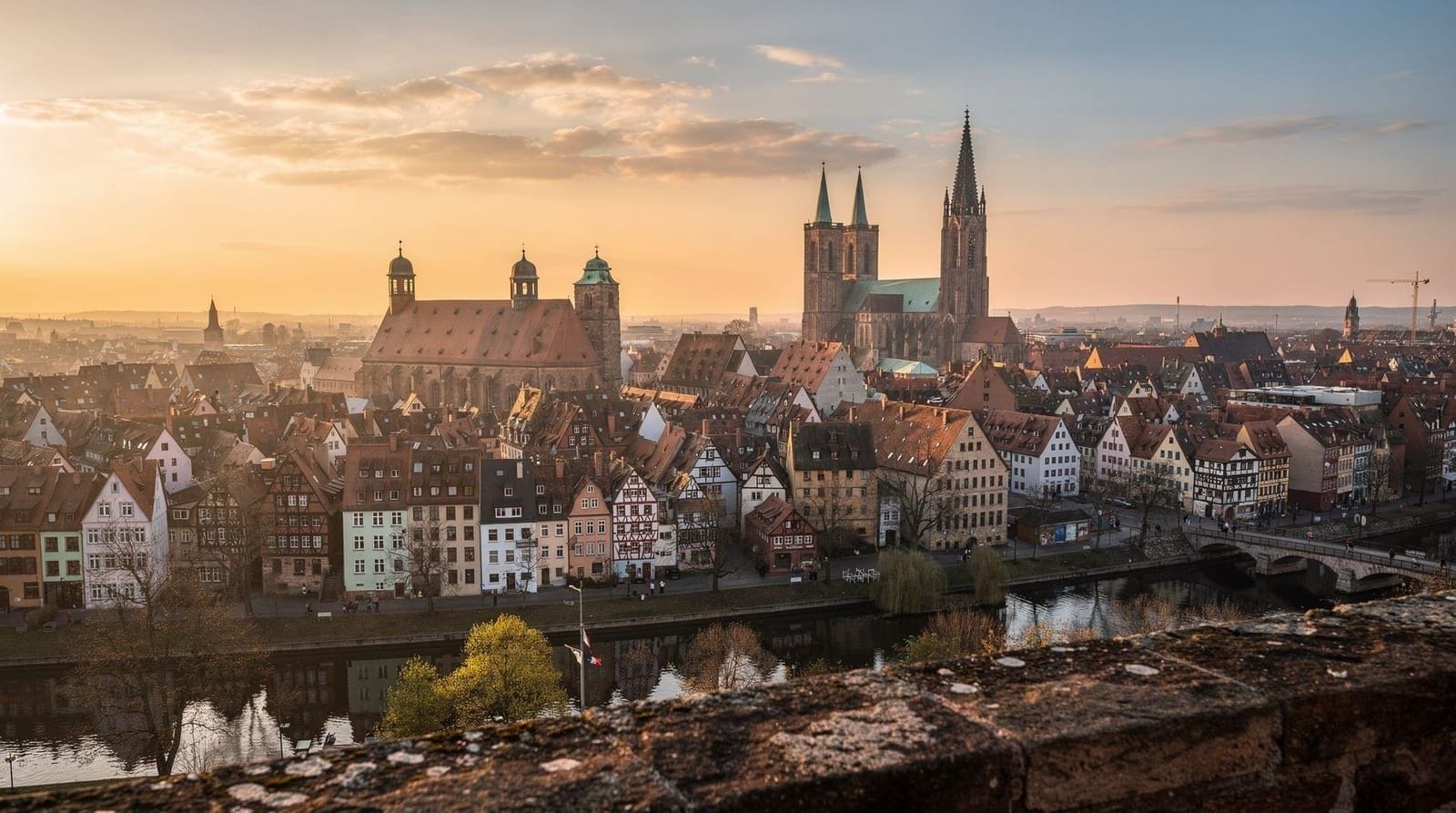
Allow 5–6 hours in Nuremberg. Aside from the market, visit the Kaiserburg (Imperial Castle, entry €7, open until 18:00) for views over the market and old town rooftops. The medieval old town walls are intact and walkable for free.
Return to Munich by 19:00–20:00. The journey back is easy; trains are frequent. Book a guided Nuremberg day trip by train from Munich
Munich Christmas market food: what to eat and what to skip
German Christmas market food varies enormously in quality depending on the stall. Here is a reliable guide to what is worth ordering:
Worth eating:
- Steckerlfisch: Fresh fish (typically mackerel or trout) grilled vertically over charcoal on a wooden skewer. Found at specialty stalls in larger markets. €8–10. The Munich version uses mackerel marinated overnight; the skin crisps perfectly over open fire. Rare outside Bavaria.
- Reiberdatschi (potato pancakes): Shredded potato fried in a pan, served with apple sauce or sour cream. €5–7. Best at the Schwabing and Haidhausen neighbourhood markets where the batter is made fresh rather than pre-mixed.
- Glühwein: The standard is mulled red wine with cinnamon, cloves, and citrus. Ask for Kinderpunsch at stalls for a non-alcoholic children’s version (€3). Quality varies enormously — markets with visible mulling pots of wine are generally better than those serving pre-packaged heated wine.
- Dampfnudel mit Vanillesoße: A pillowy steamed yeast dumpling with vanilla sauce. Found at a handful of traditional stalls. One of the most specifically Bavarian Christmas foods and rarely seen outside Germany.
- Fischbrötchen: Northern German, less common at Munich markets, but some stalls serve cured herring sandwiches. Skip these at Munich markets (they are an import from Hamburg and not authentic to the local tradition).
Not worth the price:
- Overpriced hot chocolate (€6–7 for cocoa with hot water and a small marshmallow)
- “Authentic Bavarian” gingerbread from shrink-wrapped packages (it is industrially made in Nuremberg and sold everywhere)
- Mass-produced wooden decorations labelled “handmade” — look for the “Erzgebirge Qualität” seal on wooden items to verify origin
Drinks to try beyond Glühwein:
- Heißer Apfelsaft (hot apple juice, €3–4): Sweet and child-friendly
- Feuerzangenbowle: Red wine with a sugar cone soaked in rum set on fire above the pot. More elaborate presentation, similar result to Glühwein. Found at specialty stalls.
- Eierlikör (egg liqueur): €4–6 per glass. Rich, custard-like, warm. Not everyone’s preference but distinctly German.
What to buy and what to skip
Worth buying:
- Nuremberg Lebkuchen from Schmidt or Lebkuchen-Schmidt (certified Nuremberg origin, boxes from €12)
- Hand-blown glass ornaments from smaller producers at neighbourhood markets (€5–15 each)
- Wooden Erzgebirge decorations (smoker figures, pyramids) — the Munich markets carry genuine Erzgebirge craftwork
Overpriced for what you get:
- Mass-produced Nutcrackers at Marienplatz (same items found in every German Christmas market)
- Pre-packaged Stollen from tourist stalls (buy from a real bakery like Rischart at Marienplatz for €12–18/loaf)
- Hot chocolate at the big market tents (€6 for what is essentially cocoa powder with hot water)
Avoid: Souvenir beer steins, Munich airport refrigerator magnets, and any stall selling non-German products wrapped in local branding.
For a full guide to what to eat and where to shop at Munich’s Christmas markets, see our Munich Christmas markets guide.
The Nuremberg Christkindlesmarkt in more depth
The Nuremberg Christmas market is often called the most famous in Germany, and the claim is historically defensible. The Christkind figure (a young woman dressed as an angel in gold and white) opens the market from the gallery of the Frauenkirche on the Friday before the first Advent Sunday. The tradition dates from at least the 1640s and the Christkind is elected by public vote every two years from female applicants between 16 and 22.
The Hauptmarkt setting: Nuremberg’s main market square is surrounded by medieval architecture — the Frauenkirche (Church of Our Lady, Gothic, 1352), the Schöner Brunnen (Beautiful Fountain, 14th century), and the former Rathaus. The square is compact and the market fills it entirely. On a cold December evening with light snow, it is undeniably beautiful.
Lebkuchen — the genuine article: Nuremberg Lebkuchen has its own protected designation of origin. Genuine Nürnberger Lebkuchen must be made in Nuremberg by registered producers, contain at least 25% nuts or marzipan, and carry the “Nürnberger Lebkuchen” geographic indication. The most respected producers are Schmidt (Breite Gasse 77), Haeberlein-Metzger (Königstrasse 31), and Wicklein (also on the market square). Buy directly from producer stalls rather than from generic Christmas market packaging.
The Zwetschgenmännle (dried plum figures): A Nuremberg speciality with records dating to the early 19th century. Figures of people, animals, and characters made entirely from dried prunes, wire, figs, and walnuts — no paste or additives. They were originally given as gifts to postmen and chimney sweeps. Available at specialist stalls on the market square; prices run €8–30 depending on size and complexity.
Nuremberg’s old town: The market is reason enough to come, but the city has other worthwhile sites. The Kaiserburg (Imperial Castle) opens until 18:00 daily; entry €7 but views are free from the hill surrounding it. The old town wall circuit can be walked in 45 minutes. The Documentation Center at the Nazi Rally Grounds (Zeppelinfeld, 4 km south of the old town) is one of the best WWII history museums in Germany (entry €8, open Tuesday–Sunday).
Extending the itinerary: Augsburg Christmas market
If you have 4 days, Augsburg deserves a half-day Christmas market visit. The Augsburg Christkindlesmarkt runs alongside Munich’s market season and fills the Rathausplatz and Moritzplatz squares. The distinctive feature is the glasshouse pavilion (Glaskuppel) at the Rathaus — a temporary crystal-and-steel structure erected each December. Augsburg is 60 km from Munich (35 minutes by regional train, Bayern-Ticket valid). It pairs well with a half-day morning visit on the same day as Nuremberg if you are efficient, though that makes for a very full day.
See our Munich to Nuremberg day trip guide for transport details and what to see in Nuremberg beyond the Christmas market.
Where to stay for this itinerary
Base yourself centrally — Altstadt, Maxvorstadt, or Schwabing all put you within walking or short U-Bahn distance of the main markets. Altstadt hotels are closest to Marienplatz and Rindermarkt but priced at a premium in December (€110–170/night for 3-star). Schwabing is a good middle ground: close to its own neighbourhood market, one U-Bahn stop from Münchner Freiheit, and generally €20–30 cheaper per night than Altstadt. Maxvorstadt suits travellers prioritising the museum quarter and Königsplatz market, with easy tram access to Marienplatz. Avoid basing near the airport or far outer districts purely for price — the transport time eats into short market evenings when many stalls close by 20:00–21:00. Our Munich where to stay guide breaks down neighbourhoods in more depth.
Day-by-day summary at a glance
| Day | Focus | Evening |
|---|---|---|
| 1 | Marienplatz, Rindermarkt, Haidhausen | Tollwood Winter Festival at Olympiapark |
| 2 | Schwabing, Maxvorstadt, Viktualienmarkt | Night watchman walking tour |
| 3 | Nuremberg Christkindlesmarkt (optional day trip) | Return to Munich by evening |
If you only have two days
Cut day 3’s Nuremberg trip and instead spend a compressed half-day covering both the Schwabing market and the Marienplatz market on the same afternoon — they are a 15-minute U-Bahn ride apart, so this is realistic if you start by midday. Keep Tollwood on day 1 evening regardless, since it is the most distinctive Munich experience and not easily substituted. If Nuremberg’s Christkindlesmarkt is the priority over a second Munich evening, swap it in for day 2 instead and treat Munich’s neighbourhood markets as a shorter morning add-on before the train.
Getting around between markets
Munich’s Christmas markets are spread across the city, but the U-Bahn and S-Bahn network makes hopping between them straightforward. A single-day transport ticket (Streifenkarte or day pass, around €8.60 for the inner zone) covers unlimited travel and pays for itself after 3–4 trips. Marienplatz and Rindermarkt are walkable from each other; Schwabing (Münchner Freiheit), Haidhausen (Max-Weber-Platz), and Tollwood (Olympiazentrum) each require a short U-Bahn ride. Trams and buses fill gaps the U-Bahn does not reach directly. Our Munich public transport guide covers ticket types in detail, and the Munich U-Bahn and S-Bahn guide has the full network map.
Christmas markets with kids
Munich’s markets are generally family-friendly, and several features work particularly well with children. Tollwood has a dedicated children’s area with a carousel and craft stalls. The Sendlinger Tor and neighbourhood markets are less crowded and easier to navigate with a pushchair than the dense Marienplatz stalls. Kinderpunsch (non-alcoholic mulled juice) is available at nearly every Glühwein stall, and the Christmas market carousels — a rotating horse-drawn carousel operates most years near Marienplatz — are a reliable hit. Evening visits get cold quickly for young children, so plan market time for the afternoon and save the illuminated Rathaus photo moment at dusk (around 16:00) rather than a late evening outing. See our Munich with kids guide for broader family trip planning.
Frequently asked questions about this itinerary
When do Munich Christmas markets open in 2026?
Munich’s main Christmas markets open on Friday, 27 November 2026 (the Friday before the first Advent Sunday) and run until 24 December. The Tollwood festival at Olympiapark runs through 31 December. Individual neighbourhood markets have varying closing dates — most close 23 or 24 December.
Is Nuremberg or Munich better for Christmas markets?
Nuremberg’s Christkindlesmarkt is more historically rooted and the Lebkuchen quality is superior. Munich has more variety: 30+ markets across the city, the Tollwood alternative festival, and better infrastructure. For a first-time Christmas market experience, Munich’s diversity is a stronger argument. Nuremberg’s single market has more concentrated atmosphere.
How much does it cost to visit Munich Christmas markets?
Entry to all markets is free. Budget €30–50 per person per day for food (Glühwein, market food, lunch) and any gifts. The ceramic Glühwein mug costs €4.50 as a deposit — keep it as a souvenir. If you buy gifts or ornaments, add €30–80 per visit.
Is Tollwood worth visiting compared to the traditional markets?
Yes, but for different reasons. Tollwood is better for live music, international food, and a less commercial atmosphere. The traditional Marienplatz and neighbourhood markets are better for classic German Christmas shopping and the visual spectacle of Advent decorations. Both are worth visiting if you have 3 days.
What should I wear to Munich Christmas markets in December?
Thermal base layer, warm sweater, and a proper winter coat. Temperatures are typically 0–5 C, often with wind chill. Waterproof boots are useful as the market grounds can be wet. Most Glühwein stalls have heated standing areas, and Tollwood has heated tents.
Are Munich Christmas markets crowded on weekends?
The Marienplatz market is very crowded Saturday afternoons and all day Sunday. Go on weekday mornings (10:00–13:00) for a calmer experience. Neighbourhood markets at Schwabing or Haidhausen are less crowded throughout the week.
Can I do a Munich Christmas market trip in one day from another city?
Munich is 3.5 hours from Frankfurt, 2.5 hours from Nuremberg, and 1.5 hours from Salzburg by train. A one-day visit from Nuremberg is easy. From Frankfurt, a day trip is possible but tiring. Two nights in Munich gives a much better experience for the range of markets.
Top experiences
Bookable activities with verified prices and instant confirmation on GetYourGuide.