Munich nightlife by district: where locals actually go
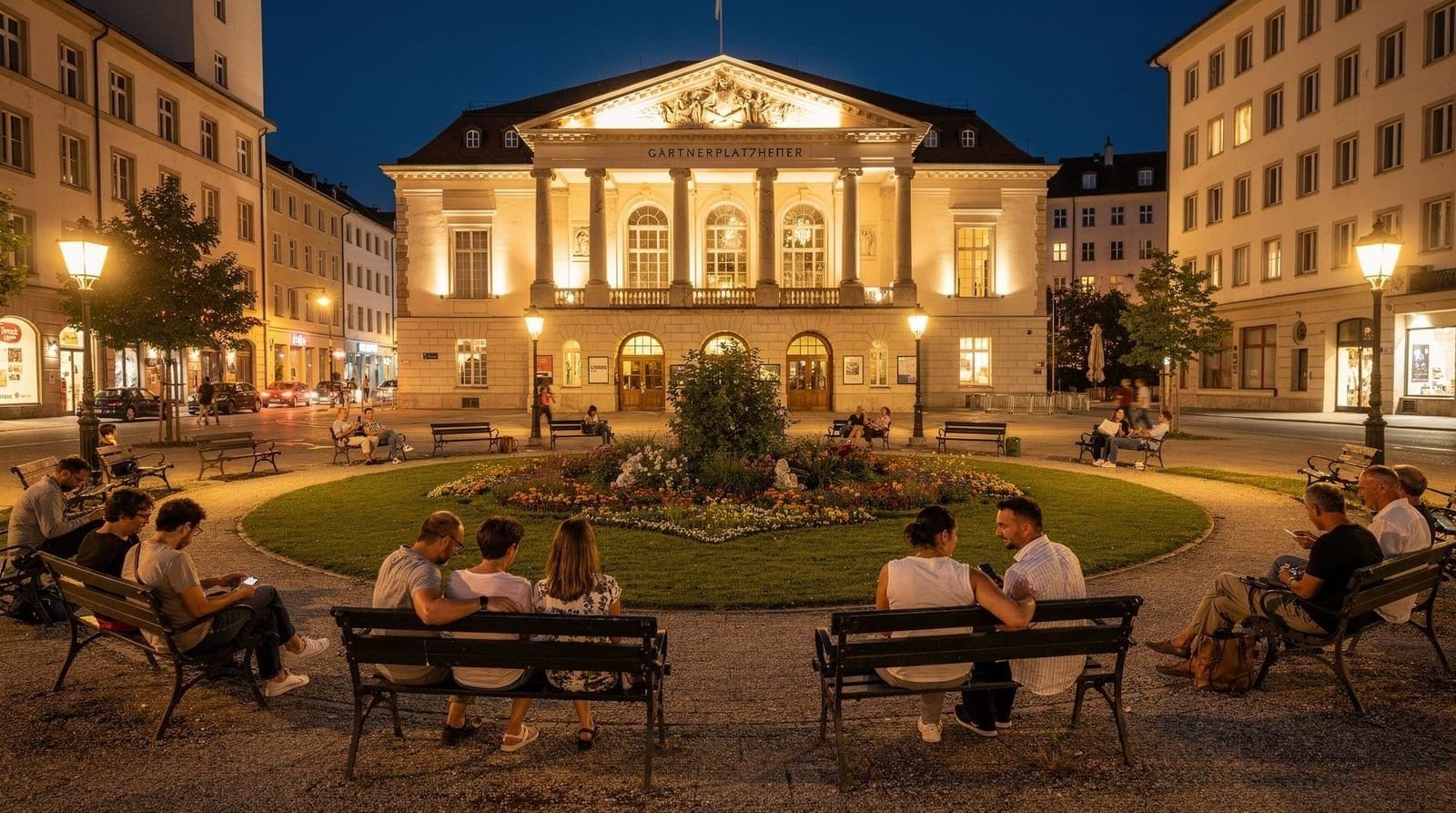
Munich after dark: a different city from the daytime clichés
The Munich you experience at 11pm is different from the one on the Oktoberfest brochures. Yes, the city has beer halls. But Munich also has a serious bar scene, genuine cocktail culture, techno clubs with international reputations, and neighborhoods where local night culture has nothing to do with Lederhosen.
This guide covers the main nightlife districts honestly — where they are, what kind of experience they offer, what they cost, and which to pick based on what you actually want from an evening.
| Where | Glockenbachviertel, Schwabing, Altstadt, Haidhausen, Maxvorstadt |
| Cost | Beer €4–€8, cocktails €12–€22, clubs €10–€25 entry |
| Starts | Bars fill from 9–10pm; clubs from midnight |
| Getting around | U-Bahn/S-Bahn (24h Fri–Sat) or taxis (€15–€25 cross-city) |
| Best pick for a first night | Glockenbachviertel |
Glockenbachviertel: the local pick
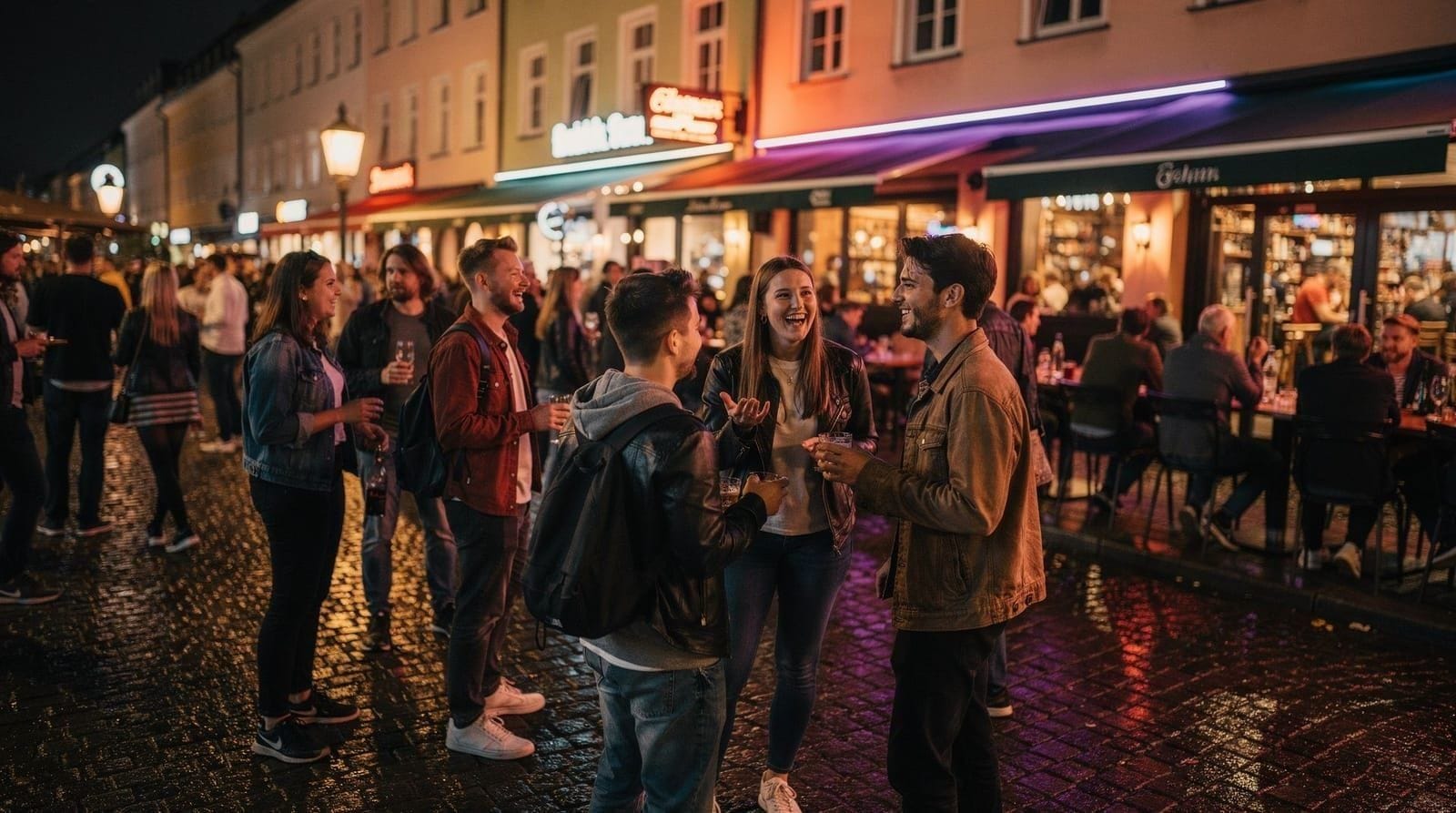
The Glockenbachviertel sits south of Sendlinger Tor and east of the Isar. It’s Munich’s queer-friendly, arts-oriented, slightly bohemian neighborhood — and its nightlife is the most genuinely local of any area in the city.
The district is centered on Hans-Sachs-Strasse and the surrounding blocks. Bars here are small, often unmarked, and range from craft beer spots to cocktail bars to wine bars to dive bars that have been there since the 1980s. The density of options per street is high.
What to expect: Locals in their 25–40s, mixed clientele, no entrance fees at bars, not aggressively touristy. Bars open from around 6pm and stay open until 2–3am; some later on weekends.
Specific spots worth knowing:
- Blitz Club on Museumsinsel: Munich’s most reputable techno club, housed in a former air raid shelter complex. International bookings, serious sound system. Entry around €10–€15. Lines on Friday and Saturday nights.
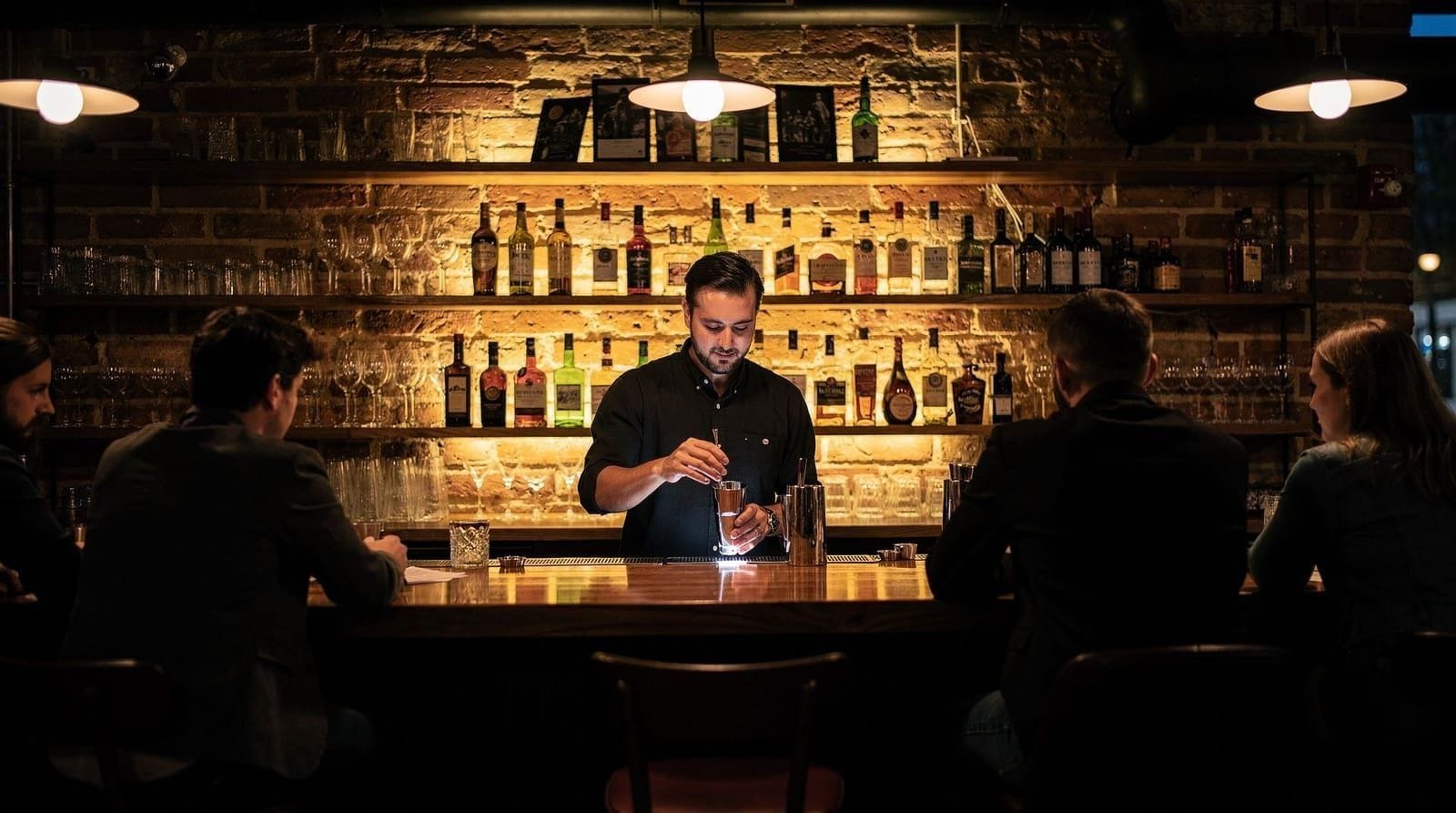
- Charles Schumann’s bar (actually in the Maxvorstadt nearby): one of Europe’s most respected cocktail bars, in a converted auto workshop. Prices match the reputation — cocktails at €18–€22. Worth it for one drink if you appreciate bar craft.
- Holy Home on Müllerstrasse: craft beer, natural wine, no pretension.
The Glockenbachviertel doesn’t start until 9pm. Don’t arrive at 7pm expecting atmosphere — most of the bars will be half-empty. By 10pm on a Friday the side streets are busy; by midnight, very busy.
Schwabing: bohemian history, current state mixed
Schwabing was Munich’s bohemian quarter at the turn of the last century — Rilke, Thomas Mann, Kandinsky, and Lenin all lived here at various points. The bohemian reputation has softened into gentrification, but the neighborhood still offers good bars and a different atmosphere from the old town.
The main nightlife strip runs along Leopoldstrasse — a wide boulevard lined with pavement cafés and bars. This is the standard evening destination for students from Ludwig Maximilian University and the Technical University.
What to expect: Younger crowd than the Glockenbachviertel, larger and busier, more mainstream. Some touristy spots toward the Englischer Garten end, better bars as you go north.
Honest note: Leopoldstrasse can feel generic — long rows of identical outdoor seating. The better bars are on the side streets: Hohenzollernstrasse, Amalienstrasse, and Türkenstrasse (which bleeds into the Maxvorstadt).
Bars worth finding:
- Alter Simpl on Türkenstrasse: Munich’s oldest pub, founded 1903. No frills, dark wood, cheap beer, locals arguing over football. Closes late.
- Muffatwerk (technically Au-Haidhausen, but accessible): multi-venue complex in an old pumping station on the Isar. Concert venue, bar, outdoor beer garden, club space. One of the better live music venues in the city.
Altstadt: tourist-heavy but some genuinely good spots
The city center around Marienplatz concentrates the most famous names in Munich nightlife. The tourist density is real, but there are specific places that justify the location.
Beer halls and brewpubs:
- Augustiner am Dom: best Augustiner tap in the old town, better crowd than the Hofbräuhaus.
- Spatenhaus an der Oper: reasonable beer hall with good views of the National Theatre on Maximiliansplatz.
- Schuhbecks Südtiroler Stuben: if you want to eat seriously in the old town, this is the option — though it’s a restaurant rather than a bar.
The Hofbräuhaus reality check: The Hofbräuhaus is worth one visit for about 45 minutes to understand what it is. It seats 3,500 people, plays oompah music loudly, and serves unlimited beer to tourists from every country. The beer is fine; the food is overpriced for quality; the atmosphere is more international theme park than local beer hall. Go once if you haven’t, don’t make it your base.
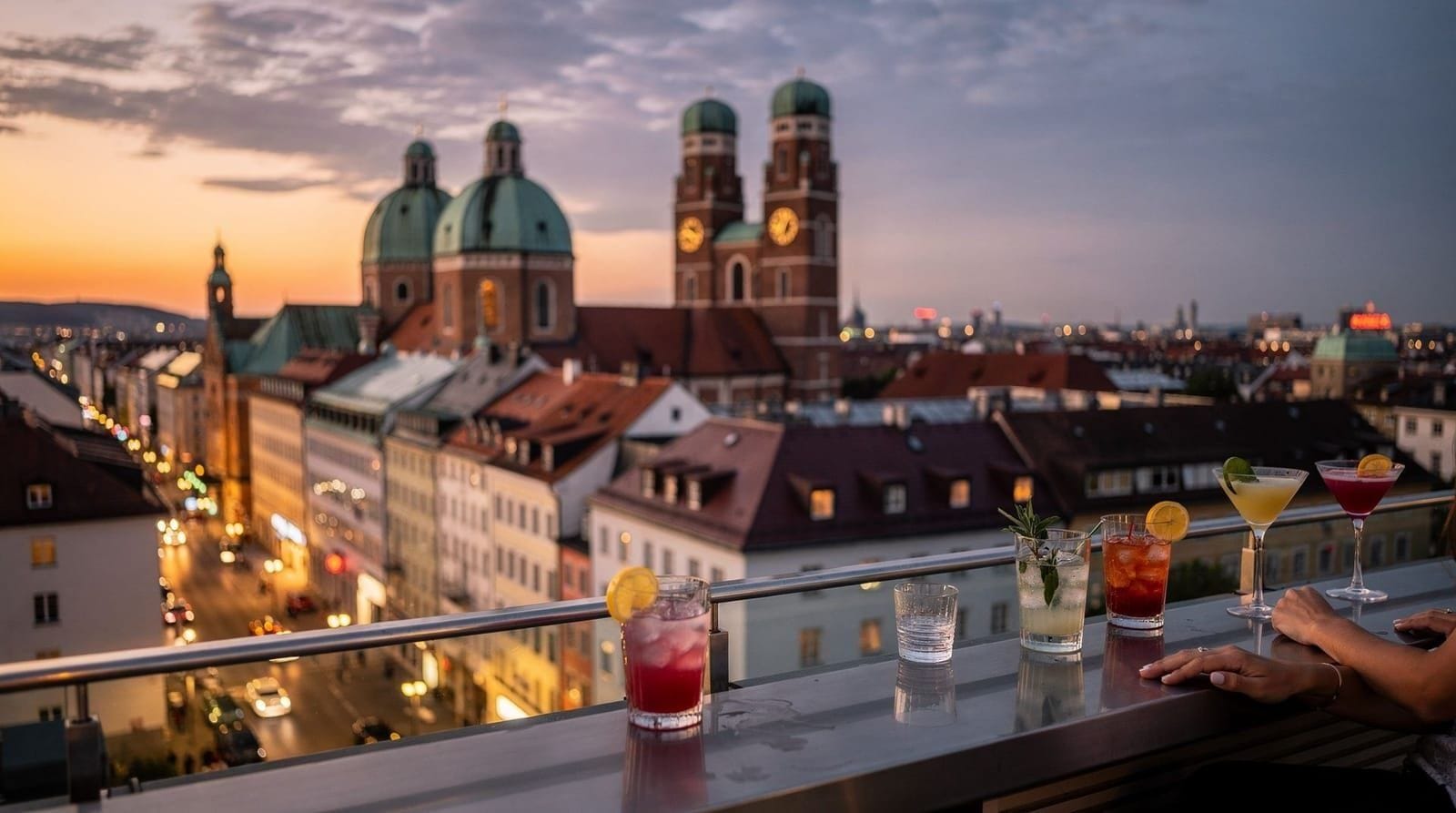
Rooftop bars: Munich has several rooftop bars worth knowing. The Bayerischer Hof hotel’s Blue Spa Bar on the rooftop is expensive but offers genuine views of the Frauenkirche towers. The Dachgarten at the Radisson Blu is more accessible pricewise.
Au-Haidhausen: east bank, less visited
Au-Haidhausen sits on the east bank of the Isar, directly opposite Maxvorstadt and the museum quarter. It’s a mix of gentrifying working-class architecture (distinctive “blue windows” houses) and increasingly good bar and restaurant culture.
The Wiener Platz end has excellent neighbourhood bars. The Muffatwerk complex (see above) is the area’s biggest draw for evening entertainment.
What to expect: Quieter than the Glockenbachviertel, more residential, later-night crowd smaller. Better for a long evening dinner followed by bar-hopping than for starting late.
Maxvorstadt: student bars and cultural venues
The Maxvorstadt museum quarter is quiet by night compared to Schwabing or the Glockenbachviertel, but Türkenstrasse and the streets around Kunstareal have decent student bars and some of Munich’s better live music venues.
The Atomic Café on Neuturmstrasse is a Munich institution — indie rock, electro, alternative nights, not particularly trendy but consistent. The Muffatcafé in Haidhausen is the more refined option for live music.
The club scene: what Munich actually offers
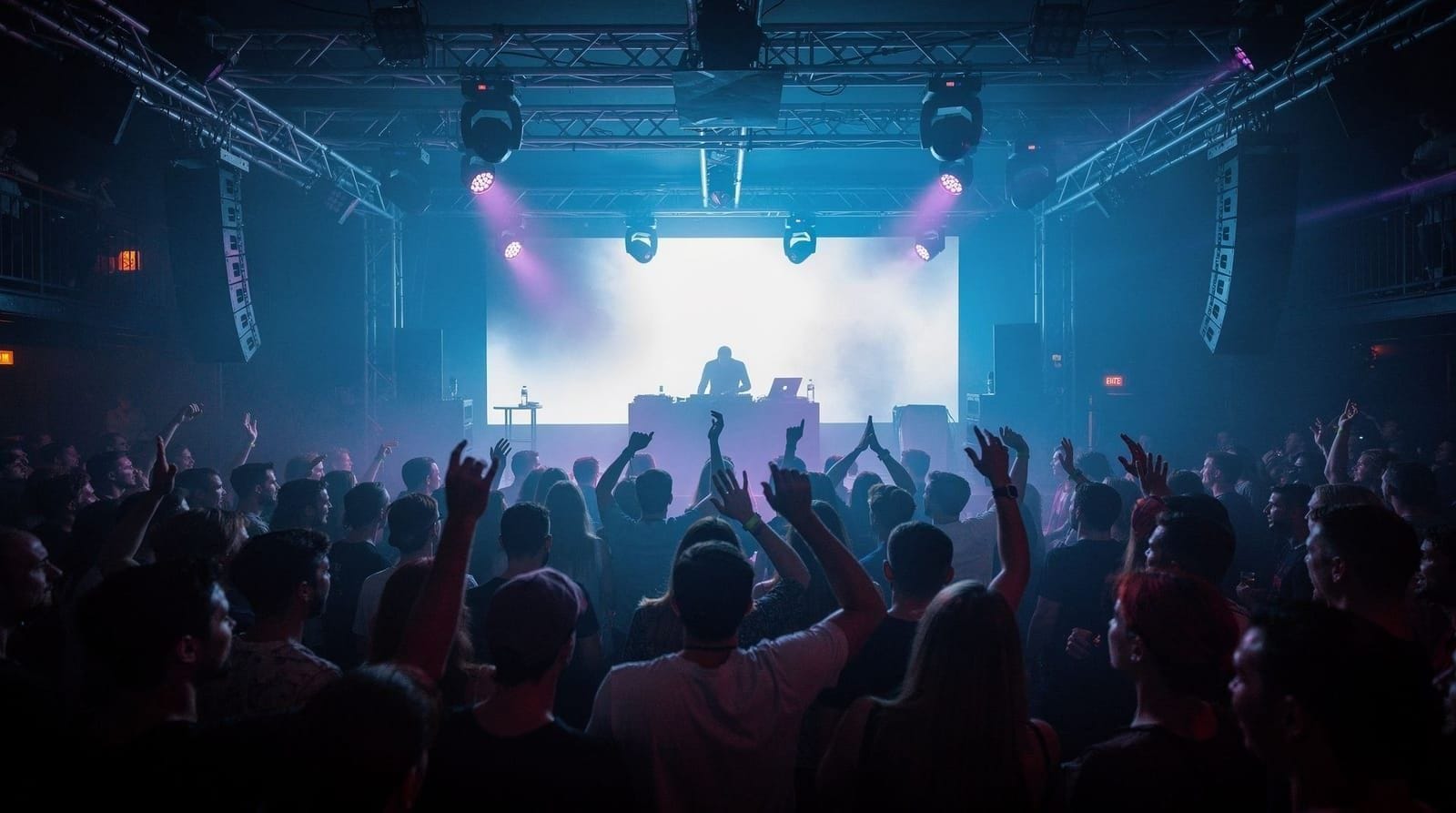
Munich’s club reputation is underrated. The clubs guide covers this in more depth, but the key facts:
- Blitz Club (Glockenbachviertel): best techno in the city, international DJs, no phones policy on the dancefloor. Serious venue.
- Bob Beaman on Plinganserstrasse: jazz and electronic, rotating programming, small capacity (around 300), intimate.
- Harry Klein (near Hauptbahnhof): 250-capacity club, long queue, loyal local following, LED art installations. One of Germany’s respected small venues.
- Pacha Munich (Maximilianplatz): commercial end of the market — house and chart music, large venue, high entry prices (€15–€25). Attracts a mixed tourist-local crowd.
Munich clubs don’t really start until midnight. Arriving at 11pm is early. Entry systems vary — some clubs have fixed admission, others are guest-list based on weekends. Harry Klein in particular has a known preference for regulars and locals over tourists.
Comparing the districts at a glance
| District | Vibe | Best for | Crowd |
|---|---|---|---|
| Glockenbachviertel | Bohemian, queer-friendly, dense bar scene | A genuine local first night out | Locals, 25–40s |
| Schwabing | Boulevard cafés, university energy | Groups wanting a lively, easy start | Students, younger |
| Altstadt | Tourist-heavy, some standout spots | Beer halls, rooftop views | Mostly tourists |
| Au-Haidhausen | Quieter, residential, live music | A long dinner into bar-hopping | Locals, later crowd smaller |
| Maxvorstadt | Student bars, live music venues | Low-key evenings near the museums | Students, mixed |
Dress codes and door policy
Munich’s door policy varies sharply by venue type. Beer halls and beer gardens have no dress code at all — come as you are. The Glockenbachviertel’s bars are similarly relaxed. Munich’s serious clubs are a different matter: Harry Klein and Blitz Club both operate selective door policies that favour locals and smaller groups over large, visibly drunk tourist parties, and dressing neatly (not necessarily formally) improves your odds. Pacha and other commercial venues enforce more conventional smart-casual dress codes and charge higher entry on weekends. If you’re unsure, arrive earlier in smaller groups rather than as part of a large stag or hen party — door staff at the better clubs are notably less forgiving of large rowdy groups.
Practical details: getting home
Munich’s U-Bahn runs 24 hours on Fridays and Saturdays (suspended on weeknights from around 1am to 5am in normal operation). Night buses fill the weeknight gap — the N-Bahn network is reasonably comprehensive.
Taxis are plentiful but expensive — a cross-city trip will cost €15–€25. Ride-sharing services operate in Munich. The public transport guide covers the night network. Munich night watchman tour — a theatrical way to see the old town at night
Budget: what a night out costs
A beer in a tourist bar on Marienplatz: €6–€8 for a half-litre. In a local bar in Glockenbach: €4–€6. A mass (litre) in a beer hall: €11–€14. A cocktail in Charles Schumann’s: €18–€22. Club entry: €10–€20 depending on venue. A dinner before going out: €18–€30 for a decent meal in Haidhausen or Maxvorstadt.
A realistic evening budget — dinner, 3–4 drinks, one club entry — runs €50–€80 per person depending on choices.
FAQ: Munich nightlife
What time does Munich nightlife start?
Bars in Munich open from 6pm but don’t fill until 9–10pm. Clubs don’t have any atmosphere until midnight; peak club hours are 1–4am. Munich night culture starts later than many tourists expect.
Is Munich nightlife better than Berlin’s?
Different rather than better or worse. Berlin’s club scene is internationally unmatched for scale and techno culture. Munich’s is smaller, better curated in some respects (Blitz Club, Harry Klein), and set in a more expensive, more conservative city. Munich’s beer hall culture is entirely its own category that Berlin doesn’t replicate.
Which district is best for a first night out in Munich?
The Glockenbachviertel is the most reliable choice for a first experience of Munich’s actual local bar scene — good density, manageable size, mixed crowd, range of bar types. Start with Hans-Sachs-Strasse and explore from there.
Are Munich clubs tourist-friendly?
The major commercial clubs (Pacha, P1) are explicitly tourist-friendly. The better underground venues (Harry Klein, Blitz) prioritise locals and have been known to turn away large groups of obvious tourists on busy nights, particularly if they’re visibly drunk. Dress codes are enforced at upmarket venues. Blitz Club has a strict no-phone-camera policy inside.
Which Munich district is safest for a solo night out?
All of the districts covered here are reasonably safe by European standards. The Glockenbachviertel and Maxvorstadt are the most consistently comfortable for solo visitors, with well-lit streets and steady foot traffic into the early hours. Use standard city precautions around the Hauptbahnhof area late at night, where street activity is higher.