Munich clubs guide 2026
Munich: Bavarian beer walking tour with samples and food
What is Munich's club scene like?
Munich has a genuine but modest club scene centred on the Werksviertel-Mitte area near Ostbahnhof. Blitz and Harry Klein are the most respected electronic music venues. P1 is the upscale option near the English Garden. Kultfabrik is a cluster of commercial venues for a more casual night out. Entry runs €10–25. The U-Bahn runs all night on Fridays and Saturdays.
Munich’s club scene in context
Munich is not Berlin. That sentence appears in almost every comparison of the two cities’ nightlife scenes, and it is worth stating clearly: if you are travelling specifically to experience Germany’s most serious electronic music scene, the correct destination is Berlin.
Munich’s club scene, however, is better than its reputation among those who have not looked. The city has two internationally regarded venues (Blitz and Harry Klein), a serious booking culture among promoters, and an audience that is genuine rather than performative about electronic music. What it lacks is the sheer scale and mythological status of the Berlin scene — which, depending on what you want from a night out, may not matter at all.
This guide covers the main clubs honestly, with practical information on access, music policy, and what to realistically expect.
| Serious electronic music | Blitz, Werksviertel-Mitte, €10–20 |
| More accessible door | Harry Klein, near Sendlinger Tor, €8–18 |
| Upscale/socially exclusive | P1, near English Garden, €15–25 |
| Casual, no-pretension | Kultfabrik, near Ostbahnhof, mostly walk-in |
| Where | East Munich hub: Ostbahnhof/Werksviertel |
| Transport | U-Bahn/S-Bahn run all night Fri–Sat |
Blitz — the flagship underground club
Location: Atelierstraße 13 (inside Werksviertel-Mitte complex), near Ostbahnhof Music: Techno, experimental electronic, occasional live acts Entry: €10–20 depending on the night; advance tickets available on Resident Advisor Policy: No-phone zone on the dance floor; camera stickers provided at entry
Blitz is the most respected club in Munich’s electronic music scene and has been for over a decade. Located in the Werksviertel-Mitte complex — a former industrial site undergoing long-running redevelopment — it occupies a purpose-designed space with one of the better sound systems in Germany.
The programming focuses on techno at the serious end of the spectrum — think Ostgut Ton-adjacent bookings rather than festival-EDM. Regular residents and local DJs anchor the schedule, with internationally known acts on major nights. The crowd skews towards regulars and genuine fans of the music rather than tourists seeking a “Berlin experience.”
The no-phone policy on the dance floor is strictly enforced. Camera stickers are provided at the entrance. This is not an Instagram destination — treat it as a place to listen to music.
Door access: Blitz is selective but not capricious. The general principles are: go before midnight, avoid large groups (more than four), dress appropriately (dark practical clothing), and engage naturally at the door. Refusing to accept rejection calmly is the surest path to a permanent ban.
Practical note: the venue is inside the Werksviertel complex, which is still partly under development. The entrance is not immediately obvious; check the venue’s social channels for current entrance locations before you go.
Harry Klein — art and electronic music
Location: Sonnenstraße 8 (near Sendlinger Tor) Music: House, techno, experimental Entry: €8–18 Policy: Photography discouraged on the dance floor; varies by event
Harry Klein has been a Munich institution since the early 2000s, surviving several relocations to arrive at its current home on Sonnenstraße, conveniently central and near the Glockenbachviertel. It has historically had stronger art direction than most German clubs — visual projections, installations — which makes it a more aesthetically considered night than raw warehouse techno.
The music policy is broader than Blitz — house gets significant play alongside techno — and the crowd is slightly more mixed. It is also less intimidating at the door, which makes it a more practical first choice if you are new to Munich’s club scene.
The venue is smaller than Blitz, which means atmosphere builds quickly and the sound is more immersive per square metre. If it is full, it fills very quickly; if it is not, the energy can feel incomplete. Arriving around midnight typically catches the right moment.
The location near Sendlinger Tor puts it on the U1/U2 and U3/U6 interchange — transport home is straightforward at any hour.
P1 — the upscale option
Location: Prinzregentenstraße 1 (next to Haus der Kunst, near the English Garden) Music: Commercial house, R&B, pop Entry: €15–25; guest list significantly improves access Policy: Strict door; smart-casual to formal dress expected
P1 occupies a unique position in Munich’s nightlife. It is the city’s most famous and most socially exclusive club, and it is also — by the standards of the underground scene — the least musically serious. These facts coexist without contradiction: P1 is not trying to be Blitz, and Blitz is not trying to be P1.
The club attracts Munich’s business community, footballers, media personalities, and a wealth-adjacent crowd that dresses accordingly. Entry is selective on appearance and perceived status rather than music credibility. The bar prices are the highest in Munich nightlife (cocktails €18–25). The music is mainstream chart-friendly house.
If you want to observe a particular slice of Munich’s social character — aspirational, style-conscious, a little superficial — P1 is the venue for it. If you want to listen to good music at reasonable prices, it is not.
Kultfabrik — commercial cluster near Ostbahnhof
Location: Grafinger Straße 6 (Ostbahnhof area, adjacent to Werksviertel) Multiple venues, varying music policies Entry: Varies; often free entry to some venues, €10–15 for others
The Kultfabrik is an older cluster of commercial nightlife venues on the east side of Munich, sitting adjacent to but distinct from the newer Werksviertel-Mitte development. Where Werksviertel tends toward quality and curation, Kultfabrik leans commercial and high-volume.
Multiple clubs operate within the Kultfabrik complex simultaneously, catering to R&B, hip-hop, pop, and commercial EDM audiences. The quality varies significantly between venues. It is essentially a nightlife theme park — loud, busy, straightforward about its commercial orientation.
This is not the choice for serious music, but it is a reasonable option for a high-energy, low-pretension night out with a group. The lack of door selectivity at most venues makes it the most accessible cluster in Munich. Combine a visit here with dinner at one of the Werksviertel-Mitte food stalls (which operate independently from the clubs) and you have a complete east-Munich evening.
Getting to the club district
The most important night-out logistics note for Munich: the east-side club district (Werksviertel, Kultfabrik) is served directly by Ostbahnhof, which is on every S-Bahn line through the city and on the U5. From the city centre:
- From Marienplatz to Ostbahnhof: 5 minutes on the S-Bahn (S1/S2/S3/S4/S6/S7/S8).
- From Sendlinger Tor to Ostbahnhof: 10 minutes (U5 then S-Bahn, or U2 then walk).
The Munich public transport guide covers night services — the U-Bahn and S-Bahn run continuously on Friday and Saturday nights.
Munich vs Berlin: the honest comparison
People ask this question constantly. Here is the short answer:
Berlin’s scene is larger, has more venues, runs longer, and has a cultural mythology that attracts international music talent at a level Munich does not match. Berghain is a world-class venue in a way that no Munich club is.
Munich’s advantages: smaller queues (usually), a more reliable night out without the possibility of a 90-minute Berghain queue ending in rejection, better public transport at 5am, and the option of walking to a beer garden on the way home. Munich also has a less transient scene — the audience has more continuity, which means regular nights feel more settled.
If you are going to both cities, go to Berlin for clubbing and Munich for beer gardens and daytime culture. If you are only going to Munich, the club scene is good enough to spend a night on.
Practical club checklist
- Check the venue’s website or Resident Advisor page for the specific night’s DJs and ticket availability before going.
- Buy tickets in advance for big nights at Blitz — it sells out.
- Arrive before midnight for selective venues.
- Carry cash for smaller venues and Kultfabrik. Many clubs do accept cards at the bar but cash is more reliable.
- The Werksviertel complex also has food vendors — eating before going in is practical.
- Bring photo ID. Age verification at club doors is standard in Germany.
- Note the walk from Ostbahnhof S-Bahn to Blitz’s entrance in the Werksviertel complex — it is about 8 minutes on foot and not immediately obvious the first time.
For bar options earlier in the evening, the Munich best bars guide covers pre-club drinking in the Glockenbachviertel and other areas.
Munich club scene: the longer picture
Munich’s club scene does not aim to be international. It is a city-sized scene serving a city population, and it has the character of that: regulars who attend the same nights monthly, promoters who have long-standing relationships with the venues they book, and a community that is neither the transient party tourists of Ibiza nor the pilgrim audiophiles of Berghain.
The practical consequence is that the best nights in Munich are often the regular nights — the long-running series that a venue has been running for years — rather than the one-off events that attract the largest names. Resident Advisor’s Munich listings will tell you what is on, but the best insider information comes from regular attendees who know which promoter consistently delivers.
The east-Munich area around Werksviertel-Mitte is still developing. The Tonhalle München (Munich’s main symphony concert venue) is scheduled to relocate to the Werksviertel complex when its current Gasteig building refurbishment completes — this will bring a different crowd and a different energy to the area on concert nights. The development of the area continues to add restaurants, cultural spaces, and outdoor event zones that complement the clubs.
For an evening that combines the established beer garden culture of Munich with its club scene, a practical pattern: dinner at Augustiner-Keller (closes 22:30), then U-Bahn to the Glockenbachviertel for bars, then S-Bahn from Sendlinger Tor or Marienplatz to Ostbahnhof for Werksviertel around midnight. The Munich nightlife guide covers this full-evening structure.
The Munich night tours guide is also relevant if you want a structured introduction to the city after dark rather than independent exploration.
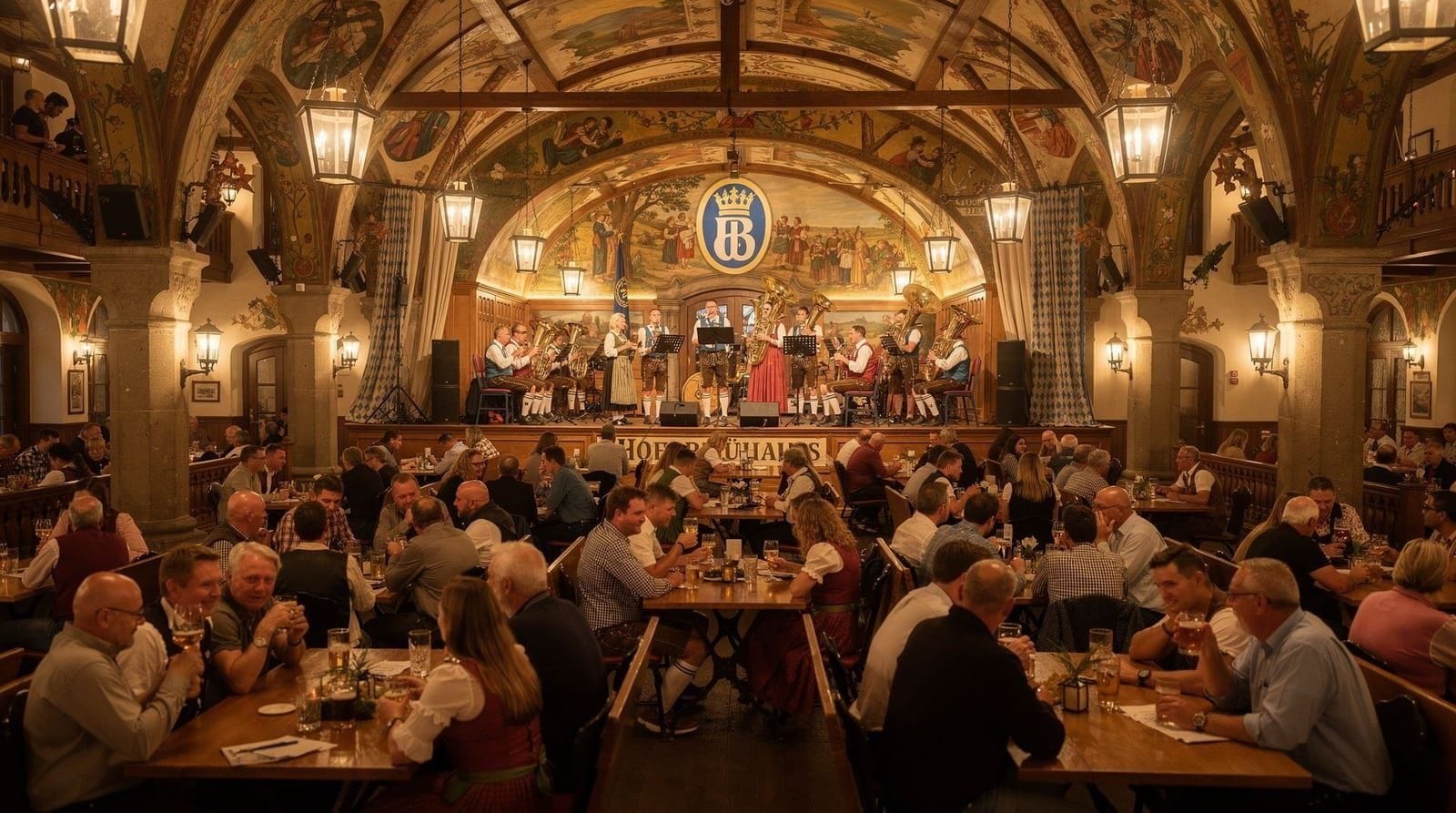
If your evening starts earlier with dinner and drinks before a late club night, a guided introduction to the beer hall side of Munich sets a useful contrast with the club scene that follows. Munich Bavarian beer walking tour with samples works well as an early-evening warm-up before heading east to Werksviertel around midnight.
Choosing a club: a quick decision guide
| If you want | Go to | Skip |
|---|---|---|
| Serious techno, no distractions | Blitz | P1 |
| A more forgiving door, house and techno mix | Harry Klein | Kultfabrik if music matters |
| To see Munich’s wealthy social scene | P1 | Blitz (wrong crowd entirely) |
| A loud, low-pretension group night out | Kultfabrik | Blitz (too selective/serious) |
| The Berlin-style warehouse experience | Neither — go to Berlin | All of the above, honestly |
What a typical night actually costs
Budgeting for a Munich club night helps set expectations, particularly compared to Berlin’s famously cheap door prices and drinks.
| Item | Typical cost |
|---|---|
| Entry (Blitz/Harry Klein) | €8–20 |
| Entry (P1) | €15–25 |
| Beer at the bar | €5–8 |
| Cocktail (P1) | €18–25 |
| Cocktail (Blitz/Harry Klein) | €10–14 |
| Taxi home (late night, mid-distance) | €15–30 |
A modest night at Blitz or Harry Klein — entry plus 2–3 drinks — runs roughly €30–50 per person. P1 easily doubles that given the drinks pricing and the social expectation to dress and spend accordingly.
Frequently asked questions about Munich clubs
Do I need to speak German to get into Munich clubs?
No. English is understood at all the venues mentioned. Door staff at Blitz and Harry Klein are generally bilingual. Being communicative and natural matters more than language.
Can I buy tickets online for Munich clubs?
Yes, for major nights at Blitz (via Resident Advisor or the club’s own website). Harry Klein also sells some events online. Kultfabrik venues and P1 are typically walk-in or guest list.
What time should I arrive at Munich clubs?
For Blitz and Harry Klein on a peak night, before midnight is the practical answer. For Kultfabrik, any time after 23:00 works. P1 is at peak capacity from midnight to 02:00.
Is the Munich club scene active year-round?
Yes, though summer brings some open-air events and the dynamic shifts slightly. October (Oktoberfest season) changes the city’s social atmosphere considerably — the focus moves to tent drinking. The main club season runs most intensively from October through May, with some of the most serious nights happening in mid-winter.
Are there other clubs beyond the main ones listed?
The Atomic Café (Neuturmstraße, near Marienplatz) focuses on indie and alternative. Muffatclub (adjacent to the Muffatwerk, Zellstraße) bridges club nights and live music. Cord (Sonnenstraße) is a smaller bar-club with DJ nights. The scene evolves; check local listings like Munich Found or the Munich Residency section of Resident Advisor for current events.
Is the Werksviertel area safe at night?
Yes. The area around Ostbahnhof and Werksviertel is industrial in character but not unsafe. The presence of large clubs means regular security and taxi availability throughout the night. The S-Bahn from Ostbahnhof runs at all hours on weekends.
How does Munich compare to other German cities for clubs?
Berlin is the clear leader nationally. Hamburg (Reeperbahn area, Robert Johnson in Offenbach-style venue) and Frankfurt have stronger scenes than Munich proportionally. Within Bavaria, Munich is the only city with a meaningful club scene.
What should I wear to a Munich club?
For Blitz and Harry Klein, dark, practical clothing is the safe default — nothing about the door policy rewards dressing up, and comfort matters more given the hours involved. For P1, smart-casual to formal is expected and enforced; underdressing is the most common reason for rejection there. For Kultfabrik, there is effectively no dress code.
Can I get into Munich clubs without a ticket booked in advance?
Yes for most venues — Harry Klein, P1, and Kultfabrik are typically walk-in with a door charge. Blitz sells advance tickets for its biggest nights on Resident Advisor, and those can sell out; for a regular weekend night, walk-in access is usually still possible but arriving early improves your odds.
Top experiences
Bookable activities with verified prices and instant confirmation on GetYourGuide.