Munich Food Bucket List: 20 Must-Try Dishes, Drinks and Experiences
Why Munich’s food scene deserves a bucket list
Munich is not a city you eat your way through accidentally. The food culture here is specific, traditional, and unapologetically hearty — and navigating it well requires knowing what to order, where to order it, and occasionally what time of day it is available. Weisswurst, for instance, is a breakfast dish with rules. Beer comes in sizes that have etiquette attached. Some of the best food in the city is served at market stalls you might walk straight past.
This list covers 20 experiences that define eating and drinking in Munich: classic dishes, essential drinks, market finds, and restaurant experiences. For each one you get the context, the best place to try it, and any logistics worth knowing.
| Where | Viktualienmarkt, traditional Gasthöfe, Augustiner venues |
| Cost | Around €3–€22 per item, most dishes under €15 |
| Time needed | A full day to hit the highlights, longer to do it properly |
| Getting there | Central Munich, all reachable on foot or one U-Bahn stop |
| Best time | Weisswurst before noon; beer gardens April–October |
To shortcut the learning curve and try multiple items in one outing, two food tours stand out. The Munich Old Town food tour with 10 tastings covers the Altstadt’s best food stops with knowledgeable local guides. The Viktualienmarkt gourmet food tour focuses specifically on the historic market and its speciality producers. Both are excellent ways to orient yourself before eating independently. For a more structured sit-down experience with a full Bavarian meal included, the 3-course Bavarian food tour delivers a proper traditional meal alongside a guided walk.
The 20 essential Munich food experiences
1. Weisswurst breakfast — before noon, with the rules
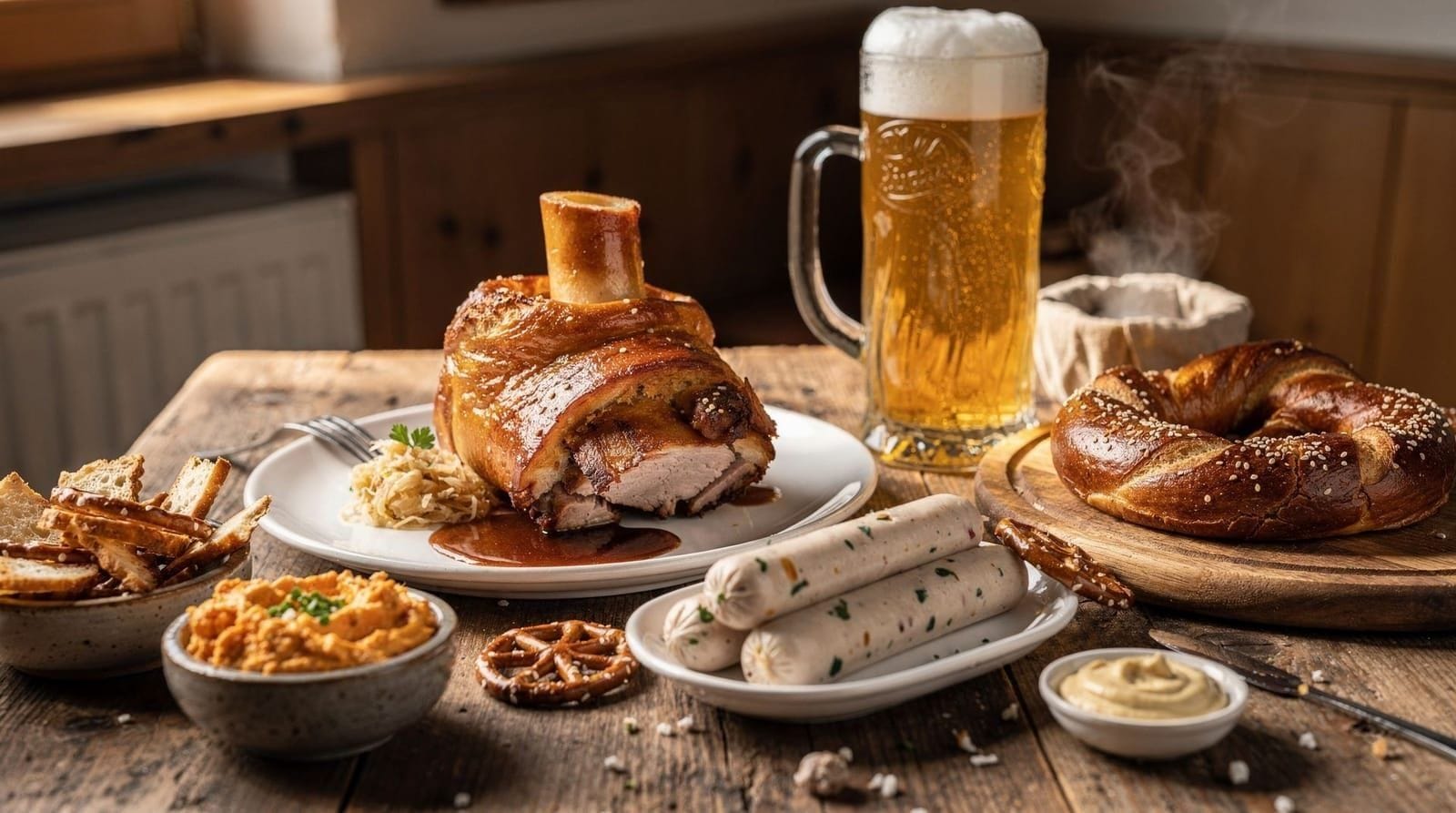
The white veal sausage is Munich’s most famous food product and one of its most specific cultural rituals. Weisswurst is eaten in the morning — traditionally before the church bells ring noon, because before refrigeration they would not keep past midday. In modern Munich the rule is loosened but the spirit holds: Weisswurst is a breakfast food, not a lunch food.
The sausages are served in hot water (not grilled), in pairs, in a ceramic bowl. You eat them by either pulling the skin off with your fingers (called “zuzeln” in Bavarian — sucking the sausage out of the skin) or cutting them lengthways with a knife and peeling back the casing. Both are correct. They come with sweet Bavarian mustard, a pretzel, and often a Weissbier. The combination of these four things, eaten in a Gasthof at 09:00, is one of the most pleasant food experiences in Bavaria.
Best place: Wirtshaus in der Au (Lilienstrasse 51) is widely considered to make the best Weisswurst in Munich, but they are served authentically at virtually every traditional Gasthof and beer hall. The Hofbräuhaus and Augustinerkeller both do a solid version.
2. Obatzda — Bavaria’s answer to cheese spread
Obatzda is a spreadable cheese mixture made from ripe Camembert blended with butter, cream cheese, onion, paprika, and caraway seeds. It is sharper and more complex than it sounds, and it is utterly addictive on a fresh pretzel. In beer gardens it is typically served in a bowl or clay pot with a ring of raw onion on top and a Brezn on the side.
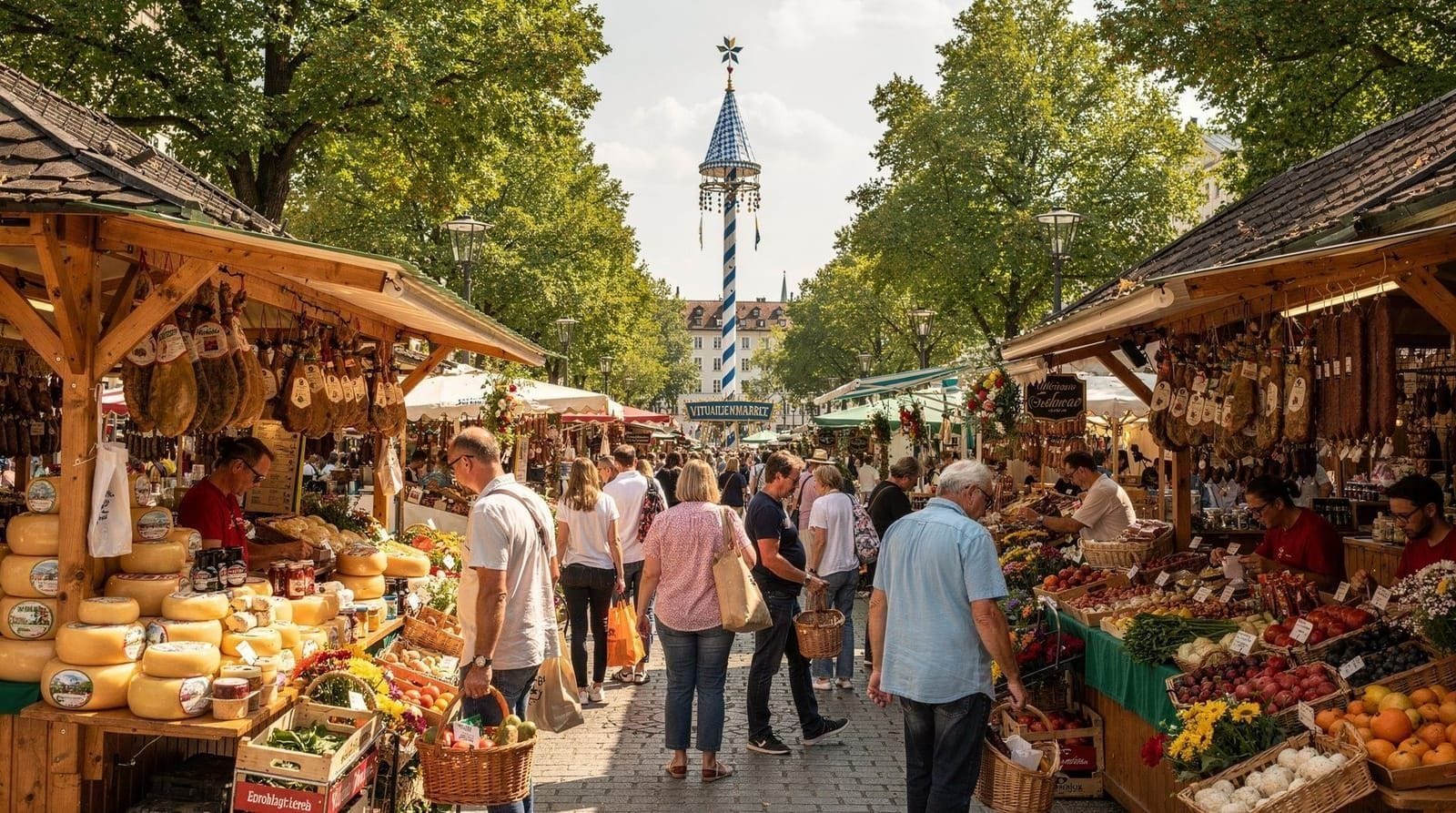
The Viktualienmarkt has several cheese and delicatessen stalls where you can buy Obatzda to eat in the market beer garden — this is one of the classic Munich picnic lunches.
3. Brezn (Bavarian pretzel) — the real thing
The Bavarian Brezn is not the American pretzel and not the small supermarket variety. It is large (fist-sized or bigger), dark brown from lye treatment, with a thick doughy body and a crunchy salted surface. The texture contrast between crisp exterior and chewy interior is the whole point.
Buy them fresh from a bakery, not a vending machine. The best are from traditional Bavarian bakeries such as Rischart (multiple central locations) or from the pretzel stall in the Viktualienmarkt. In a beer garden, they are served hanging from a wooden stand or on their own plate. Always eat with Obatzda if available.
4. Masskrug of Augustiner — Munich’s best beer, served right
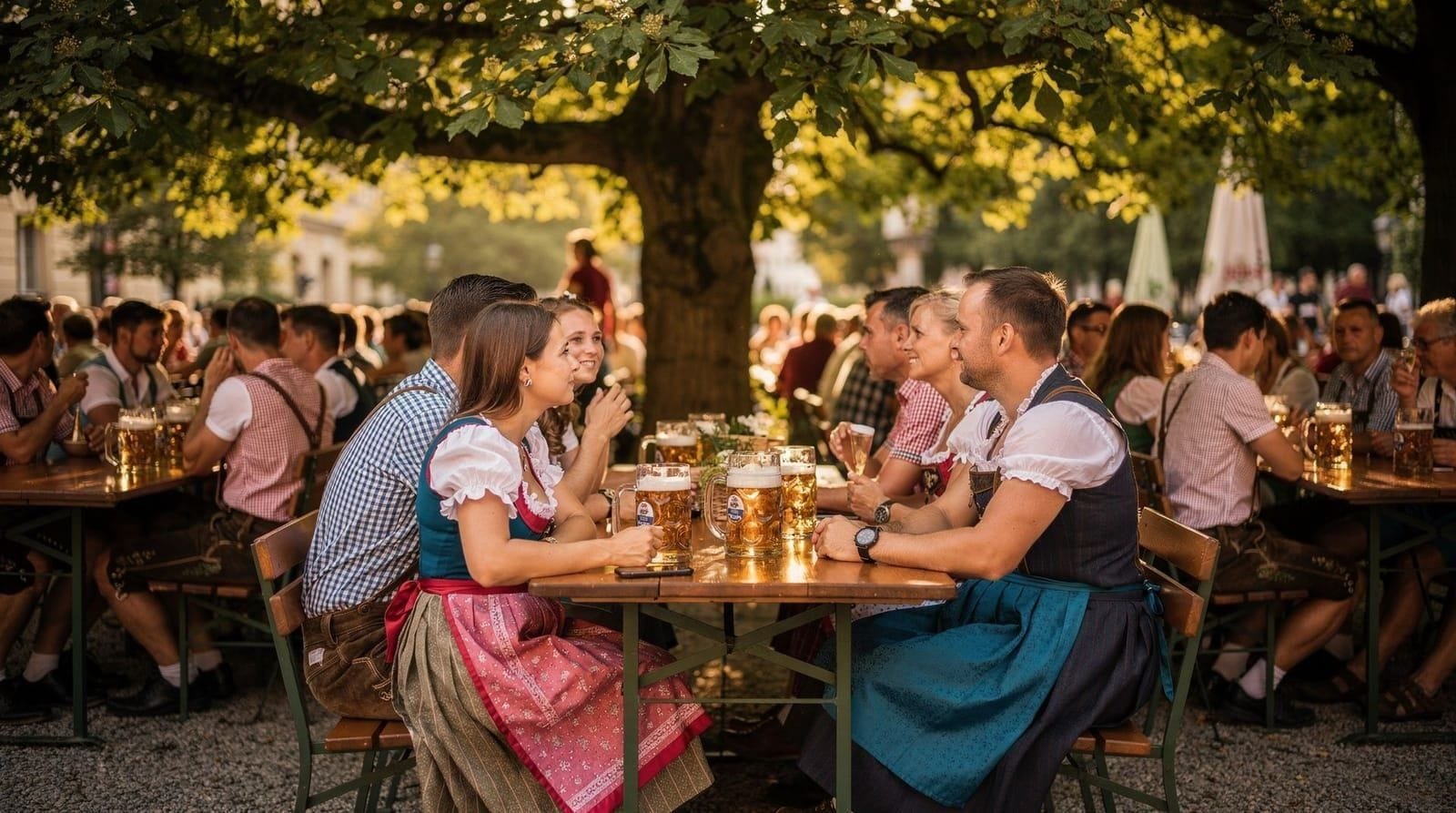
A Masskrug is a one-litre ceramic or glass stein. Ordering “eine Masskrug” in Munich means you want a litre of whatever the house beer is. The correct term at a table is simply “eine Mass” (with a capital M — it is a measurement noun, not a plural). The full formal term used by waitresses and waiters is “a Massl”.
Augustiner-Bräu is Munich’s oldest independent brewery and widely regarded as producing the city’s best beer. Unlike Hofbräuhaus (which is tourist-heavy), Augustiner has several genuinely local haunts: the Augustinerkeller beer garden on Arnulfstrasse is one of Munich’s most atmospheric large beer gardens, and the Augustiner am Dom beside the Frauenkirche is a reliable sit-down option.
5. Schweinshaxe — slow-roasted pork knuckle
The Schweinshaxe is the defining Bavarian meat dish: a whole pork knuckle (shank), slow-roasted until the meat falls off the bone and the skin crisps to crackling. It is enormous. One Haxe is typically 1.2–1.5 kg and will challenge most people to finish solo. It comes with either Semmelknödel (bread dumplings) or Kartoffelknödel (potato dumplings) and often a small pile of sauerkraut.
The best Haxe in Munich is a contested topic. Reliable options: Haxnbauer im Scholastikahaus (Sparkassenstrasse 6, near Marienplatz) specialises specifically in pork knuckle and has been doing it for decades. The Paulaner am Nockherberg on the hill above the Isar is another traditional choice. Budget approximately €18–22 for a Haxe in 2026.
6. Semmelknödel
These bread dumplings — made from day-old rolls soaked in milk with egg, parsley, and onion — are the classic side dish alongside roast pork, venison, and mushroom sauce. They are mild, slightly spongy, and excellent at absorbing rich gravy. Often underrated by visitors who focus on the protein, Semmelknödel in good mushroom sauce (Pilzrahmsauce) can be genuinely outstanding as a vegetarian option at traditional restaurants.
7. Steckerlfisch — grilled fish on a stick
Steckerlfisch (literally “stick fish”) is a whole mackerel or trout skewered on a wooden stick and grilled over open coals. It is a Bavarian beer garden institution and one of the city’s great street food traditions. The fish is marinated in salt, herbs, and sometimes beer before grilling, and eaten directly from the stick with bread. You find it at outdoor festivals, the Oktoberfest, and a few dedicated stalls.
The Steckerlfisch stand at the Auer Dult market (held three times a year at Mariahilfplatz) is a Munich institution. During Oktoberfest, every tent and fairground stall sells them.
8. Dampfnudel — steamed sweet dumpling
Dampfnudel is a soft, yeast-based dumpling steamed in a covered pot until the base caramelises on the pan and the top stays pillowy-white. Served with vanilla sauce or custard, it is one of Munich’s most comforting desserts. The moment when the lid is lifted at the table and the steam billows out is part of the experience.
Best place: Wirtshaus in der Au (Lilienstrasse 51) is the undisputed Munich destination for Dampfnudel — they have been making them since the 1870s and specialise in Bavarian dumplings in all forms. They sell out. Arrive early or queue.
9. Kaiserschmarrn — the shredded pancake dessert
Originally from the Austrian imperial court (Kaiser = emperor, Schmarrn = mess/shred), Kaiserschmarrn is a thick, eggy pancake torn into irregular pieces in the pan and dusted with powdered sugar. It is served with a fruit compote — typically plum (Zwetschkenröster) or mixed berry — and sometimes raisins. At alpine mountain huts, this is the classic post-hike dessert.
In Munich, it appears on most traditional restaurant menus. At altitude, try it at the Zugspitze summit restaurant after coming down from the glacier — the combination of mountain air, exhaustion, and a bowl of Kaiserschmarrn with Preiselbeeren (lingonberry jam) is uniquely satisfying.
10. Obazda with Radieschen — the market lunch
At the Viktualienmarkt beer garden, you can put together an exceptional Munich lunch from market stalls for well under €20: a container of Obatzda from the cheese counter, a fresh Brezn, a small bag of Radieschen (Munich radishes, the small round red ones), and a Mass of beer from the beer garden bar. This is how locals eat at the market. No waiter, no table service, just the food and the chestnut trees.
See our Viktualienmarkt food guide for the specific stalls and where to find each component.
11. Radler — the cyclist’s beer
A Radler is half beer, half lemon soda, mixed in the glass. The name means “cyclist” — the drink was invented (or at least popularised) by a Munich innkeeper who mixed beer with lemonade to stretch supplies when cyclists descended on his pub unexpectedly. It is refreshing, lower in alcohol than a full beer, and perfectly suited to warm days. Order “ein Radler” at any beer garden or bar.
12. Weissbier — wheat beer in its natural habitat
Bavaria produces more Weissbier (wheat beer, also called Hefeweizen) than anywhere else in the world, and drinking it in Munich is a qualitatively different experience from drinking it elsewhere. The local brands — Schneider Weisse, Paulaner, Erdinger, Franziskaner — are produced near Munich and arrive at beer halls in perfect condition. The flavour profile is banana-clove yeast with a hazy golden appearance and a tall creamy head.
Order with the traditional glass: a tall 0.5-litre Weizenglas. At the Schneider Weisse Brauhaus on Tal (near Marienplatz), you can drink Schneider’s Aventinus (their dark Weizenbock) directly from the brewery’s own tap — a different and more complex beast than standard Weissbier.
13. Leberkäse — Bavarian meat loaf
Despite the name (Leber = liver, Käse = cheese), Leberkäse contains neither liver nor cheese in its standard modern form. It is a finely ground meat loaf of beef and pork, baked in a rectangular block and served in thick slices, usually warm in a fresh Semmel (white bread roll). It is Munich’s fast food: cheap, filling, sold from butchers and market stalls all day.
The best Leberkäse Semmel in Munich is often cited as coming from the traditional butcher stalls in the Viktualienmarkt — the Metzgerei Trettl stall has regulars who queue at lunchtime. Price in 2026: approximately €3–4 for a Semmel mit Leberkäse.
14. Brezen-Knödel in Gulaschsuppe
This is not a dish you will necessarily encounter at tourist restaurants, but it appears at Bierkeller menus and traditional Wirtshäuser: chunks of day-old pretzel as the dumpling in a beef goulash soup. Dense, warming, and very Bavarian. The Biergarten at the Chinese Tower in the English Garden serves a version of this.
15. Zwiebelrostbraten — roast beef with onions
A quintessential Bavarian Sunday lunch dish: thinly sliced roast beef layered with crispy fried onion rings and served with Semmelknödel and brown gravy. The version at Zum Franziskaner (Residenzstrasse 9) is one of Munich’s most reliable traditional plates — a restaurant that has been on that street since 1866.
16. Münchner Schnitzel — a local variation
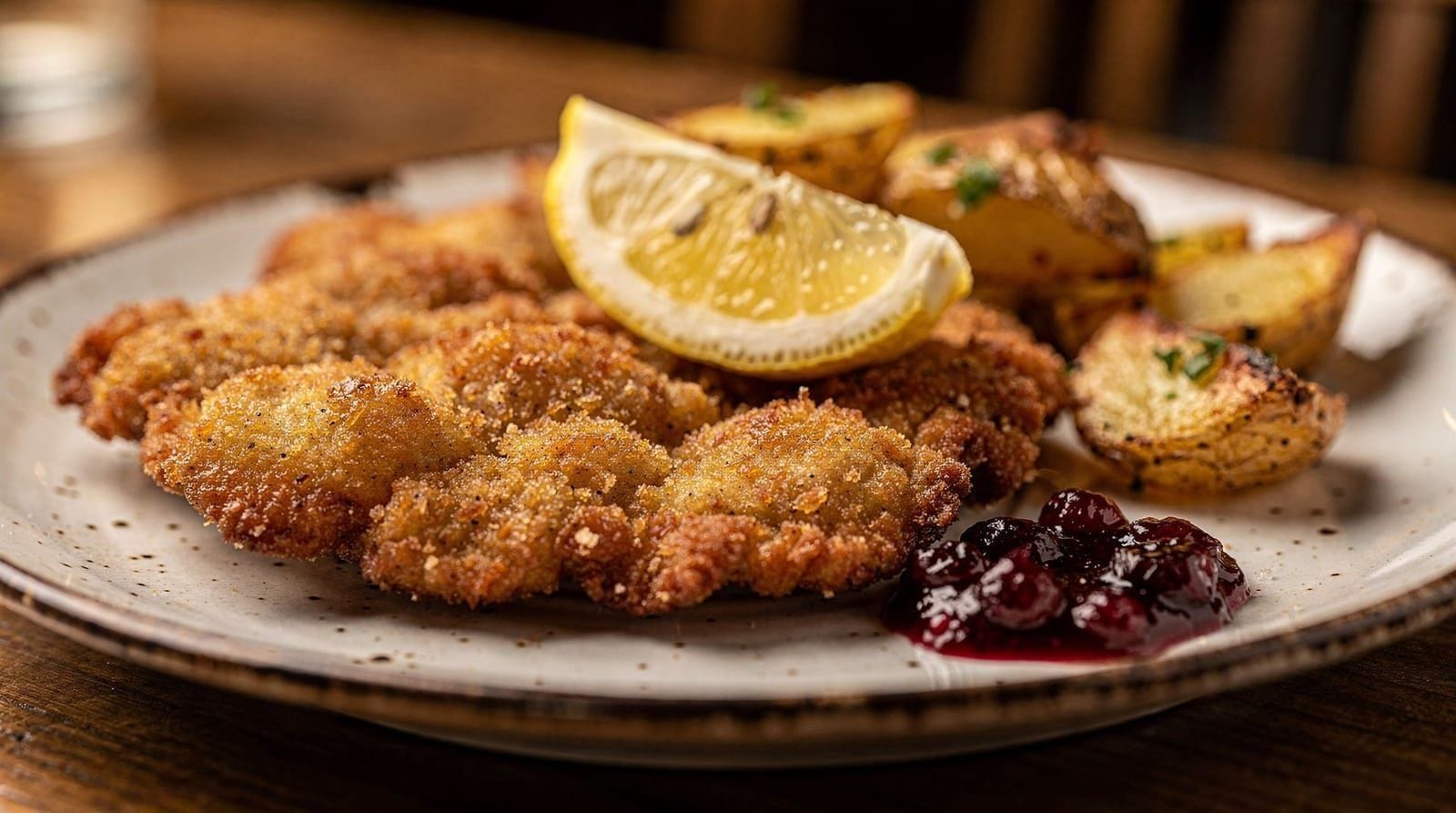
The Wiener Schnitzel (veal, pan-fried in breadcrumbs) is Austrian, but Munich has its own version: the Münchner Schnitzel, typically pork rather than veal, often served with a fried egg and sauce. It appears on most traditional menus and is a reliable, unfussy plate when you want something straightforward.
17. Augustiner Edelstoff from a Holzfass (wooden barrel)
At the Augustiner Keller during special events, and at the Augustiner Stammhaus on Neuhauser Strasse in February (Starkbierfest time), Augustiner beer is served directly from gravity-poured wooden barrels. The Edelstoff poured from wood has a different texture than the same beer from a metal keg — less carbonated, softer, more complex. Tracking this down is a Munich food experience that most visitors never encounter.
18. Viktualienmarkt cheese and charcuterie
The Viktualienmarkt has permanent speciality food stalls that go far beyond tourist trap fare. The Alois Dallmayr stand and the independent cheese sellers stock aged mountain cheeses (Bergkäse, Emmentaler, Allgäuer varieties), cured meats, and Bavarian speciality products. Spend 30 minutes browsing and tasting — most stalls offer small tastings if you ask — and you will leave with a much more nuanced understanding of Bavarian food culture than any restaurant visit provides.
19. Starkbier — strong beer in spring
Starkbier (strong beer, minimum 6.5% alcohol) has its own Munich festival: the Starkbierfest on Nockherberg, held every March. The Paulaner brewery inaugurates the season with the ceremonial tapping of the Salvator, their flagship Starkbier. The beer itself is dark, malty, and significantly more substantial than regular Märzen. The tradition dates to Franciscan monks who brewed it as “liquid bread” to sustain them through Lent.
Outside festival season, Salvator and other Starkbier varieties are served year-round at the Paulaner am Nockherberg restaurant.
20. Oktoberfest tent beer — Wiesn Märzen
If you visit during Oktoberfest (mid-September to early October), the beer served inside the great festival tents is different from what you drink the rest of the year: Wiesn Märzen, a special amber lager brewed specifically for the festival, with a malt-forward flavour and enough sweetness to go down very easily at 1 litre a time. The atmosphere inside the tents — the brass bands, the density of the crowd, the toast of “Prost!” echoing from 6,000 people simultaneously — is a specific experience that has no equivalent elsewhere.
For planning an Oktoberfest visit, see our Oktoberfest guide.
Price cheat sheet: what these dishes actually cost
| Dish or drink | Typical price (2026) |
|---|---|
| Weisswurst breakfast (pair + pretzel) | €7–€10 |
| Brezn (fresh, from a bakery) | €1.50–€2.50 |
| Masskrug (1L Augustiner, beer garden) | €5.20–€6.20 |
| Schweinshaxe with dumpling | €18–€22 |
| Leberkäse Semmel | €3–€4 |
| Kaiserschmarrn | €8–€12 |
| Steckerlfisch | €10–€14 |
Prices rise noticeably at tourist-facing venues like the Hofbräuhaus — expect to pay 30–50% more for the same dishes there than at a neighbourhood Gasthof or the Viktualienmarkt.
Where locals eat vs. where tourists eat
The gap between tourist-facing and local Munich food is wider than in many European cities, and it’s almost entirely about geography. Around Marienplatz and the Hofbräuhaus, menus are translated into six languages, portions are standardised, and prices carry a location premium. Walk 10–15 minutes into Maxvorstadt, Haidhausen, or the Glockenbachviertel, and the same dishes — Schweinshaxe, Schnitzel, Semmelknödel — appear on menus without English translations, at noticeably lower prices, cooked for a clientele that eats there weekly rather than once. Zum Franziskaner and Augustiner am Dom sit in an unusual middle ground: central, well-known, but still genuinely respected by Munich residents rather than purely tourist operations. If you only have time for central options, prioritise these two over the Hofbräuhaus.
Vegetarian and dietary notes
Bavarian food is meat- and dairy-heavy by tradition, but Munich’s food scene has adapted. Semmelknödel in Pilzrahmsauce (mushroom cream sauce) is a genuinely satisfying vegetarian main at most traditional restaurants, and Obatzda, Brezn, and market produce cover a full vegetarian Brotzeit without difficulty. Vegan options are more limited at traditional Gasthöfe but increasingly common in Munich’s broader restaurant scene, particularly in Maxvorstadt and the Glockenbachviertel. Our Munich vegetarian and vegan guide covers specific restaurants that do this well, including which traditional dishes can be adapted.
How to eat your way through Munich efficiently
The best food day in Munich looks roughly like this: start with a Weisswurst breakfast at a traditional Gasthof before 10:00, spend mid-morning at the Viktualienmarkt sampling cheese, radishes, and Obatzda, have Leberkäse Semmel standing at a butcher counter for a mid-morning snack, eat Schweinshaxe for lunch at a proper Bierkeller, then visit a beer garden in the afternoon for a Mass and Steckerlfisch if in season.
For an expert-guided introduction, the 10-tasting Old Town food tour compresses the key stops into a structured walk. The Viktualienmarkt gourmet tour is the best way to understand the market’s best stalls. And if you want the sit-down traditional meal experience with context, the 3-course Bavarian food tour delivers it with a guide who explains the history behind each dish.
For deeper reading: our best Bavarian food guide covers the regional cuisine context, Bavarian dishes to try goes into more detail on specific preparations, best restaurants in Munich covers where to eat across price ranges, and Munich street food guide focuses on the market and street options. Vegetarians are not an afterthought here — our Munich vegetarian and vegan guide covers the options honestly. And no Munich food guide is complete without a beer garden chapter — see best beer gardens in Munich for the top outdoor drinking spots across the city.
Frequently asked questions about Munich food
What’s the single food experience I shouldn’t skip in Munich?
If you only do one thing, make it a Weisswurst breakfast before noon at a traditional Gasthof — it’s the most culturally specific of everything on this list and takes under an hour.
Is Munich food expensive compared to the rest of Germany?
Somewhat, particularly in the Altstadt around Marienplatz and at tourist-facing venues like the Hofbräuhaus. Eating at the Viktualienmarkt, neighbourhood Gasthöfe, or beer gardens keeps costs reasonable and is usually the more authentic choice anyway.
Can I do this whole list on a tight budget?
Most of it, yes. A Weisswurst breakfast, a Leberkäse Semmel, a market Brotzeit with Obatzda and Brezn, and a Masskrug at a beer garden together cost under €25, and cover more than half the list. The pricier items — a full Schweinshaxe dinner or a guided food tour — are worth budgeting separately if you want the complete experience rather than the essentials.