Munich beer garden etiquette — what to know before you go
Why beer garden culture is different from what you expect
If you’ve grown up with pub culture — where you find a seat, sit down, and a server comes to you — Munich’s beer gardens will feel slightly disorienting at first. The system is different, the conventions are specific, and getting them wrong in small ways will mark you as a tourist. That’s fine — everyone starts somewhere. But knowing the conventions in advance makes the experience much better, and locals genuinely appreciate visitors who’ve made the effort to understand how things work.
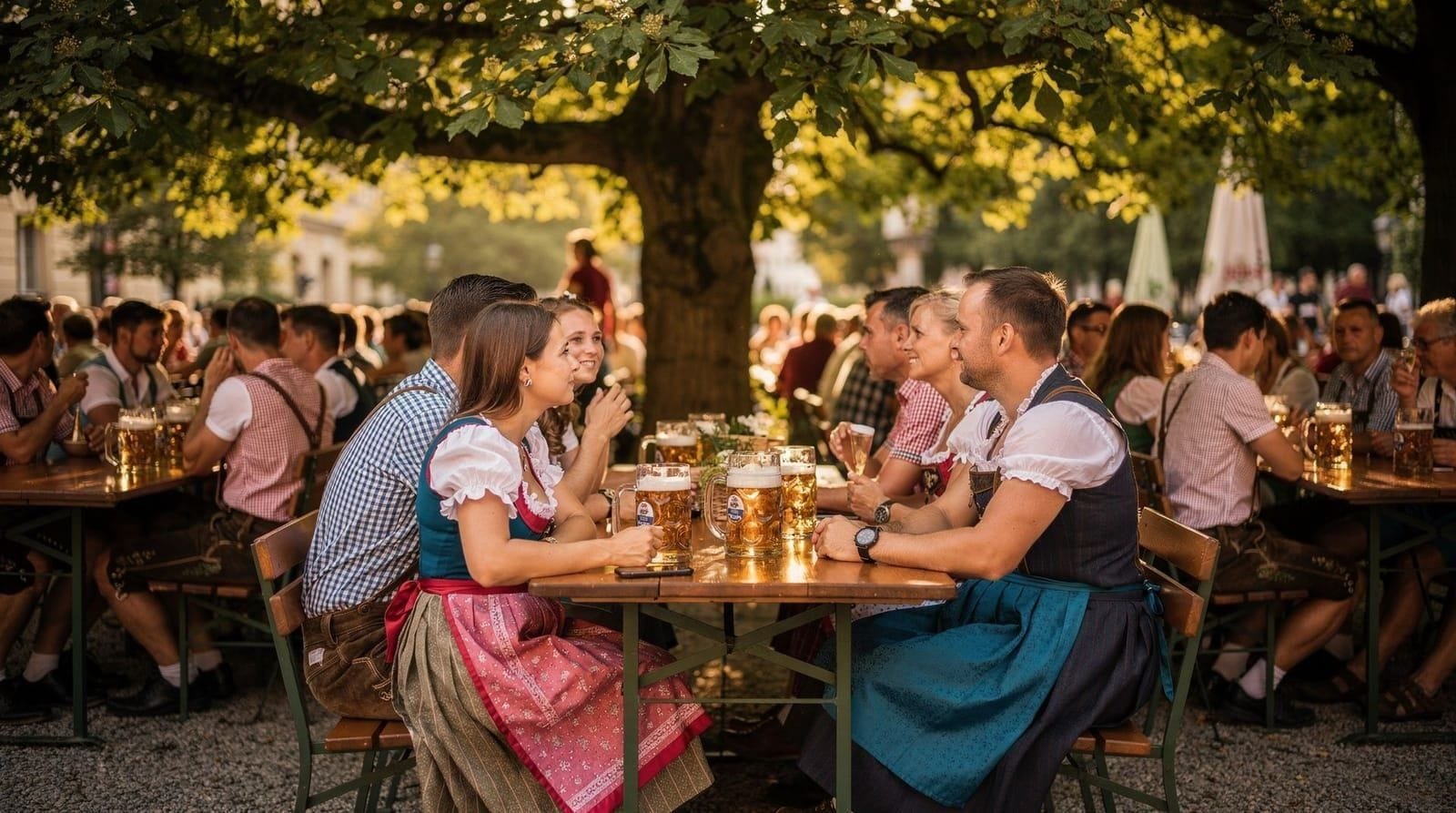
Munich’s beer gardens trace their origins to the early 19th century, when brewers stored beer underground beneath gravel and chestnut trees to keep it cool through summer. The trees became permanent fixtures, the gravel stuck around, and by tradition, the brewery couldn’t open a kitchen — so patrons brought their own food. That last convention still applies in many beer gardens today, and understanding it is the first thing to get right.
| Where | Any Munich beer garden — Augustiner Keller, Hirschgarten, Chinesischer Turm |
| Cost | Around 5.20–6.20 EUR per Maß in self-service sections |
| Sections | Selbstbedienung (self-service, bring food) vs. Bedienung (waiter service) |
| Bring | Your own food is fine in self-service; never your own drink |
| Season | Roughly late April to October, weather permitting |
The most important rule: Selbstbedienung vs. Bedienung sections
Most large Munich beer gardens are split into two zones:
Selbstbedienung (self-service): You go to the counter, get your food and beer, pay, and find a table. You can also bring your own food here. Prices are slightly cheaper.
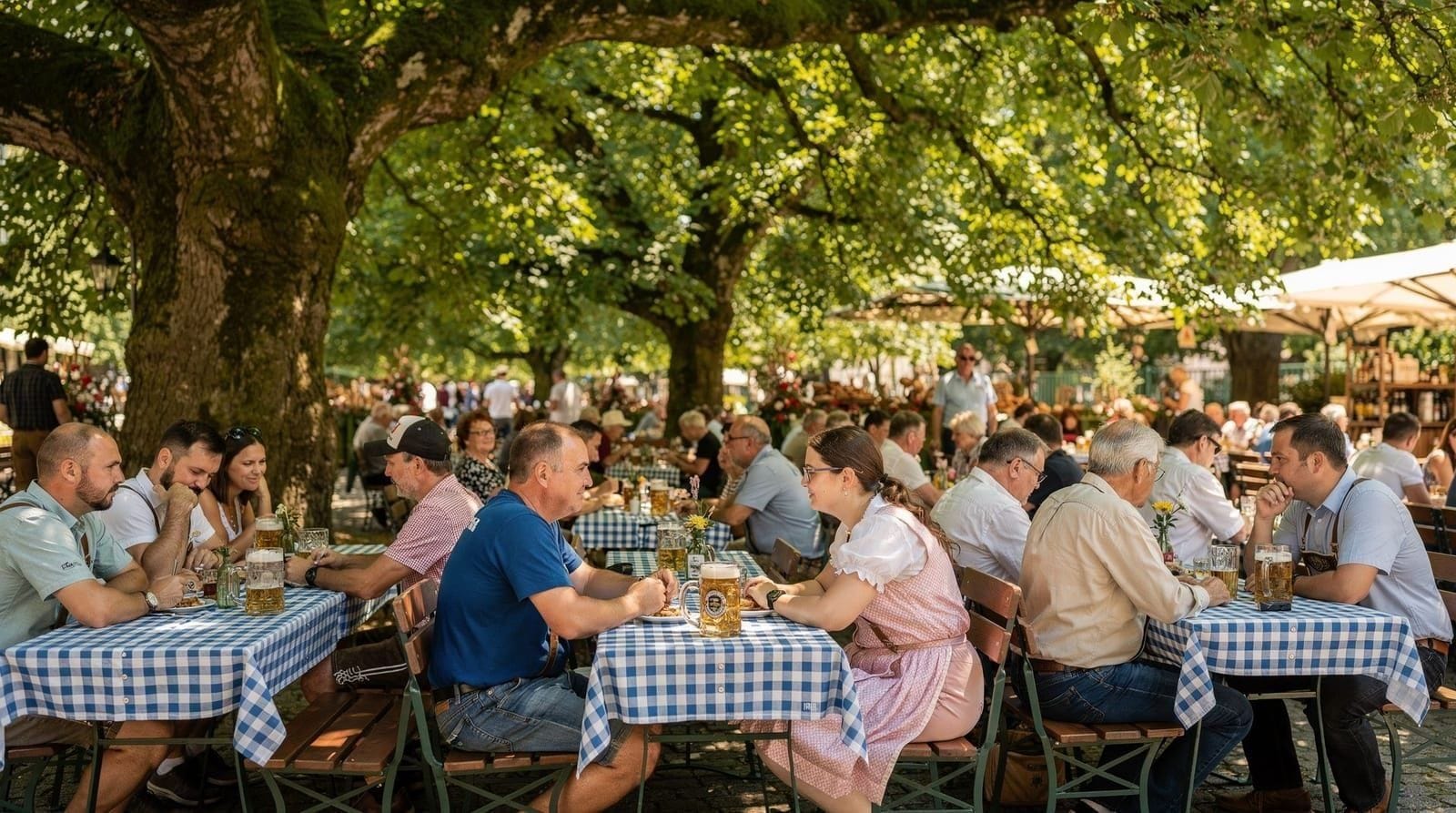
Bedienung (waiter service): A server comes to your table. You generally cannot bring outside food here. Prices are marginally higher. Tablecloths or reserved signs indicate this section.
The self-service section is the authentic beer garden experience and where most Munich regulars sit. Don’t wander into a waiter-service section with your supermarket cheese and expect no reaction.
Bringing your own food
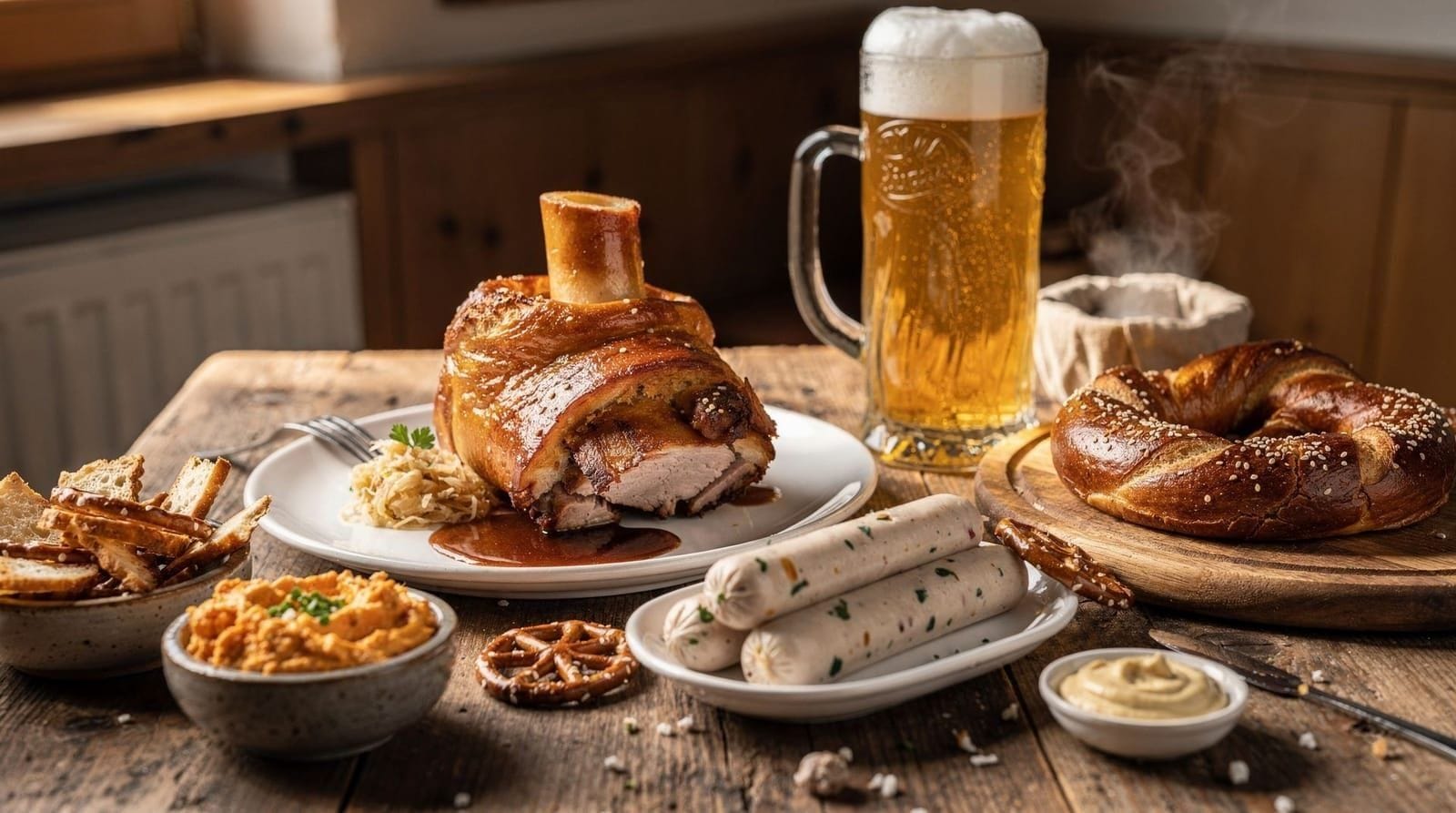
Bringing your own food (Brotzeit — literally “bread time”) to the self-service section is not just tolerated, it’s traditional. Locals regularly arrive with a packed Brotzeit box: sliced radishes, Obatzda (a spiced cheese spread), dark bread, cold meats, and perhaps some Laugenbrezel (pretzels).
What you should NOT bring:
- Food from competing restaurants or nearby fast food
- Anything requiring preparation or heating at the beer garden
- Food that creates significant mess or odors (keep it considerate)
The beer, however, must be purchased at the beer garden itself — you cannot bring your own drinks. Buying food from the beer garden counter is also perfectly fine, and many people do a mix of brought food and purchased snacks.
How to order beer
At the self-service counter, approach when you’re ready and state your order clearly. The standard measures are:
- Maß: 1 liter — the standard in most beer gardens. Pronounced roughly “mahss.”
- Halbe: 0.5 liters — acceptable to order, not seen as odd.
- Radler: lemon soda mixed with beer, typically half-half. Common in summer.
- Alkoholfrei: non-alcoholic beer. All major breweries make one.
You’ll be asked if you have a Pfand (deposit) chip for a clean glass. At places like the Augustiner Keller, you collect a chip for the Mass krug deposit (around 1–2 EUR) and return it when you leave to get the money back. Don’t walk off with the chip without thinking — it’s essentially the glass deposit.
Pay as you order. Tipping at the counter is uncommon (you’re in self-service). If you have table service, round up or leave 5–10%.
Finding a table and sharing
In busy Munich beer gardens, sharing tables is normal and expected. Sitting down at a table where strangers are already seated is completely fine — just make brief eye contact and sit. The long communal wooden benches (Bierbänke) and tables are designed for exactly this. A nod or a “Grüß Gott” (the Bavarian greeting, more common than “Hallo”) is polite.
Reserving a spot by leaving your bag is common for small groups going to the counter, but don’t leave an entire bench “reserved” for people still 20 minutes away while others are looking for space on a busy Saturday.
Tip: Tables with tablecloths are reserved for waiter service — don’t sit at those unless you intend to use that section.
What to actually drink
The dominant breweries serving Munich’s beer gardens are Augustiner, Hofbräu, Paulaner, Spaten, Löwenbräu, and Hacker-Pschorr. Each beer garden typically serves one brewery exclusively (they’re usually owned by or contracted to that brewery).
Locally, Augustiner has the highest reputation among Munich drinkers — the Edelstoff (a helles lager served from wooden barrels at the Augustiner Keller) is considered the gold standard. You’ll find Augustiner at the Augustiner Keller, the Augustiner Stammhaus on Neuhauser Straße, and several other locations.
The Chinesischer Turm in the English Garden serves Hofbräu. The Hirschgarten serves Augustiner. The Hofbräukeller on Innere Wiener Straße serves Hofbräu. Each has a slightly different atmosphere, which our best beer gardens guide covers in full.
If you want to understand the breweries themselves rather than just the etiquette, a brewery tour fills that gap well. Paulaner brewery tour with tasting
When beer gardens are open
Most beer gardens open around 10:00–11:00 and stay open as long as the weather is good, typically until 22:00–23:00. In Munich, there are specific noise ordinances — the city requires beer gardens to stop loud music and bring noise levels down after 23:00 at most locations. Don’t expect late-night sessions at a traditional Biergarten.
Beer gardens open weather-permitting. A rainy Tuesday means many will be half-empty or closed entirely. Most have covered sections for light rain.
Season: broadly from late April through October, weather permitting.
Best months to go, honestly
| Month | Atmosphere | Notes |
|---|---|---|
| May–June | Lively, first warm evenings | Locals rush outside after a long winter; can fill fast on the first sunny weekends |
| July–Aug | Peak season, busiest | Book nothing — beer gardens don’t take reservations in self-service, but arrive early for a table on hot evenings |
| September | Best overall | Warm days, thinner crowds before Oktoberfest, chestnut trees still full |
| Oktoberfest weeks | Very crowded near Theresienwiese | Beer gardens elsewhere in the city stay calmer than the festival tents |
| Oct–April | Mostly closed or indoor-only | A handful, like Augustiner Keller, keep a heated section running through winter |
Regional variations: Munich vs. the rest of Bavaria
The self-service/waiter-service split, the Brotzeit tradition, and the Maß/Halbe measures are consistent across Bavaria, but Munich’s beer gardens have a few local quirks worth knowing. Munich gardens are generally larger and more crowded than village beer gardens elsewhere in Bavaria, since the city concentrates both residents and tourists into a handful of famous locations. Munich also enforces its noise ordinance more strictly than smaller towns, where a village Biergarten might run later without complaint. If your trip extends beyond the city — to Andechs or a Bavarian Alps day trip — expect a slower, more local version of the same etiquette, with fewer tourists to dilute it.
For a deeper dive into the drinks themselves rather than the etiquette, see our Munich beer tasting tours guide and the comparison of Augustiner vs. Hofbräu, Munich’s two most-discussed breweries.
Beer hall vs. beer garden — know the difference
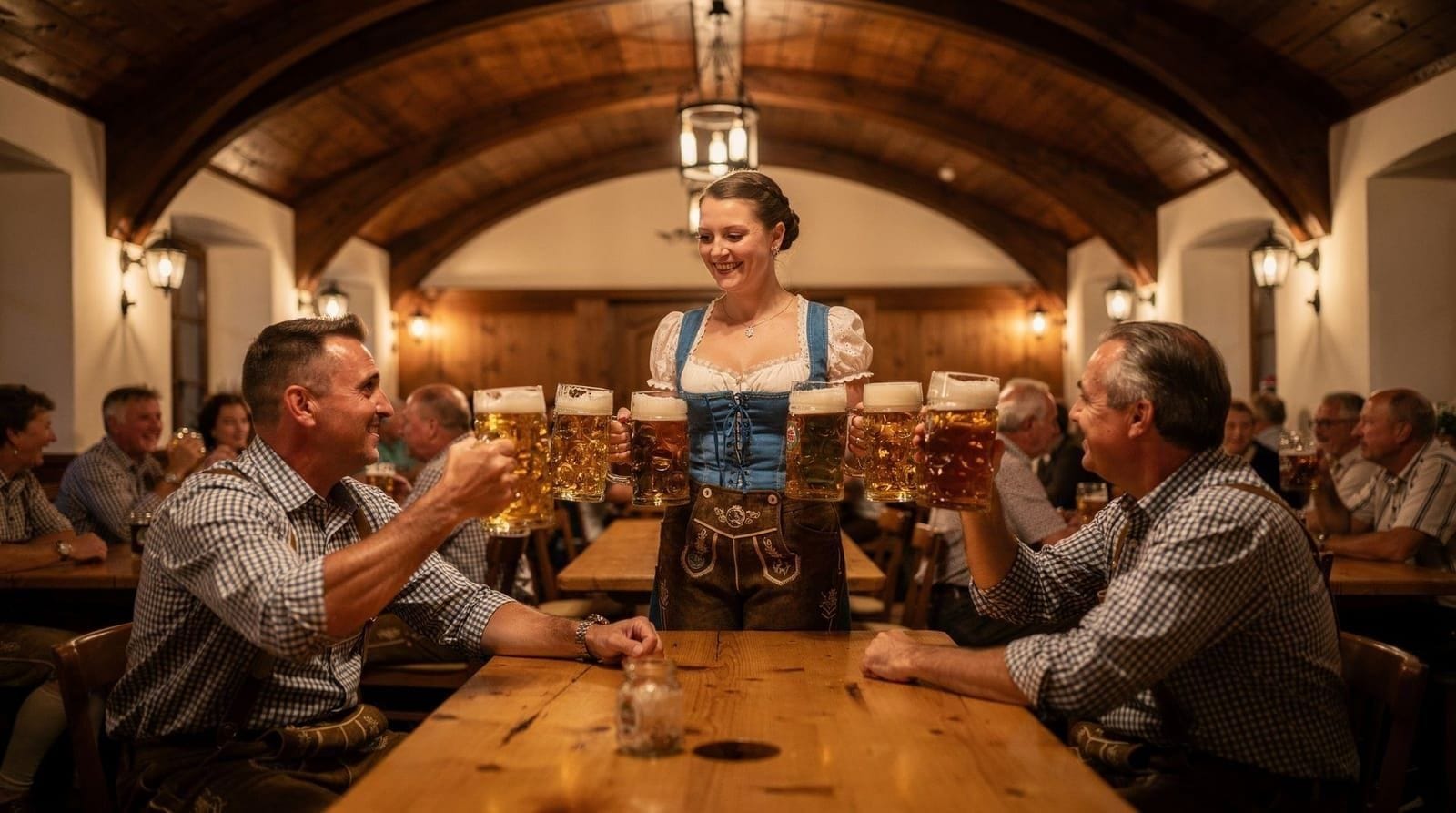
Many visitors mix these up. A beer hall (Bierhalle) is indoors — the Hofbräuhaus being the most famous example. Beer gardens are outdoor. The etiquette overlaps, but there are differences:
- Beer halls are open year-round regardless of weather
- Beer halls typically don’t allow outside food
- Beer halls often have live music, particularly oompah bands
- Beer hall prices tend to be higher, especially at tourist-facing spots like Hofbräuhaus
For a complete comparison, read our Munich beer halls guide and our Hofbräuhaus guide.
Things tourists commonly get wrong
Expecting waiter service everywhere: At self-service counters, nobody will come to take your order. You must go to the counter yourself.
Asking for ice in beer: Do not ask for ice in your beer. Just don’t.
Ordering a pint: Munich beer is sold in Maß (1L) or Halbe (0.5L). “A pint” isn’t a unit anyone uses here.
Being loud and disruptive at a communal table: Beer gardens are convivial, not rowdy. Loud stag parties, excessive shouting, or behavior that disrupts people sharing your table is unwelcome and will result in looks at minimum.
Leaving without returning your Pfand chip: If you took a chip for the glass deposit, return it before you leave.
Sitting at a reserved Stammtisch: Some beer gardens have permanent reserved tables (Stammtisch) for regulars — these are usually marked with a sign or decoration. Sit elsewhere.
The best beer gardens to visit in Munich
A brief ranking for first-time visitors:
- Augustiner Keller (Arnulfstraße 52) — best overall. Augustiner Edelstoff from wooden barrels, large garden, mostly locals in the evening.
- Hirschgarten (Hirschgartenallee 1) — Munich’s largest beer garden, Augustiner, family-friendly.
- Chinesischer Turm (English Garden) — most atmospheric, slightly pricier and more touristy but the setting is beautiful.
- Viktualienmarkt beer garden — central location, see our Viktualienmarkt beer garden guide for current details.
- Hofbräukeller (Innere Wiener Straße) — less touristy than Hofbräuhaus, good food, genuine atmosphere.
Frequently asked questions about Munich beer garden etiquette
Can I bring my own food to a Munich beer garden?
Yes, to the self-service (Selbstbedienung) section. You cannot bring your own drinks. In the waiter-service section, outside food is generally not allowed.
Is it rude to sit at a table with strangers?
No, it’s completely normal. The long communal benches are designed for this. A brief acknowledgment when you sit is polite but not mandatory.
What’s the Pfand chip and when do I need it?
Some beer gardens (particularly Augustiner Keller) operate a glass deposit system. You pay a small deposit (1–2 EUR) for your Mass krug and receive it back when you return the glass to the counter. The chip proves you have a clean glass in circulation.
What should I eat at a beer garden?
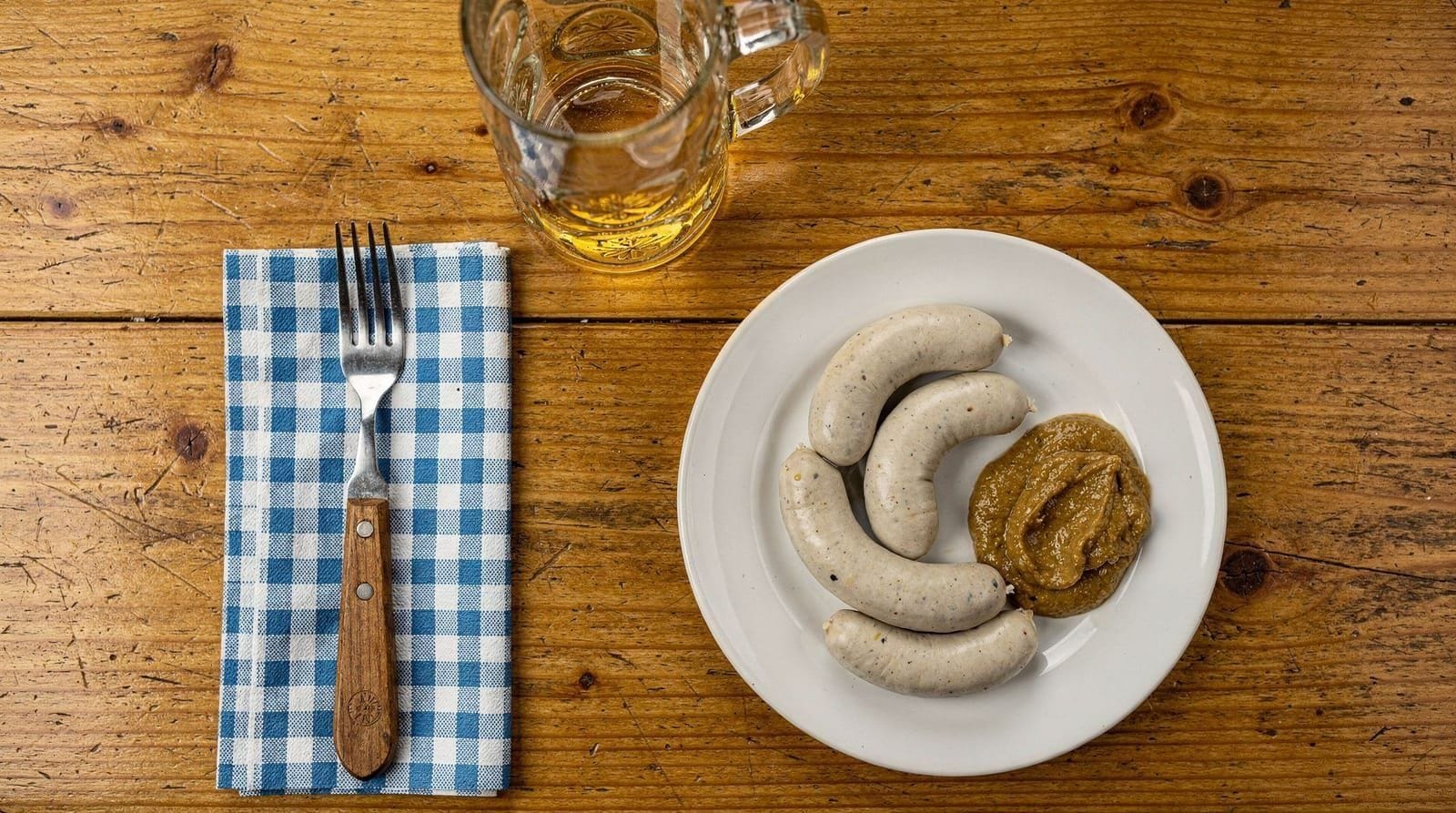
Classic Brotzeit options: Obatzda (Bavarian cheese spread) with Laugenbrezn, Rettich (white radish with salt), Steckerlfisch (grilled fish on a stick), Leberkäse, or a simple Brez’n. Most beer gardens also sell Weisswurst if you’re there before noon (Weisswurst is traditionally a morning food eaten before the church bells strike midday — though this rule is increasingly relaxed).
How much does a Maß cost in Munich in 2026?
Beer gardens: 5.20–6.20 EUR per Maß. Hofbräuhaus and tourist-facing beer halls: 12–15 EUR. At Oktoberfest: approximately 14.90–15.90 EUR (2026 prices to be announced).
Can children come to beer gardens?
Yes. Bavarian beer gardens are family-friendly spaces. Children are welcome and many larger gardens have play areas. Non-alcoholic drinks and food are available for kids.
Do beer gardens take reservations?
Self-service sections never take reservations — it’s first-come, first-seated at communal benches. The waiter-service (Bedienung) section, marked with tablecloths, can sometimes be reserved for larger groups, particularly at places like the Hofbräukeller; call ahead if you have a group of eight or more.
What’s the difference between a beer garden and a beer hall for a first-timer?
A beer garden is outdoors, seasonal, and generally allows outside food in the self-service section; a beer hall like the Hofbräuhaus is indoors, open year-round, and doesn’t allow outside food. If you’re only doing one, a beer garden on a warm evening is the more distinctly Bavarian experience — see our beer hall etiquette guide for the indoor equivalent of these rules.