Best time to visit Munich in 2026: an honest month-by-month breakdown
Why “best time” depends entirely on what you want
Ask ten Munich visitors when to come, and you will get ten different answers. A beer garden fanatic will say July. A Christmas market devotee will say December. Someone who wants Neuschwanstein without a two-hour queue will say February. The honest answer is that Munich has no universally bad month — only trade-offs you should understand before you book.
This is a 2026-specific guide. Some events have shifted dates, some attractions have changed policies, and prices in the city centre have moved significantly since pre-2020 levels. We will cover every month, and flag the three big crowd events that genuinely distort the city: Oktoberfest, Christmas markets, and the Corpus Christi public holiday.
| Cheapest months | January, February, November (outside event weekends) |
| Warmest months | July, August (24–27°C average highs) |
| Best all-round window | May, June, or the first two weeks of September |
| Book furthest ahead for | Oktoberfest tent tables, summer Neuschwanstein tickets |
Month-by-month at a glance, before the detail below:
| Months | Weather | Crowds | Prices |
|---|---|---|---|
| Jan–Feb | Cold, occasional snow | Low | Low |
| Mar–Apr | Mild, unpredictable | Low–moderate | Low–moderate |
| May–Jun | Warm, mostly dry | Moderate | Moderate |
| Jul–Aug | Hot, occasional storms | High | High |
| Sep (pre-fest) | Warm, stable | Low–moderate | Moderate |
| Late Sep–early Oct | Mild | Very high (Oktoberfest) | Very high |
| Oct (post-fest) | Cool, golden light | Low–moderate | Moderate |
| Nov | Grey, rainy | Low | Low |
| Dec | Cold | High (markets) | High |
January and February: genuinely good if you dress for it
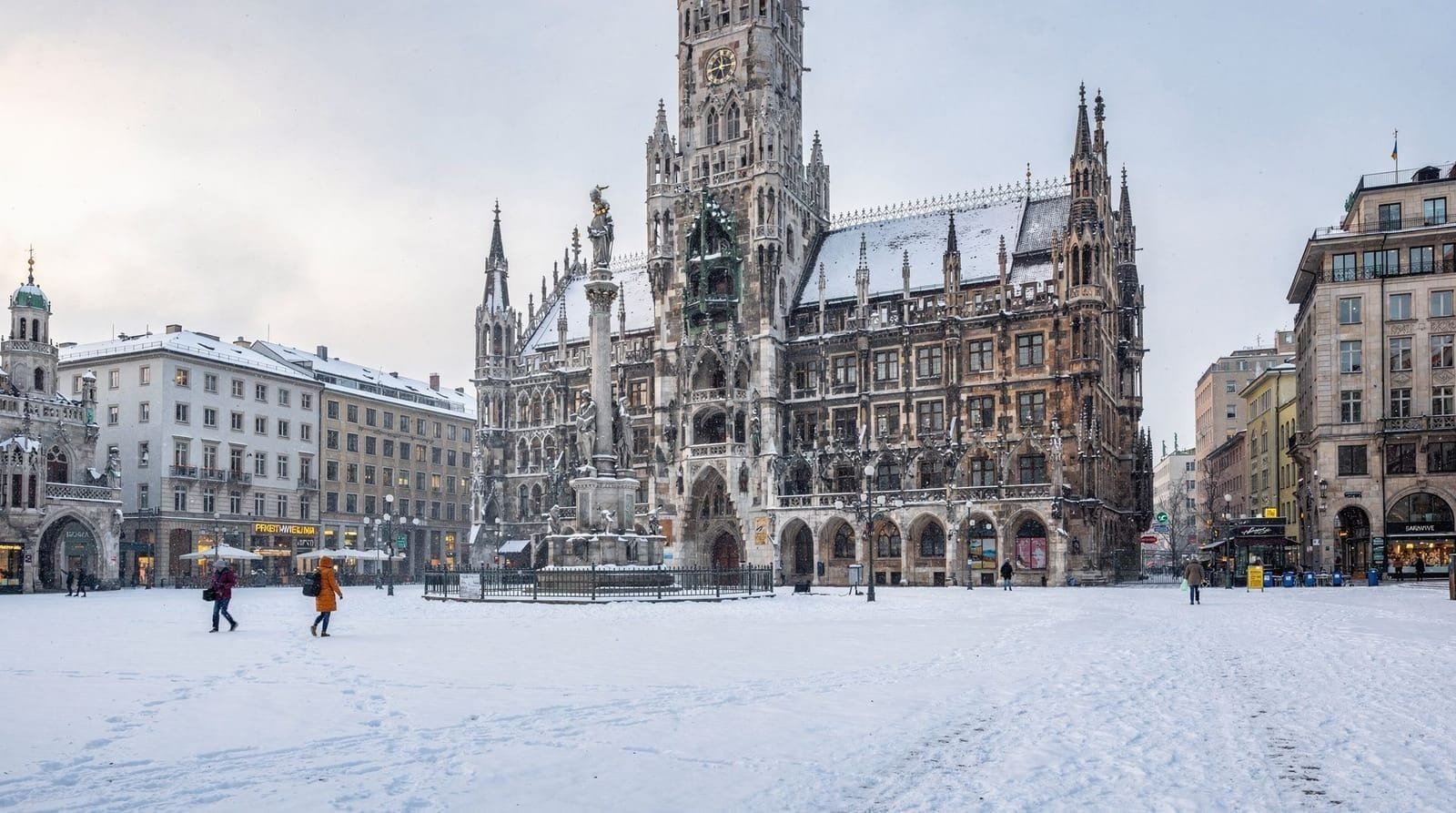
January is Munich’s coldest month, with average highs around 2°C and lows dipping below -5°C on the worst nights. The city gets dusting snow rather than heavy accumulation, so getting around by U-Bahn and S-Bahn stays straightforward.
What you gain: hotel rates are 30–40% lower than summer, queues at the Deutsches Museum and Residenz Palace are short, and Neuschwanstein actually looks stunning under snow. Timed tickets are still required — book at least three weeks ahead — but you won’t be competing with tour buses at the Marienbrücke viewpoint.
What you lose: beer gardens are closed. Almost all are shut from November through April. The Englischer Garten is walkable but cold. Day trips to the Alps work if you’re a skier — Garmisch-Partenkirchen’s access to Zugspitze is fully operational — but the lakes are quiet and slightly bleak.
February brings the Munich Fasching carnival, which peaks on Shrove Tuesday (March 3 in 2026). It’s not Cologne-scale, but the Viktualienmarkt celebrations and fancy dress in the city centre are genuine local fun rather than a tourist performance.
See our full guide: Best time to visit Munich and the dedicated Munich in winter guide for a fuller season breakdown.
March and April: the shoulder season sweet spot
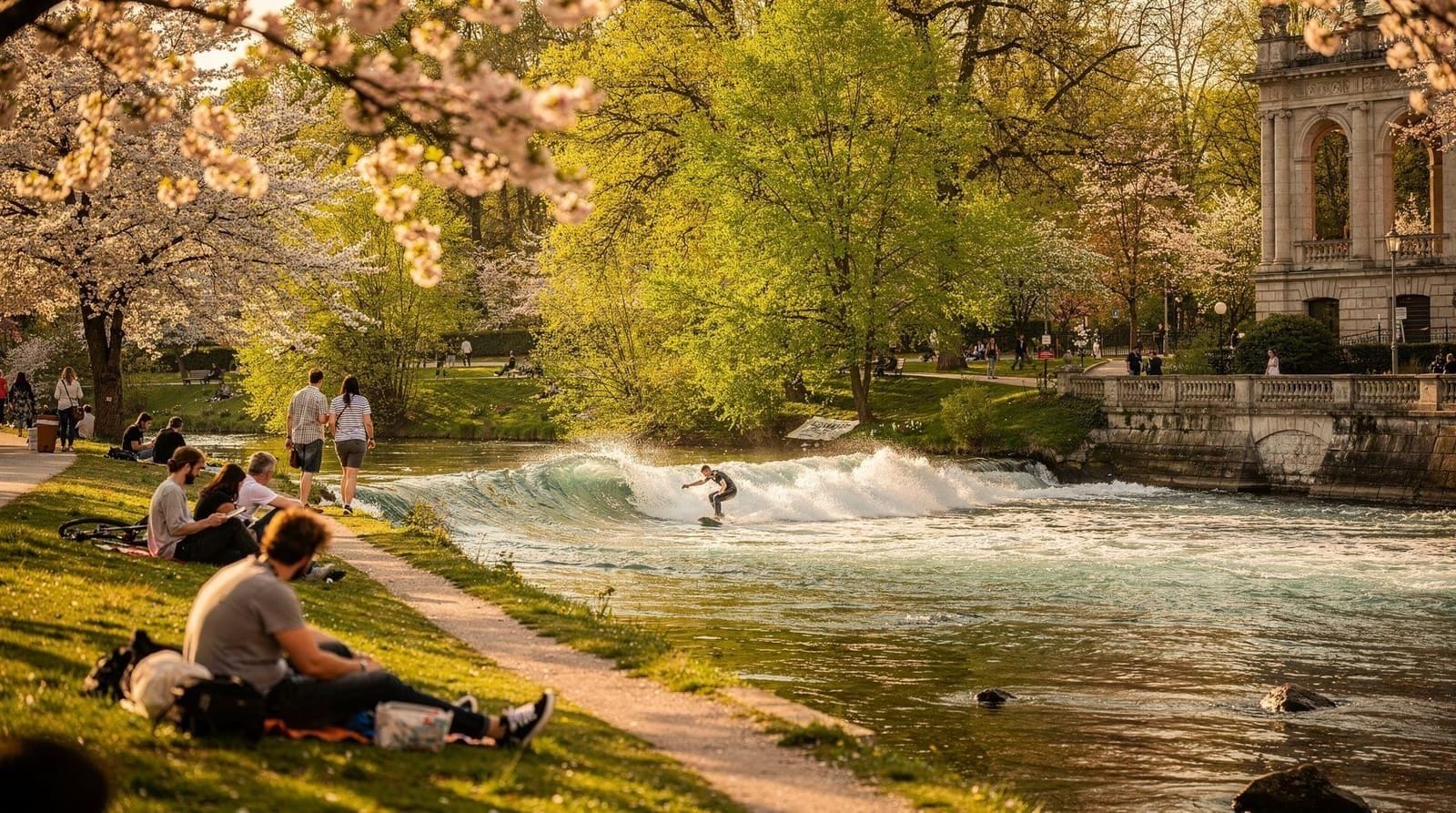
March in Munich is unpredictable — you might get 15°C and sunshine, or a late snow dump. April reliably warms up and the city starts to come alive. Beer garden season officially launches in late April (weather permitting), and the Englischer Garten’s Eisbach wave has surfers year-round but draws its best crowds as it warms.
Prices are still moderate. Hotels average €120–180 per night for a three-star central property, compared to €200+ in July. Easter weekend (April 5–6, 2026) pushes prices up sharply for four or five days, then drops again.
Nymphenburg Palace and its park are beautiful in spring, and the Alpengarten im Englischen Garten (Munich’s alpine botanical garden) starts its display. Worth adding to an itinerary even if you’re not a garden enthusiast.
Key watch-out: Starkbierfest (Strong Beer Festival) runs in late February through early March at Paulaner on the Nockherberg. It’s a local affair, tickets sell via the brewery, and it’s a worthwhile experience for anyone who wants an Oktoberfest-style atmosphere without the September price surge.
Internal link: Starkbierfest guide and the Munich spring guide for a fuller season breakdown of March–May.
May and June: arguably the best all-round window
If you want good weather, manageable crowds, and prices that have not gone full-summer, May and June are strong contenders for the best months to visit Munich. Highs reach 20–24°C by June, evenings are light until 9pm, and the city is genuinely at its most photogenic.
Beer gardens are in full swing. The Augustiner-Keller on Arnulfstrasse seats 5,000 people under chestnut trees and runs entirely on gravity-fed oak barrels. Arrive by 6pm for a bench on a weekday, or earlier on weekends. A Mass (litre) of Augustiner Hell costs around €11.50–12.50 in 2026.
Corpus Christi (June 4 in 2026) is a Bavarian public holiday with a large procession through the old town. It is beautiful to watch but causes significant crowding in central Munich for one to two days.
Day trips are excellent in this window. The lakes — Starnberger See, Ammersee, Chiemsee — are swimmable by mid-June (water temperatures 18–20°C). The Alpine roads are fully open. Neuschwanstein is busy but manageable if you book early morning timed tickets.
July and August: high season in every sense
Peak summer is peak everything: peak visitors, peak prices, peak queues. Average highs are 24–27°C, occasionally hitting 32°C. Beer gardens are packed every evening, the Englischer Garten becomes Munich’s urban beach, and the Isar river sees thousands of locals floating downstream on inflatable rings — a genuine Munich tradition, free, and worth watching.
The tourist pressure is real. Hotel prices for central three-star rooms climb to €220–300+. Marienplatz is gridlocked with group tours. Neuschwanstein sells out timed entry weeks in advance. The BMW Museum and Deutsches Museum are crowded at midday.
Workarounds that actually help: book all attractions months ahead, plan major sights for 8–9am (most open at 9am), and structure afternoons around beer gardens or the Englischer Garten where there are no tickets to buy.
If you want a day trip to the Alps, July and August are when Zugspitze is most dramatic — the summit café is open, the cogwheel railway from Garmisch runs frequently, and the cable car access from the Austrian side at Ehrwald gives you a genuinely spectacular alternative route. Zugspitze day trip with transport See the Munich in summer guide for a fuller breakdown of what to prioritise and what to skip in the hottest months, and the Munich packing guide for what actually helps in the heat.
September (before Oktoberfest): an underrated window
The first two weeks of September are one of Munich’s best-kept secrets. Summer temperatures persist (often 20–25°C), crowds have dropped because European school holidays ended in late August, and prices fall before the Oktoberfest surge hits on September 19.
Neuschwanstein is genuinely less crowded in early September than in July. Tegernsee and Chiemsee are still warm enough to swim. The Alps are at their most accessible for hiking.
Then Oktoberfest begins. September 19, 2026, is tapping day, and from that point the city runs at a different frequency. See the dedicated section below, and the full Munich autumn and Oktoberfest season guide for how the two halves of September actually differ.
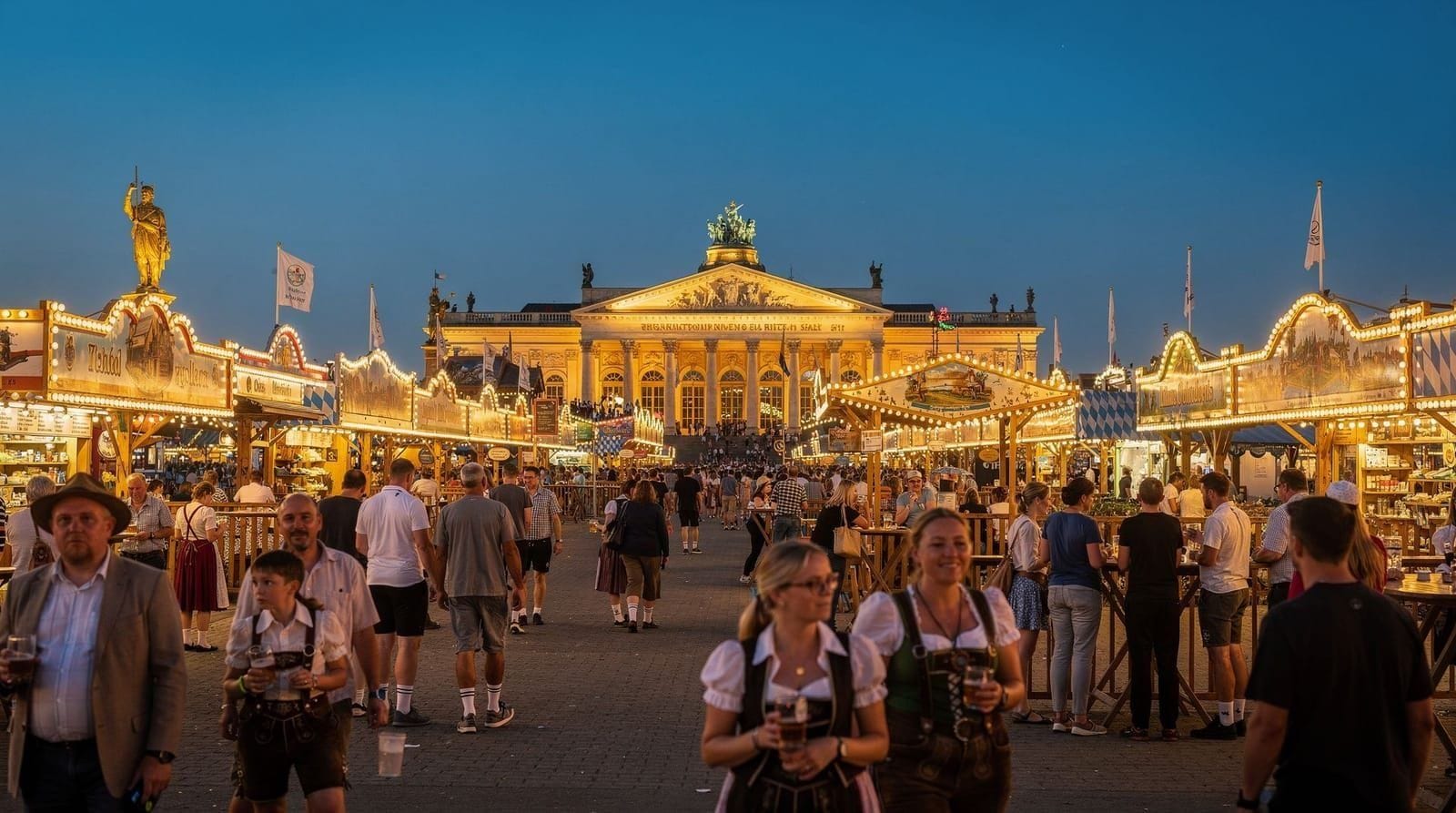
Oktoberfest 2026: September 19 to October 4
Oktoberfest 2026 runs from Saturday, September 19, through Sunday, October 4. This is the standard pattern of the third Saturday in September through the first Sunday in October. The festival takes place on the Theresienwiese, about 20 minutes’ walk southwest from the main train station (Hauptbahnhof).
Key practical facts for 2026:
Tent reservations: The major tents (Hofbräu-Festzelt, Augustiner-Festhalle, Schottenhamel, Winzerer Fähndl) require table reservations well in advance — for the first and last weekends, often a year ahead. Walk-in seating exists but is limited to standing tables at the back and is unpredictable on weekends. If a reservation is important to you, 2026 bookings opened in late 2025 — check directly with tent operators.
Prices: A Mass (1 litre) costs approximately €16–17 inside tents in 2026. Food is expensive. Budget around €80–100 per person for a proper tent session including drinks and a meal.
Crowds: Saturdays are the most crowded. The first and last weekends are the busiest. The least crowded days are Tuesday through Thursday after the first week.
What’s free: Entry to the grounds is free. Only the beer costs money. The fairground rides, which surround the tents, are separately ticketed. Reserve an Oktoberfest tent table
Hotel prices during Oktoberfest run 2–3x normal rates. Book the moment you decide to go. The S-Bahn runs extended services to the Theresienwiese stop (served by U4 and U5, not S-Bahn) and the area is walkable from Hauptbahnhof.
More detail: Oktoberfest 2026 and Oktoberfest tables and reservations
October (after Oktoberfest): golden Bavaria
The week after Oktoberfest closes on October 4 is when Munich returns to normality and the landscape turns spectacular. Autumn colour in Bavaria peaks in mid-to-late October. The foothills around Tegernsee, the Partnach Gorge near Garmisch, and the forests around Neuschwanstein are at their photographic best.
Temperatures are 12–17°C — comfortable for walking and sightseeing, cool enough that beer gardens are winding down. Prices drop sharply from Oktoberfest levels. This is genuinely good value travel with excellent conditions.
The Alpenglow (Alpenglühen) light on the mountains at sunrise and sunset is most reliable in October, when clarity is high and the angles are dramatic. The castle towns of Füssen and Oberammergau are much quieter than summer.
November: honest assessment — skip or go in with low expectations
November is Munich’s most challenging month. It is neither properly autumnal nor properly wintry, with grey skies, rain, and limited daylight (sunset around 4:30pm by month’s end). Beer gardens are shut. Christmas markets open on the last weekend but the first few days are crowded.
For museum enthusiasts it is fine — the Alte Pinakothek, Neue Pinakothek, and Deutsches Museum are all excellent rainy-day destinations. The Pinakotheken complex (Museum Quarter) can easily fill two full days.
If your dates fall in November, prioritise the Residenz (Munich’s Royal Palace) for an indoor half-day, and the Deutsches Museum for another. Day trips in November are not very rewarding unless you have good rain gear.
Munich Residenz guide and Deutsches Museum guide
December: Christmas markets and cold magic
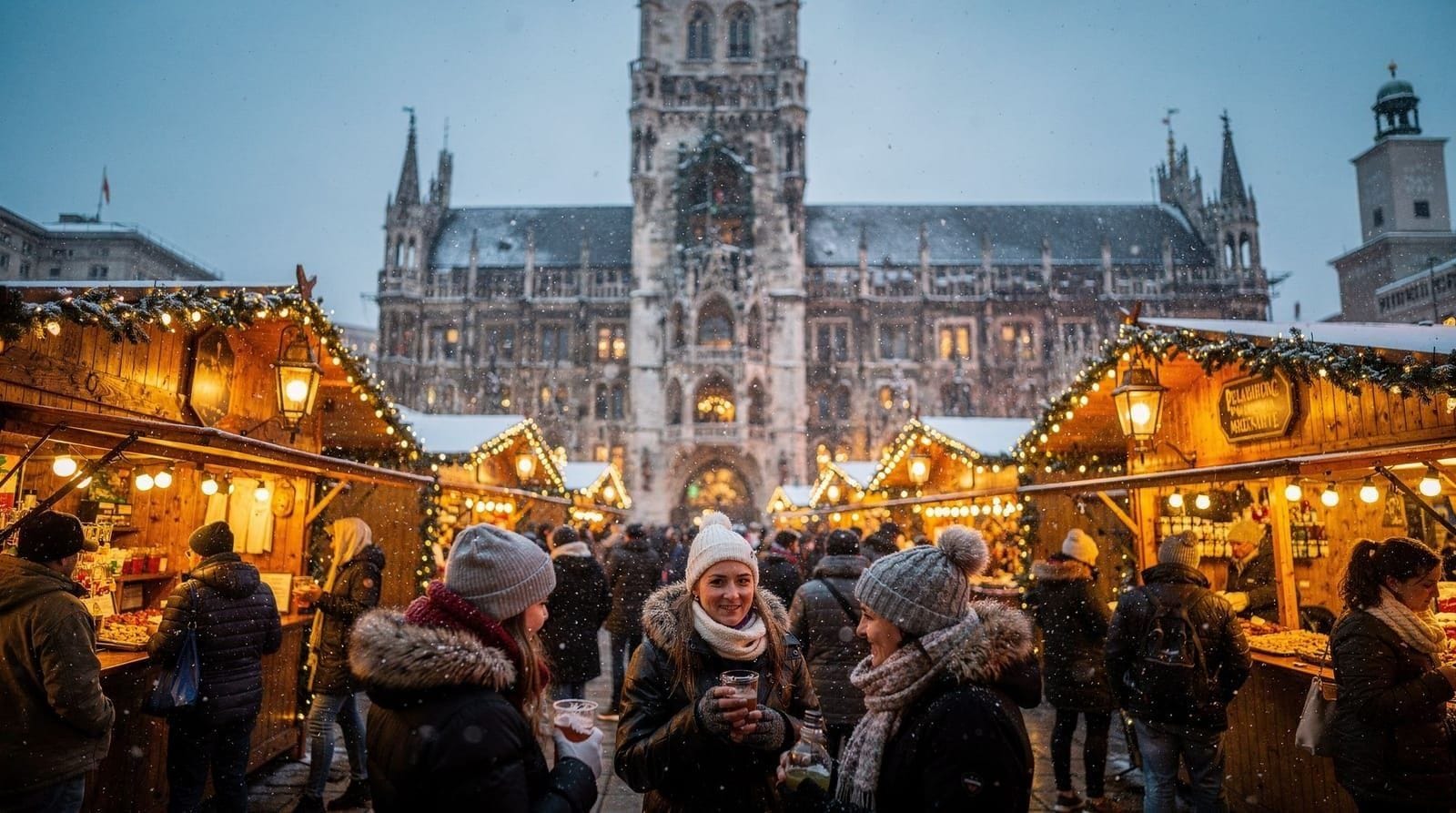
Munich’s Christmas markets (Christkindlmärkte) are legitimately good. Unlike some German cities where the main market is tourist-trap prices and plastic goods, the Marienplatz market and several neighbourhood markets maintain quality.
The Marienplatz market runs from late November through December 24. The Schwabing market on the Münchner Freiheit, the market at Sendlinger Tor, and the medieval market outside the Residenz (Mittelaltermarkt) are all worth visiting and significantly less crowded than Marienplatz.
Glühwein (mulled wine) runs €4–6 for a mug plus a deposit of €2–3 for the mug. Lebkuchen (gingerbread), Stollen, and Gebrannte Mandeln (spiced almonds) are the foods to prioritise.
Temperatures in December are 0–5°C. Christmas Day (December 25) and the day after (December 26, a public holiday in Bavaria) see almost everything shut. New Year’s Eve is celebrated at Marienplatz with a public gathering, though Munich is more restrained than Berlin or Cologne.
More detail: Munich Christmas markets guide 2026
Quick verdict: when to visit Munich by type of trip
- Budget travellers: January, February, or early March. Lowest prices, no compromise on attractions.
- First-timers wanting good weather: May or June. Best balance of conditions, accessibility, and price.
- Beer garden obsessives: July or August. Peak season but worth it for the atmosphere.
- Oktoberfest: Book September 19–October 4 well in advance, expect to spend.
- Families with kids: June or early July. Schools are out but not yet at peak crush.
- Castle and landscape photography: Late October. Golden light, manageable crowds.
- Christmas atmosphere: Last week of November through December 22.
See our planning guides: Munich trip planning guide and How many days in Munich? Honest planning by duration
New Year in Munich
If your trip spans the turn of the year, expect a distinct atmosphere: fireworks are legal for the public to set off on New Year’s Eve itself (not before, not after), Marienplatz fills with an informal street party, and many restaurants require advance booking for New Year’s Eve dinner. The days immediately after January 1 are quiet and cheap — a good window if you’re flexible and want low prices without full winter’s coldest weeks. See the Munich New Year guide for the specifics of what’s open and what isn’t.
Frequently asked questions about the best time to visit Munich
Is Munich worth visiting in winter?
Yes, with expectations set correctly. January and February are cold but have excellent museum access, the Christmas atmosphere lingers into early January, and Neuschwanstein under snow is one of Bavaria’s best images. Beer gardens are shut and evening entertainment is more indoor-focused.
When are hotel prices lowest in Munich?
January and November (excluding Starkbierfest week and the Christkindlmarkt opening weekend). Late October, after Oktoberfest, also sees good rates. The absolute peak is the Oktoberfest period, when prices triple.
How far in advance should I book for Oktoberfest 2026?
For tent reservations: you should have booked in 2025 for the first weekend. For walk-in visits, no booking is needed for the grounds, but hotels should be locked in 6–12 months ahead. Train tickets to/from Munich during Oktoberfest weekends sell out on popular routes.
Does it snow in Munich?
Light snow is common from December through February, with occasional snow in November and March. The city handles it well (salted roads, reliable U-Bahn), but the Alps an hour south get significant snowfall, making Zugspitze and Garmisch excellent for skiing from late December through April.
What is the best month for a day trip to Neuschwanstein?
May, June, or October. You get good light, walkable weather on the hill to the castle, and fewer bus tours than July–August. Always book timed tickets online in advance — they sell out regardless of month.
Are there any events in Munich beyond Oktoberfest worth planning around?
Yes: Starkbierfest (February–March, strong beer season), the Auer Dult flea market (May, August, October), the Tollwood Festival (summer and winter editions), and the Filmfest München in late June. The International Motor Show (IAA Mobility) moved to Munich in recent years and returns biennially.
Is it better to visit Munich in spring or autumn?
Both are strong shoulder-season choices with similar prices and crowd levels, but the experience differs. Spring (April–May) means fresh green parks, the start of beer garden season, and warming weather. Autumn (mid-October) means golden colour in the Alps, cooling temperatures, and beer gardens winding down. Neither is objectively better — pick based on whether you’d rather see the city waking up or the Alps at their most photogenic.
Does the time of year affect which day trips make sense?
Yes, significantly. Zugspitze and Königssee are best May through October, when cable cars, boats and hiking trails run full schedules. Neuschwanstein works year-round but is most magical under snow in winter and least crowded in October. Dachau and the museum-heavy day trips (Nuremberg, Regensburg) work in any season, which is why they’re the honest fallback for a November or January visit.
The bottom line
Munich rewards visitors who plan around their priorities. The city works well in almost every month — it is clean, well-connected, and has enough quality attractions to fill a week in any season. What changes is the atmosphere, the price, and the crowding level at specific sites. Match your visit to what matters most to you, book the genuinely scarce things (Neuschwanstein tickets, Oktoberfest tent reservations) well ahead, and you will have a good trip.
For full trip planning resources: Munich trip planning guide and Munich budget guide 2026