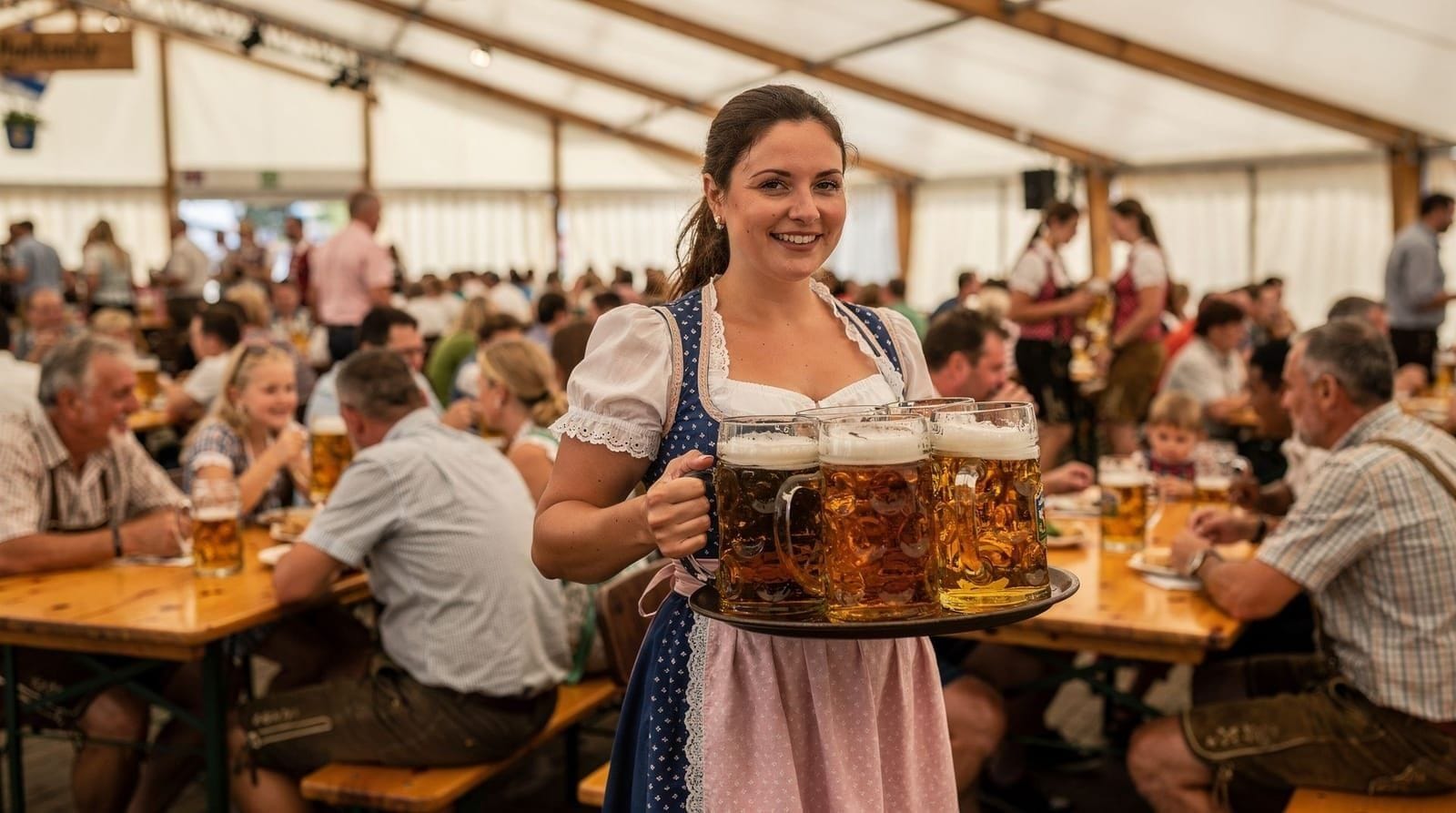
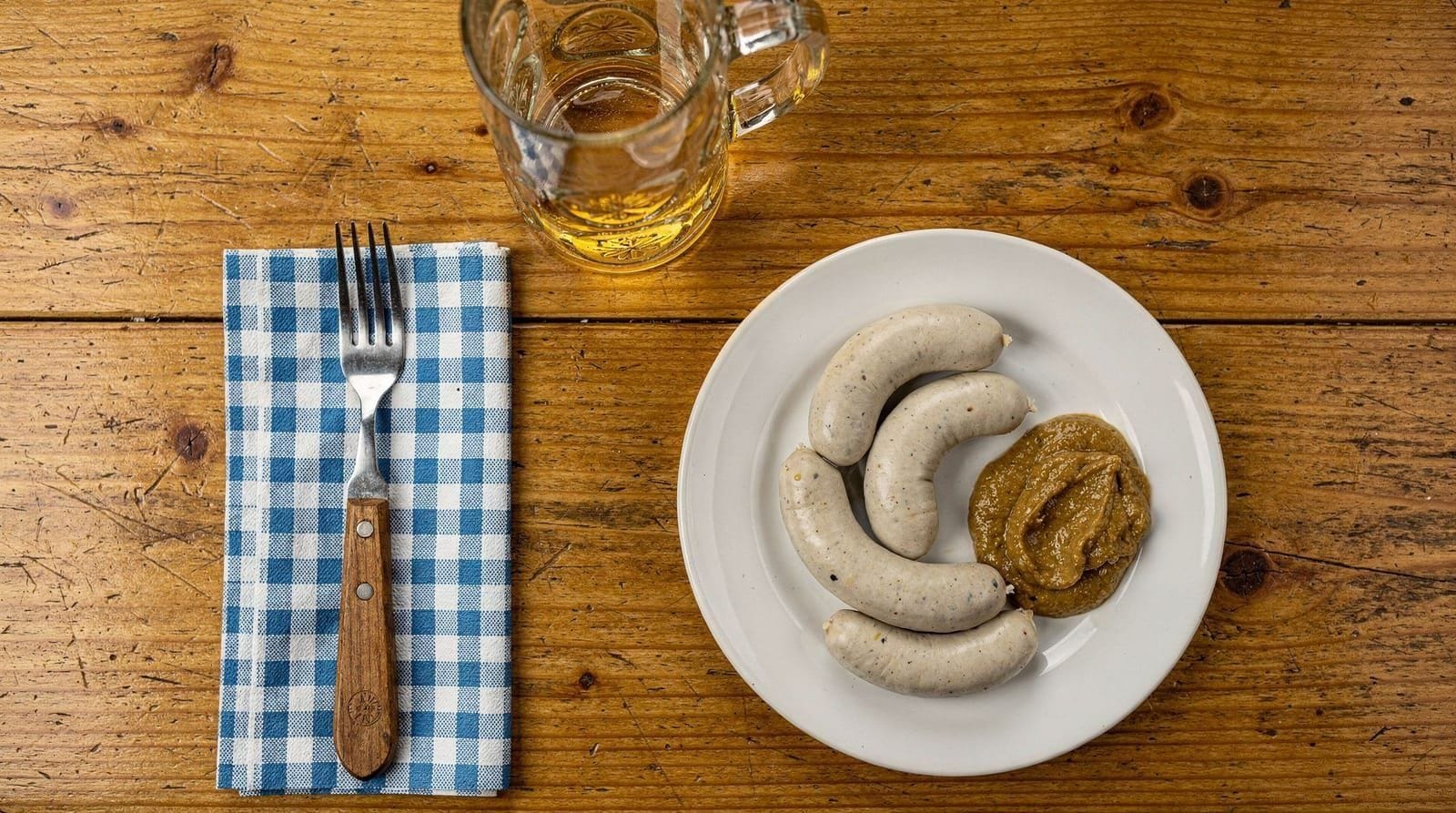
Oktoberfest reserved table 2026 — is it worth it? Honest guide
Munich: Oktoberfest tour with tent reservation, food and beer
Oktoberfest is free to enter, which surprises most first-time visitors and is exactly the confusion that reserved-table resellers profit from. This review explains what a reserved table genuinely buys you, how to tell a legitimate operator from a scam, and who actually needs to pay for one.
| Where | Theresienwiese, western city centre |
| Cost | Entry free; Mass of beer around €14–15; reserved packages around €50–300+ per person |
| Time needed | Reserved sessions typically run 4–6 hours |
| Getting there | U4/U5 to Theresienwiese, or 15-minute walk from Hauptbahnhof |
| Best time | Weekday mornings for walk-in; book reserved tables weeks ahead for weekends |
The most important thing to understand about Oktoberfest entry
This is the part that confuses most visitors, and the confusion is financially exploitable: Oktoberfest entry is free. There are no admission tickets.
You do not need to buy any ticket, pass, or package to walk through the gates of the Theresienwiese grounds and into the beer tents. The grounds, rides, food stalls, and the exteriors of the tents are all free to enter. You can walk into the beer tents, sit down at an unreserved table, order a Mass of beer (€14–15 in 2026), and have an authentic Oktoberfest experience without paying anyone a booking fee.
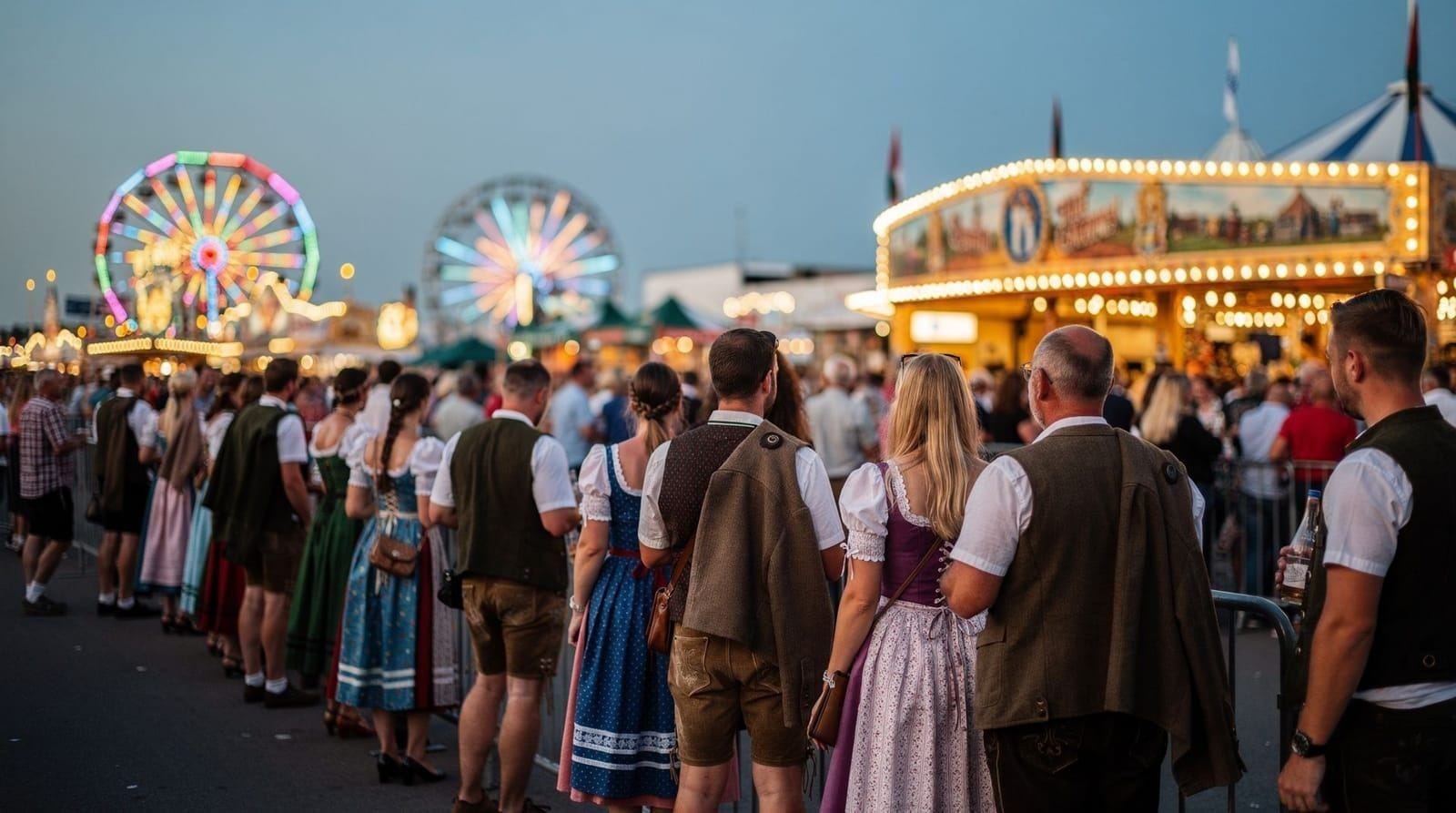
What changes this calculation is capacity. The main tents hold between 3,000 and 10,000 people and fill to legal capacity on busy days — particularly Friday afternoons from about 14:00, all day Saturday, all day Sunday, and throughout the first two weekends of the festival. When a tent reaches capacity, the tent operators close the doors and only allow entry as others leave. On peak days, this can mean queues of 30 minutes to two hours to enter the most popular tents, or simply being turned away entirely.
A reserved table eliminates the capacity risk. You have a confirmed seat inside the tent for a specific period, typically 4 to 6 hours, and you walk past the queue.
What a reserved table actually gets you
A genuine reserved table provides:
A confirmed seat inside the tent for the reserved period. This is the core value. You will not be standing in a queue or turned away at the door.
A mandatory minimum spend that is applied to your table. Every reserved table requires the party to spend a minimum amount on food and beer from the tent’s servers. Most packages bundle one or two Mass steins and a snack into the price. Additional food and beer is ordered and paid normally at tent prices.
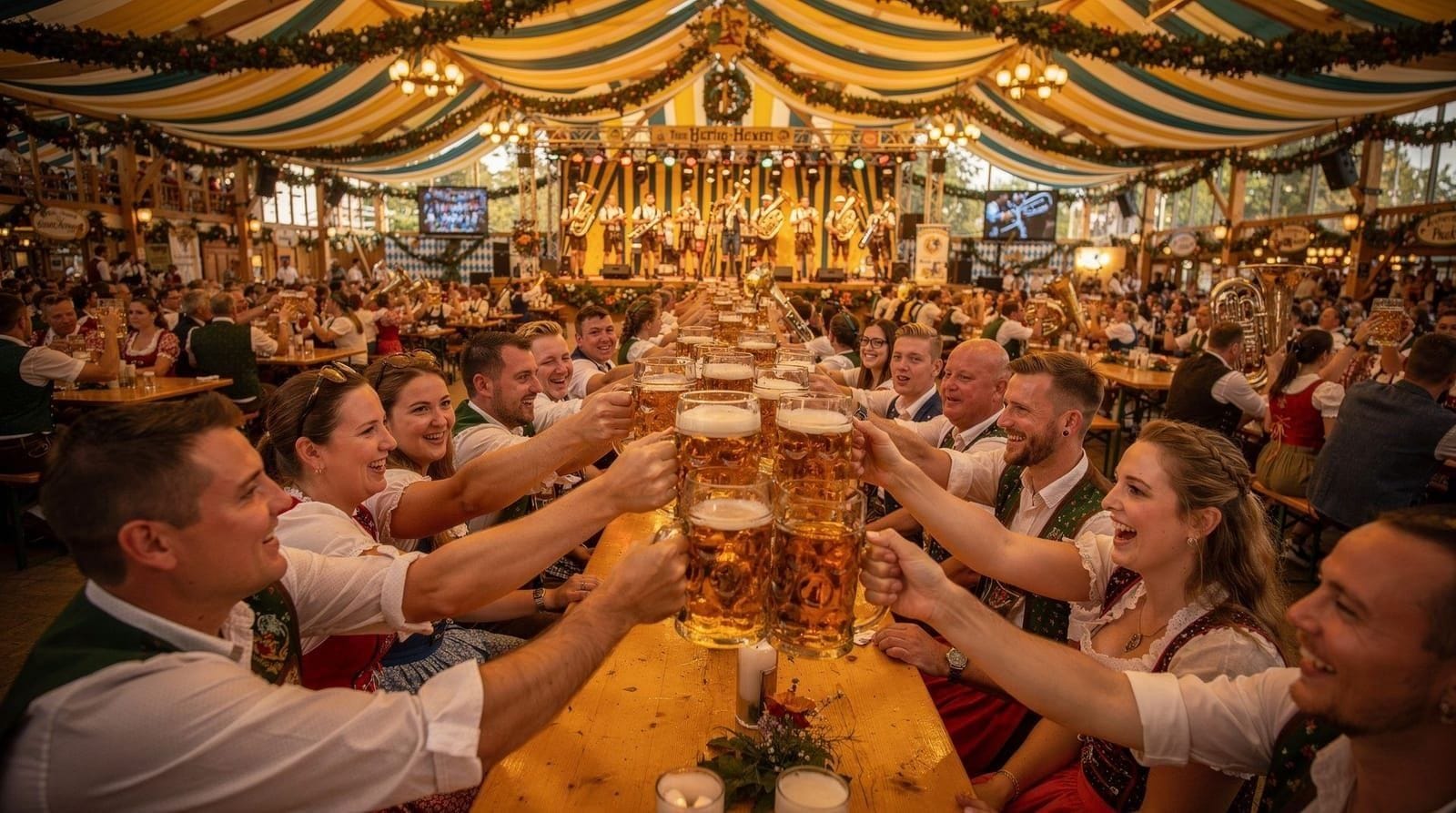
A time slot — most table reservations run for 4 to 6 hours, typically either a morning session (tent opens around 09:00 on weekdays, 08:00 on weekends) or an afternoon/evening session. The sessions are separated to allow tent staff to reset tables between bookings.
A specific location within the tent. This matters more than many people realise. A seat in the main hall near the brass band is louder but more immersive; seats on the covered outdoor terrace (Außenbewirtschaftung) are quieter and more relaxed. Premium spots on the inner gallery level offer views of the whole tent. Check what the operator specifies. Book Munich Oktoberfest tour with reserved tent table
The reseller landscape — what to watch for
Because official table reservations are nearly impossible to obtain for individual visitors without years of connections with tent management, a secondary market of access brokers has developed. This market ranges from completely legitimate licensed tour operators to outright scams.
Legitimate operators buy table blocks from tent management as part of a formal commercial relationship. They resell access as a guided package. The prices are higher than the cost of simply drinking at the tent (because you are paying for guaranteed access plus any service), but the access is real and the reviews are verifiable. GetYourGuide, Viator, and established Munich tour operators fall into this category.
Problematic operators make exaggerated claims (“official Oktoberfest tickets”), show prices without being clear about what the mandatory minimum spend covers, or sell single seats at individual tables without the social context of a group. Read the operator’s cancellation policy carefully — legitimate operators offer full refunds if the festival is cancelled or if you cancel well in advance; scam operators often do not.
Outright scams — less common but worth knowing: people selling “Oktoberfest tickets” outside the grounds, unofficial websites claiming to sell entry passes, and social media listings for reserved seats with no verifiable connection to a tent operator. None of these are legitimate. There are no Oktoberfest entry tickets. Anyone selling a “ticket” to enter the grounds is selling a piece of paper that will get you nothing.
Our Oktoberfest scams and tips guide covers the full range of deceptions to avoid, including overpriced hotel transfers, fake pretzel-and-beer packages, and the problem of unofficial “Oktoberfest costumes” sold near the festival grounds at inflated prices.
How to get an official reservation
The direct route to a table reservation is through the individual tent operators, whose websites publish reservation forms. Reservations for the following year typically open in October, immediately after the current year’s festival ends. Tables are allocated first to long-standing corporate clients and regular groups who have maintained relationships with tent management for years. The reality for individual visitors booking for the first time is that tables in the most popular tents — particularly Augustiner-Festhalle and Hofbräu-Festzelt — are functionally unavailable through the official channel.
Smaller tents and specialist tents (the Fischer-Vroni fish tent, the Weinzelt wine tent, the Käfer Wiesn-Schänke for a more upscale experience) have more accessible reservations and are worth considering for visitors who want a genuine reserved table experience outside the main circus. Our Oktoberfest tickets and tables guide covers the complete tent-by-tent reservation picture.
Who actually needs a reserved table?
It is worth paying for if:
- You are visiting during the first two weekends or on any Saturday during the festival
- Your group has four or more people and coordinating arrival times and finding unreserved seats together is logistically complex
- You have a specific tent in mind and want certainty rather than luck
- You are travelling from overseas specifically for Oktoberfest and the trip is expensive enough that the capacity risk is unacceptable
- You want to arrive in the afternoon or evening (the riskiest times for walk-in entry)
It is not worth paying for if:
- You are visiting on a weekday morning — walk-in entry is straightforward before 11:00 on most weekdays
- You are flexible about which tent you drink in — less popular tents have unreserved seats even on busy days
- Your group is two people or fewer — two people can find seats in unreserved sections even at moderately busy times
- You are already in Munich for several days and can try multiple times if the first attempt is full
The festival runs for 16 to 18 days total (mid-September to early October). Visiting on a Tuesday or Wednesday mid-festival rather than a weekend transforms the experience — shorter queues, lower crowd pressure, and a better chance of finding the Münchners who actually use Oktoberfest as a social event rather than visitors who come once in a lifetime.
Choosing the right tent
The tent choice is as important as whether you have a reservation, and it is the decision most visitors make without enough information.
Augustiner-Festhalle — Serves Augustiner beer directly from wooden barrels (one of the very few tents to still do this). Considered the best beer at Oktoberfest by local consensus. More local crowd, slightly calmer than Hofbräu.
Hofbräu-Festzelt — The most international tent, heaviest tourist concentration, loudest. If you want the maximum “Oktoberfest chaos” experience this is it. Our Hofbräuhaus guide covers the brand’s history.
Hacker-Festzelt — Known as “Heaven of Bavaria” for its painted sky ceiling. Mid-range crowd mix between local and tourist.
Schottenhamel — The festival’s oldest tent and the site of the opening ceremony. Full capacity within minutes of the Lord Mayor’s tap each year.
Weinzelt — The wine tent, for visitors who genuinely prefer wine to beer. A calm alternative to the main beer tents.
Käfer Wiesn-Schänke — Premium upscale tent with table service and a celebrity visitor tradition. Requires a reservation more urgently than other tents as the capacity is much smaller.
See our Oktoberfest guide and Oktoberfest when and where guide for full tent descriptions and the year’s specific dates.
Tent comparison at a glance
| Tent | Known for | Crowd | Reservation difficulty |
|---|---|---|---|
| Augustiner-Festhalle | Beer from wooden barrels, best local reputation | Mostly locals, calmer | High — very sought-after |
| Hofbräu-Festzelt | Loudest, most international | Heavy tourist mix | High on weekends |
| Hacker-Festzelt | Painted sky ceiling | Mixed local/tourist | Moderate |
| Schottenhamel | Oldest tent, opening ceremony | Full within minutes on day one | Very high early on |
| Weinzelt | Wine rather than beer | Calmer, older crowd | Moderate |
| Käfer Wiesn-Schänke | Upscale table service | Smaller capacity, premium | High — urgent to book |
Which days actually need a reservation
Not every day of the 16–18 day festival carries the same crowd pressure, and this is the detail most planning guides skip.
| Day/time | Crowd level | Reservation needed? |
|---|---|---|
| Weekday morning (before 11:00) | Low | No — walk-in is straightforward |
| Weekday afternoon/evening | Moderate | Optional, helpful for groups of 4+ |
| Friday from ~14:00 | High | Recommended |
| Saturday, all day | Very high | Yes, especially for popular tents |
| Sunday | High | Recommended, especially afternoon |
| First two weekends overall | Highest of the festival | Yes |
Logistics on the day
The Theresienwiese grounds are in the western city centre, roughly a 15-minute walk from Munich Hauptbahnhof (central station) or accessible by U-Bahn on lines U4 and U5 (exit Theresienwiese). On peak days, the U-Bahn runs additional services but stations near the festival are extremely crowded. Walking from the station or from the adjacent Schwanthalerhöhe neighbourhood is often faster.
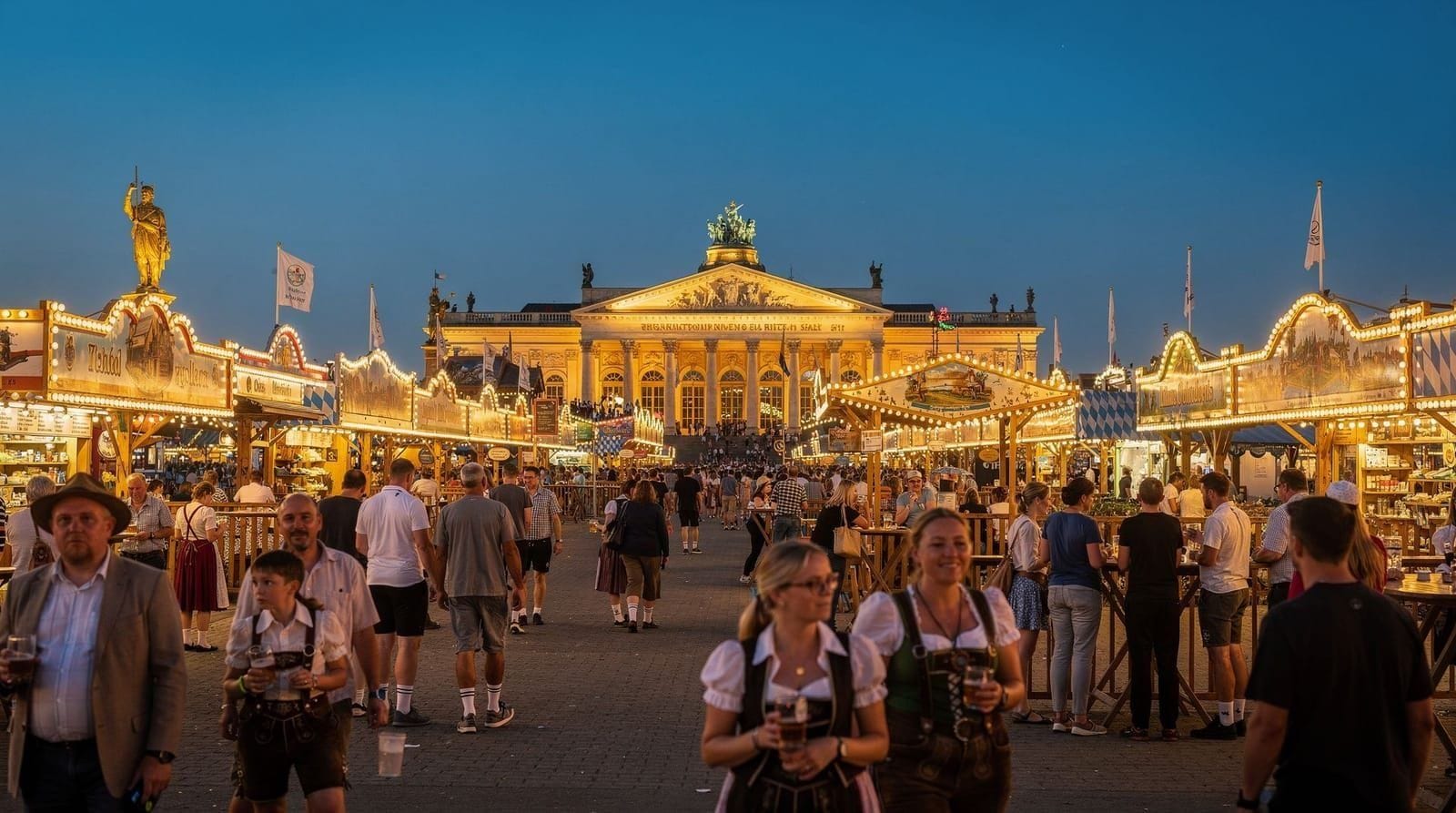
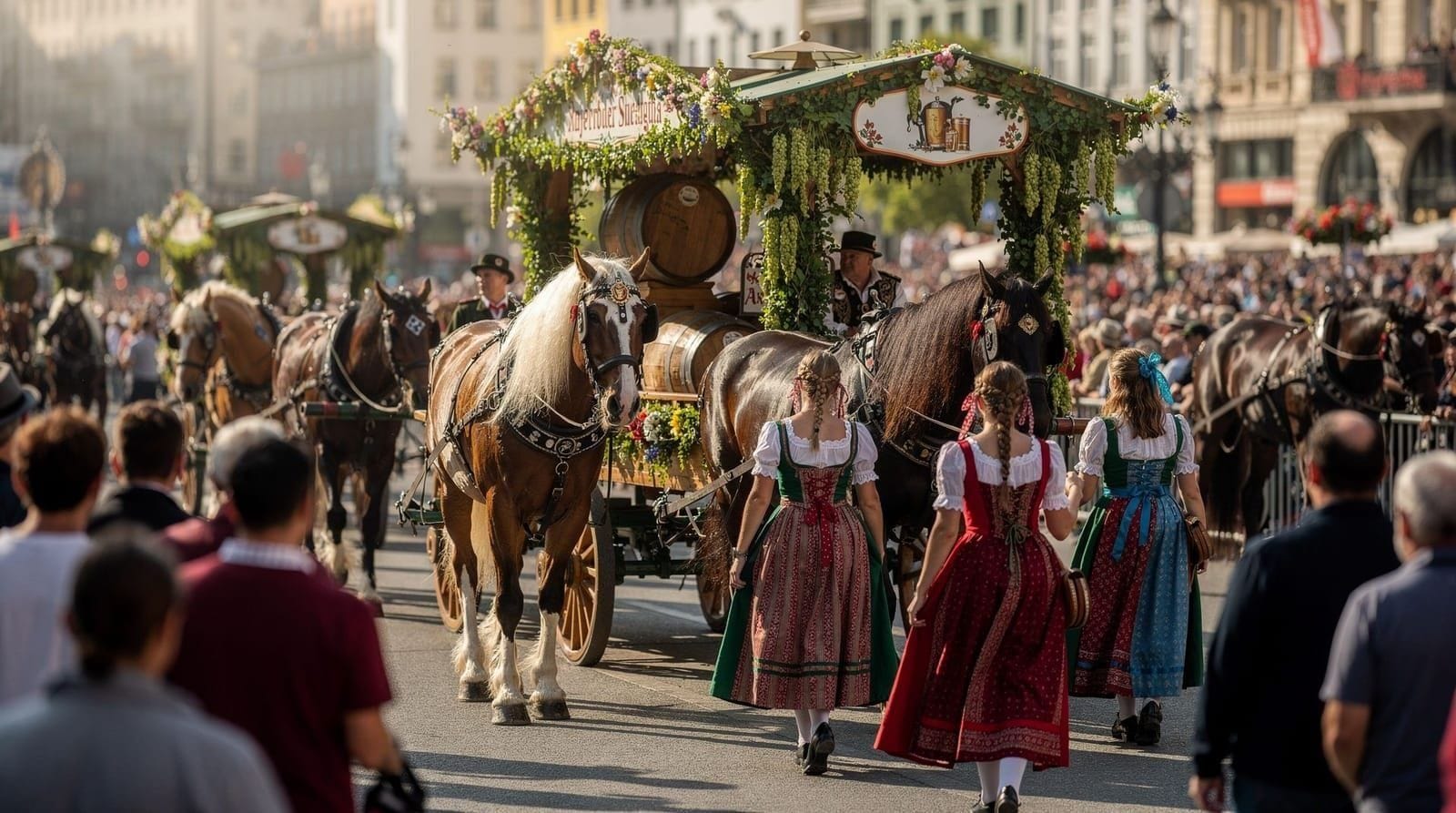
Dress code: traditional Bavarian costume (Dirndl for women, Lederhosen for men) is the norm, not a tourist gimmick. Locals wear Tracht with genuine enthusiasm, and visitors who make the effort are received more warmly. However, there is no requirement — you will see a wide range of clothing at all times.
Arrival time for reserved tables: operators specify a check-in window, typically 30 minutes before your session starts. Arriving early gives you time to find the host’s meeting point (usually near a specific tent entrance) and get settled before the session fills.
Honest assessment: is it worth the premium?
For a Saturday visit or any visit during the first two weekends, a reputable reserved table package eliminates the most significant planning risk at Oktoberfest — not getting in. The premium you pay over the cost of simply buying beer at tent prices is real but not large relative to the cost of a Munich trip. For visitors who have travelled from outside Europe specifically for the festival, the certainty is worth it.
For flexible visitors open to weekday visits, morning arrivals, or trying multiple tents, the free entry reality means you can have a genuine Oktoberfest experience without paying anything beyond the cost of your beer and food inside the tent.
The festival is genuinely good. The beer is excellent, the brass bands are loud and fun, the pretzel is the correct size (enormous), and the atmosphere during Oktoberfest season transforms the Theresienwiese into one of the most energetic public events in Europe. Getting in is the only logistics problem — and it is mostly solved by timing.
Further reading: Munich autumn Oktoberfest season guide · Best time to visit Oktoberfest · Munich beer hall etiquette
Building a full trip around Oktoberfest
Most visitors budget more than one day for the festival itself, which leaves room to add something outside Munich if the trip is longer than a long weekend. A Salzburg day trip works well as a change of pace the day after a heavy Oktoberfest session — under 90 minutes each way by train and a completely different atmosphere. If you’re staying multiple nights during the festival, spread reserved-table days across the trip rather than trying to hit every tent in one visit; recovery time matters more at Oktoberfest than at most city breaks.
Frequently asked questions about Oktoberfest reserved tables
Do I need a reserved table to attend Oktoberfest?
No. Entry to the Oktoberfest grounds and beer tents is free. A reserved table guarantees a seat inside the tent on busy days when the tents fill to capacity. It is not required for weekday morning visits.
How much does an Oktoberfest reserved table cost?
Official table reservations from the tent operators are free to book — you pay only the mandatory minimum spend on food and beer at the table. Third-party resellers charge €50–300+ per person, which covers the mandatory minimum spend plus a premium for guaranteed access.
How do I get an official Oktoberfest table reservation?
Through the individual tent operators’ websites, with reservations opening in October for the following year. In practice, most tables go to long-standing corporate clients. Individual visitors have limited success through official channels for the most popular tents.
Are Oktoberfest table packages from GetYourGuide legitimate?
Yes. Licensed tour operators buy table blocks from tent management and resell access as part of a guided package. The access is real. Verify which tent and section is specified, and read reviews before booking.
What does a reserved table package include?
A reserved seat inside the tent for a set time period (typically 4 to 6 hours), a mandatory minimum spend credit toward food and beer, and sometimes a guided group meet-up with a local host.
Which Oktoberfest tent should I choose?
Augustiner-Festhalle is considered the best for beer quality. Hofbräu-Festzelt is the most international. Hacker-Festzelt has the famous painted sky ceiling. Schottenhamel is the oldest and hosts the opening ceremony. Choose based on your preferred atmosphere.
What time should I arrive at Oktoberfest without a reservation?
On weekdays, arriving before 10:00 when the tents open gives the best chance of a seat. By noon on weekdays and 10:30 on weekends, main tents are typically full. Sundays and weekday mornings are the most accessible for walk-in visitors.
Can I cancel a reserved table if my plans change?
It depends on the operator. Licensed tour operators generally offer free cancellation up to a set number of days before the date; read the specific policy before booking, since third-party resellers vary widely and some scam listings offer no refund at all.
Is it cheaper to book directly through a tent or through a reseller?
Direct official reservations have no booking fee beyond the mandatory minimum spend, but they are practically unavailable to first-time individual visitors for the popular tents. Resellers charge a premium precisely because they’ve secured that access in advance — for most visitors, the premium buys certainty rather than a bargain.